
Xiao Feng Art Museum by ZAO&Zhang Ke: A Sculptural Sanctuary Framing Landscape and Art in Hangzhou
A sculptural concrete museum in Hangzhou, winding around a tranquil courtyard, blending art, landscape, and contemplative spatial experiences inspired by scholar gardens.


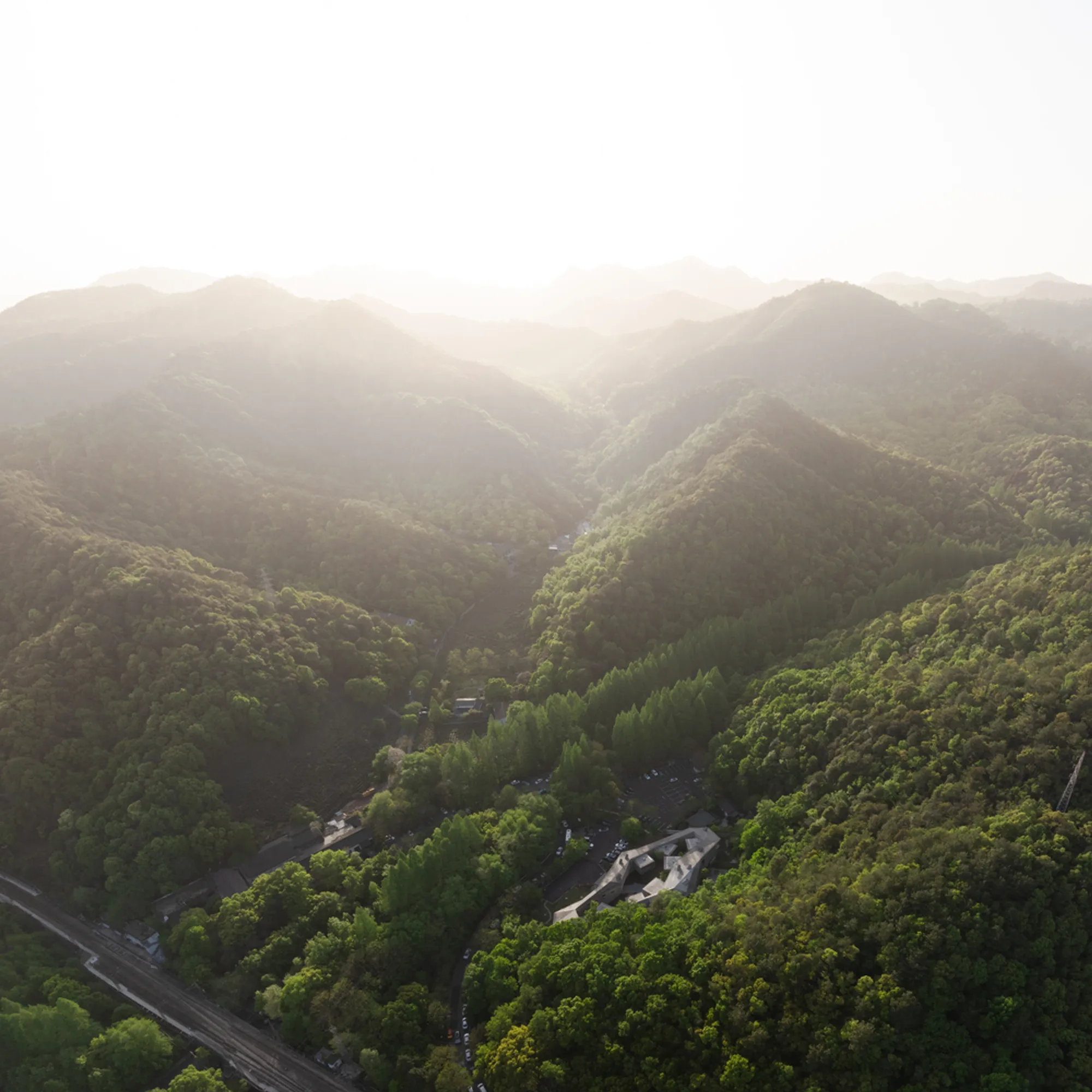
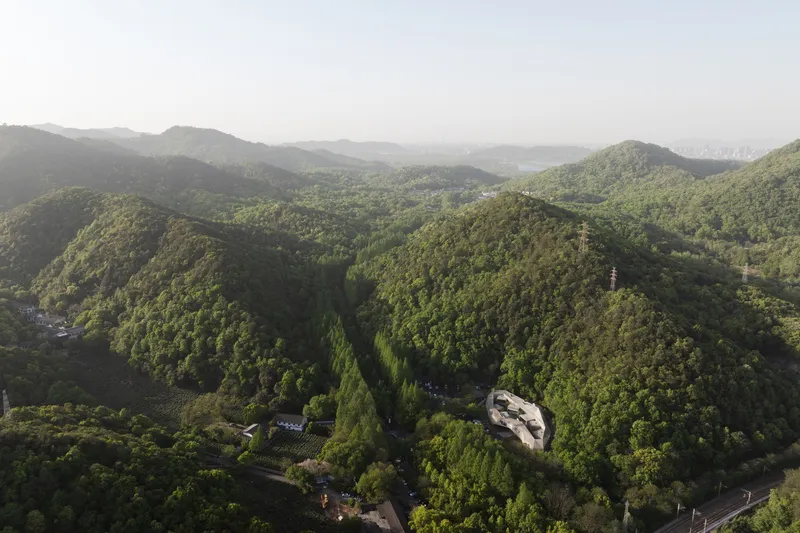
Set at the foot of Hangzhou’s Daci Mountain, just south of West Lake, the Xiao Feng Art Museum by ZAO/Zhang Ke Architecture Office is conceived as a poetic retreat that merges architecture, art, and nature. Designed to honor celebrated painter couple Xiao Feng and Song Ren, the museum reinterprets the traditional Chinese scholar’s garden through contemporary forms, intimate courtyards, and immersive spatial sequences.
A Museum Shaped by Landscape and Culture
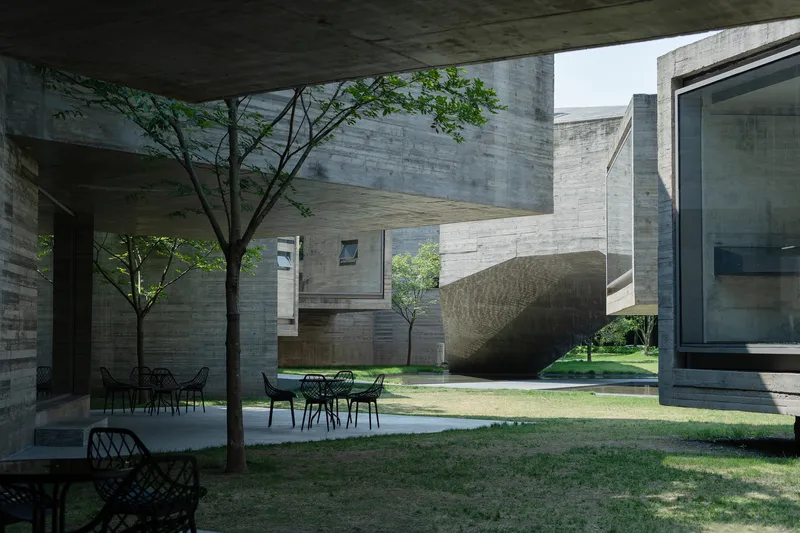
Rooted in the cultural heritage of Hangzhou and the artistic legacies it nurtures, the museum presents an introverted spatial language. Its design draws inspiration from literati gardens—spaces where scholars historically sought reflection, inspiration, and serenity.
Rather than replicating classical motifs, the museum translates these principles into an organic architectural system. Linear volumes coil around a sunken courtyard like a stone ribbon, quietly blending into the mountain terrain while framing carefully orchestrated views of nature.
Architectural Form and Spatial Journey
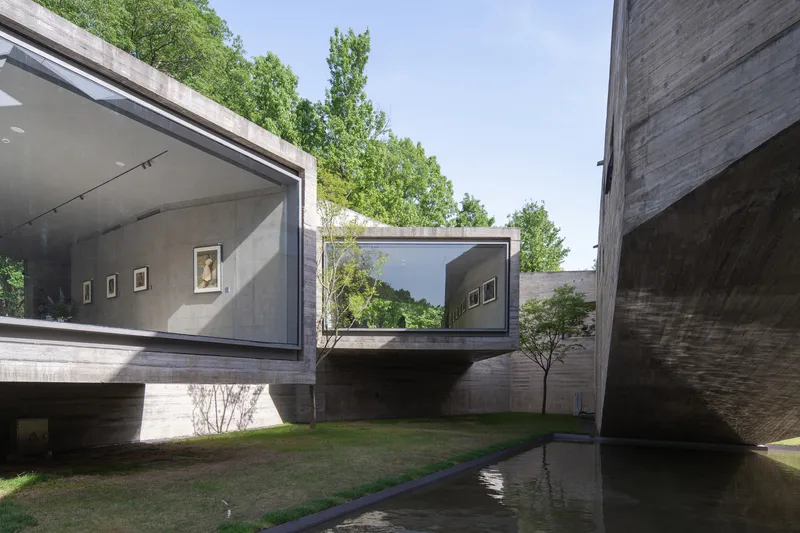
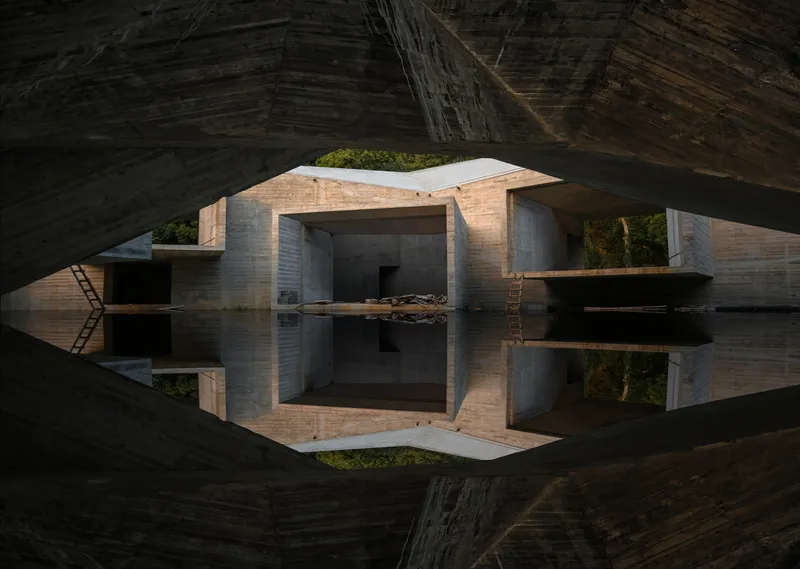
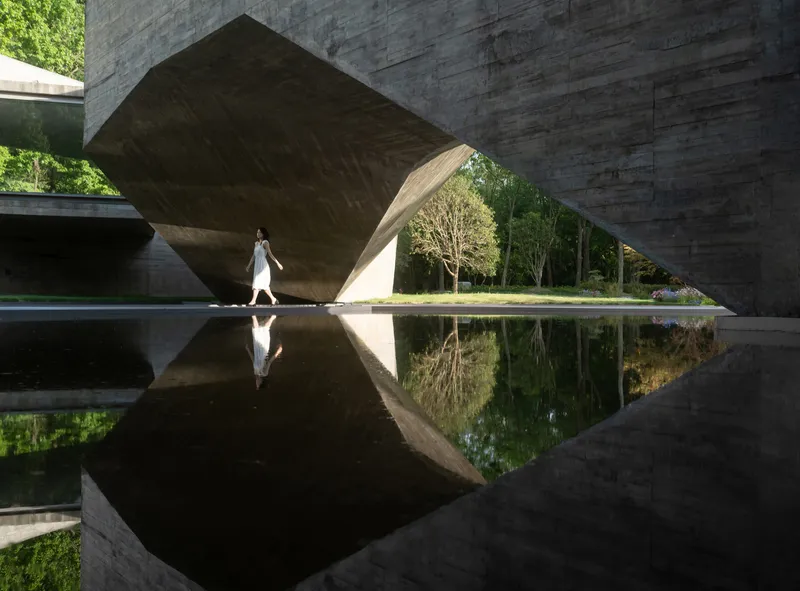
Visitors approach the museum by passing beneath a sculptural bridge that reveals the interior courtyard—a subtle gesture that builds anticipation and heightens spatial drama. Once inside, the museum unfolds as a continuous loop, echoing the flowing rhythm of the landscape and the meditative nature of viewing art.
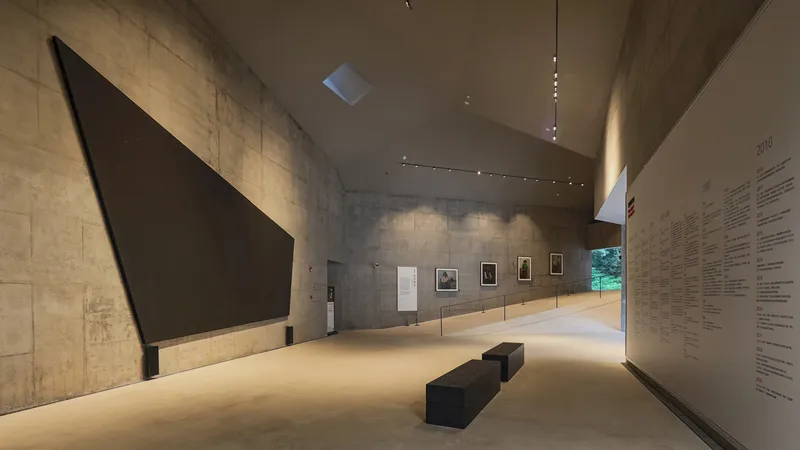
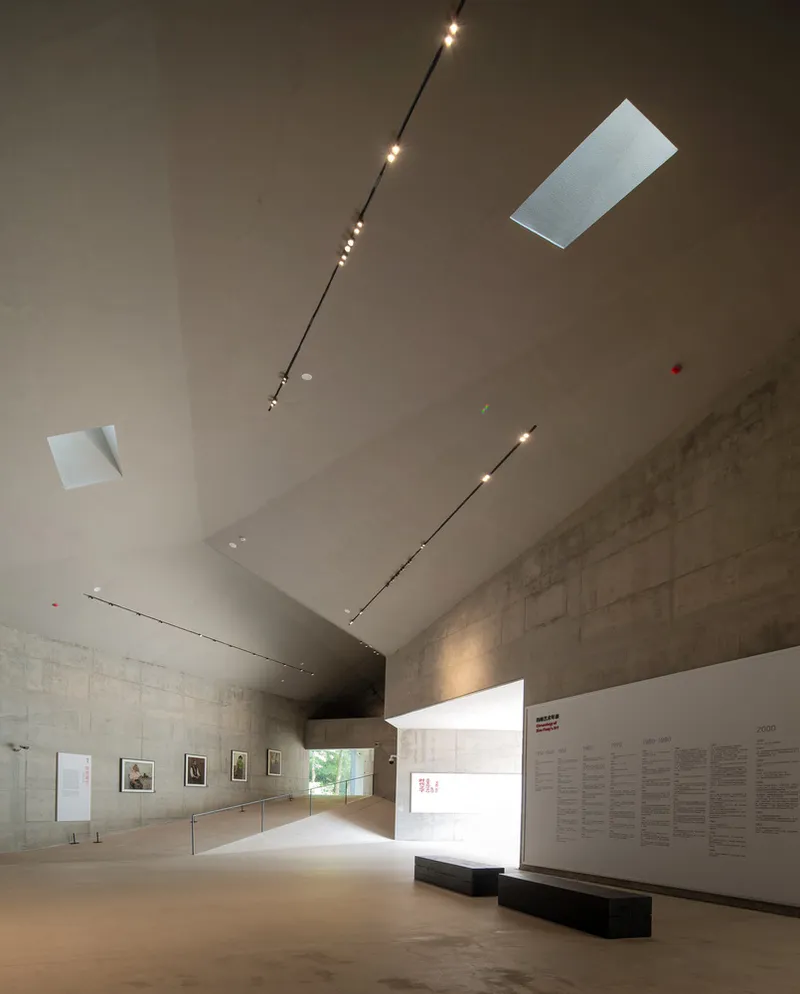
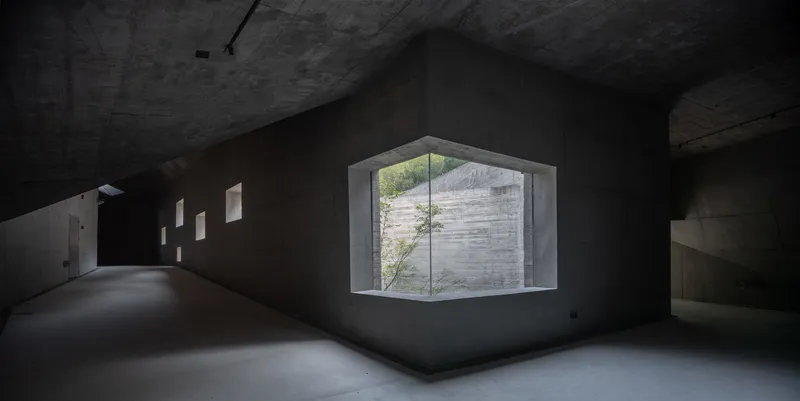
Circulation paths vary in width and height, shifting from narrow, introspective corridors to expansive exhibition volumes. This spatial choreography encourages changing emotional states—quiet immersion, sudden openness, and contemplative pause.
Layered Movement and Perspectives
A series of ramps leads guests across different levels, reinforcing fluid motion and accessibility while offering varied perspectives. Polygonal walls soften the geometry into organic movement, creating subtle shifts of shadow and light across surfaces.
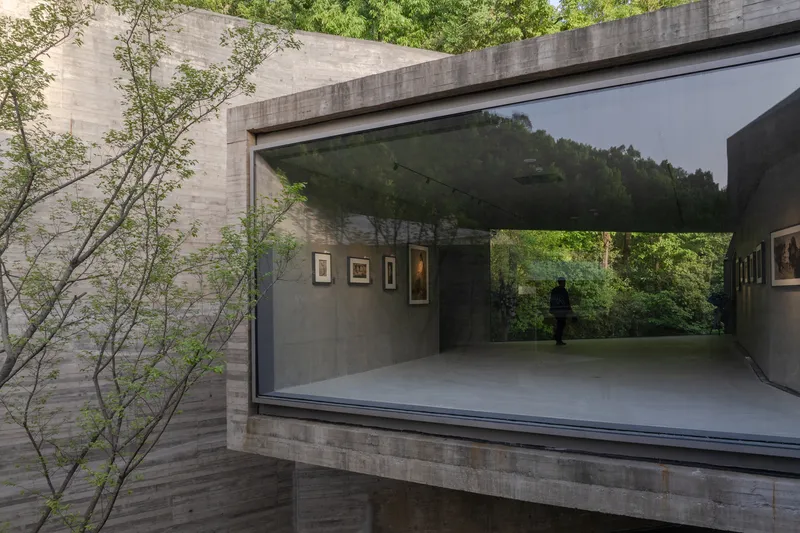
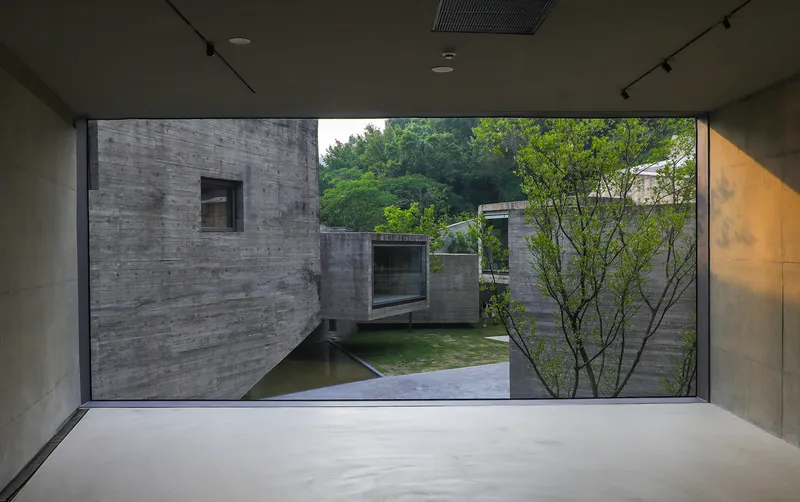
Protruding box-like volumes extend toward the courtyard, opening panoramic frames to mountain and garden views. In select moments, apertures align to allow direct visual connections between interior spaces and the rolling landscape beyond—merging built form with nature’s brushstrokes.
Materiality and Atmosphere
The building’s monolithic presence is defined by hand-cast concrete infused with traditional black ink pigment—a technique that produces a deep, tactile finish reminiscent of ink-wash painting. The material choice pays homage to the artistic legacy of the museum’s subjects while grounding the architecture in elemental simplicity.
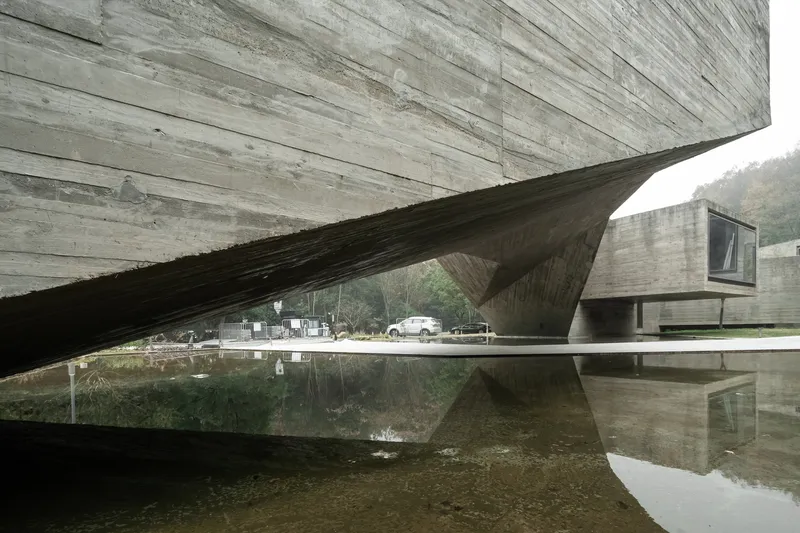
Natural and artificial lighting play a critical role. Gentle daylight grazes textured surfaces, while controlled illumination enhances the visual depth of both art and architecture. At dusk, the museum becomes a luminous lantern—anchoring itself as a contemplative beacon on the mountainside.
An Immersive Dialogue Between Art and Nature
More than a cultural destination, the Xiao Feng Art Museum functions as a serene refuge where architecture, nature, and artistic expression converge. Through its introverted courtyard, fluid spatial flow, and meditative atmosphere, the project embodies a contemporary interpretation of Chinese cultural philosophy—where built space becomes canvas, frame, and sanctuary.
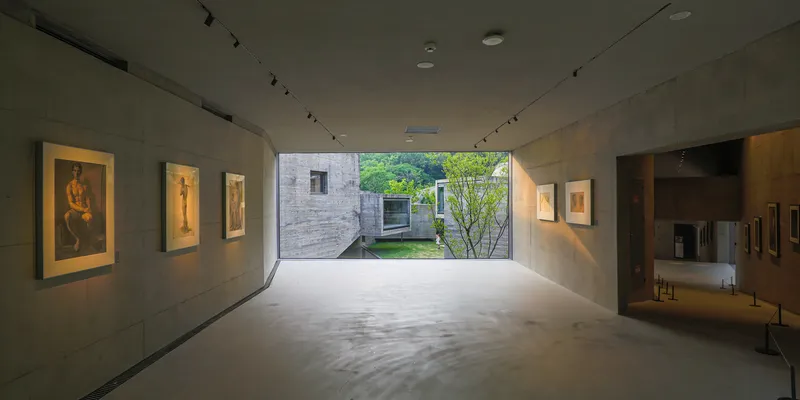
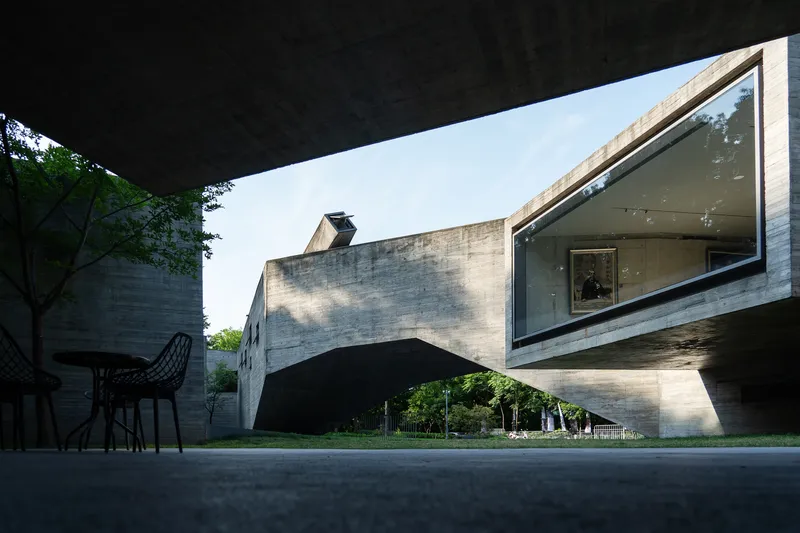
All photographs are works of Sumin, DONG Image, Sheng Yang, Qingshan Wu, Arch Nango



Popular Articles
Popular articles from the community


Hill & Cross Opera: Sculptural Opera House Architecture Shaped by Tallinn’s Landscape and Identity
Hill & Cross Opera reimagines opera house architecture in Tallinn through its sculptural hill, civic plaza, glass wave and a luminous cross.

Co-life: Sustainable Architecture for Age-Friendly Community Living
Co-life reimagines sustainable architecture for seniors through courtyards, rammed earth, shared gardens, and spaces designed for belonging.

Co-Life: Senior Housing Design That Reconnects Older Adults With the City
Co-Life reimagines senior housing design through healing gardens, shared streets, workshops, and a sustainable community across generations.

The Earth Pod: 3D Printed Homes for Resilient Refugee Communities
The Earth Pod reimagines refugee housing through 3D printed homes made from clay, combining resilience, self-sufficiency, and rapid shelter.
Similar Reads
You might also enjoy these articles


Hodi-Mandai Geram
Project Function: Preservation and revitalization of the Intangible heritage and socio-spatial identity of the Hodi by Housing, Cultural Memory Center, Sacred Grove, landscape, local tourism economy


Olio Towers: A Mid-Rise for Performers That Fuses Housing, Rehearsal, and Stage
Located blocks from Houston's Theater District, this modular tower stacks living units around a central performance atrium.

Oasis: Modular Green Housing Carved into Dhaka's Urban Fabric
A shortlisted Plugin Housing entry reclaims unauthorized settlements in Dhaka with stepped concrete volumes, green roofs, and ventilation-driven design.

Black Hole: A Floating Megastructure for the Post-Physical Era
Emiliano Mazzarotto envisions a spherical, self-scaling arena where e-sports, digital hotels, and holographic stadiums replace traditional public space.


Explore Landscape Art Competitions
Discover active competitions in this discipline



Challenge to reimagine the Iron Throne


Photograph architecture without architects


Illustrate the lost glory of Angkor Wat - Render Challenge

Bring back Drive In's
Comments (0)
Please login or sign up to add comments
No comments yet. Be the first to comment!