

Xiazhi Ferry Terminal, Xiazhi Island: Architecture as a Threshold Between Sea and Land
Sculptural ferry terminal on Xiazhi Island blending concrete and glazed ceramic, symbolizing transition, connection, and harmony between sea and land.


Located on Xiazhi Island in Zhejiang Province’s Zhoushan Archipelago, the Xiazhi Ferry Terminal by Atelier Z+ transcends its functional role to become a sculptural symbol of connection—between ocean and land, tradition and modernity, and departure and return. Completed in 2021, the project redefines maritime infrastructure as a poetic and civic space that embodies both geographic and cultural identity.

A Gateway to the Island
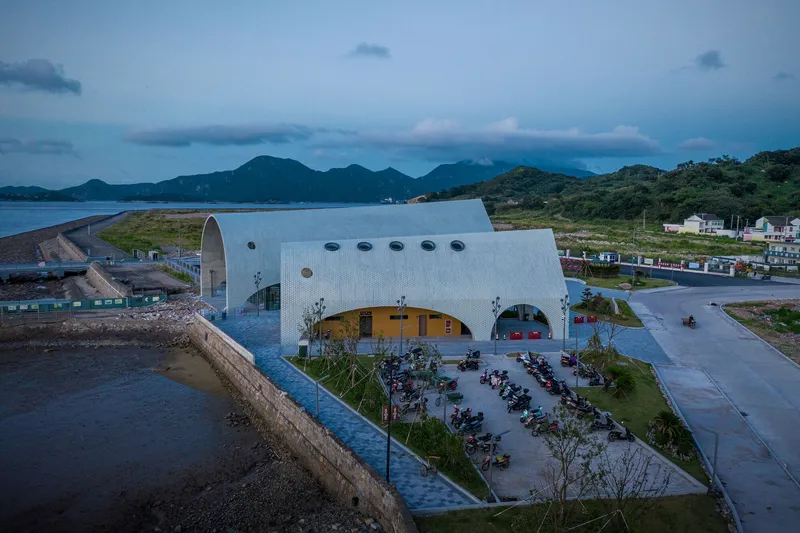
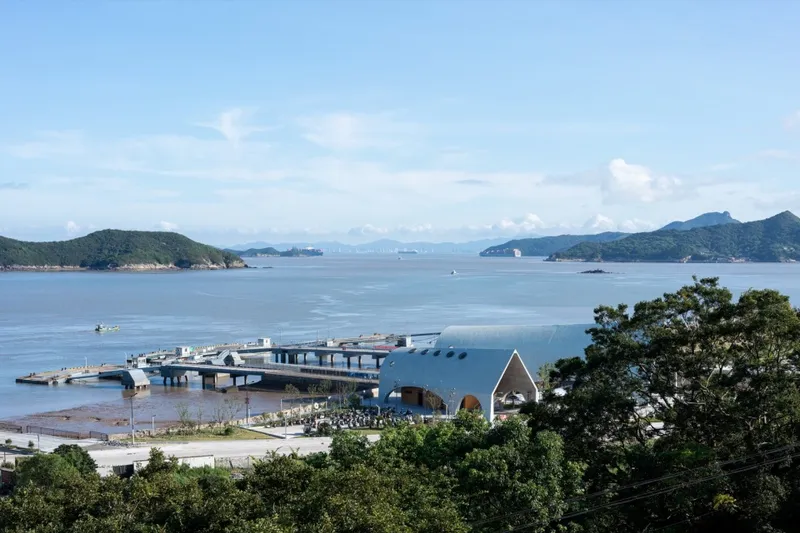
The terminal is situated at Zhapeng Wharf, the northernmost tip of Xiazhi Island’s northwest coastline. The site, shaped like a triangle, lies between a Z-shaped seawall and an S-shaped coastal road, with Zhapeng Village to the south. This natural and man-made geometry guided the architectural approach, influencing both spatial composition and material expression.
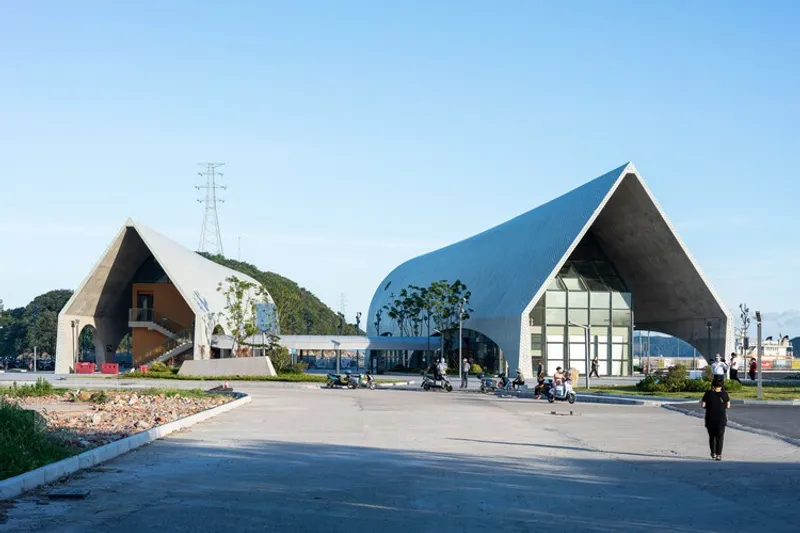
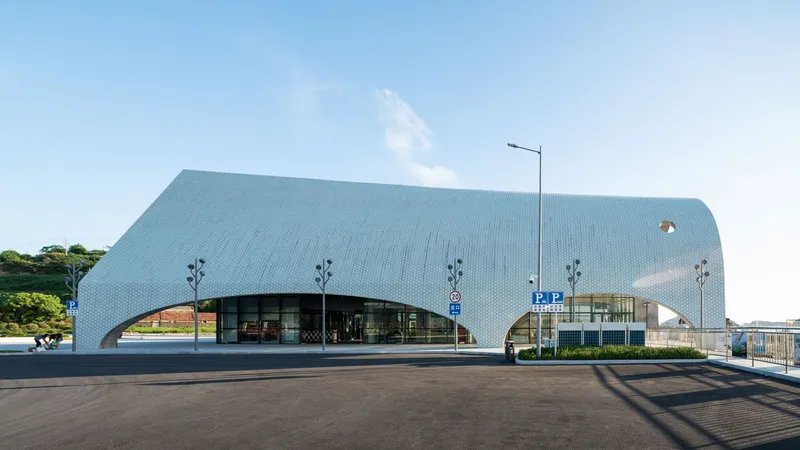
Rather than treating the ferry terminal as a mere point of transit, Atelier Z+ envisioned it as a public landscape—a threshold where local life and oceanic movement converge. The design releases portions of the coastline back to communal use, prioritizing access, gathering, and openness along the waterfront.
Concept: The Ferry as Transition
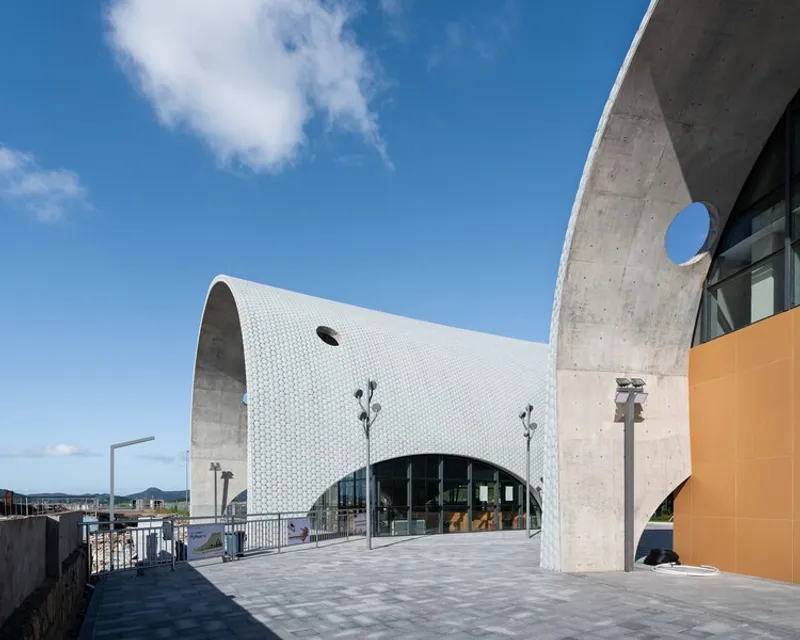
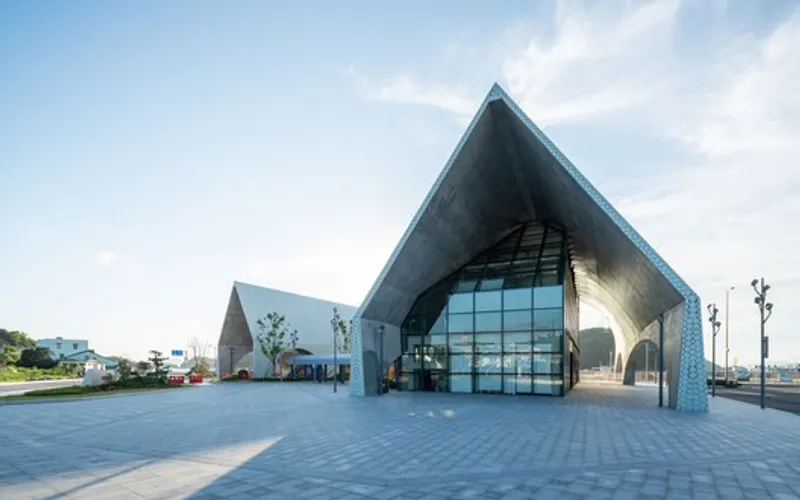
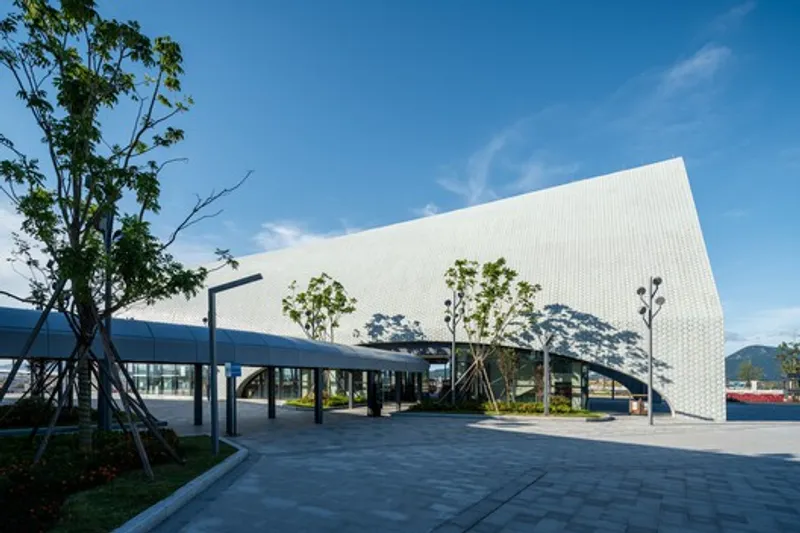
In many coastal cultures, a ferry journey represents not only physical movement but also transformation—a passage between two realms. Inspired by this duality, the architects crafted a composition of two barrel-vaulted concrete shells that intersect gracefully at an angle. These two volumes, balanced in form and scale, echo the topography of the site: one rises like a coastal hill, the other arcs like a tidal wave.
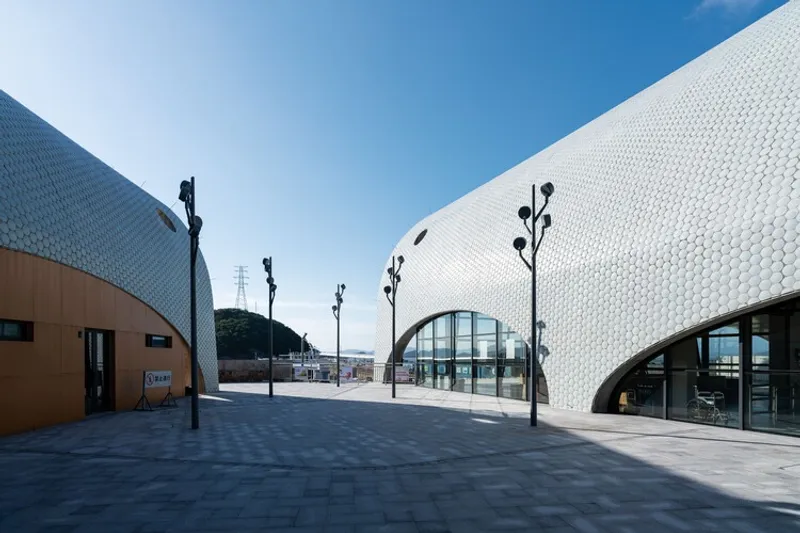
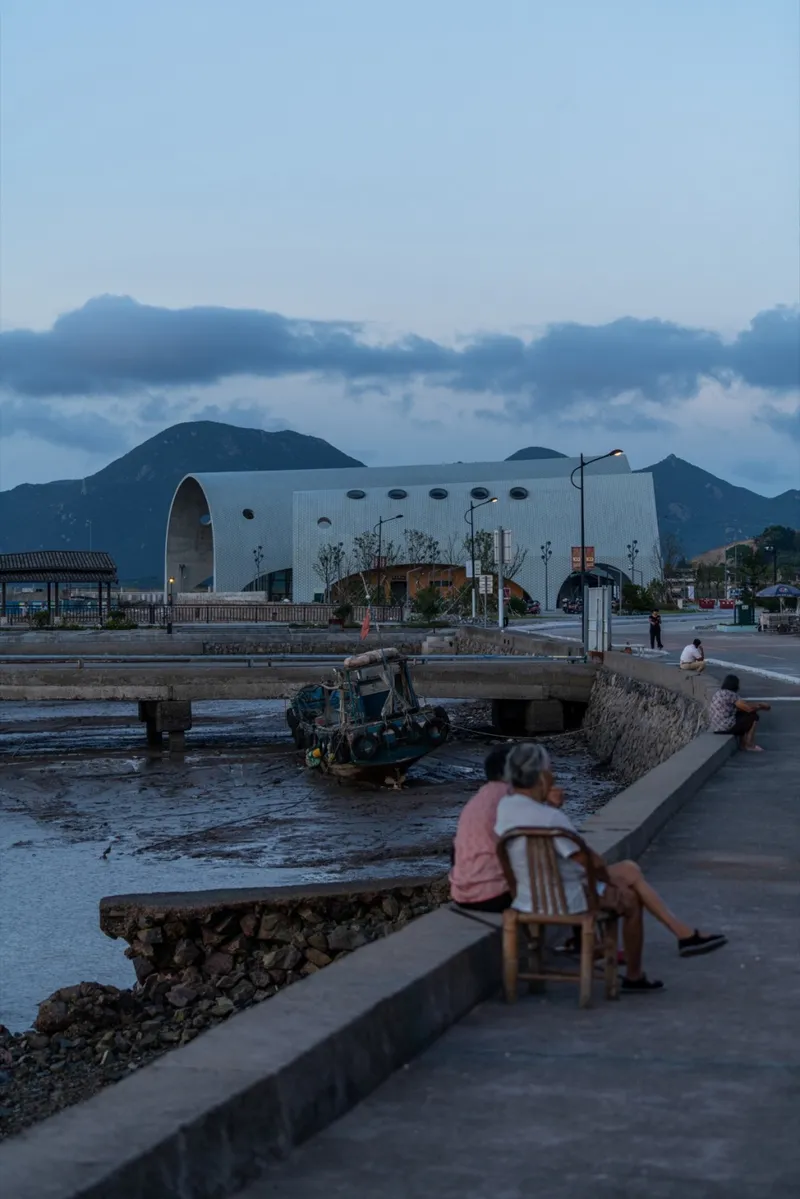
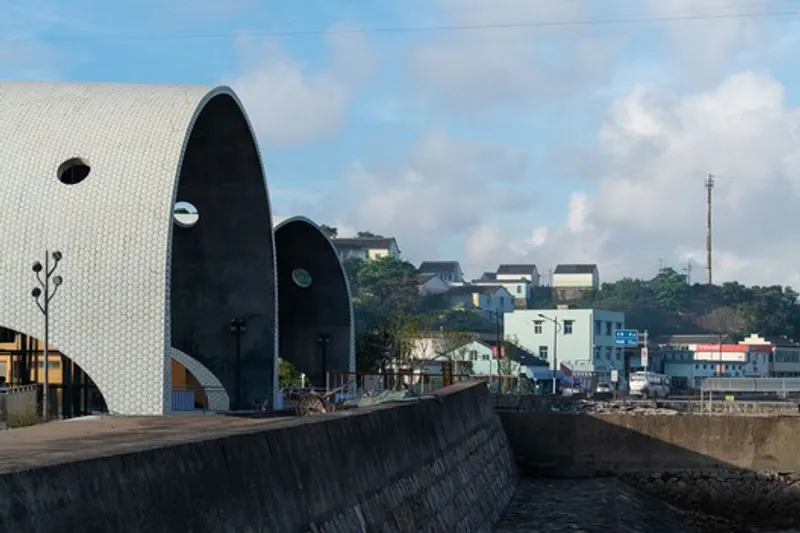
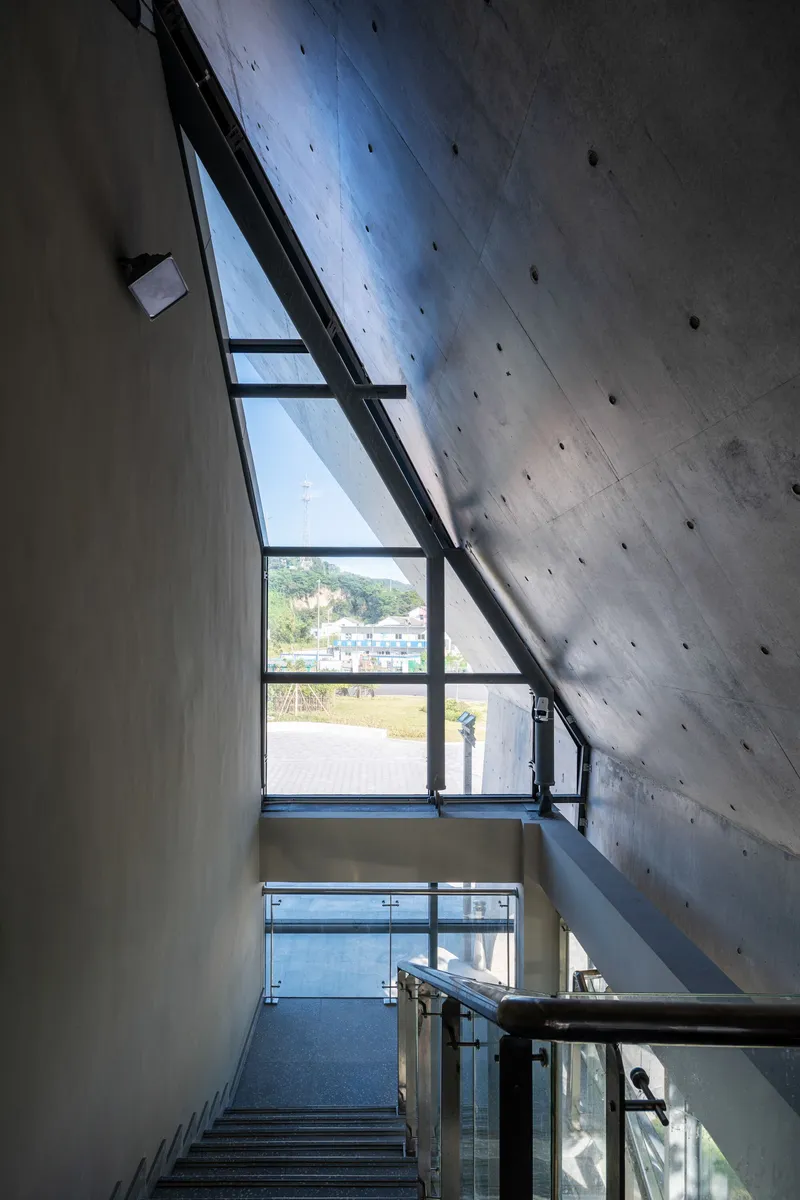
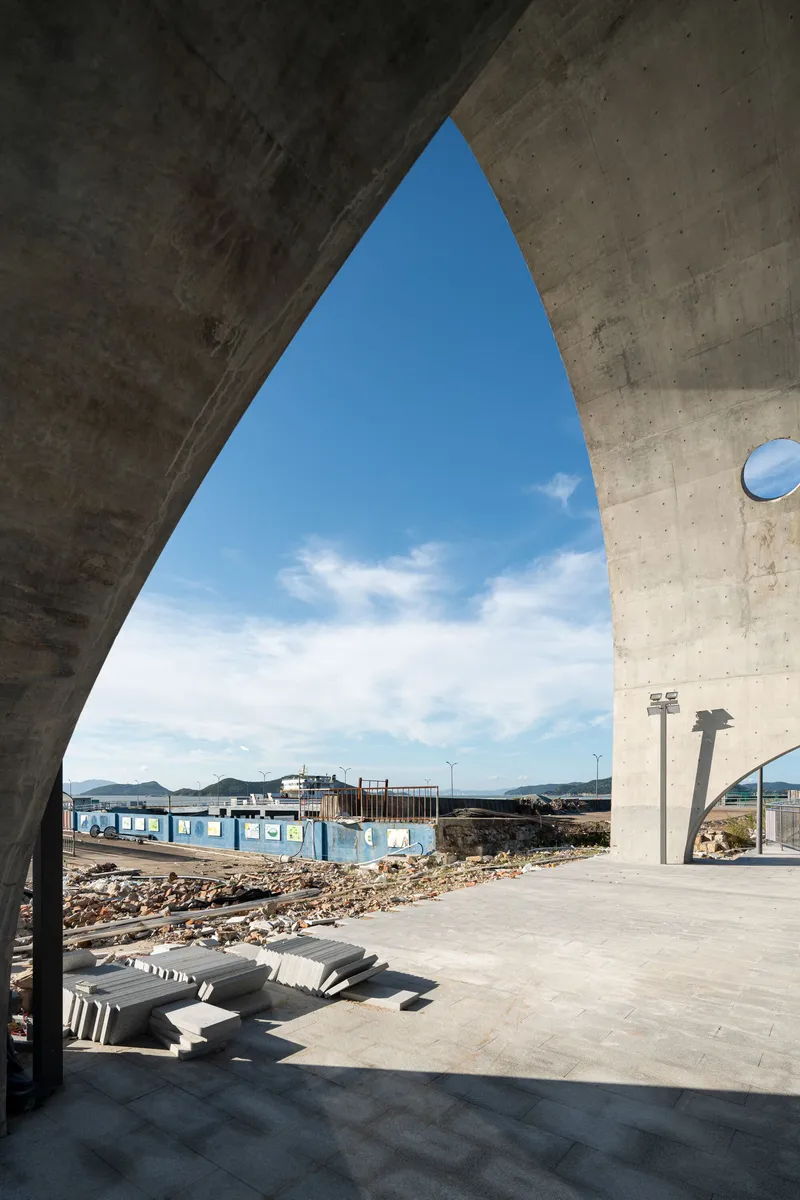
Facing the sea, the shells open as gentle semicircular arches, symbolizing openness and departure. From the island side, they transition into solid triangular roofs, evoking shelter and return. The form thus encapsulates both motion and stability, embodying the central idea of “Ferry as Transition”—a metaphor for continuity between human movement and natural rhythm.

Structure and Spatial Experience
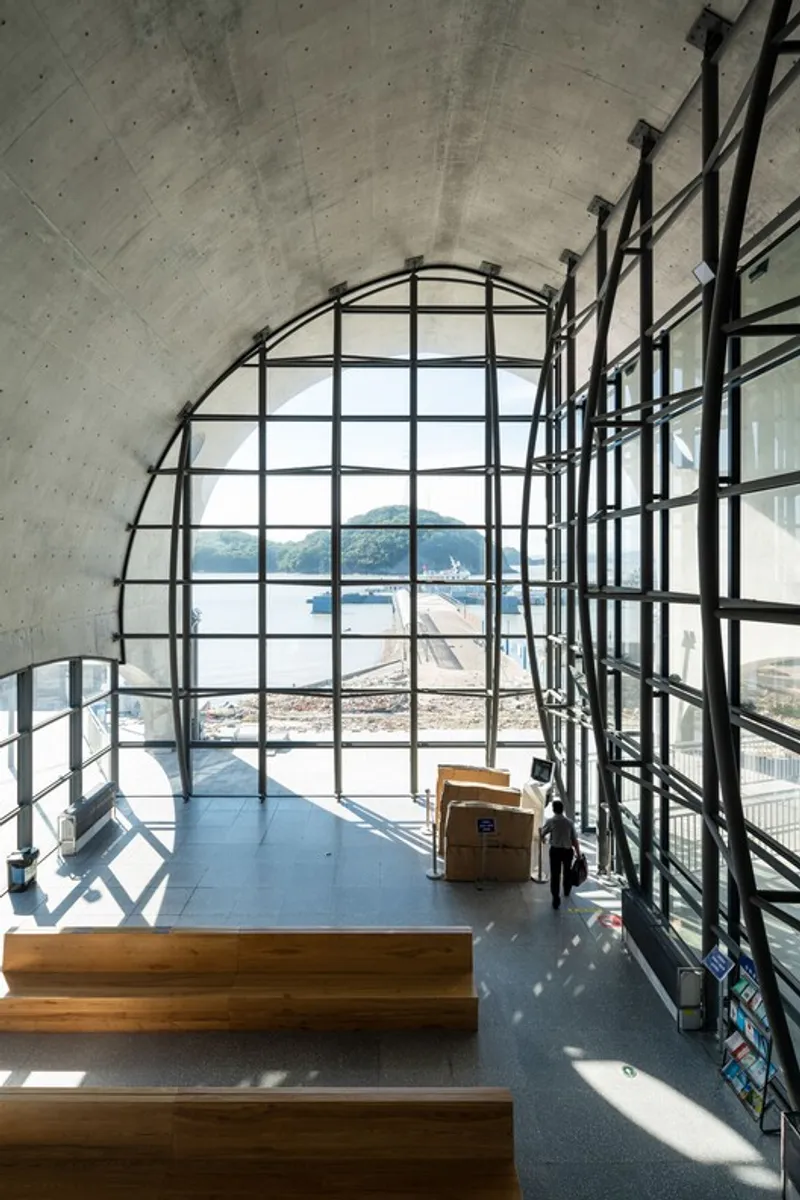
Each shell is a variable-section concrete structure supported by shear walls, with large elliptical openings carved into its surface. These voids allow sunlight and sea breezes to enter freely, transforming the terminal into a luminous, flowing space that connects interior and exterior worlds. Despite its expansive coverage, the structure is held by only six column piers, maintaining both spatial openness and structural equilibrium.
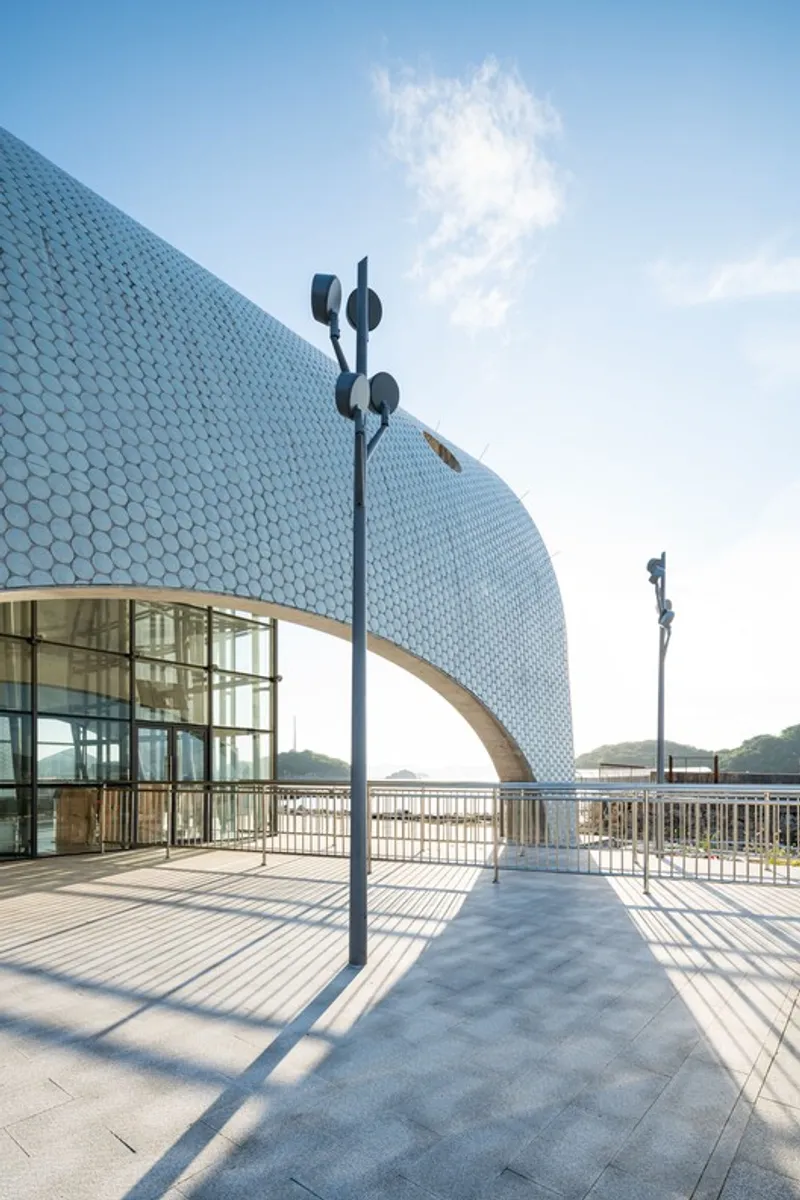
A curved steel-arched corridor links the two shells, forming a sheltered pathway between the ticketing hall and waiting area while preserving visual connection to the surrounding sea and sky. With light filtering through the openings, the terminal’s interior shifts in tone and atmosphere throughout the day, creating an experiential architecture rooted in rhythm and change.

Materiality: Concrete and Glazed Ceramic
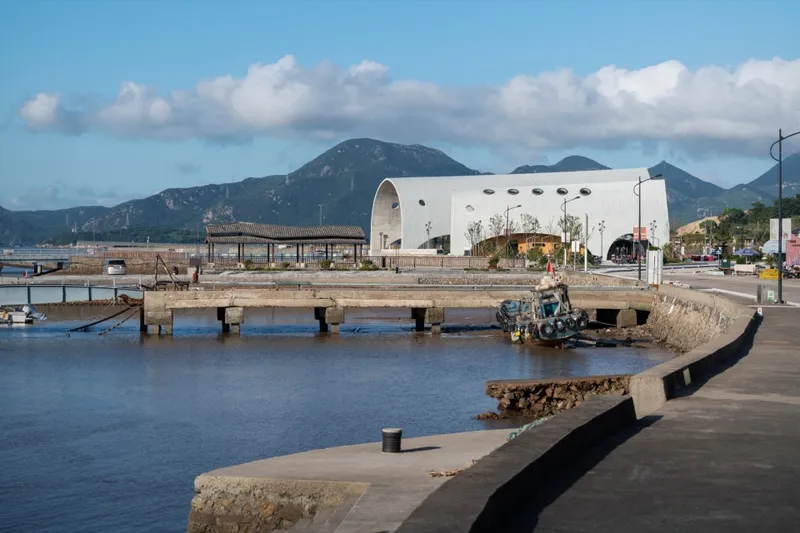
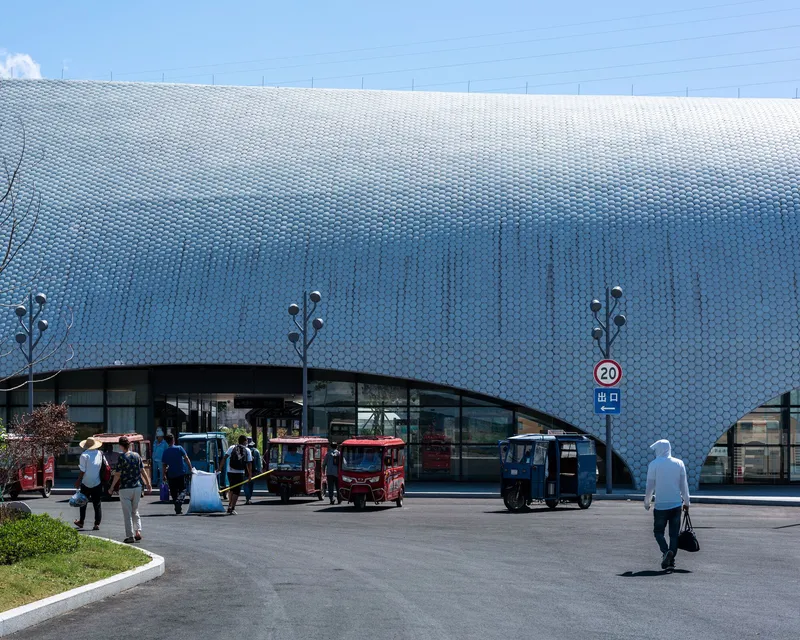
The project’s material language strengthens its dialogue with the site’s seascape. The inner surfaces of the shells are crafted from fair-faced concrete, revealing the raw structural beauty and craftsmanship of the system. In contrast, the outer surfaces are clad in sky-blue glazed ceramic tiles that shimmer like fish scales—a deliberate nod to the island’s fishing culture.
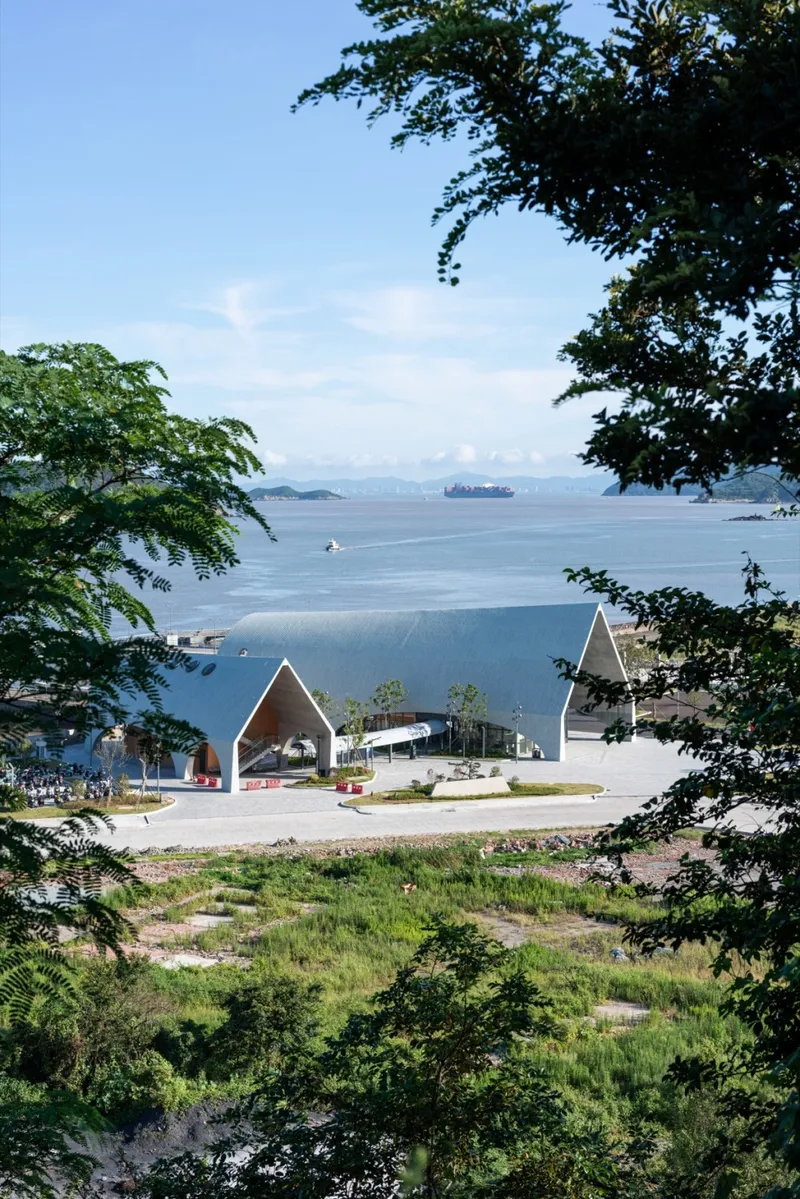
Seen from nearby hills, the terminal’s curved roofs reflect light in soft, liquid tones, visually merging with the surrounding waters. This seamless transition between land and sea defines the building’s identity as an architectural anchor—a structure that belongs equally to nature and to the community it serves.
Reconnecting Heritage and Modernity
Beyond its visual form, the Xiazhi Ferry Terminal embodies a deep respect for the site’s layered history. Portions of the earlier terminal were sustainably reused, and the new design traces the alignment of the lost inward seawall along its eastern boundary. These subtle gestures embed continuity of place, ensuring that modern construction does not erase memory but extends it forward.
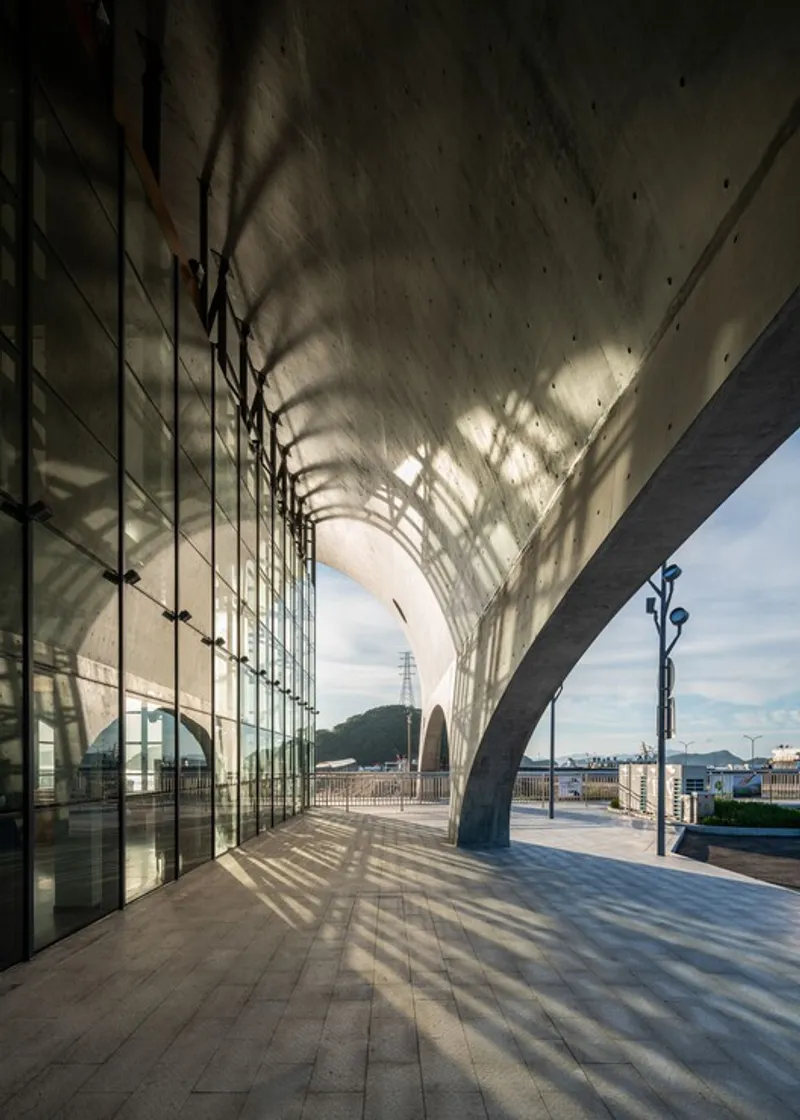
By translating the ordinary act of boarding a ferry into an architectural ritual, Atelier Z+ transforms infrastructure into public art—an expressive interface where movement, belonging, and reflection converge.
A Symbol of Belonging
The Xiazhi Ferry Terminal stands as more than a passenger facility; it is a landmark of shared identity. It speaks to the timeless rhythm of coastal life and the emotional resonance of travel—moments of leaving and coming home. The building’s sculptural form and material sensitivity create a civic gesture that binds community, geography, and memory in one enduring composition.




Popular Articles
Popular articles from the community


The Ocean Hive: Sustainable Architecture for a Self-Sufficient Civilization at Sea
The Ocean Hive imagines sustainable architecture at sea, where modular habitats, algae, wave power and ocean waste sustain a growing colony.

The Musturak Paradise: Senior Living Architecture for a Connected Future in Temara, Morocco
The Musturak Paradise reimagines senior living architecture in Temara via private homes, social spaces, culture, community, and shared care.

AL-JANNAH: Sustainable Architecture and Permaculture for Afghan Widows
AL-JANNAH uses sustainable architecture and permaculture to create resilient oasis of housing, learning, work and renewal for Afghan widows.

The Earth Pod: 3D Printed Homes for Resilient Refugee Communities
The Earth Pod reimagines refugee housing through 3D printed homes made from clay, combining resilience, self-sufficiency, and rapid shelter.

Similar Reads
You might also enjoy these articles


Hodi-Mandai Geram
Project Function: Preservation and revitalization of the Intangible heritage and socio-spatial identity of the Hodi by Housing, Cultural Memory Center, Sacred Grove, landscape, local tourism economy


Olio Towers: A Mid-Rise for Performers That Fuses Housing, Rehearsal, and Stage
Located blocks from Houston's Theater District, this modular tower stacks living units around a central performance atrium.

Oasis: Modular Green Housing Carved into Dhaka's Urban Fabric
A shortlisted Plugin Housing entry reclaims unauthorized settlements in Dhaka with stepped concrete volumes, green roofs, and ventilation-driven design.

Black Hole: A Floating Megastructure for the Post-Physical Era
Emiliano Mazzarotto envisions a spherical, self-scaling arena where e-sports, digital hotels, and holographic stadiums replace traditional public space.


Explore Industrial Building Competitions
Discover active competitions in this discipline



Challenge to reimagine the Iron Throne


Photograph architecture without architects


Illustrate the lost glory of Angkor Wat - Render Challenge


Design challenge to reuse E-waste
Comments (0)
Please login or sign up to add comments
No comments yet. Be the first to comment!