

Xingcheng Exhibition Garden by Archermit: A Poetic Interpretation of Western Sichuan Gardens
Xingcheng Exhibition Garden in Chengdu blends Western Sichuan garden traditions, bamboo-lotus architecture, and poetic indoor-outdoor spaces reflecting cultural elegance.


The Xingcheng Exhibition Garden, designed by Archermit, is a masterful reinterpretation of the Western Sichuan garden tradition, seamlessly blending cultural symbolism, natural landscapes, and architectural elegance. Rooted in the rich cultural system of Western Sichuan, the garden reflects the profound understanding of nature, humanity, and living spaces that defines this region. Through this design, the architects convey the artistic sensibilities of Chengdu’s inhabitants and their concept of “poetic dwelling.”
Architecture as a Scenic Feature
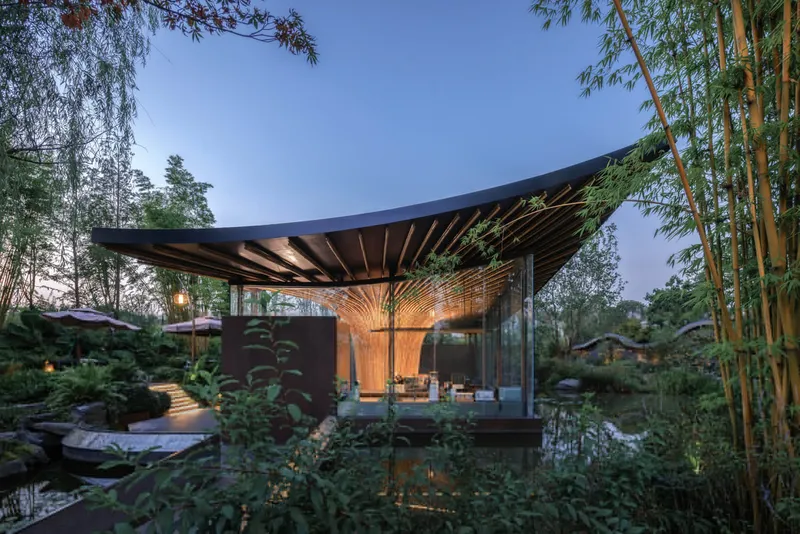
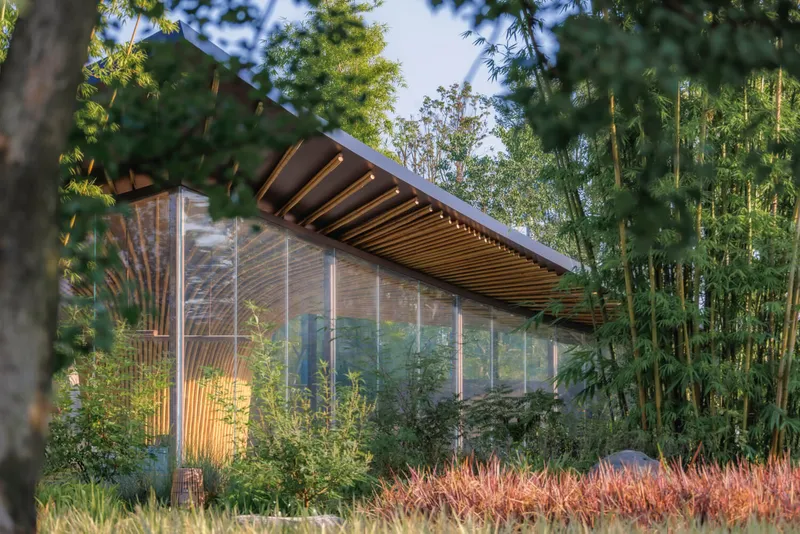
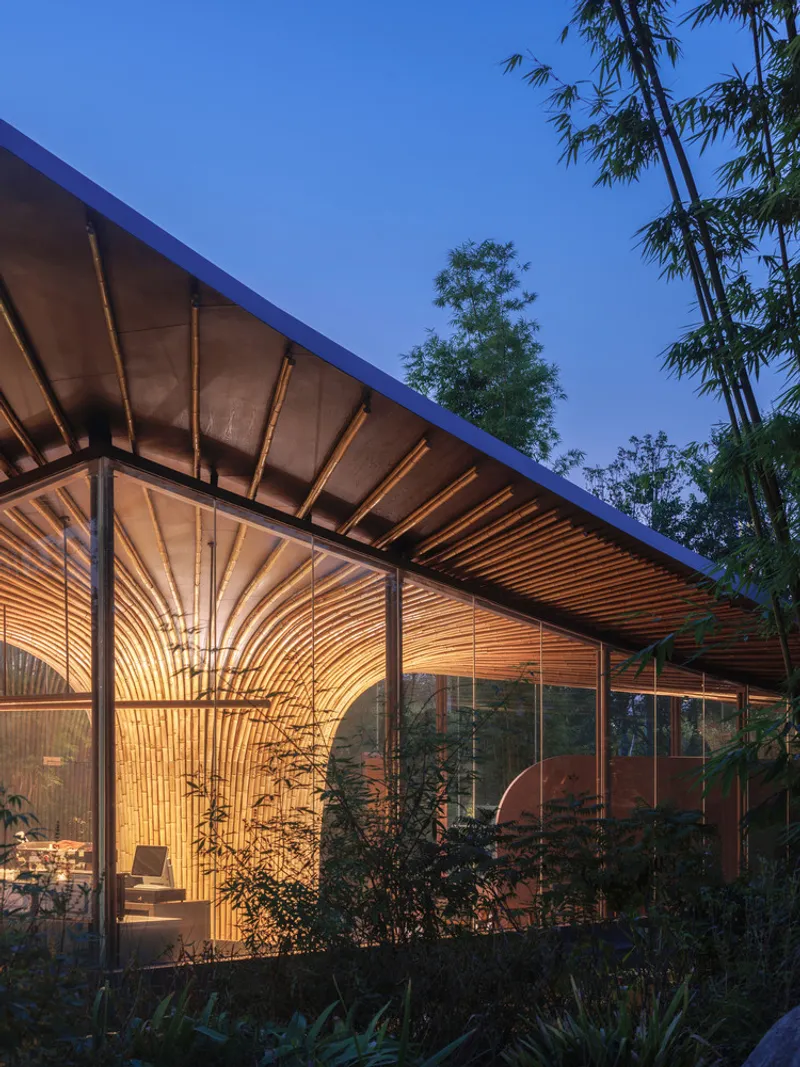
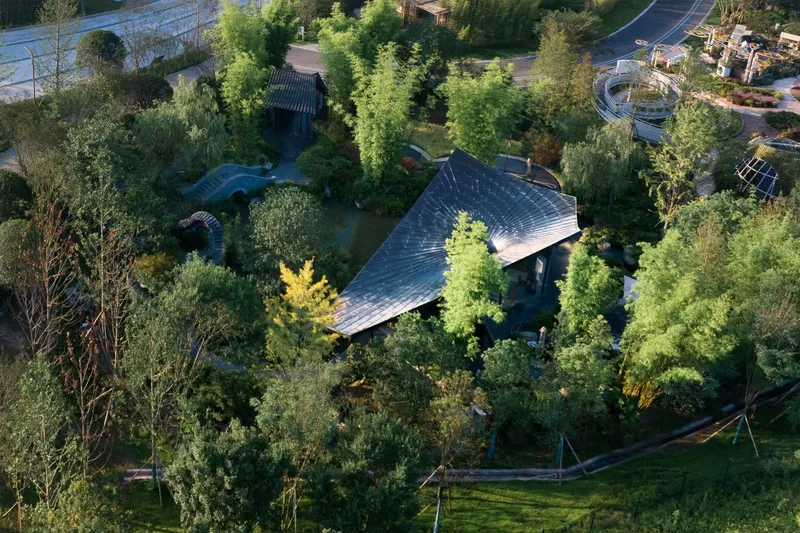
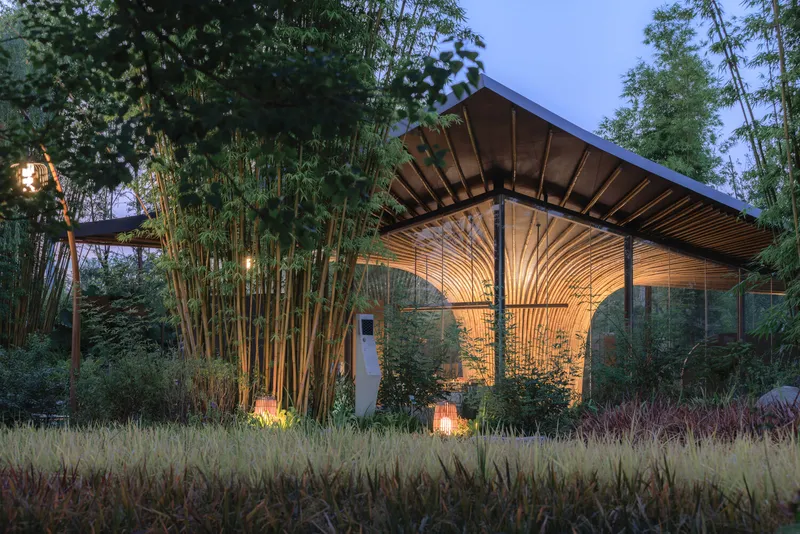
The garden follows the garden-first design principle, where architecture becomes an integral part of the scenic landscape rather than a standalone structure. The main building emerges as a light, transparent, and elegant centerpiece, accentuating the surrounding natural environment. Traditional landscape elements of Western Sichuan gardens, such as bamboo forests and lotus ponds, are thoughtfully incorporated to establish a harmonious and visually poetic setting.
The Lotus Leaf Pavilion, Symbolism and Form
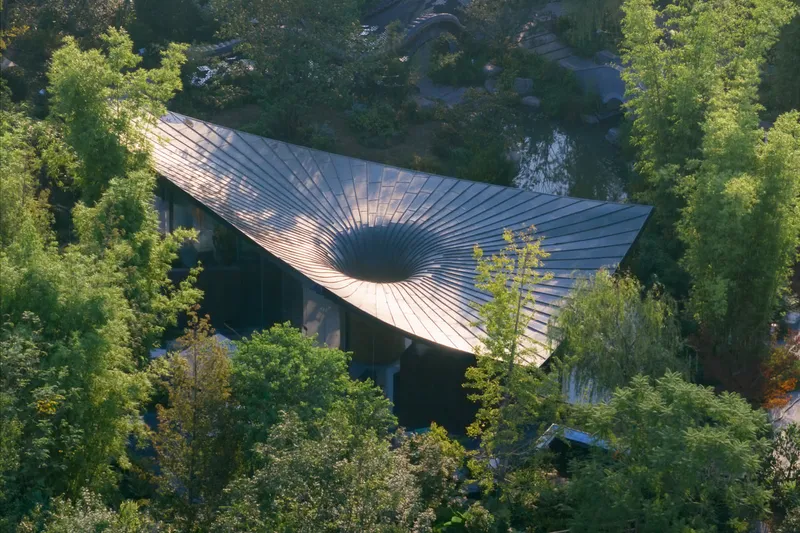
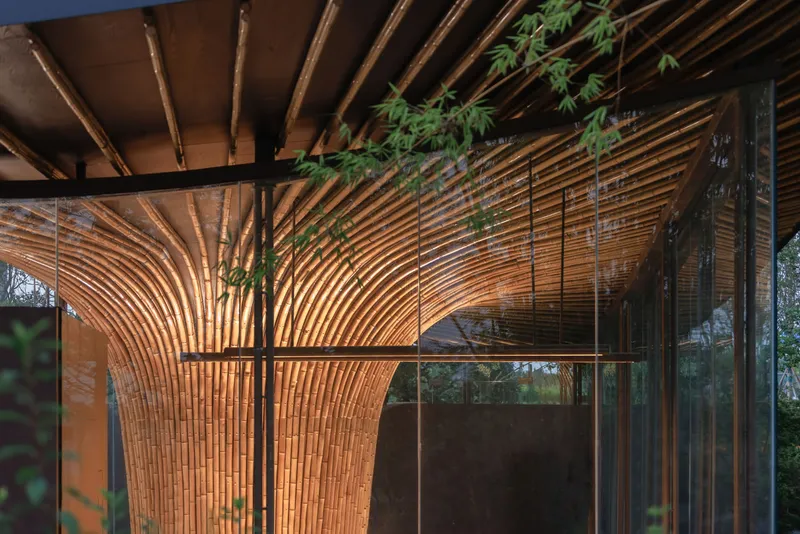
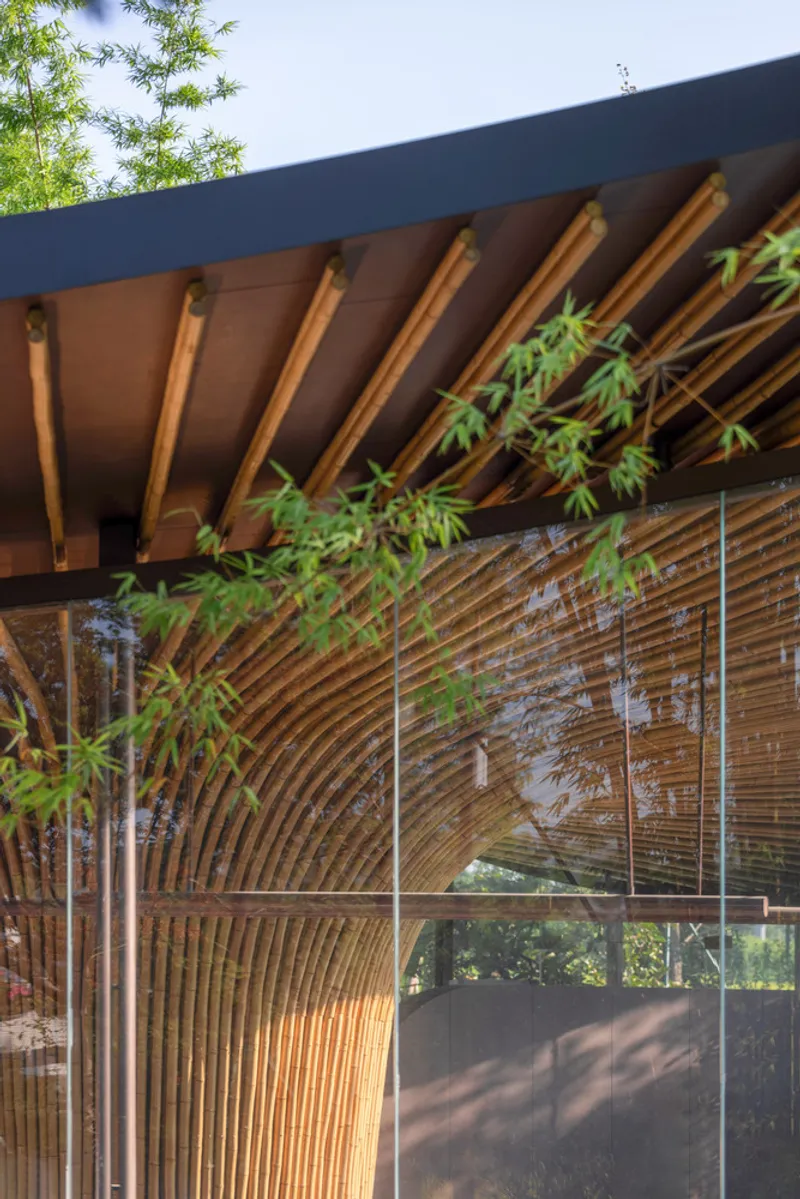
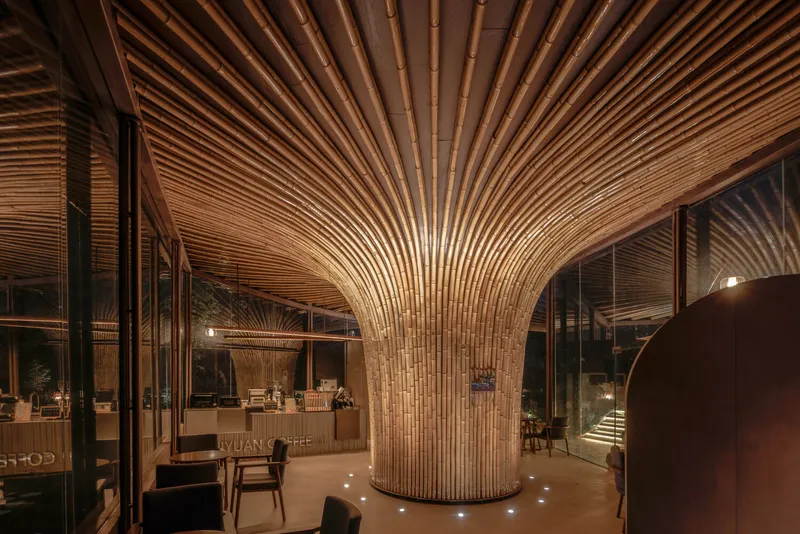
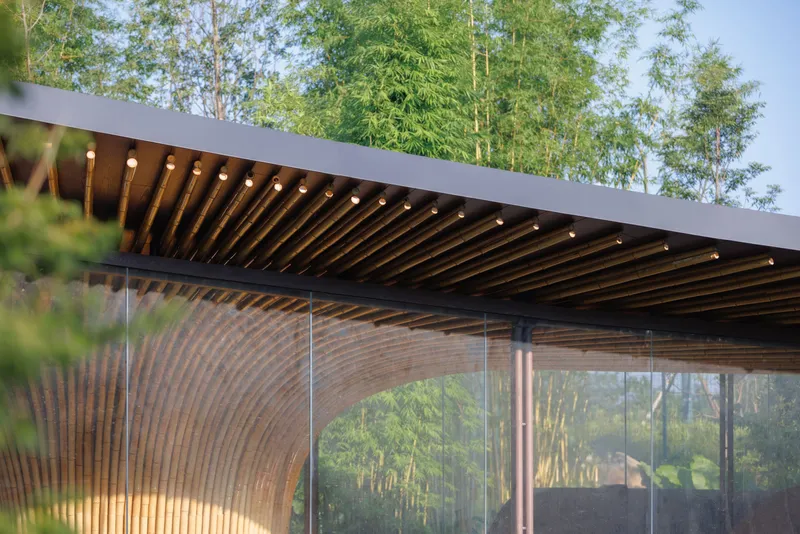
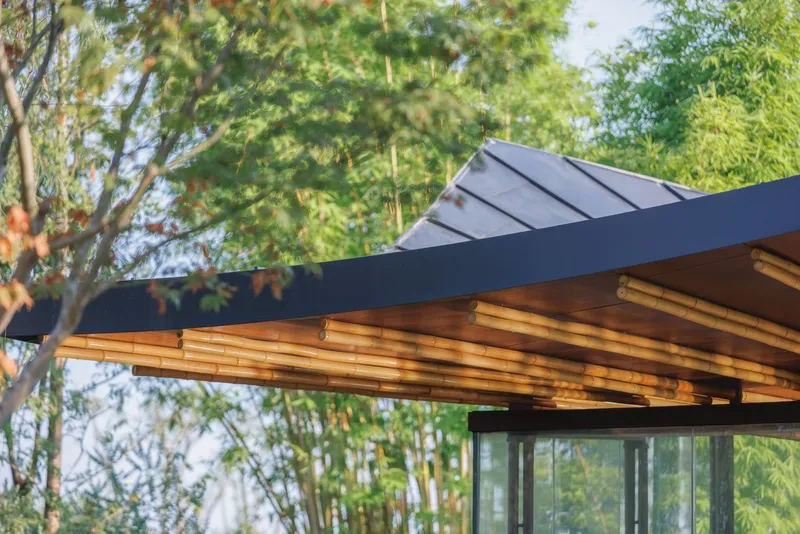
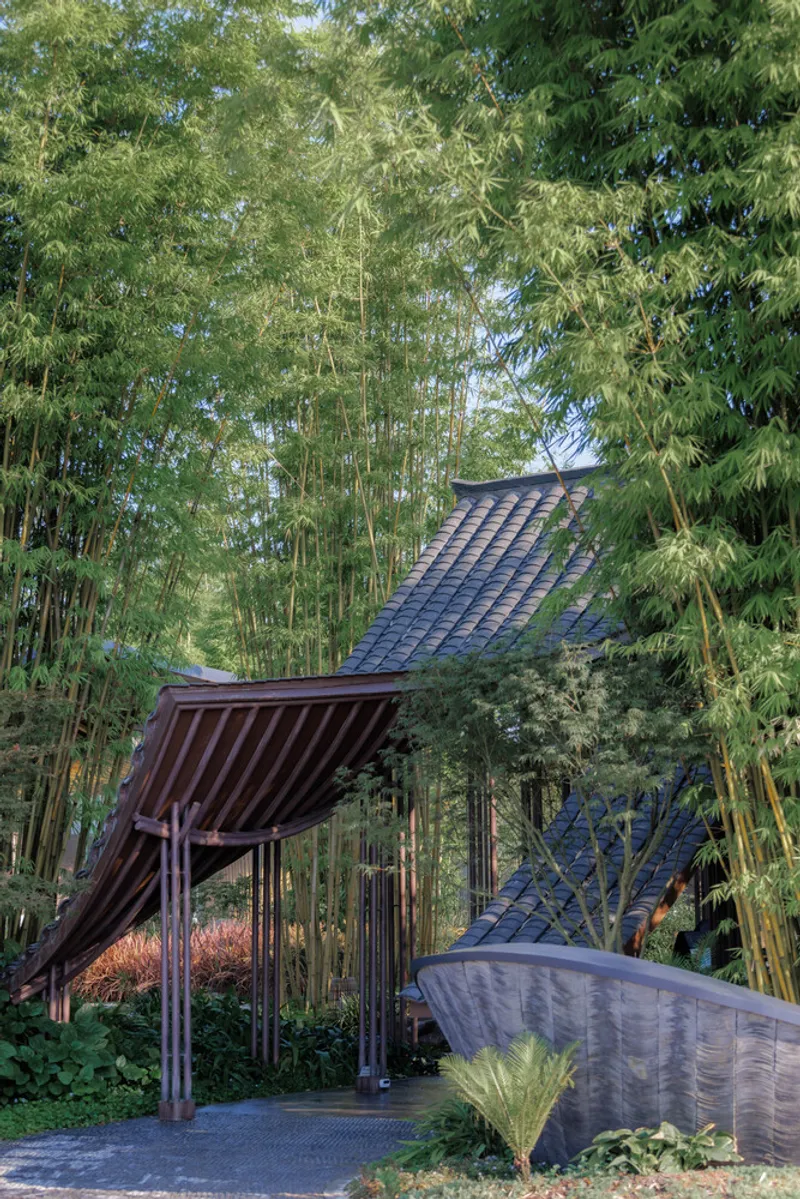
The exhibition hall, inspired by the lotus leaf, sits delicately above a reflective pool. Bamboo clusters beneath spread outward, with their vertical poles echoing the veins of the lotus leaf above. The pavilion’s curved roof draws inspiration from Western Sichuan folk houses, reflecting their sloping roofs, long eaves, and delicate green tiles, but expressed in a contemporary, abstract form.
To heighten its dramatic and romantic character, the center of the lotus leaf roof is hollowed, transforming it into a large-scale rainwater collector. This design element not only responds to the Expo theme but also serves as a functional art installation, blending environmental consciousness with aesthetic innovation.
Seamless Indoor-Outdoor Experience
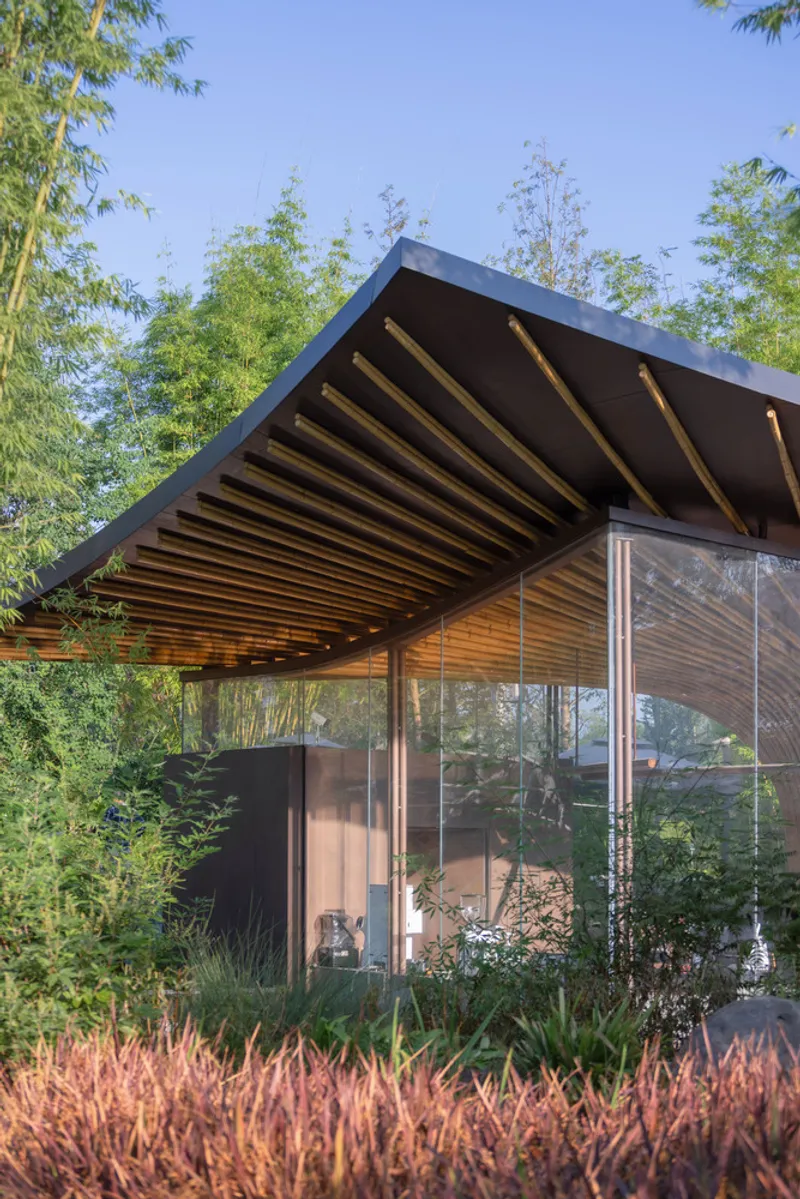
The exhibition hall’s sunken floor, recessed by 0.6 meters, allows visitors to experience a subtle shift in perspective. From seated positions, the water level of the pond aligns with the viewer’s line of sight, merging sky and water into a continuous reflective surface. Inside and outside spaces are intertwined, with forests, fields, and water features integrated throughout the pavilion. This thoughtful layout encourages visitors to fully immerse themselves in the natural and cultural landscape of Western Sichuan.
Bamboo, A Cultural and Material Exploration
Since 2018, Archermit has conducted extensive research on bamboo architecture and its cultural significance. Initially planned as a hybrid bamboo structure combining laminated and raw bamboo, practical considerations led to a steel framework complemented by raw bamboo decorations. Despite this adaptation, the pavilion maintains the essence of bamboo’s lightness, flexibility, and symbolic resonance in Chinese culture.
Spiritual and Cultural Significance
Western Sichuan gardens often carry deep spiritual and commemorative meanings beyond their leisure and aesthetic functions. The Bamboo Lotus Pavilion serves not only as an exhibition space but also as a medium to convey cultural symbolism. Visitors are invited to reflect on the interconnectedness of nature, art, and human experience, awakening a shared cultural sensibility unique to Chinese heritage.
All photographs are works of
Arch-Exist Photography


Popular Articles
Popular articles from the community


David Ortega Stacks a Two-Story Mexico City Penthouse Around a Steel Stair and a Pergola-Shaded Roof Terrace
In Colonia Roma, a 300 m² penthouse uses oak joinery, a planted steel stair and a slatted roof pergola to make a new-build apartment feel like a house.


Aquadapt: An Underwater Habitat That Rewrites Its Rooms by the Hour
Curved modules ring the seabed while one shell shifts from breakfast room to cinema, farm and football pitch as residents' needs change.

Opera on the Sea: Driftwood Logic Shapes a Timber Opera House on Estonia's Coast
Trevor Orgill's opera house translates the entangled drift of floating timber into a civic building where wood, water, and music converge.

The Amber Palace Opera: A Geological Fiction Surfaces on Tallinn's Baltic Waterfront
Pierre Brillard reimagines a Baltic legend as a public landscape, opera house, and waterfront promenade rooted in Tallinn's coastal identity.

Similar Reads
You might also enjoy these articles


Hodi-Mandai Geram
Project Function: Preservation and revitalization of the Intangible heritage and socio-spatial identity of the Hodi by Housing, Cultural Memory Center, Sacred Grove, landscape, local tourism economy


Olio Towers: A Mid-Rise for Performers That Fuses Housing, Rehearsal, and Stage
Located blocks from Houston's Theater District, this modular tower stacks living units around a central performance atrium.

Oasis: Modular Green Housing Carved into Dhaka's Urban Fabric
A shortlisted Plugin Housing entry reclaims unauthorized settlements in Dhaka with stepped concrete volumes, green roofs, and ventilation-driven design.

Black Hole: A Floating Megastructure for the Post-Physical Era
Emiliano Mazzarotto envisions a spherical, self-scaling arena where e-sports, digital hotels, and holographic stadiums replace traditional public space.

Explore Chinese Small Scale Architecture Competitions
Discover active competitions in this discipline

Challenge to reimagine the Iron Throne

Photograph architecture without architects

Illustrate the lost glory of Angkor Wat - Render Challenge

Design challenge to reuse E-waste
Comments (0)
Please login or sign up to add comments
No comments yet. Be the first to comment!