

Xuebei Home: Rebuilding Heritage and Identity in Huizhou’s Urban Villages
A compact ancestral home rebuilt with honest materials, micro-landscapes, and cultural references, creating a breathing, contemporary refuge within Huizhou’s dense urban village.


Reimagining Ancestral Memory in a Dense Urban Context
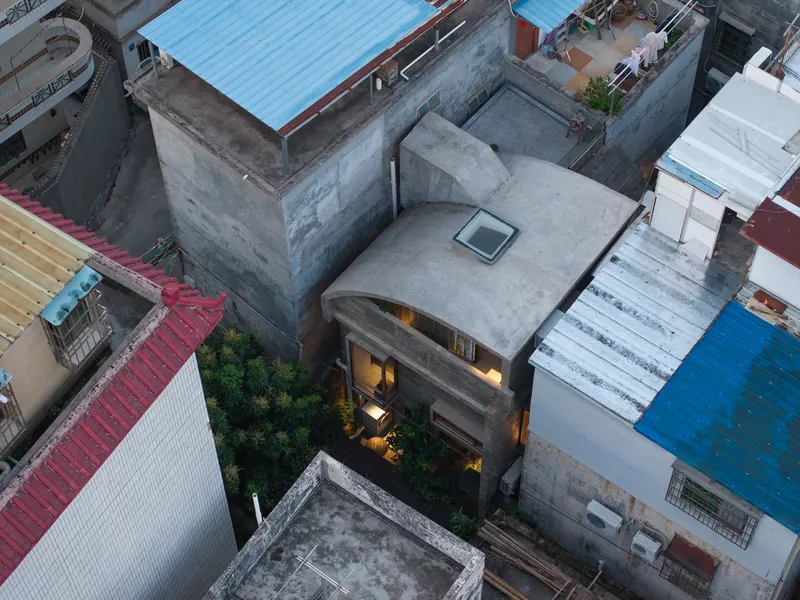
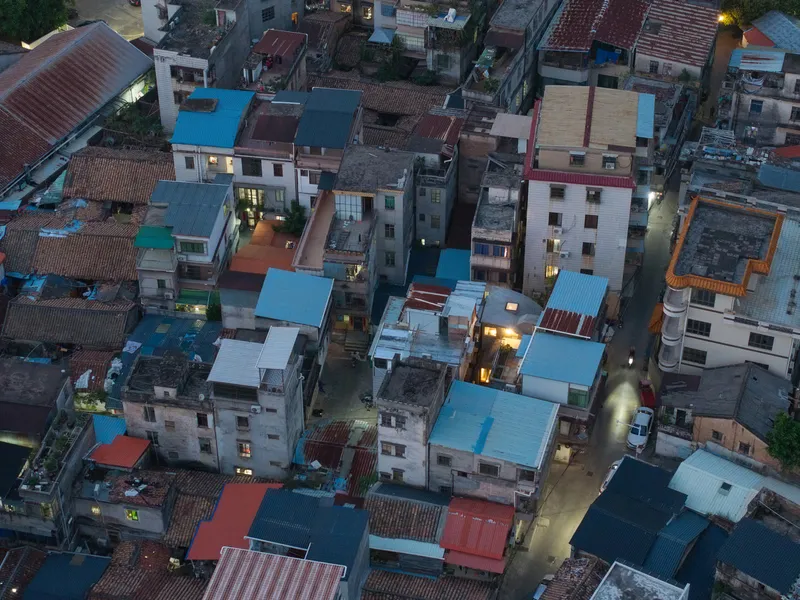
Xuebei Home by Republic Construction Architecture Studio is a thoughtful reconstruction of a collapsed 44-square-meter ancestral house in Qiaodong, an old urban village in Huizhou, China. Completed in 2025 with a total built area of 116 m², the project investigates how architecture can revive family heritage, respond to the Lingnan climate, and navigate the challenges of compact neighborhoods. Through a careful dialogue between material honesty and cultural continuity, the design establishes a renewed spiritual anchor for a family while providing a prototype for micro-scale urban regeneration.
Architecture as a Response to Memory, Climate, and Community
In high-density urban villages, buildings often grow haphazardly, resulting in enclosed spaces, poor ventilation, and weakened community ties. Xuebei Home counters these tendencies with a design strategy rooted in regional sensitivity and cultural empathy. The architects explore how spatial gestures—such as open frames, layered thresholds, micro-landscapes, and breathing structures—can restore a sense of place in an environment dominated by urgency and density.
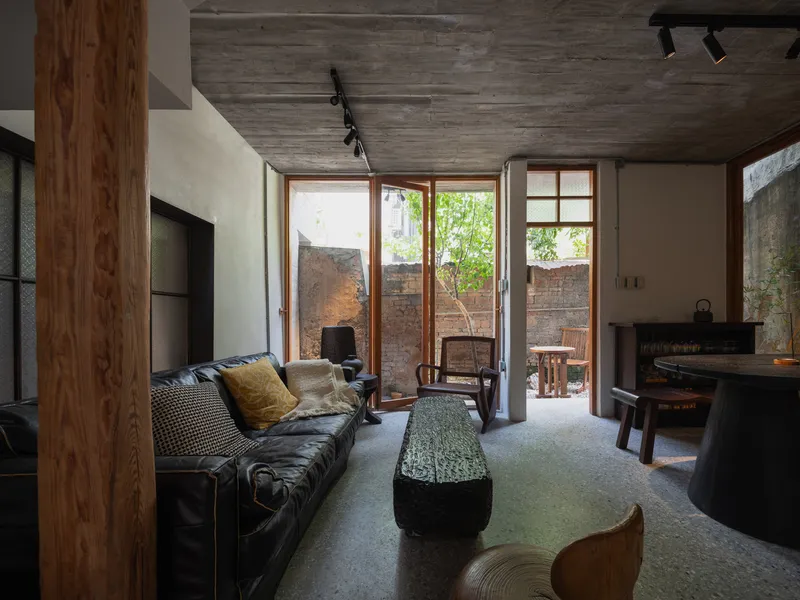
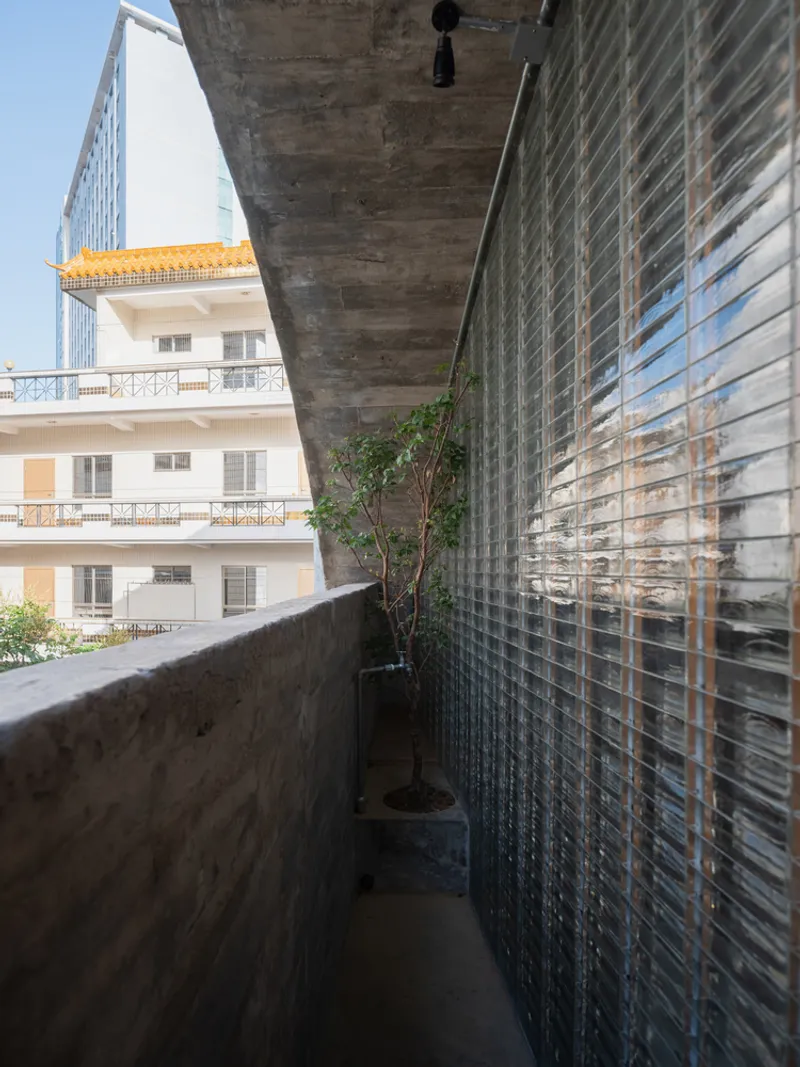
The reconstruction honors the family’s emotional connection to the site while respecting the rhythms of the local climate. Large openings, shaded outdoor spaces, natural cross-ventilation, and a soft material palette create a home that breathes with its surroundings rather than resisting them.

Design Strategies: Fragmented Time, Framed Landscapes, and Material Honesty
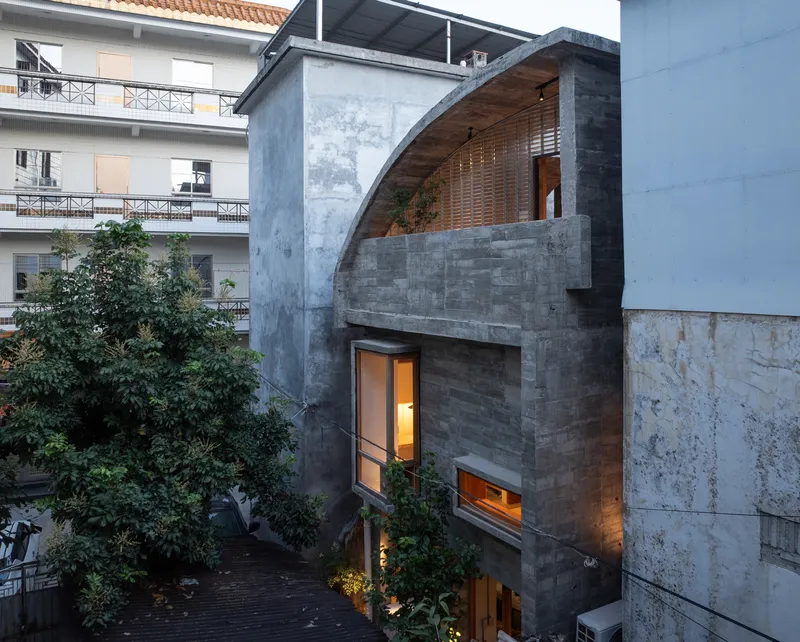
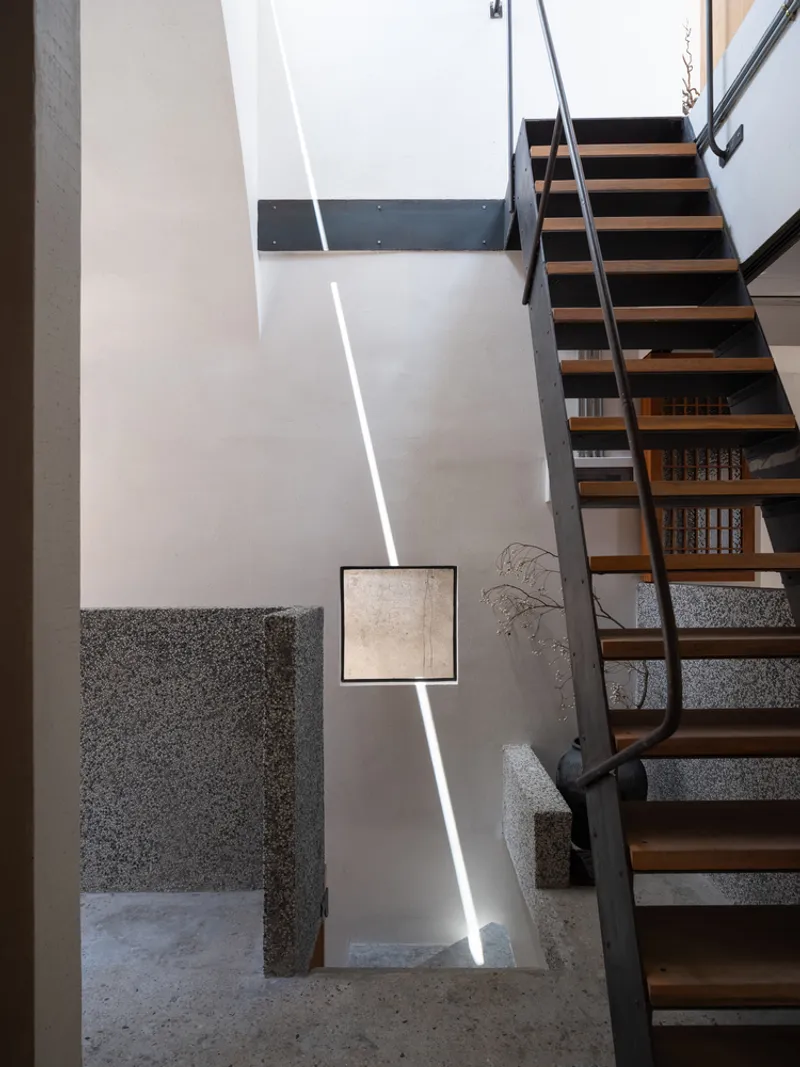
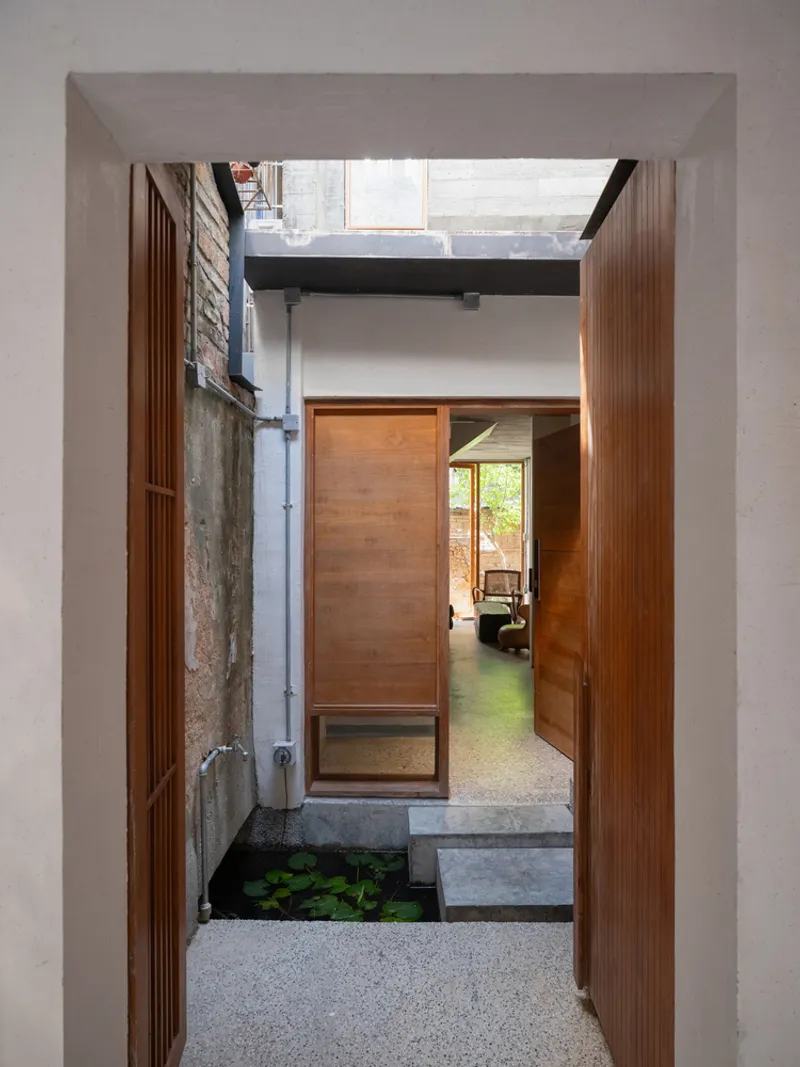
The project employs four core strategies to rethink the limitations of the site. “Fragmented time” appears in the small transitions—narrow passages, stair landings, and framed windows—that slow the pace of movement and create moments of reflection. “Framed micro-landscapes” turn tight interior views into curated scenes, connecting the occupants with sky, neighbors, and greenery. “Breathing structures” integrate porous materials, light wells, and open beams to enhance airflow. “Material honesty” preserves the tactile presence of concrete, wood, and brick, grounding the home in the memory of its former structure.
These elements collectively resist the typical closed-off nature of urban village construction, instead proposing an open, gentle, and human-centered approach.
Reinterpreting Traditional Prototypes with Contemporary Sensitivity
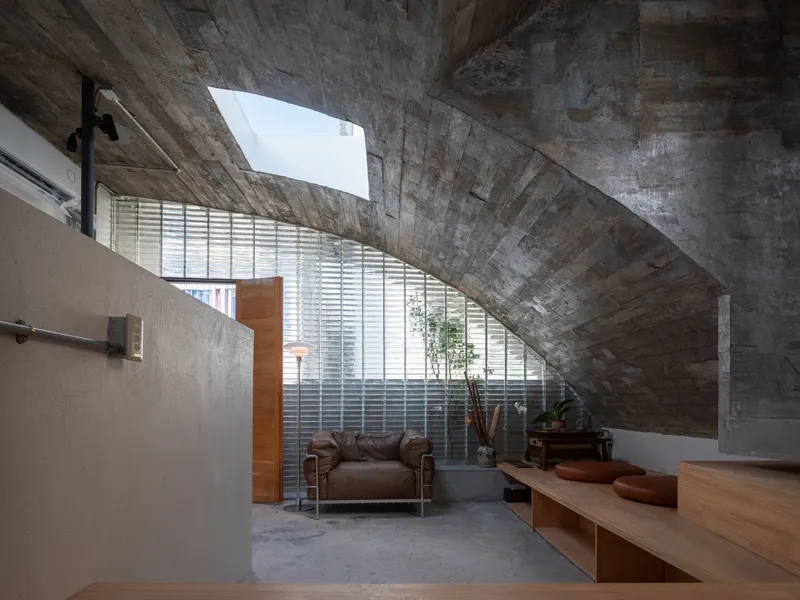
Xuebei Home is rooted in historical spatial archetypes familiar to southern China. Prototypes such as ladders, barns, central columns, and garden pools are not simply replicated but abstracted and reimagined in modern architectural language. The design preserves sections of the old masonry walls as emotional and structural anchors. A curved roof softens the compression typically felt in narrow village plots, allowing daylight to bounce deeper into the interior.
A miniature garden pool reminiscent of traditional courtyard living creates a serene grounding element—a quiet counterpoint to the compact surroundings of the urban village. It reconnects the home to natural cycles and introduces a subtle meditative quality to everyday routines.
Crafting a Cultural Homeland in a Compact Space
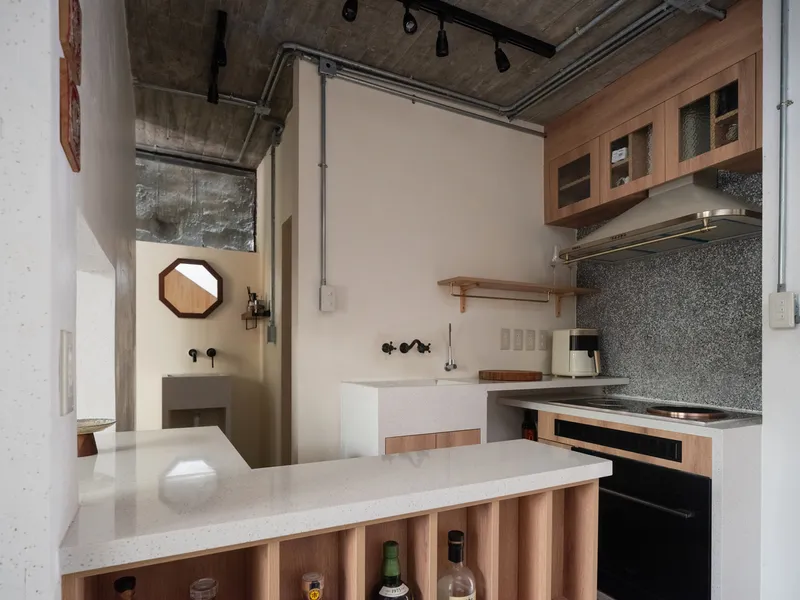
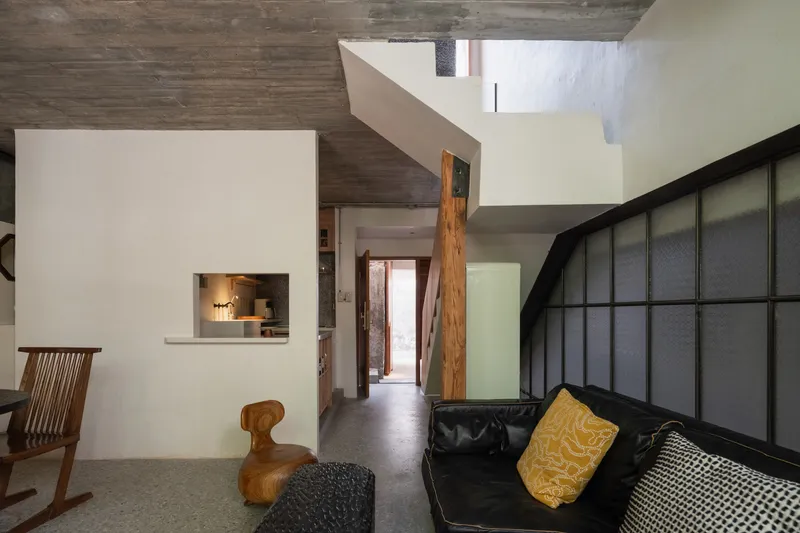
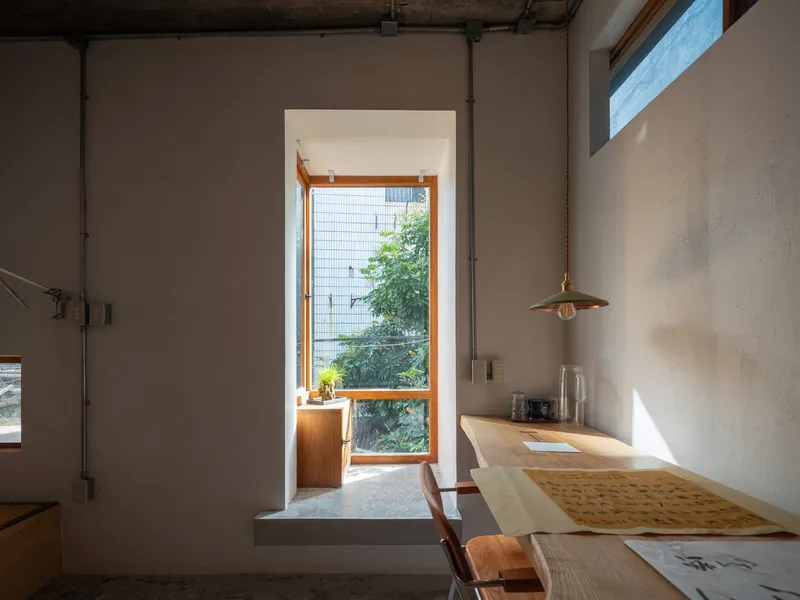
Inside the modest footprint, the architects create a multi-layered spatial world where daily life and cultural memory intersect. Timber beams, exposed brick, carefully curated lighting, and tactile materials evoke the spirit of the old dwelling while supporting modern living patterns. The staircase becomes a sculptural spine, linking vertical layers of living, contemplation, and rest.
Every corner demonstrates how small-scale architecture can balance practicality with poetic expression. The home becomes a vessel for ancestral memory, maintaining continuity between past and present while supporting contemporary lifestyle needs.

A New Model for Micro-Urban Renewal in Contemporary Cities
Xuebei Home is more than a residential reconstruction—it is a meaningful exploration of humanistic urban renewal. It proposes a replicable model for revitalizing aging structures within dense urban villages through deliberate craftsmanship, cultural sensitivity, and climate-responsive design. By retaining emotional depth while improving spatial performance, the project reveals how architecture can strengthen community identity at micro scales.
All photographs are works of Ce Wang


Popular Articles
Popular articles from the community


Aquadapt: An Underwater Habitat That Rewrites Its Rooms by the Hour
Curved modules ring the seabed while one shell shifts from breakfast room to cinema, farm and football pitch as residents' needs change.

Singing Woman: An Opera House That Performs Before the Curtain Rises
Ovidiu Cristian Pavel's conceptual opera house translates Estonia's choral identity into a sculpted waterfront landmark facing the Baltic Sea.


FCC Arquitectura Expands a Portuguese Granite House with a Board-Marked Concrete Wing
In Portugal, JV House pairs a cleaned-up whitewashed and granite dwelling with a timber-shuttered concrete extension, courtyards and a garden pool.

graciastudio Turns a Viewless Tijuana Lot Inward Around a Courtyard of Concrete, Timber and Trees
In Tijuana, Jorge Gracia's GA2 House stacks a timber-clad private floor over exposed concrete and replaces a missing view with a planted interior patio.

Similar Reads
You might also enjoy these articles


Hodi-Mandai Geram
Project Function: Preservation and revitalization of the Intangible heritage and socio-spatial identity of the Hodi by Housing, Cultural Memory Center, Sacred Grove, landscape, local tourism economy


Olio Towers: A Mid-Rise for Performers That Fuses Housing, Rehearsal, and Stage
Located blocks from Houston's Theater District, this modular tower stacks living units around a central performance atrium.

Oasis: Modular Green Housing Carved into Dhaka's Urban Fabric
A shortlisted Plugin Housing entry reclaims unauthorized settlements in Dhaka with stepped concrete volumes, green roofs, and ventilation-driven design.

Black Hole: A Floating Megastructure for the Post-Physical Era
Emiliano Mazzarotto envisions a spherical, self-scaling arena where e-sports, digital hotels, and holographic stadiums replace traditional public space.

Explore Chinese Small Scale Architecture Competitions
Discover active competitions in this discipline

Challenge to reimagine the Iron Throne

Photograph architecture without architects

Illustrate the lost glory of Angkor Wat - Render Challenge

Design challenge to reuse E-waste
Comments (0)
Please login or sign up to add comments
No comments yet. Be the first to comment!