
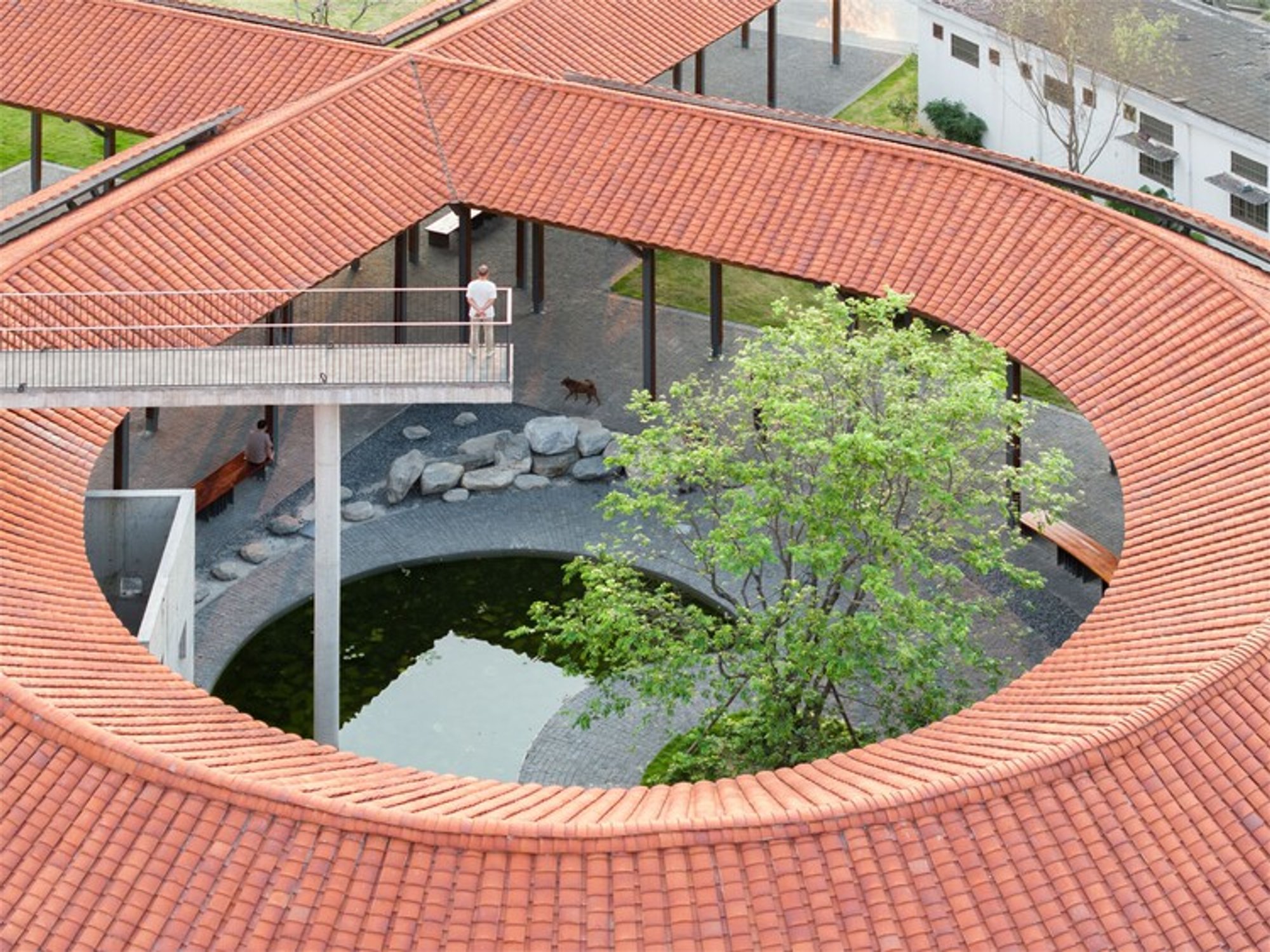
Yanbu Old Dragon Park by Atelier cnS-CICADA ART
A contemporary village park in Foshan translating ancient dragon-boat heritage into climate-responsive architecture, material memory, and a vibrant communal living room.

Located in Foshan, Yanbu Old Dragon Park is a contemporary public landscape deeply rooted in ritual, memory, and collective ethics. Designed by Atelier cnS-CICADA ART, the 5,500-square-metre park transforms an ordinary village site into a spatial narrative that reanimates nearly six centuries of intangible cultural heritage. Rather than monumentalizing history, the project translates legend into lived space: where architecture becomes a medium for continuity, humility, and communal life.
The Old Dragon as Cultural Origin
At the heart of the project lies the legend of the Yanbu Old Dragon, an ancient dragon boat constructed in 1432 during the Xuande reign of the Ming Dynasty. Buried beneath the silt of a local river, the boat is believed to be 593 years old and is revered not merely as an artifact, but as a moral symbol. Its associated legend centers on the principle of “resolving discord with mutual respect”, an ethic that has shaped Yanbu Village’s dragon-boat culture for generations.
This cultural lineage: ritualized through festivals, collective labor, and humility, forms the spiritual foundation of the park. The architects approached the project not as a memorial, but as a living framework capable of reactivating community life while honoring the invisible values embedded in local tradition.
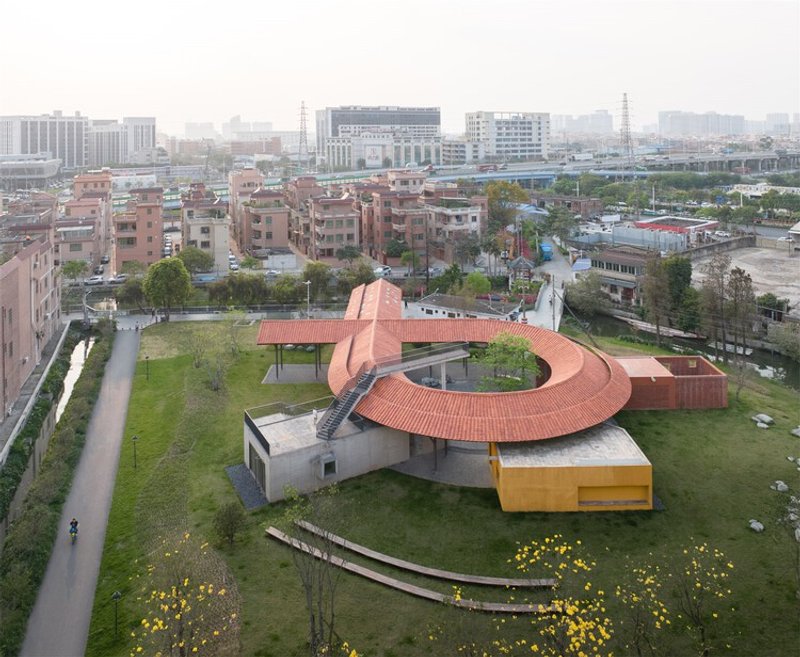
“The New Dragon Gazing Upon the Old”
The conceptual core of Yanbu Old Dragon Park is articulated through a poetic phrase: “The New Dragon Gazing Upon the Old.” This idea does not imply imitation or reconstruction, but rather an abstract dialogue between past and present, permanence and change, memory and projection.
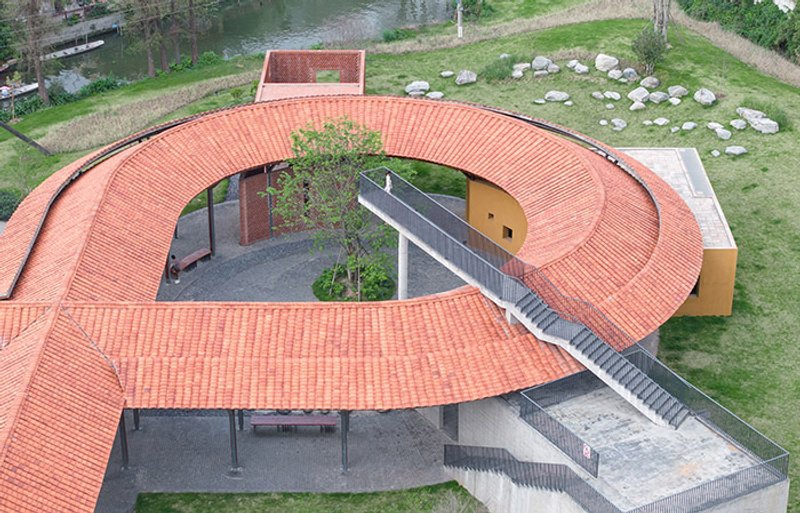
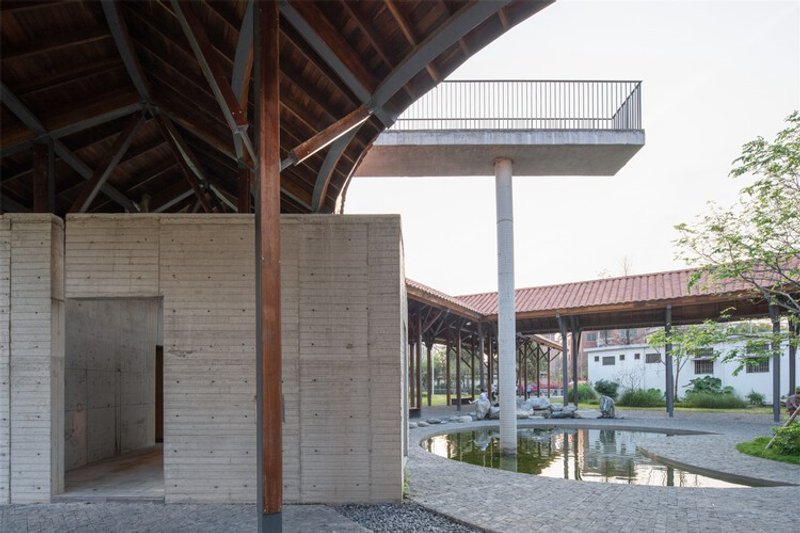
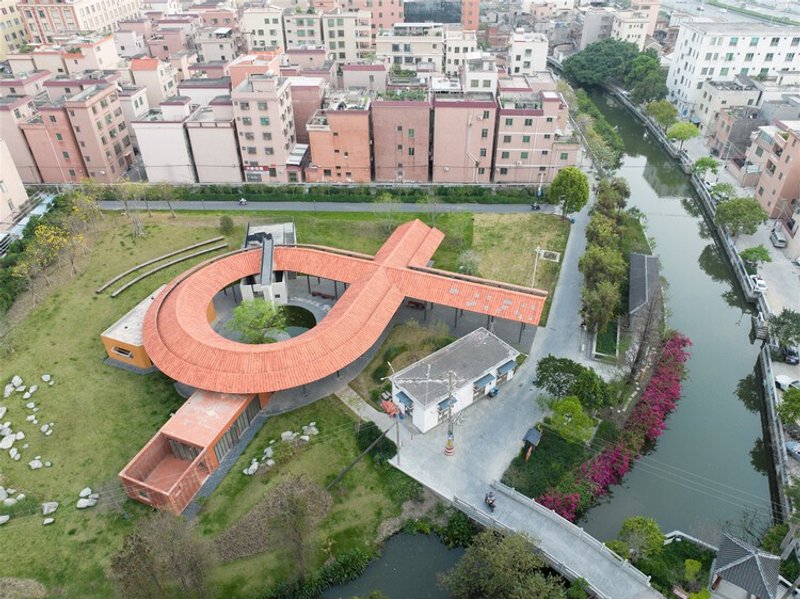
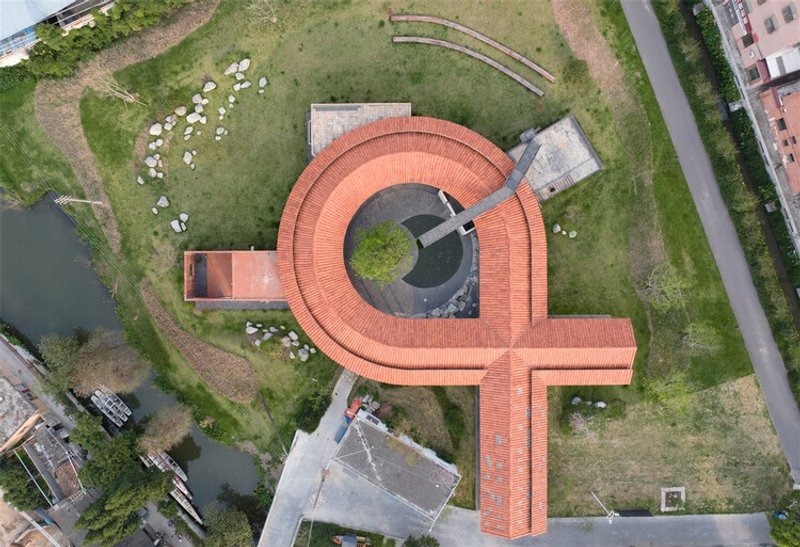
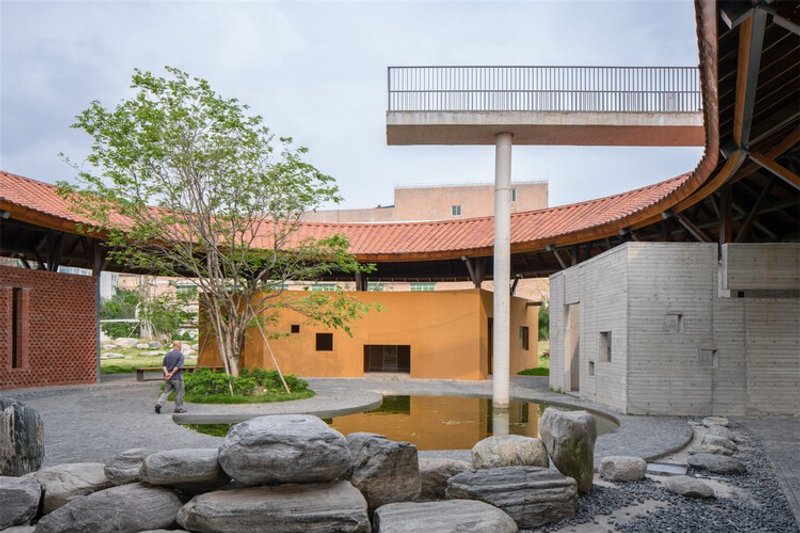
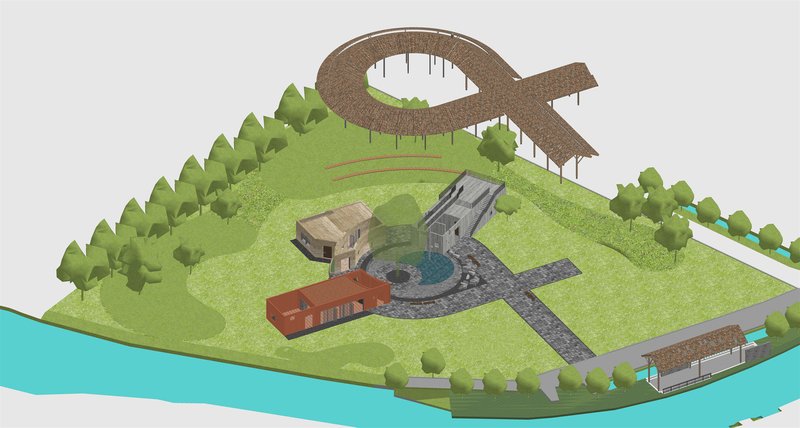
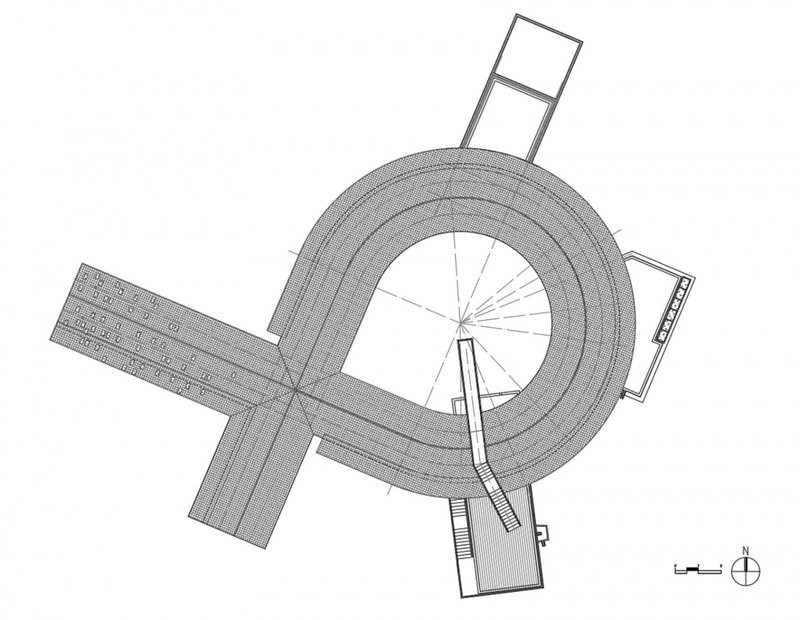
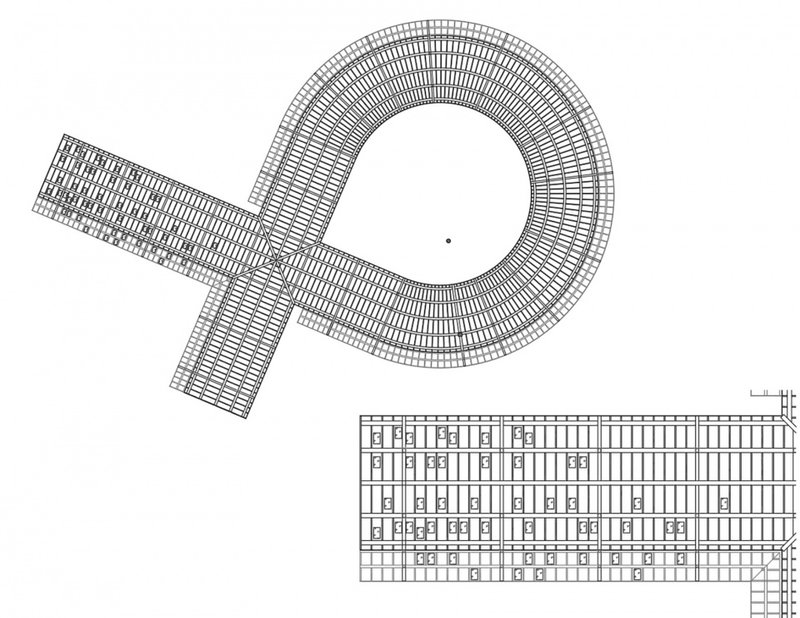
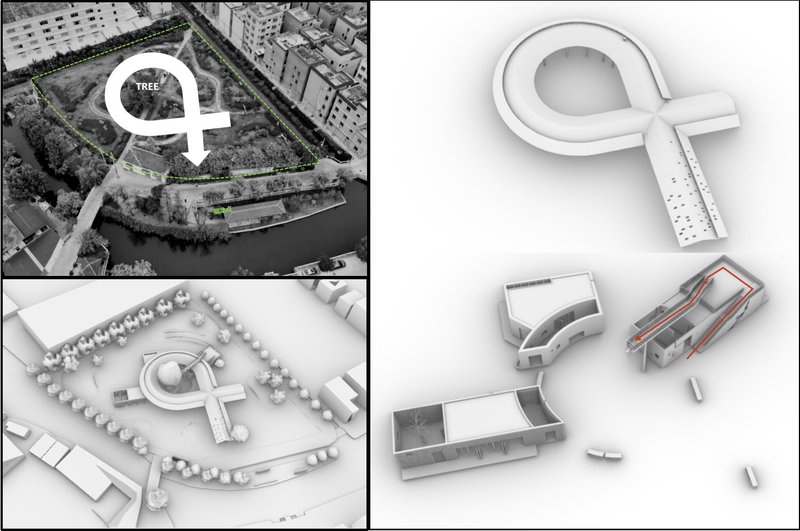
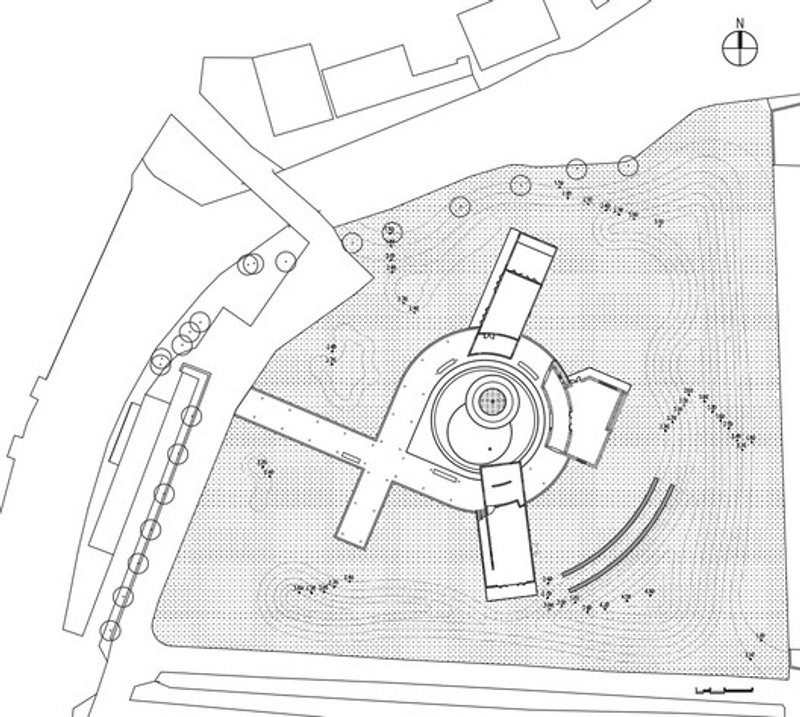
Architecturally, this dialogue is spatialized through a linear elevated corridor, a “spatialized narrative path”, that stretches across the site and symbolically extends toward the “Dragon’s Lair,” the resting place of the ancient boat. This corridor becomes the project’s narrative spine, guiding movement while weaving together architecture, landscape, and collective memory. Walking through the park is thus an act of remembrance and reinterpretation, where history unfolds gradually through space.
From Fragmented Ground to Spatial Continuum
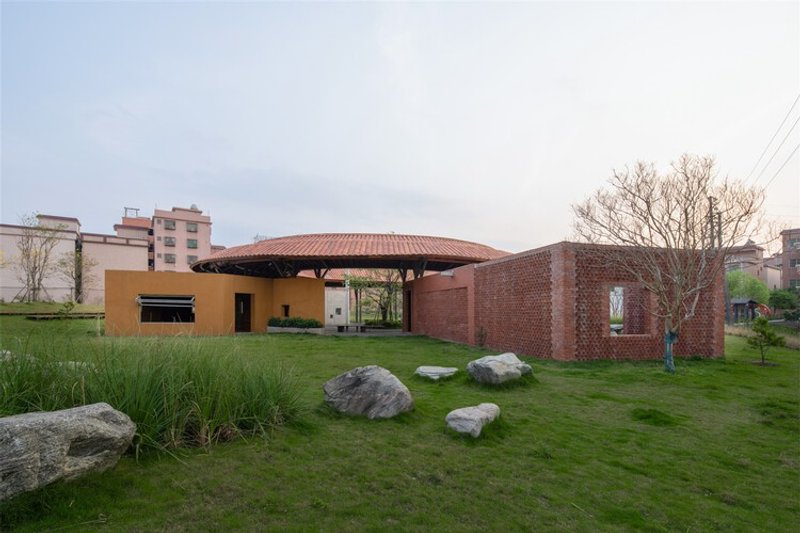
Prior to intervention, the site consisted of disconnected village elements: waterways, vegetable plots, old structures, mounds, and trees, lacking a unifying public realm. The design responds by overlaying a coherent architectural system composed of one continuous corridor and three distinct landscape structures. Together, they create a porous spatial network that connects, frames, and amplifies existing conditions rather than erasing them.
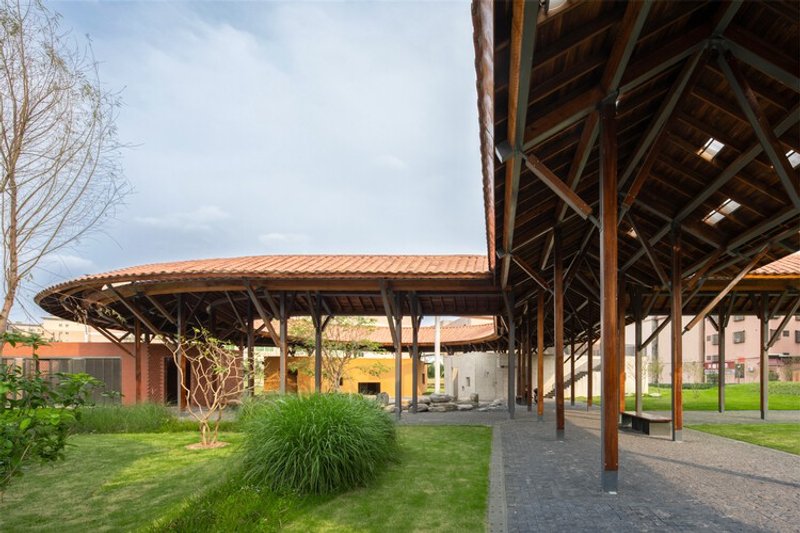
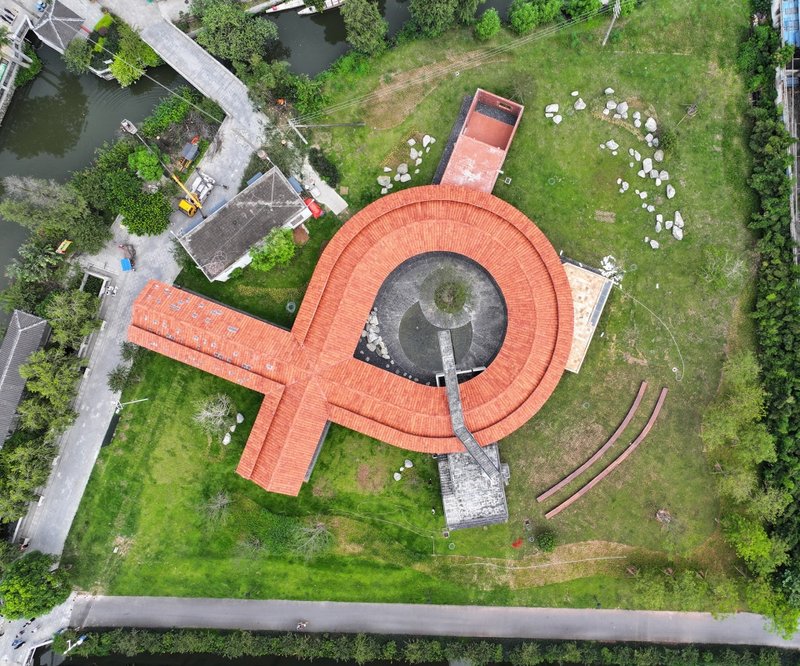
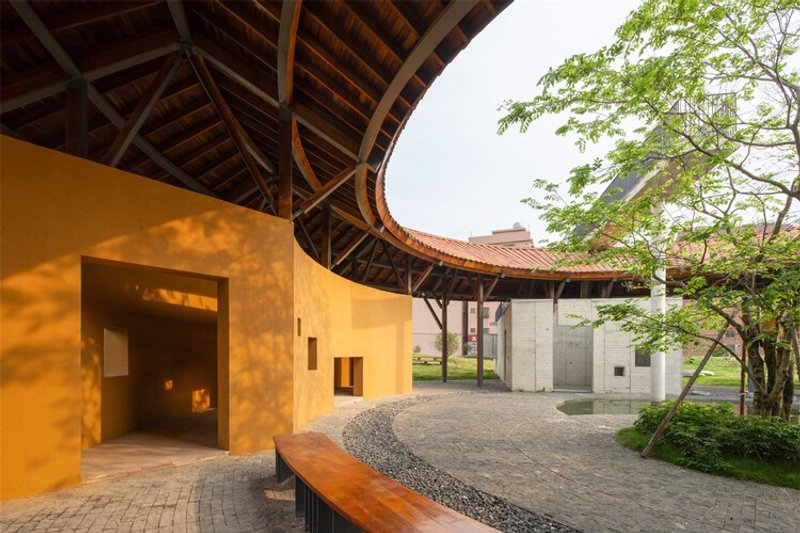
The three architectural volumes are carefully positioned in response to the site’s natural and social features. Acting as architectural “viewfinders,” they frame specific vistas: toward water, vegetation, and daily village life, allowing residents to rediscover familiar surroundings through curated perspectives.
Material as Cultural Translation
A defining strength of Yanbu Old Dragon Park lies in its material strategy. Each architectural element employs locally resonant materials and construction methods, reinterpreted through a contemporary architectural language. This “deep translation of locality” ensures that the project feels both new and inherently familiar.
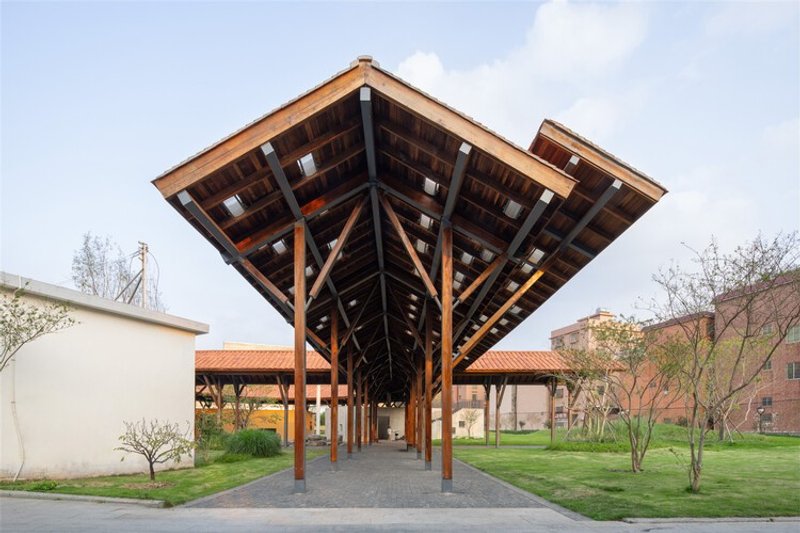
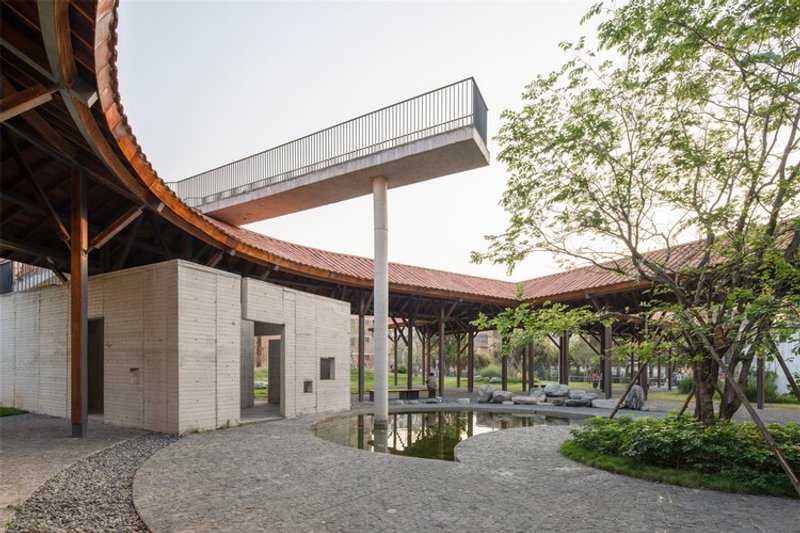
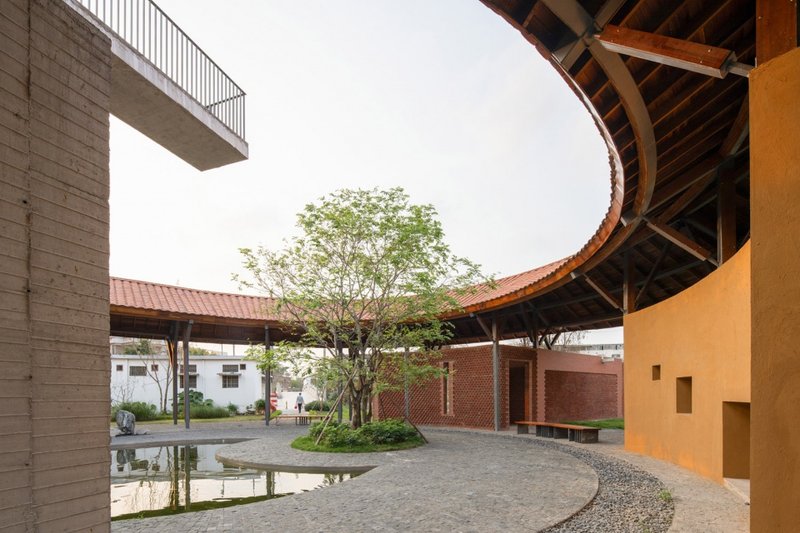
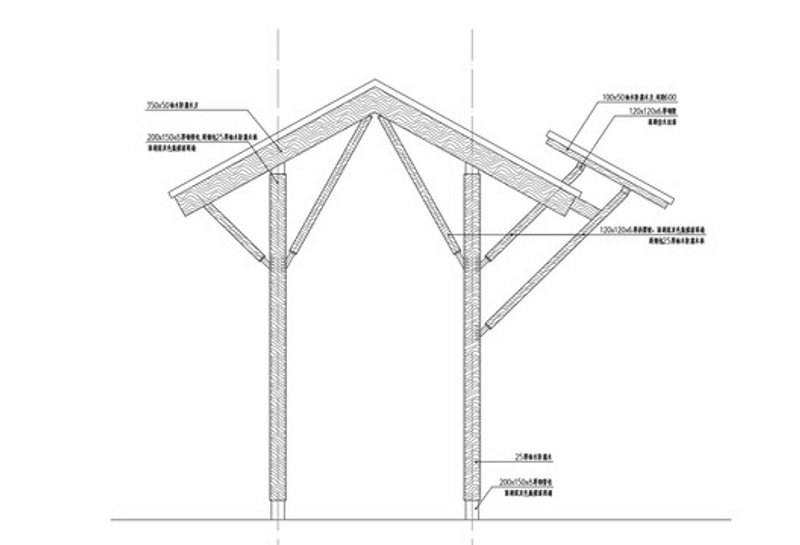
Perforated red-brick masonry forms semi-permeable walls that breathe with light and air, echoing traditional Lingnan construction while fostering climatic comfort. Rammed-earth walls introduce a tactile warmth and primordial texture, grounding the architecture in the earth itself. Timber-textured fair-faced concrete, sculpted into geometric volumes and dramatic cantilevers, bridges craftsmanship and modernity. Terracotta tiles, crowning the steel-timber corridor, visually and materially anchor the architecture within the village’s material memory.
Together, these materials create a layered sensory experience: one that registers time through weathering, shadow, and touch.
Climatic Intelligence and Flexible Architecture
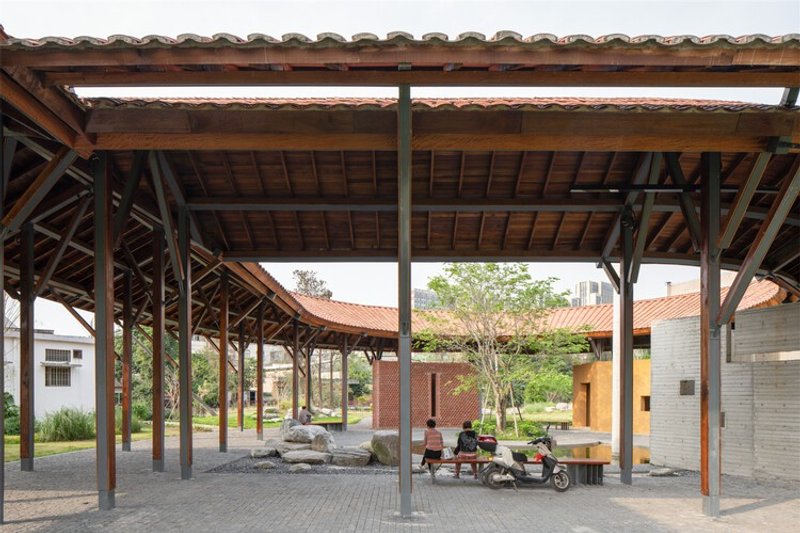
Situated in the Lingnan region, Foshan experiences hot, humid summers that demand careful climatic responsiveness. The elevated corridor system serves not only as a conceptual device, but as an environmental mediator finely tuned to local conditions.
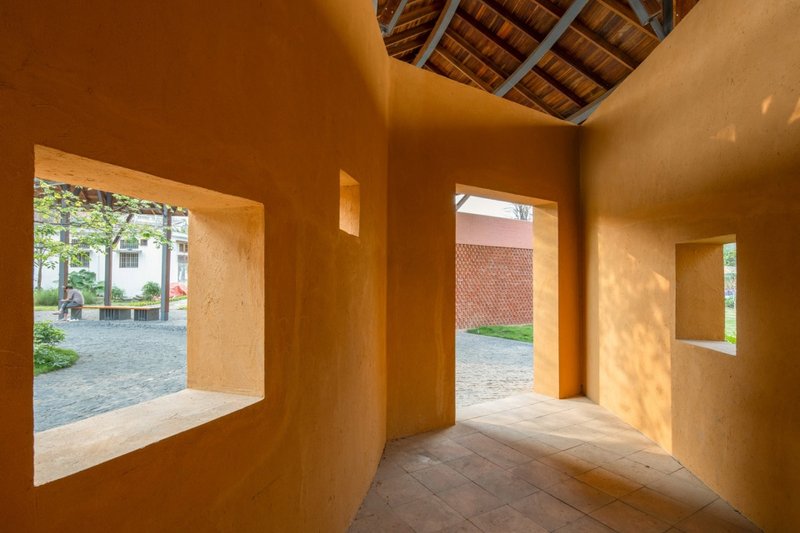
The corridor generates a sequence of shaded, in-between spaces structured around a precise spatial ratio: one-third solid mass, one-third semi-permeable screen, and one-third open void. This composition encourages cross-ventilation, filters sunlight, and creates constantly shifting patterns of light and shadow throughout the day. Architecture here is not static: it breathes, adapts, and performs.
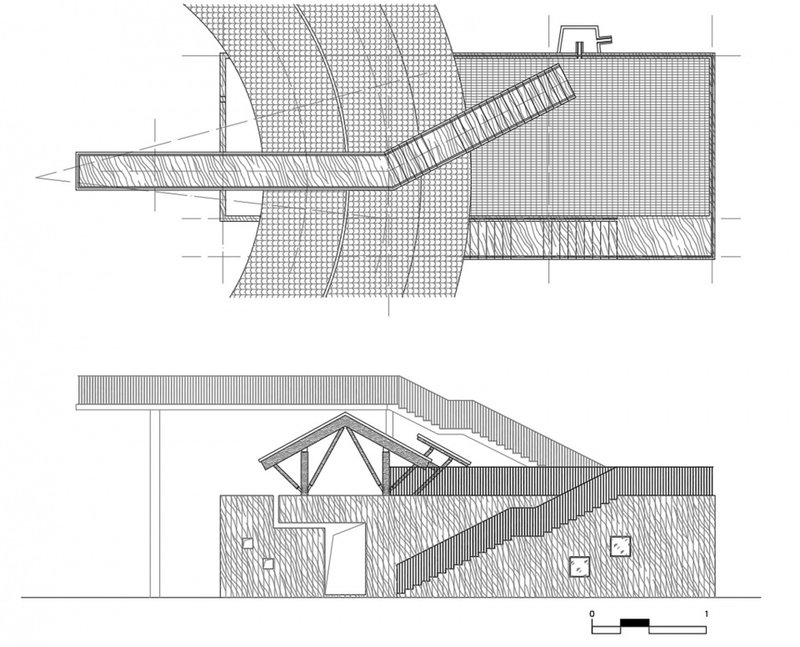
This approach exemplifies what the architects describe as “flexible architecture”: a spatial system capable of accommodating changing climatic conditions, diverse social uses, and informal occupation. The park becomes comfortable not through mechanical systems, but through form, material, and orientation.
A Village “Living Room”
Beyond its symbolic and environmental ambitions, Yanbu Old Dragon Park is fundamentally a social project. The corridor and three landscape volumes define a constellation of public spaces varying in scale, enclosure, and atmosphere. At the heart of this composition lies a reflective pool and an existing tree, around which daily life naturally gathers.
Here, residents sit, talk, rest, and observe. Children play, elders linger, and festivals unfold organically. What was once a commemorative site is transformed into a communal “living room”, a shared domestic extension of the village that supports everyday routines rather than isolated spectacle.
This shift from monument to living infrastructure is crucial. The park does not demand reverence; it invites participation. Cultural heritage is sustained not through distance, but through proximity and use.
All the Photographs are works of Siming Wu




Popular Articles
Popular articles from the community

Prokop Hartl Turns a 1930s Prague Corner Apartment into a Lesson in Structural Honesty
A 115 m² renovation on the Vltava River celebrates exposed concrete, restored parquet, and a mirrored column as its centerpiece.
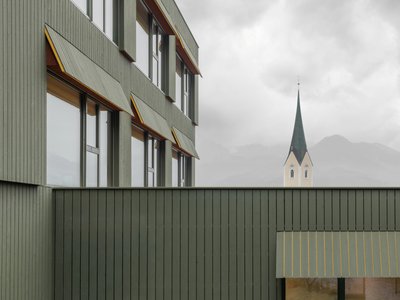
Pedevilla Architects Disguise a Five-Story School as a Tyrolean Farmhouse in Kössen
A dark-clad education center in rural Austria borrows the robust calm of Alpine vernacular to anchor a village's northern edge.
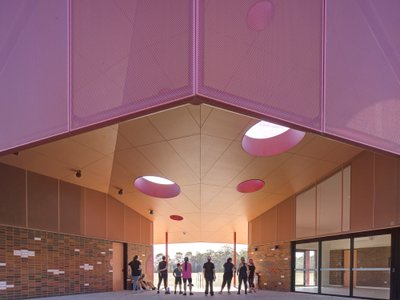
Sam Crawford Architects Anchors a Sports Pavilion in 10,000 Years of Indigenous History
A V-shaped brick and steel pavilion in southwest Sydney translates ancient clay ovens and gathering traditions into civic architecture.
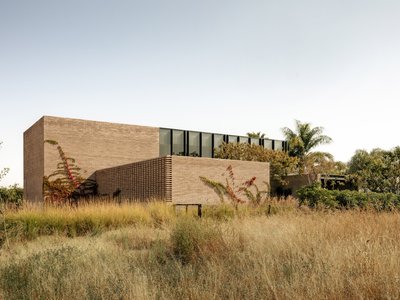
LABarq Builds an Entire House in Querétaro from a Single Custom Concrete Block
Casa Capuchinas uses one sand-colored block as structure, finish, and sunscreen across 477 square meters of suburban Mexico.

Similar Reads
You might also enjoy these articles

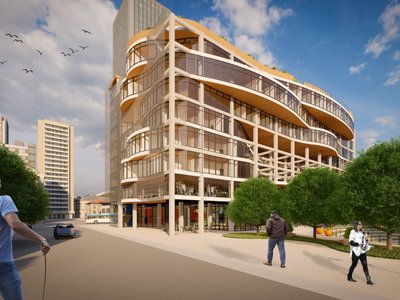
Olio Towers: A Mid-Rise for Performers That Fuses Housing, Rehearsal, and Stage
Located blocks from Houston's Theater District, this modular tower stacks living units around a central performance atrium.
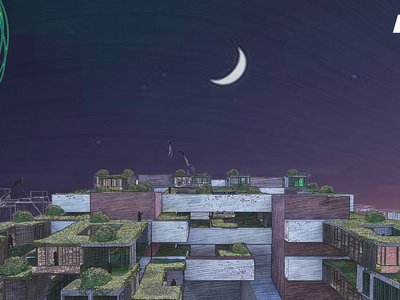
Oasis: Modular Green Housing Carved into Dhaka's Urban Fabric
A shortlisted Plugin Housing entry reclaims unauthorized settlements in Dhaka with stepped concrete volumes, green roofs, and ventilation-driven design.

Black Hole: A Floating Megastructure for the Post-Physical Era
Emiliano Mazzarotto envisions a spherical, self-scaling arena where e-sports, digital hotels, and holographic stadiums replace traditional public space.
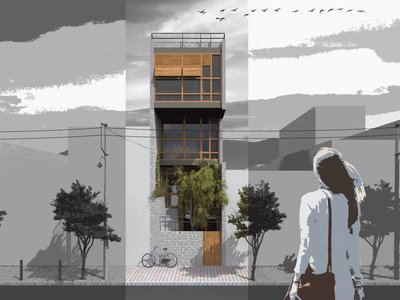
Compact & Sustainable Living in Piraeus: A Four-Level Family Home Built Around Light and Air
A narrow townhouse in one of Greece's densest port cities uses a central atrium and passive strategies to house three generations under one roof.


Explore Architecture Competitions
Discover active competitions in this discipline




The International Standard for Design Portfolios


The Global Benchmark for Architecture Dissertation Awards


The Global Benchmark for Graduation Excellence


Challenge to design an urban locus of culture and heritage
Comments (0)
Please login or sign up to add comments
No comments yet. Be the first to comment!