
Yushima Building by Tenhachi Architect & Interior Design: A Timber-Clad Vertical Landmark Rooted in Tokyo’s Urban Fabric
A slender timber-clad office tower in central Tokyo, blending sustainability, natural materials, and urban harmony while aging gracefully within the dense cityscape.


A Soft, Wooden Silhouette Along Historic Nakasendo
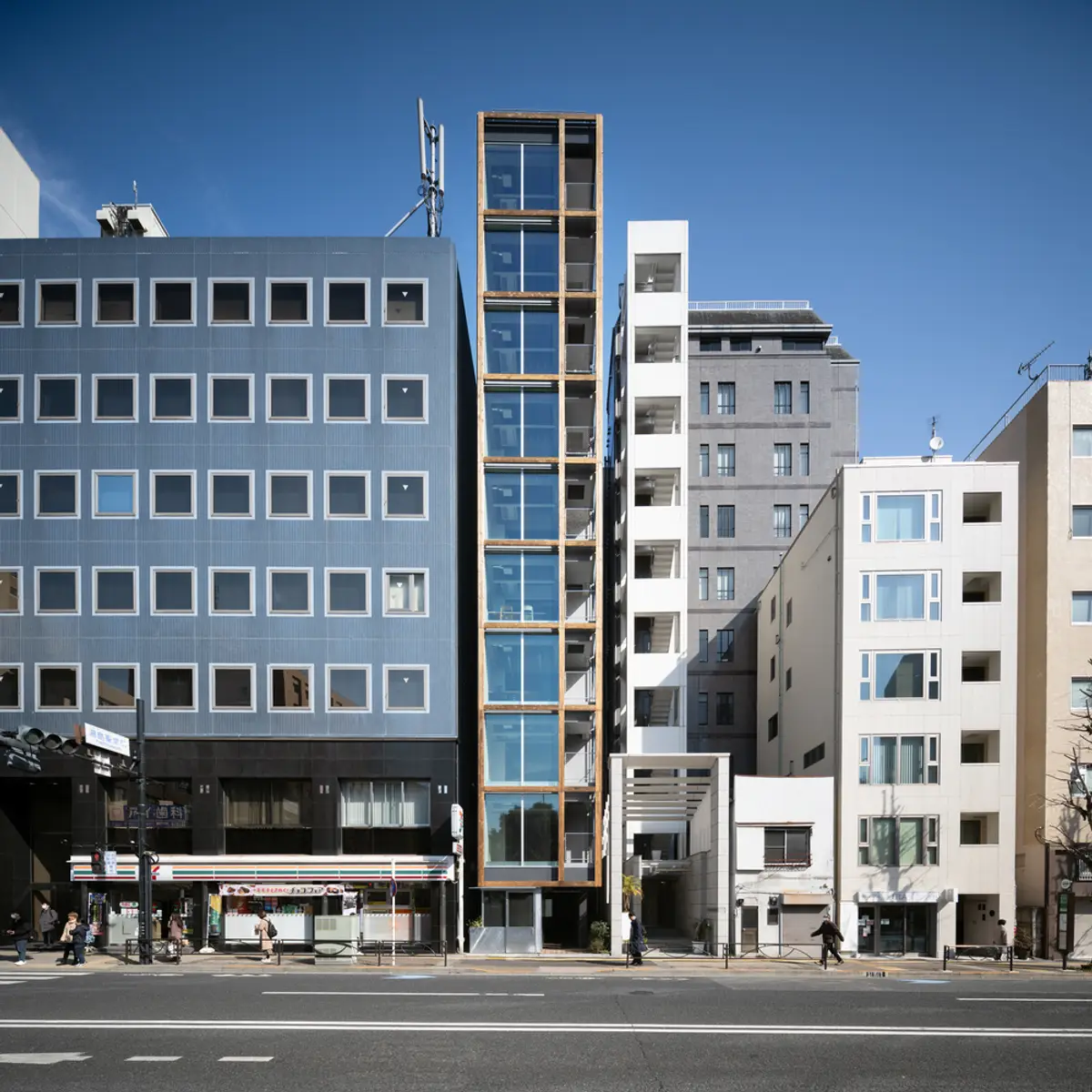
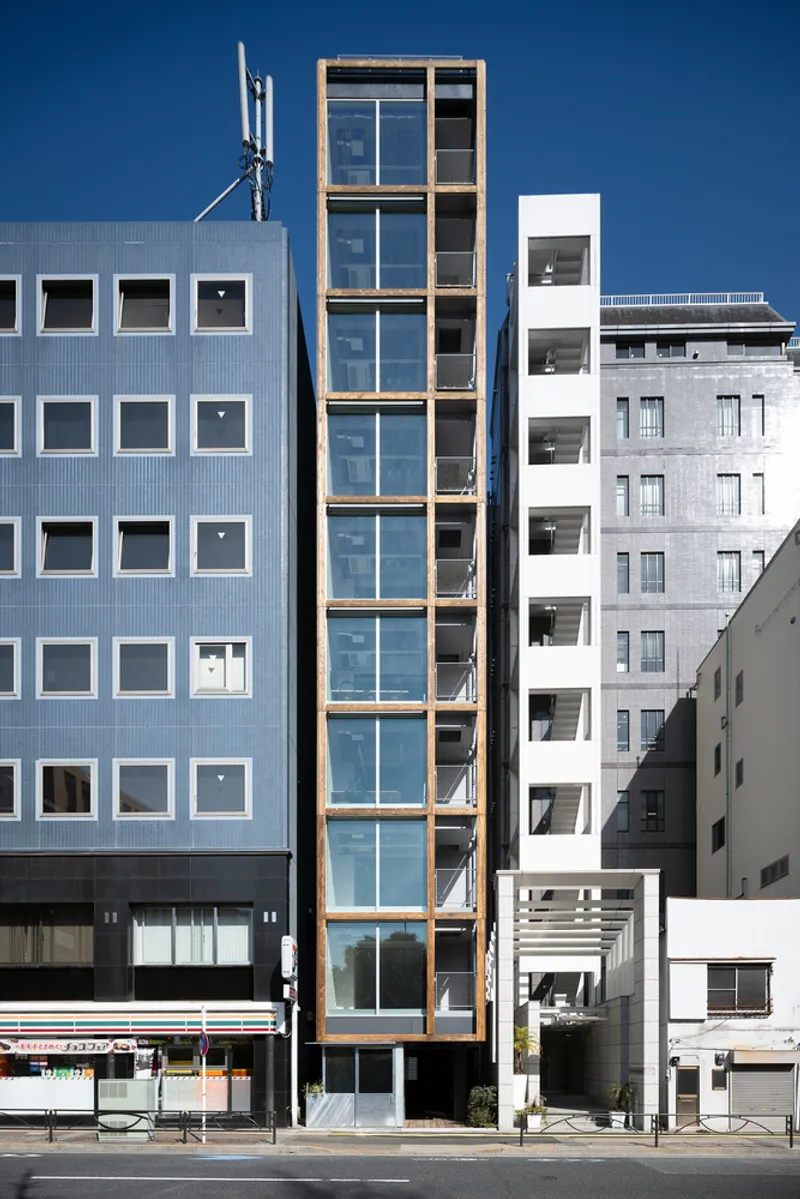
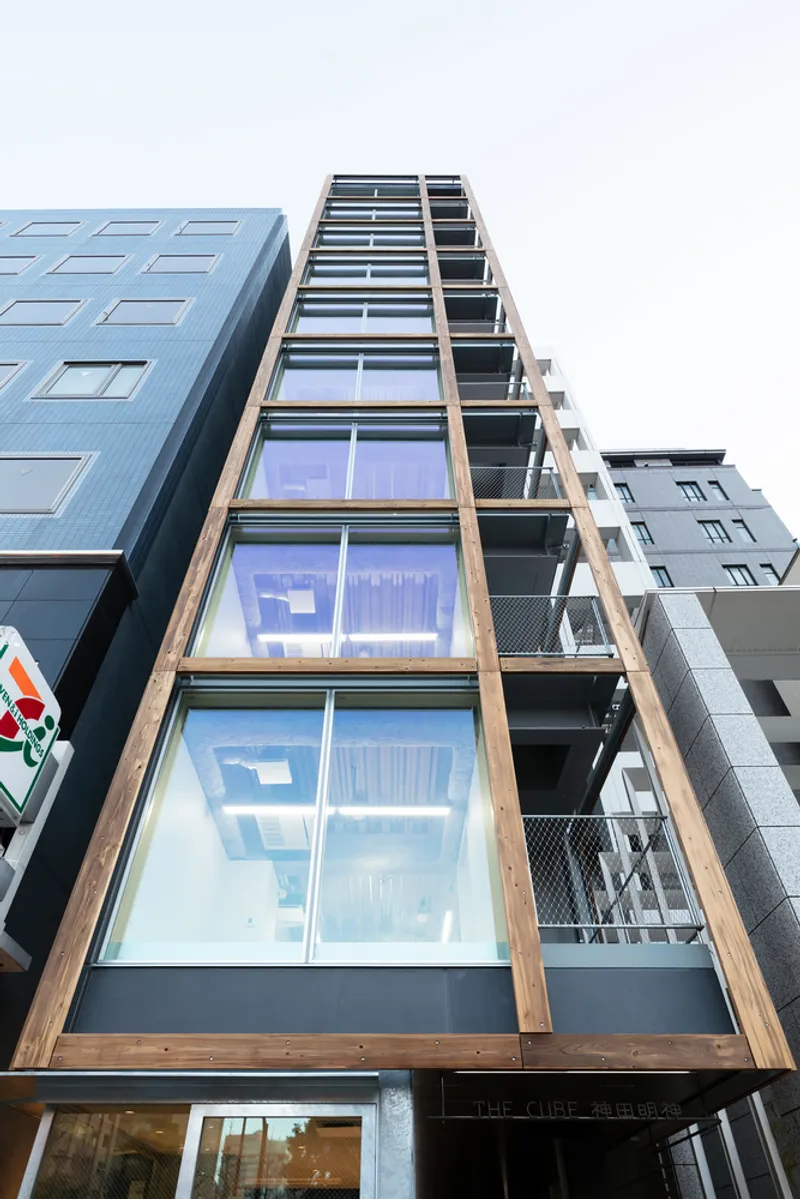
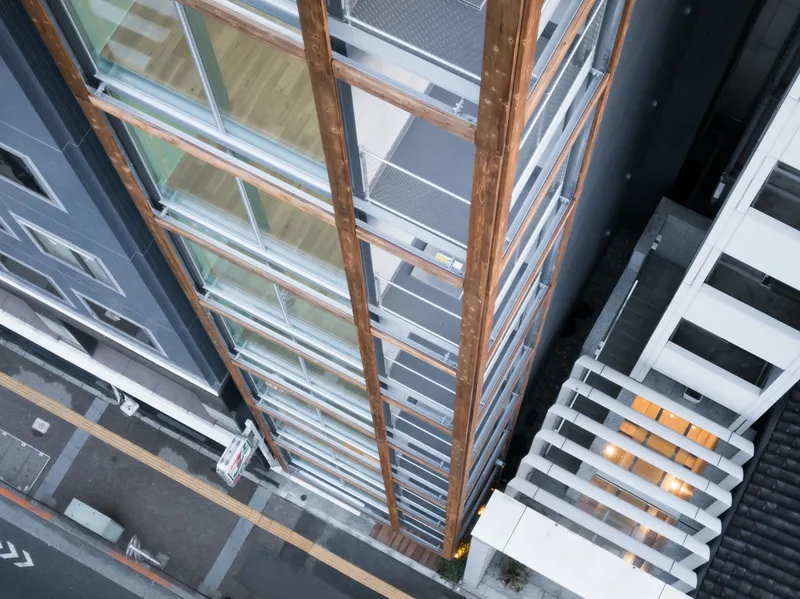
Located near the revered Kanda Myojin Shrine and facing the historic Nakasendo route, the Yushima Building by Tenhachi Architect & Interior Design redefines what a compact urban office tower can be. Set on a narrow 5.2m × 14.5m site in central Tokyo, and surrounded by dense mid-rise structures, the project aims not to stand out through visual dominance, but to soften its presence within the cityscape. Its design strategy centers on blurring architectural boundaries and creating a warm, human-scaled vertical form.
A 10-Story Pencil Tower Designed to Age Gracefully
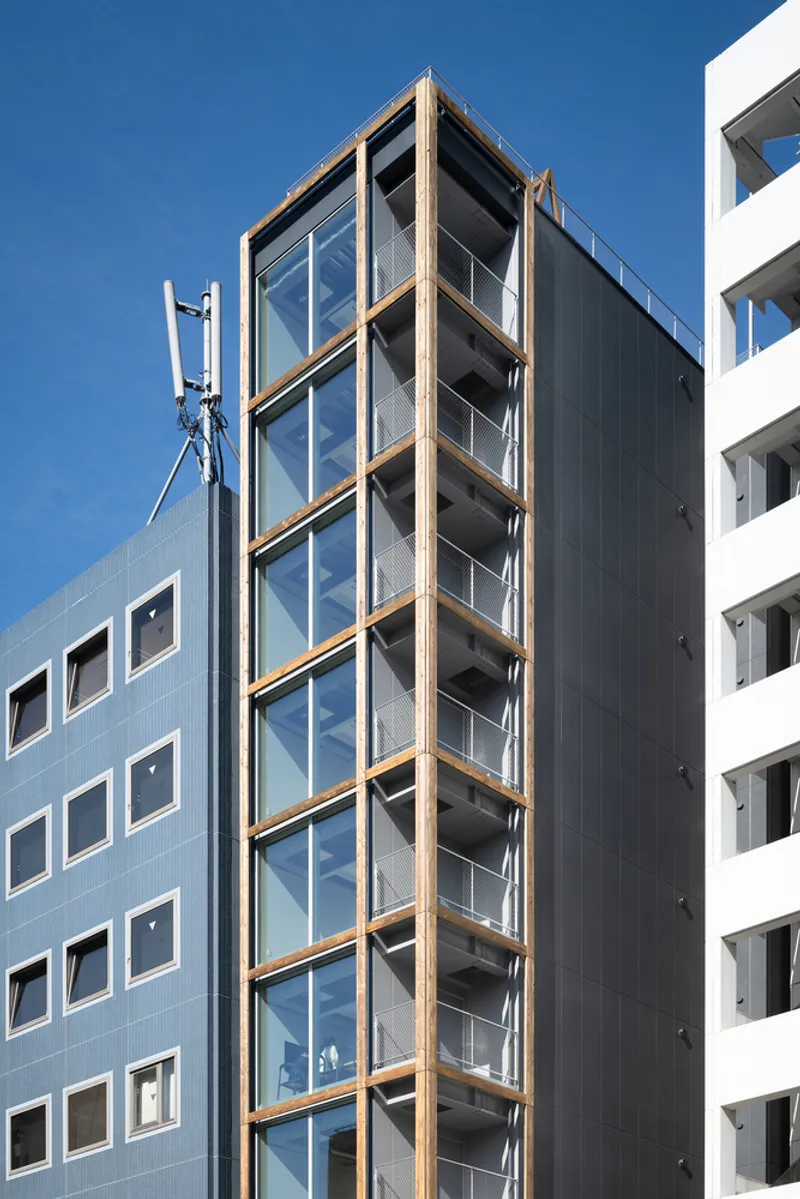
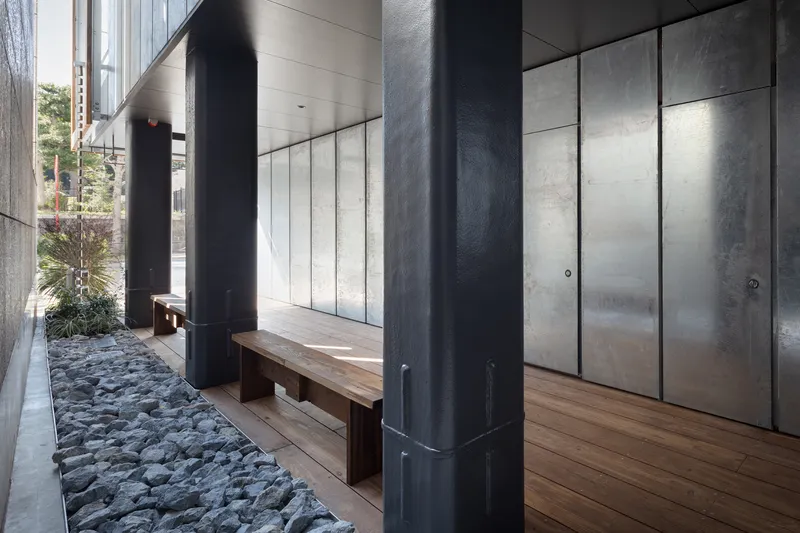
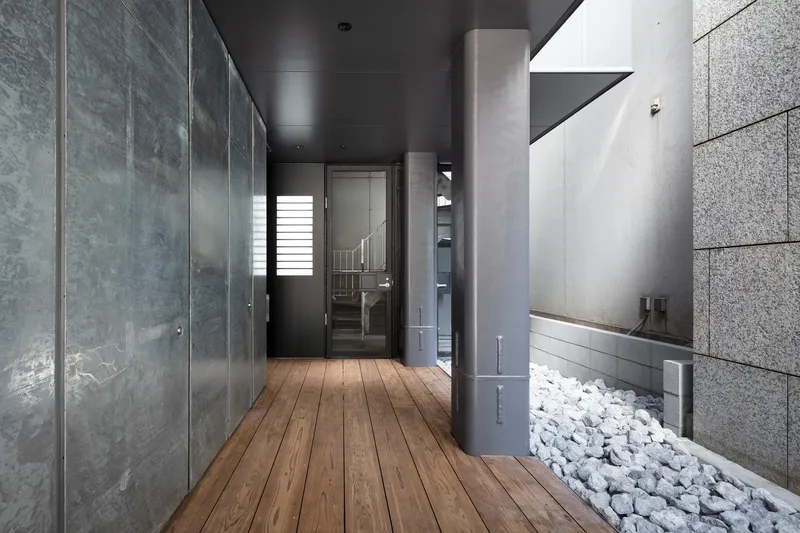
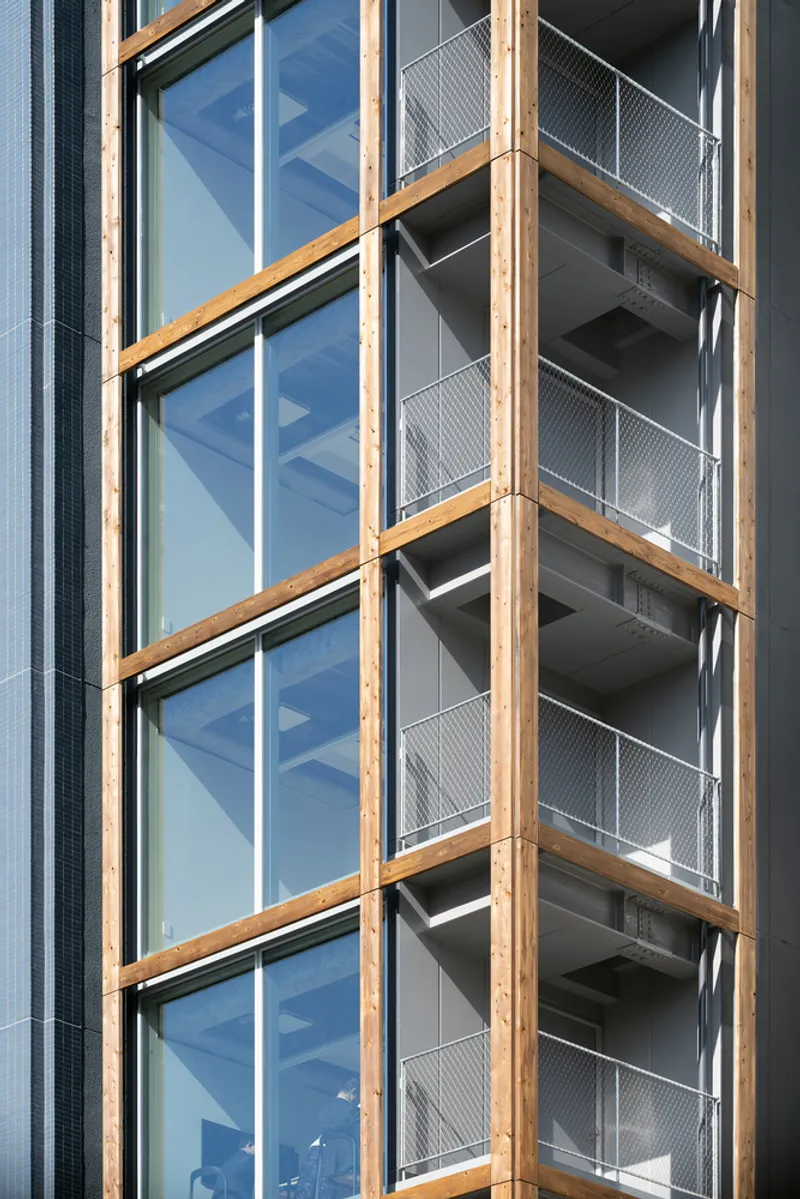
The building rises as a slender 10-story office tower, but it avoids the typical coldness of commercial architecture by embracing natural materials—especially wood—as its core identity. The façade and entry are wrapped in Franwood, a domestically sourced timber produced from forest thinning during mountain path conservation work. This sustainable, plant-based material offers more than aesthetic warmth:
- Zero maintenance and no chemical coatings
- Over 50 years of outdoor durability
- A weathering process that helps the building blend into the city over time
As Franwood subtly ages, the building forms a gentle dialogue with its surroundings, evolving with the seasons and contributing to a more resilient and natural urban expression.

Material Honesty: Embracing Time, Weathering, and Change
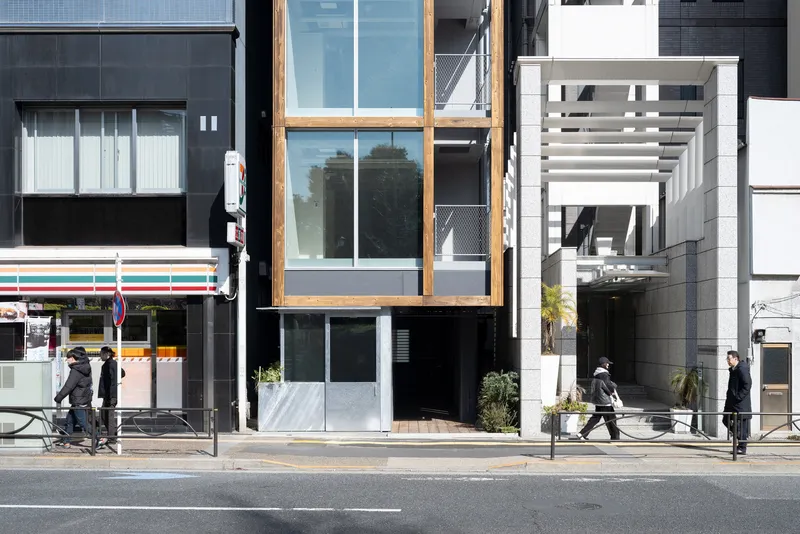
Complementing the timber exterior, hot-dip galvanized steel panels are used throughout the façade. Instead of hiding patina or natural wear, the design celebrates materials that retain the memory of time. This approach rejects the pursuit of a permanently pristine surface and instead promotes an architecture that matures with the environment, reflecting shifts in climate, use, and atmosphere.
Beyond the visual qualities, wood serves multiple environmental and urban functions:
- Carbon fixation and reduced emissions
- Improved thermal comfort in dense urban zones
- Circular use of forest resources
- Support for local production and timber economies
The Yushima Building becomes a quiet, sustainable presence that enriches the everyday life of the neighborhood.
Open, Flexible Interiors Supported by a Rigid Frame Structure
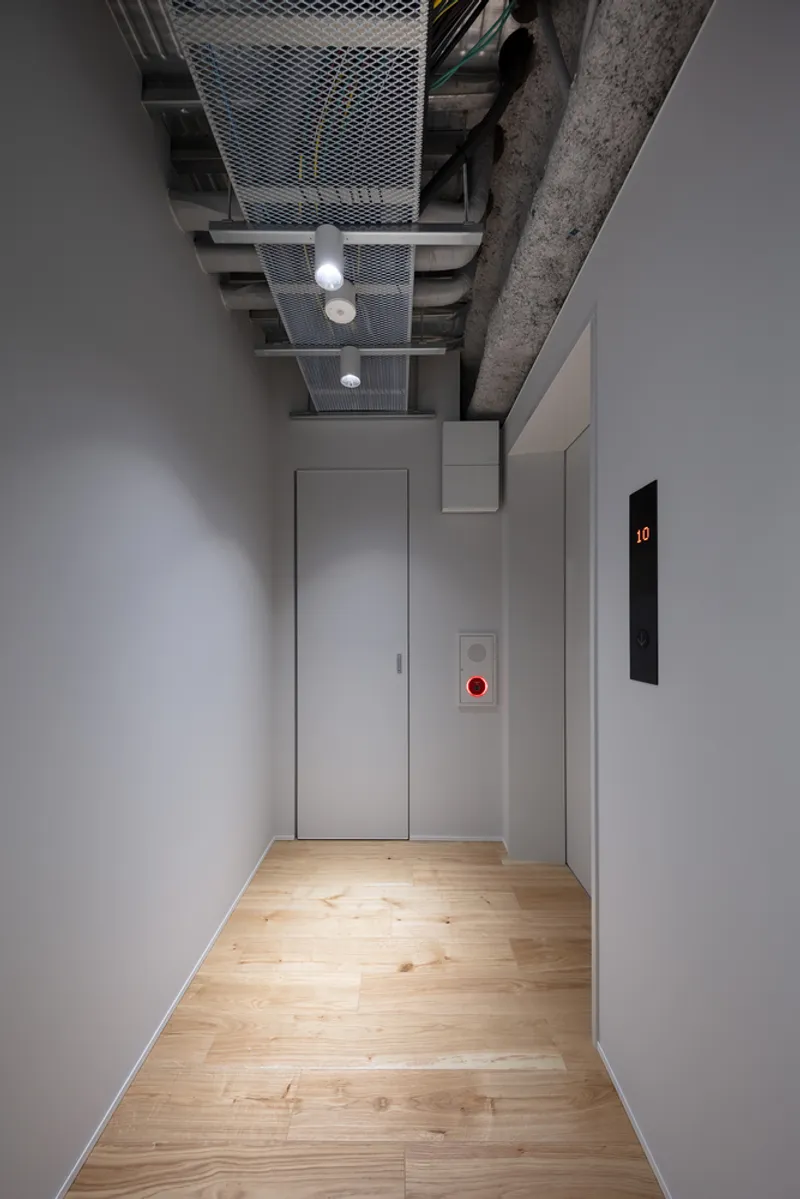
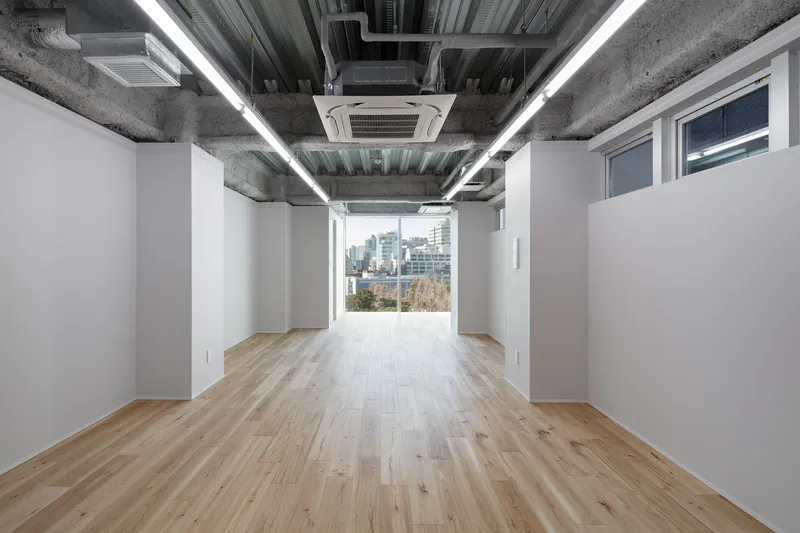
The building’s structural system uses a rigid rahmen frame of beams and columns. By eliminating bracing and shear walls, Tenhachi creates open, flexible floor plates that adapt to changing office needs.
- Ground Floor: A street-facing retail space that activates the pedestrian edge
- Floors 2–10: Office floors designed for spatial clarity, comfort, and productivity
Every interior element—from the warm timber accents to the careful detailing—reflects a commitment to supporting users with a calm, tactile working environment.

A Rooftop That Reconnects with Tokyo’s Skyline
At the top, a rooftop terrace opens to expansive views of the Ochanomizu skyline, including landmarks such as Yushima Seido, Nikolai-do Orthodox Cathedral, and Hijiribashi Bridge. Despite its compact footprint, the vertical journey culminates in a rare moment of openness—an elevated refuge where the rhythm of the city briefly slows.
Architecture That Breathes with the City
The Yushima Building does not attempt to shield itself from urban noise or visual density. Instead, it breathes with Tokyo, drawing strength from its materials, its context, and its honest relationship with time. Through wood, steel, and thoughtful design, the building forms a soft yet enduring outline—an example of how sustainability, heritage, and contemporary urban life can coexist within a compact architectural footprint.


Popular Articles
Popular articles from the community


Lunar Spiral: Space Architecture Shaped by the Mathematics of the Universe
Lunar Spiral reimagines space architecture through Fibonacci geometry, lunar regolith, levitating habitats, and self-sustaining Moon living.

Little Red Riding Hood: Architectural Design as a Journey Through Fear, Light, and Storytelling
Little Red Riding Hood reimagines the fairy tale through architectural design shaped by fear, light, scale, memory, uncertainty, and choice.

Play: Fragments of Their World
Familiar architecture becomes modular playground design, creating safe spaces where displaced children can learn, connect, imagine and play.

Co-Life: Senior Housing Design That Reconnects Older Adults With the City
Co-Life reimagines senior housing design through healing gardens, shared streets, workshops, and a sustainable community across generations.

Similar Reads
You might also enjoy these articles


Hodi-Mandai Geram
Project Function: Preservation and revitalization of the Intangible heritage and socio-spatial identity of the Hodi by Housing, Cultural Memory Center, Sacred Grove, landscape, local tourism economy


Olio Towers: A Mid-Rise for Performers That Fuses Housing, Rehearsal, and Stage
Located blocks from Houston's Theater District, this modular tower stacks living units around a central performance atrium.

Oasis: Modular Green Housing Carved into Dhaka's Urban Fabric
A shortlisted Plugin Housing entry reclaims unauthorized settlements in Dhaka with stepped concrete volumes, green roofs, and ventilation-driven design.

Black Hole: A Floating Megastructure for the Post-Physical Era
Emiliano Mazzarotto envisions a spherical, self-scaling arena where e-sports, digital hotels, and holographic stadiums replace traditional public space.

Explore Office Building Competitions
Discover active competitions in this discipline

Challenge to reimagine the Iron Throne

Photograph architecture without architects

Illustrate the lost glory of Angkor Wat - Render Challenge

Design challenge to reuse E-waste
Comments (0)
Please login or sign up to add comments
No comments yet. Be the first to comment!