
Yuz Museum’s New Venue by Scenic Architecture Office: A Modern Ode to Jiangnan’s Cultural Landscape
A modern art museum blending Jiangnan traditions with contemporary design, harmonizing nature, light, and spatial flow in Shanghai’s greenbelt.


A Cultural Beacon in the Greenbelt of Panglong
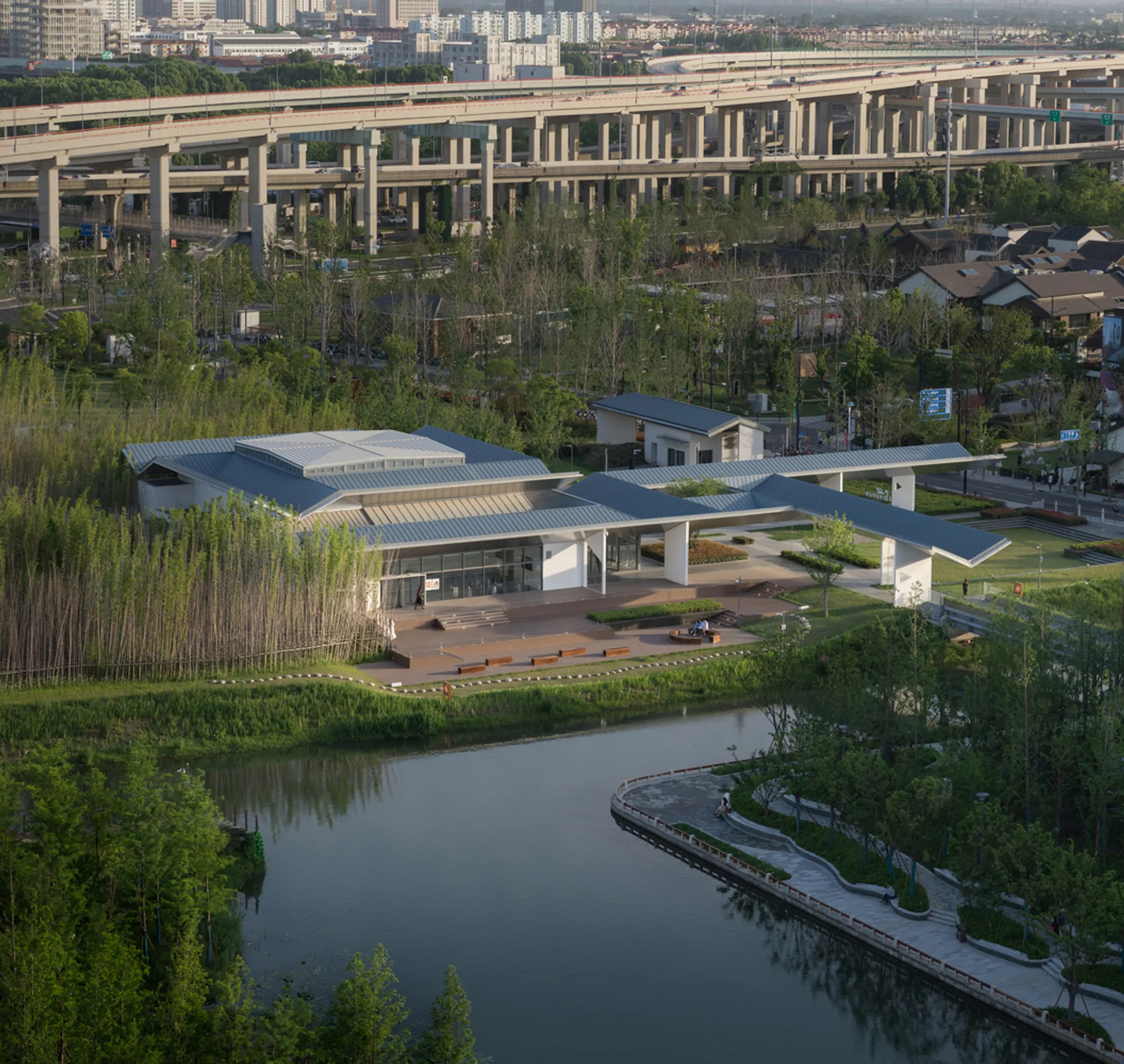
The newly unveiled venue of the Yuz Museum, designed by Scenic Architecture Office, emerges as a poetic dialogue between contemporary spatial narratives and the traditional cultural fabric of Jiangnan. Located just beyond the east entrance of Panglong Town, this museum is more than an art destination—it is a thoughtful architectural meditation on space, time, tradition, and transformation.
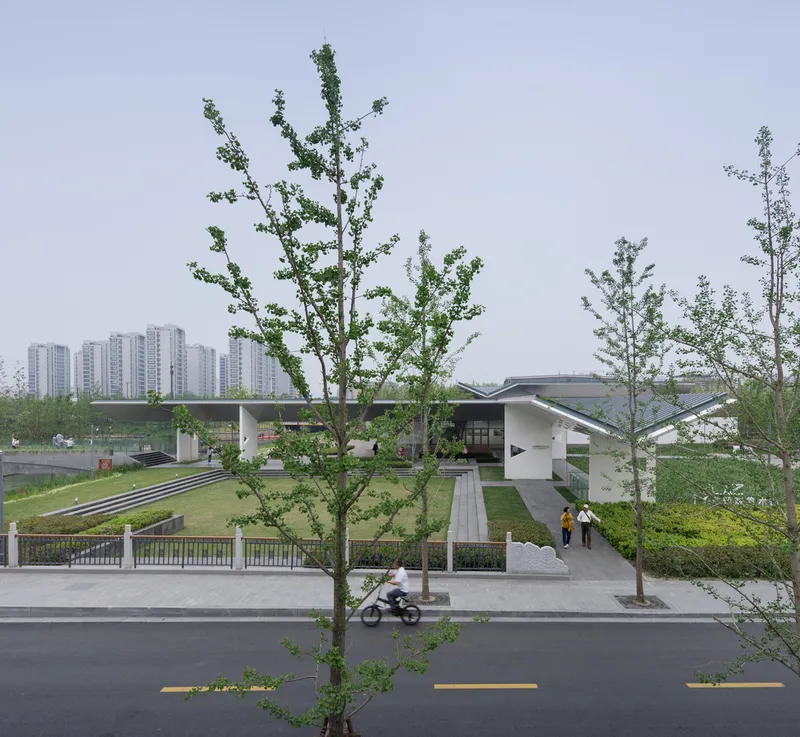
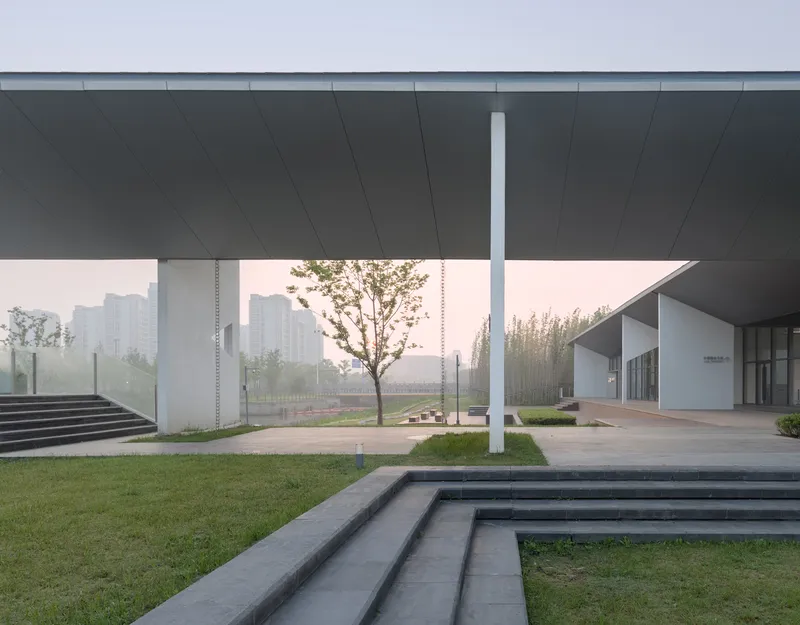
Separated from the urban fabric by a 60-meter green buffer zone, the museum asserts its presence with intentional detachment. This threshold, reminiscent of Luzhi Town’s natural transition zones, prepares visitors for a contemplative shift from urban life to an immersive art experience. The setting blurs boundaries between architecture and nature, creating a harmonious transition from town to cultural sanctuary.

Contextual Integration and Spatial Orientation
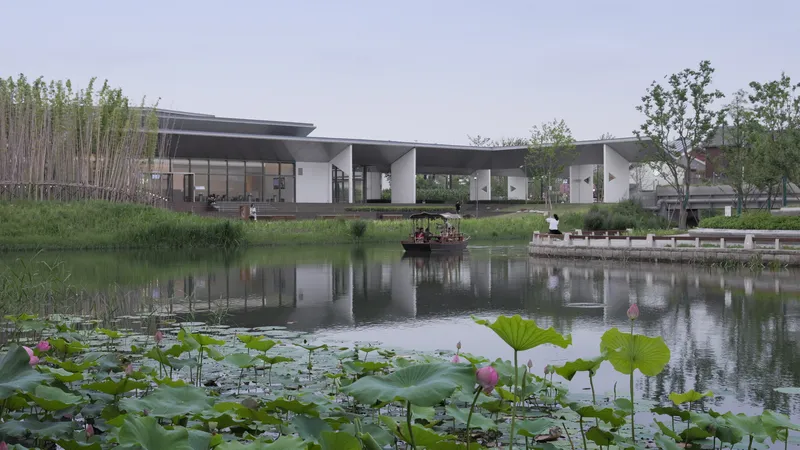
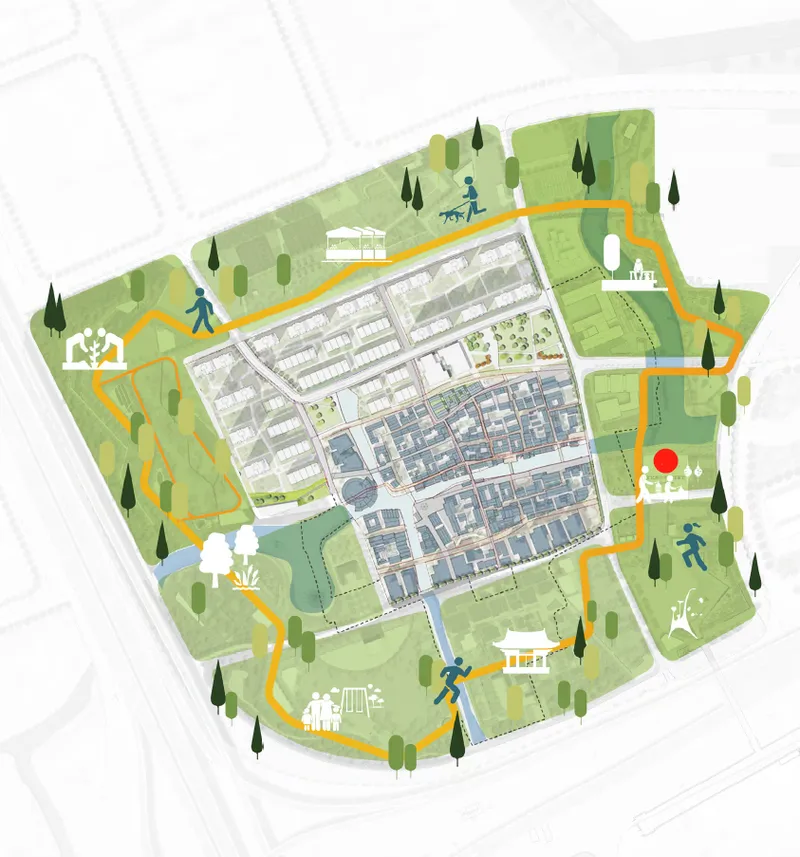
Scenic Architecture’s site strategy carefully orchestrates connectivity and spatial extension in four directions—north to a pedestrian bridge, south to open parkland, east to a riverside edge, and west to the town. This multi-directional accessibility ensures the museum acts as a central anchor within the greenbelt.
Surrounded by rice paddies, lawns, riverbanks, and curated gardens, the building’s spatial organization responds to both the natural environment and historical context. The structure functions as a cultural node, mediating between the vibrant life of the town and the tranquil setting of the surrounding landscape.

Architectural Form and Courtyard Strategy
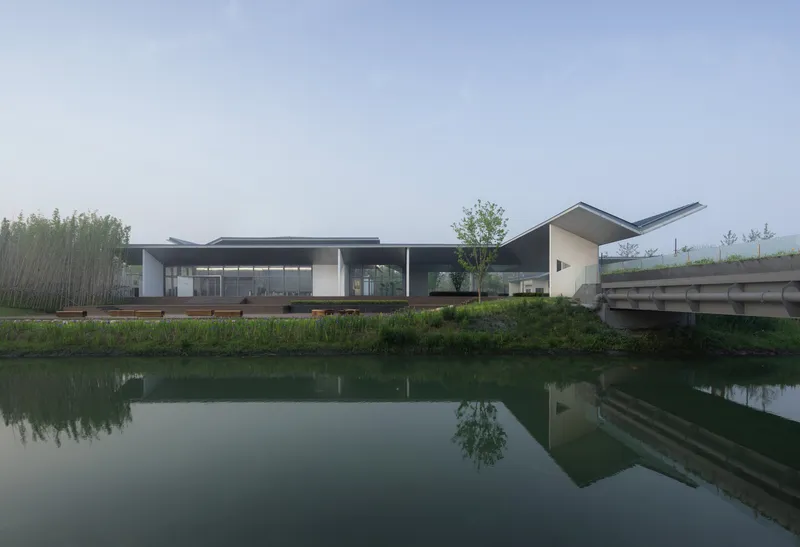
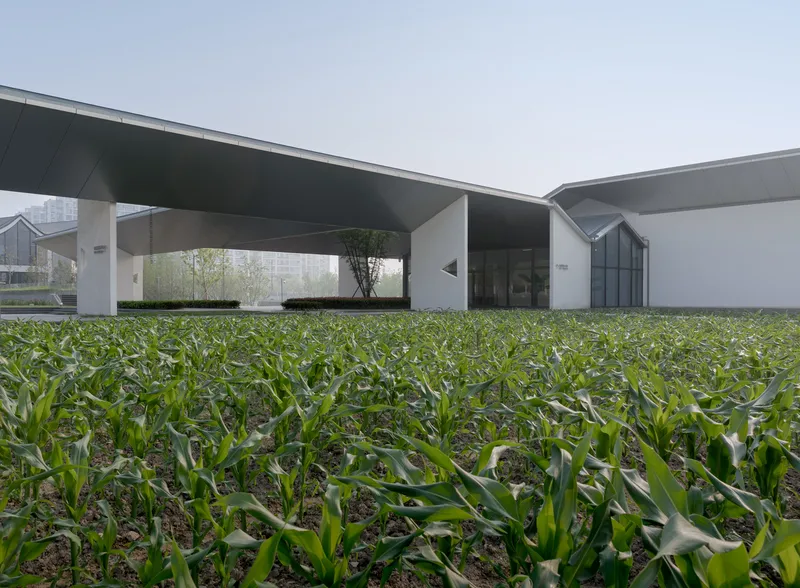
Drawing inspiration from traditional Jiangnan architecture, the museum’s layout is defined by a windmill-shaped corridor system. These open-air galleries divide the greenbelt into four distinct quadrants: southwest rice paddies, northwest lawns, northeast riverfront, and southeast museum volume. At the intersection, a courtyard emerges—a semi-outdoor vestibule where landscape and built form converse.
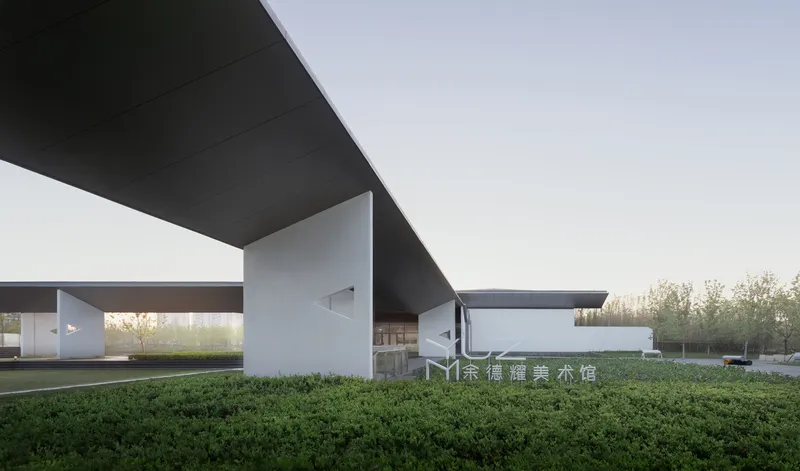
The corridors employ "half gable walls" and double-pitched, inward-sloping roofs, reinventing traditional forms through modern techniques. The 7.2-meter-wide roofs, supported by alternating structural walls, slow visitors' pace, guiding views toward curated scenes of field, water, and architecture. This circulation strategy fuses movement with meditation.

Seamless Structural Language: Inside and Out
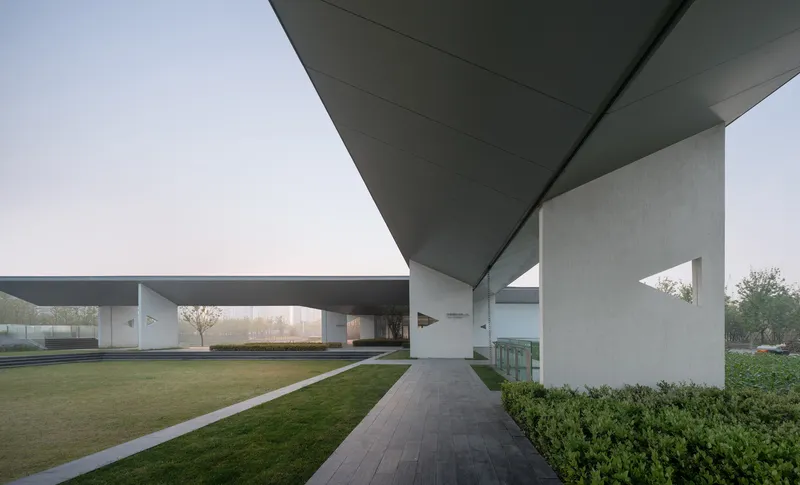
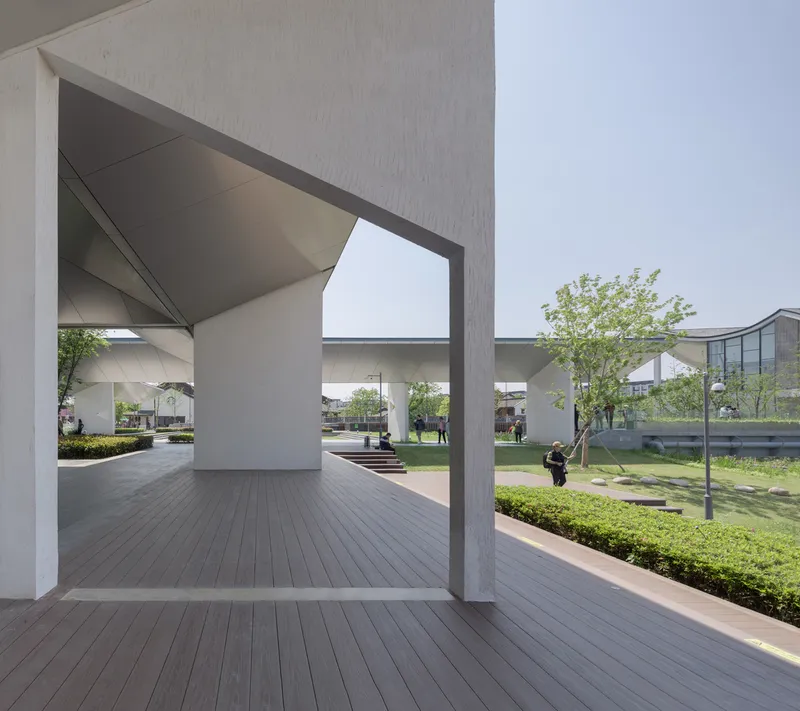
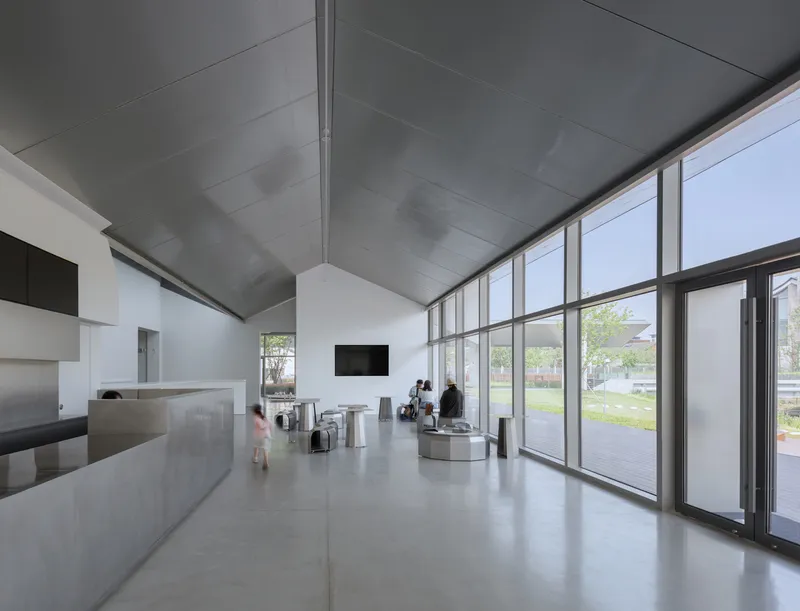
The interior adopts the same spatial language and structural rhythm as the outdoor corridors, creating a unified architectural identity. The foyer and small exhibition hall mimic the corridor form, with gabled roofs and 7.2-meter-wide spans. These spaces blend fluidly into the outdoor courtyards, erasing distinctions between interior and exterior.
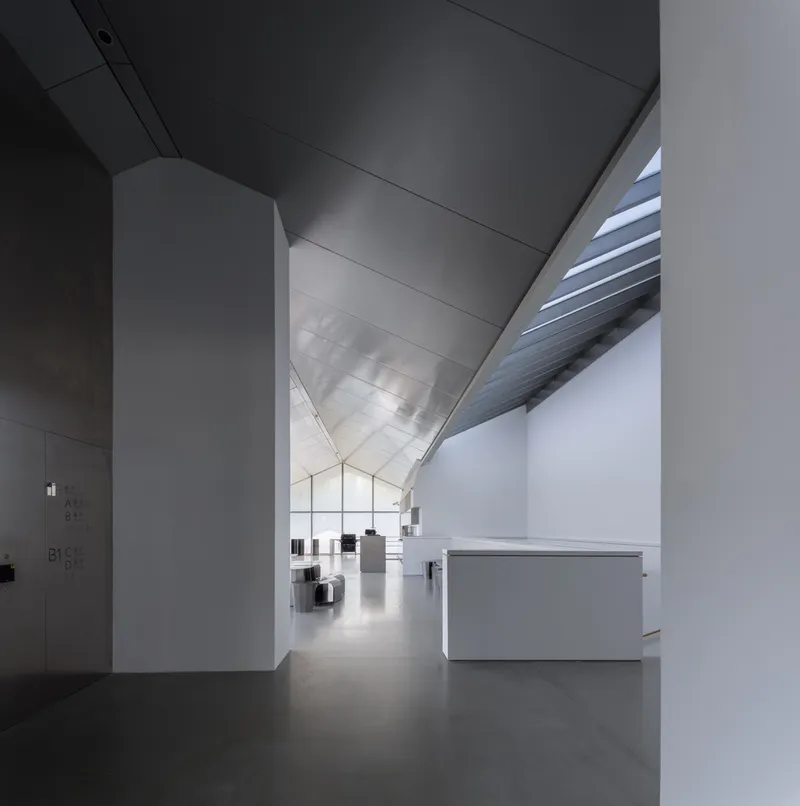
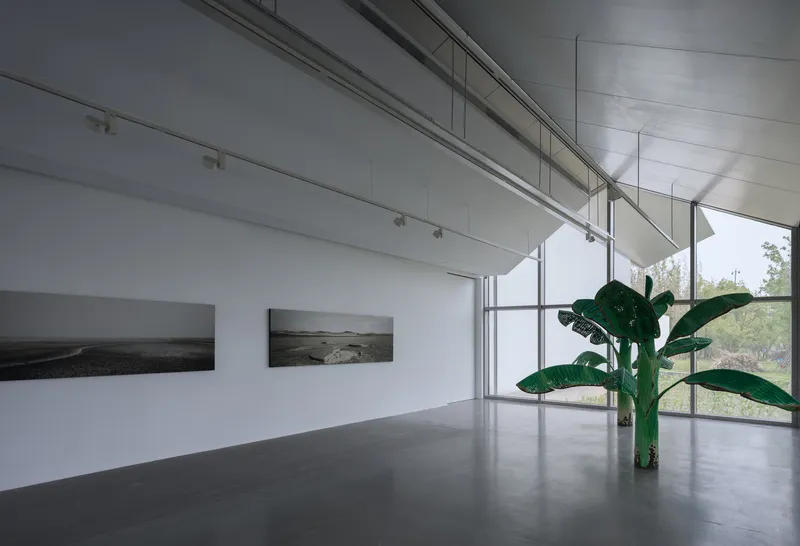
The main exhibition space—a column-free 466 m² hall—is constructed using a folded-plate truss system that supports a square grid of double-pitched roofs. This modular design enables flexibility, with movable walls and integrated lighting suspended from the windmill-like ceiling structure. A raised central roof allows natural light to diffuse softly into the space, transforming the interior into a canvas of shifting light and shadow.
Material Palette and Poetic Light
Natural light plays a pivotal role in defining the museum’s atmosphere. Tapered perforated panels and sloped membranes filter light into the main hall, producing a subtle interplay of brightness and shade. Floor-to-ceiling glazing in the smaller halls invites views of the paddy fields and water beyond, while fritted glass with rice-grain patterns provides diffused light and privacy where needed.
Materials such as titanium-zinc panels and anodized honeycomb aluminum ceilings add a tactile, contemporary dimension, echoing the texture of traditional blue-black roof tiles while reflecting the changing light and surrounding landscape. Walls coated in hand-painted vertical-textured finishes suggest the rain patterns of the Yangtze River Delta, imbuing the space with regional memory and architectural storytelling.

A Living Museum Rooted in Time
Originally completed before the pandemic, the museum awaited its operator for two years before being chosen by the Yuz Museum to become its new home. Mr. Budi Tek, founder of Yuz Museum, praised the site’s intimate scale, immersive spatial sequencing, and natural integration—hallmarks of a new Jiangnan modernism.
The adaptive landscape design mirrors this philosophy. Farmers transitioned from rice to corn due to seasonal conditions, underscoring a resilient, nature-aligned approach to agriculture. On opening day, the museum stood surrounded by tall corn stalks, their rustling echoing through the eaves—nature and architecture intertwined.
A Contemporary Jiangnan Manifesto
The new venue of the Yuz Museum is not just a building; it’s an embodiment of cultural continuity, architectural innovation, and landscape integration. Scenic Architecture Office has redefined the museum typology—where corridor, courtyard, and gallery merge into a seamless spatial experience, rooted in both historical memory and modern expression.
This project stands as a visionary interpretation of Jiangnan vernacular architecture, offering visitors a journey through space, light, tradition, and contemporary art.
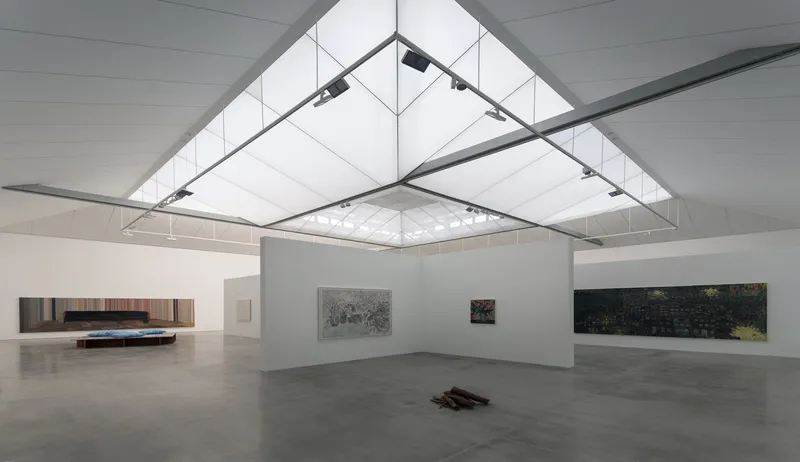
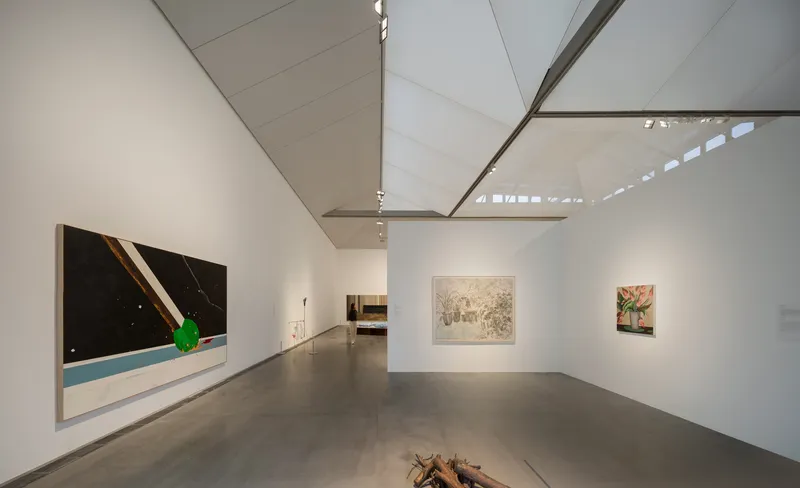
All Photographs are works of Shan Liang


Popular Articles
Popular articles from the community


Hill & Cross Opera: Sculptural Opera House Architecture Shaped by Tallinn’s Landscape and Identity
Hill & Cross Opera reimagines opera house architecture in Tallinn through its sculptural hill, civic plaza, glass wave and a luminous cross.

Riyadh For All: Intergenerational Urban Design for Active Aging in Rabat
Riyadh For All reimagines urban design in Rabat with intergenerational co-living, adaptive courtyards, and Moroccan cultural exchange today.

Co-Life: Senior Housing Design That Reconnects Older Adults With the City
Co-Life reimagines senior housing design through healing gardens, shared streets, workshops, and a sustainable community across generations.

The Earth Pod: 3D Printed Homes for Resilient Refugee Communities
The Earth Pod reimagines refugee housing through 3D printed homes made from clay, combining resilience, self-sufficiency, and rapid shelter.

Similar Reads
You might also enjoy these articles


Hodi-Mandai Geram
Project Function: Preservation and revitalization of the Intangible heritage and socio-spatial identity of the Hodi by Housing, Cultural Memory Center, Sacred Grove, landscape, local tourism economy


Olio Towers: A Mid-Rise for Performers That Fuses Housing, Rehearsal, and Stage
Located blocks from Houston's Theater District, this modular tower stacks living units around a central performance atrium.

Oasis: Modular Green Housing Carved into Dhaka's Urban Fabric
A shortlisted Plugin Housing entry reclaims unauthorized settlements in Dhaka with stepped concrete volumes, green roofs, and ventilation-driven design.

Black Hole: A Floating Megastructure for the Post-Physical Era
Emiliano Mazzarotto envisions a spherical, self-scaling arena where e-sports, digital hotels, and holographic stadiums replace traditional public space.


Explore Cultural Architecture Competitions
Discover active competitions in this discipline



Challenge to reimagine the Iron Throne


Photograph architecture without architects


Illustrate the lost glory of Angkor Wat - Render Challenge

Bring back Drive In's
Comments (0)
Please login or sign up to add comments
No comments yet. Be the first to comment!