

Zaha Hadid Architects win Vilnius railway station renovation design competition.
The renowned architecture firm's bold and innovative design impresses judges and promises to transform the Lithuanian capital's transportation hub
Zaha Hadid Architects has won the international architectural competition for the redevelopment of the Vilnius railway station complex and surrounding area. The firm’s proposal, named ‘Green Connect,’ has been awarded the highest ranking by the evaluation commission, and aims to create an integrated transportation hub for the 21st century. The project will also include new civic spaces surrounded by nature.
The director of Zaha Hadid Architects, Gianluca Racana, stated that it is an honour to be awarded the highest ranking in this competition, especially for such a strategically important site for Vilnius. The ‘Green Connect’ proposal will be a future-proof transport hub designed with the passenger experience in mind. The new public spaces that will be created will transform the site into a destination for not only those using the transportation hub but also for the city of Vilnius and the local community.
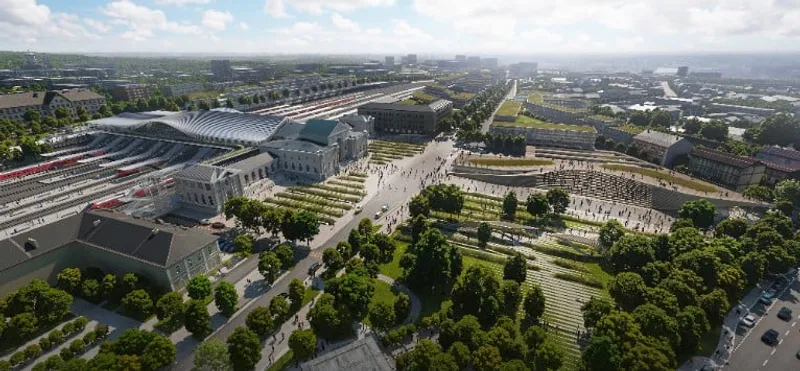
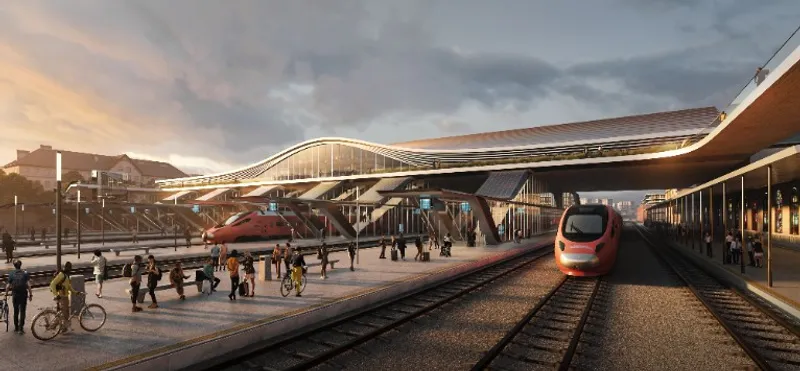
The proposal incorporates a new public bridge over the railway tracks that connect the Naujininkai district to the south with the city centre and Vilnius's old town. This bridge will transform the existing rail infrastructure from being a barrier that divides the city into a connector that unites Vilnius and serves as a transport hub for national and local rail services. It will also connect to the new Rail Baltic line that links with Europe’s high-speed network.
The renovation and reuse of the original station will create a new 9,500 sq. m concourse bridge that is a contemporary reinterpretation informed by the existing heritage building. The composition of the station’s new bridge gradually transforms along its length, from the pitched roof defined by the existing neoclassical station’s triangular pediment into softer geometries and volumes that reduce in scale to land at Pelosos Street in the Naujininkai district. A linear skylight along the length of the bridge and glazed facades over the railway tracks will provide natural light and intuitive navigation through the concourse.
The temporary kiosks and offices that have been installed over recent decades will be removed, and the clarity of the existing 9,000 sq. m station will be restored. The station will also be linked with a new public transport terminal for the city’s bus networks. This terminal will be designed as an inhabited landscape within the upgraded Stories Square park in front of the station. Its outdoor amphitheatre and ramp will lead to a public terrace on its roof.
Zaha Hadid Architects’ proposal is integral to the city’s ongoing sustainability agenda that prioritizes pedestrians and cyclists. The ‘Green Connect’ project will not only provide a wealth of new public space, but it will also create a transport hub that is future-proofed and designed with the passenger experience in mind.

The project will transform the existing rail infrastructure from a barrier that divides the city into a connector that unites Vilnius and serves as a transport hub for national and local rail services, in addition to the new Rail Baltic line that links with Europe’s high-speed network. The new concourse bridge will be a contemporary reinterpretation of the existing heritage building, and the restored clarity of the station will provide a renewed sense of purpose for the local community.
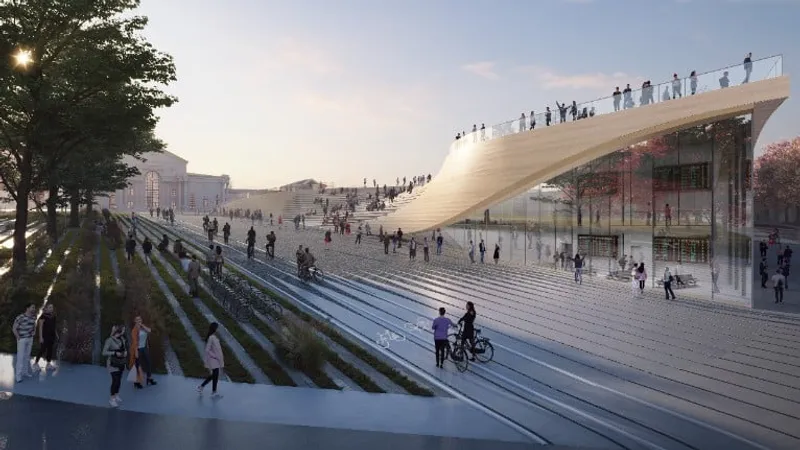
The Vilnius Railway Station is set to undergo a major transformation, thanks to the vision of Zaha Hadid Architects. The development involves relocating the existing car park to a new underground facility and creating a vibrant civic space that incorporates nature-based solutions. The new design features over 300 new trees and 4,000 square metres of landscaping, including tree-lined avenues and water gardens for the natural collection, filtration and purification of rainwater. The square and its adjacent park will provide an easily accessible green space for communities throughout the year, enhancing well-being and interaction.
One of the key features of the renovation is the new concourse bridge. The 46-metre-wide structure spans 150 metres across the railway platforms, with a roof structure and terraced landscape constructed in locally-sourced laminated timber. This material is lightweight, fire-resistant, and incorporates low embodied carbon. The fluid forms of the bridge's design provide a unique visual appeal while also supporting the bus terminal below. The terraced landscape adds to the aesthetic, providing an inviting space for people to gather and relax.
Nature-based solutions are integral to the design, with green roofs, landscaping and planting used to lower temperatures in summer and provide heat insulation in winter. This interconnected series of natural habitats within the city is easily accessible and can be enjoyed by communities throughout the year, enhancing well-being and interaction. The project also incorporates energy production technologies and depolluting strategies to improve air quality within the adjacent neighbourhoods. The positioning of photovoltaic panels has been determined through annual solar radiation analysis to maximise efficiency.
The new design also prioritises the maximisation of sunlight within the interiors in winter while reducing glare in summer. The facades have been defined to achieve this aim, providing a comfortable environment for occupants. The focus on sustainability is evident throughout the design, with the use of locally-sourced materials, low embodied carbon, and energy-efficient technologies.
The transformation of the Vilnius Railway Station and its surrounding areas will create a vibrant civic space that incorporates nature-based solutions and cutting-edge technologies. The use of green roofs, landscaping, and planting will not only enhance the aesthetic but also provide an interconnected series of natural habitats within the city. The new concourse bridge provides a unique visual appeal, while the terraced landscape adds to the inviting space for people to gather and relax. The focus on sustainability and energy efficiency is commendable and sets an excellent example for future developments.
In conclusion, the Vilnius Railway Station renovation project by Zaha Hadid Architects is a remarkable example of how cutting-edge design can blend seamlessly with sustainability and nature-based solutions. The project incorporates energy-efficient technologies, maximises sunlight within the interiors, and deploys green roofs and planting to lower temperatures and enhance well-being. The transformation will create a vibrant civic space that provides an interconnected series of natural habitats within the city, enhancing the quality of life for all.
***
Cover Render by Negativ, Courtesy of Zaha Hadid Architects

Popular Articles
Popular articles from the community


LT2A and OPEN Architectes Thread a Brick and Glass High School Through a Wooded Belgian Campus
In Braine-l'Alleud, a 3,000 m² wing for Collège Cardinal Mercier pairs pale brick with a glazed colonnade, deferring to a small chapel and a dense wood.


Aquadapt: An Underwater Habitat That Rewrites Its Rooms by the Hour
Curved modules ring the seabed while one shell shifts from breakfast room to cinema, farm and football pitch as residents' needs change.

David Ortega Stacks a Two-Story Mexico City Penthouse Around a Steel Stair and a Pergola-Shaded Roof Terrace
In Colonia Roma, a 300 m² penthouse uses oak joinery, a planted steel stair and a slatted roof pergola to make a new-build apartment feel like a house.

The Amber Palace Opera: A Geological Fiction Surfaces on Tallinn's Baltic Waterfront
Pierre Brillard reimagines a Baltic legend as a public landscape, opera house, and waterfront promenade rooted in Tallinn's coastal identity.

Similar Reads
You might also enjoy these articles

Rede Arquitetos Turns Circulation into Civic Space at the Educar II SESC School in Fortaleza
In Fortaleza, Brazil, Educar II SESC-CE trades a signature form for mesh screens, yellow thresholds and courtyard walkways built for equatorial heat.
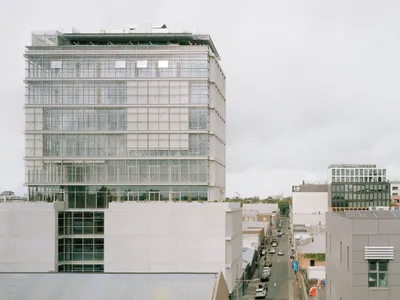
116 Rokeby Building, Collingwood
Sustainable Collingwood office building featuring double-skin façade, natural ventilation, rooftop amenities, and carbon-neutral design focused on wellbeing and longevity.
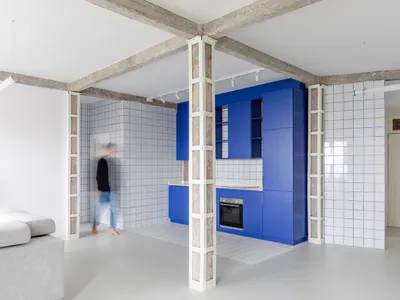
Contemporary Apartment Renovation in Spain: RV House by BIAN Opens Up to the Sea
A minimalist 1930s apartment in Santander is transformed into a flexible, sea-facing home through contemporary Spanish renovation.
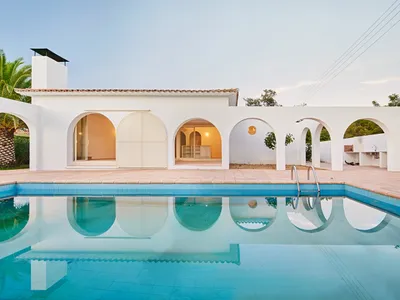
3 Marías House: A Contemporary Mediterranean Courtyard Retreat by Bajet Giramé + Burckhardt
Mediterranean courtyard home blending traditional architecture with modern design, terracotta flooring, flexible interiors, sustainable climate strategies, and garden integration.

Explore Architecture Competitions
Discover active competitions in this discipline


Challenge to reimagine the Iron Throne

Photograph architecture without architects

Illustrate the lost glory of Angkor Wat - Render Challenge

Design challenge to reuse E-waste
Comments (0)
Please login or sign up to add comments
No comments yet. Be the first to comment!