

Zen House by Garrido Lizarraga Arquitectos: A Minimalist Sanctuary Rooted in Nature
Zen House blends minimalist concrete architecture with preserved trees, creating a serene family home and yoga studio integrated seamlessly into Mérida’s natural landscape.


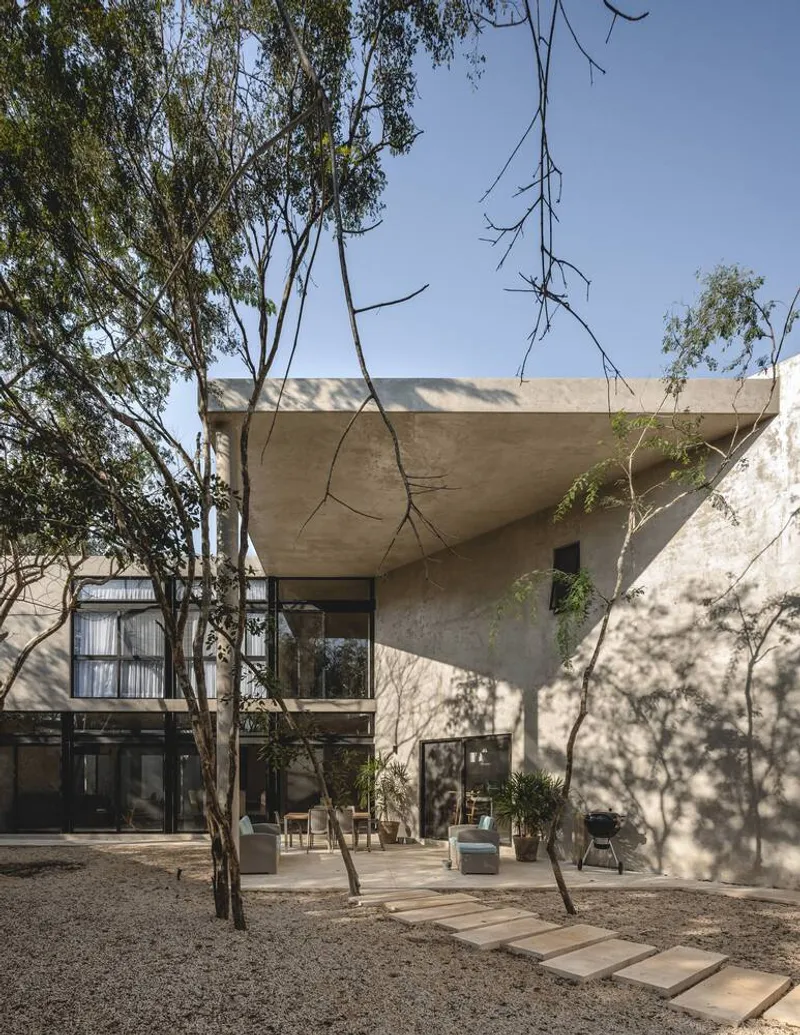
Zen House, designed by Garrido Lizarraga Arquitectos in Mérida, Mexico, redefines residential architecture by merging domestic living with a serene yoga studio. Conceived for a yoga teacher seeking harmony between home and practice, the project embraces the surrounding ecosystem as its central design force. With a total area of 400 m², the 2022 residence stands as a quiet, contemplative retreat, shaped by the unwavering commitment to preserve the site’s existing endemic trees.

A Design Concept Shaped by Nature
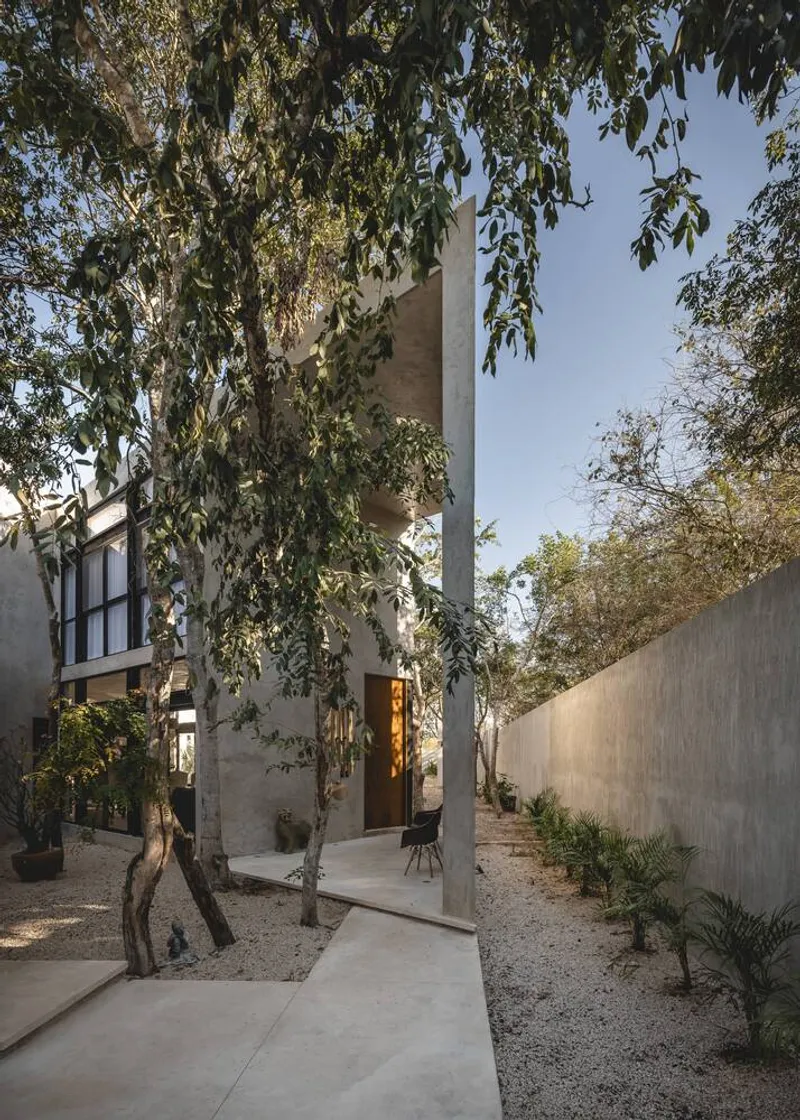
From the outset, the owners imposed one non-negotiable condition: no trees were to be cut down. This environmental mandate became the conceptual backbone of the project. Rather than adapting the site to the architecture, the architects adapted the architecture to the land, allowing roots, trunks, and canopies to define orientation, massing, and circulation.
The result is a home where architecture acts in service of nature: framing it, protecting it, and integrating seamlessly with the micro-ecosystem.


Entry Sequence and Spatial Zoning
Dual Porticos Signaling Two Worlds
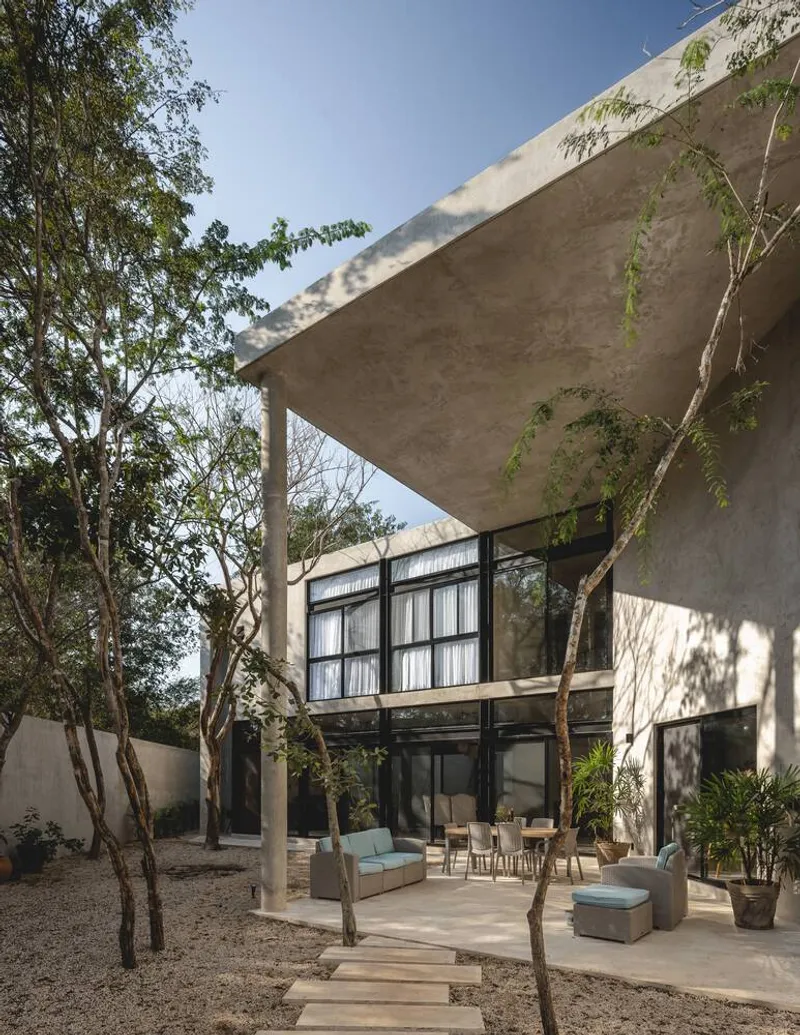
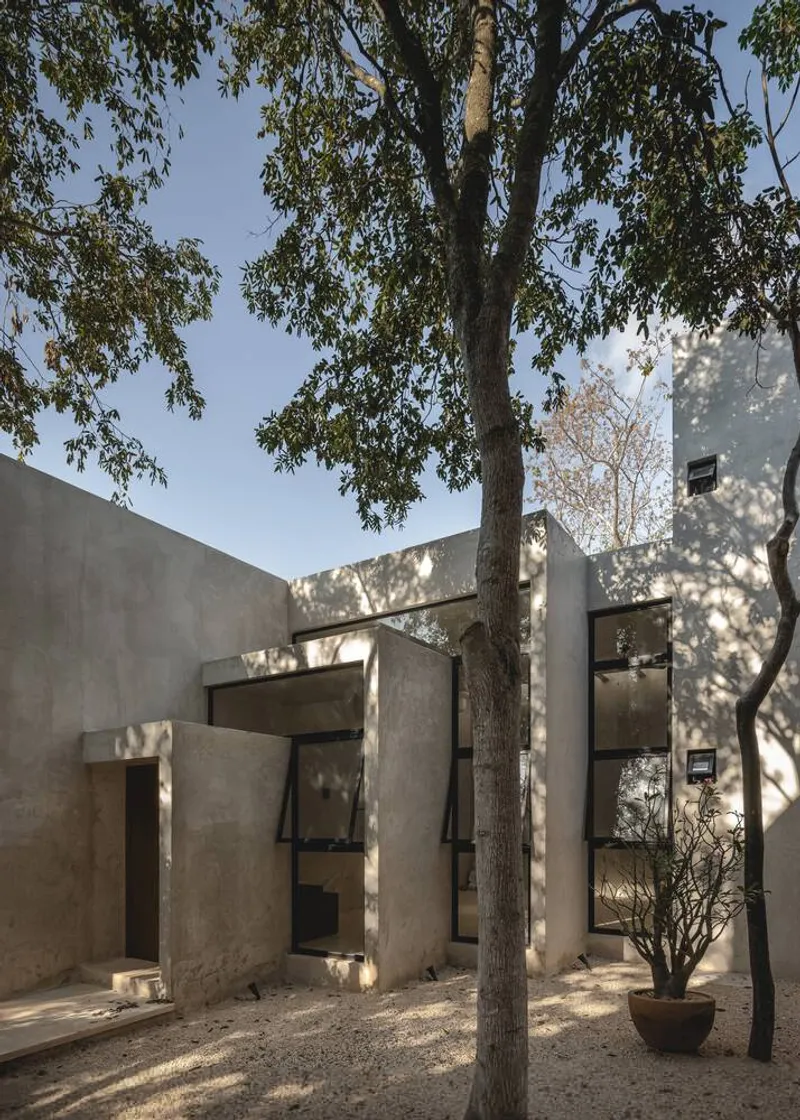
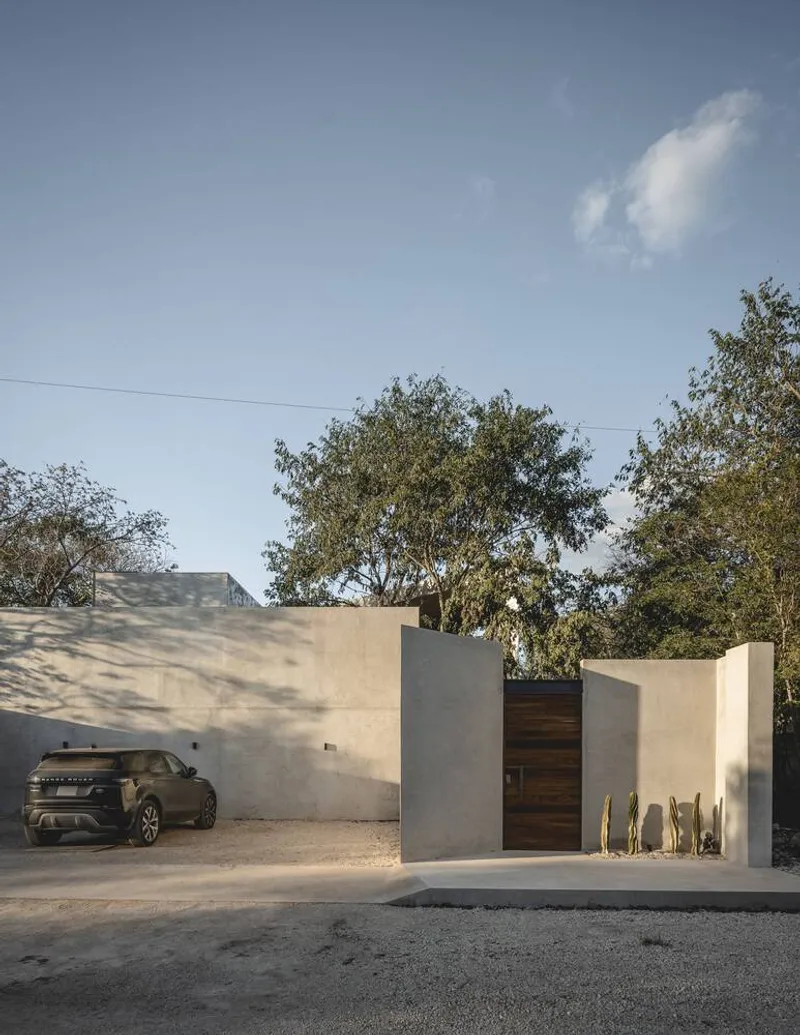
The entrance experience is defined by a dramatic double-height portico, guiding residents and visitors into the main home. A smaller 2-meter-high portico identifies the gateway to the yoga studio, subtly differentiating between public, private, and contemplative realms.
Circulation Through Light and Height
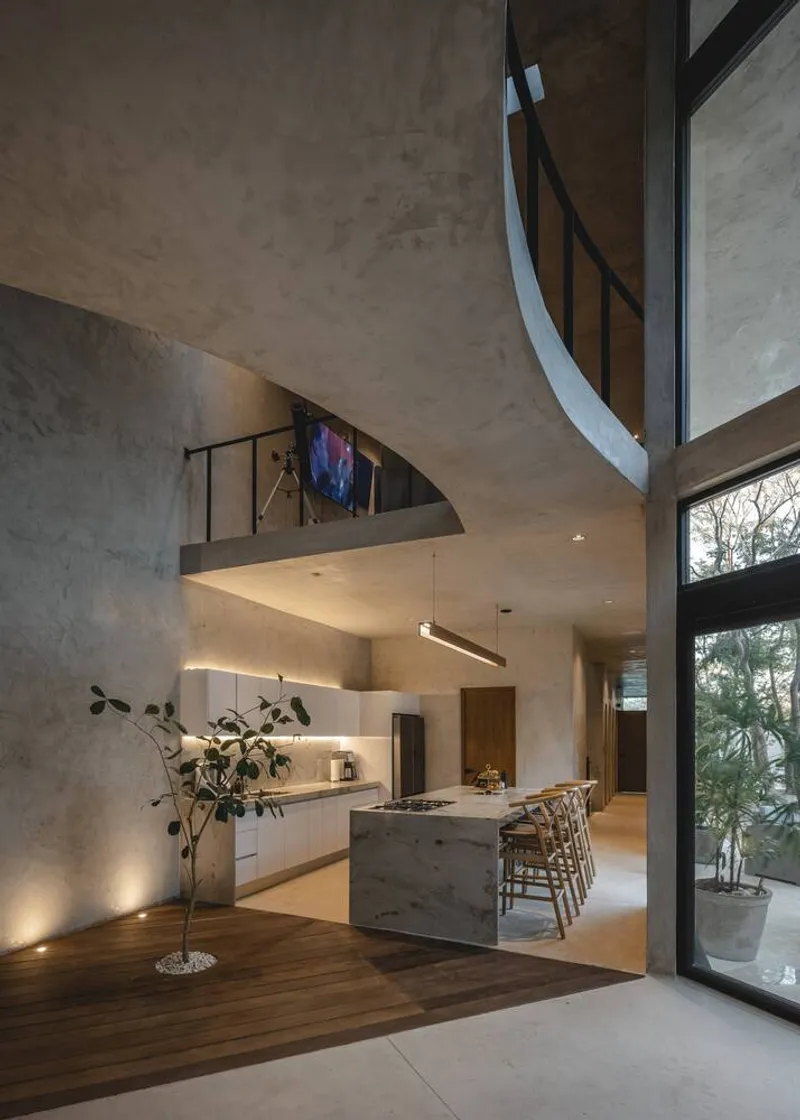
Inside the home, a sculptural double-height space, punctuated by a curved bridge, creates a fluid transition between the dining area and the kitchen. This spatial gesture enriches movement through shifting perspectives: verticality, shadows, and softened edges that encourage a slower, mindful pace.
The Heart of the Home: A Vertical Core of Connection
The second level continues this interplay of openness and connection. The same central void links the family room with the bedrooms, establishing a social nucleus where the family naturally gathers. This core is also a visual anchor, offering dynamic views across floors through layered volumes, mezzanines, and controlled apertures that modulate natural light.


Materiality: A Calm and Neutral Palette
Zen House adopts a restrained material language rooted in minimalism and sensory balance:
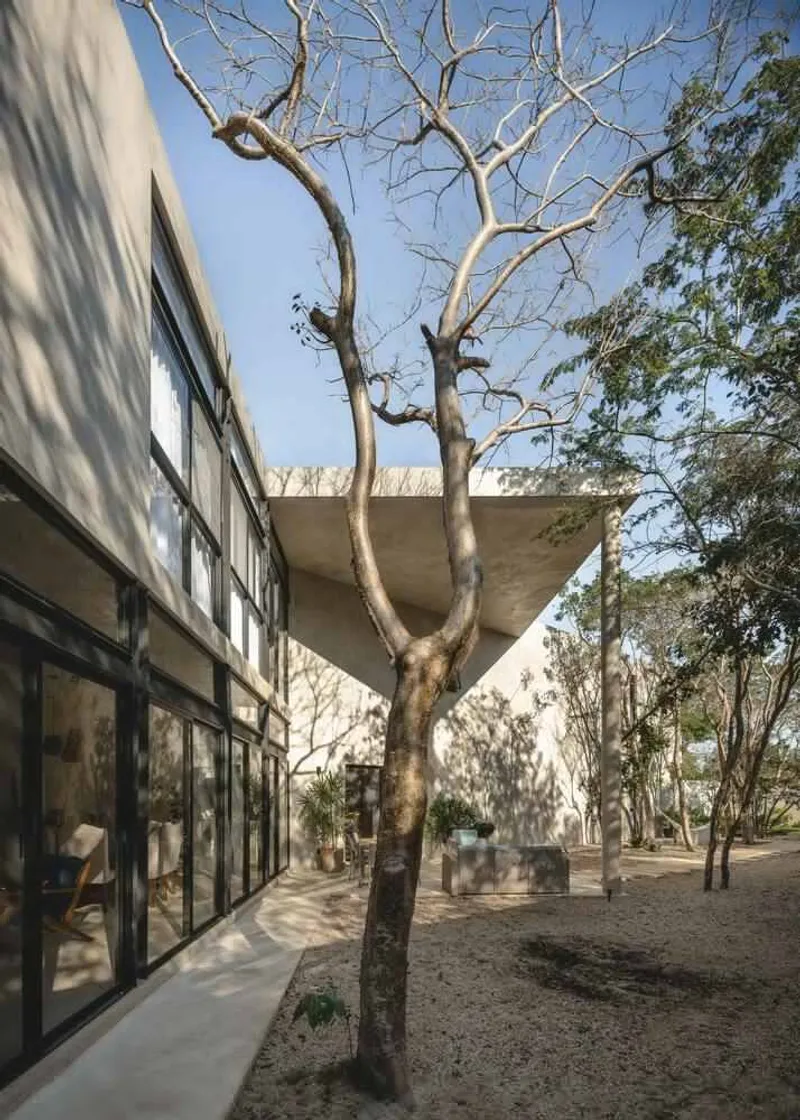
- Exposed concrete walls and ceilings emphasize mass, texture, and permanence.
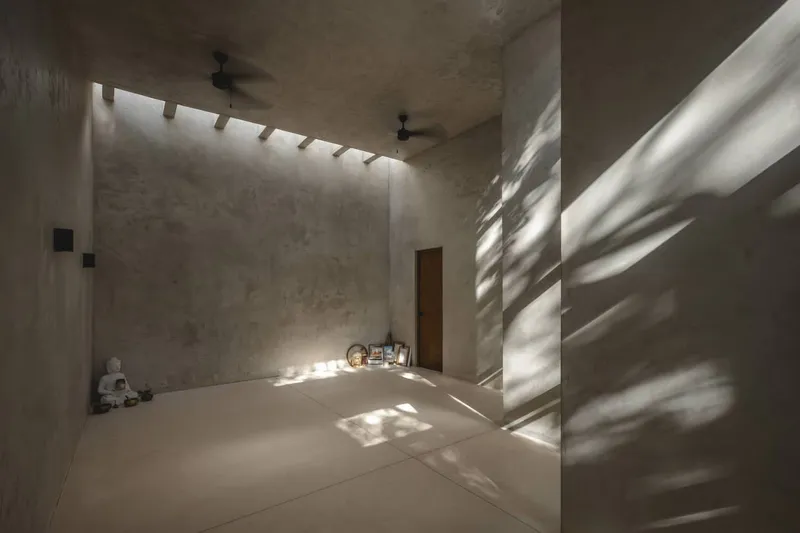
- Polished white cement floors reflect natural light, enhancing thermal comfort.
- Black-framed windows contrast the pale surfaces and precisely frame the surrounding greenery.
The tall concrete planes serve as a neutral backdrop for nature’s silhouettes: branches, shadows, and filtered sunlight become ever-changing architectural elements.

Climate Responsiveness and Environmental Impact
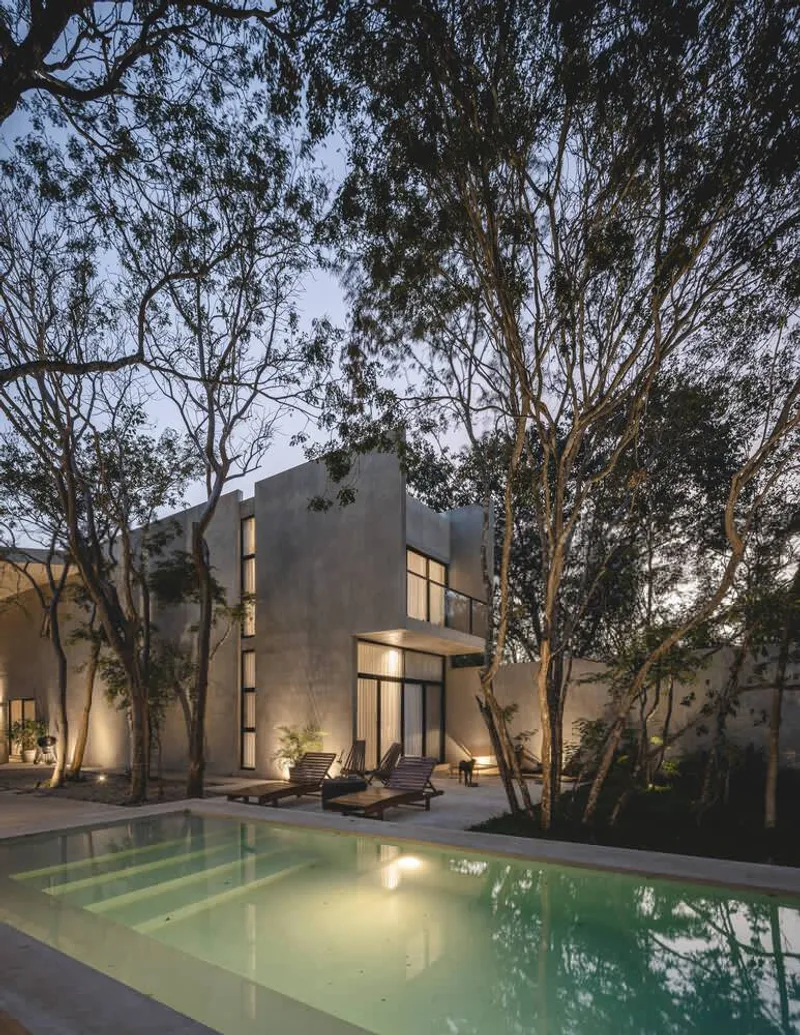
One of the most notable achievements of the project is the preservation of all 45 endemic trees on site. This decision significantly lowered the ambient temperature compared with surrounding urban zones, creating a microclimate that naturally cools the house.
The conserved trees also maintain habitats for local wildlife. Birds such as parrots, hummingbirds, cardinals, and nightingales continue visiting the site, reinforcing the home’s connection to Mérida’s natural biodiversity.
A Minimalist Retreat Integrated with Its Environment
Zen House embodies restraint, serenity, and an honest expression of materials. Rather than dominating its environment, the architecture softly recedes into it: allowing the canopy, filtered sunlight, and local climate to shape an atmosphere of wellness. Its tranquil presence reflects the values of its owner: mindfulness, simplicity, and deep respect for nature.

All photographs are works of
Manolo Solís


Popular Articles
Popular articles from the community


Opera on the Sea: Driftwood Logic Shapes a Timber Opera House on Estonia's Coast
Trevor Orgill's opera house translates the entangled drift of floating timber into a civic building where wood, water, and music converge.


graciastudio Turns a Viewless Tijuana Lot Inward Around a Courtyard of Concrete, Timber and Trees
In Tijuana, Jorge Gracia's GA2 House stacks a timber-clad private floor over exposed concrete and replaces a missing view with a planted interior patio.

Aquadapt: An Underwater Habitat That Rewrites Its Rooms by the Hour
Curved modules ring the seabed while one shell shifts from breakfast room to cinema, farm and football pitch as residents' needs change.

Cube Design Draws an Ecological Corridor Between Two Shenzhen Hills with the Nankai Building
Beside Shenzhen's container docks, the Nankai Building pairs stacked balconies with a climbing green screen to connect two hillsides across its height.

Similar Reads
You might also enjoy these articles


Hodi-Mandai Geram
Project Function: Preservation and revitalization of the Intangible heritage and socio-spatial identity of the Hodi by Housing, Cultural Memory Center, Sacred Grove, landscape, local tourism economy


Olio Towers: A Mid-Rise for Performers That Fuses Housing, Rehearsal, and Stage
Located blocks from Houston's Theater District, this modular tower stacks living units around a central performance atrium.

Oasis: Modular Green Housing Carved into Dhaka's Urban Fabric
A shortlisted Plugin Housing entry reclaims unauthorized settlements in Dhaka with stepped concrete volumes, green roofs, and ventilation-driven design.

Black Hole: A Floating Megastructure for the Post-Physical Era
Emiliano Mazzarotto envisions a spherical, self-scaling arena where e-sports, digital hotels, and holographic stadiums replace traditional public space.

Explore Meditation Space Competitions
Discover active competitions in this discipline

Challenge to reimagine the Iron Throne

Photograph architecture without architects

Illustrate the lost glory of Angkor Wat - Render Challenge

Design challenge to reuse E-waste
Comments (0)
Please login or sign up to add comments
No comments yet. Be the first to comment!