

Zen House by Studio Nirvana: A Minimalist Sanctuary in Kerala
Zen House by Studio Nirvana is a minimalist tropical retreat in Kerala, blending concrete, wood, and nature to evoke tranquility.


Zen House, designed by Studio Nirvana, is an exceptional residential project in Palakkad, Kerala, conceived as a luxurious vacation home. Far more than a mere dwelling, Zen House is a sanctuary crafted to provide mental clarity, emotional balance, and a deep connection to nature. Inspired by Zen philosophy, the design embodies simplicity, harmony, and mindful living.

A Sanctuary of Stillness and Space
Set amidst the lush tropical landscape of Palakkad, Kerala, Zen House by Studio Nirvana redefines the idea of a vacation home as a meditative retreat. Designed as more than just a dwelling, this 20,000-square-foot residence is envisioned as a spatial sanctuary—a place of silence, reflection, and renewal. Rooted in the philosophy of Zen, the house cultivates a sense of inner balance and mindful living through simplicity, light, and natural connection.

The project embodies the architects’ pursuit of creating spaces that evoke peace and enlightenment. Every line, material, and void has been composed with intentional restraint, removing excess to allow tranquility to take center stage. The design follows a minimalist approach, reducing visual noise and fostering mental clarity through its pure spatial composition.

Concept: The Essence of Zen Living
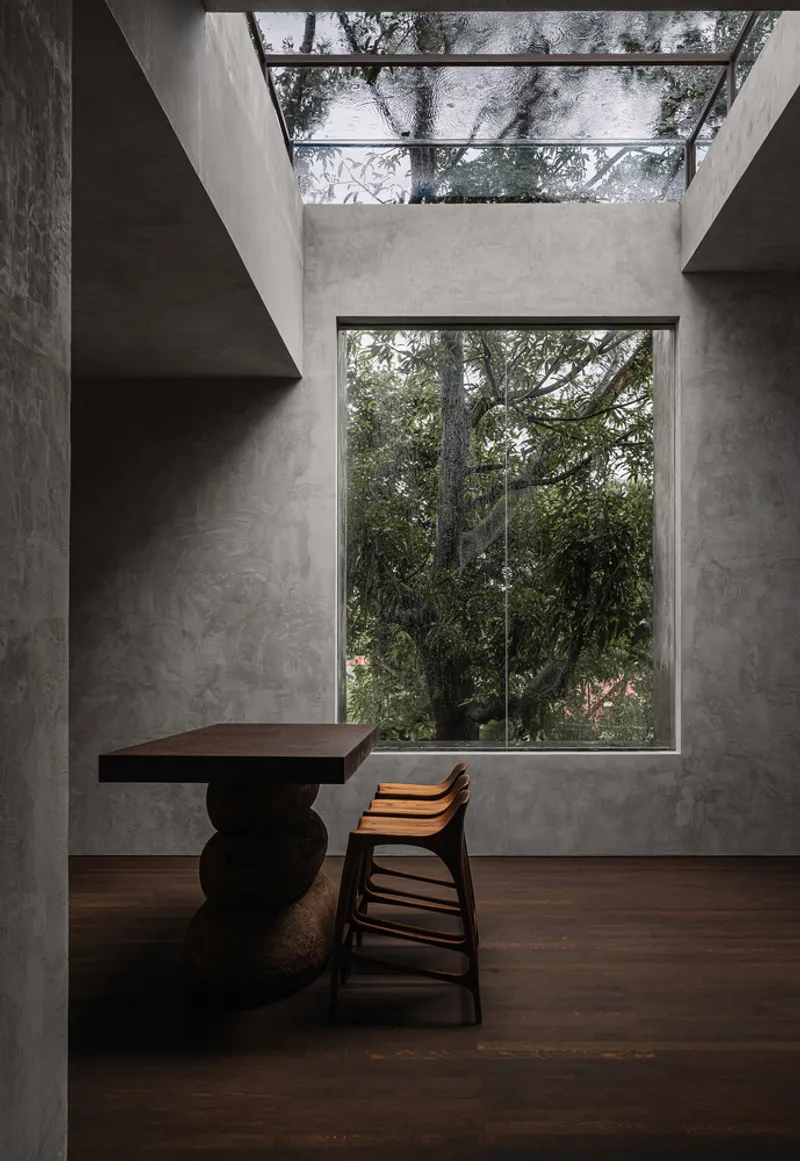
Studio Nirvana’s design philosophy draws from the core principles of Zen—simplicity, harmony, and integration with nature. The architecture avoids ornamentation, allowing space, light, and texture to communicate serenity. The open plan establishes an intuitive flow between living, dining, and private areas, while the connection between indoors and outdoors is emphasized through uninterrupted visual axes and courtyards that open toward mature mango and jackfruit trees.
The architects describe the design as “a conscious effort to design for stillness.” Spaces have been intentionally left functionally undefined, offering room for pause and personal interpretation—echoing Zen’s belief that emptiness itself can be a form of meaning.
Spatial Composition and Layout
Occupying a half-acre plot, the main residence spans approximately 15,000 sq. ft., featuring five bedrooms, open living and dining spaces, a kitchen, an indoor pool, and a meditation room. Adjoining this, an outhouse accommodates a gym, spa, and salon, extending the total built area to 20,000 sq. ft.
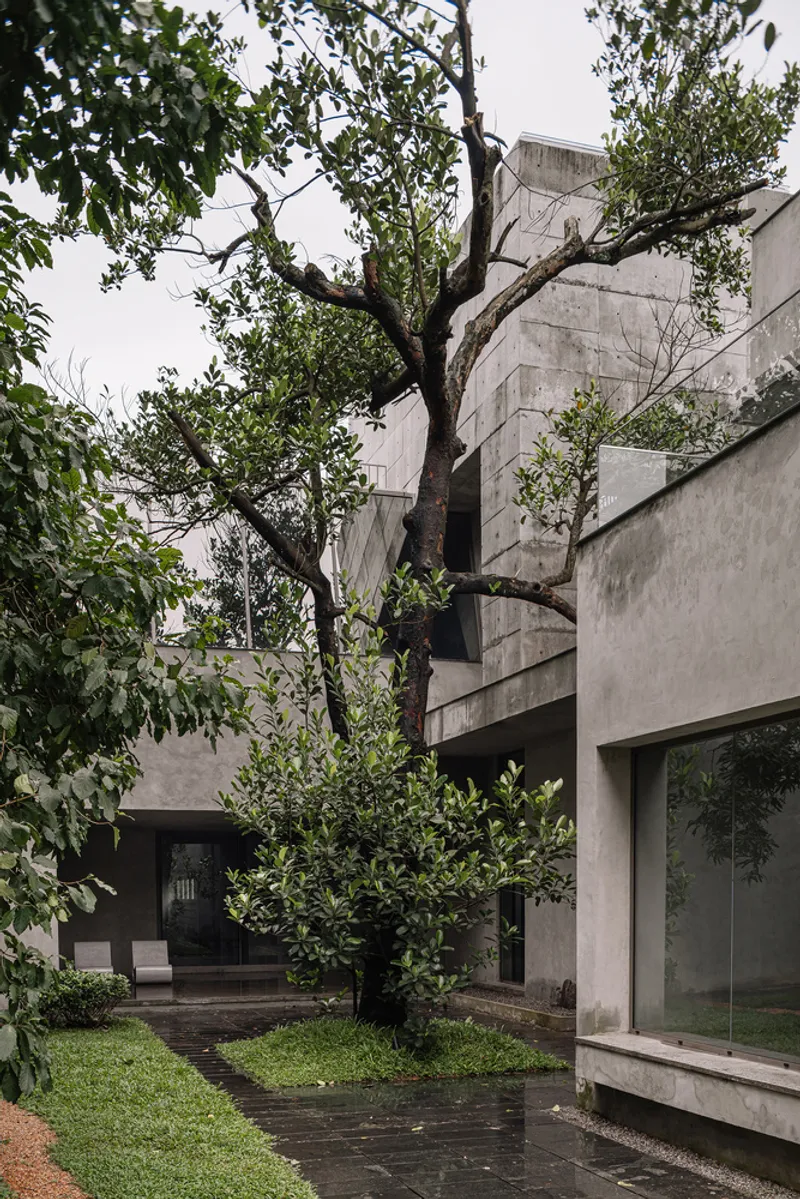
The floor plan unfolds organically, shaped by the site’s existing vegetation. The architects consciously avoided cutting mature trees; instead, the built form bends and shifts around their trunks and canopies, creating voids and geometric variations that lend the architecture a naturally evolving rhythm.
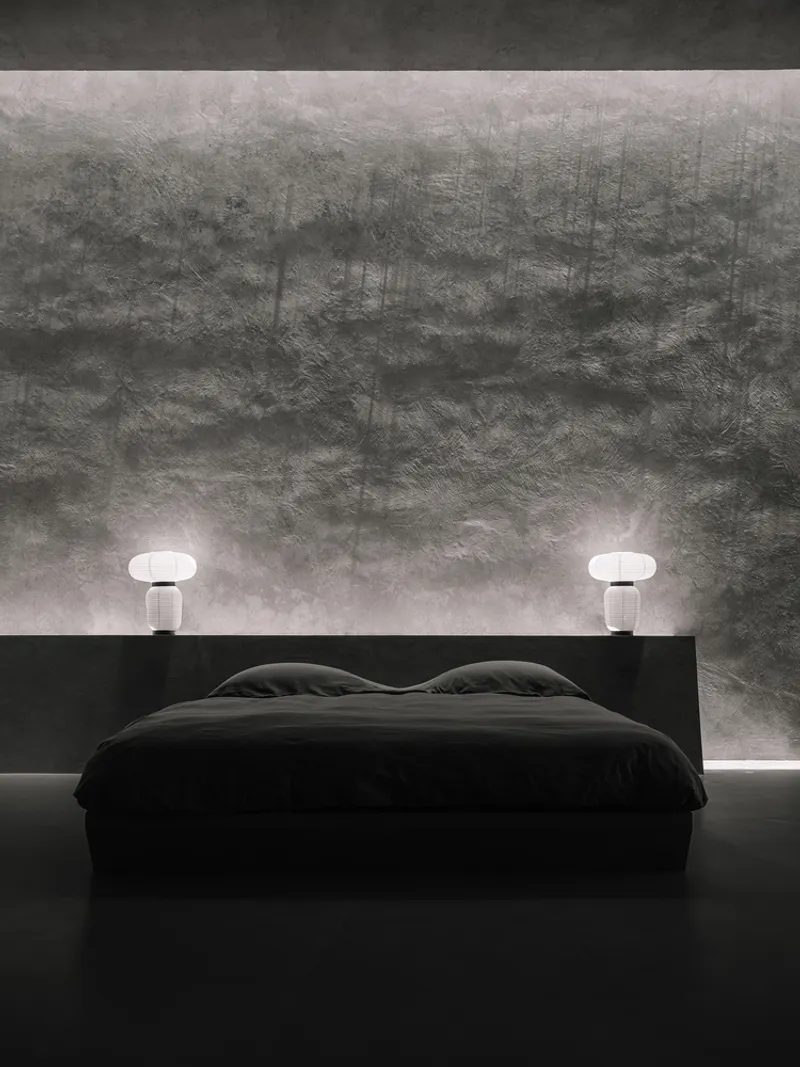
The trees act as living architecture, their canopies filtering sunlight to create dynamic patterns of shadow across concrete floors and timber walls. This constant interplay of light and shade transforms the interiors into a living canvas of natural movement.

Materiality and Atmosphere
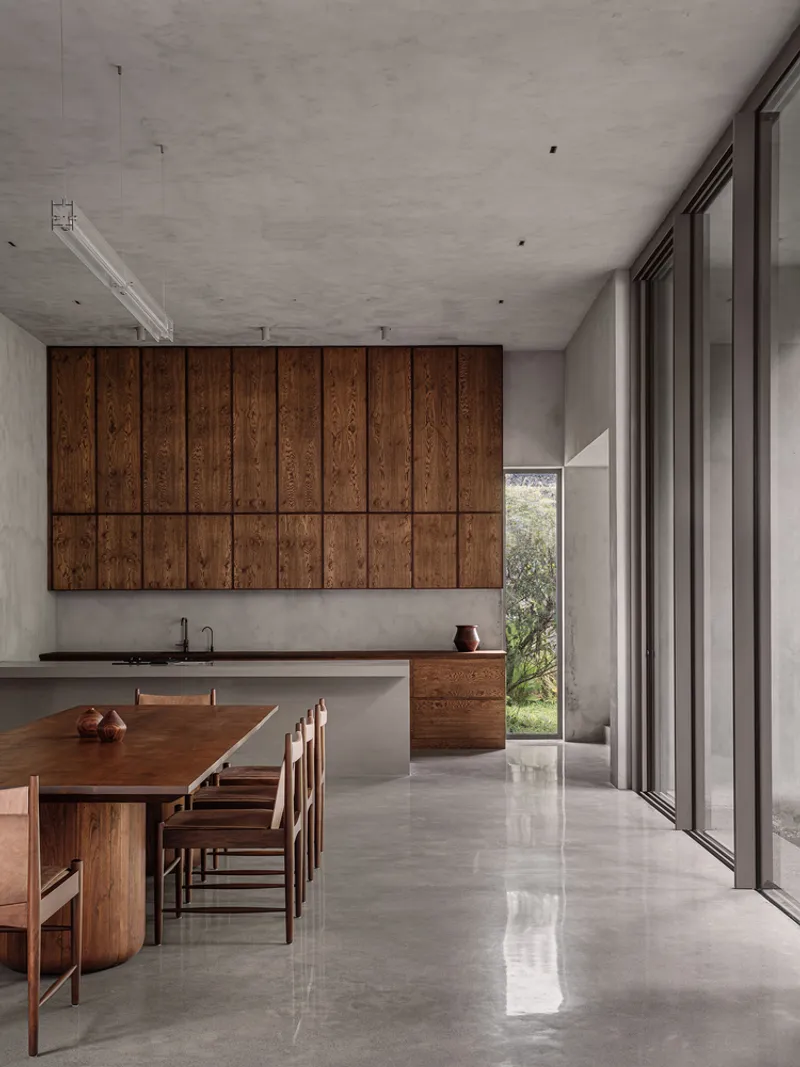
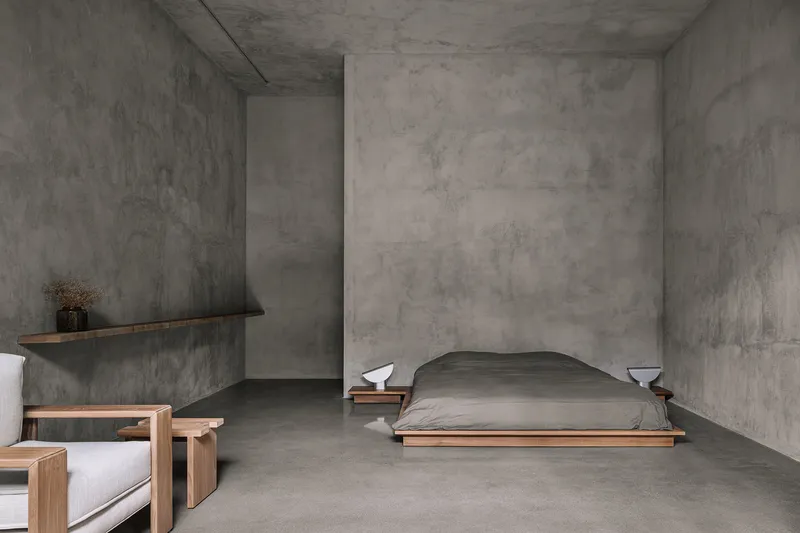
Material selection plays a crucial role in maintaining the project’s calming aesthetic. Exposed concrete, warm wood, and subtle lime finishes dominate the palette, producing a tactile serenity that resonates with the natural surroundings. Each surface contributes to a meditative quietness—raw, authentic, and timeless.
The architects describe their approach as one of “gradual emptiness”—a process of design reduction intended to clear the mind of distraction. The neutral tones, refined textures, and soft natural light together nurture a contemplative atmosphere that blurs the boundary between architecture and mindfulness.

Light as a Living Element
At Zen House, light is treated as an architectural material. Skylights, open courtyards, and carefully positioned fenestrations choreograph daylight throughout the day, making illumination itself a part of the sensory experience. As sunlight moves through spaces, it creates a rhythm that mirrors meditation—slow, intentional, and ever-changing.
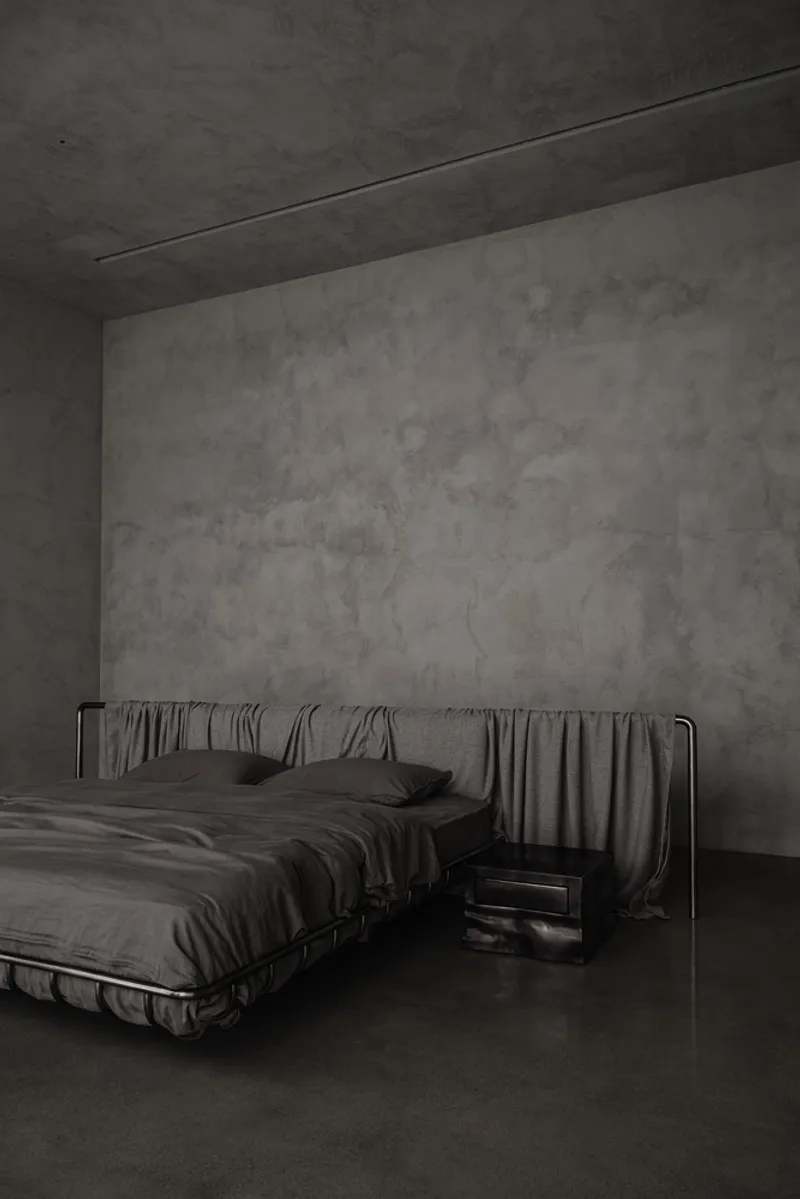

Architecture as Mindfulness
The Zen House by Studio Nirvana is not merely a physical space—it’s an architectural expression of peace. Rooted in minimalist design and Zen philosophy, the project invites its inhabitants to reconnect with themselves and their environment through simplicity, light, and nature.
In a world of constant motion, this home stands still—a haven for clarity, reflection, and presence.
All photographs are works of Ishita Sitwala


Popular Articles
Popular articles from the community


Temporary Home for Dogs: A Reversed Zoo Rethinks Animal Shelter Architecture
In Bucharest, a sinuous corridor and freed landscape flip the logic of containment, designing a shelter that works to make itself unnecessary.

Opera by the Sea Estonia: Three Shells Dissolving Architecture into Tallinn's Coastline
A winning opera house proposal replaces monumental form with interconnected shells that blur the boundary between building, park and Baltic Sea.

The Amber Palace Opera: A Geological Fiction Surfaces on Tallinn's Baltic Waterfront
Pierre Brillard reimagines a Baltic legend as a public landscape, opera house, and waterfront promenade rooted in Tallinn's coastal identity.

Singing Woman: Contemporary Architecture Inspired by Estonia’s Voice and the Sea
Singing Woman turns Estonia’s song culture into flowing opera house architecture, blending public life, landscape, sea, and national memory.

Similar Reads
You might also enjoy these articles


Hodi-Mandai Geram
Project Function: Preservation and revitalization of the Intangible heritage and socio-spatial identity of the Hodi by Housing, Cultural Memory Center, Sacred Grove, landscape, local tourism economy


Olio Towers: A Mid-Rise for Performers That Fuses Housing, Rehearsal, and Stage
Located blocks from Houston's Theater District, this modular tower stacks living units around a central performance atrium.

Oasis: Modular Green Housing Carved into Dhaka's Urban Fabric
A shortlisted Plugin Housing entry reclaims unauthorized settlements in Dhaka with stepped concrete volumes, green roofs, and ventilation-driven design.

Black Hole: A Floating Megastructure for the Post-Physical Era
Emiliano Mazzarotto envisions a spherical, self-scaling arena where e-sports, digital hotels, and holographic stadiums replace traditional public space.
Explore Meditation Space Competitions
Discover active competitions in this discipline

Challenge to reimagine the Iron Throne

Photograph architecture without architects

Illustrate the lost glory of Angkor Wat - Render Challenge

Design challenge to reuse E-waste
Comments (0)
Please login or sign up to add comments
No comments yet. Be the first to comment!