
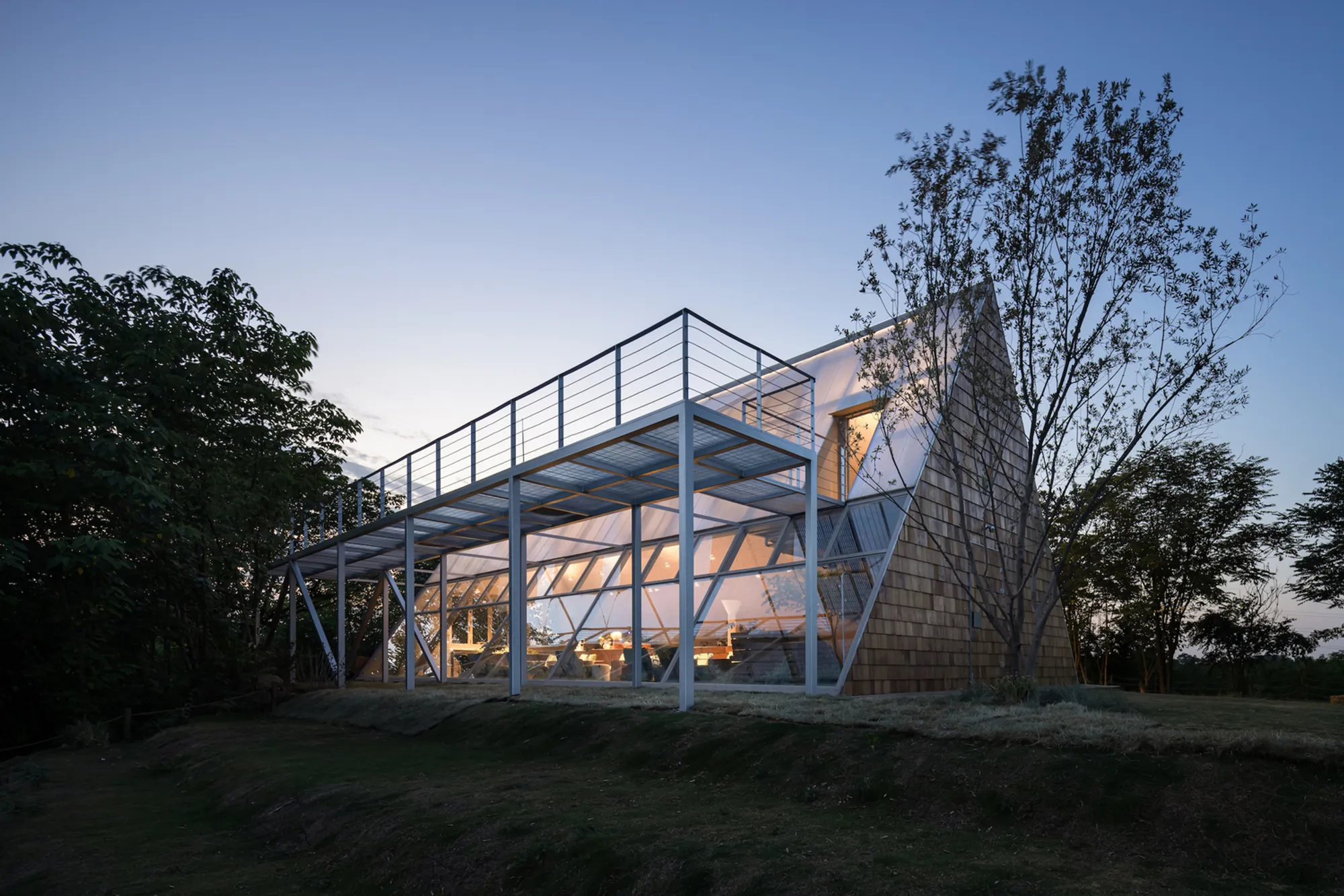
Zhicang Coffee: A Masterpiece in Triangular Prism Architecture Design by MOS Wood & Stone Design
A striking triangular prism-shaped café in Xi’an, blending architectural innovation, sustainability, and cultural heritage at Mihe Farm.


Introduction to Triangular Prism Architecture Design
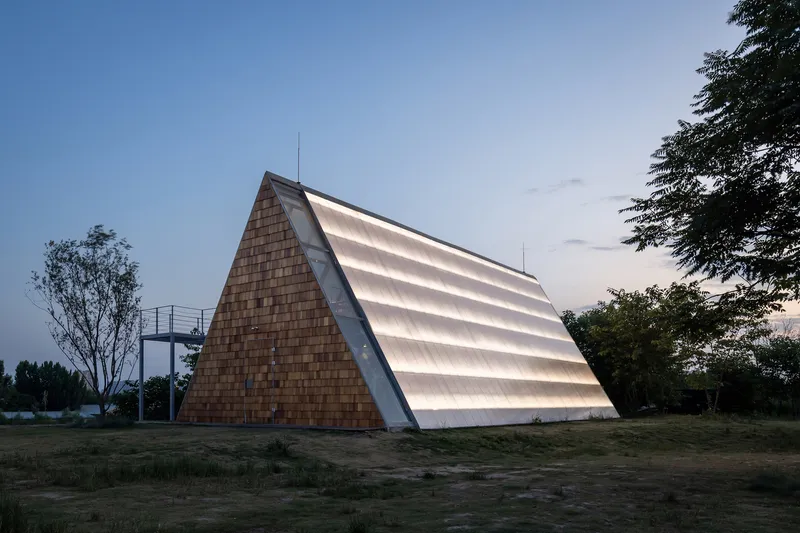
Zhicang Coffee, located on Mihe Farm in Xi’an, China, is an extraordinary architectural creation by MOS Wood & Stone Design. Completed in 2024, the project introduces a stunning triangular prism-shaped building that harmoniously integrates modern architectural techniques with the historical and natural landscape of the Han Chang’an City site. Positioned on a highland within the farm, the café is not just a functional space but a symbol of how architecture can blend preservation, innovation, and environmental harmony.
The design transforms a simple coffee shop into an iconic landmark that celebrates the concept of "a container of light" while offering panoramic views, functional spaces, and a deep connection to nature. This architectural gem redefines the way urban and rural landscapes can merge into a single cohesive narrative.
Context and Site Integration
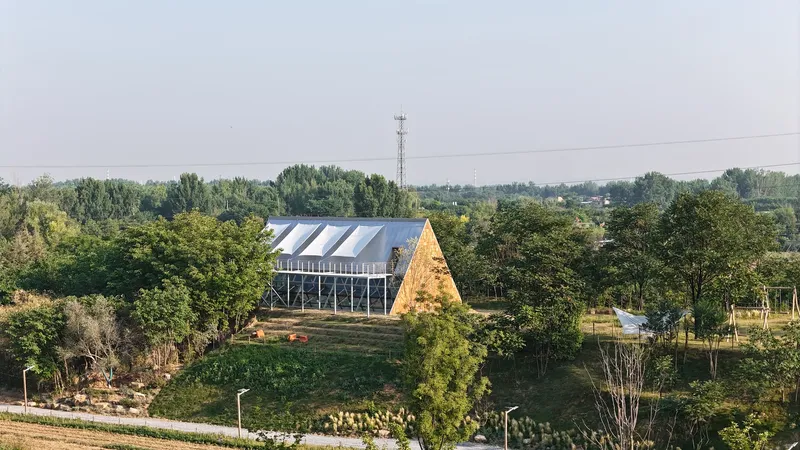
Mihe Farm, where Zhicang Coffee resides, represents a dual effort to preserve historical sites while promoting modern urban renewal. Situated in Lixiahao Village, one of 33 villages within the historic Han Chang’an City area, the farm retains its natural terrain and pastoral charm. Against this rustic backdrop, Zhicang Coffee emerges as one of the first brands to settle in the area, enhancing the farm’s offerings with its unique design and multifunctional purpose.
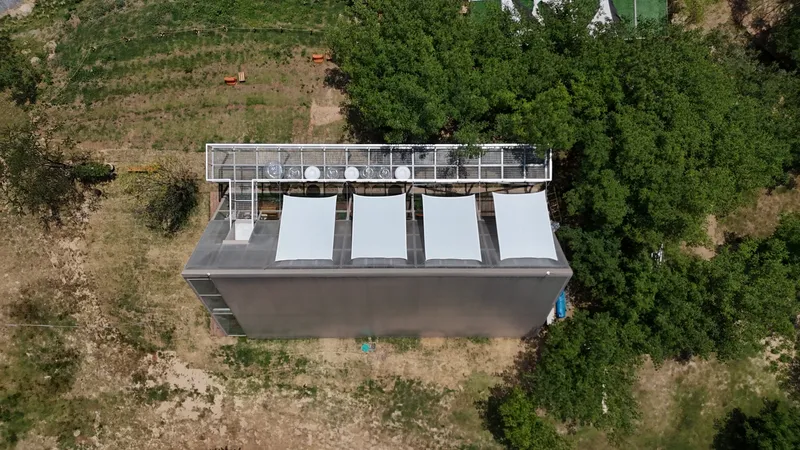
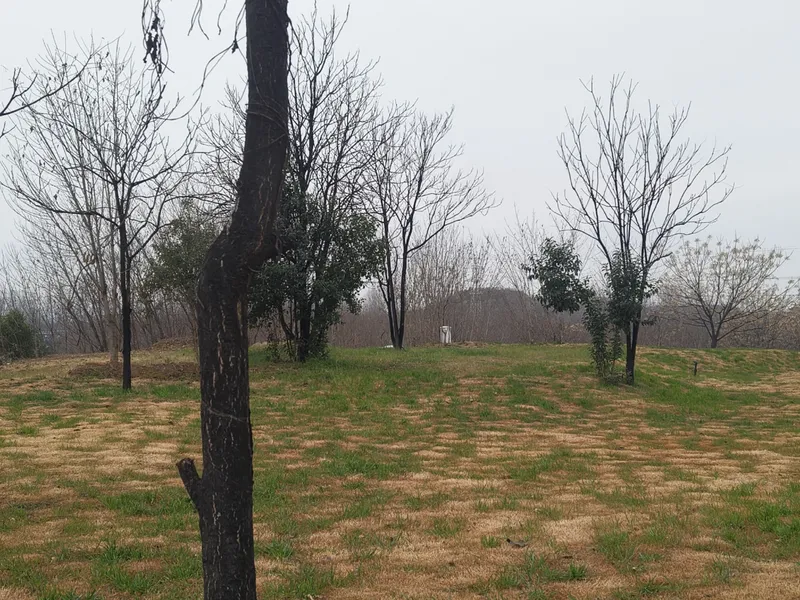
The highland chosen for the café provides sweeping views of the farm and its surroundings. The uneven terrain and triangular open space defined by clusters of trees on the site naturally inspired the architects to adopt a triangular prism form. This design choice not only complements the setting but also emphasizes the café’s role as a focal point within Mihe Farm.
The Concept of "A Container of Light"
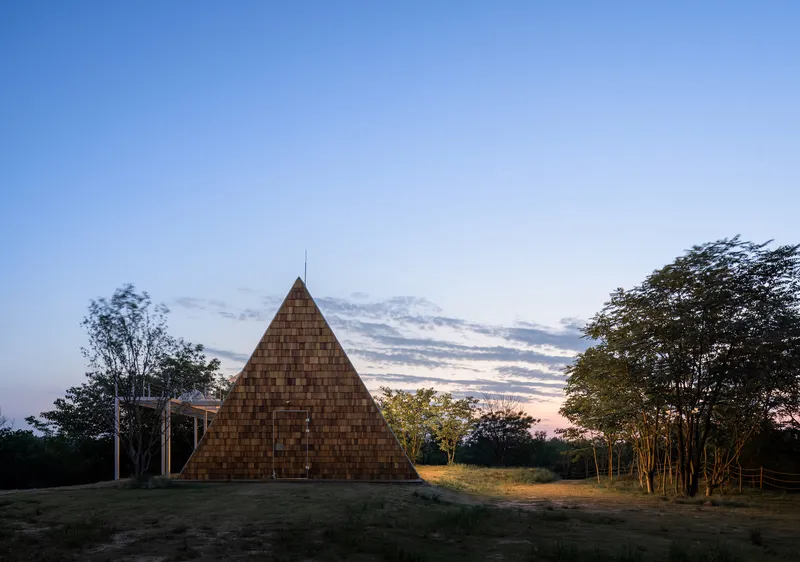
Zhicang Coffee embodies the brand’s ethos of creating spaces that reflect local landscapes and cultures. The triangular prism design reinforces the concept of "a container of light," with its structure maximizing natural light during the day and transforming into an illuminated beacon at night. The building achieves this duality through its innovative use of materials and spatial organization.
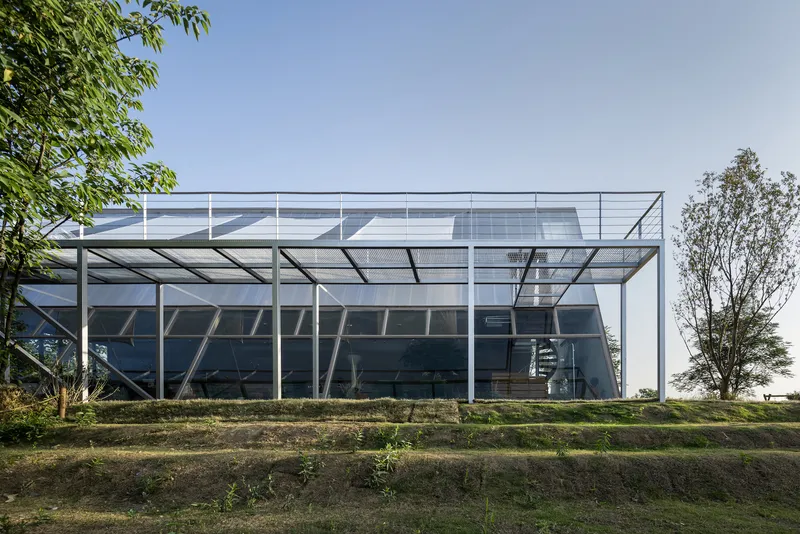
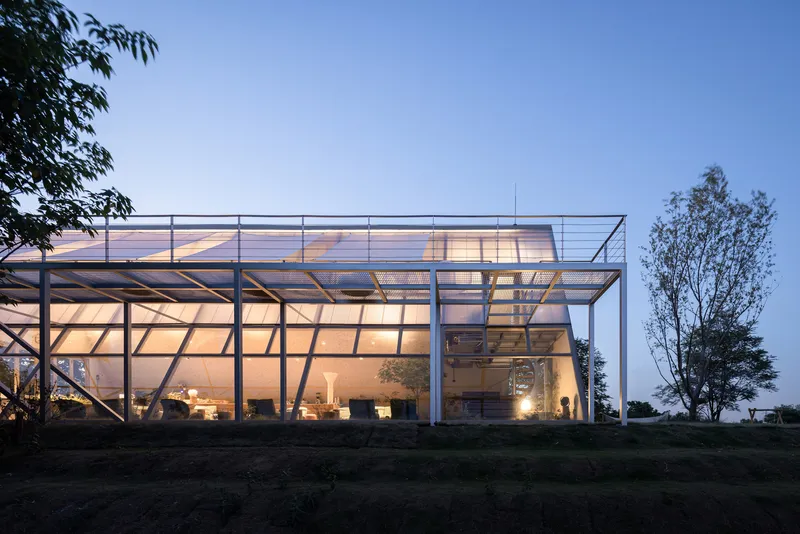
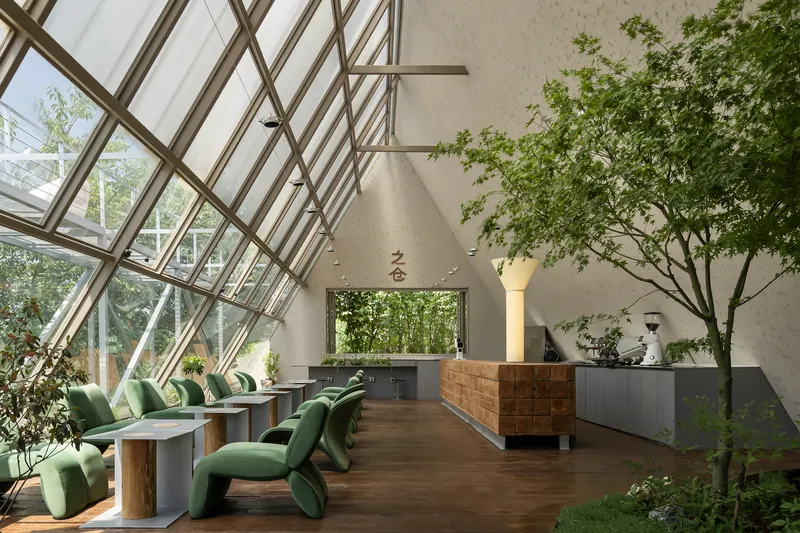
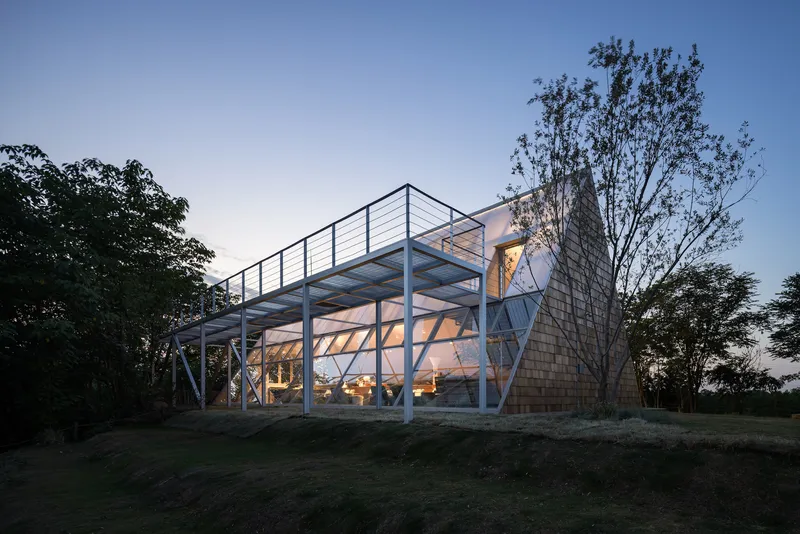
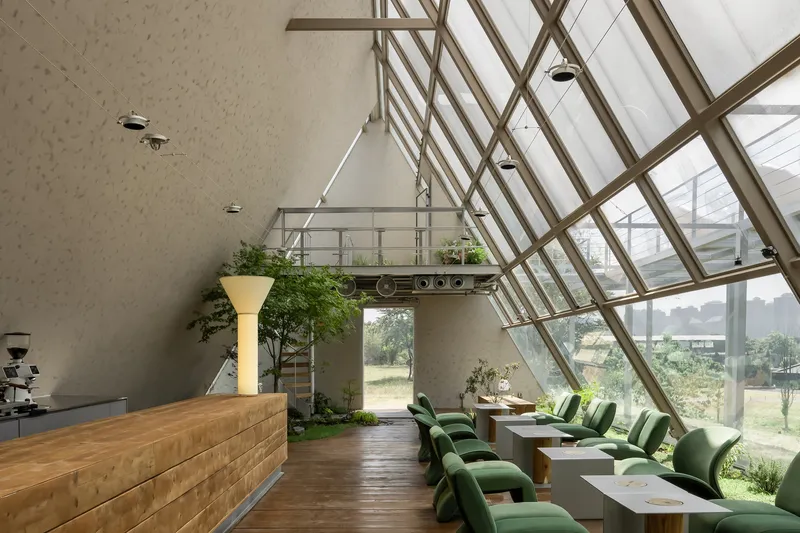
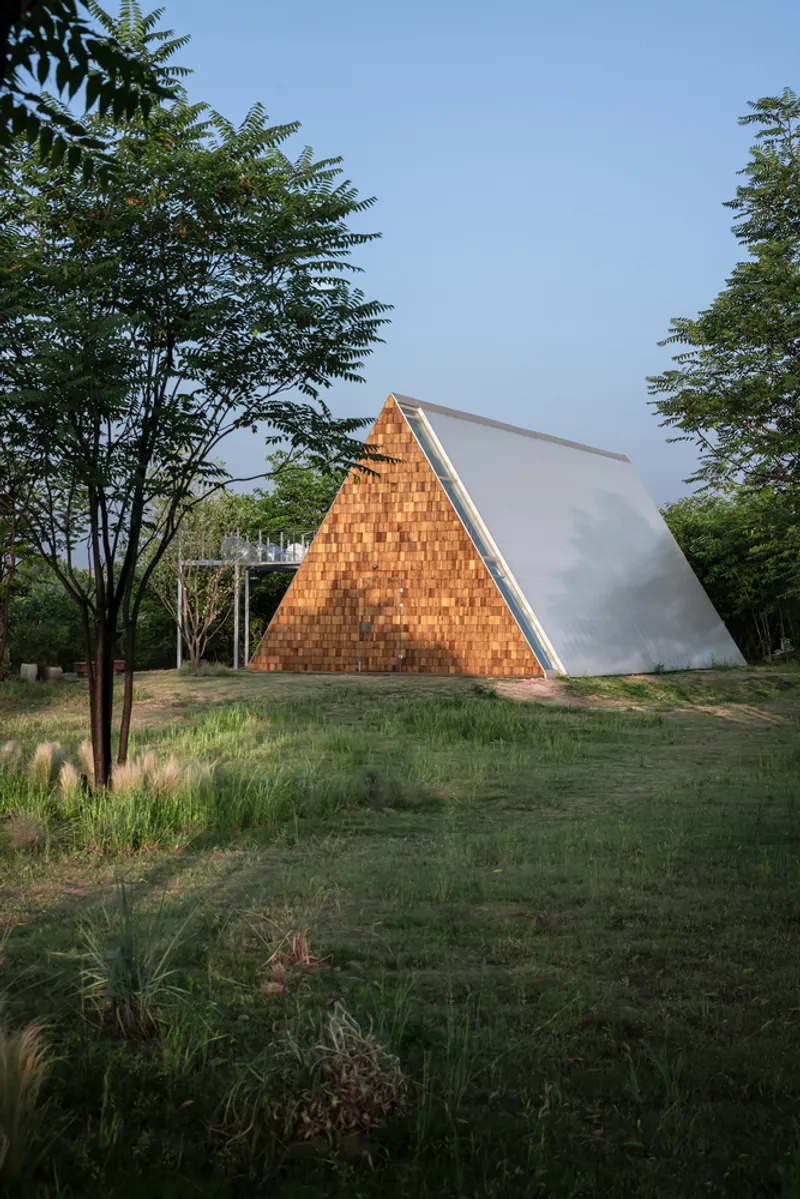
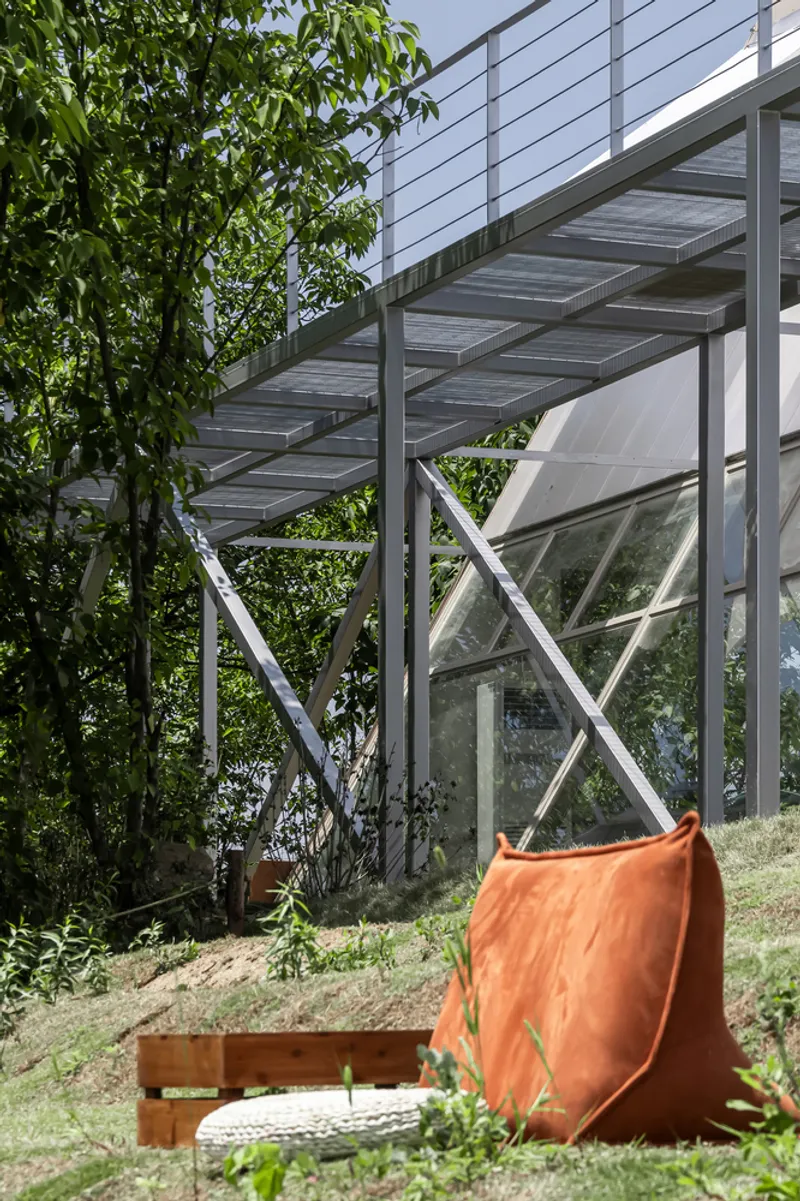
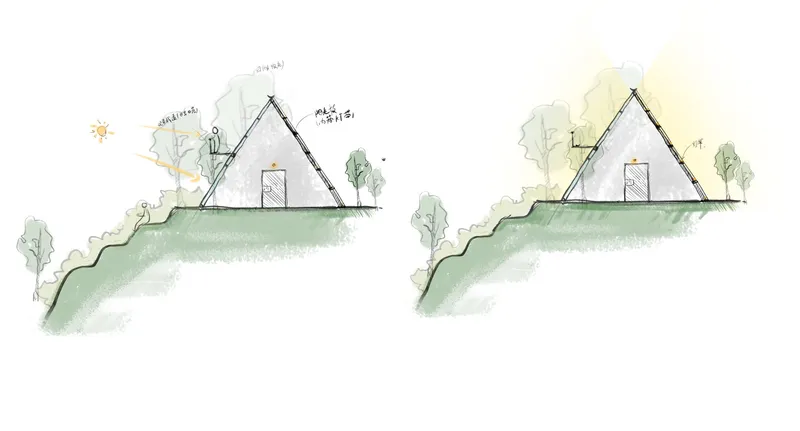
The steel framework of the café, especially on the southern side, integrates large transparent glass panels that invite natural light into the interior while framing picturesque views of the farm. This openness contrasts with the more solid north façade, where translucent sunlight panels and horizontal light strips create an interplay of light and shadow. As night falls, the café becomes a "lighthouse," its illuminated north and south facades enriching the surrounding landscape.
Architectural Form and Materiality
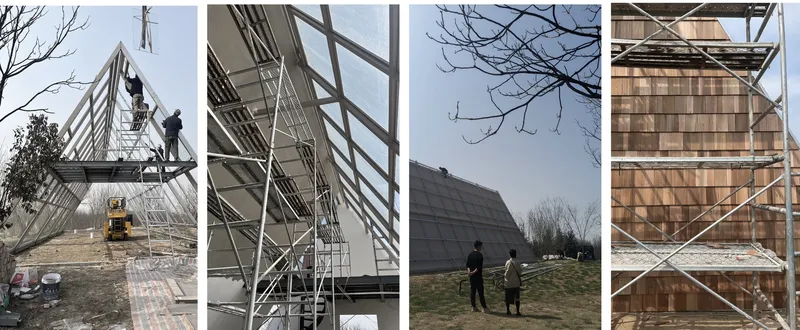
The triangular prism shape of Zhicang Coffee stems from the site’s natural topography and the need for a stable structure on the highland. By flipping a rectangular prism vertically, the architects achieved a form that converges upward, symbolizing focus and elevation. This upward movement draws the eye toward the highland, making the café a central point of interest within Mihe Farm.
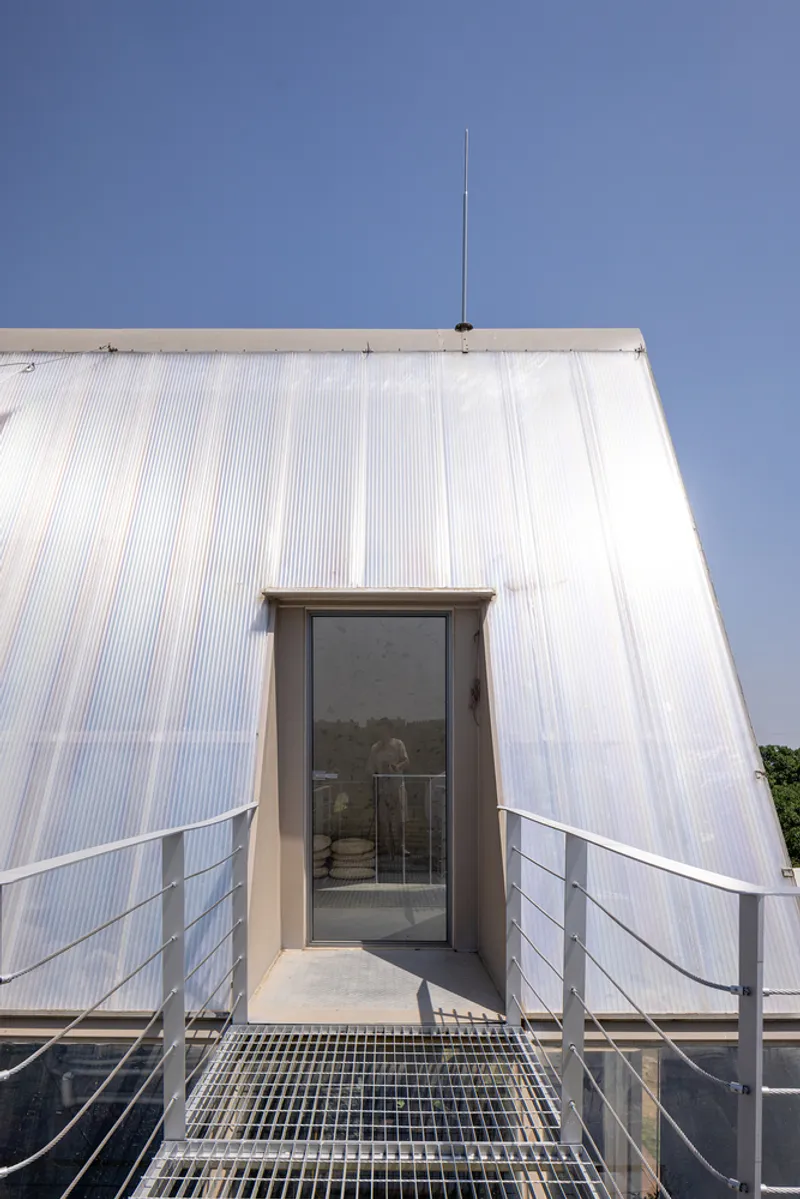
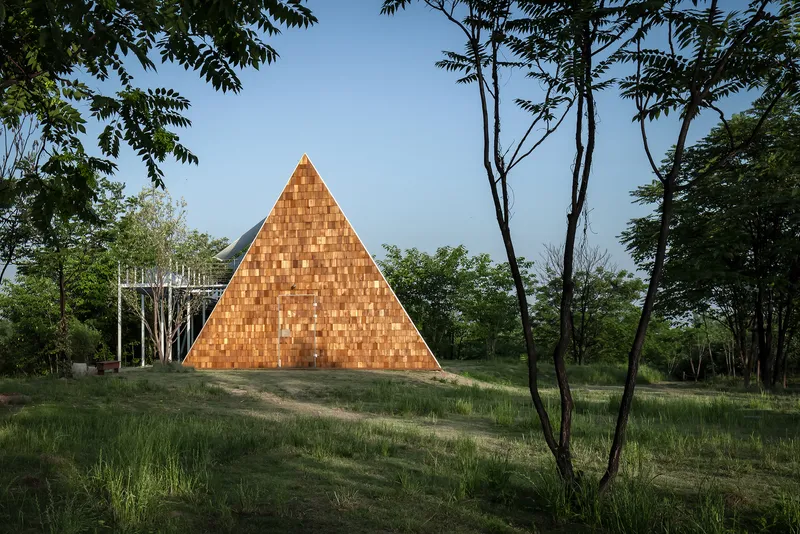
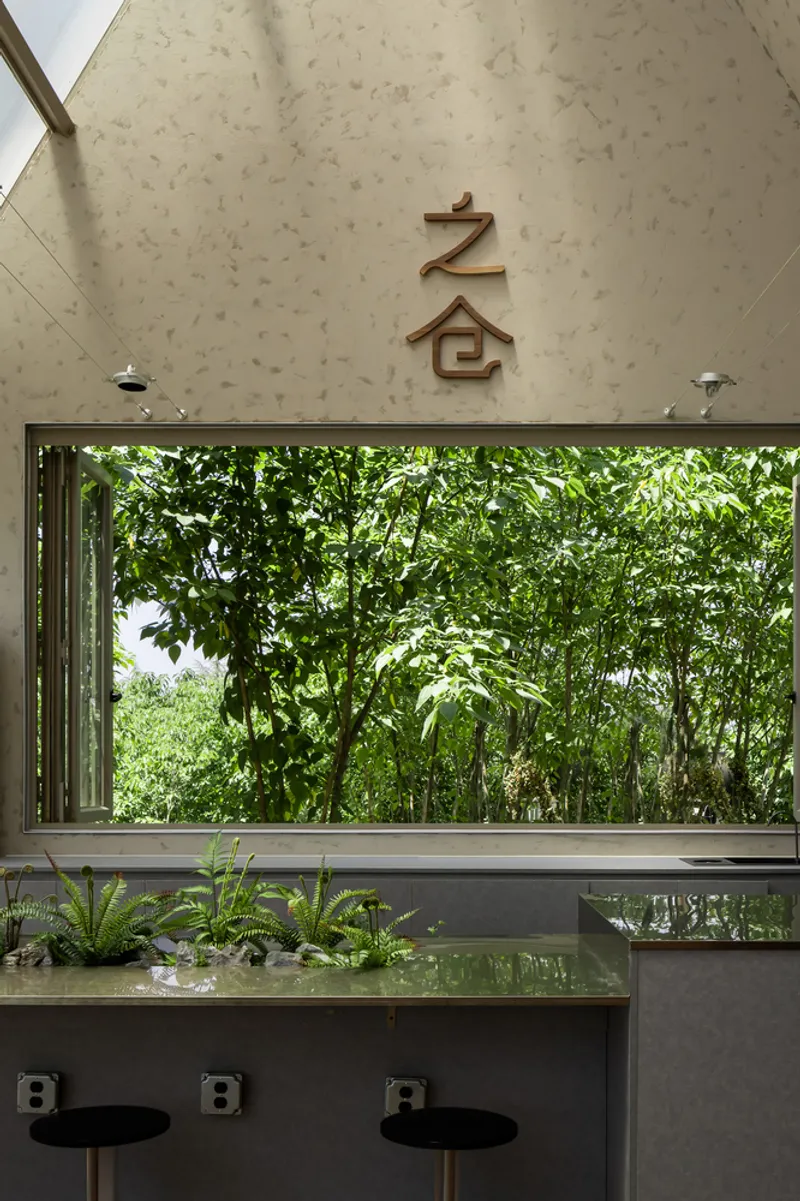
The eastern façade, where the entrance is located, adopts a bold triangular geometry. Crafted with natural cedar wood chips, the façade features a gradient of irregular colors, adding a sense of vibrancy and texture to the design. The west façade, surrounded by trees, incorporates a horizontal window that frames the lush landscape, bringing the outdoors into the interior.
Interior Design and Spatial Flow
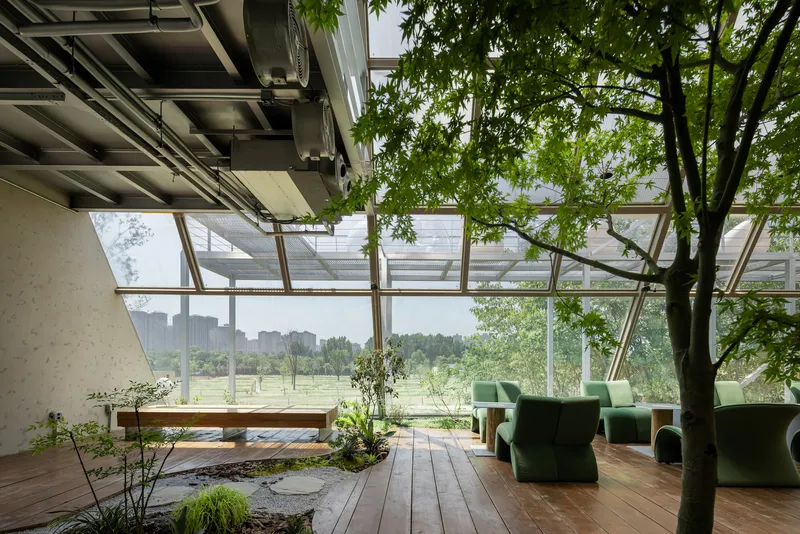
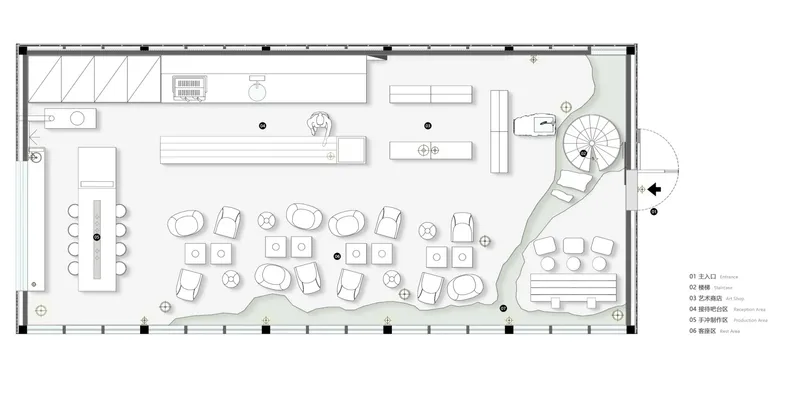
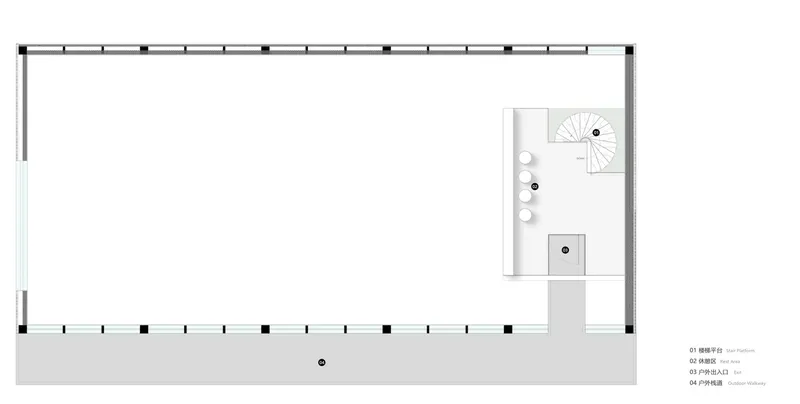
The interior of Zhicang Coffee is meticulously designed to balance openness and functionality. The ground floor features a seamless transition between indoor and outdoor spaces, facilitated by a steel corridor extending from the south side of the building. A spiral staircase near the entrance connects the first and second floors, leading to an outdoor footpath that offers unparalleled views of the farm and its sunsets.
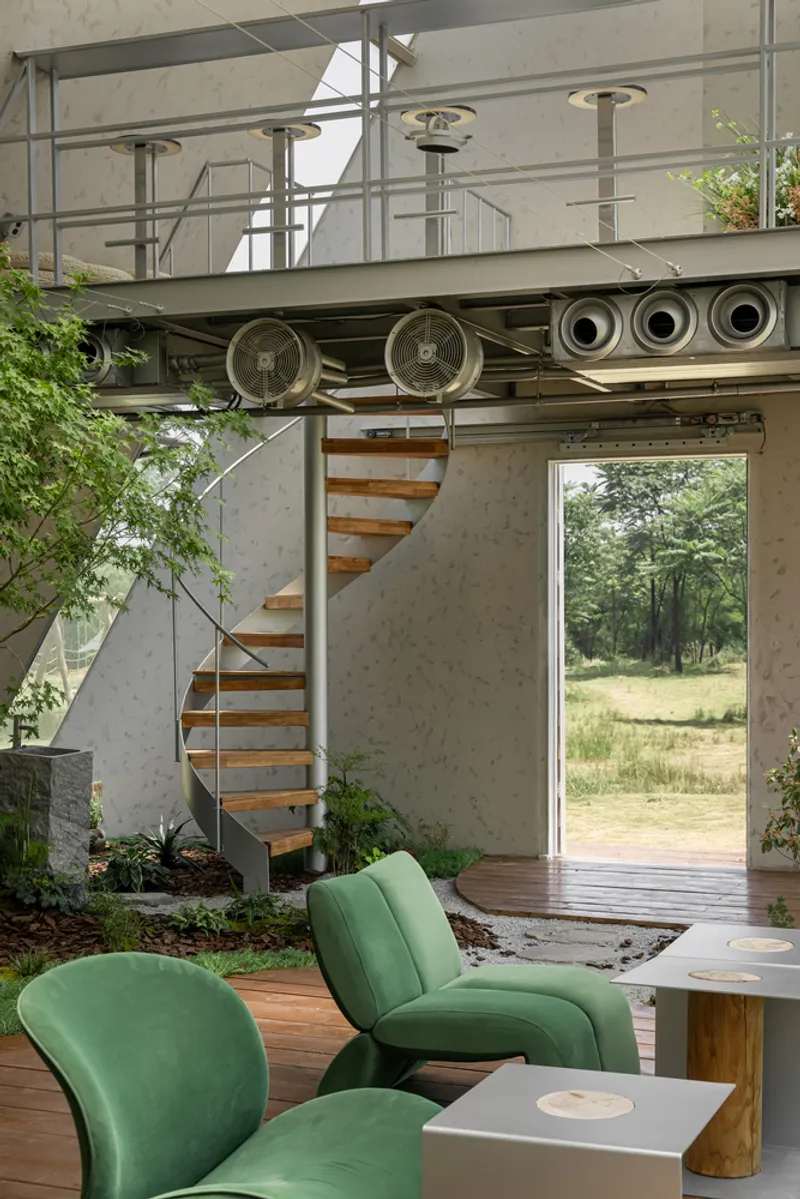
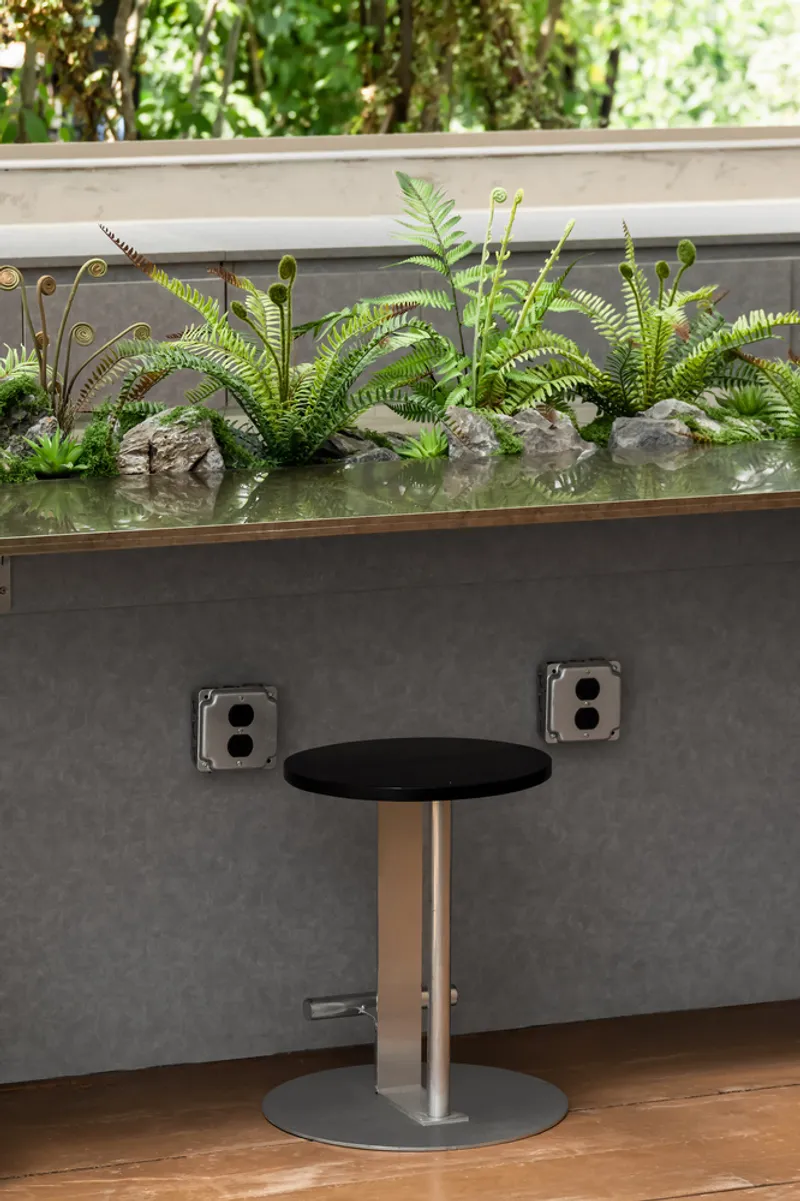
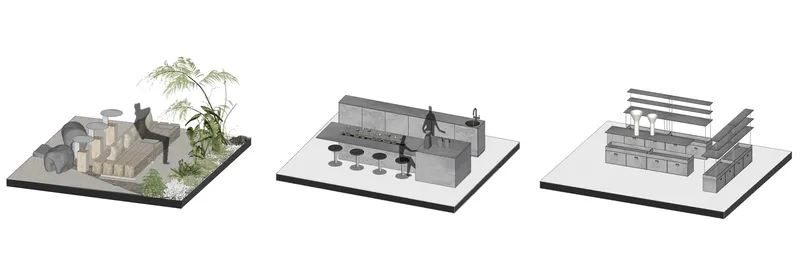
The café’s layout accommodates diverse functions, including a coffee station on the north side, a retail area showcasing coffee beans and art merchandise, and an open seating area facing the west façade’s horizontal window. The design prioritizes customer interaction, with the display cabinets for art merchandise strategically positioned near the staircase to encourage exploration and engagement.
Nature and Sustainability
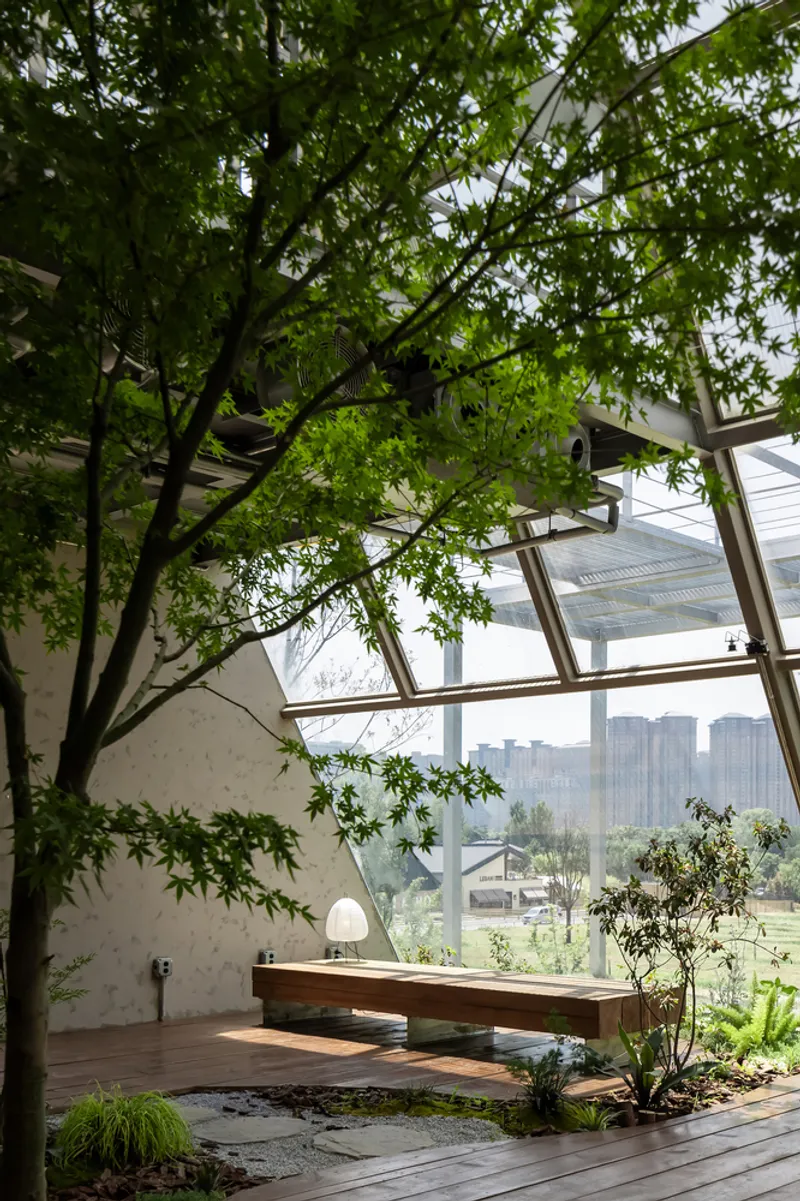
Zhicang Coffee is a testament to sustainable architectural practices. In accordance with site regulations, the building incorporates indoor maple trees and integrates them with the surrounding natural environment. The interior spaces are bathed in natural light, reducing the need for artificial lighting during the day. The expansive glass panels on the south façade enhance ventilation while connecting the café’s interior to the farm’s lush greenery.
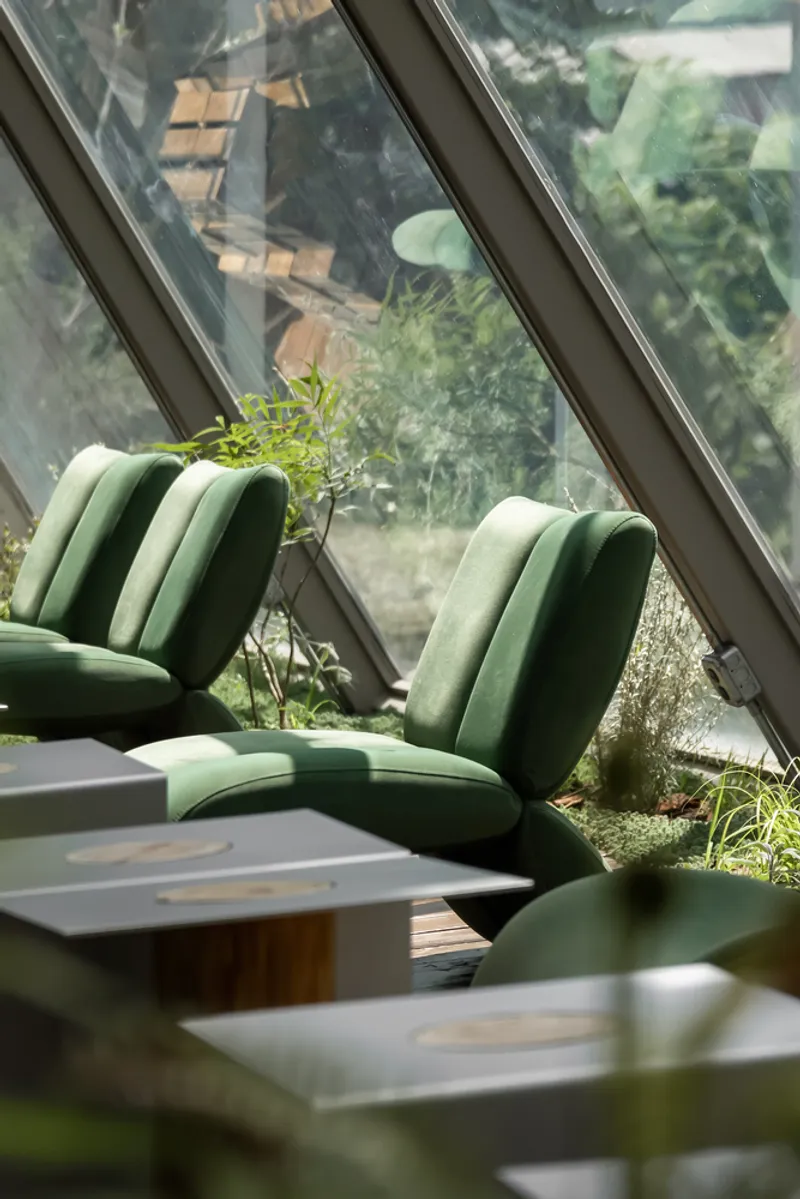
The triangular prism structure also reflects the architects’ sensitivity to local materials. The cedar wood façade echoes the textures and tones of the surrounding landscape, creating a visual dialogue between the building and its environment. This thoughtful material choice ensures that the café blends seamlessly with its pastoral setting.
A Space for Community and Culture
Zhicang Coffee is more than just a café; it is a cultural hub within Mihe Farm. Its multifunctional design enriches the visitor experience by providing a space to relax, enjoy scenic views, and engage with local art and culture. The integration of art merchandise and retail areas reflects the brand’s commitment to fostering a deeper connection with the community.

The café’s architectural form, inspired by triangular prism design principles, invites people to view the landscape and architecture through a new lens. By redefining the relationship between built structures and their natural surroundings, Zhicang Coffee elevates the idea of a café to an inspiring, thought-provoking experience.
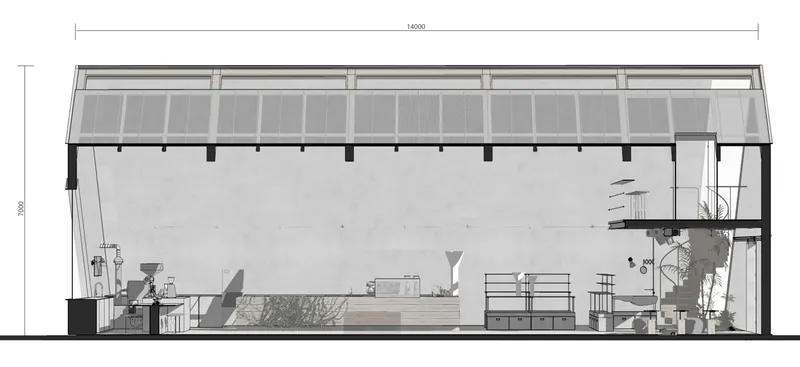
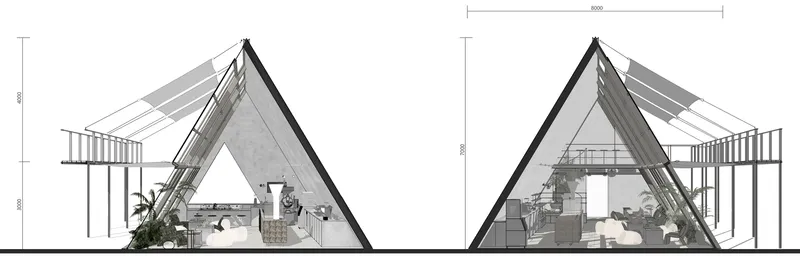
Zhicang Coffee by MOS Wood & Stone Design represents a groundbreaking exploration of triangular prism architecture design. Its innovative form, harmonious integration with the landscape, and commitment to sustainability set it apart as a beacon of modern architectural practice. By blending functionality, cultural significance, and aesthetic appeal, Zhicang Coffee redefines the role of architecture in preserving heritage while embracing progress. It stands as a compelling example of how design can bridge the past and present, offering a vision for the future of rural-urban spaces.
All Photographs are work of Kevin




Popular Articles
Popular articles from the community


Co-life: Sustainable Architecture for Age-Friendly Community Living
Co-life reimagines sustainable architecture for seniors through courtyards, rammed earth, shared gardens, and spaces designed for belonging.

The Musturak Paradise: Senior Living Architecture for a Connected Future in Temara, Morocco
The Musturak Paradise reimagines senior living architecture in Temara via private homes, social spaces, culture, community, and shared care.

Play: Fragments of Their World
Familiar architecture becomes modular playground design, creating safe spaces where displaced children can learn, connect, imagine and play.

The Ocean Hive: Sustainable Architecture for a Self-Sufficient Civilization at Sea
The Ocean Hive imagines sustainable architecture at sea, where modular habitats, algae, wave power and ocean waste sustain a growing colony.


Similar Reads
You might also enjoy these articles


Hodi-Mandai Geram
Project Function: Preservation and revitalization of the Intangible heritage and socio-spatial identity of the Hodi by Housing, Cultural Memory Center, Sacred Grove, landscape, local tourism economy


Olio Towers: A Mid-Rise for Performers That Fuses Housing, Rehearsal, and Stage
Located blocks from Houston's Theater District, this modular tower stacks living units around a central performance atrium.

Oasis: Modular Green Housing Carved into Dhaka's Urban Fabric
A shortlisted Plugin Housing entry reclaims unauthorized settlements in Dhaka with stepped concrete volumes, green roofs, and ventilation-driven design.

Black Hole: A Floating Megastructure for the Post-Physical Era
Emiliano Mazzarotto envisions a spherical, self-scaling arena where e-sports, digital hotels, and holographic stadiums replace traditional public space.


Explore Architecture Competitions
Discover active competitions in this discipline



Challenge to reimagine the Iron Throne


Photograph architecture without architects


Illustrate the lost glory of Angkor Wat - Render Challenge


Design challenge to reuse E-waste
Comments (0)
Please login or sign up to add comments
No comments yet. Be the first to comment!