
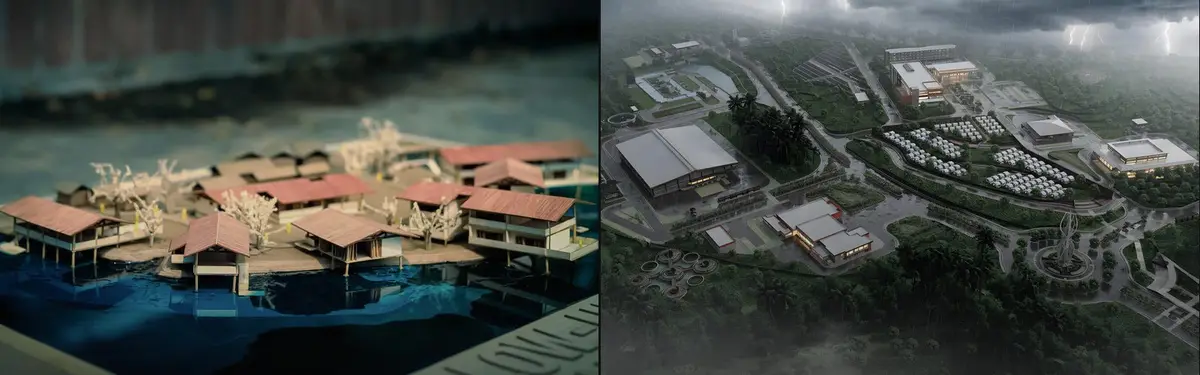

Disaster Resilient
Architecture and design approaches that help communities withstand, recover from, and adapt to disasters and crises.


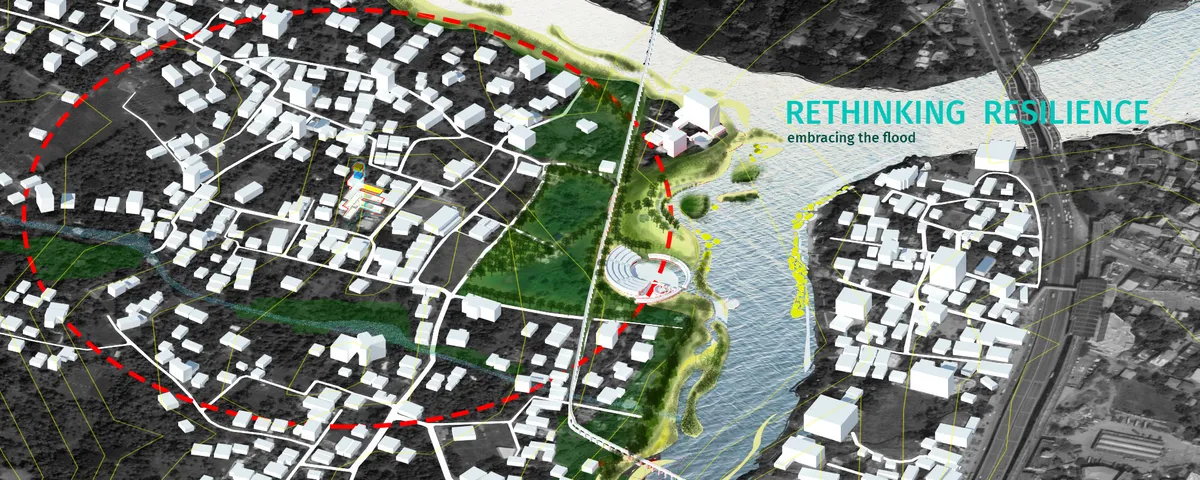
Rethinking Resilience
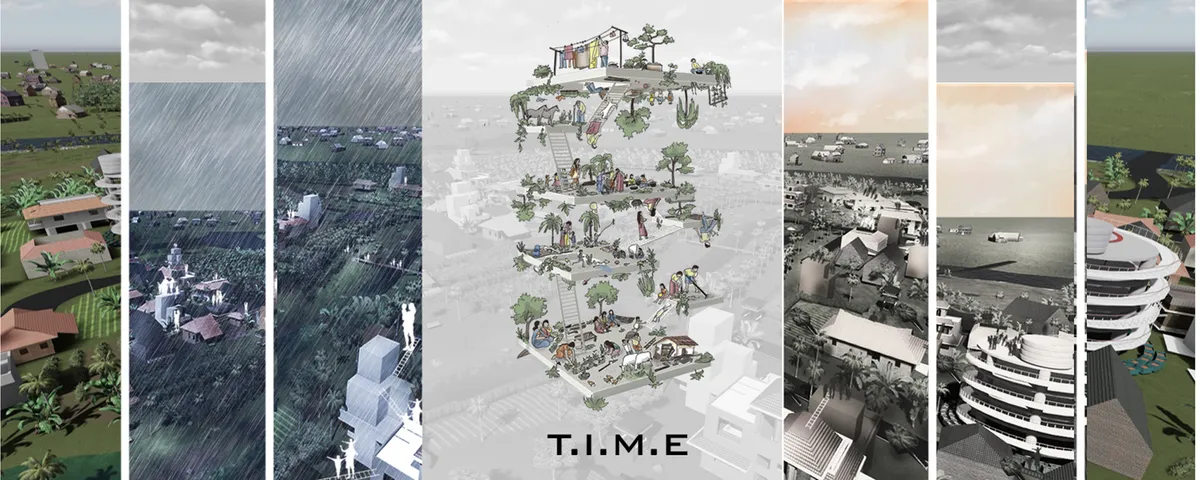
The project embraces flood as a natural phenomena as the premise to imagine the possibility of secure human habitation. With this as the central idea, the project defines resilience to be two fold- 1.to be prepared before flood. 2. sustenance and recuperating post flood scenario. In its execution, the project encapsulates this idea at three distinct scales.

THE FLOOD RESILIENT COMMUNITY
A design for a 100 home community that is affected by the floods, but needs to get back on their own to a better future. A design that looks into flood resilient societies, community development as a drive to healthy societies, and individual dwelling upgrading.
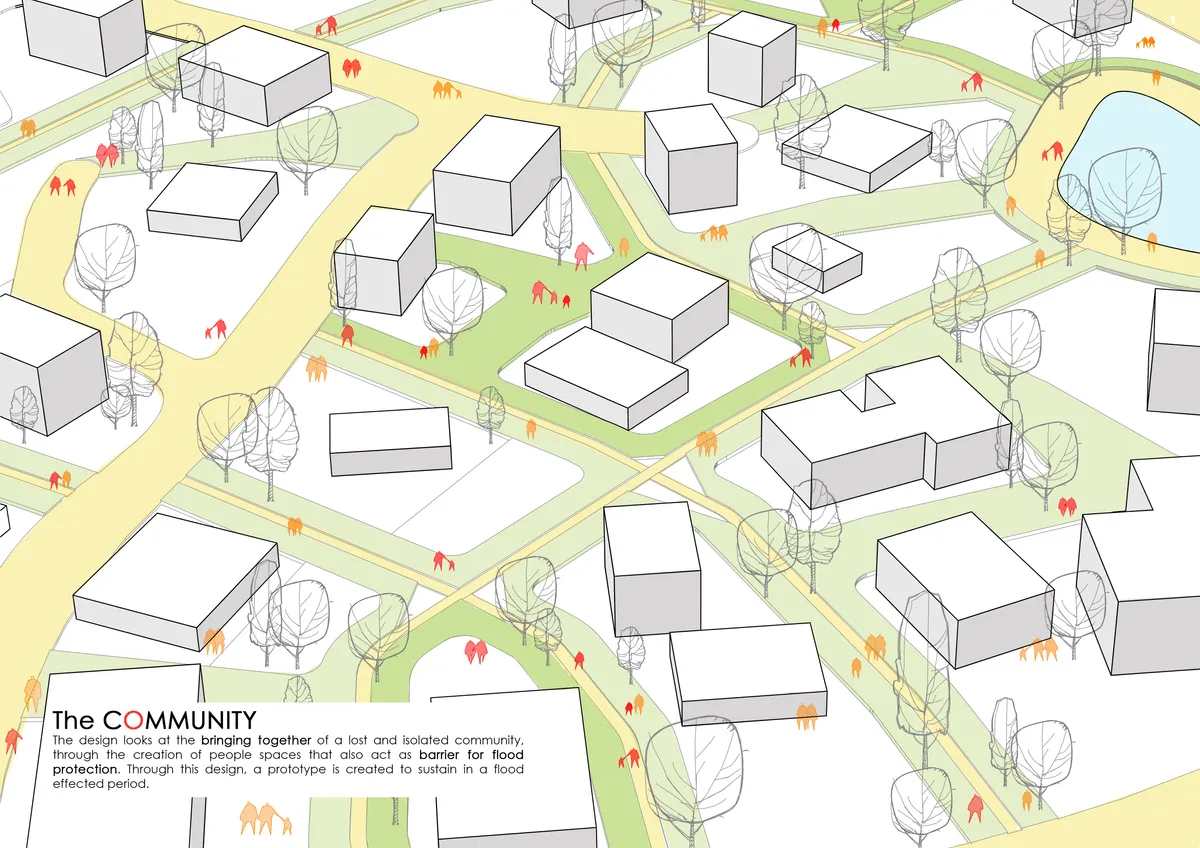


T.I.M.E. HEALS
Habitat when tarnished disrupts lifestyle causing emotional, mental and financial losses which creates scars forever. So, it is necessary to heal from the beginning by converting the exhausting period of struggle into a motivating environment with interactive neighbourhood. Our system unites the community by various incremental measure at different levels.


HELAXIS: A Multi-Thematic Regional Disaster Agency Complex in Region VIII
The project title is coined from the main problem addressed in the study. Accordingly, the project is titled Helaxis, an acronym for Hub for Emergency Learning Analytics x Intervention Strategy which is aligned with the Four Thematic Areas of NDRRM.

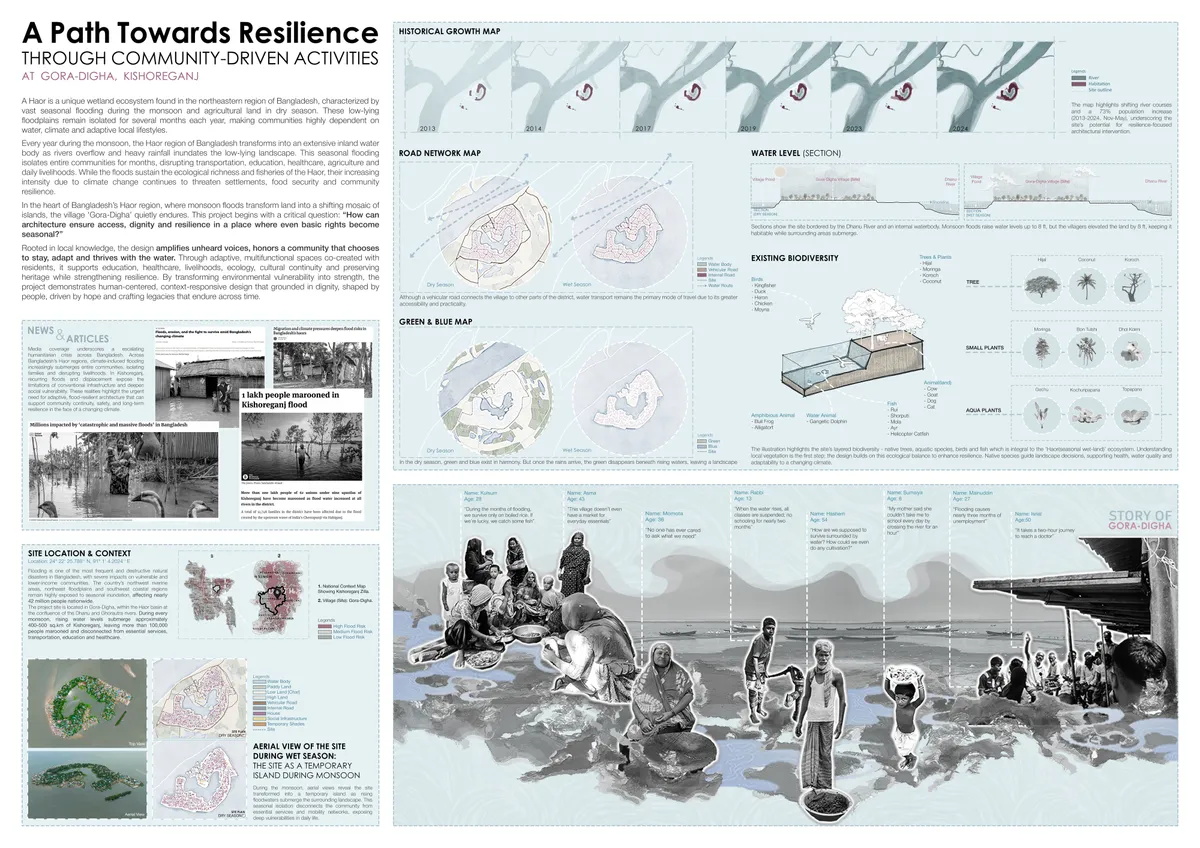
A Path Towards Resilience Through Community-Driven Activities at Gora-Digha, Kishoreganj
In the ‘Haor’(Seasonal wetlands), where the ground disappears each monsoon, permanence is an illusion. This project imagines architecture not as a defense against water but as an instrument of continuity, an adaptive civic landscape that allows communities to gather, endure and sustain dignity amid recurring cycles of flood and retreat.


RESILE-UBUNTU: Circular Courtyard Neighborhoods for Widows and Children in Kandahar
A shortlisted Resile entry that layers home, courtyard, cluster and commons so that safety and shared daily life can rebuild a community together.


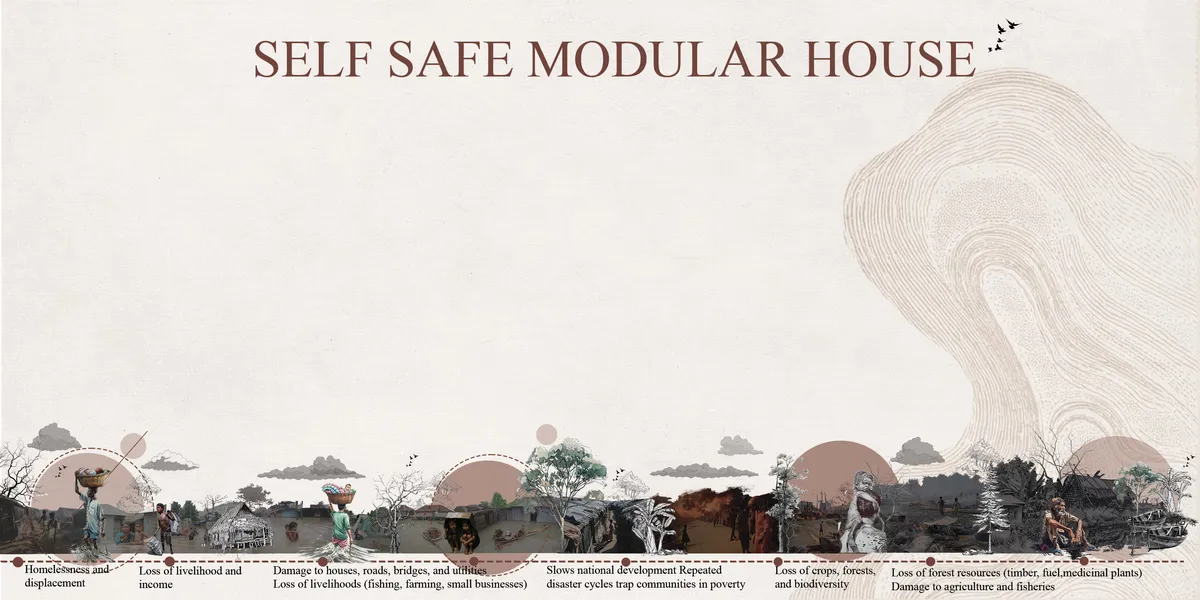
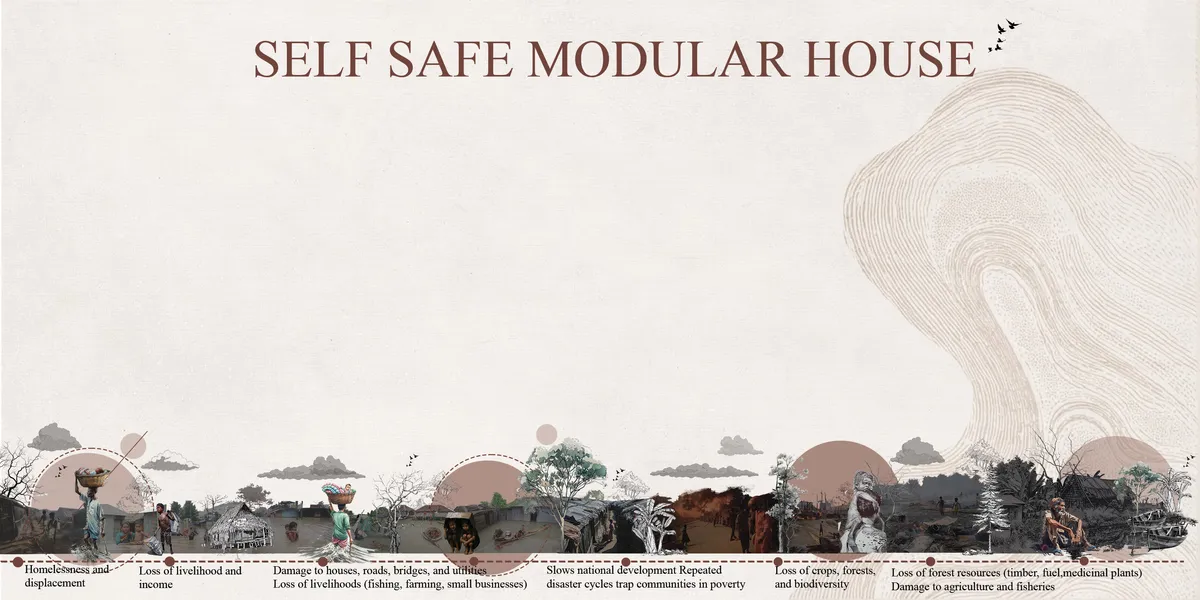
SELF SAFE MODULAR HOUSE
A self-safe modular house is a compact, disaster-resilient housing unit made from prefabricated modules that are easy to assemble, repair, and expand. It is designed to provide safe shelter during floods, cyclones, and earthquakes using local, sustainable materials. The house is affordable, adaptable, and suitable for vulnerable communities in disaster-prone
Resile: A Walled Settlement in Kandahar Where Widows Rebuild Daily Life Around a Shared Agora
Anna Lena Reier borrows the hierarchy of the traditional Afghan city, from protective wall to cardo and agora, to shape a gradual path to recovery.

Resile: A Courtyard Community in Raw Earth for Afghan War Widows and Their Children
A shortlisted proposal that turns the courtyard into a protected neighbourhood of earthen homes, gardens and shared institutions for widowed families.

Resile: A Clay Village Where Independence Does Not Mean Isolation
A settlement of 20 clay buildings for families affected by conflict, where shared courtyards and bridges keep independence from becoming isolation.


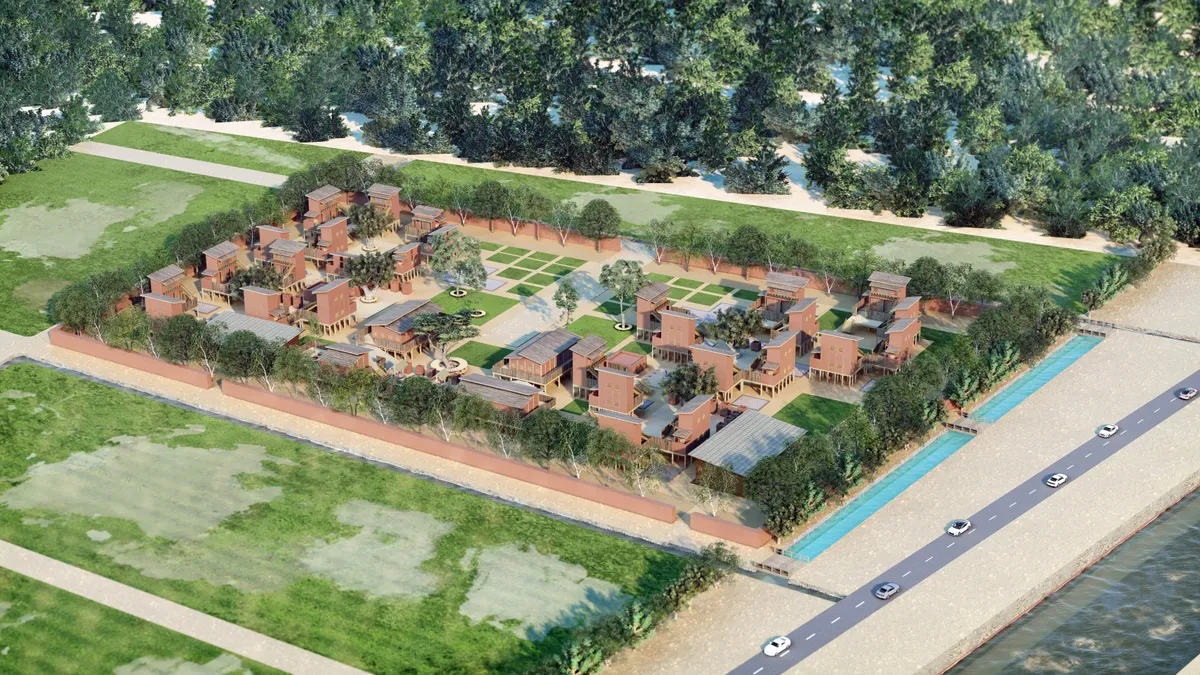
FLOOD RESILIENT HOUSING
The research underscores the importance of designing flood-resilient housing that allows communities to remain in place, preserving their socio-economic and cultural fabric. By leveraging locally available materials and involving the community in the design and maintenance processes, the proposed solutions not only enhance flood resilience but also promote a

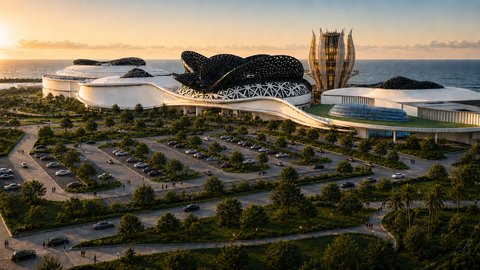
Mediating resilience and livelihood through community architecture Regional center for Oceanography
Integrated Centre for Coastal Interpretation, Research and Resilience integrates marine research, public interpretation, community development, and disaster resilience. Community spaces are designed to convert into emergency response and relief facilities during disasters, ensuring adaptability and long-term coastal resilience.
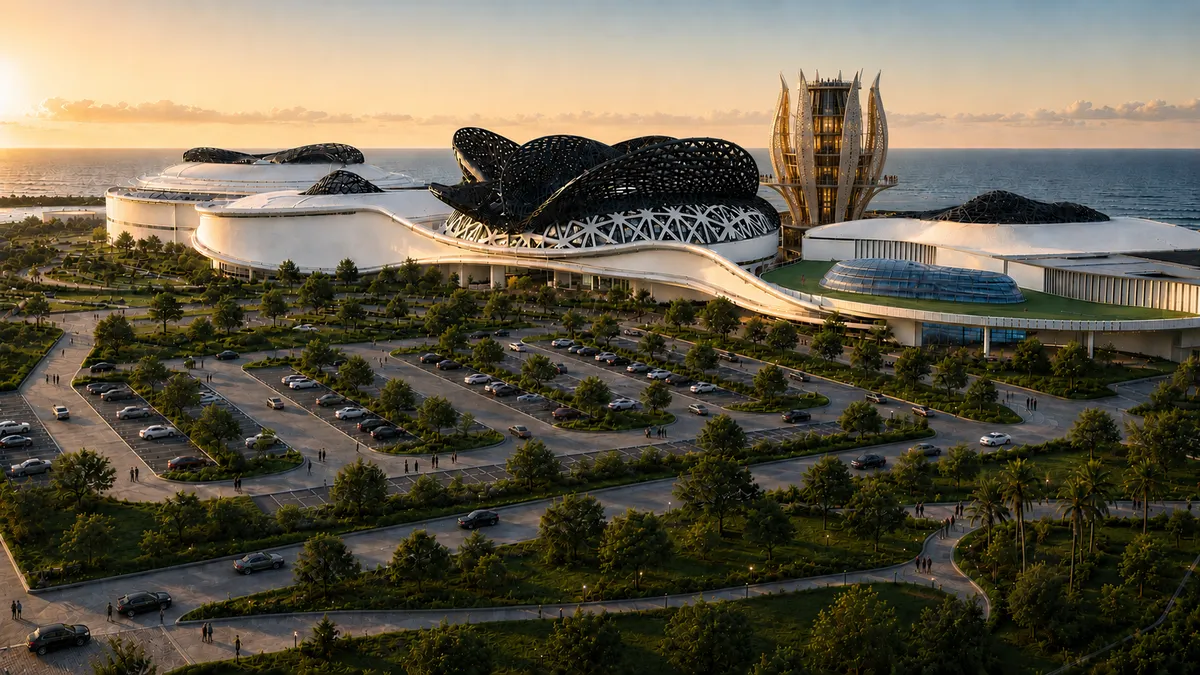


HELAXIS: A Design Proposal of a Multi-Thematic Regional Disaster Agency Complex in Region VIII
Disaster Risk, Reduction, and Management (DRRM); prototype development; resilient architecture; simulation; thematic areas


স্থিৰ (Sthir): 3D-Printed Housing That Rebuilds Assam from the Ground Up
A modular, earth-based housing system for flood-prone Assam that fuses 3D printing technology with bamboo, rainwater harvesting, and courtyard-driven commu

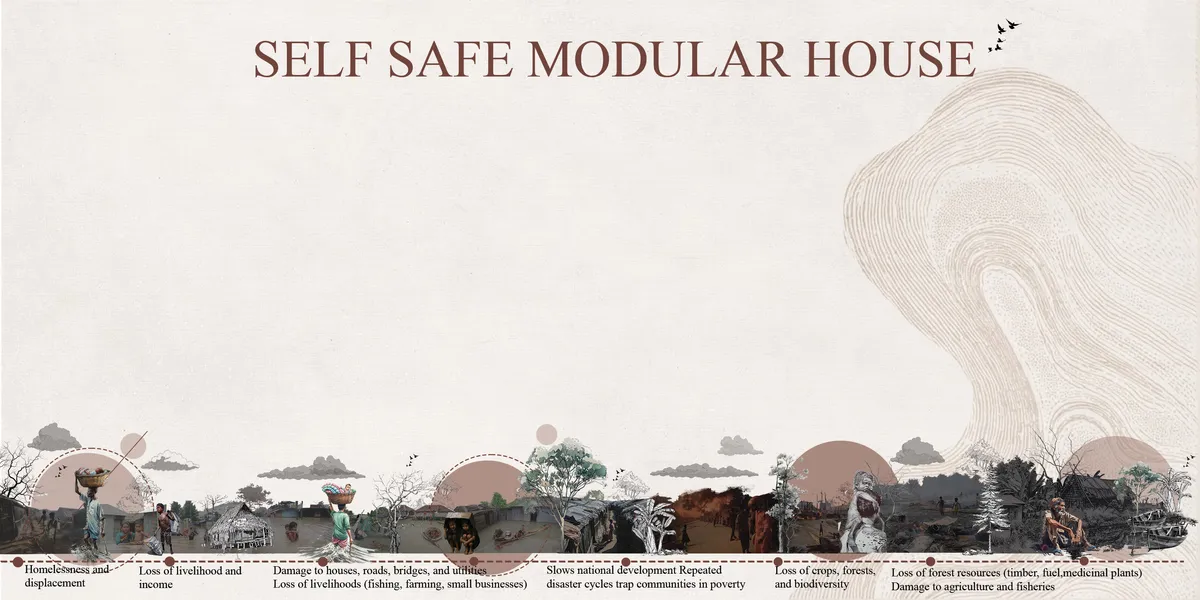
SELF SAFE MODULAR HOUSE
A self-safe modular house is a compact, disaster-resilient housing unit made from prefabricated modules that are easy to assemble, repair, and expand. It is designed to provide safe shelter during floods, cyclones, and earthquakes using local, sustainable materials. The house is affordable, adaptable, and suitable for vulnerable communities in disaster-prone areas.

Community Based Development, Jamuna Riverbank: Stilted Bamboo Homes for a Village That Floods Every Year
Raised on concrete pillars and bamboo frames, clustered homes around shared courtyards let Sirajganj's river families stay put through monsoon floods.


SAIRA: Shared And Individual Response for Action
A natural disaster disrupts man's pursuit of happiness and forces him/her to restart their lives from scratch. What we need today is a resilience strategy that is not just focused on generating housing stock but looks to empower people to take positive action during any disaster in the future.
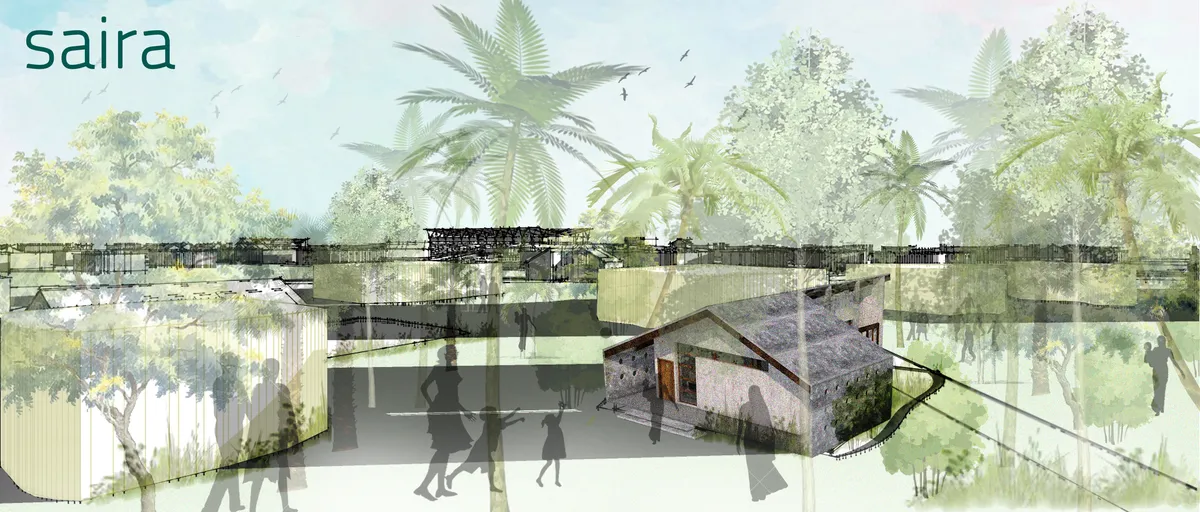


A strong, context-sensitive thesis that thoughtfully addresses seasonal flooding through community-driven and adaptable architecture. Further development of the architectural drawings and flood-response details could strengthen the promising concept and its practical impact.
Such a wonderful way of seeing, thinking and responding to one's surroundings. This project is truly thoughtful and deeply connected to it’s context. Bravo for the effort and dedication behind it!