


Educational Building
Design and architecture of learning spaces, schools, and educational facilities that shape how people acquire knowledge and skills.


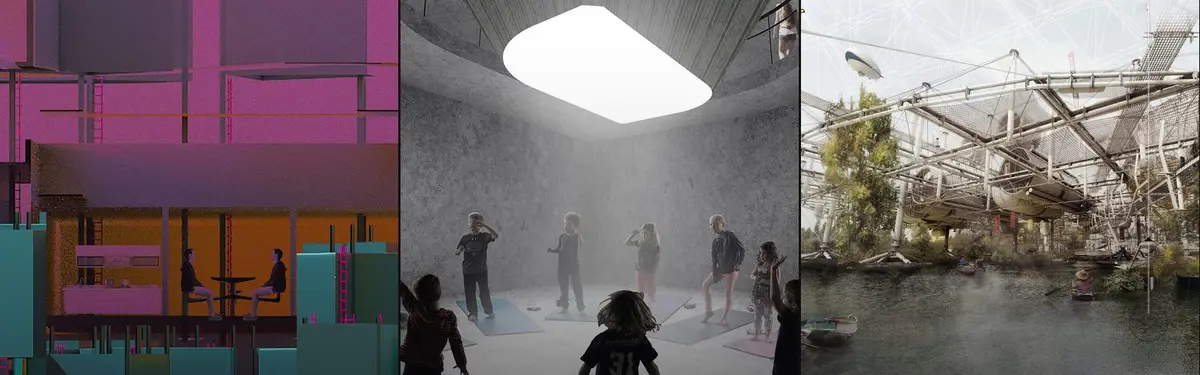
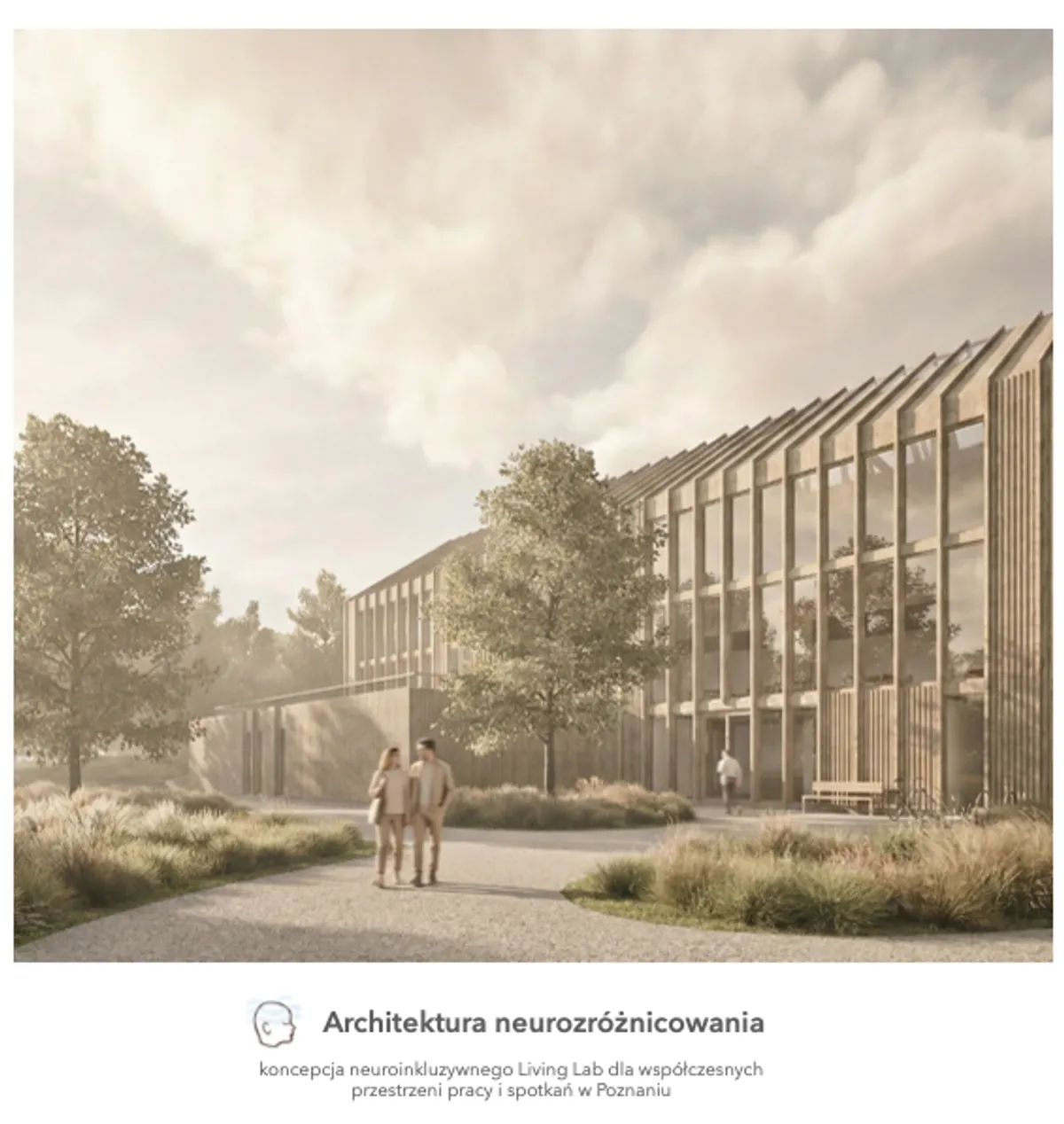
Neurodiversity architecture-the concept of a neuroinclusive Living Lab for contemporary workspaces
Based on original empirical research, this project explores how architecture can support sensory regulation and cognitive well-being. It proposes a neuroinclusive Living Lab that translates scientific evidence into practical design strategies, creating a flexible model for inclusive, human-centred workplaces and meeting areas.


Swamp Capsule Camp: Prefabricated Pods That Disappear Into the Wetlands
A children's educational camp in the Tame Valley Wetlands deploys modular capsules, reedbeds, and concentric planning to tread lightly on fragile ground.


Grassroots: Lattice Domes and Gravel Yards Turn a Walled Indian Block into a Preschool
A shortlisted pre-education school proposal scatters timber-ribbed pods across an enclosed courtyard, letting play, planting and lessons share one ground.


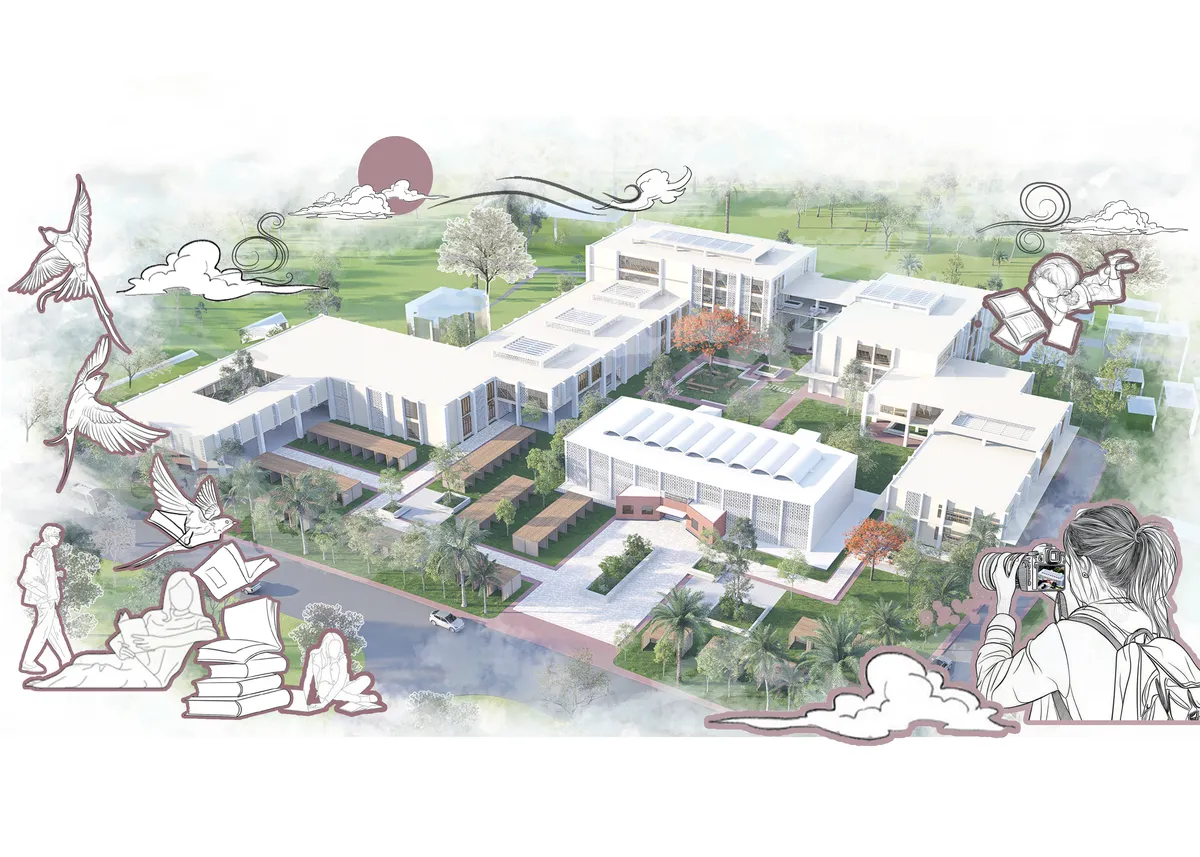
Conserving Modernity: A Dialogue Between Past and Future of Khulna Divisional Library
Conserving Modernity reimagines the 1964 Khulna Divisional Library as a dialogue between heritage and contemporary intervention. Guided by “Timeless Convergence,” it preserves modernist identity while introducing adaptive civic spaces that reactivate public engagement through flexible programs, cultural exchange, and climate-responsive design.

Brilliant work! Well done!

Thank you so much for your kind words and appreciation!

A thoughtful and well-researched heritage-led proposal that creates a meaningful dialogue between past and future. Further refinement of public access and the distinction between the existing and new architecture could make the intervention even stronger.
Thank you for the insightful feedback. I greatly value your perspective and appreciate the constructive observations, which will be helpful in further refining the proposal.

Well done! Keep up the excellent work!
Thank you very much for your kind words and encouragement. I truly appreciate your feedback and support.


SITUATIONS SCHOOL
We believe learning should not be restricted to a specific space, it needs to be a nonstop process, a mindset to transform all human-made environments into learning opportunities. Therefore a school should be a place where children learn how to learn through their own natural behaviours ?play and exploration? and at their own pace.
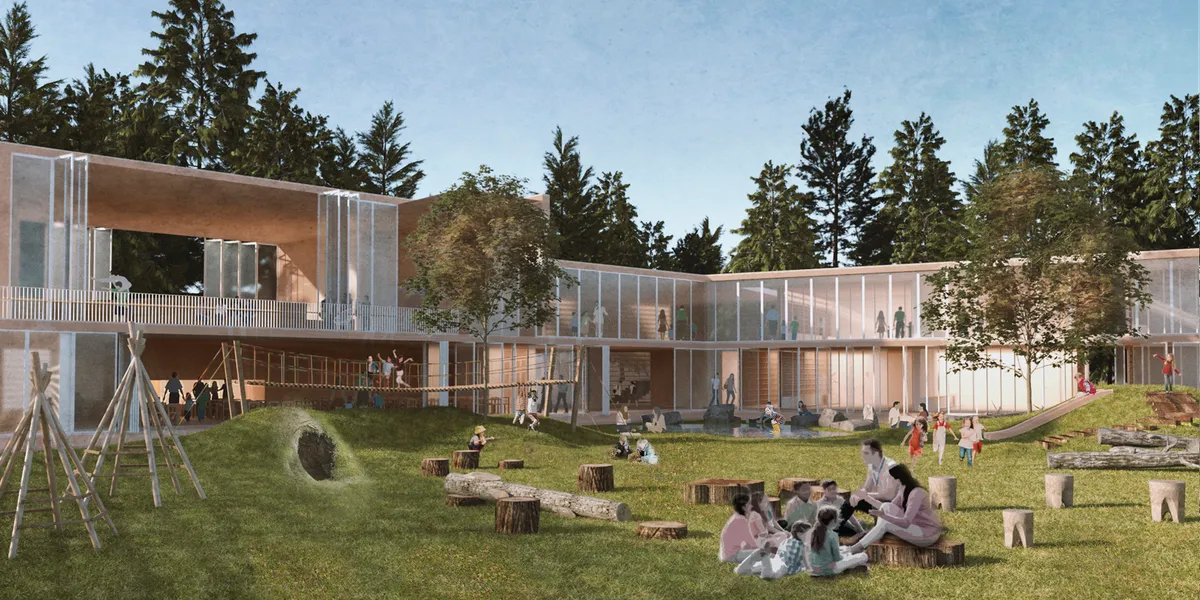
Autism-Friendly School Architecture Design: Niddrie Autistic School by Guymer Bailey Architects
The Niddrie Autistic School by Guymer Bailey Architects is a pioneering example of autism-friendly educational design, blending adaptability with inclusivity.


Tengbom Restores Tensta's Pagoda-Roofed 1980s School and Reopens It as a Shared Campus for a Stockholm Suburb
In Spånga-Tensta, Stockholm, a heritage-listed 1980s school of brick, cast concrete and pagoda roofs reopens with its character carefully kept intact.

Gut Deubelbeiss Nill Architekten Rebuilds a Lost Schoolhouse in Unterägeri as a Shingled Timber Counterpart
In Unterägeri, Switzerland, a timber school with a concrete core replaces a demolished 1834 schoolhouse and completes a listed school courtyard.

The Third Teacher: An Alternative School Where Looms and Lessons Share One Walled Campus
In Anegundi, a school and a hub for women weavers sit inside one curved wall, so that craft, farmland and classroom learn from each other.

TM Studio Builds a Stepped Concrete Home for Yu Yi's Educational Thought on a Shanghai School Campus
On a Yangpu high school corner in Shanghai, terraced concrete, a public arcade and warm oak interiors turn an educator's legacy into civic architecture.

CSWADI Wraps a Chengdu Fusion Research Center Around a Funnel-Shaped Sichuan Light Well
In Chengdu's Tianfu New Area, a 38,000 m² ring of louvred offices for fusion scientists gathers around a funnel skylight and planted atrium.

Trondheim School of Architecture: A Banded Copper Landform That Puts Its Bet on the Skin
A shortlisted school for Trondheim wraps a flexible, student-centric program in layered copper fins and a woven glass canopy across a sculpted site.

Tabula Rasa Architecture School: A Trondheim Workshop Where Gravity Draws the Front Door
A see-and-learn school-workshop that turns structural logic into a lesson, pairing a hanging-vault entrance with open study halls and glazed labs.


The Northern lights: An Architecture College in Trondheim Built Around the Act of Watching
Anastasia Askerko stacks three low floor plates near Dragvoll, opening its workshops to neighbours and turning a tiered drawing hall to the horizon.

Norway Architecture Academy: A Glass Courtyard That Makes Interaction the Curriculum
In Trondheim, a glazed atrium, sunken workspaces, a public roof deck and modular apartments turn a school of architecture into a meeting ground.

Architectural College, Trondheim: A Timber School for Architects That Argues With Its Own Plan
A Norwegian timber college with pitched peaks and a wedge-shaped plan, shortlisted at Elementary and judged sharply on typology.


Are 50 children and 40 staff members are intended for one module which can be multiplied or for whole school? What should be the programmatic outline?
Example of a programmatic outline for one module of the school, designed for 50 children and 40 staff members. 1. Spaces to Learn (40% of space) - Classrooms: 10 rooms accommodating 5 children each. - Library and Media Center: Resources for 50 children and workstations for staff. - Computer Lab: For digital learning and research. 2. Spaces for Rehabilitation (20% of space) - Counseling Rooms: Private areas for one-on-one support. - Therapy and Wellness Center: Spaces for group activities and therapies. - Sensory Rooms: For children with additional needs. 3. Spaces for Public Engagement and Recreation (20% of space) - Auditorium: Multi-use space for meetings, performances, and gatherings. - Exhibition Space: To display student work and engage with the community. 4. Open Play Spaces (10% of space) - Outdoor Playground: Safe and accessible equipment. - Sports Court: Multipurpose area for various physical activities. 5. Ancillary Spaces (10% of space) - Administration Offices: For the staff to manage school operations. - Staff Lounge: A relaxation space for the staff. - Maintenance and Storage Rooms: For the upkeep of the module. This programmatic outline is an indicative guideline and you may modify it as per your design concept and functional outline. You may add or remove certain functions as well.
What exactly should the "module" be understood as?
The term "module" in your E-Heal competition brief refers to a design that is intended to be adaptable both at the individual unit level within a school and at a regional level across different sites. The programmatic outline for a module, catering to 50 children and 40 staff members, should be seen as a self-contained unit that includes designated spaces for learning, rehabilitation, public engagement, and support activities. Your design should not only accommodate the needs within one school but also be versatile enough to be replicated across different locations, creating a standardized educational environment that can be implemented throughout the region. In essence, your module should serve as a blueprint for creating multiple schools with similar design principles and educational strategies, promoting a consistent quality of learning and care. By designing with this modularity in mind, you are ensuring that each module can function effectively on its own while also fitting into a broader, scalable network of schools, thereby multiplying the impact of your architectural solution across the region.