
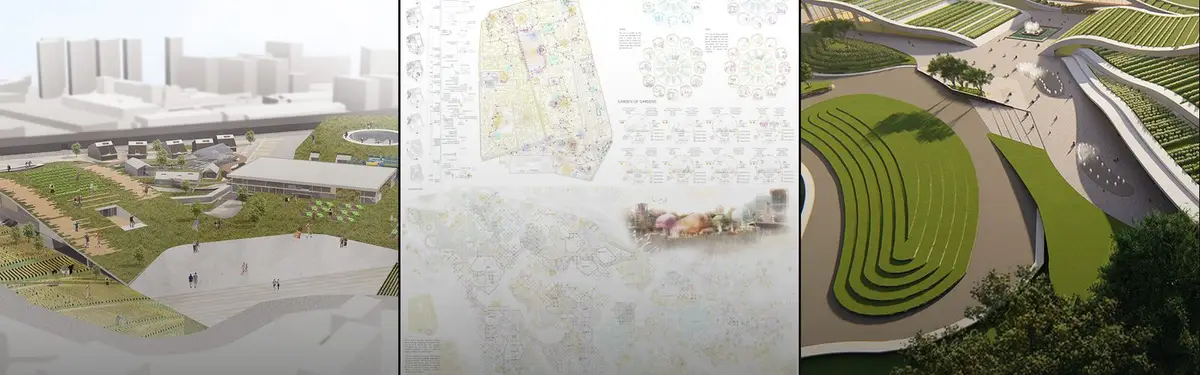

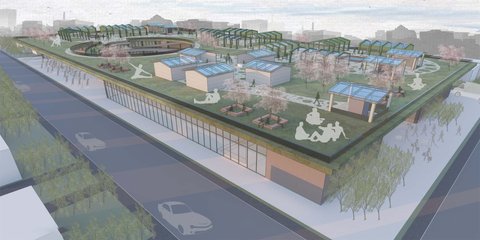
Permaculture
Design and planning approaches that integrate agriculture, ecology, and built environments into productive, self-sustaining systems.


Super-Farm: Collapsing the Distance Between City Life and Agriculture
A fractal agricultural architecture embeds geodesic domes, rotating ring systems, and closed-loop eco-cycles directly into the urban fabric.






Flower of the Desert
Choosing arid climate and Following bio mimicr design, we came to across a plant that lives in the Namibia desert, Welwitschia which is extremely sustainable in Arid areas and lives about 1000 to 1500 years. The unusual form of this plant keeps the soil under the plant cool and moist. The thick leaves lay on the sand surface and prevent wind erosion aswell.



Nuswa Bhuvana, Marunda Across Nature
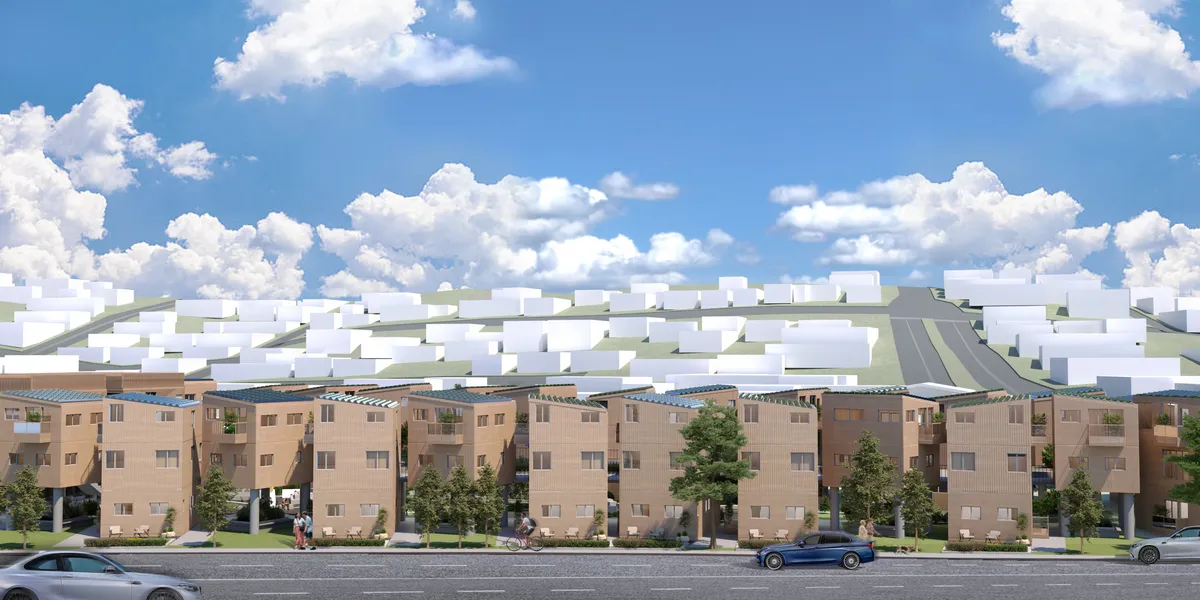
A Public Housing that integrates living activities with nature to mitigate the negative impacts of coal pollution. The project draws from the local agricultural heritage of Marunda, transforming it into a permaculture system (regenerative agriculture). This concept embedding permaculture directly into the living ecosystem through biophilic architecture.
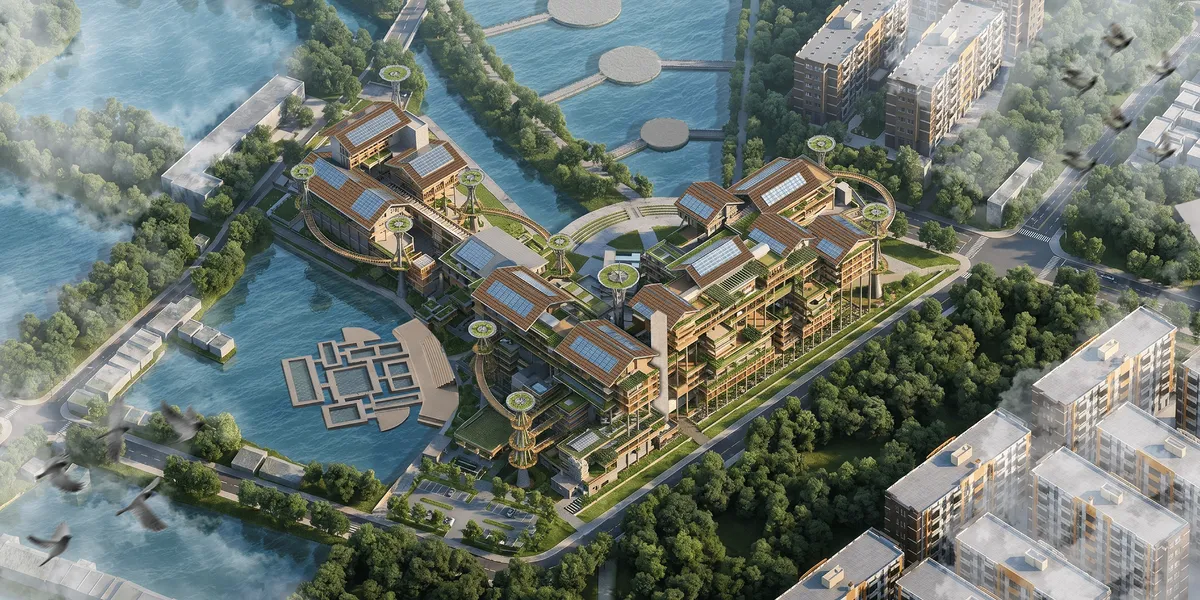

THE OASIS BIOME: A REGENERATIVE AGROECOSYSTEM
An inquiry into regenerative agro-structure through the design of The Oasis Biome, this report explores how architecture can act as a living ecosystem to support climate-resilient food production. Drawing from standards of agroecology, managed environment agriculture, and water-saving technology, it proposes a spatial systems where cultivation, conservation, and community empowerment intersect. The project is situated in Birulia, Savar, and serves as a design-primarily based academic research under the Bachelor of Architecture program at Southeast University.


[ Terra // Critica ] 'Dialectics of Panormos Through Environmental Ethics'
[ Terra // Critica ] challenges the existing environmental ethics philosophies of ecocentrism and anthropocentrism by spatializing the theory itself into reality and to create “deeper” spaces of mutual existence and symbiotic relationships through relational engagement rather than a shallow existence of one // the other through water and coastal remediation
![[ Terra // Critica ] 'Dialectics of Panormos Through Environmental Ethics'](https://img.uni.xyz/eyJidWNrZXQiOiJ1bmktcHJvamVjdHMiLCJrZXkiOiIxMy9kMDU4M2JjOS03ZWFhLTRlMmMtYTU4Zi1iODFlNGYyNGQwY2EvYmVndW00OTEyMDI2LTA2LTMwVDA5LTMxLTQ5LTQ2NjI4MS5qcGciLCJlZGl0cyI6eyJyZXNpemUiOnsid2lkdGgiOjEyMDAsImZpdCI6Imluc2lkZSJ9LCJqcGVnIjp7InF1YWxpdHkiOjgwfSwid2VicCI6eyJxdWFsaXR5Ijo4MH0sImZsYXR0ZW4iOmZhbHNlLCJub3JtYWxpc2UiOmZhbHNlfX0=)

A highly ambitious and intellectually rich thesis that brings environmental ethics into spatial practice. Clarifying and prioritizing the many strategies, while strengthening their technical performance, could make this powerful proposal even more convincing.

Fostering Coexistence: Revitalizing Coastal Communities and Ecological Restoration
This project presents a regenerative model for climate-responsive coastal development, integrating wetland filtration, mangrove restoration, circular waste management, and community-led livelihoods. By positioning architecture as a catalyst for ecological restoration, it strengthens biodiversity, enhances resilience, and reconnects people with nature.
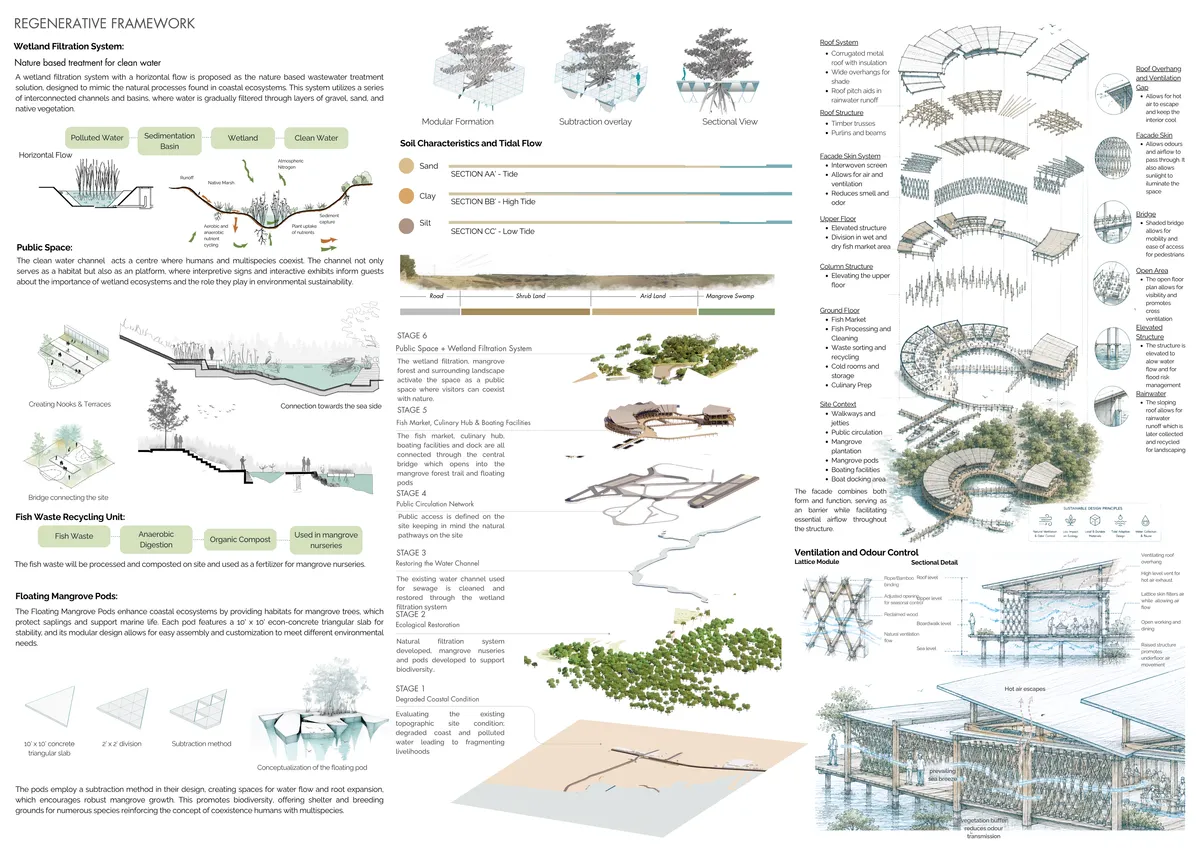
A strong and well-researched regenerative proposal that successfully connects ecological restoration with community livelihoods and public space. Its greatest strength is the systemic relationship between water, mangroves, waste, fisheries and architecture. Further technical validation and a sharper architectural synthesis would strengthen the project considerably

The project demonstrates a well-conducted site analysis and a thorough study of the surrounding context. However, the plan resolution is low, which affects its clarity and readability. Overall, it is a good project that successfully integrates architectural design with urban design.

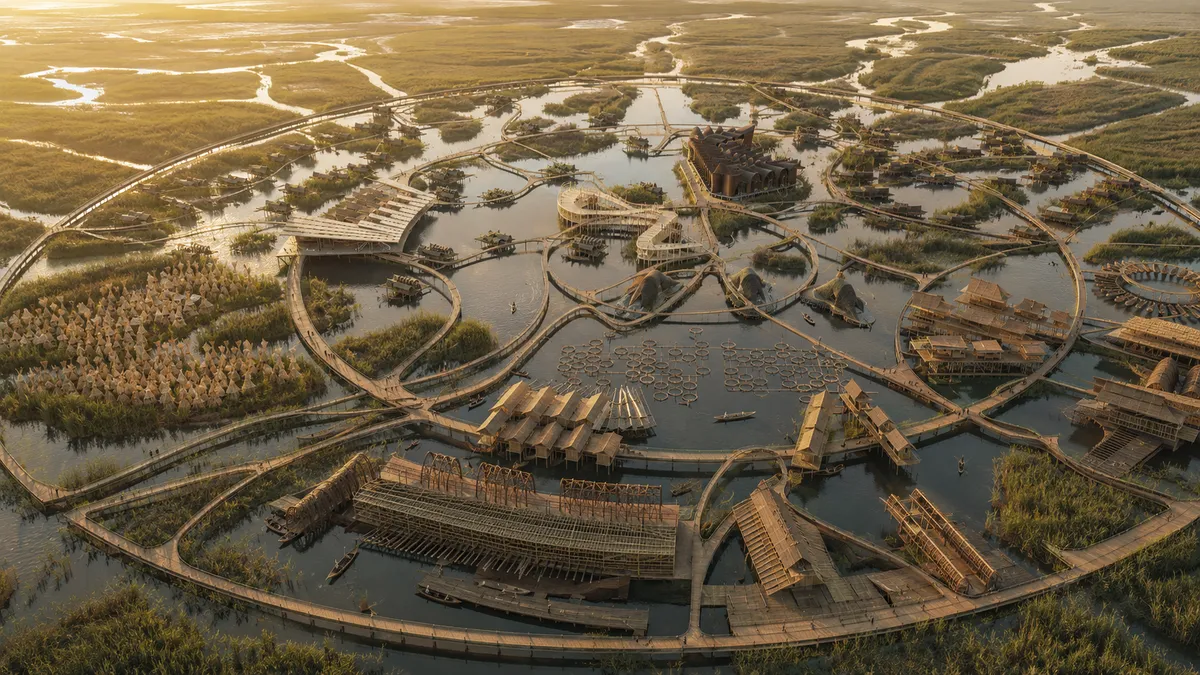
RE-GENERATOR EDEN, Reinhabiting the Garden of Eden in Al-Hammar Marshes
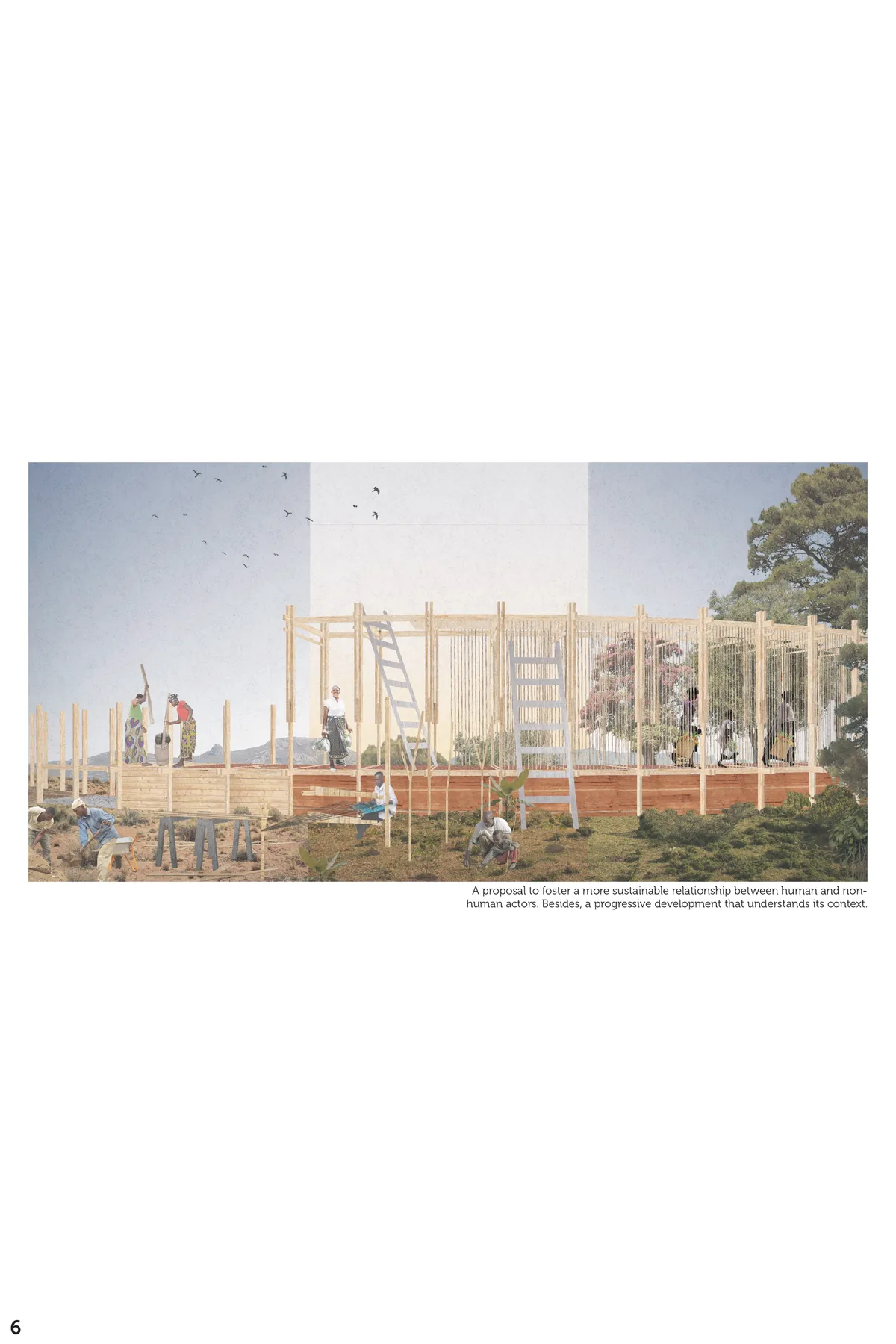
A regenerative tectonic system in Al-Hammar Marshes (UNESCO) countering drought and displacement. Driven by a closed-loop metabolic logic (Reuse→Transformation), the architecture economically empowers Marsh Arabs via three circular vectors: reeds (structural/craft), buffalo milk, and resilient fish infrastructure, reconnecting humanity and nature.

wow !
Amazing work 💕💕

✨🩷🩷🩷

AL-JANNAH: An Oasis Settlement Where Permaculture Rebuilds Livelihoods for Afghan Widows
A shortlisted Resile entry arranges homes, schools, a souq and farms around a central pond, treating water and land as shared infrastructure.


Community-Based Eco-Tourism At Madhupur Sal Forest
The Mass Tourism practice has hugely impacted the communities and eco-system of Bangladesh. This project aims to create a sustainable Community-Based tourism model which will work for the holistic development of the underprivileged Garo community and the deteriorating eco-system of Madhupur.
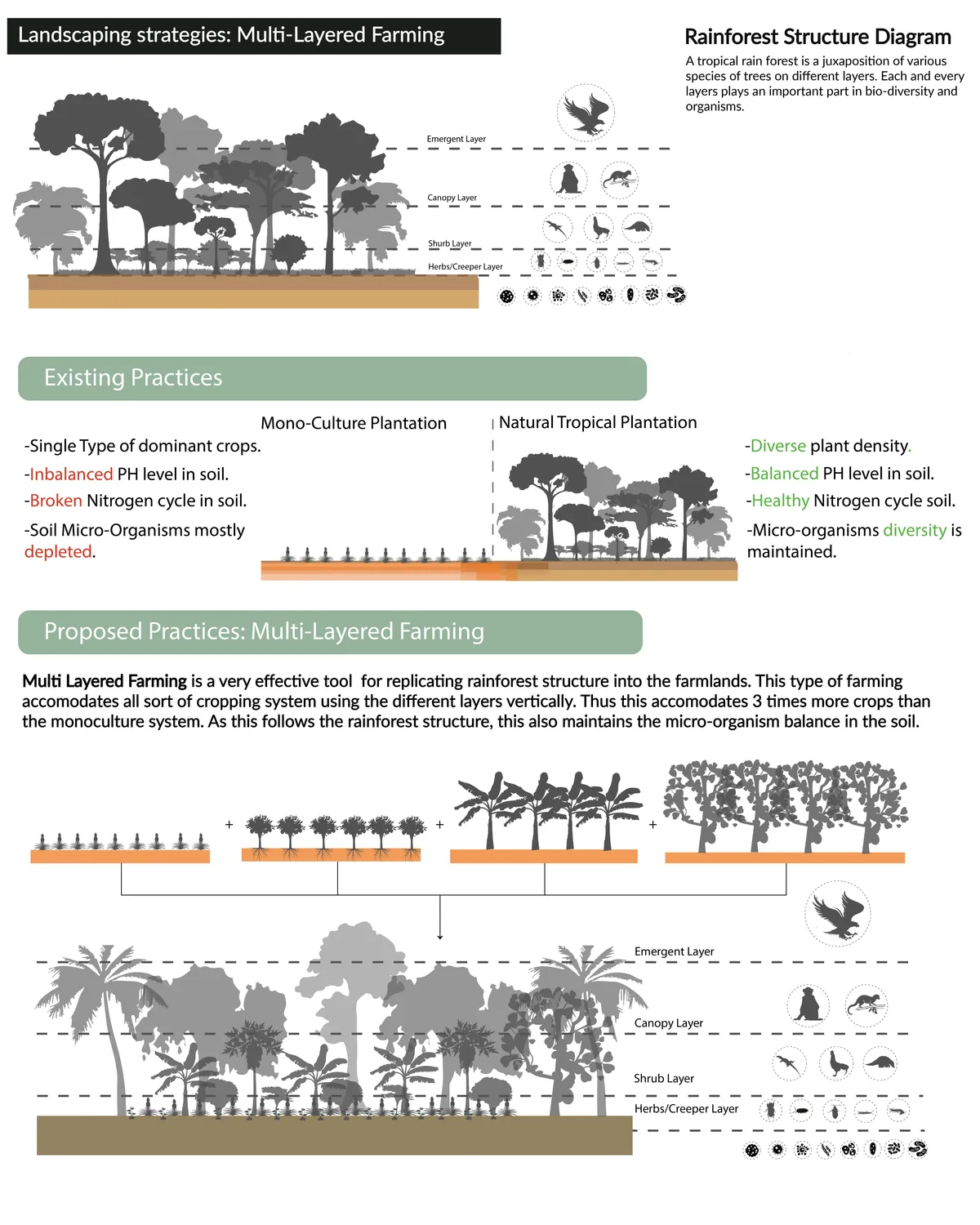


Farming For All
"Farming for All" is a living area that combines different programs focused on harvesting, learning, consumption, entertainment, and housing.
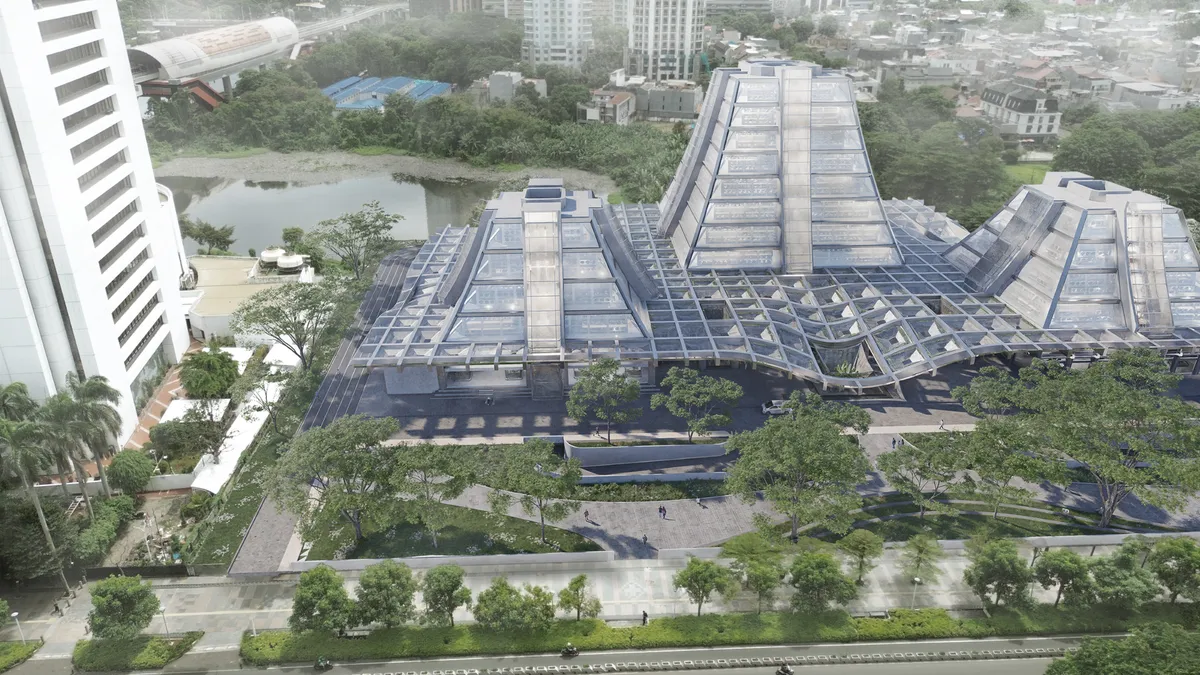
Urban Farming Centre with Permaculture Approach
Jakarta’s heavy reliance on external food supply poses risks to its food security. Urban Farming Centre offers a solution by promoting local food production, education, and recreation through permaculture-based architecture—an ecological approach that enables sustainable, resilient systems for urban agriculture.



PRODUCING
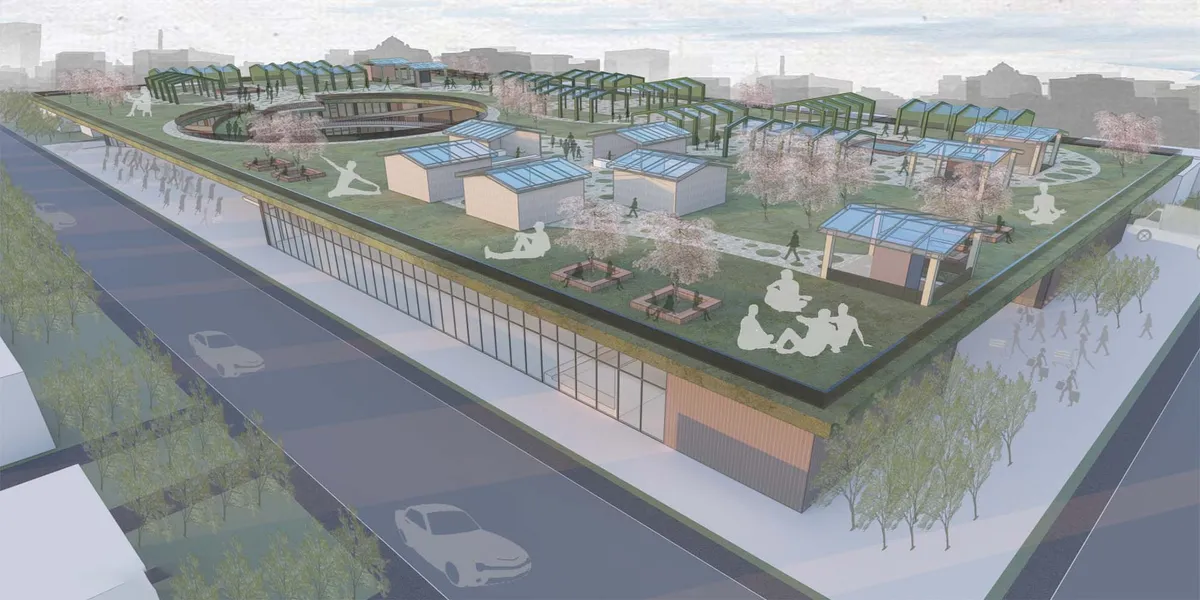

It is a project that I have witnessed most of its phases. The comments of the architect that will contribute to the marketplace understanding of the project, which he implemented with patience and determination, will undoubtedly be a great opportunity for the people of California.

Çok güzel düşünülmüş günümüz ihtiyaçlarını karşılayan bir tasarım.
This is a great project! !!!!!! 😍 It’s wonderful👍



Footprints
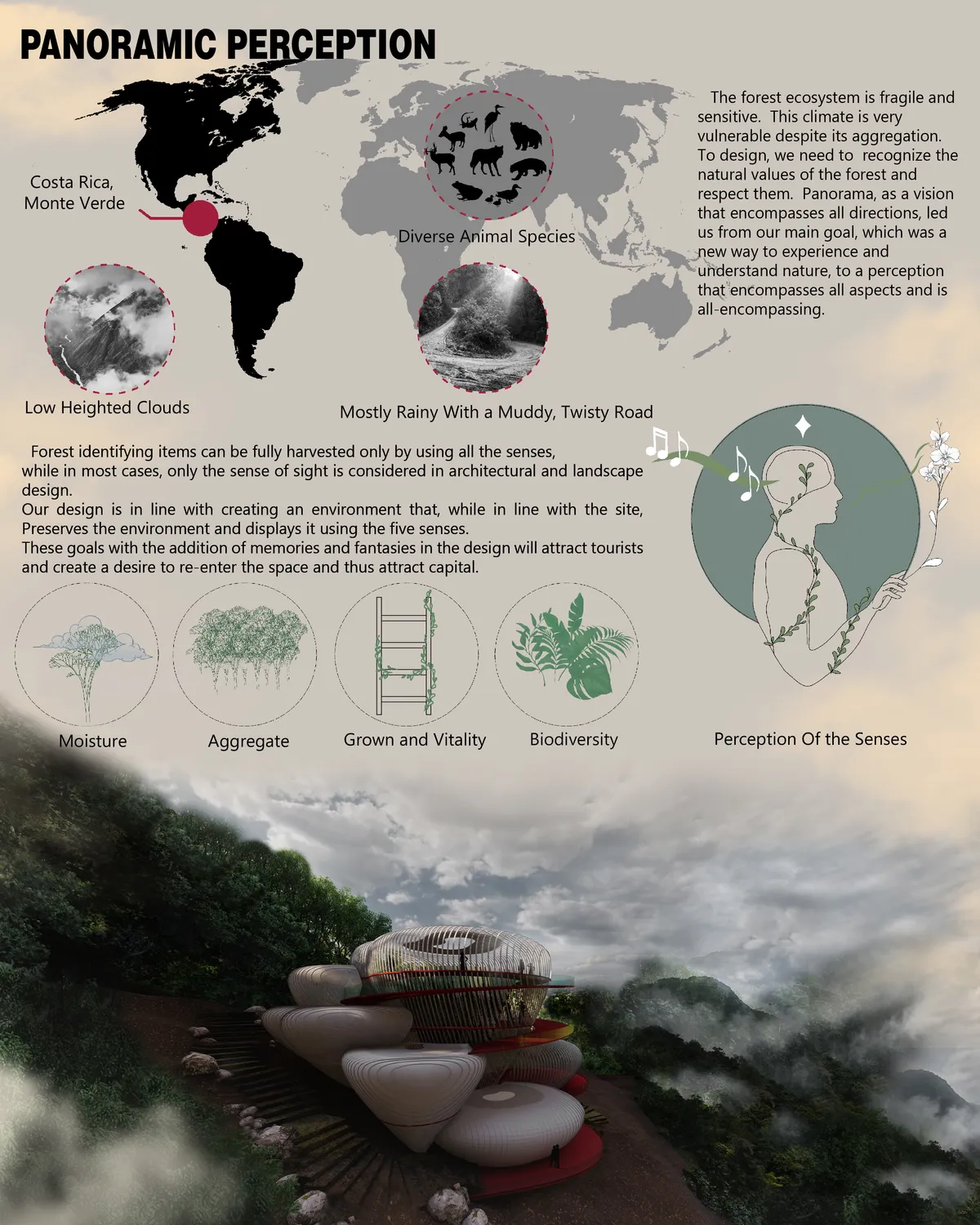
This tropical retreat is an exploration of possibilities where people live in harmony with nature. By learning from the nature in place and the indigenous wisdom, our design emerges from and honors native context, becoming part of it, like trees in a forest, leaving a more regenerative footprint.
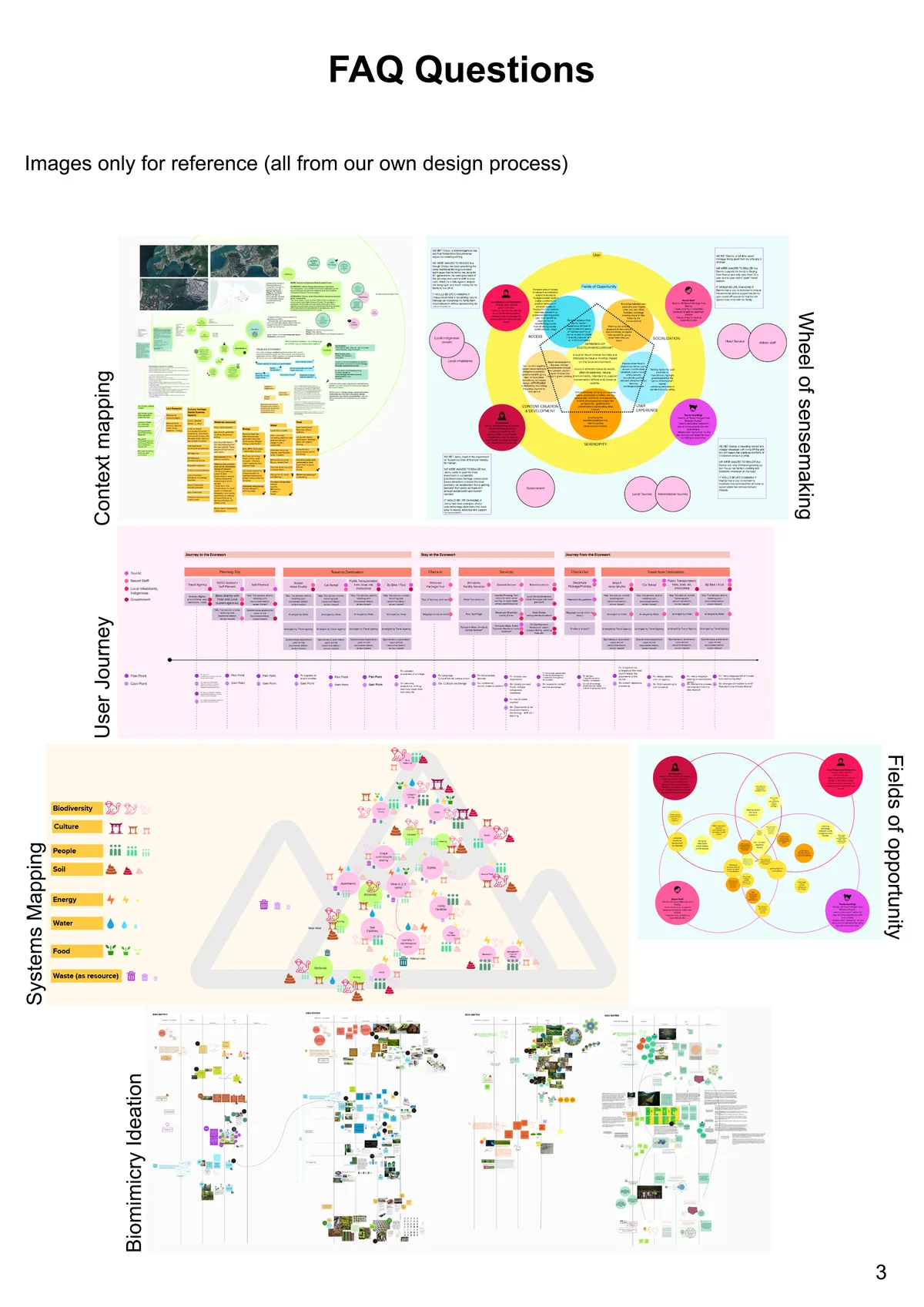
please make it free


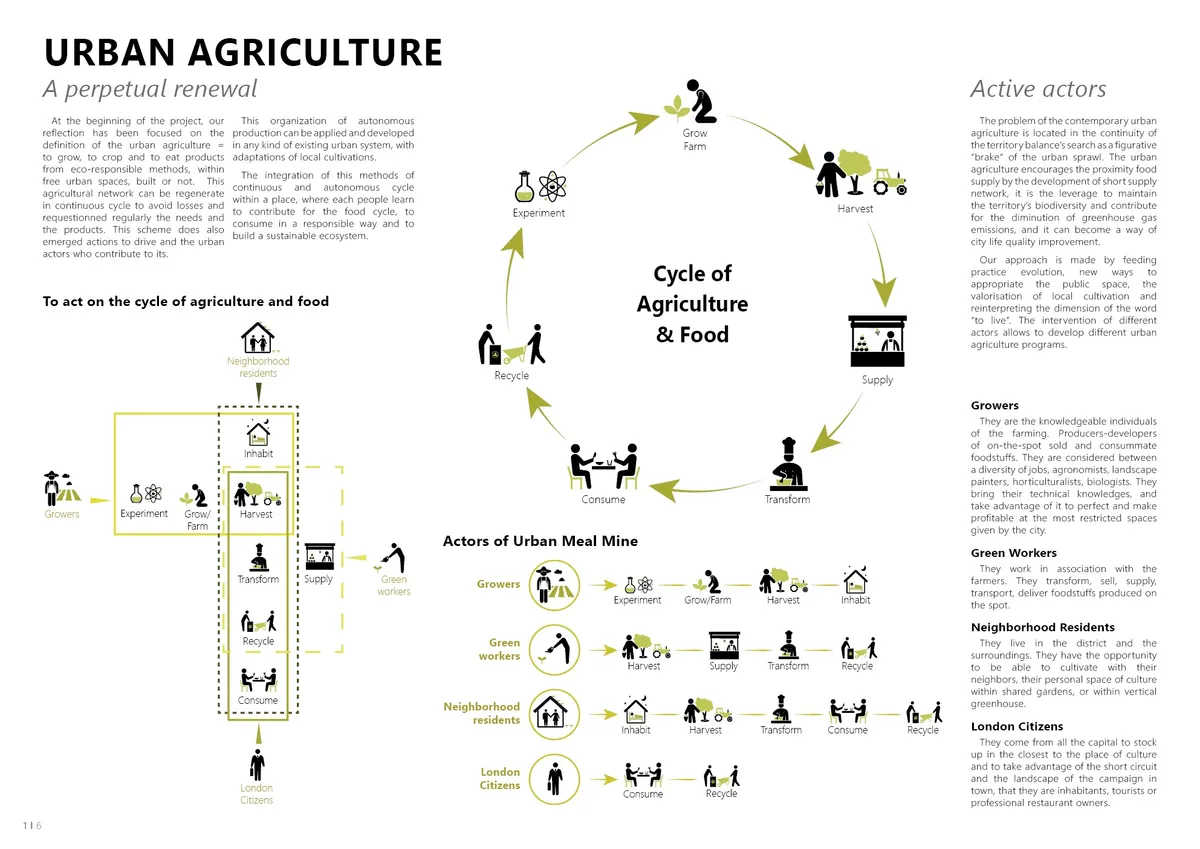
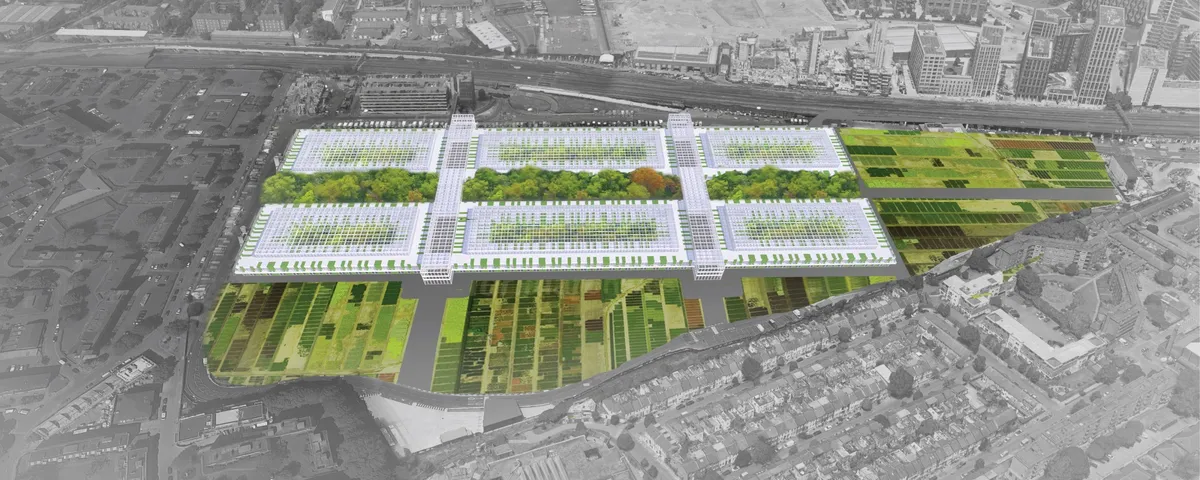
NINE ELMS FOOD PARK
The Nine Elms Food Park showcases a variety of food production strategies, giving visitors and residents the opportunity to learn how food from all over world is grown. The food produced and processed on-site offers a new urban lifestyle that revitalizes essential food production knowledge and skills while also connecting urban populations with nature.
Food-scape: A Stacked Waterfront Village Where Every Restaurant Gets a Sea View
Chiming Wong's mixed-use food building stacks modular glass boxes on a fixed frame, cascading terraces toward the sea so each level becomes a destination.


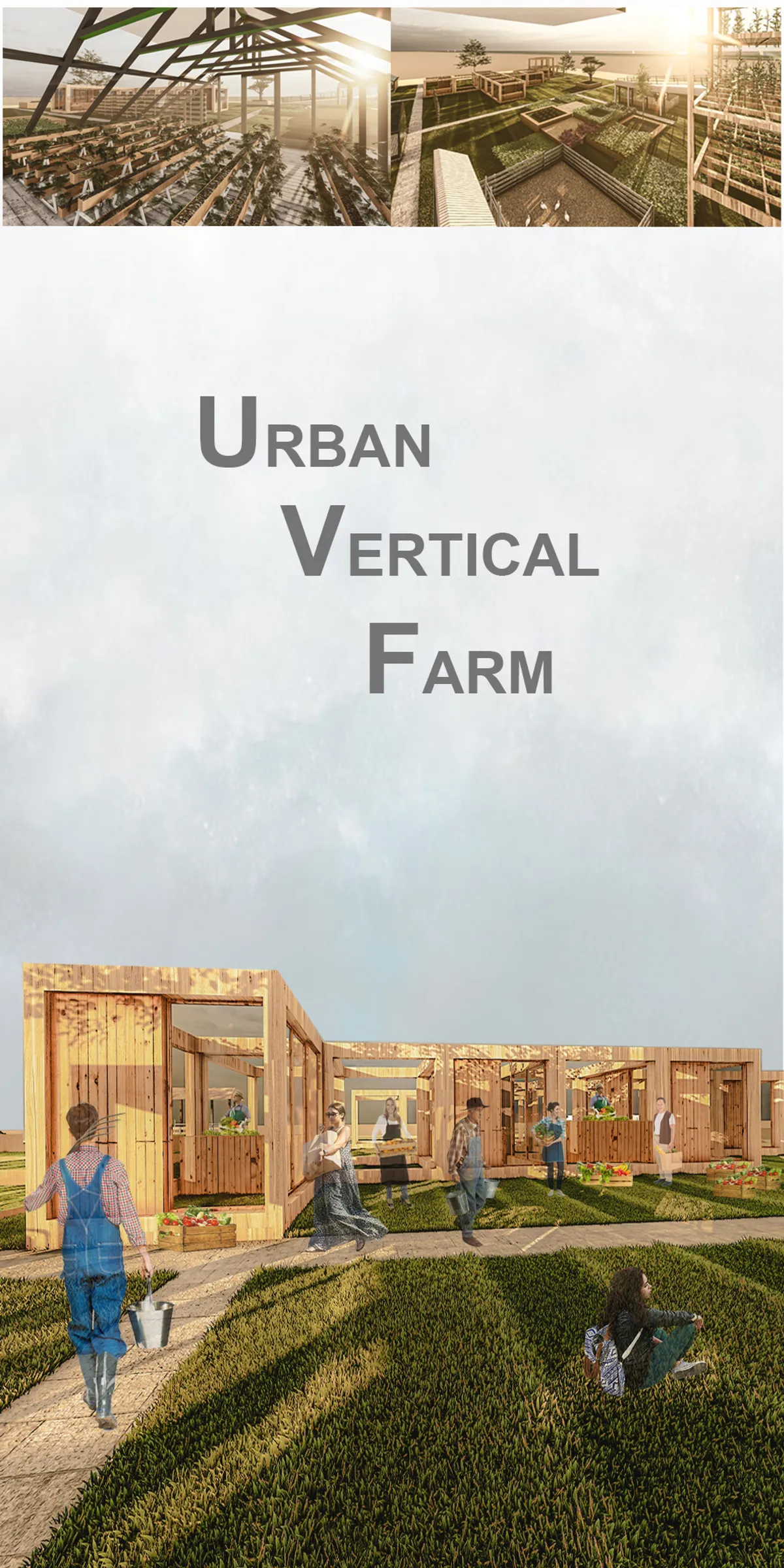
The Growing Citadelle: A City Fortified by Food, Built from Farming Towers and Modular Homes
Vertical farming towers and FoodB.O.X housing units combine into an urban framework that expands and contracts with a city's seasonal food demand.





Voted for this work! Very good project!Congratulations!
Congratulations!!! Very good project


good idea and concept, mostly consistent would have liked to see a bit more of the idea in the materialization - for the rest solid and good idea and design
Great