


Tactical Urbanism
Small-scale interventions and temporary strategies that activate and reshape urban spaces through community engagement and adaptive design.
Tactical urbanism is the practice of making short-term, low-cost changes to streets and public spaces, such as painted plazas, pop-up bike lanes, parklets and movable seating, to test ideas that could later become permanent. It is often led by citizens, artists or community groups, but city governments now use the same methods to trial projects before committing capital budgets. The core idea is simple: build a cheap version first, watch how people use it, then decide.
What is tactical urbanism?
The term covers a family of approaches that also go by guerrilla urbanism, pop-up urbanism, city repair, DIY urbanism and urban prototyping. Wikipedia's summary of the field describes it as a low-cost, temporary change to the built environment intended to improve neighbourhoods and gathering places, and notes that community-led installations are often meant to pressure agencies into building a more permanent version. The Street Plans Collaborative, a planning practice, defines it through five traits: a deliberate, phased approach to change; local solutions to local problems; short-term commitment as a first step towards longer-term change; low risk with potentially high reward; and the building of social capital between citizens and institutions.
Tactical urbanism sits between several neighbouring fields. It shares the goals of placemaking, which focuses on how people use and care for a place, but places more weight on the method of rapid, reversible testing. It overlaps with urban intervention and public art, yet its aim is usually practical: a safer crossing, a place to sit, a lane for bicycles. And it differs from conventional capital projects in sequence. A traditional plan designs, consults, funds and builds over many years; a tactical project builds something light in weeks, then lets the results shape the permanent design.
The scale is deliberately small. Typical interventions include chair bombing (placing salvaged seating where none exists), painted crosswalks, depaving, open streets programmes, food carts in underused squares and pop-up cafes in parking spaces. What unites them is the willingness to act before every question is answered.
A short history of tactical urbanism
The movement draws on older precedents. Wikipedia's account traces inspiration to Bogotá's Ciclovía, the car-free street programme whose name is anglicised as "open streets", to Paris-Plages, and to the plazas created in New York under transportation commissioner Janette Sadik-Khan. The phrase "tactical urbanism" itself appeared in the 1984 English translation of Michel de Certeau's The Practice of Everyday Life, though in a different sense; the modern meaning is credited to the New York planner Mike Lydon.
A defining early act took place in San Francisco in 2005. The art and design studio Rebar fed a parking meter, unrolled turf over the space and set down a potted tree, creating a one-day park. According to the history of the parklet, that unofficial project grew into Park(ing) Day, an annual worldwide event, and its logic was later formalised in San Francisco's first public parklets in 2010.

The most famous case is Times Square. In February 2009 New York's mayor announced that traffic lanes on Broadway from 42nd to 47th Street would be closed from Memorial Day and turned into pedestrian plazas as a trial, with results to be monitored. The first seats were inexpensive plastic lawn chairs. In February 2010 the plazas were made permanent, and the city later hired Snøhetta to rebuild the space in granite, a project completed at the end of 2016. The sequence of paint, chairs, data and then permanent construction became the template many cities copied.
Two parallel threads gave the movement its vocabulary. The Project for Public Spaces adopted the phrase "Lighter, Quicker, Cheaper", borrowed from Eric Reynolds, and launched focused advocacy around it in 2011. Tactical urbanism formally coalesced after a meeting of the Next Generation of New Urbanists in New Orleans in November 2010, which produced an open-source guide. In 2015 Island Press published Tactical Urbanism: Short-Term Action for Long-Term Change by Mike Lydon and Anthony Garcia, whose case studies range from guerrilla wayfinding signs in Raleigh to pavement turned into parks in San Francisco.
"The quality of a public space has always been best defined by the people who use it."
Project for Public Spaces, The Lighter, Quicker, Cheaper Transformation of Public Spaces (2015)

Key principles of tactical urbanism
The projects below come from uni.xyz members, and each makes one of the movement's core principles concrete.
Act now, test, then scale
A tactical project is a prototype at full size. It must be cheap enough to fail and easy enough to adjust. Toolset for a City's Metabolism, by Katarzyna Soltysiak and Petter Habostad, a winning entry in the Urban Meal Mine competition, proposes a structure of simple scaffolding elements that can grow and shrink with the engagement of local people and is fully reusable. The team frames the empty plot as an opportunity rather than a problem.
"We call for embracing voids within urban tissue, not necessarily meaning these should be neglected in planning but rather open for spontaneity."
Katarzyna Soltysiak and Petter Habostad, Toolset for a City's Metabolism
Work with leftover space and existing infrastructure
Tactical urbanism rarely needs new land. It looks for the spaces that planning has left behind: parking lanes, underpasses, wide pavements and vacant lots. The journal on +us explains how Alea Reid and Isabelle Jackson target the dim spaces beneath 83 bridges of Calgary's Plus-15 elevated walkway network, using lightweight installations that attach to existing infrastructure without permanently altering it. The project received a People's Choice Award in the Urbanscape: Symbiosis competition.

Modular, movable and reversible
Because a test may be moved or removed, the hardware is usually a kit rather than a building. The Bloc journal describes a Runner-up entry in Urbanscape 2018 by Sam Lynch, Vicki Myers, Jordan Rhodes and Robert Taylor: two cubes that snap together to form benches, planters, bike racks or performance platforms, and can be rearranged when needs change. Hannah Kny's furniture for cyclists and pedestrians in Brazilian cities follows the same logic, dimensioned to fit standard parking footprints so it can slot into spaces that car-centred planning created.
Built from the bottom up
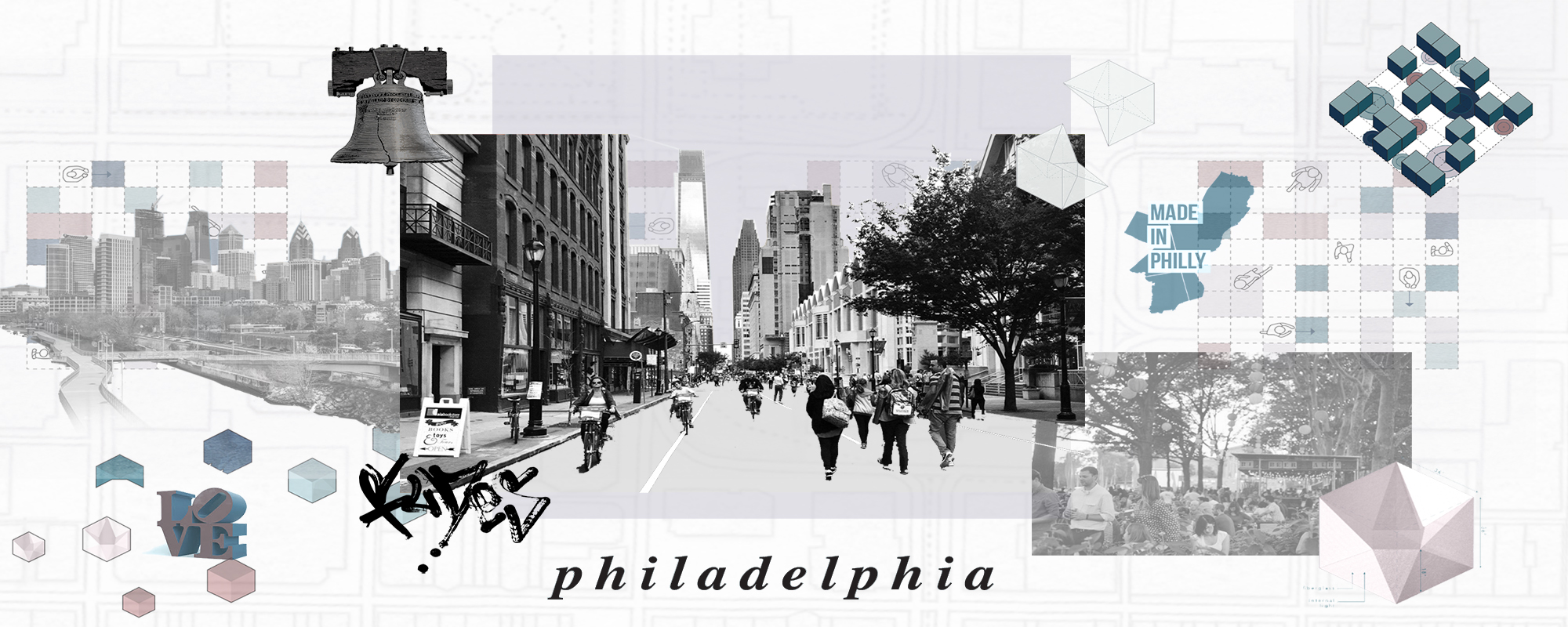
Authorship matters as much as form. re-grouping, by Shannon McLain and Petra Stanev, describes itself as a bottom-up, community powered approach to street furniture for Philadelphia, marking neglected infrastructure and transforming vacant lots. Diffusion boxes, entered in the Salut Paris competition by kristin Wayne, gives everyone a modular shared unit and lets them choose where to place it.
Let the street do more than one job
A small object can carry several functions at once. In the Guwahati street furniture journal, Sujata Hazarika proposes bamboo bus shelters that harvest rainwater, parklets that absorb runoff and benches with planted cores along Rajgarh Road, so that a network of modest pieces helps a street cope with monsoon flooding. Cantero, by Santiago Romero, Nicolas Noblia and Pablo D'Angelo, adds sensors to a gardening unit so that a strip of pavement becomes a shared farm.
Tactical urbanism on uni.xyz
Members have published 39 projects and 41 journals under this topic. Many began as competition briefs about streets, rail corridors and urban furniture; others are theses on contested public space. Several of the strongest entries share a method: they start by recording how people already use a site.
The most liked project in the topic is BENAAM AJNABI-The Unnamed Strangers of Lahore by Shajiya Naveed, which asks "What's in a name?" while exploring the narrative of a protest. It is a reminder that the street is also where people claim visibility, and that temporary occupation has political as well as practical meanings.

CUBE(ish), by Selen Karadogan, Mert Akay and Ecem Kutlay, received a People's Choice Award in Elevate 2019. It starts from the observation that people rushing between home and work rarely pause, and proposes an in-between space that offers an escape point from the daily rush. It is a good example of tactical thinking applied to a feeling rather than a traffic problem.
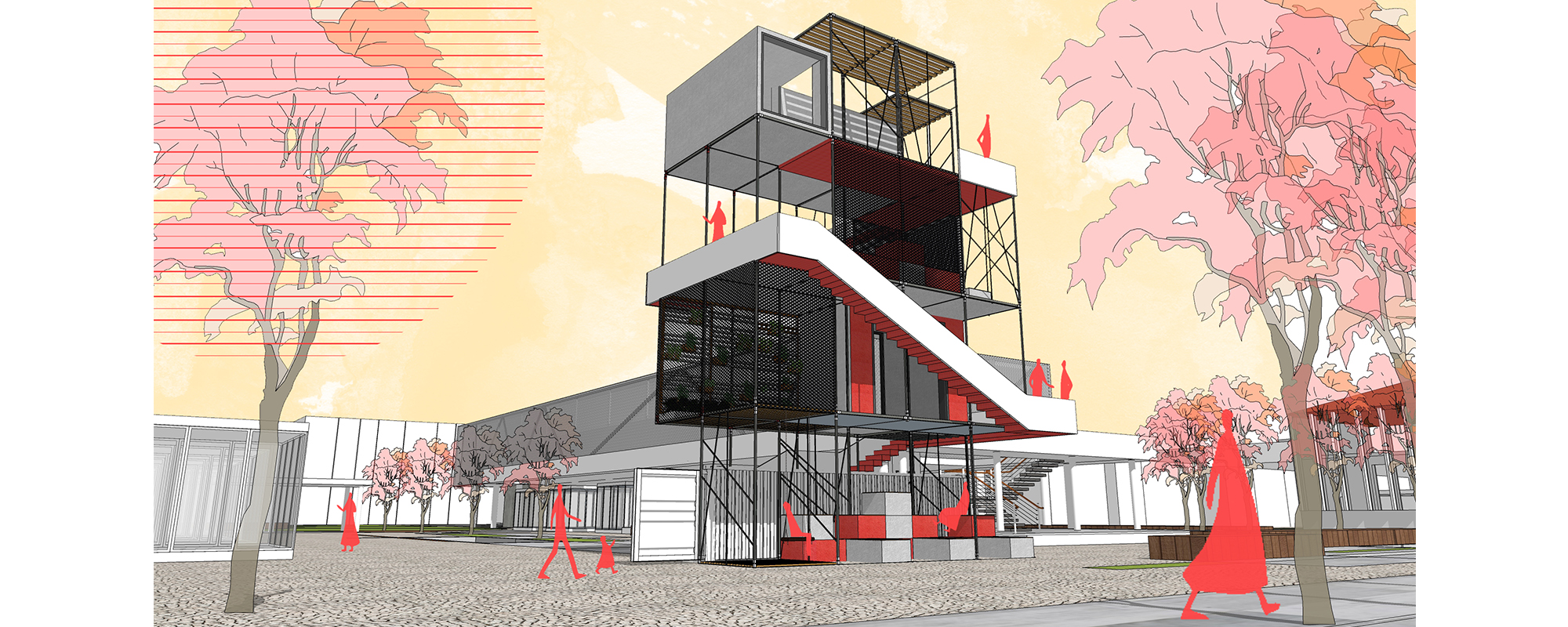
The Salut Paris competition produced several entries on reclaiming rail land. Bend It, a winning entry by Rogerio Carvalheiro, Neil Maass and Matthew Cavender, began with how a neighbouring community had already appropriated an abandoned train route to meet nature and neighbours in ways the team calls informal, organic, creative and productive. That is tactical urbanism observed before it is designed: the project builds on what residents were already doing.

In the same competition, Rolly by Yuna Kim, which received an Organizer's Choice Award, places modular objects that can move along the tracks across the whole Petite Ceinture, so the intervention travels rather than staying in one spot.
Closer to everyday streets in South Asia, Syed Shah Adnan's thesis on the spaces beneath Karachi's Malir 15 flyover studies how informal place-making by pedestrians and vendors already shapes the area, and proposes a connective intervention that turns neglected infrastructure into active public space. Urban mAtrA, by Raymond C, Muzamil, ginu shajan and Nizam MA, takes its name from the Sanskrit word for furniture and reimagines what the team calls the earliest street furniture, sitting under a tree, as a foldable and movable shadow.
Two editorial journals extend the idea to culture. Instant City covers Shao Xueyan's Editor's Choice entry in the Opera Truck competition, a fleet of modules that unfold into stages, markets and cinemas and treat modular architecture as a tool for temporary urbanism. The Empty Space, Lianping Xia's Runner-up entry in the same competition, reads Peter Brook's idea that any space can become a stage and tests one modular system across plazas, parks and city streets.
Challenges and future directions
The first challenge is permanence. A pilot that never becomes permanent can fade, and a successful one can be quietly removed when budgets or politics change. Times Square worked because the city committed to monitoring and then to rebuilding. Many smaller trials end without that second step.
The second is permission. Wikipedia's overview notes that tactical projects vary widely in legality and support. When residents in Honolulu repainted a dangerous crosswalk to spell "Aloha" in 2014, officials called it a deviation from the standard. Some cities now offer formal routes instead. New York's NYC Plaza Program invites community groups to propose plaza sites through a competitive application, prioritises neighbourhoods that lack open space, and expects partners to operate and maintain the plazas.

That leads to the third and hardest question: who gets to intervene? Programmes that depend on volunteer stewardship favour neighbourhoods with organised groups and spare time. A pilot that ignores the street vendors and informal users who were already there can also push them out. Designers working in this field increasingly start with mapping existing users, as several uni.xyz projects do, before adding anything new.
Tactical urbanism for students and designers
Tactical urbanism suits student work because it rewards observation, cheap prototypes and clear before-and-after evidence. Strong thesis angles include a pilot for a school street, a kit of parts for monsoon or heat conditions, a temporary market or night use for an underpass, or a protocol for turning a successful trial into a permanent design. Painted surfaces and murals also connect the field to street art, while broader studies of shared ground belong with public space research. A good submission documents the site before and after, records who uses it and when, and explains which parts of the test should become permanent and which should stay flexible. Live briefs on streets and urban furniture appear regularly on uni.xyz competitions.
Frequently asked questions
What is an example of tactical urbanism?
Park(ing) Day is the classic example: since Rebar's first installation in San Francisco in 2005, people have turned metered parking spaces into temporary parks for a day. The 2009 pedestrian plazas in Times Square, first furnished with cheap lawn chairs, are the best-known case of a city using the same method.
What does "lighter, quicker, cheaper" mean?
It is a phrase used by the Project for Public Spaces, borrowed from Eric Reynolds, for simple, short-term and low-cost improvements to public space. Projects start as inexpensive trials that can be changed quickly, and successful ones are later made permanent.
Is tactical urbanism legal?
It depends on the project. Some interventions are unsanctioned and may be removed, while others are run or permitted by city governments. Many cities now offer formal programmes for plazas, parklets or open streets, which give residents a legal route to the same results.
How is tactical urbanism different from placemaking?
Placemaking is the broader aim of shaping places around the people who use them. Tactical urbanism is a method for getting there: quick, reversible, low-cost tests that gather evidence before permanent investment.
Who wrote the book Tactical Urbanism?
Mike Lydon and Anthony Garcia wrote Tactical Urbanism: Short-Term Action for Long-Term Change, published by Island Press in 2015. It covers the movement's history, case studies and a toolkit for practitioners.
References and further reading
- Tactical urbanism, Wikipedia
- Parklet, Wikipedia
- Times Square, Wikipedia
- The Lighter, Quicker, Cheaper Transformation of Public Spaces, Project for Public Spaces
- NYC Plaza Program, New York City Department of Transportation
- Tactical Urbanism: Short-Term Action for Long-Term Change (Lydon and Garcia, 2015), Open Library


Popular projects
View all 36 projects


Latest journals
View all 40 journals
Customized Instant City Module Operating System: A Second, Movable City Above Barcelona's Eixample
A post-metabolist plan for Barcelona's Eixample inserts a mobile lattice of modules into the air, rooftops and courtyards rather than razing the grid.
Instant City: Archigram's Roaming Metropolis Rebuilt as a Fleet of Unfolding Cultural Modules
A fleet of autonomous modules unfolds from compact transport forms into stages, markets and cinemas, turning plazas into temporary cultural venues.
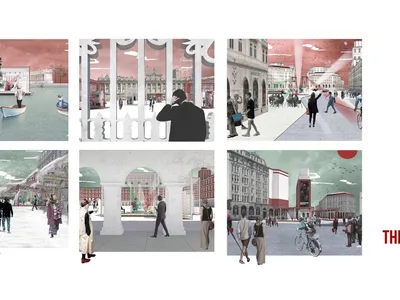
The Empty Space: Modular Units That Turn Plazas, Parks and Streets into Open Stages
Lianping Xia's runner-up Opera Truck entry reads Peter Brook's empty space as a modular framework that performers, audiences and cities keep redefining.

Temporary Identity: Modular Housing That Lets Bologna's Pilastro District Change Without Displacement
A reversible layer of prefabricated, relocatable living units slips between Pilastro's slabs, absorbing change so residents never have to leave.


