
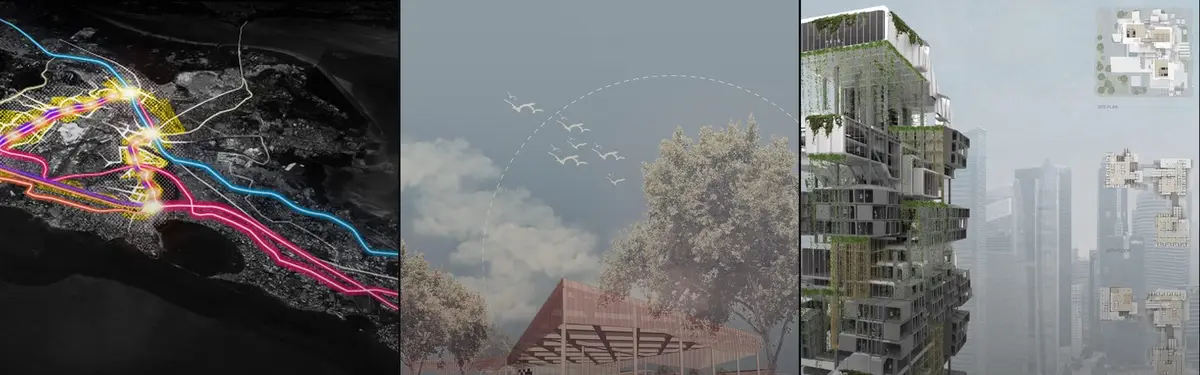


Transit Oriented Development
Urban design and architecture centered on creating livable communities around transit infrastructure and mobility hubs.
Transit Oriented Development integrates transportation networks with mixed-use urban spaces to reduce car dependency and create walkable neighborhoods. This approach shapes how cities grow around transit stations and corridors, influencing housing, commerce, and public life.
The community explores station redesigns and precinct transformations, modular city frameworks, pedestrian-oriented transit architecture, and strategies for converting transit hubs into vibrant urban destinations that serve broader community needs.


Popular projects
View all 23 projects


Latest journals
View all 26 journals

Transitional Linkage: An Elevated Pedestrian Spine That Formalizes a City's Most Dangerous Shortcut
Zillur Rahman turns an informal crossing over rail and highway into a raised civic spine that ties six transport modes together at a single shared level.
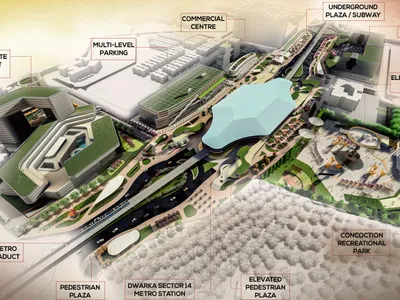
Restructuring Dwarka MRTS Station Precincts: Turning Residual Metro Land into a Civic Gateway
A layered public realm of plazas, elevated decks, subways and parks stitches Dwarka's fragmented metro corridor back into everyday pedestrian life.

Interstate Bus Terminal, Dwarka: A No-Conflict Circulation System for New Delhi's Intercity Travel
An 11-hectare greenfield terminal in Sector 23 separates buses, cars, autos and pedestrians into dedicated loops under a solar-clad shell roof.

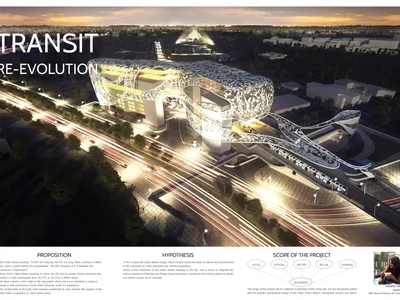
Transit Re-evolution: Turning Delhi's Metro Stations into Urban Destinations
A mixed-use metro station typology that choreographs movement, retail, and public life around the daily commute in Delhi's expanding network.


