

Adaptive Reuse Architecture in Ho Chi Minh City: A Coffee Shop Transformation
Explore innovative adaptive reuse architecture, seamlessly blending heritage preservation and contemporary design in a Vietnamese coffee shop.


Discover the innovative design curated by sgnhA architects in Ho Chi Minh City, Vietnam. Architects Tran Quoc Khoi Nguyen and Nguyen Duc Tuan Anh spearheaded a transformative project focusing on the adaptive reuse of a modernist structure for a vibrant coffee shop. This article delves into the architectural nuances of this space, seamlessly blending heritage preservation with contemporary design elements.

The Ground Floor: Symmetry and Harmony
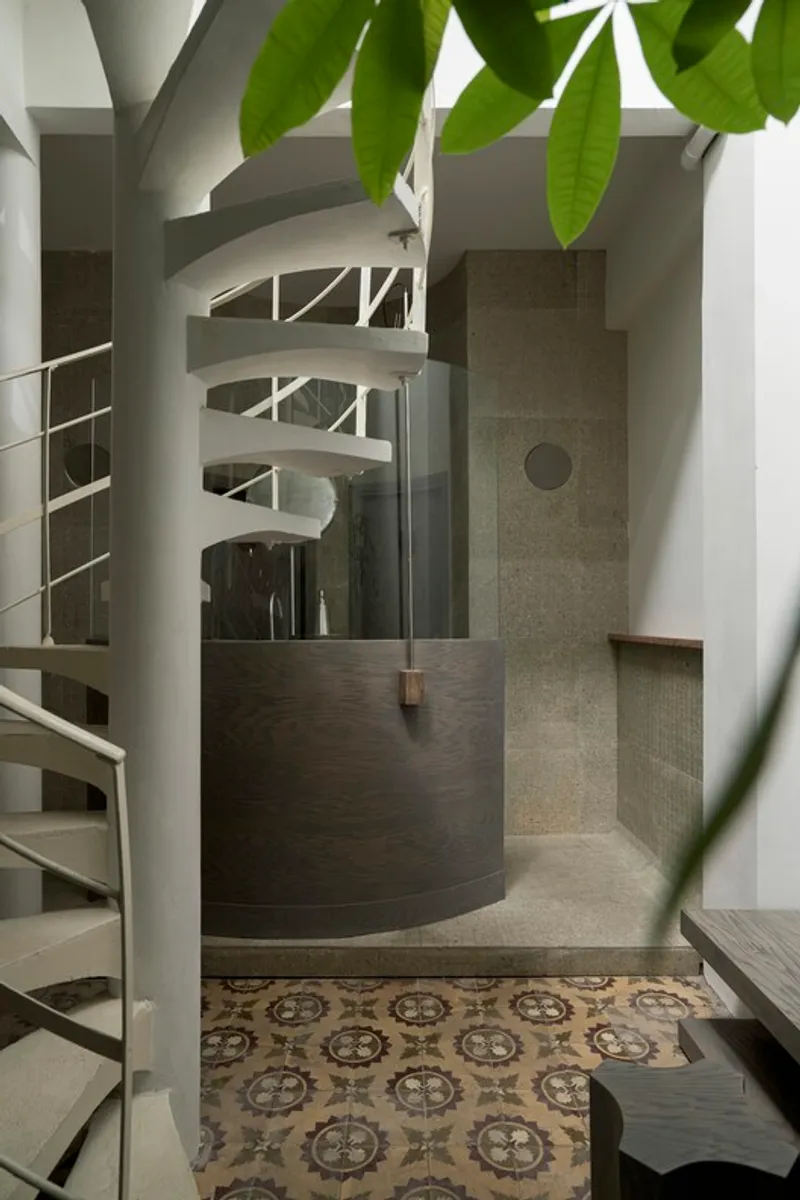
The ground floor of the coffee shop unfolds as a symmetrical masterpiece, with a central coffee bar anchoring the space. Emphasizing the building's facade axis, this area sets the tone for a welcoming atmosphere. A courtyard, featuring a spiral staircase, cleverly acts as a buffer zone, creating a balance between interior and exterior spaces. Within this realm, essential facilities like restrooms and storage seamlessly integrate, contributing to the functional harmony of the space.
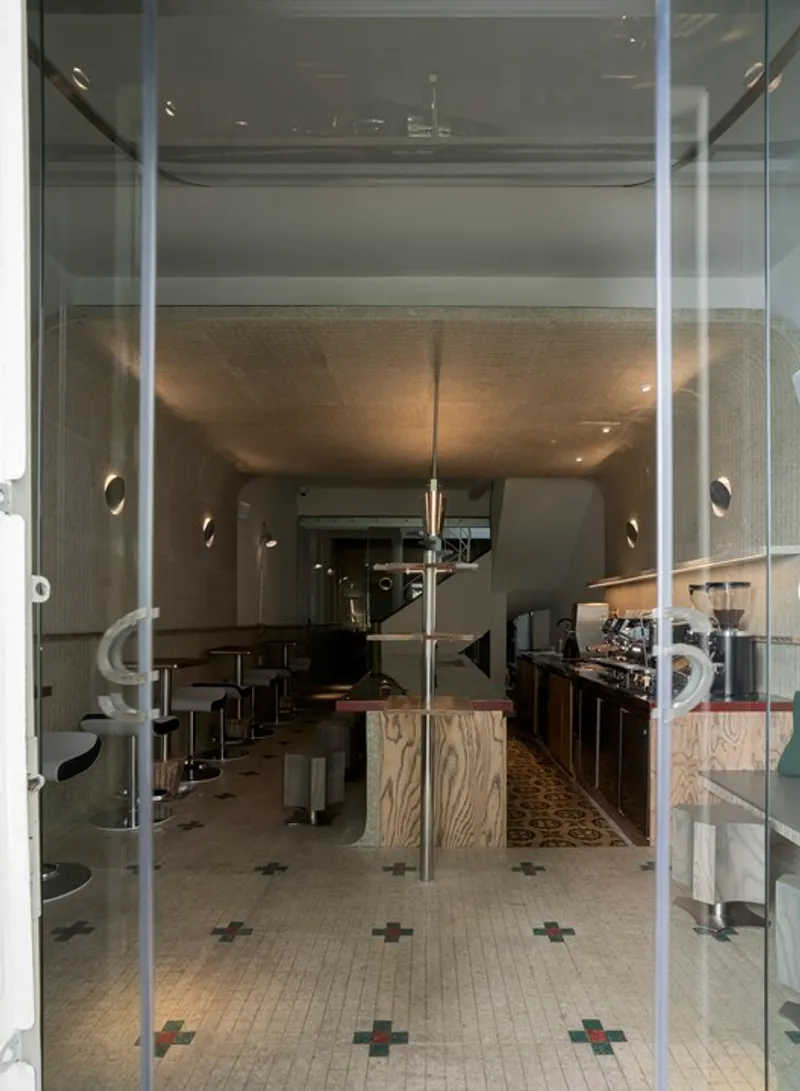

First Floor Elegance: Communal Seating and Beyond
Ascending to the first floor reveals the main seating area, characterized by a large communal table and banquette seating along the space's length. A small balcony provides a scenic view of the front yard, while a semi-indoor corridor connects to the roasting room at the back. This level becomes a focal point for social interaction, where design elements seamlessly converge to enhance the overall aesthetic.



Sustainable Design: A Marriage of Form and Function
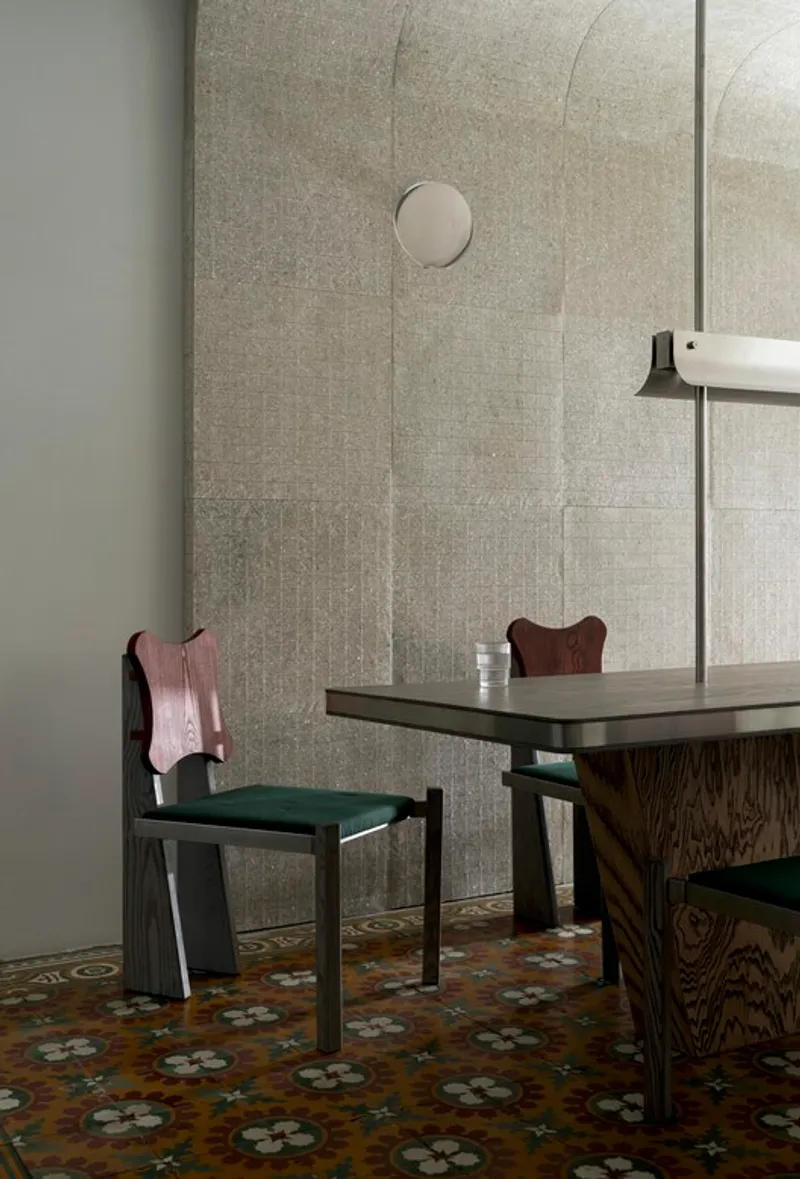
The architects' commitment to preserving the building's existing conditions is evident in the use of adaptive materials. A steel frame and recycled plastic panels form an internal envelope, unifying various elements such as floors, walls, ceilings, partitions, handrails, lighting, and air conditioning. The choice of recycled plastic not only aligns with sustainability goals but also ensures a harmonious integration of new components into the existing structure.


Inspired Elements: A Heritage Dialogue
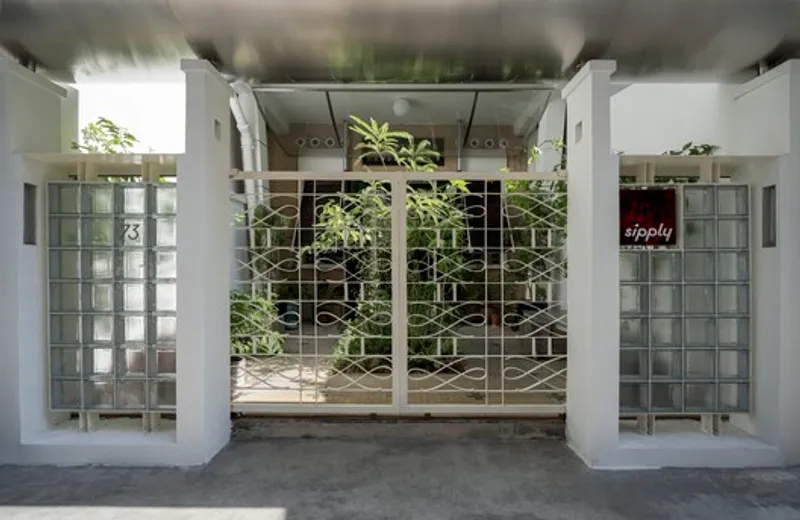
Drawing inspiration from the building's original features, the architects incorporate existing cement tile patterns, a revolving round window, and Art Deco-inspired motifs into the design. The strategic use of a glass wall with a curved ceiling adds an extra dimension, refracting and reflecting light to showcase heritage elements. This deliberate integration fosters a compelling conversation between the past and the present.

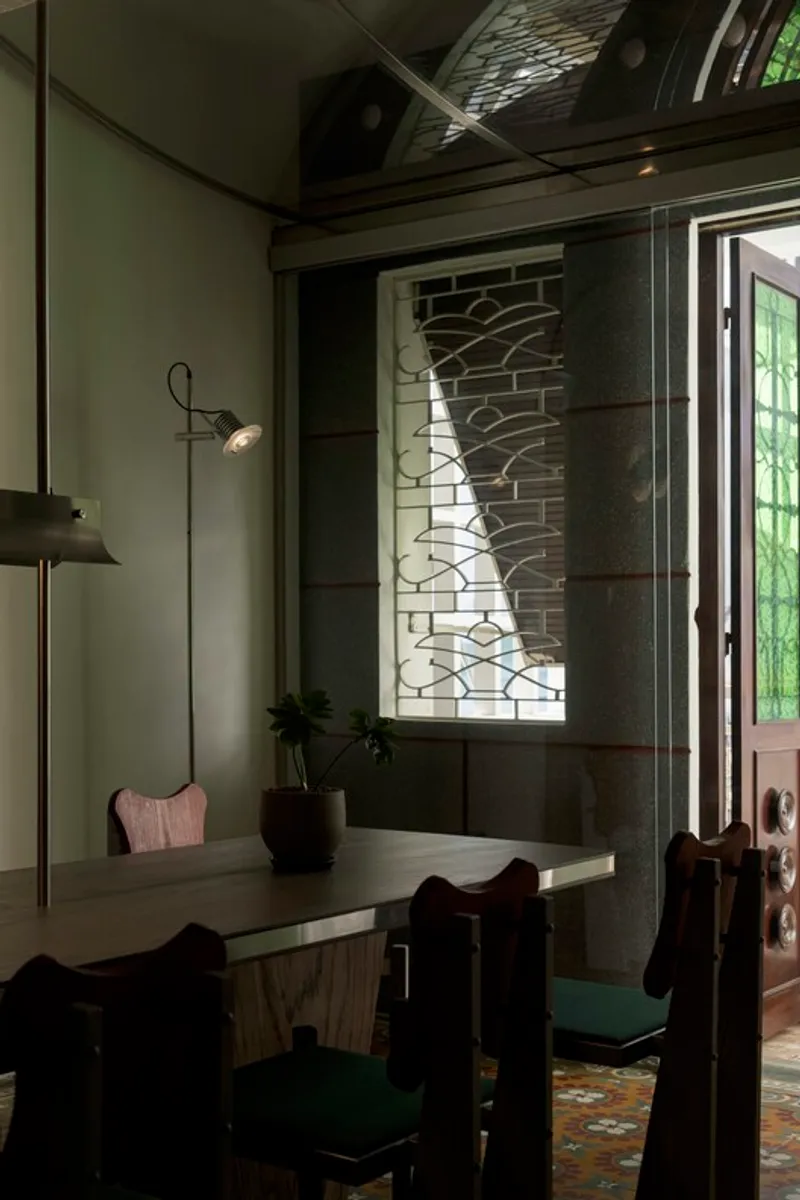

In summary, this adaptive reuse architecture project in Ho Chi Minh City stands as a testament to the harmonious coexistence of heritage and modern design. Architects Tran Quoc Khoi Nguyen and Nguyen Duc Tuan Anh's meticulous approach not only transforms a coffee shop but also contributes to the broader discourse on sustainable and thoughtful architectural interventions.
All photographs are work of Do Sy


Popular Articles
Popular articles from the community


longwave studio Reorganizes a 112 m² Tainan Apartment Around the Daily Routines of a Family and Two Cats
In Tainan, Taiwan, birch plywood, rust-red furniture and a freestanding plaster wall link arrival, storage, work and family life in one apartment.

Jaramillo Van Sluys Arquitectura and Urbanismo Turn a Demolished Registry Lot in Quito into an Orchard Plaza
In Quito's Centro Histórico, a 2,800 m² plaza exposes the San Agustín convent wall and redraws its lost Augustinian orchard in volcanic stone.

Architekt Andreas Gruber Scatters 23 Dark Timber Chalets Across a South Tyrolean Forest Edge
In Molini di Tures, Amonti Chalets breaks a resort into a hamlet of gabled timber houses, with parking, storage and services pushed into the slope.

David Ortega Stacks a Two-Story Mexico City Penthouse Around a Steel Stair and a Pergola-Shaded Roof Terrace
In Colonia Roma, a 300 m² penthouse uses oak joinery, a planted steel stair and a slatted roof pergola to make a new-build apartment feel like a house.

Similar Reads
You might also enjoy these articles

Gil Mello Arquitetura Tilts a Single Roof Toward the Waterfalls on a Plateau Above Aiuruoca, Brazil
In Aiuruoca, Minas Gerais, a 200 m² house of local labor and reclaimed poles pairs a low valley veranda with a tall mountain one.

U.GA Architects Wraps an Oval Rooftop Pool in Curved Board-Formed Concrete on Busan's Jeollidan-gil
In Busan's Jeonpo-dong, a 454 m² mixed-use block stacks a neighborhood facility, guest rooms and an oval rooftop pool inside spiraling concrete walls.

Felipe Hess Arquitetos Turns a Blind Stone Wall to the Street and Opens a Brazilian House onto a Courtyard and Canal
A canal-front house in Brazil hides behind painted stone and planting, then opens to an olive-tree courtyard, a reed-ceilinged porch and a curving pool.

David Macias Steps a Doorless Stone and Plaster House Down a Tropical Colombian Hillside
In the humid hills of Colombia, Threshold House replaces the front door with an open void and terraces its 850 m² down the slope instead of fighting it.

Explore Ho Chi Minh City Competitions
Discover active competitions in this discipline

Challenge to reimagine the Iron Throne

Photograph architecture without architects

Illustrate the lost glory of Angkor Wat - Render Challenge

Design challenge to reuse E-waste
Comments (0)
Please login or sign up to add comments
No comments yet. Be the first to comment!