
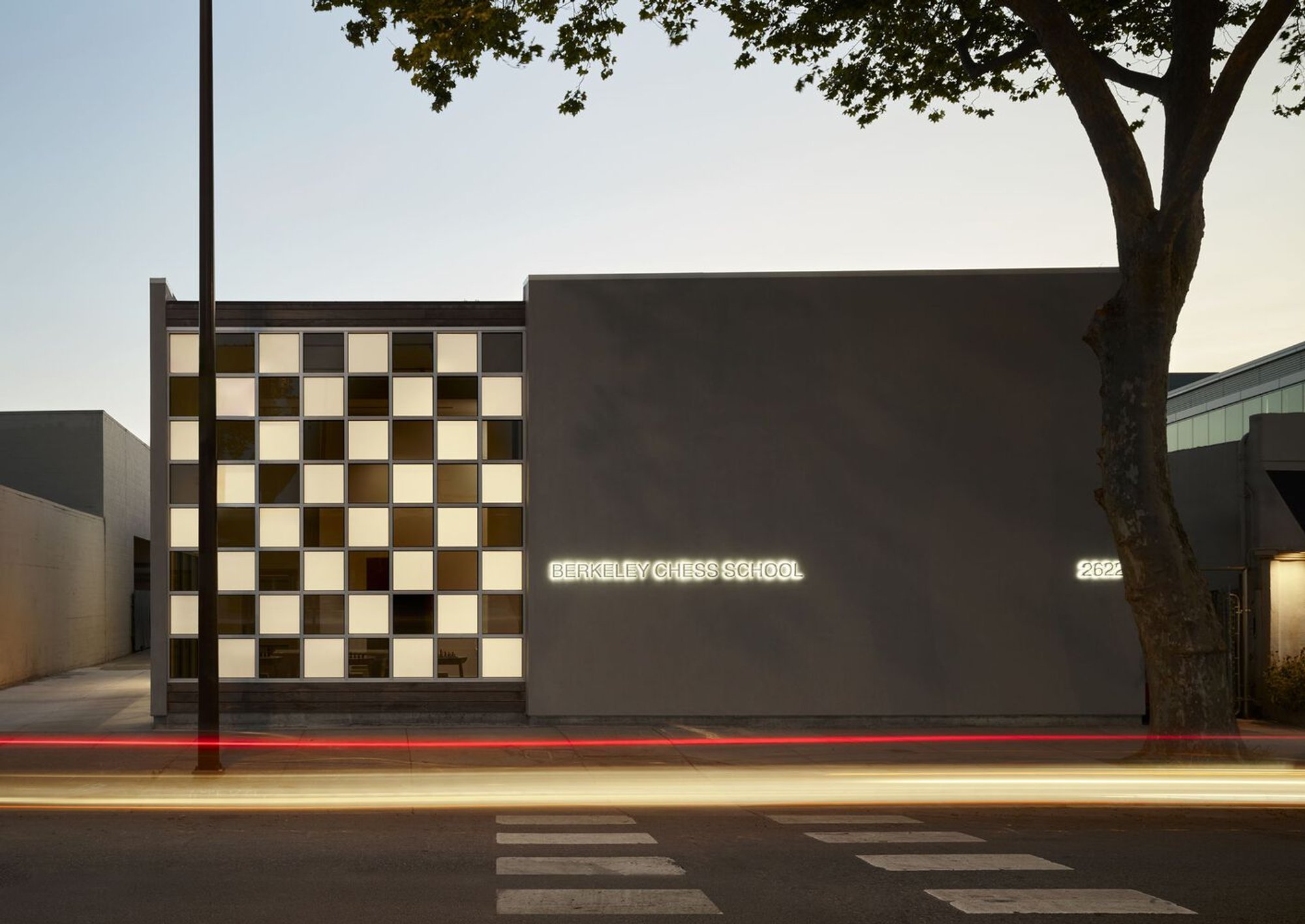
Berkeley Chess School by Rangr Studio: A Chessboard-Inspired Architectural Transformation
A vibrant chess school expansion featuring a striking glass chessboard façade, new classrooms, café, and accessible design promoting learning and community.

The Berkeley Chess School in Berkeley, California, expands its mission of empowering young learners through a thoughtful architectural intervention by Rangr Studio. Founded in 1981 as a small after-school program, the school now teaches nearly 7,000 children across the Bay Area each year and has produced three grandmasters. Beyond competitive achievement, the institution emphasizes chess as a powerful tool for cognitive development and future success in STEM fields.
A Community-Focused Educational Environment
For more than four decades, the Berkeley Chess School has delivered free chess instruction to students who might otherwise lack access to strategic thinking programs. The school continues to support low-cost summer camps and year-round Friday night classes, using chess education as a pathway toward social equity and expanded academic opportunities.
Architectural Concept: The Chessboard as a Spatial Identity
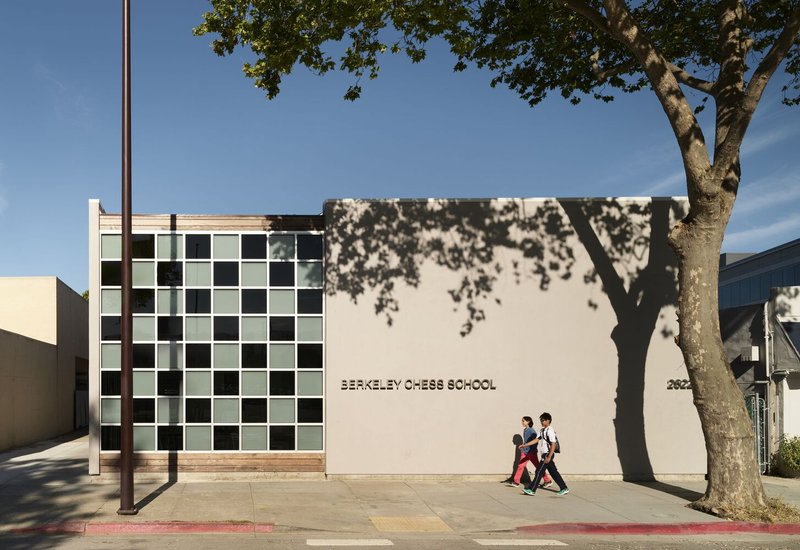
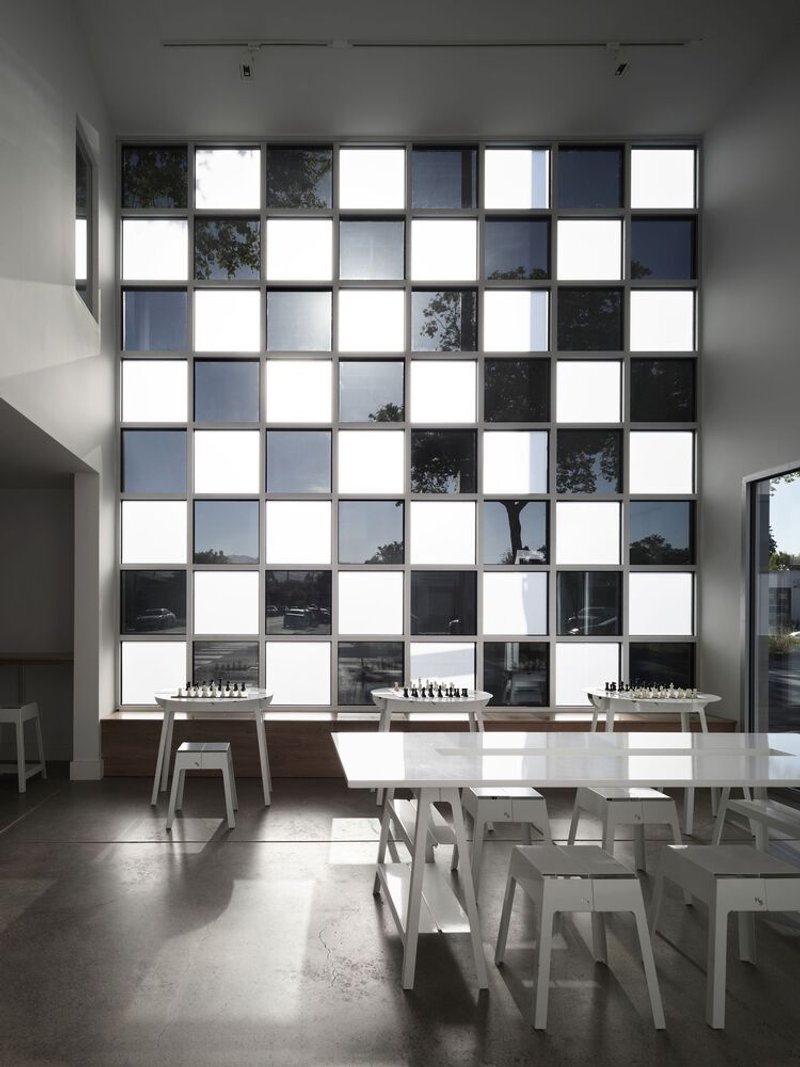
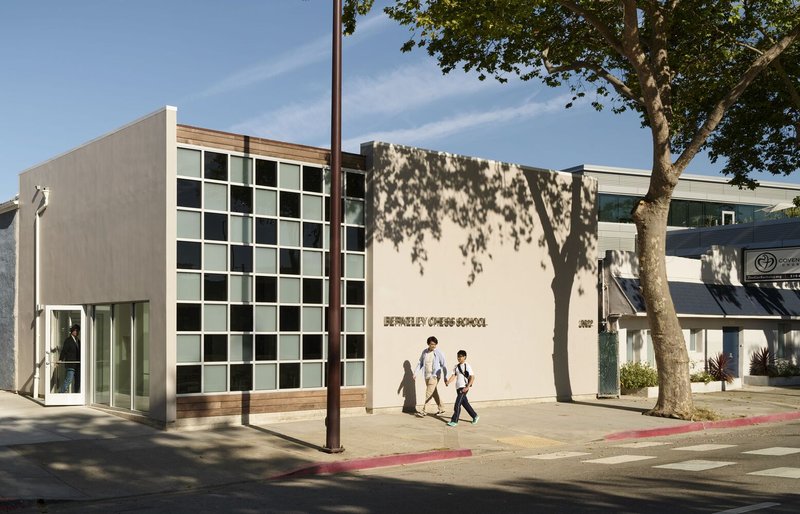
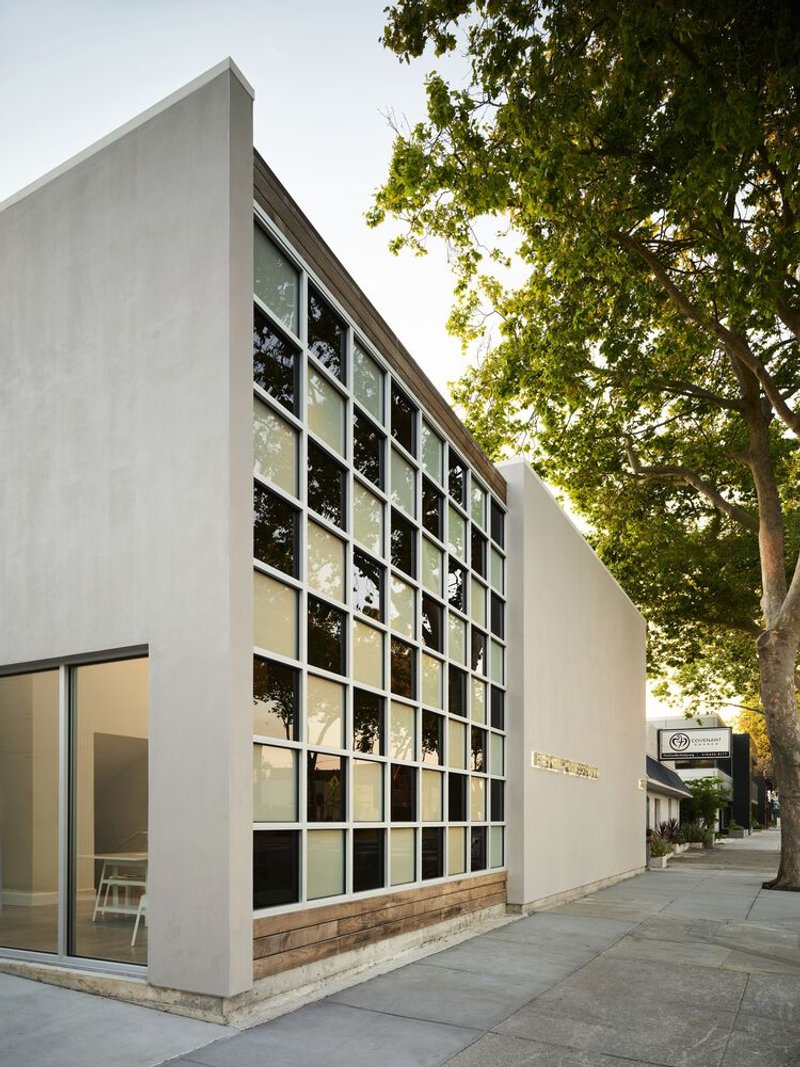
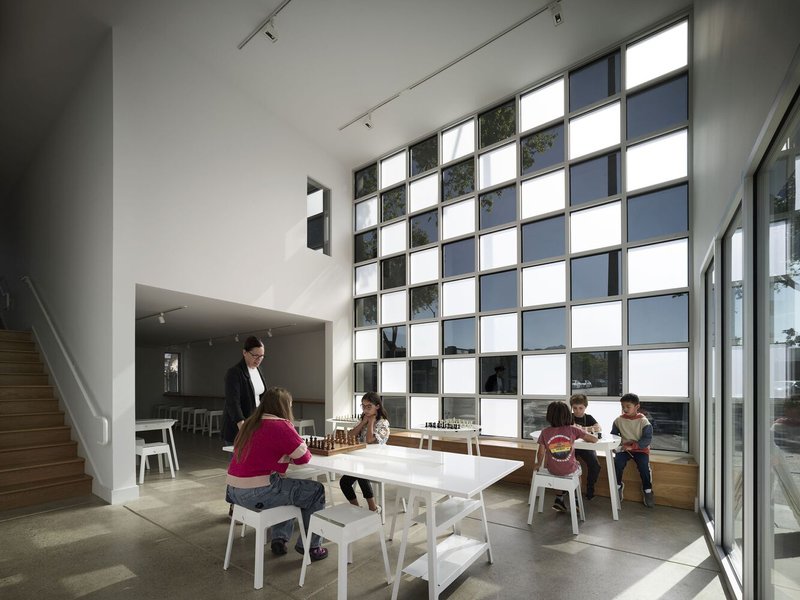
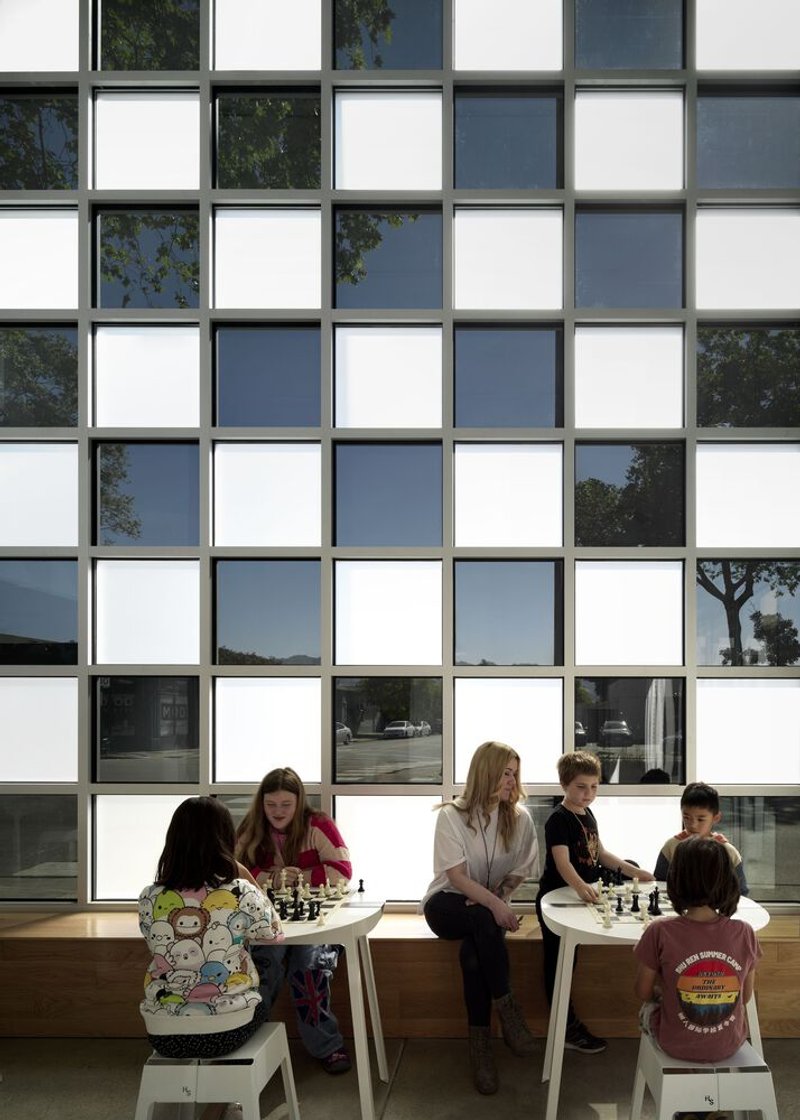
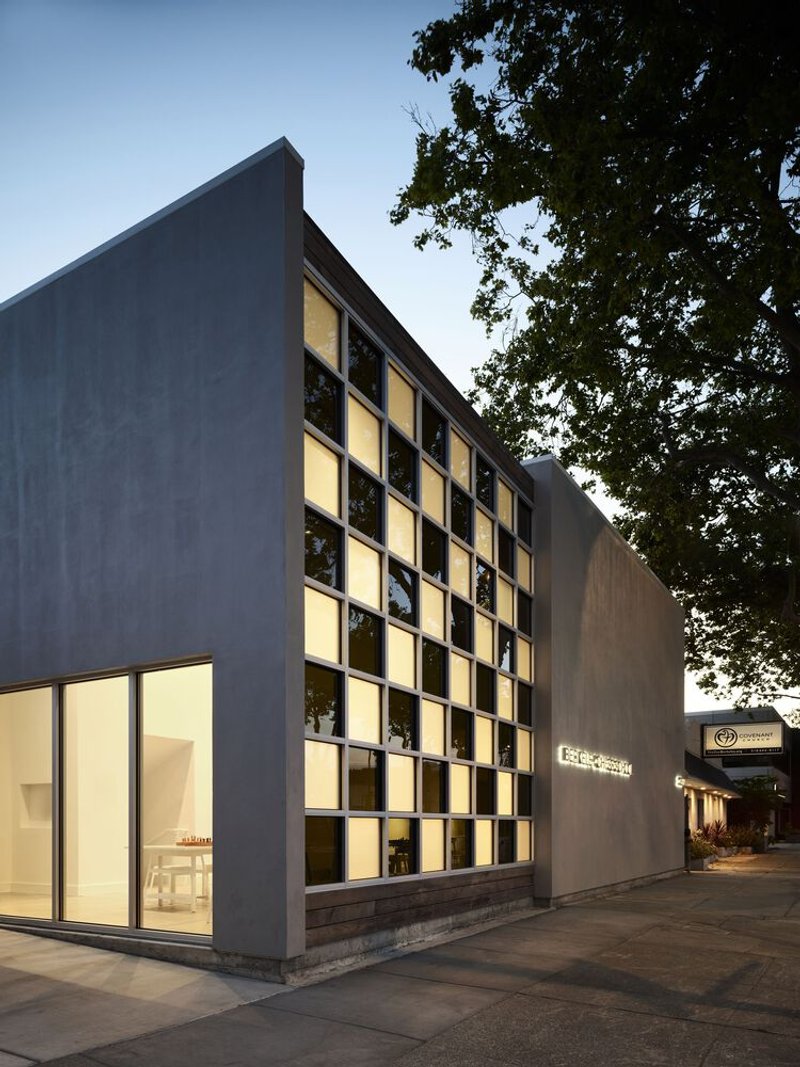
Rangr Studio’s recent addition to the existing building introduces a renewed identity rooted in the visual language of chess itself. Working within the nonprofit’s modest budget, the architects explored ways to elevate the school’s presence using simple, cost-effective materials. The solution emerged through the idea of a chessboard façade, created using a combination of affordable tinted and translucent glass panels. This composition transforms a standard storefront glazing system into a bold architectural gesture that both references the game and enhances the building’s urban visibility.
The chessboard façade functions beyond symbolism. It becomes an immersive threshold: an architectural device that welcomes students, teachers, and visitors into the metaphorical world of chess. Approaching the school from the street, the distinctive pattern signals the institution’s mission at an urban scale while giving the façade depth, texture, and rhythm.
Program Expansion: Accessibility, Community, and Learning
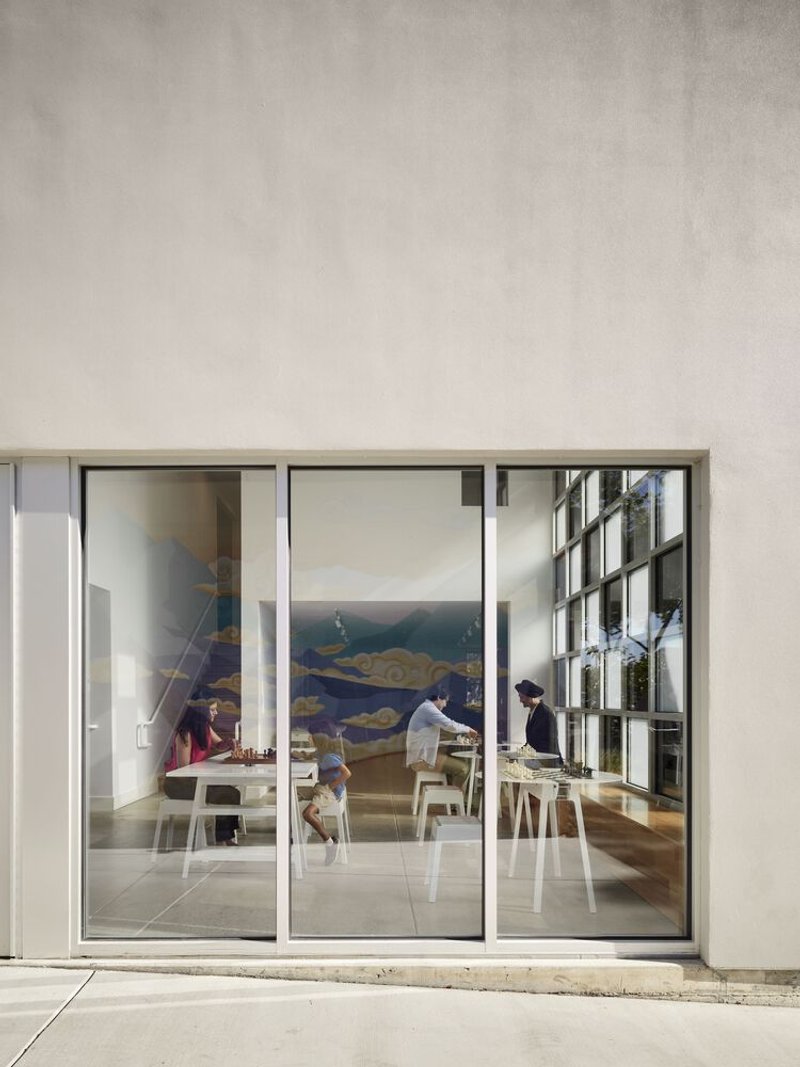
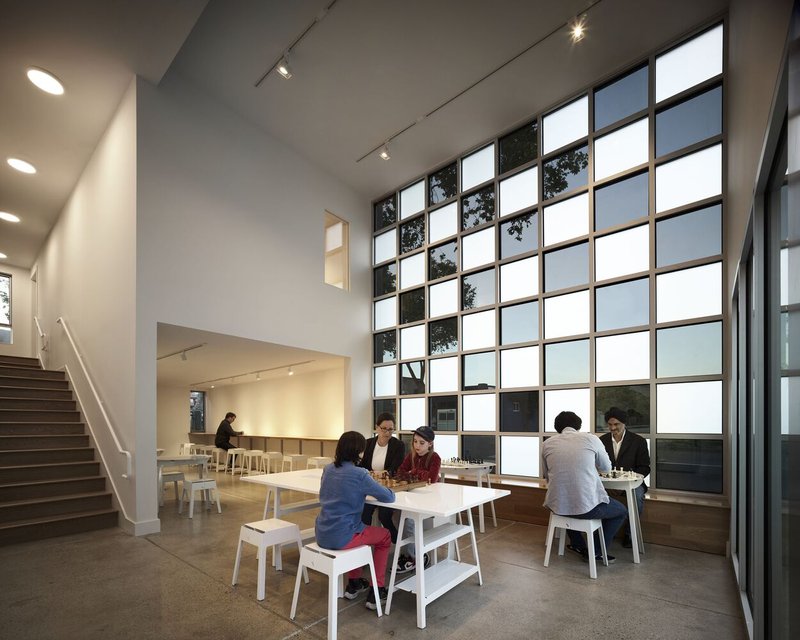
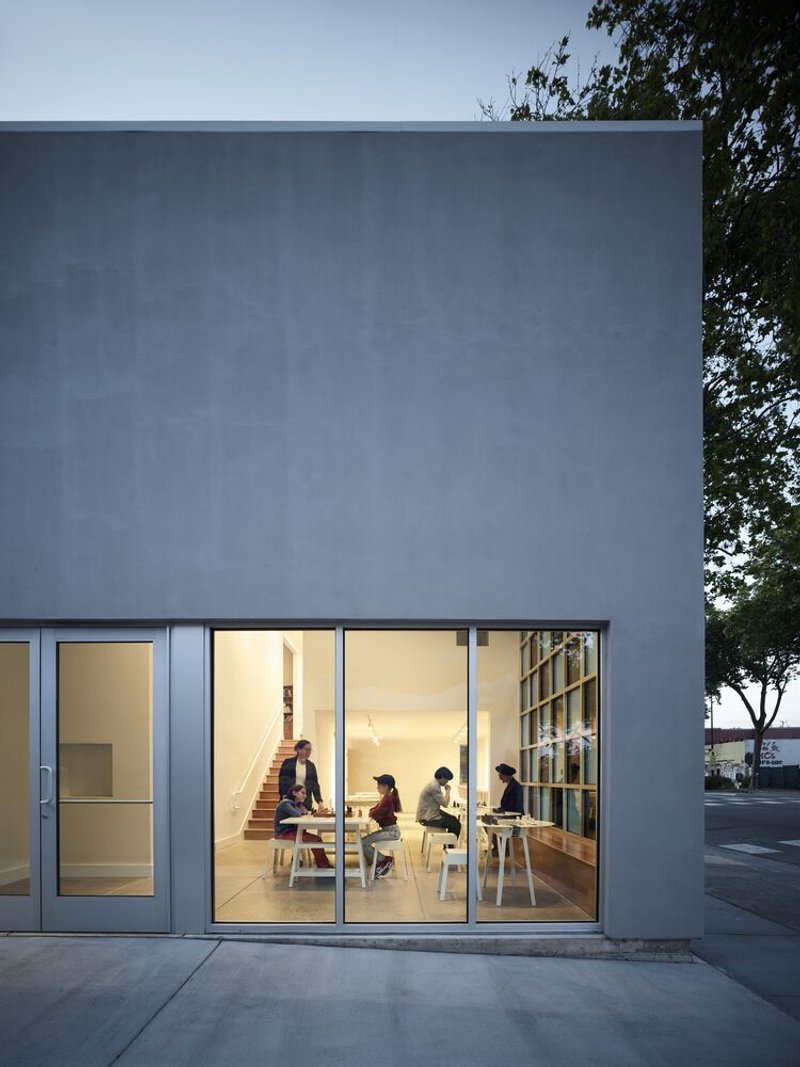
The renovation introduces essential programmatic spaces including a new accessible entry, a community café, and a flexible classroom. These additions strengthen the school’s function as a social and educational hub while ensuring ADA compliance. Interiors are designed with clarity and warmth, using natural light, simple materials, and carefully placed openings to create an environment conducive to strategic thinking and focused learning.
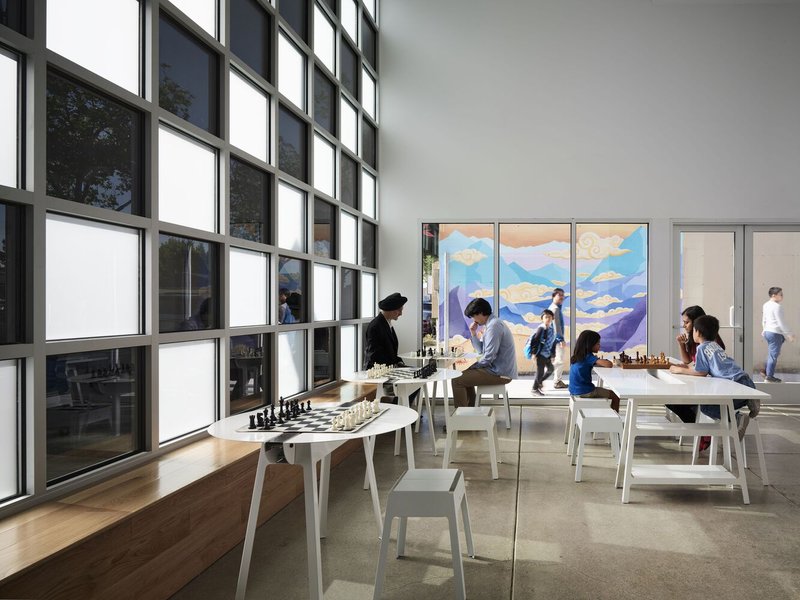
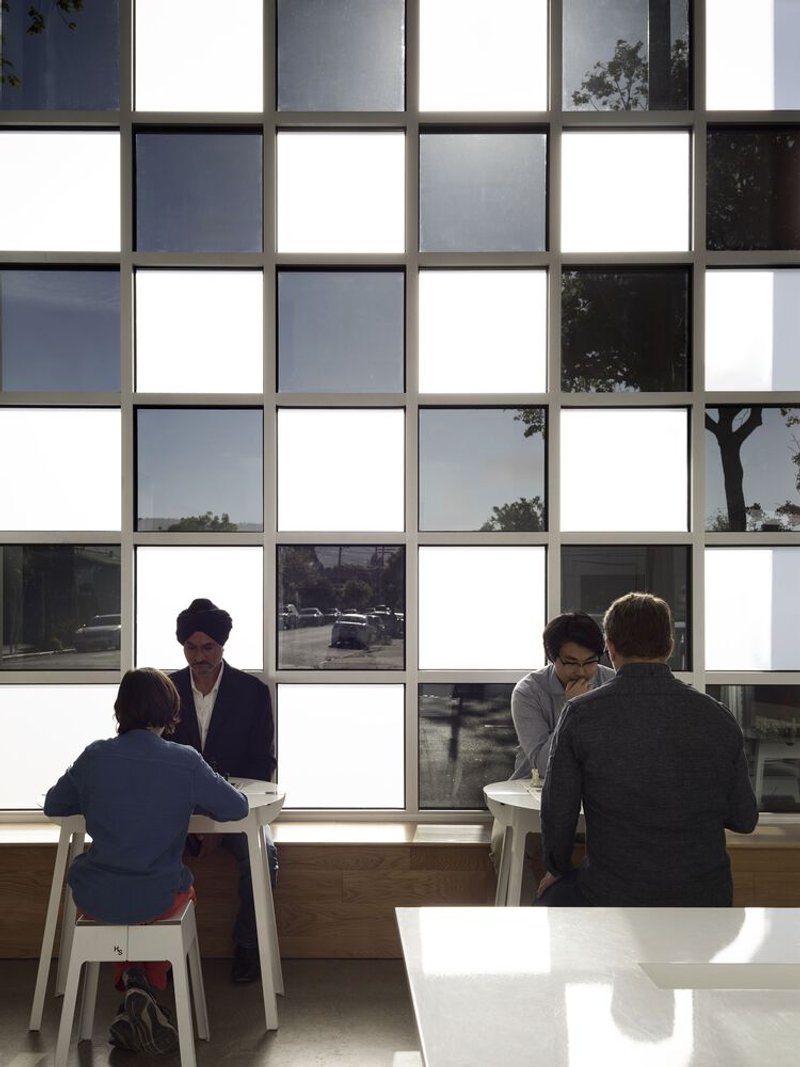
All photographs are works of Matthew Millman




Popular Articles
Popular articles from the community

BAUEN Builds Two Rammed Earth Volumes in Paraguay Inspired by the Ovenbird's Nest
In San Bernardino, a house of compacted earth channels the instinct of a constructive bird to shelter life from the Paraguayan summer.
VEIVE Architects Builds a Mountain Hostel That Disappears into a Hangzhou Hillside
On the Huihang Ancient Trail in Xiangjian Village, a shelter of wood, steel, and rammed earth roots itself in the rural landscape.
Foster + Partners Wraps a 200-Meter Shanghai Tower in Stainless Steel and Industrial Memory
The Suhe Centre Office Tower anchors a regenerated waterfront district in Shanghai with an all-steel structure that nods to local warehouse heritage.
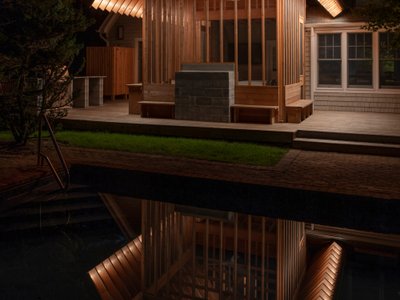
BLDUS Turns a 250-Square-Foot Screened Porch into a Pine Forest Temple in East Hampton
A gabled cedar pavilion mimics the rhythm of surrounding pines, anchoring a 1990s wooded home to its hollow in Long Island.


Similar Reads
You might also enjoy these articles

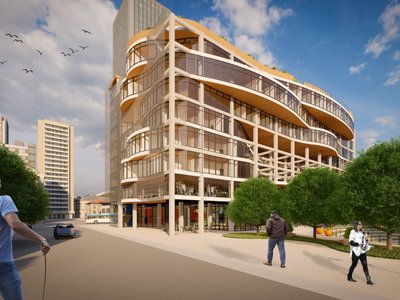
Olio Towers: A Mid-Rise for Performers That Fuses Housing, Rehearsal, and Stage
Located blocks from Houston's Theater District, this modular tower stacks living units around a central performance atrium.
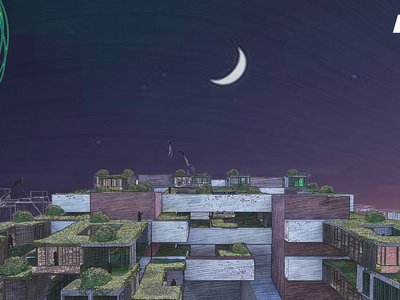
Oasis: Modular Green Housing Carved into Dhaka's Urban Fabric
A shortlisted Plugin Housing entry reclaims unauthorized settlements in Dhaka with stepped concrete volumes, green roofs, and ventilation-driven design.

Black Hole: A Floating Megastructure for the Post-Physical Era
Emiliano Mazzarotto envisions a spherical, self-scaling arena where e-sports, digital hotels, and holographic stadiums replace traditional public space.
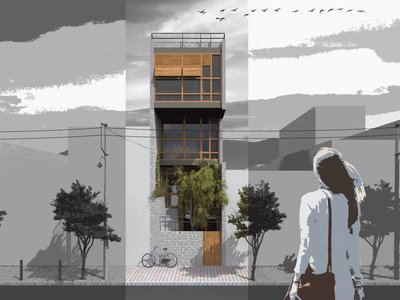
Compact & Sustainable Living in Piraeus: A Four-Level Family Home Built Around Light and Air
A narrow townhouse in one of Greece's densest port cities uses a central atrium and passive strategies to house three generations under one roof.


Explore Architecture Competitions
Discover active competitions in this discipline




The International Standard for Design Portfolios


The Global Benchmark for Architecture Dissertation Awards


The Global Benchmark for Graduation Excellence


Challenge to design public laboratory
Comments (0)
Please login or sign up to add comments
No comments yet. Be the first to comment!