
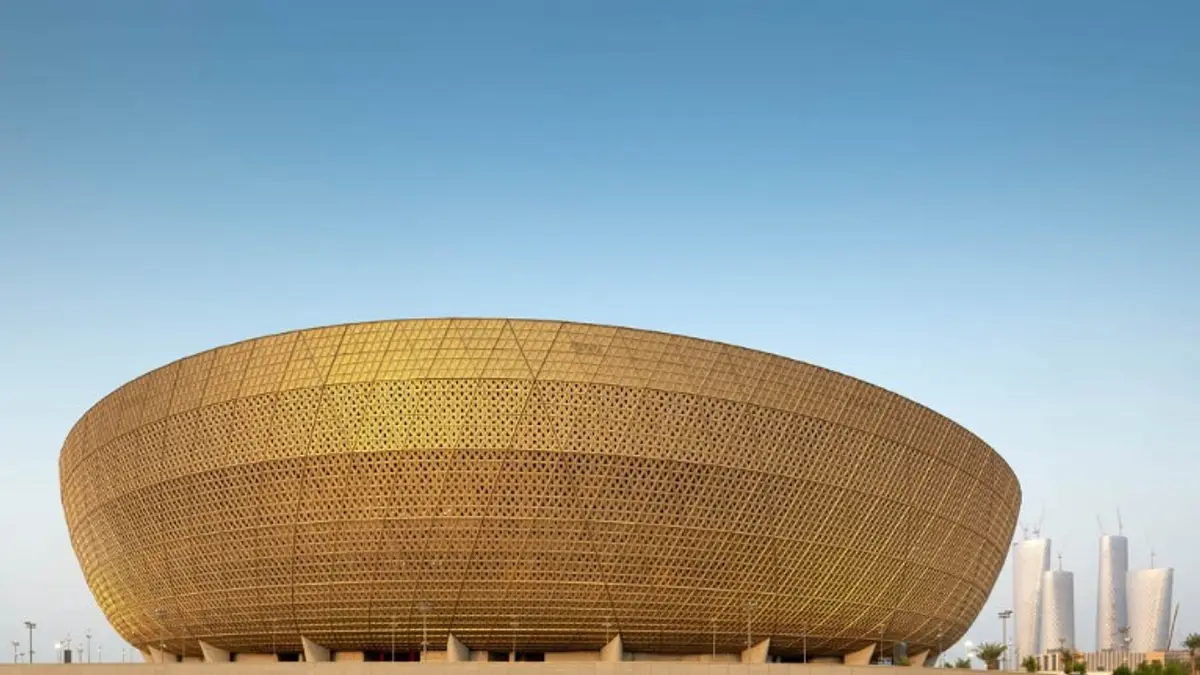
Explore the Spectacular Stadiums of the 2022 FIFA World Cup Qatar™
A Journey Through the Venues of the Most Anticipated Sporting Event of the Year

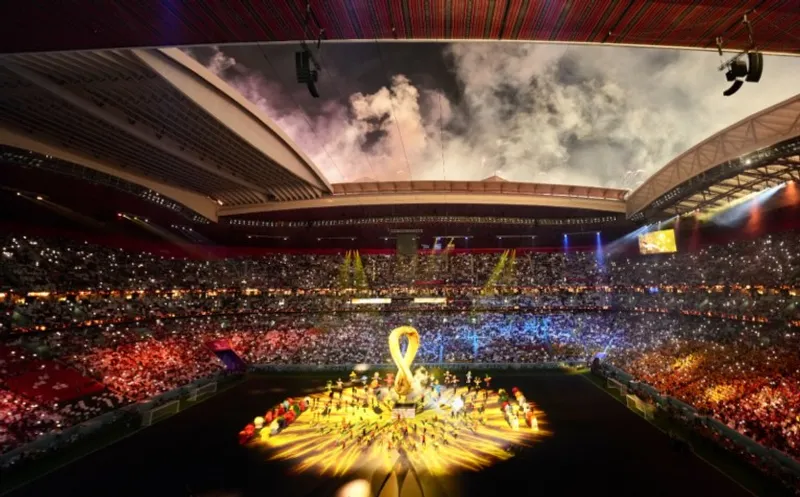
The highly anticipated FIFA World Cup Qatar 2022™, the first of its kind to be held in an Arab nation, officially started yesterday at the magnificent Al Bayt Stadium, following a breathtaking opening ceremony.
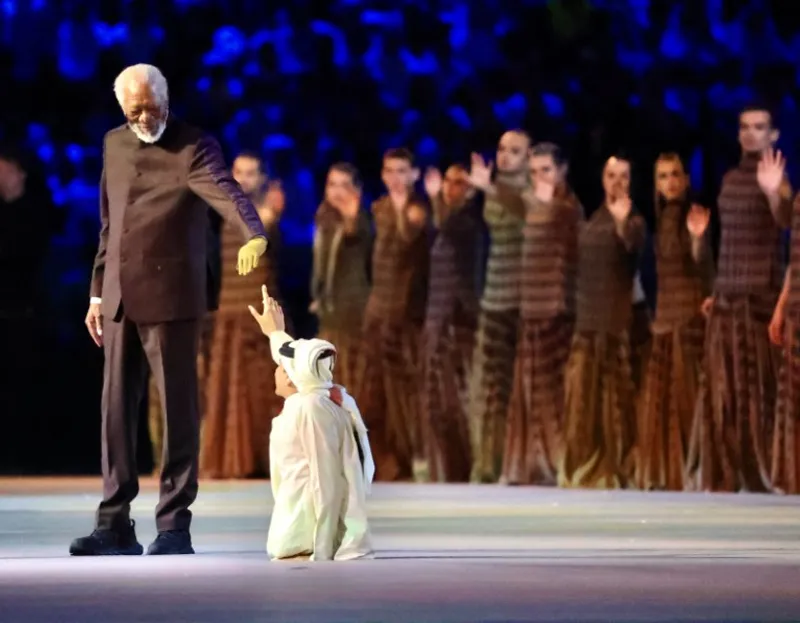
The opening ceremony, lasting for 30 minutes, was narrated by the talented Academy Award-winning actor Morgan Freeman and also featured Jung Kook from the popular Korean supergroup BTS. The ceremony showcased the rich culture and heritage of Qatar and emphasized the power of football in bringing people from diverse nations and cultures together.
 ©Supreme Committee for Delivery & Legacy
 ©Supreme Committee for Delivery & Legacy
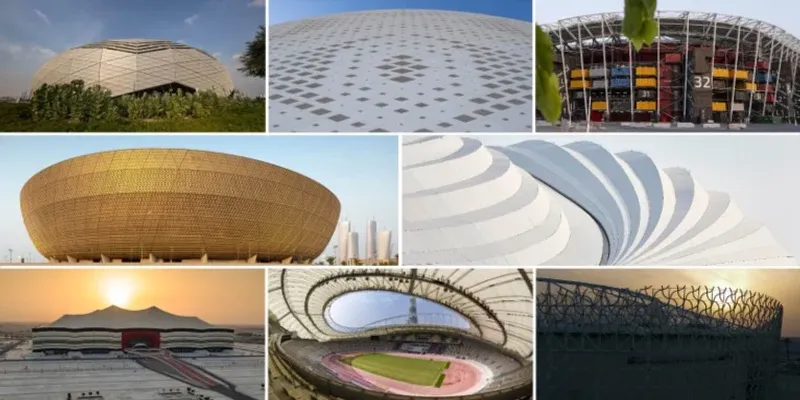
Eight state-of-the-art venues, designed with environmental sustainability in mind, will host the matches. Seven of these stadiums have been constructed in the past three years, while the eighth has undergone a comprehensive renovation. All of these venues are made from recyclable materials and are geared towards a more sustainable future.
Lusail Stadium
The largest stadium of the World Cup, Lusail Stadium, has been crafted by the renowned architectural firm, Foster + Partners. With a seating capacity of 80,000, it will serve as the centrepiece venue for the upcoming FIFA World Cup Qatar 2022™ and will host the majority of matches, including the highly anticipated final. The external design of the seating bowl is showcased as a shimmering golden vessel, adding a touch of glamour as it glistens in the sun. Once the World Cup has come to an end, the stadium will be transformed into a versatile community centre.
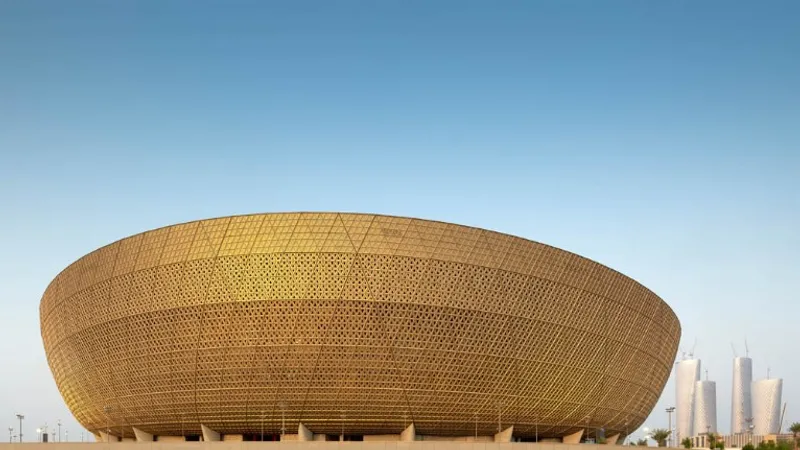 ©Nigel Young / Foster + Partners
Al Janoub Stadium & Precinct
In May 2019, Al Janoub Stadium, designed by the renowned Zaha Hadid Architects, was officially opened. This new stadium will host the group and quarter-final matches of the tournament and is located in Al Wakrah, just 20km south of Doha and easily accessible via the Red Line of the Doha Metro system.
The roof design of the stadium is a unique interpretation of the hulls of traditional dhows, turned upside down and brought together to provide shade and shelter. This design is reflected in the stadium's envelope, details, and materials, including the roof beam structure, which mimics the interior structure of a dhow's hull. The facades of the stadium are also unique, with their slanted and tapered elevations resembling the pleating of a dhow's sails.
After the World Cup, some of the stadium's facilities will be considered temporary, reducing the number of effective seats from 40,000 to around 20,000. However, these temporary seats have been designed to be demountable and transportable, providing the opportunity for them to be used in developing countries that are in need of sporting infrastructure.
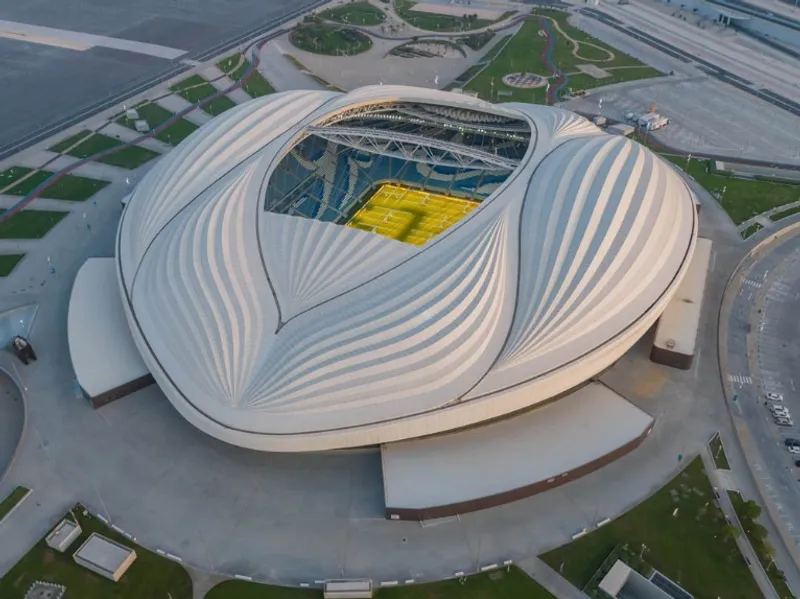 ©Supreme Committee for Delivery & Legacy
Stadium 974 | Ras Abu Aboud Stadium
Ras Abu Aboud Stadium, also known as Stadium 974, is a one-of-a-kind venue located by the water with a stunning view of the Doha skyline. The design of this stadium, created by RFA - Fenwick Iribarren Architects, showcases the city's industrial and port history through the use of 974 shipping containers and modular steel elements. This unique design has resulted in a modern, brightly coloured arena that can seat up to 40,000 people. The modular construction approach has also allowed for reduced building materials, which ultimately helps control construction costs.
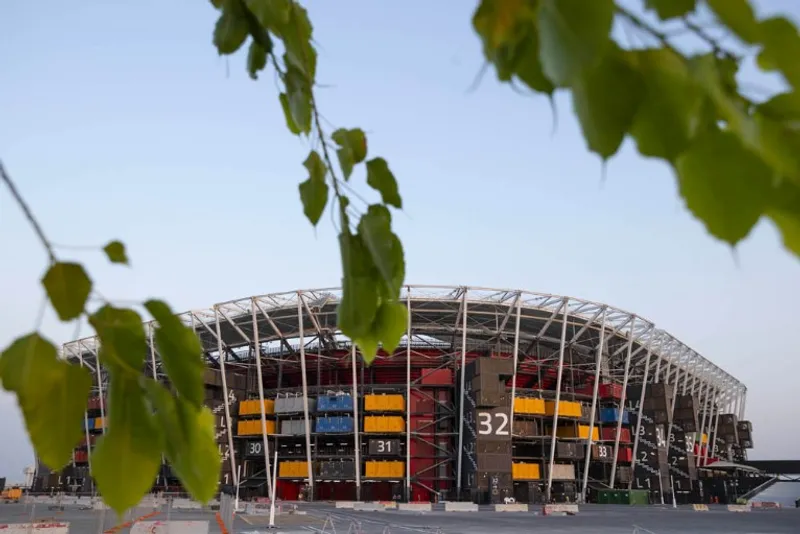 ©Supreme Committee for Delivery & Legacy
Ahmad Bin Ali Stadium
The Ahmad Bin Ali Stadium designed by BDP Pattern is situated in Al Rayyan, a city known in Qatar as the entrance to the desert and its strong link to the nation's cultural heritage.
Inspired by the Desert, the stadium's master plan is designed as a journey through the desert landscape, incorporating a circle packing geometry.
One of the standout features of the stadium is its sophisticated, intricately designed facade. It is a modern adaptation of the traditional Naquish patterns that are specific to the Qatari culture.
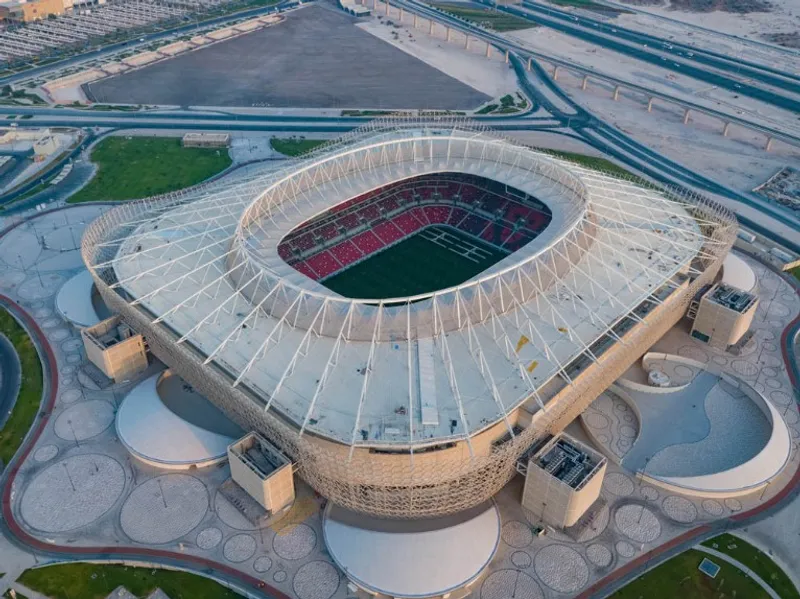 ©Supreme Committee for Delivery & Legacy
Education City Stadium
The Education City Stadium boasts the collaborative design of BDP Pattern and RFA - Fenwick Iribarren Architects, who envisioned the exterior as a dazzling diamond nestled on a lushly landscaped platform.
The metallic fabric façade features a bold geometric tessellation of diamonds and triangles, causing each panel to reflect different light qualities, shimmer with varying colors, and mirror different aspects of the surrounding area. As the sun moves throughout the day, it animates the appearance of the stadium, creating the illusion of continuous movement. At night, its inner illumination shines through the façade.
This project has earned a Five-Star rating under the Global Sustainability Assessment System (GSAS), making it the first stadium in the world to receive such recognition. Over 55% of the materials used in the project come from sustainable sources, and 28% of the construction materials are recycled.
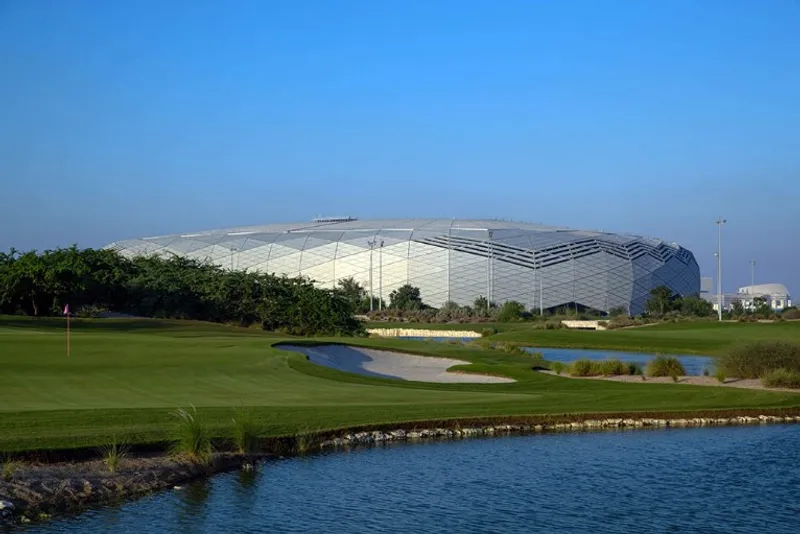 ©Supreme Committee for Delivery & Legacy
Al Thumama Stadium
The design of the stadium symbolizes the Gahfiya, a ubiquitous headwear donned by males throughout the Middle East.
In order to accommodate the requirements of the local community and furnish emerging nations with top-notch sports facilities, the stadium's capacity has been reduced. The remaining 20,000-seat facility will host football games and other athletic events. Additionally, a sports clinic subsidiary will open its doors on the premises, and the stadium's upper stands will be transformed into a chic hotel.
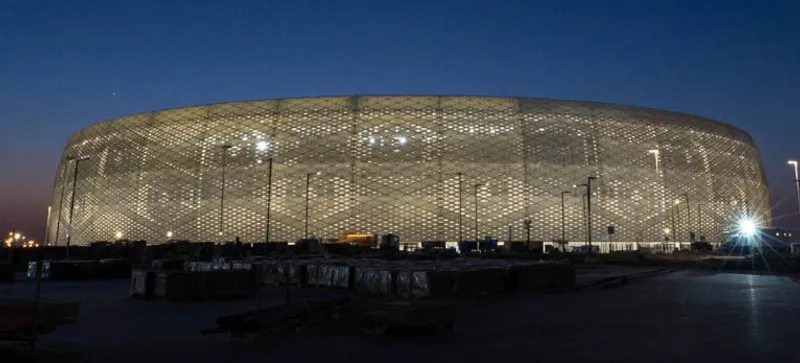 ©Supreme Committee for Delivery & Legacy
Al Bayt Stadium
The Al Bayt Stadium, with a capacity of 60,000, played host to the opening match of the FIFA World Cup Qatar 2022™ and will continue to be the venue for other crucial matches, including the semi-finals.
Deriving its name from the "bayt al sha'ar," the historic tents used by nomadic peoples in Qatar and the Gulf region, the stadium's design pays homage to the country's past and present while looking towards its future.
After the tournament, the modular upper tier will be disassembled and the seats will be reutilized to establish sports facilities both in Qatar and abroad. The skybox level will be transformed into a luxurious five-star hotel, while the upper concourse will feature a shopping centre, food court, gym, and multipurpose hall. Additionally, a premier sports medicine hospital is set to open within the stadium building.
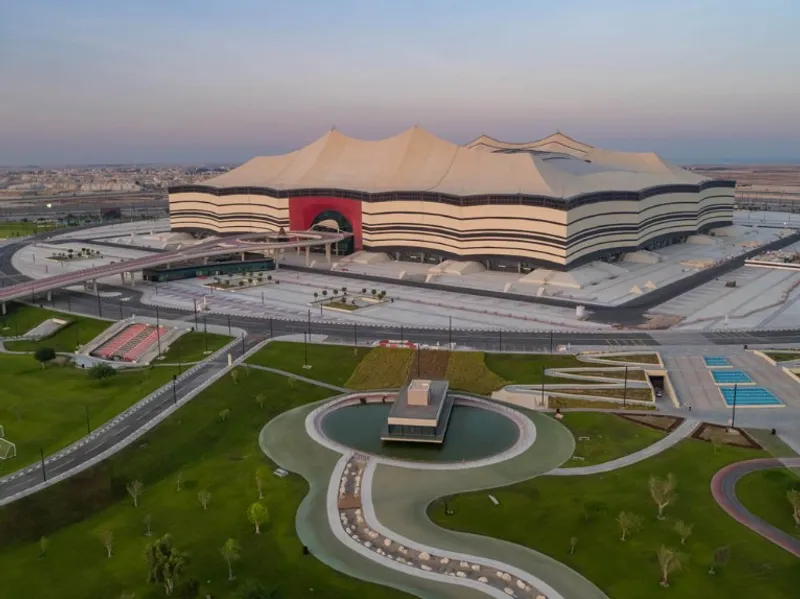
©Supreme Committee for Delivery & Legacy
Khalifa Stadium
The Khalifa International Stadium, which is situated approximately 11 km from Doha, is the oldest stadium in existence. Constructed in 1976, it has a rich history of hosting major sporting events such as the Asian Games, the Arabian Gulf Cup, and the AFC Asian Cup. In 2019, the stadium was the host venue for the IAAF World Athletics Championships.In preparation for the FIFA World Cup Qatar 2022™, the Khalifa International Stadium underwent a comprehensive redevelopment. Despite the renovations, the stadium's iconic dual arches were preserved and have been further accentuated with the addition of a spacious canopy that supports the new cooling system. The recent upgrades have increased the stadium's capacity by adding an extra 10,450 seats. Additionally, the stadium boasts a newly designed facade, making it a modern and impressive structure.
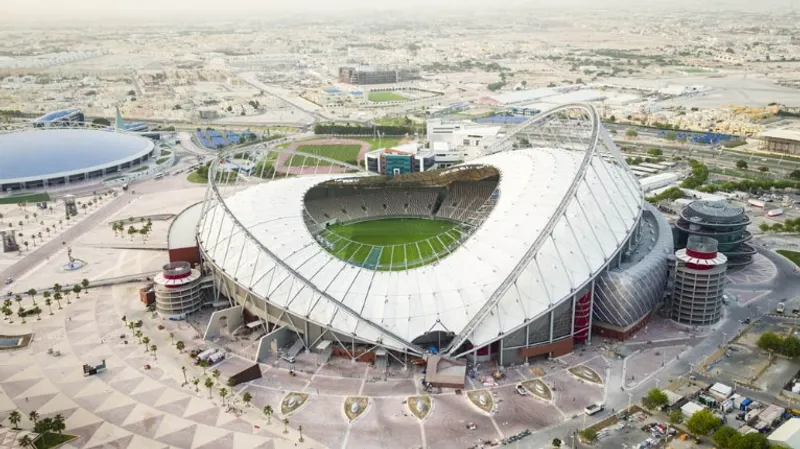 ©Supreme Committee for Delivery & Legacy
References (1)

Popular Articles
Popular articles from the community


The Musturak Paradise: Senior Living Architecture for a Connected Future in Temara, Morocco
The Musturak Paradise reimagines senior living architecture in Temara via private homes, social spaces, culture, community, and shared care.

The Ocean Hive: Sustainable Architecture for a Self-Sufficient Civilization at Sea
The Ocean Hive imagines sustainable architecture at sea, where modular habitats, algae, wave power and ocean waste sustain a growing colony.

Hill & Cross Opera: Sculptural Opera House Architecture Shaped by Tallinn’s Landscape and Identity
Hill & Cross Opera reimagines opera house architecture in Tallinn through its sculptural hill, civic plaza, glass wave and a luminous cross.

Co-Life: Senior Housing Design That Reconnects Older Adults With the City
Co-Life reimagines senior housing design through healing gardens, shared streets, workshops, and a sustainable community across generations.

Similar Reads
You might also enjoy these articles
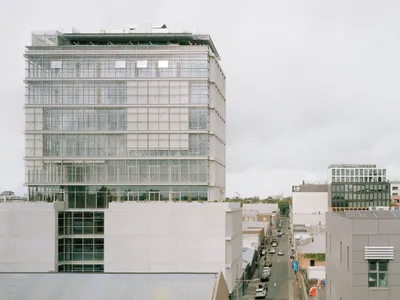
116 Rokeby Building, Collingwood
Sustainable Collingwood office building featuring double-skin façade, natural ventilation, rooftop amenities, and carbon-neutral design focused on wellbeing and longevity.
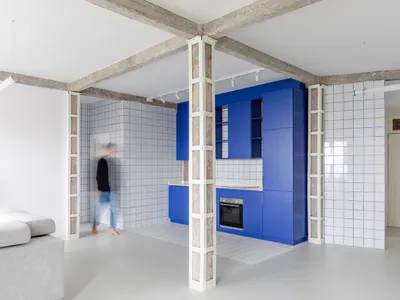
Contemporary Apartment Renovation in Spain: RV House by BIAN Opens Up to the Sea
A minimalist 1930s apartment in Santander is transformed into a flexible, sea-facing home through contemporary Spanish renovation.
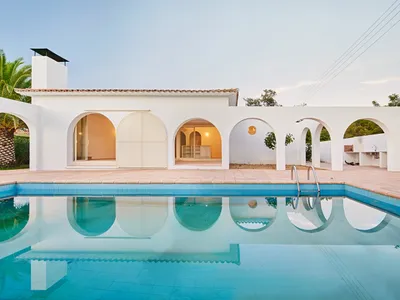
3 Marías House: A Contemporary Mediterranean Courtyard Retreat by Bajet Giramé + Burckhardt
Mediterranean courtyard home blending traditional architecture with modern design, terracotta flooring, flexible interiors, sustainable climate strategies, and garden integration.
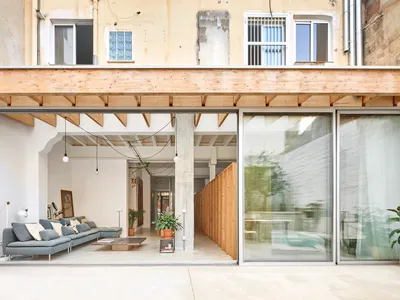
NZ10 Apartment by auba studio: Adaptive Reuse in Palma de Mallorca
Adaptive reuse apartment transforms bakery into light-filled home with patios, privacy layers, and wood interiors enhancing urban living experience.

Explore Stadium Competitions
Discover active competitions in this discipline


Challenge to design a barrier free sports center

Challenge to design an outdoor ice-rink and park

Challenge to reimagine the Iron Throne

Photograph architecture without architects
Comments (0)
Please login or sign up to add comments
No comments yet. Be the first to comment!