

Innovative Bridge Design in Urban Areas: Transforming Cityscapes and Enhancing Community Life
Spaceflowing: Redefining Urban Bridges as Multifunctional Cultural Hubs.


Introduction to Spaceflowing: A New Era in Bridge Design
In the bustling cityscape of New York, a groundbreaking project emerges, redefining the essence of urban connectivity and cultural integration. "Spaceflowing" by visionary architects Yufeng Tu and Liu Feng presents not just a bridge but a multifunctional urban space, promising a new direction for innovative bridge design in urban areas. This transformative project exemplifies how modern architecture can fuse functionality with cultural vibrancy, turning the mundane task of crossing from one point to another into an immersive, communal experience.

The Concept Behind Spaceflowing: More Than Just a Bridge
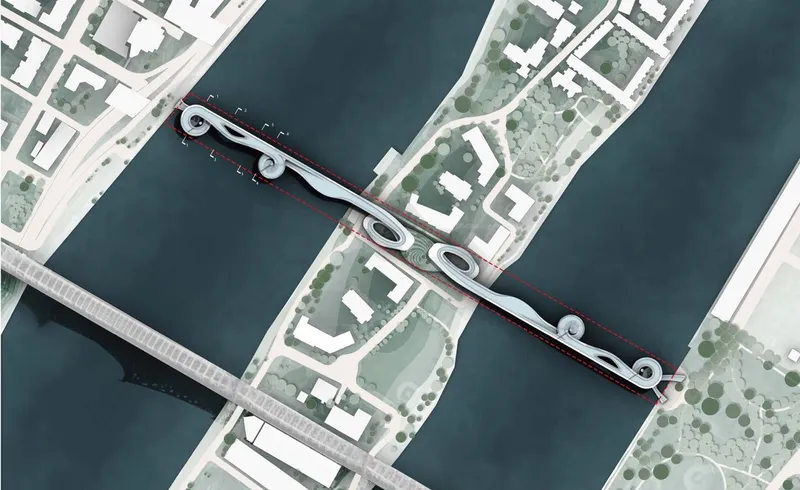
At its core, Spaceflowing is a testament to the evolving role of bridges in urban architecture. No longer mere pathways, they are becoming integral elements of city life, offering venues for social interaction, cultural events, and leisure activities. The design concept of Spaceflowing is a tripartite structure connecting Manhattan, Roosevelt Island, and Long Island City, each segment of the bridge designed to enhance the urban experience with areas for gatherings, performances, and relaxation.

The Architectural Marvel of Spaceflowing
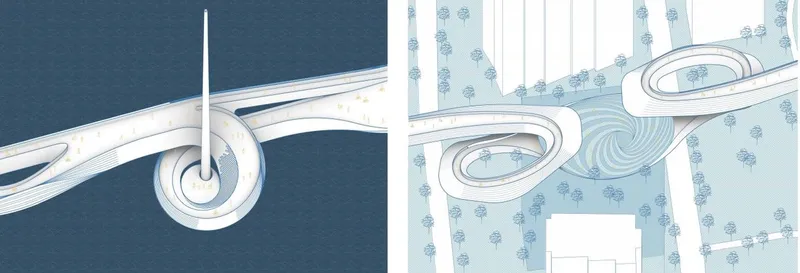
The innovative approach of bending traditional straight bridge forms into a series of curvatures creates multiple levels and enclosed circles. These spaces are envisioned as cultural hotspots where people can host events, perform, or simply enjoy panoramic city views. The design cleverly incorporates amphitheater-like steps and open spaces, inviting residents and visitors to pause, interact, and engage with the environment and each other.
Structural Ingenuity and Sustainability
From a structural standpoint, Spaceflowing stands out for its sustainability and functionality. The bridge towers, lifting the circular slopes with steel strings, ensure a minimalistic yet sturdy design. Positioned 15 meters above the East River, the design prioritizes safety and accessibility, allowing the seamless passage of boats and ferries, thus integrating efficiently with the existing transportation network.

The Cultural Significance of Bridges in Urban Development
Drawing inspiration from iconic structures like the Golden Gate Bridge, Spaceflowing aims to become more than a landmark. It seeks to be a living, breathing entity within New York, contributing to the city's dynamic culture and community spirit. This project reflects a broader trend in innovative bridge design in urban areas, where infrastructure serves as a canvas for public life and cultural expression.
Spaceflowing as a Community Hub
Envisioned as a "playground" for both residents and visitors, Spaceflowing invites diverse activities, from casual strolls and cycling to spontaneous street performances. This approach aligns with New York's vibrant street life and the city's tradition of public art and communal spaces. By incorporating features like wood benches, sculptures, and performance areas, the bridge becomes a reflection of the city's eclectic and inclusive spirit.
Spaceflowing by Yufeng Tu and Liu Feng represents a bold step forward in the realm of urban architecture and innovative bridge design. It challenges conventional notions of what a bridge can be, transforming it from a simple connector to a vibrant, multifunctional urban space. As cities continue to evolve, projects like Spaceflowing pave the way for more integrated, culturally rich, and sustainable urban environments, demonstrating that architecture can indeed bridge more than just physical gaps – it can connect people, cultures, and experiences.
In embracing the future, Spaceflowing sets a precedent for innovative bridge design in urban areas, showcasing the potential of architecture to enhance community life and reshape our urban landscapes.



Popular Articles
Popular articles from the community


Play: Fragments of Their World
Familiar architecture becomes modular playground design, creating safe spaces where displaced children can learn, connect, imagine and play.

The Musturak Paradise: Senior Living Architecture for a Connected Future in Temara, Morocco
The Musturak Paradise reimagines senior living architecture in Temara via private homes, social spaces, culture, community, and shared care.

Conexión: Biophilic Design Reimagines High-Rise Living in Hong Kong
Conexión reimagines high-rise living in Hong Kong through biophilic design, green facades, shared spaces, daylight, water and nature within.

The Earth Pod: 3D Printed Homes for Resilient Refugee Communities
The Earth Pod reimagines refugee housing through 3D printed homes made from clay, combining resilience, self-sufficiency, and rapid shelter.

Similar Reads
You might also enjoy these articles

Day and Night Park: A Time-Based Urban Newsstand in Beijing
A temporary urban newsstand in Beijing blending travel, light, and reading through poetic colors, compact form, and community-focused design.

Modernist Patio Renovation in El Masnou, Barcelona by Oliver Segura Arquitectura + Cebrià Arquitectura
Modernist patio renovation blending tradition and innovation with a movable pool, leveled floors, and Catalan materials in El Masnou.

Alto Residencial Coop: Cooperative Housing Development in Santiago de Compostela by Carbajo Barrios Arquitectos
A linear cooperative housing complex blending white volumes and perforated metal façades, enhancing community living, natural light, privacy, and urban integration.

Vil Genis School by BPA ARCHITECTURE – Massy, France
Vil Genis School in Massy, France, features sustainable design, south-facing classrooms, community integration, accessible spaces, and modern educational architecture.

Comments (0)
Please login or sign up to add comments
No comments yet. Be the first to comment!