
Ivy Studio Lines a Montreal Italian Restaurant with Stone, Marble, and Fluted Glass
Piatti Restaurant layers raw stone walls, green veined marble, and reeded glass partitions into a tactile trattoria in Montreal.

Italian restaurants in North America tend to fall into two camps: the red-sauce joint that leans on nostalgia, or the minimalist trattoria that strips everything back to white plaster and Edison bulbs. Ivy Studio's interior for Piatti Restaurant in Montreal sidesteps both clichés. Instead of evoking a generic Italian countryside, the designers assembled a palette of materials that feels rooted in Mediterranean geology, then arranged them with enough layering and translucency to keep the space cinematically interesting across the length of a three-course meal.
What makes Piatti worth studying is the discipline of its material strategy. Every surface decision, from the rough-hewn stone walls behind the bar to the dark green marble cladding a fireplace surround, serves a sensory purpose: texture you want to touch, depth you want to look into, light you want to sit near. The fluted glass partitions do double duty, dividing the floor plan into intimate zones while multiplying candlelight and movement into soft, rippling reflections. It is a restaurant that understands atmosphere as something built, not merely decorated.
Stone and Memory
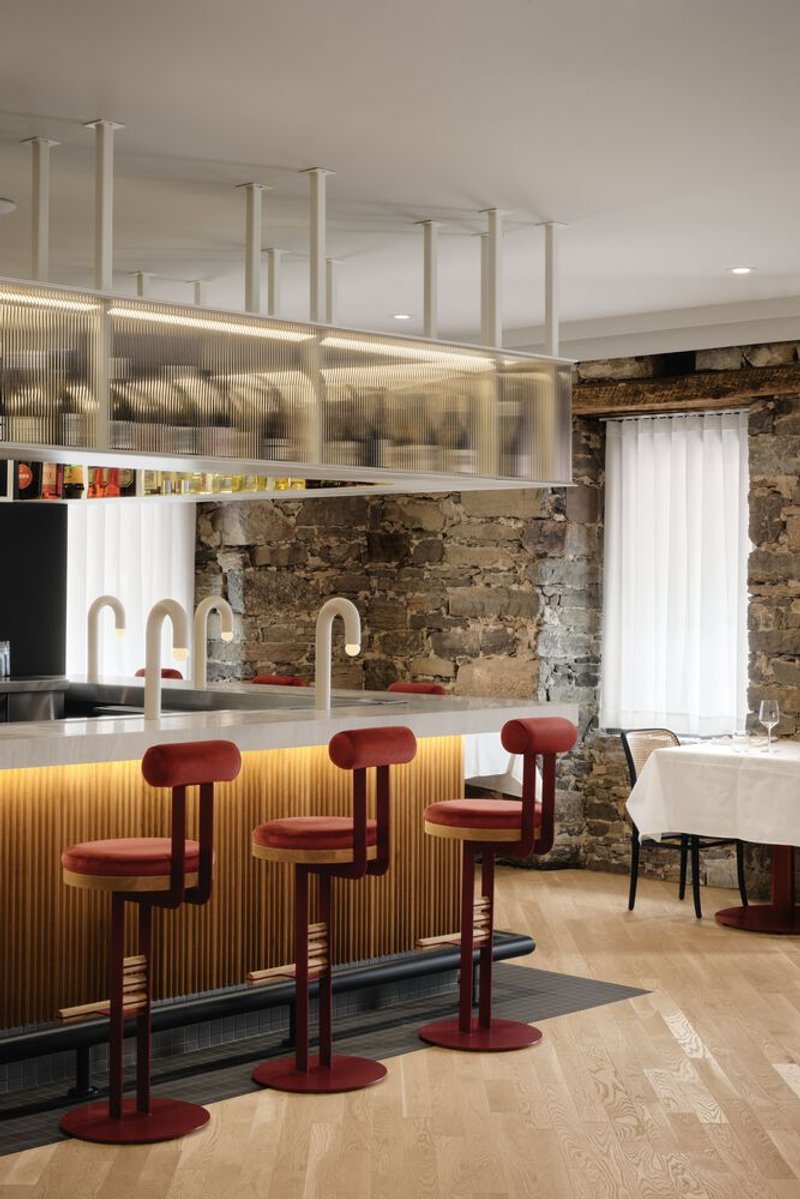
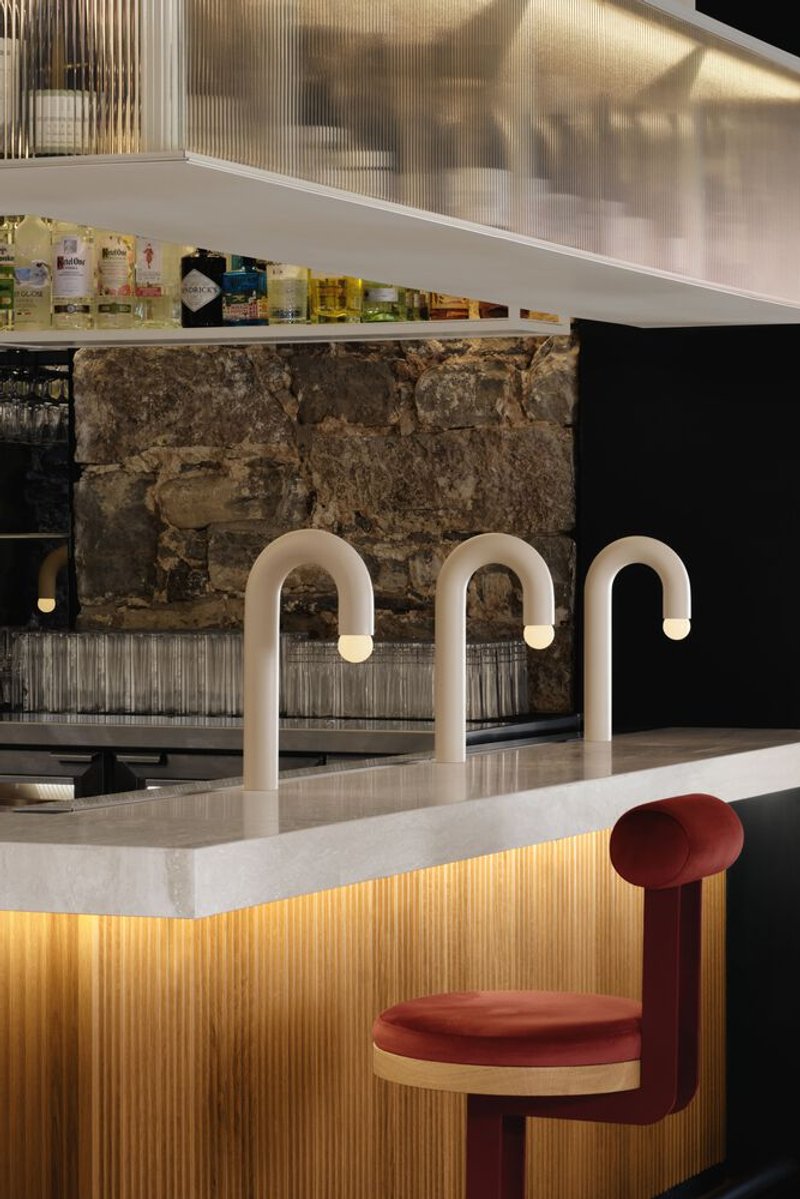
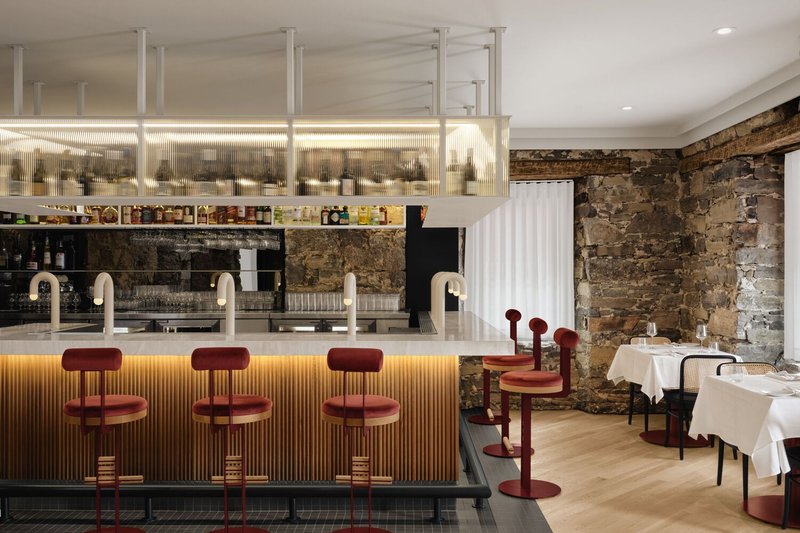
The bar area is anchored by a weathered rubble stone wall that reads like an excavated ruin. Rather than restoring or smoothing the surface, Ivy Studio left the stone rough and openly jointed, creating a backdrop that absorbs light instead of bouncing it. Curved tap fixtures sit on a clean white stone countertop in front of this ancient-looking surface, and the contrast between precision metalwork and geological roughness generates most of the bar's visual energy.
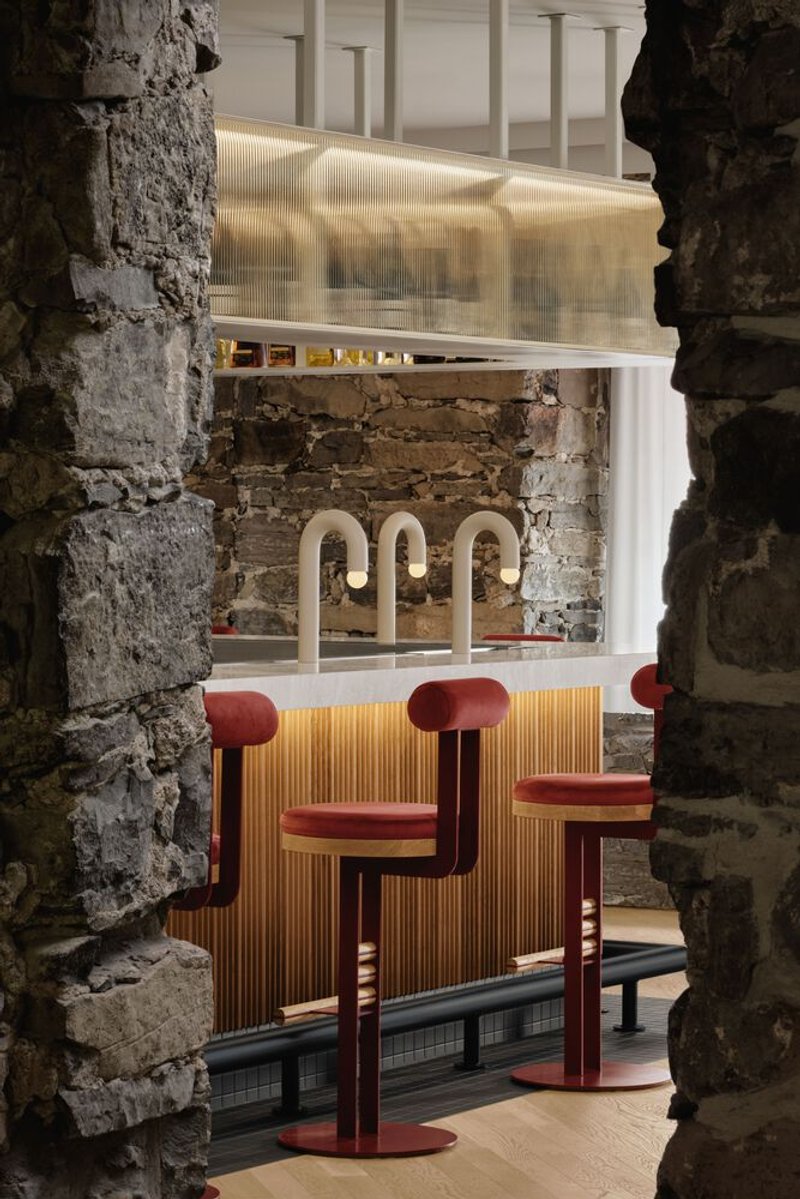
Looking through the stone opening toward the bar counter, the layering becomes clear. Backlit ribbed panels glow behind rows of bottles, the warm amber light filtered through the same reeded language that recurs throughout the restaurant. The effect is grotto-like without ever tipping into theme-park territory, largely because the materials are real and the lighting restrained.
Green Marble as Accent Architecture
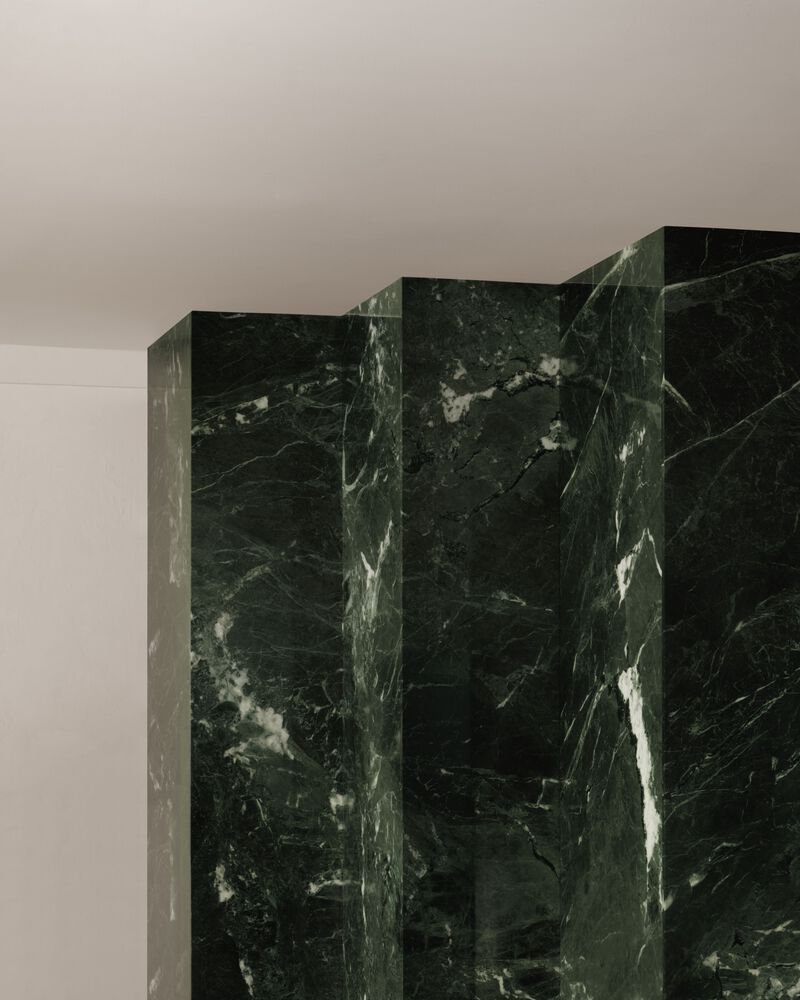
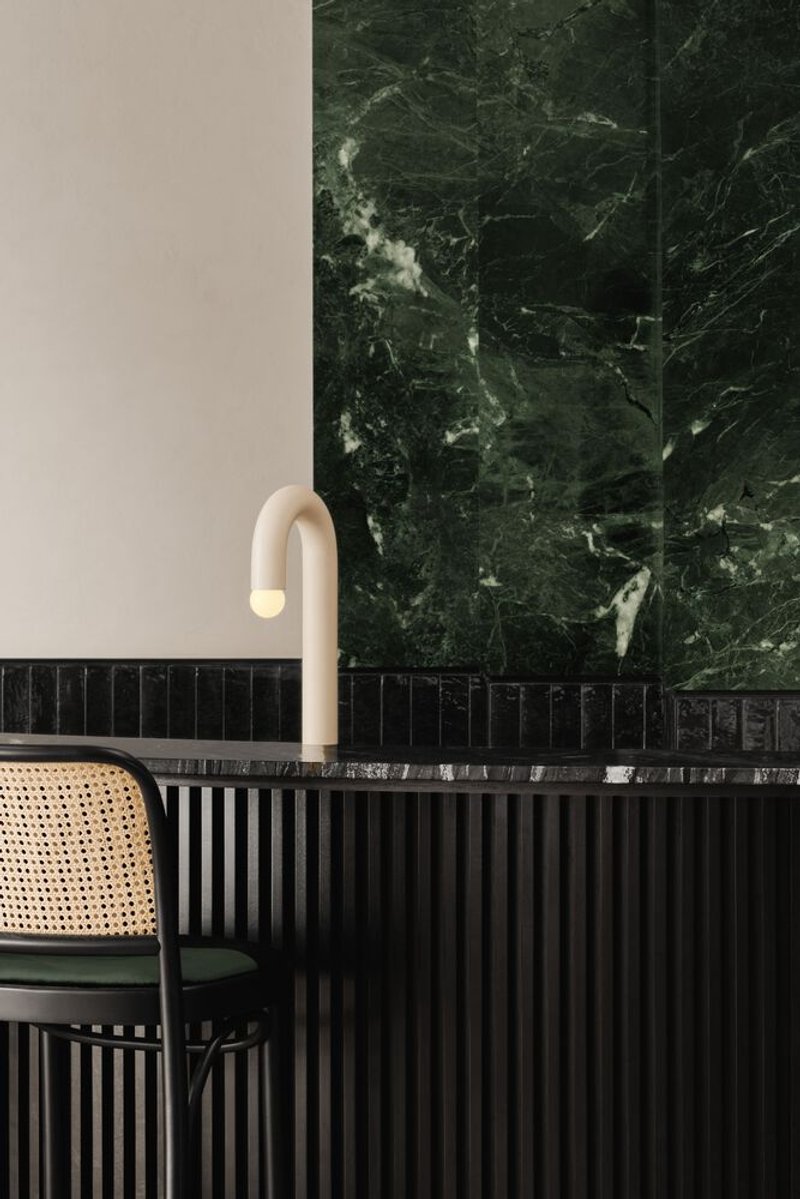
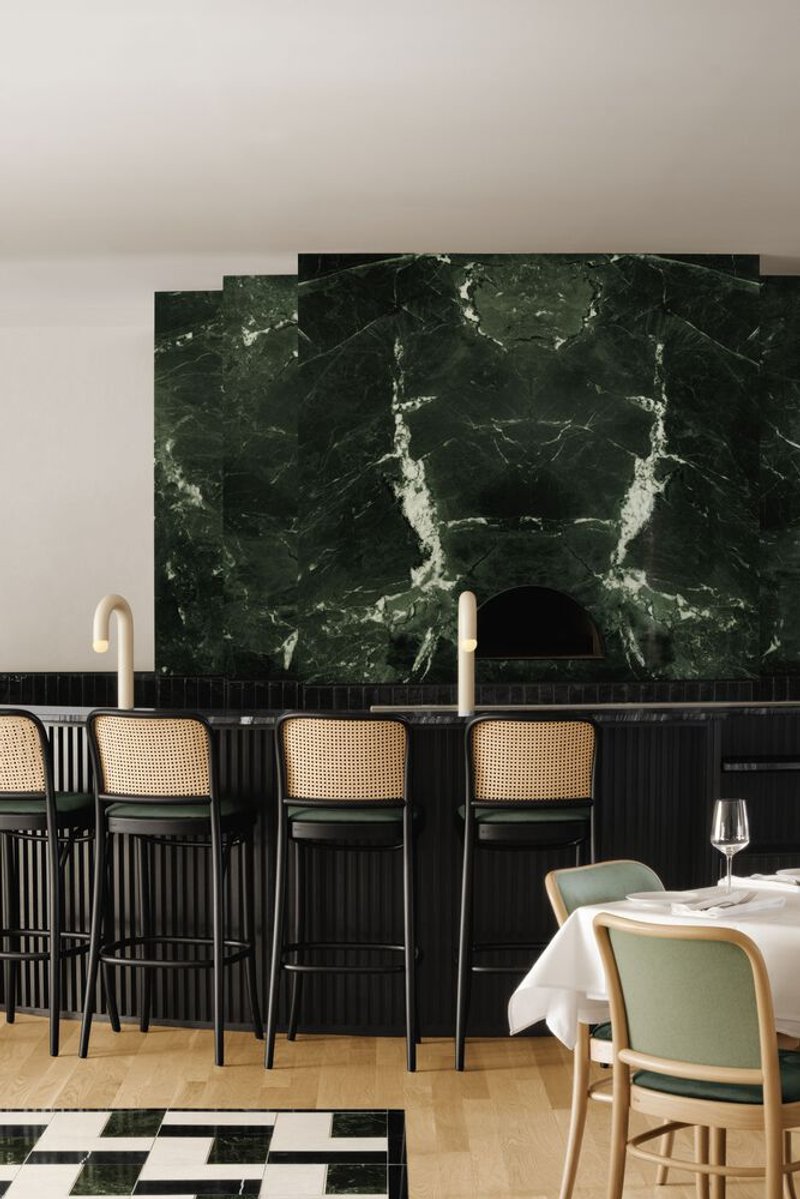
Ivy Studio uses dark green veined marble sparingly, which is exactly why it registers so powerfully. A full wall of it sits behind the main bar, its surface moody and deep, catching light along white veins that shift in reading depending on the angle. Elsewhere, a fireplace surround clad in the same stone anchors a row of cane-backed bar stools, turning a transitional seating zone into something worth lingering in.
The detail shot of a curved wall sconce mounted beside a green marble panel reveals the precision of the adjacencies. Fluted black timber wainscoting below, veined stone above, a disc of warm light bridging the two. None of these materials are novel individually. What matters is the tightness of the joint, the specificity of the reveal, the fact that someone thought carefully about where one material ended and another began.
Fluted Glass and the Art of Partial Separation
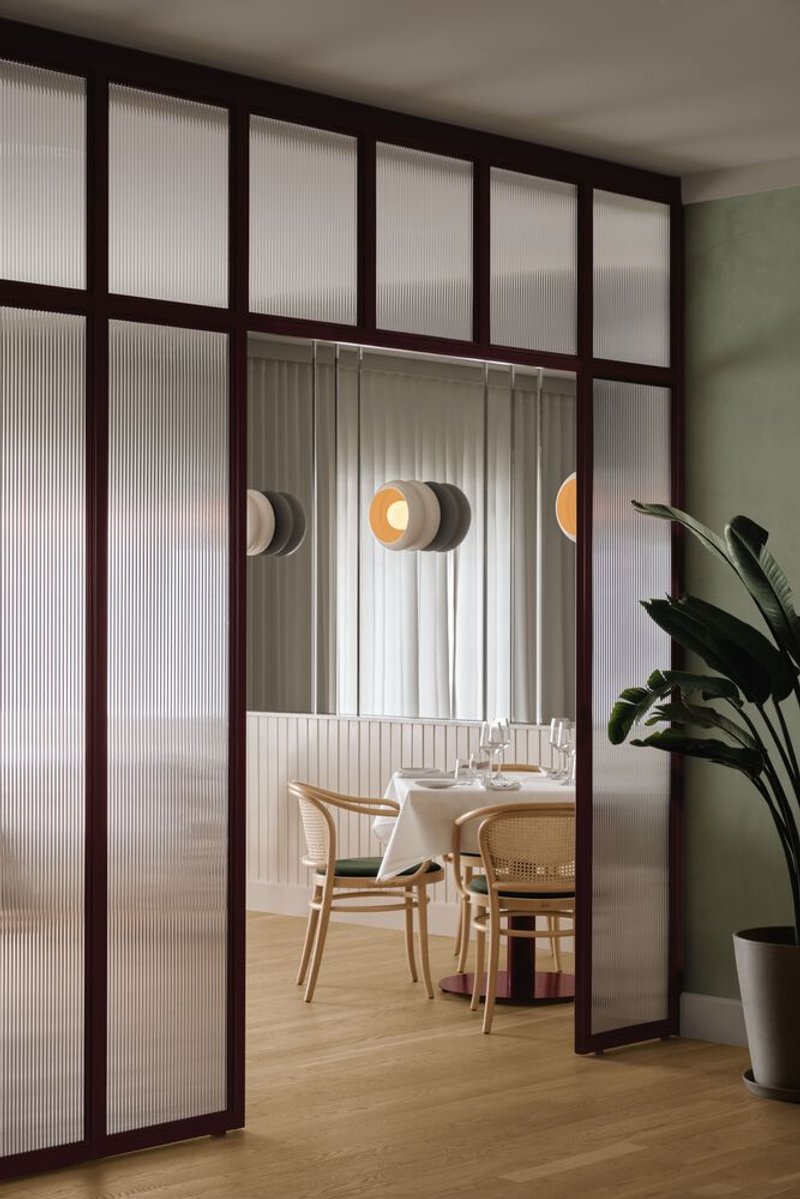
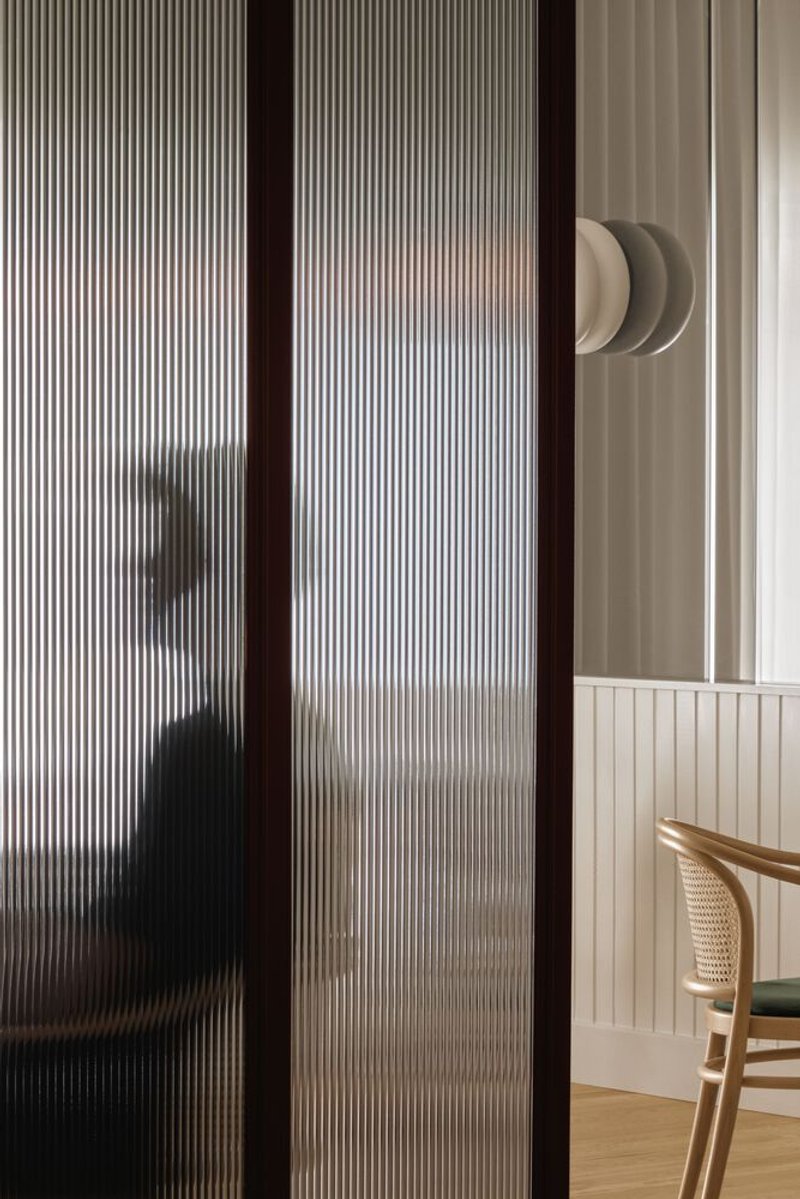
Restaurants thrive on contradiction: people want to feel private at their table but connected to the room's energy. The fluted glass partitions at Piatti solve this problem elegantly. Set in dark timber frames, the reeded panels blur silhouettes into soft movement, allowing light and color to pass through while dissolving specific detail. A sliding door version of this partition teases a figure beyond, turning a functional divider into a moment of visual intrigue.
From the dining side, the glass picks up reflections of circular wall sconces and cane chair backs, doubling the room's depth without requiring mirrors. It is a move that owes more to Japanese shoji screens than to any Italian reference, and it works precisely because it refuses to be literal about its cultural sources.
Dining Rooms Built for Warmth
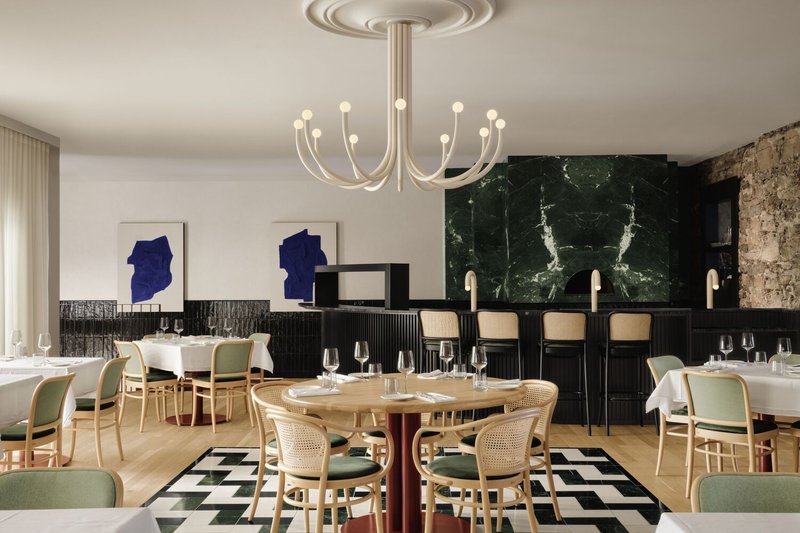
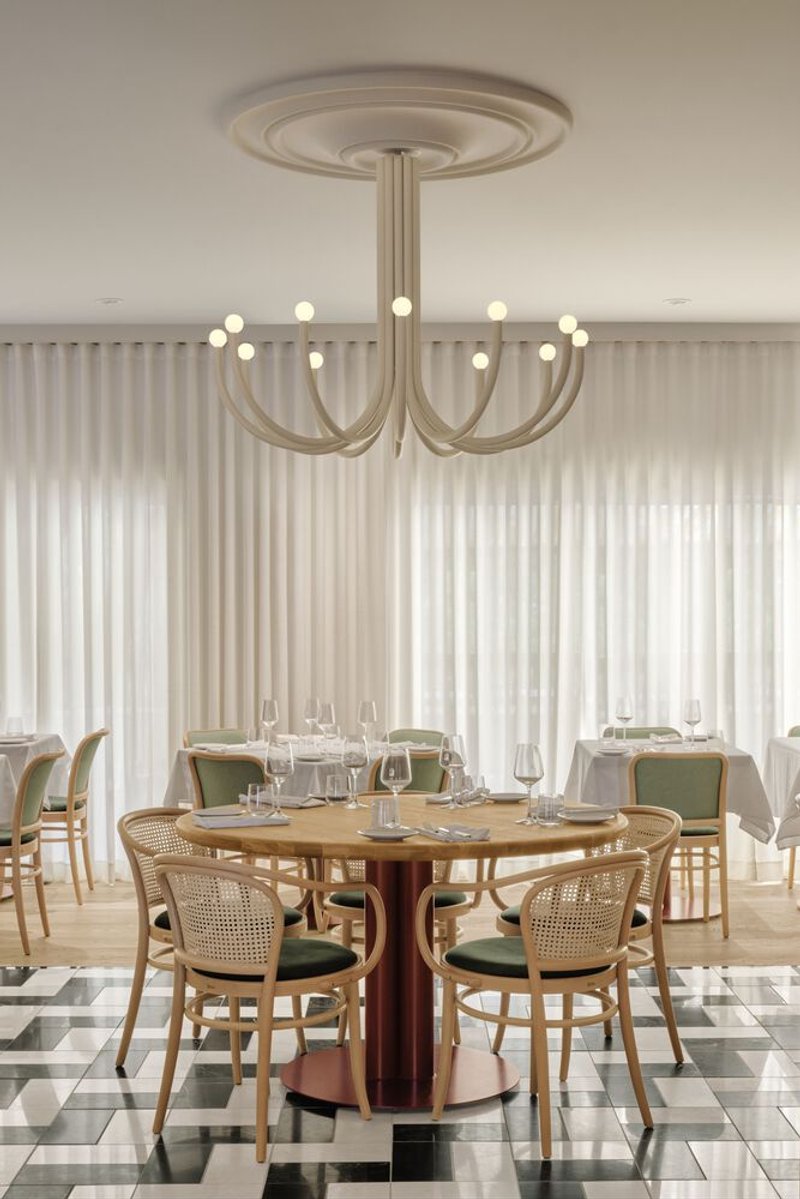
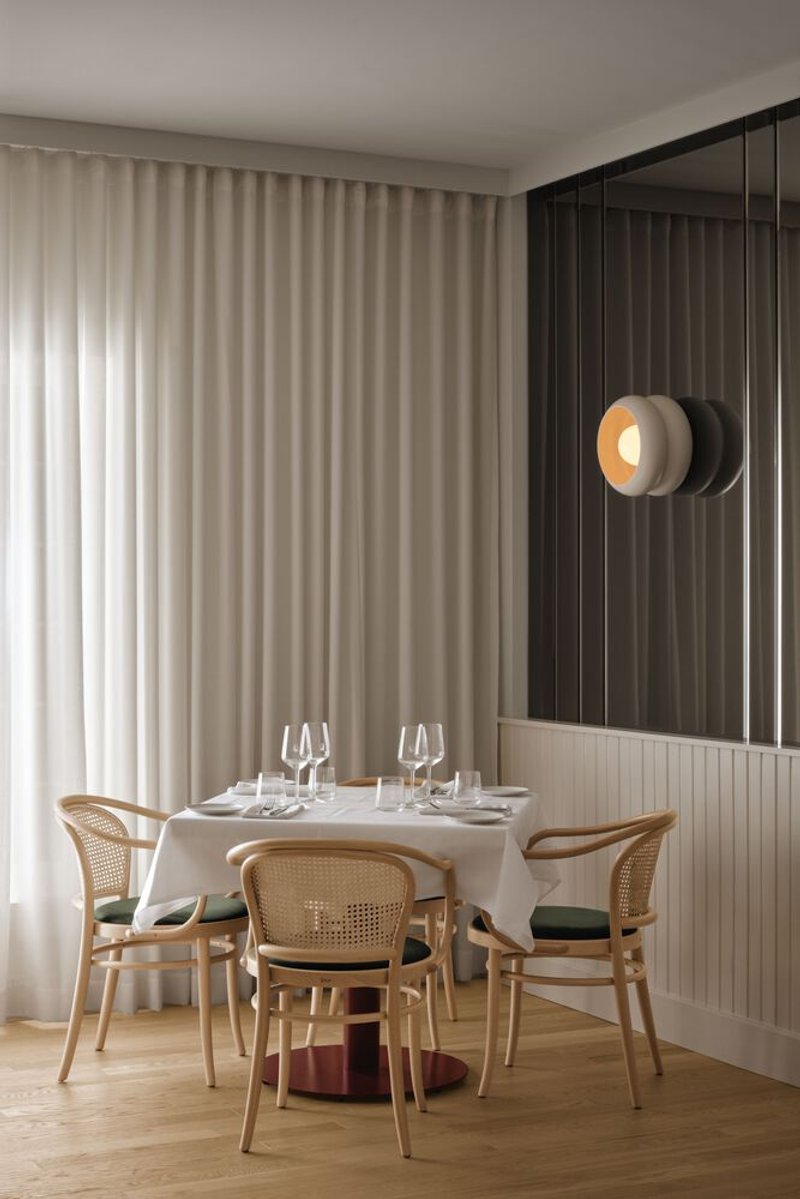
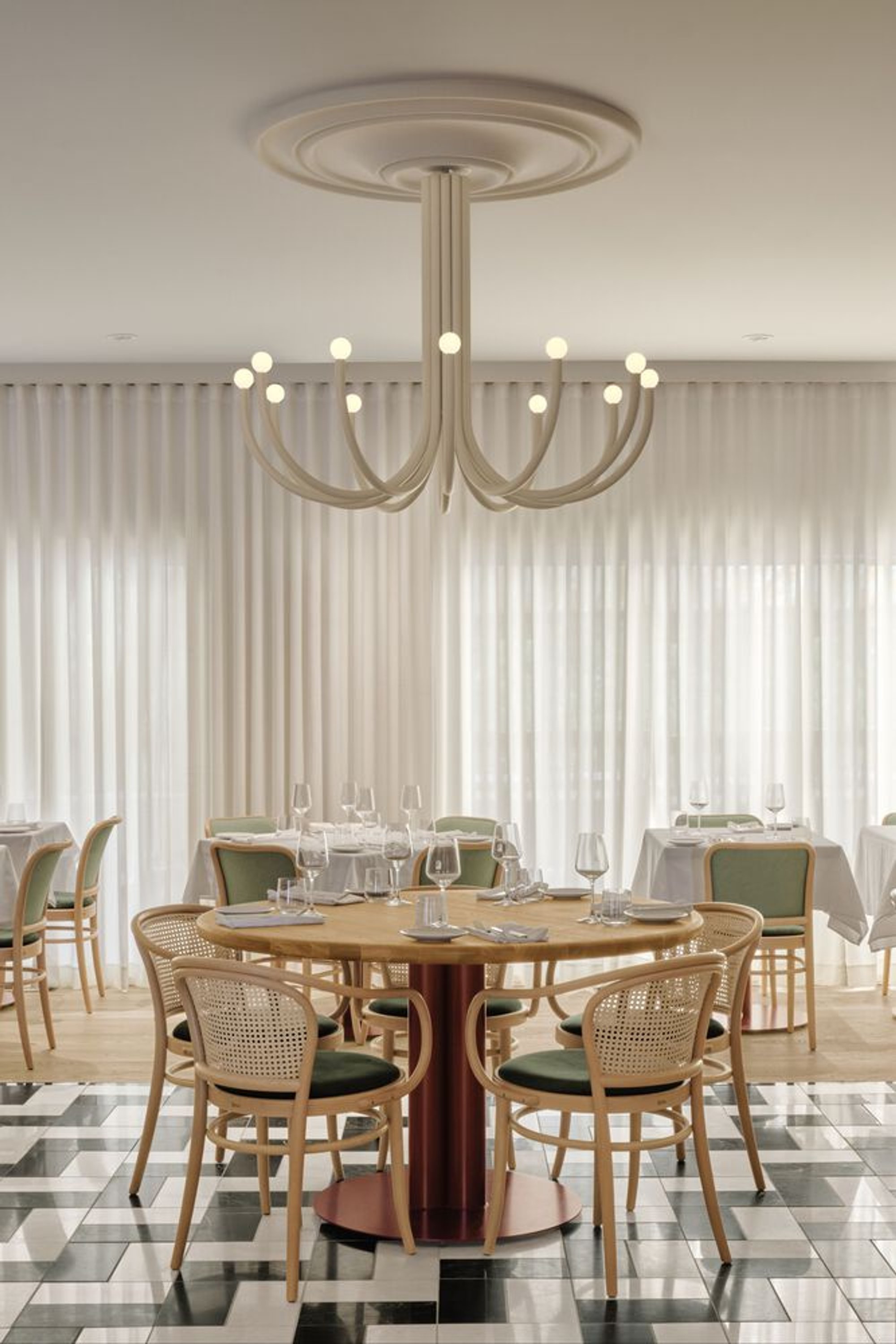
The main dining room pulls together the full material vocabulary. Cane chairs surround round and rectangular tables beneath fluted chandeliers, checkered floor tiles anchor the composition below, and sheer curtains filter daylight along the perimeter. The result is warm without being heavy. Cream, amber, and dark timber dominate, with the occasional flash of green marble or exposed stone visible through glass partitions in the background.
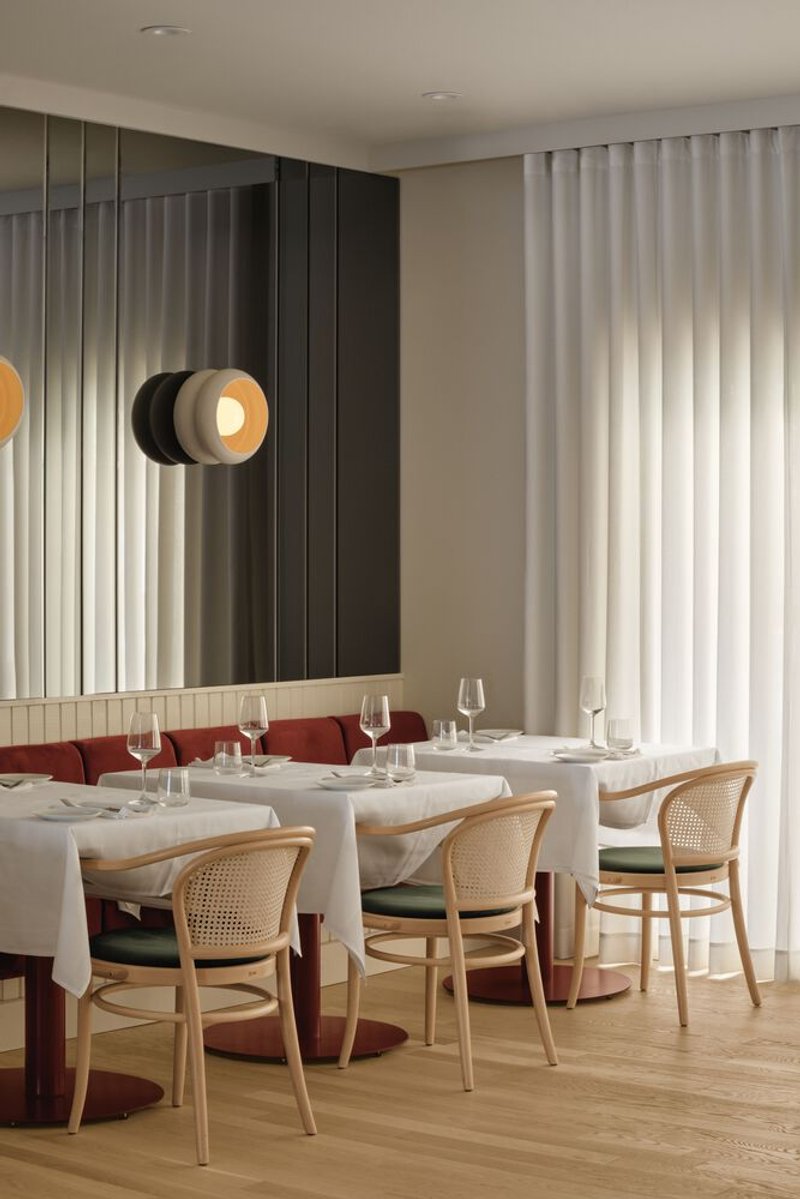
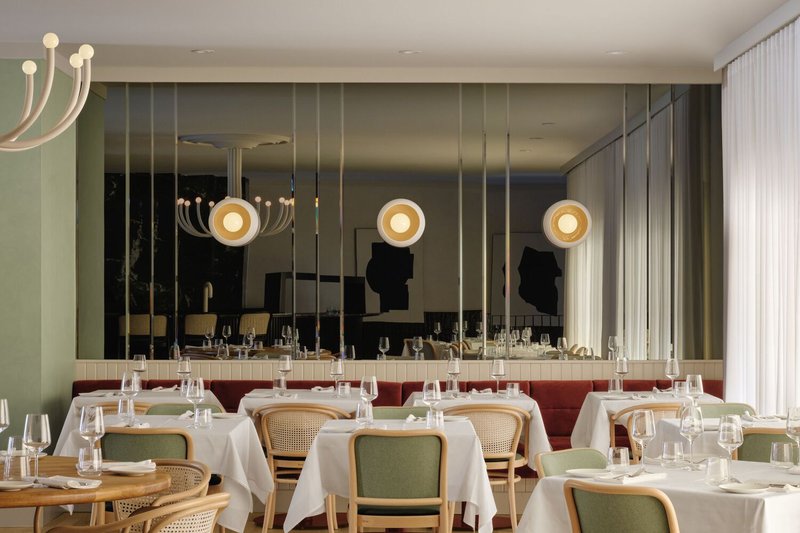
Mirrored wall panels in the secondary dining zone amplify pendant lights and white tablecloths, stretching the room laterally and creating a sense of generosity in what is likely a relatively narrow floor plate. Ivy Studio clearly understands that a restaurant's atmosphere is built from accumulated reflections and half-seen surfaces as much as from furniture and finishes.
Details That Earn Their Keep
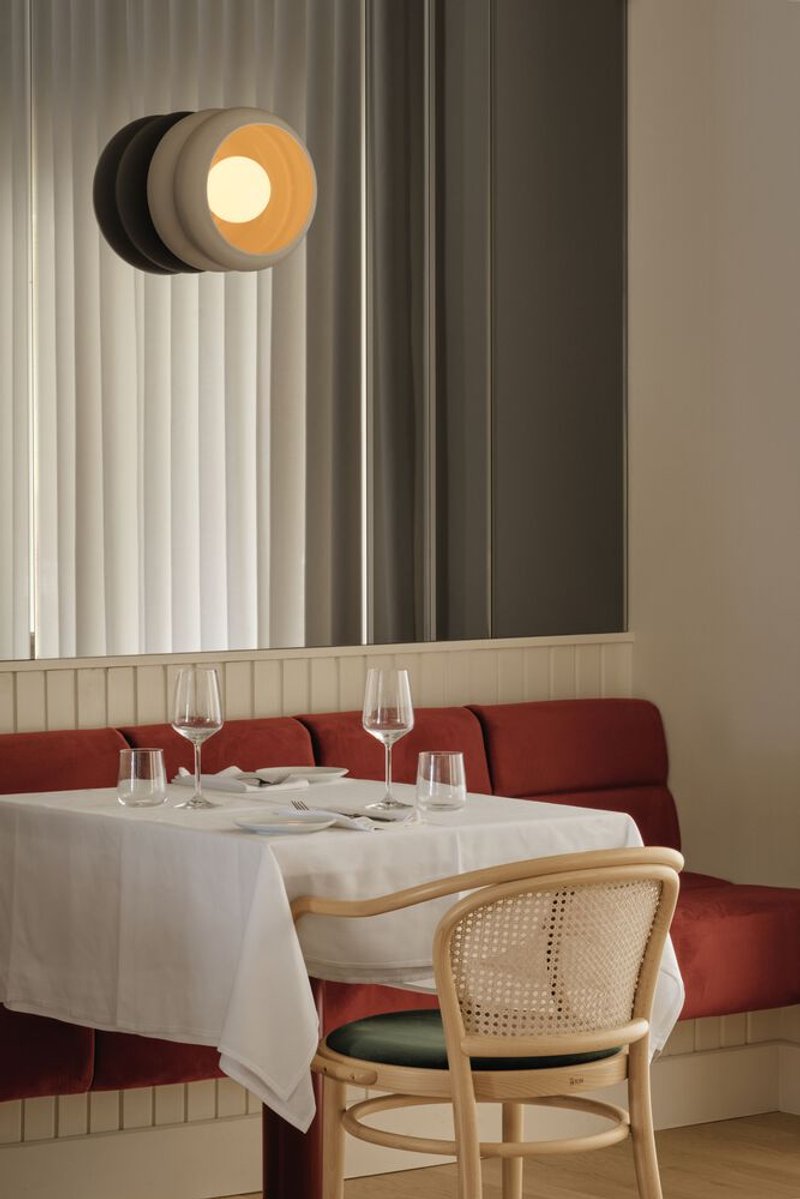
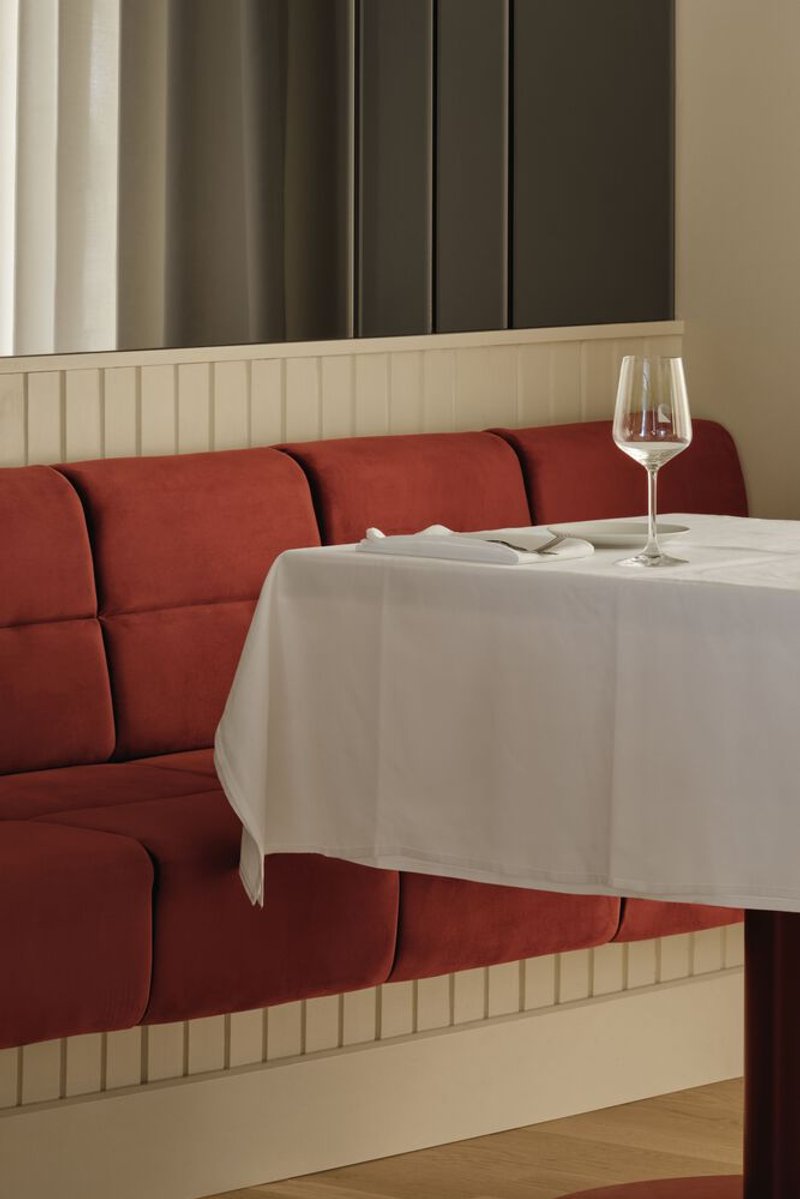
A circular wall sconce composed of layered black and amber discs hangs above a banquette, casting a warm halo that defines the table below without flooding the room. It is the kind of fixture that photographs well because it was designed to light well first. Nearby, an upholstered red banquette meets fluted cream wainscoting in a corner that is all about comfort and proportion, a single wine glass catching the light in a composition that feels almost staged but is simply the result of good spatial planning.
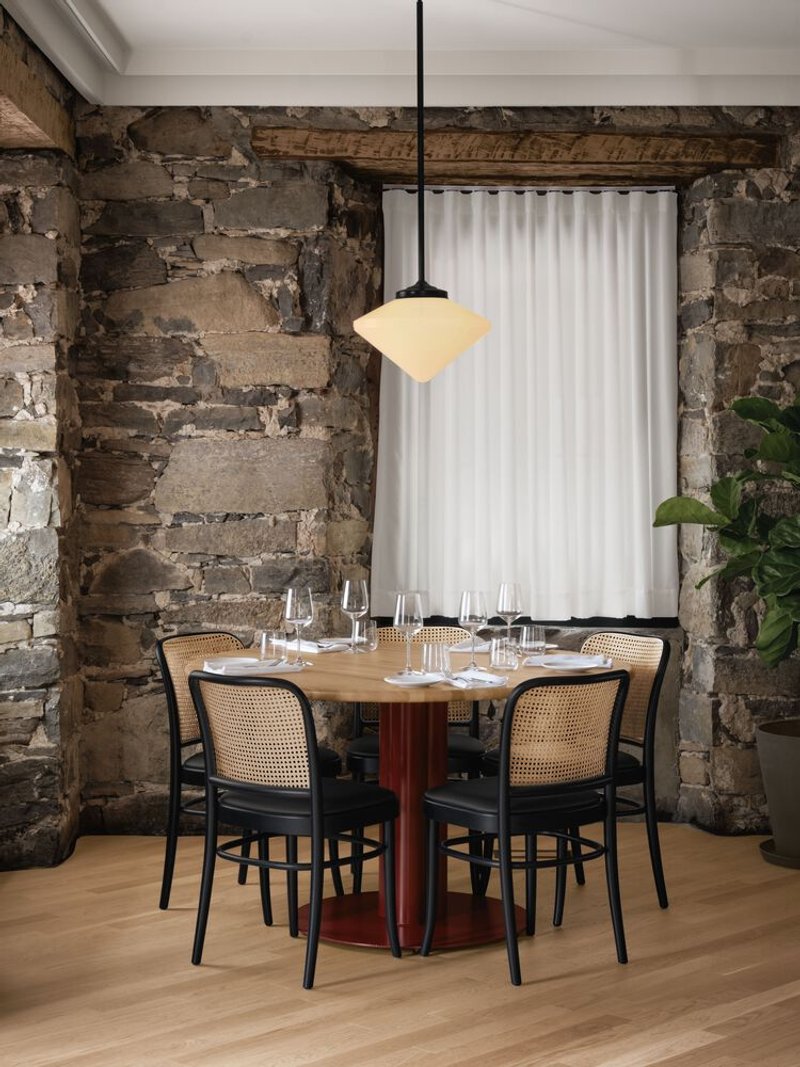
Elsewhere, exposed stone walls meet timber beams above a dining table, and a pendant light hangs low enough to create a pool of intimacy. These are not expensive moves. They are considered ones, and they demonstrate that material intelligence and lighting control can do what no amount of decorative spending can: make a room feel like it has always been there.
Circulation and Vertical Connection
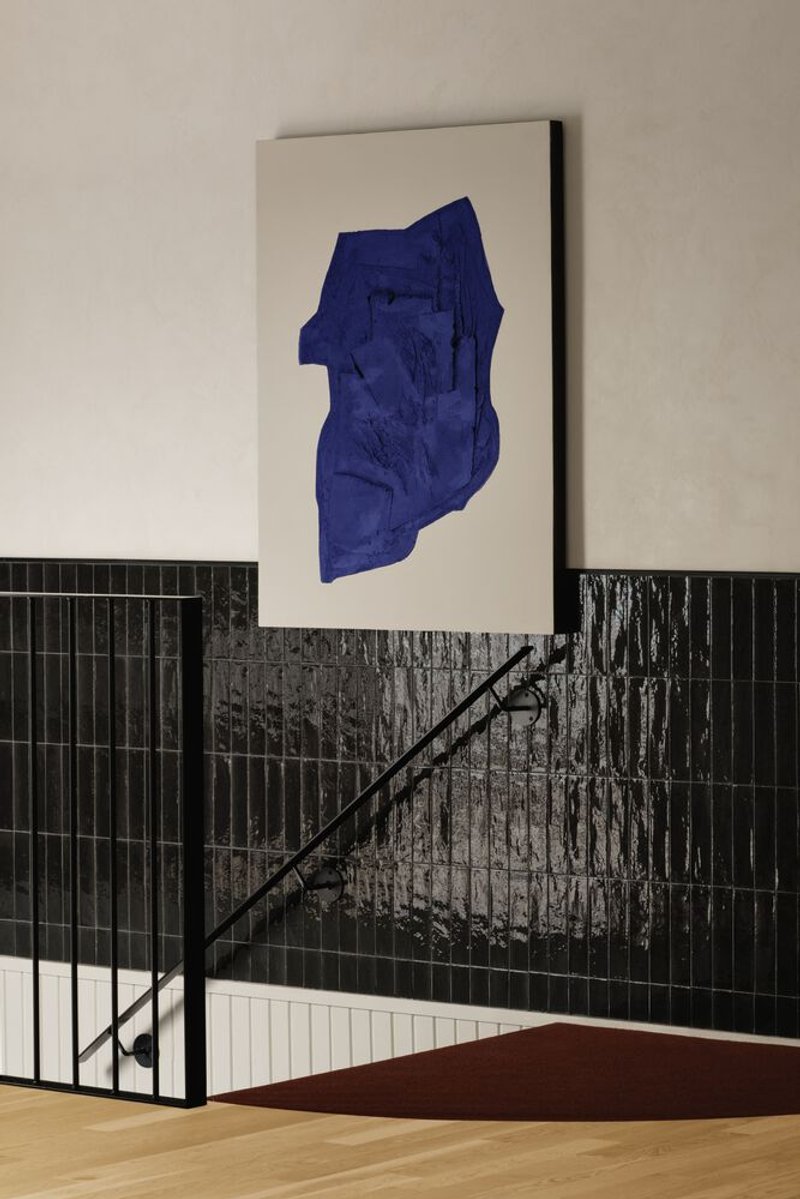
A staircase with a black metal railing beside a dark tiled wall leads to a second level, its landing punctuated by a blue artwork on a beige surface. The transition from the warmth of the dining floor to the cooler palette of the stairwell is handled simply, with tile and metal replacing stone and glass. It signals a shift in register without breaking the atmospheric thread.
The bar's ribbed timber front and backlit glass shelves read as a piece of furniture scaled up to architecture. From the front, the ribbing echoes the fluted glass partitions and the wainscoting, tying the serving zone back to the dining zones through a consistent tactile language. Everything in Piatti rhymes without repeating itself.
Plans and Drawings
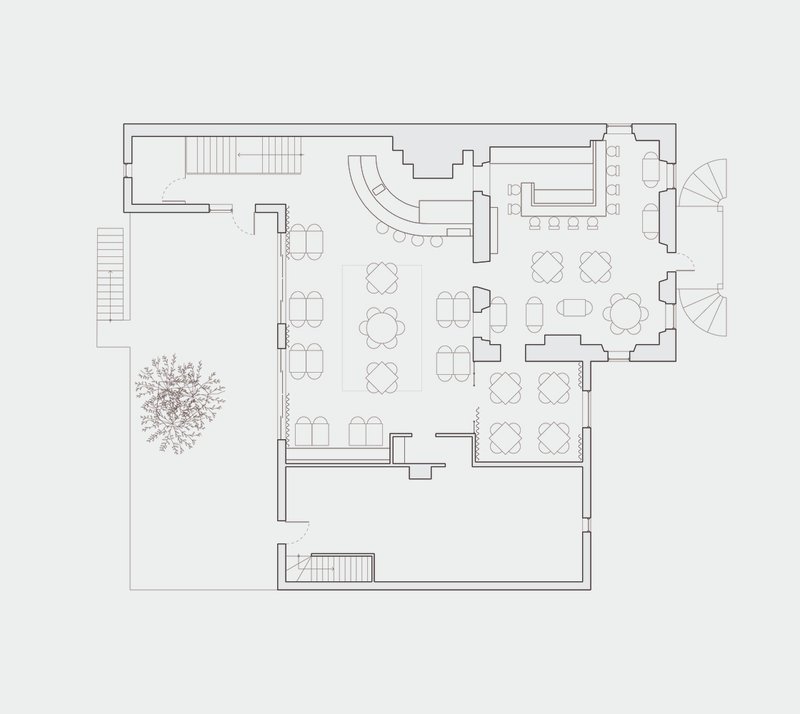
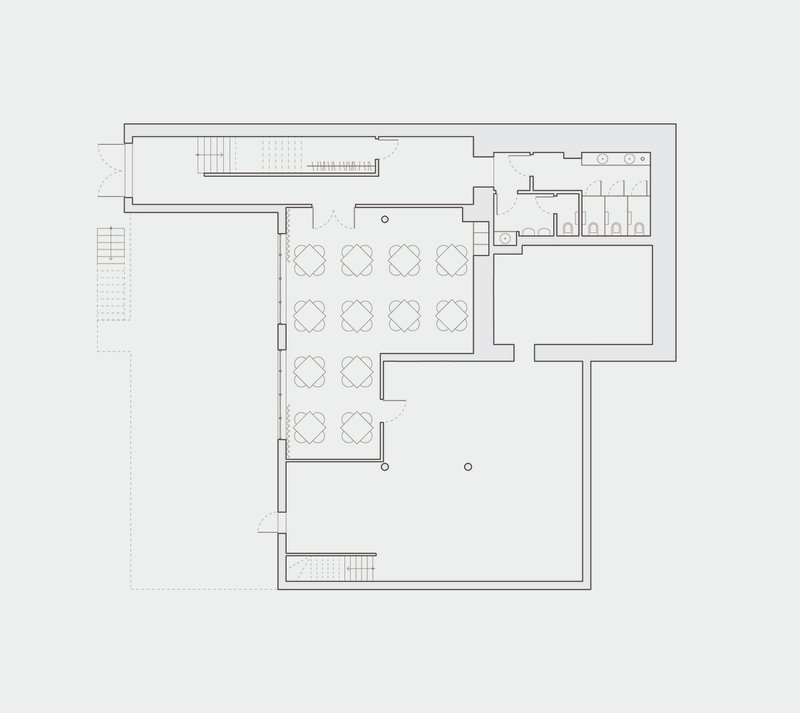
The floor plans reveal a compact, carefully zoned layout. A curved bar counter occupies the center of the composition, with dining tables arranged around it in clusters that allow for both intimate two-tops and larger group seating. A courtyard with a tree provides an outdoor datum, and the staircase tucks against a side wall to preserve floor area. Service zones are positioned efficiently at the rear, keeping the front of house free from operational clutter. The plan confirms what the photographs suggest: Piatti's atmosphere is not accidental but the product of precise spatial choreography.
Why This Project Matters
Restaurant interiors have a notoriously short shelf life. Trends cycle fast, and most dining rooms are designed to photograph well on opening night rather than to age gracefully. Piatti pushes against that tendency by grounding its identity in materials that gain character over time: stone that already looks centuries old, marble whose veining only becomes more familiar with repeated visits, timber that will darken and patina. Ivy Studio has made a bet that durability is more interesting than novelty, and the result is a space that feels established from day one.
More broadly, Piatti demonstrates that a strong restaurant interior does not require a singular conceptual gimmick. There is no overarching metaphor here, no narrative about journeys or harvests or Italian grandmothers. There is instead a rigorous material logic applied consistently across every surface and detail, from the fluted glass to the curved sconces to the stone walls. The discipline is the concept. For a dining room, that is more than enough.
Piatti Restaurant by Ivy Studio, Montreal, Canada. Photography by Alex Lesage.
About the Studio
Share Your Own Work on uni.xyz
If projects like this are the kind of work you want to make, uni.xyz is a place to publish your own, find collaborators, and enter design competitions.




Popular Articles
Popular articles from the community

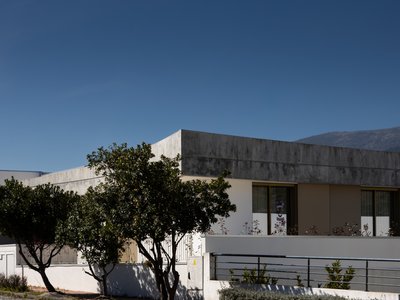
PLATAFORMArq Folds a Concrete Roof Over the Portuguese Mountains in House #474
A 220-square-meter residence in Teixoso, Portugal, wraps board-formed concrete into an angular canopy that frames the Serra da Estrela foothills.
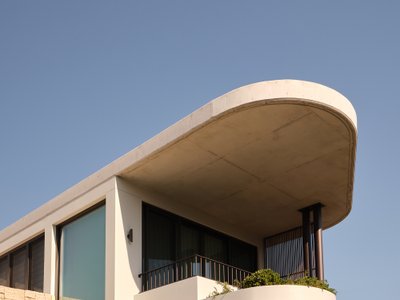
Stanton Architects Sculpts a Curving Family Home into Sydney's Inner West Fabric
Five Dock House uses cantilevers, curved concrete, and layered courtyards to carve out privacy on a tight suburban lot in Sydney.
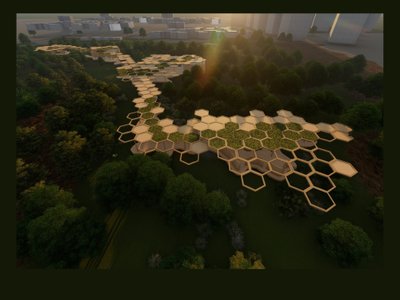
Eco Chapel: A Green Architecture Pavilion Designed in Symbiosis with the Forest
Eco Chapel uses green architecture to weave prayer, learning and reuse into a forest pavilion shaped by modular hexagonal canopies for life.

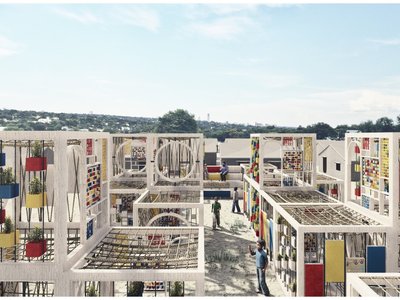
The Faith: Modular Architecture for Play, Learning, and Hope in Kutupalong Refugee Camp
A modular playground architecture project in Bangladesh where play, learning, safety, and hope rebuild childhood inside a refugee camp anew.


Similar Reads
You might also enjoy these articles

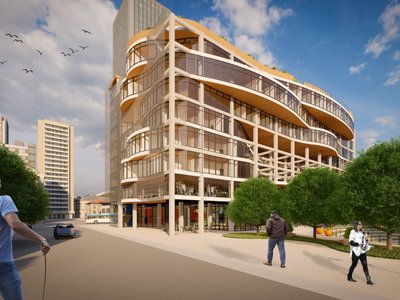
Olio Towers: A Mid-Rise for Performers That Fuses Housing, Rehearsal, and Stage
Located blocks from Houston's Theater District, this modular tower stacks living units around a central performance atrium.

Oasis: Modular Green Housing Carved into Dhaka's Urban Fabric
A shortlisted Plugin Housing entry reclaims unauthorized settlements in Dhaka with stepped concrete volumes, green roofs, and ventilation-driven design.

Black Hole: A Floating Megastructure for the Post-Physical Era
Emiliano Mazzarotto envisions a spherical, self-scaling arena where e-sports, digital hotels, and holographic stadiums replace traditional public space.
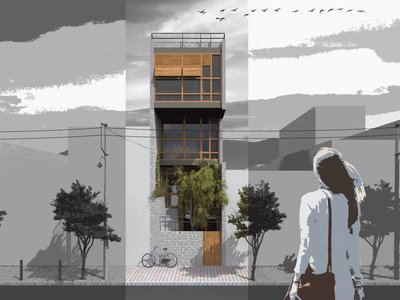
Compact & Sustainable Living in Piraeus: A Four-Level Family Home Built Around Light and Air
A narrow townhouse in one of Greece's densest port cities uses a central atrium and passive strategies to house three generations under one roof.


Explore Hospitality Building Competitions
Discover active competitions in this discipline




The International Standard for Design Portfolios


The Global Benchmark for Architecture Dissertation Awards


The Global Benchmark for Graduation Excellence


Challenge to reimagine the Iron Throne
Comments (0)
Please login or sign up to add comments
No comments yet. Be the first to comment!