
Lina Ghotmeh's Vision Selected for 22nd Serpentine Pavilion
Renowned Architect's Innovative Design to Grace Serpentine Galleries


The Serpentine Gallery Pavilion 2023 will be designed by Paris-based architect Lina Ghotmeh of Lebanese origin. The pavilion is set to be unveiled in June 2023 at Serpentine South, with financial support from Goldman Sachs, which has been backing the annual project for 9 consecutive years.
Since its inception in 2000 with Dame Zaha Hadid, the Serpentine Pavilion commission has been a renowned platform for both established and emerging architects to showcase their first UK structures. Over the years, the pavilion has evolved into a participatory platform for the Serpentine's experimental, interdisciplinary programs and events for the community and families.
Lina Ghotmeh's Paris-based practice, Lina Ghotmeh—Architecture, focuses on global projects at the intersection of architecture, art, and design. Her practice takes a comprehensive 360-degree approach to each project, considering social conditions, environments, materials, and the history of the location, as well as the habits of the users.

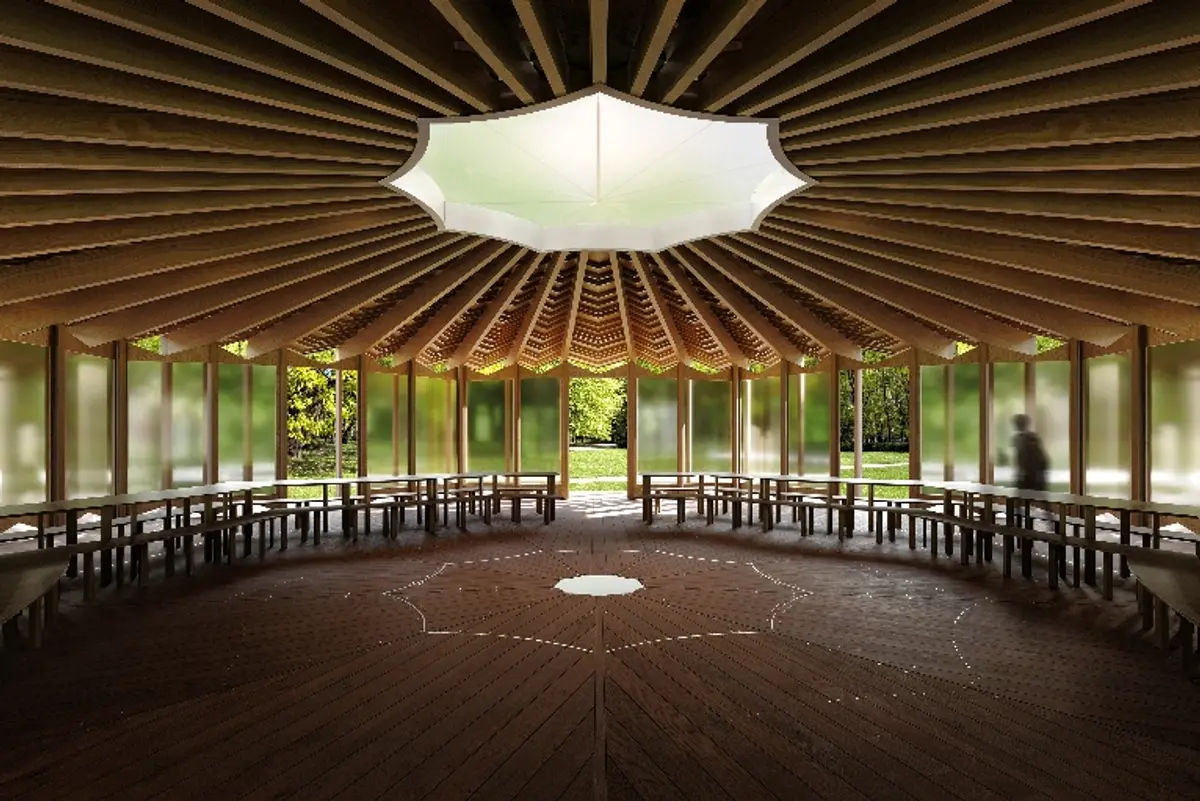
The 22nd Pavilion will persist in its tradition of "Archaeology of the Future" by examining concepts such as memory, space, and landscape through the architect's unique perspective. The upcoming Pavilion, named "À Table," takes its inspiration from the French invitation to sit and dine together. The design of the structure will embody unity, taking the form of an organic table and seating arrangement that encourages human interaction. Nature serves as a muse, with the structure reflecting the surrounding trees and canopies. At the heart of Ghotmeh's architectural design is the idea of community and togetherness.
The architect said: “À table is an invitation to dwell together, in the same space and around the same table. It is an encouragement to enter into a dialogue, to convene and to think about how we could reinstate and re-establish our relationship to nature and the Earth.
The Earth that embraces us is our first source of sustenance; without it, we living beings, could not survive. Rethinking what and how much we eat – how we ‘consume’ and how we weave our relationships with one another and the living world – moves us towards a more sustainable, ecosystemic communion with the Earth. Our ‘cuisine’ grounds us home; it reminds us how linked we are to the climates in which we grew up.
As a Mediterranean woman, born and raised in Beirut, and living in Paris, I feel a deep belonging to our ground, to what it contains, and to what it embraces: from the buried yet weathering archaeology of past civilisations to the embedded living world that spurs green life to sprout from every crack in the streets. In my practice as an architect, I excavate to design (and learn) from the traces of the past and I listen to the voices of my ancestors as well as those of our living world. These voices vividly resonate with future structures as ways to influence and challenge tomorrow’s architecture.
In today’s changing times, this Pavilion offers a celebratory space. It is endowed with a table, around which we will sit together in a modest, low structure and in an atmosphere reminiscent of the Toguna huts of the Dogon people in Mali, West Africa, designed to bring all members of a community together in discussion. Here we can eat, work, play, meet, talk, rethink, and decide. Built with bio-sourced and low-carbon materials, the structure appears like a skeleton. Sustainably sourced timber ribs are arranged to support a suspended pleated roof. Echoing the structures of tree leaves, the Pavilion embraces the nature of the park in which it emerges. Reminding us of the many lives blossoming beneath our feet, the concave lines of its perimeter are drawn from the forms in the stems and canopies of adjacent trees. While rooted in its place and welcoming the space of the park with its open gallery-like envelope, the Pavilion grows as an adaptable system. It can be disassembled and reassembled, allowing it to live beyond its Serpentine site while holding the memory of its original ground.”
Bettina Korek, Chief Executive, and Hans Ulrich Obrist, Artistic Director, said: “We are thrilled to present Lina Ghotmeh’s first structure in the UK here at Serpentine next summer. Her design for À table draws on natural elements that reflect its surroundings in Kensington Gardens and expands on our mission of creating connections between architecture and society by promoting unity and togetherness in its form and function. We are endlessly grateful to our loyal partners and supporters, for making Ghotmeh’s brilliant concept for a Pavilion built from state-of-the-art sustainable materials into an inspiring reality, for the people of London and for our visitors from around the world to enjoy all summer. As Etel Adnan once told us, The world needs togetherness, not separation. Love, not suspicion. A common future, not isolation.”
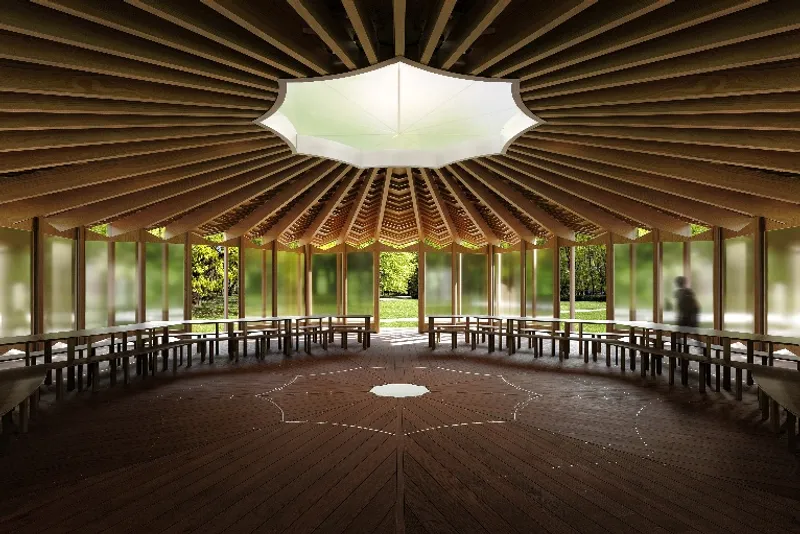
Ghotmeh's Pavilion will be at the forefront of sustainability and environmental responsibility, as it is designed with nature, organic elements, and sustainability in mind. The main structure will be made of timber and will be lightweight and completely dismountable. The focus will be on using sustainable materials and ensuring the structure can be reused after its time at Serpentine.
During the summer months, the Serpentine Pavilion 2023 will host the Park Nights program, offering a platform for interdisciplinary live performances in music, poetry, spoken word, and dance. It will also host Serpentine's education and civic initiatives.
The selection for this year's Pavilion was made by Serpentine Artistic Director Hans Ulrich Obrist, CEO Bettina Korek, Director of Construction and Special Projects Julie Burnell, Director of Curatorial Affairs and Public Practice Yesomi Umolu, and Curator at Large Natalia Grabowska, with the advice of Sir David Adjaye OM OBE and David Glover. In 2022, Sir Adjaye was honoured with the Order of Merit by Her Majesty the Queen for his distinguished service in the arts, literature, science, and culture. Serpentine would also like to recognize the contributions of the late architect Richard Rogers, who was an integral part of the Serpentine Pavilion team and served as an advisor since 2017.
The Pavilion is supported by Goldman Sachs with additional support from Saint-Gobain.
Lina Ghotmeh
Lina Ghotmeh’s (b.1980, Beirut, LB, Lebanon) projects include the Estonian National Museum / Memory Field (Grand Prix Afex 2016 & Mies Van Der Rohe Nominee); 'Stone Garden' Housing & Art Gallery, crafted tower and gallery spaces in Beirut, Lebanon; ‘Réalimenter Masséna’ wooden tower dedicated to sustainable food culture in Paris (laureate of Paris’ call for innovative projects), France; Ateliers Hermès in Normandy, first passive low carbon workshops building, in France; Wonderlab exhibition in Tokyo and Beijing & Les Grands Verres for the Palais de Tokyo, Paris, France.
Ghotmeh is actively involved in the academic world and has lectured in institutions across the world. She is Louis I Khan 2021 visiting professor at Yale School of Architecture in United States and Gehry Chair 2021–22 at the University of Toronto, Canada.
She co-presides the Scientific Network for architecture in extreme climates and is was a member of the Aga Khan Award for Architecture 2022 Jury. Among Prizes, she was awarded in 2021 the 2020 Schelling Architecture Prize, has received the 2020 Tamayouz ‘Woman of Outstanding Achievement’, the French Fine Arts Academy Cardin Award 2019, the Architecture Academy Dejean Prize 2016 and the French Ministry of Culture Award in 2008.
Her work is currently exhibited at the Cooper Hewitt Smithsonian Museum in New York and was previously shown at the MAXXI in Rome (2021–22) and the 17th Architecture Biennale in Venice (2021).
Press release and images courtesy of Serpentine Galleries
Cover: Serpentine Pavilion 2023 designed by Lina Ghotmeh — Architecture Design render, exterior view © 2022 Lina Ghotmeh — Architecture, courtesy: Serpentine

Popular Articles
Popular articles from the community


Lunar Spiral: Space Architecture Shaped by the Mathematics of the Universe
Lunar Spiral reimagines space architecture through Fibonacci geometry, lunar regolith, levitating habitats, and self-sustaining Moon living.

Hill & Cross Opera: Sculptural Opera House Architecture Shaped by Tallinn’s Landscape and Identity
Hill & Cross Opera reimagines opera house architecture in Tallinn through its sculptural hill, civic plaza, glass wave and a luminous cross.

The Ocean Hive: Sustainable Architecture for a Self-Sufficient Civilization at Sea
The Ocean Hive imagines sustainable architecture at sea, where modular habitats, algae, wave power and ocean waste sustain a growing colony.

ALGAL REALM: A Bio-Integrated Lunar Habitat Design for Life Beyond Earth
ALGAL REALM reimagines lunar habitat design with algae-powered life support, 3D-printed regolith, and vertical living for a lunar future.

Similar Reads
You might also enjoy these articles
116 Rokeby Building, Collingwood
Sustainable Collingwood office building featuring double-skin façade, natural ventilation, rooftop amenities, and carbon-neutral design focused on wellbeing and longevity.
Contemporary Apartment Renovation in Spain: RV House by BIAN Opens Up to the Sea
A minimalist 1930s apartment in Santander is transformed into a flexible, sea-facing home through contemporary Spanish renovation.
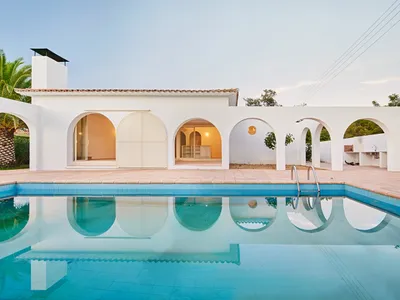
3 Marías House: A Contemporary Mediterranean Courtyard Retreat by Bajet Giramé + Burckhardt
Mediterranean courtyard home blending traditional architecture with modern design, terracotta flooring, flexible interiors, sustainable climate strategies, and garden integration.
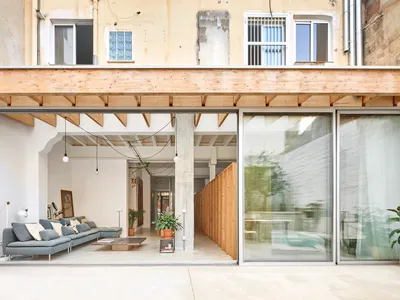
NZ10 Apartment by auba studio: Adaptive Reuse in Palma de Mallorca
Adaptive reuse apartment transforms bakery into light-filled home with patios, privacy layers, and wood interiors enhancing urban living experience.

Explore Cultural Architecture Competitions
Discover active competitions in this discipline


Challenge to reimagine the Iron Throne

Photograph architecture without architects

Illustrate the lost glory of Angkor Wat - Render Challenge

Bring back Drive In's
Comments (0)
Please login or sign up to add comments
No comments yet. Be the first to comment!