

The Progression of Generation Alpha
Evolving trends of youth and their transforming patterns concerning technology.


The CAUSE
The exponential development in the field of technology, and thus automation, constantly keeps creating a new phase that makes the present-day different from the previous one. It is quite evident that with these ongoing changes around, the way we live, work and perform our day-to-day activities has been revamping. But is the change we are getting adapted to, a desired one?
The current generation has a diverse web of opinions on whether the future is going in the right direction and reshaping for the future based on radical shifts that took place between the past and the present. Social, cultural, and economic factors play a vital role in forming and articulating these opinions but it's only time that can tell us what the future generation has got to reveal.
Employment being a driving factor interdependent on technology adds a lot of weight in the scripting of the future.

The IMPACT
The factors like the increase in the number of working sectors creating favorable circumstances for the employment seekers, and the advancement in technology and automation that involves lesser manual involvement with each new innovation put forward, are creating an imbalance in the job displacement and opportunity cycle. Some emerging trends that highlight the importance of innovation and biotic involvement in work sectors will probably be the life-savers of many in the upcoming decades. This might redefine the role of a human being in the work system.
Speaking in the context of a modular-living trend, people have different mindsets and workability factors. The definition of comfort for any two people will hardly be the same. Employees and employers will probably have two totally different versions of a serene working environment within the same office. Personalization of spaces is one of the main reasons why modularity has been widely accepted across the globe. This being a very subjective aspect, needs to be carefully dealt in a designers point of view, as any product, device, or space cannot speak the same language to all its users.
The FUTURE
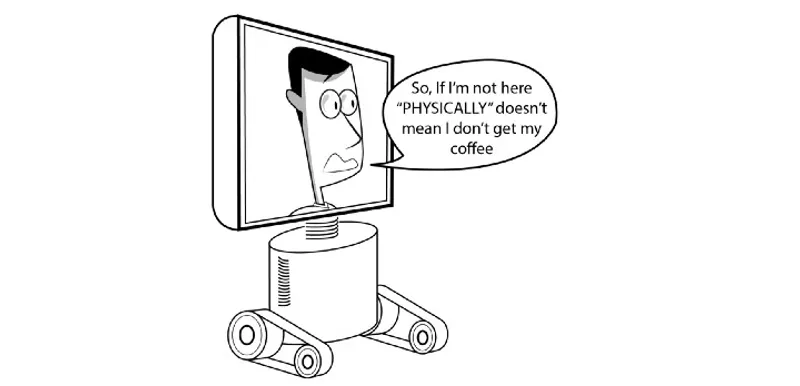
It is a widely accepted prophecy that outdoor physical activities and social interactions are and will remain to be inversely proportional to the advancement in technology which further leads to a user-friendly atmosphere. Though it majorly depends on how the provided resources are being utilized at the receivers’ end, the designer plays a key role in shaping tomorrow. Learning from the past and working in the present has now become easier than ever before, but the future got way too unpredictable due to the pace of growth in technology and changing trends of the human race.
Work-from-home has been a sensation in its initial stages around a decade ago. This provided a man not only with comfort but also a platform for further development where he looked forward to avoiding the need of even getting out of his room yet accomplishing given tasks on time. Further developments on this subject might someday lead to a scenario whereby the need for a paper or even a device can be totally avoided. Even further in the timeline, the need for a human being working on the task will probably be avoided just as well!
Check out exciting and thought-provoking challenges on UNI: https://uni.xyz/competitions/
-
Avail UNI membership with the 'Technosphere' competition.

-
AI Box - Challenge to design a convention center for Artificial Intelligence.

-
Ar2050 - 3D Visualization challenge: Future workspaces for architects.


Popular Articles
Popular articles from the community

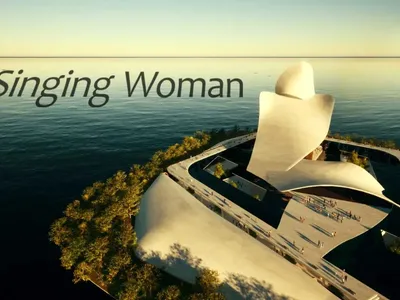
Singing Woman: An Opera House That Performs Before the Curtain Rises
Ovidiu Cristian Pavel's conceptual opera house translates Estonia's choral identity into a sculpted waterfront landmark facing the Baltic Sea.


Cube Design Draws an Ecological Corridor Between Two Shenzhen Hills with the Nankai Building
Beside Shenzhen's container docks, the Nankai Building pairs stacked balconies with a climbing green screen to connect two hillsides across its height.

LT2A and OPEN Architectes Thread a Brick and Glass High School Through a Wooded Belgian Campus
In Braine-l'Alleud, a 3,000 m² wing for Collège Cardinal Mercier pairs pale brick with a glazed colonnade, deferring to a small chapel and a dense wood.

Juan García Correa, John González and Claudia Rueda Sink a Circular Amphitheater into a Manizales Engineering Building
On the La Nubia campus in Manizales, Colombia, the S1 Building folds labs and offices into a hillside of ramped lawns that double as a campus route.

Similar Reads
You might also enjoy these articles
Juan García Correa, John González and Claudia Rueda Sink a Circular Amphitheater into a Manizales Engineering Building
On the La Nubia campus in Manizales, Colombia, the S1 Building folds labs and offices into a hillside of ramped lawns that double as a campus route.

Arealis Brasil Wraps a São Paulo Office for Everis's Creative Arm Around a Glowing Curved Counter
In Brooklin Paulista, a 300 m² office for the creative agency Chazz uses timber, metal mesh and ribbed green glass to blur workspace and pub.
LT2A and OPEN Architectes Thread a Brick and Glass High School Through a Wooded Belgian Campus
In Braine-l'Alleud, a 3,000 m² wing for Collège Cardinal Mercier pairs pale brick with a glazed colonnade, deferring to a small chapel and a dense wood.

Atelier Diving Bell Stitches a Hangzhou Food Court Together with a Louvered Steel Canopy
In Hangzhou's Liangzhu Culture Village, a 1,400 m² food court renewal uses canopies, tree benches and props to turn a passage into a place.
Comments (0)
Please login or sign up to add comments
No comments yet. Be the first to comment!