
Redefining Mobility: An In-Depth Look at Station Plus, the Future of Service Stations
Station Plus: A groundbreaking, eco-friendly service complex revolutionizing the refueling experience for next-gen vehicles.


As the world progresses into an era where diversity in vehicle technology is not just anticipated but already a vivid reality, service stations must evolve to keep pace. 'Station Plus' by Xiaotong Ma, a winner entry titled 'Overhaul,' stands at the forefront of this transformation. This article delves deep into the anatomy of Station Plus, exploring its potential to redefine vehicular service and user experience.

Station Plus: A Paradigm Shift in Vehicular Services
A Multifunctional Nexus for Diverse Vehicle Types
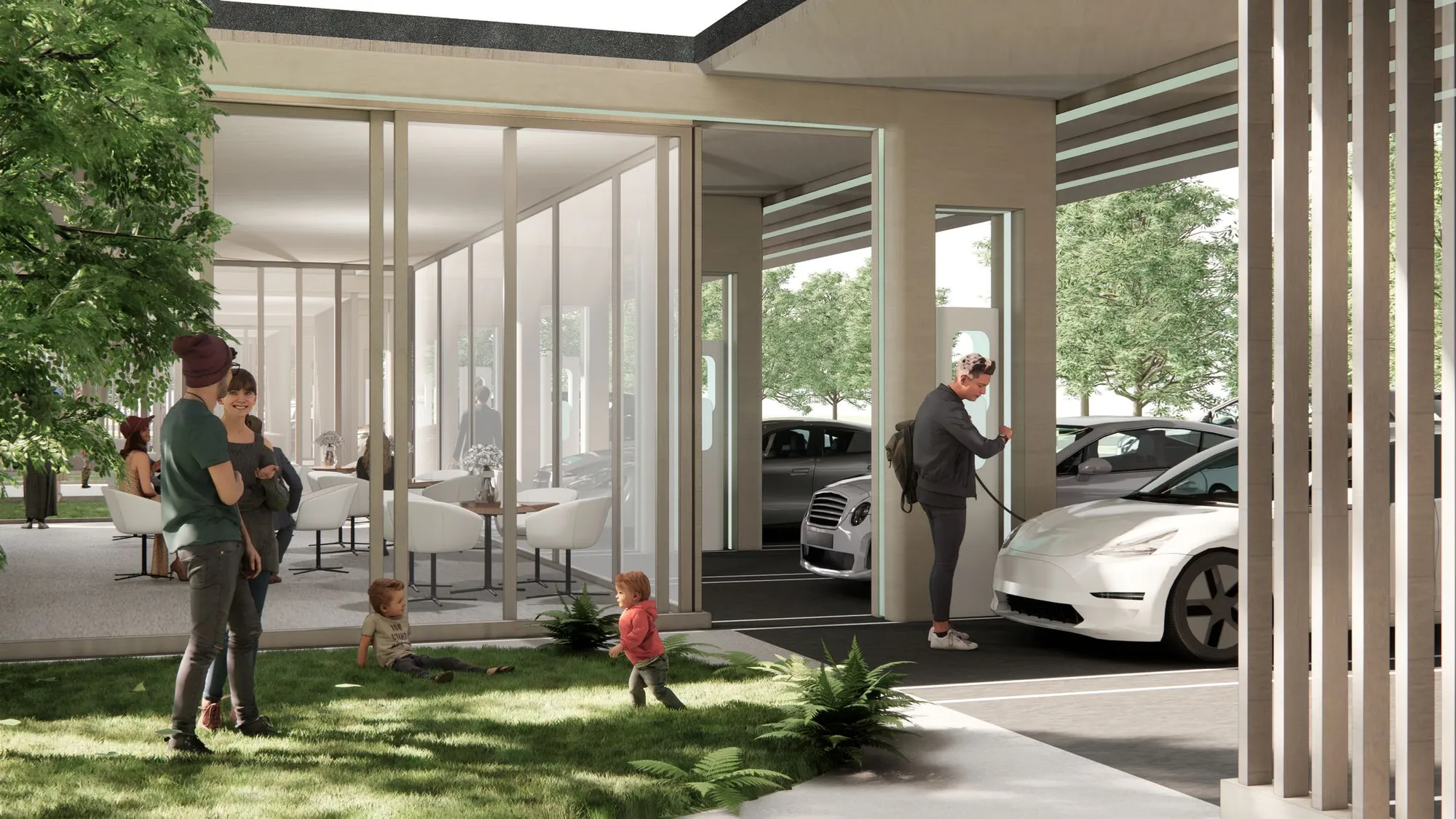
Station Plus embodies a service complex that accommodates diesel, gas, hybrid, electric, and autonomous vehicles. This architectural marvel extends beyond basic fueling and charging needs to offer a rich and varied experience for its users. The service station serves as a social and restorative hub where motorists can refuel, recharge, and relax.

Expansibility and Modularity: The Core Design Principles
The innovative approach to Station Plus's design lies in its modularity. Two primary types of units define its structure: one that caters to conventional fueling and another dedicated to electric and autonomous vehicles. The strategic angle connection between multiple units paves the way for an expandable multifunctional automobile service center.

Navigating Through the Design of Station Plus
Site and Space Formulation
The Seamless Integration of Function and Aesthetics (H3)
With a focus on streamline clarity and functionality, the units are designed to address specific spatial requirements. The layout accounts for different energy replenishment needs while ensuring safety through appropriate distance and independent flow lines for various types of vehicles.

User Experience Tailored to Modern Needs (H3)
Station Plus goes beyond functional to address the emotional well-being of its patrons. Pleasant, open spaces that merge with nature create a calming environment. Comfort zones are strategically placed for those waiting, allowing moments of rest or engagement in a variety of activities.

First Floor Plan: An Exemplar of Efficient Space Utilization (H3)
The first floor plan reveals an intricate dance of vehicular and human traffic. Each area is purposefully designed, from charging docks to recreational spaces, demonstrating a harmonious blend of utility and leisure.

Harnessing Clean Energy for Sustainable Operations
An Energy System for Tomorrow (H3)
Station Plus is not just an architectural endeavor but also an ecological one. The energy system utilizes solar, wind, and potentially hydrogen power, connecting to the grid yet capable of self-sustenance, marking a new chapter in clean energy utilization for public services.
Station Plus is a beacon of futuristic design, marrying functionality with sustainability. As we embrace a future marked by diverse vehicle technologies, such centers will become cornerstones of community and progress. Xiaotong Ma's vision for Station Plus is not just a concept but a call to action for architects, designers, and city planners worldwide.


Popular Articles
Popular articles from the community


Hill & Cross Opera: Sculptural Opera House Architecture Shaped by Tallinn’s Landscape and Identity
Hill & Cross Opera reimagines opera house architecture in Tallinn through its sculptural hill, civic plaza, glass wave and a luminous cross.

Co-Life: Senior Housing Design That Reconnects Older Adults With the City
Co-Life reimagines senior housing design through healing gardens, shared streets, workshops, and a sustainable community across generations.

The Ocean Hive: Sustainable Architecture for a Self-Sufficient Civilization at Sea
The Ocean Hive imagines sustainable architecture at sea, where modular habitats, algae, wave power and ocean waste sustain a growing colony.

Lunar Spiral: Space Architecture Shaped by the Mathematics of the Universe
Lunar Spiral reimagines space architecture through Fibonacci geometry, lunar regolith, levitating habitats, and self-sustaining Moon living.


Similar Reads
You might also enjoy these articles

Day and Night Park: A Time-Based Urban Newsstand in Beijing
A temporary urban newsstand in Beijing blending travel, light, and reading through poetic colors, compact form, and community-focused design.

Modernist Patio Renovation in El Masnou, Barcelona by Oliver Segura Arquitectura + Cebrià Arquitectura
Modernist patio renovation blending tradition and innovation with a movable pool, leveled floors, and Catalan materials in El Masnou.

Alto Residencial Coop: Cooperative Housing Development in Santiago de Compostela by Carbajo Barrios Arquitectos
A linear cooperative housing complex blending white volumes and perforated metal façades, enhancing community living, natural light, privacy, and urban integration.

Vil Genis School by BPA ARCHITECTURE – Massy, France
Vil Genis School in Massy, France, features sustainable design, south-facing classrooms, community integration, accessible spaces, and modern educational architecture.
Explore Charging Stations Competitions
Discover active competitions in this discipline



Challenge to design locus for the upliftment of human rights


Challenge to reimagine the Iron Throne


Photograph architecture without architects


Illustrate the lost glory of Angkor Wat - Render Challenge
Comments (0)
Please login or sign up to add comments
No comments yet. Be the first to comment!