
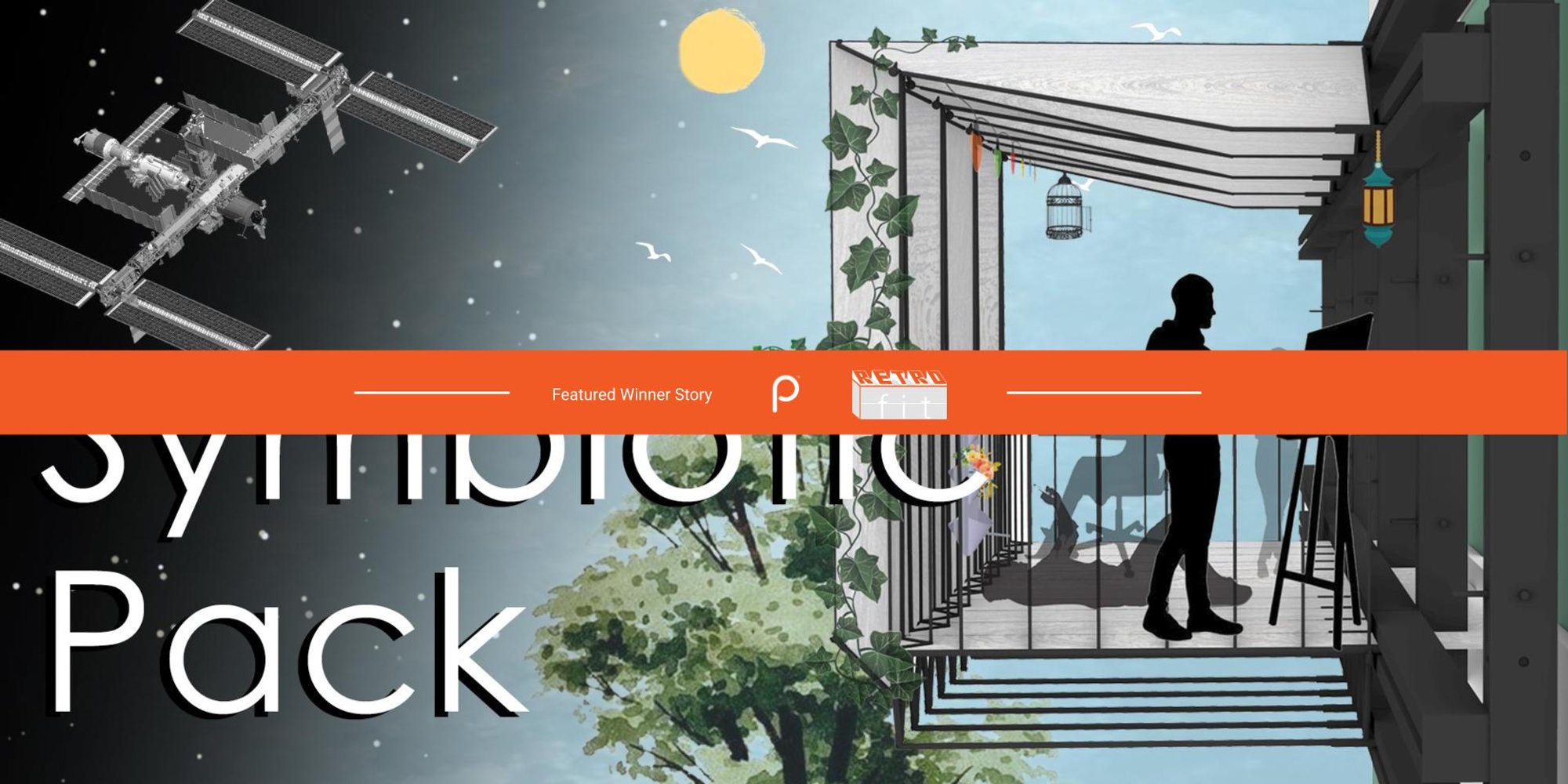
Bringing Modularity to Balconies.
Retro - Fit - Result Story

A rapidly densifying urban sprawl and the need to house an ever-increasing population has led to an explosion of mass housing schemata. Owing to a severe shortage of land resources to accommodate said housing, the housing tower sought vertical growth. The one plan principle in housing, the replication of housing units has often resulted in the element of individuality being taken away from the resident of the house. The process of owning a house has thus transformed into a series of compromises rather than aspirations being met. Primary among those is the compromise of space.
Precast construction technology has now slowly become more commonplace, helping to achieve the economy of construction, time, and cost. As a response to the growing problems of modern-day housing specified here, several building elements can now thus be “retro”-fit over existing homes. Apart from enabling the resident to acquire such provisions economically, this also enables the user to exercise a degree of additional control over his home, apart from the basic unit sold to him. The balcony is now one such element.
As space, a balcony is used for leisure, for services, as an elaborate vegetal container, a thermal break between the interior and exterior, and as a potent element impacting the elevation design of the building. Yet still, the notions with respect to what a balcony represents in a home, how it is constructed, and how it is installed have remained more or less the same since the industrial age. The question deemed to be asked here is: Can a Balcony in a house be more, mean more, and be less work for the homeowner himself? Can architecture and industrial design overlap to create something that modularises yet maxes out the efficiency of balconies?
The challenge was to design and detail a retrofit balcony module that can be readily attached to both new and old structures. Participants must also choose an existing built residential site where they wish to apply this retro-fit intervention.
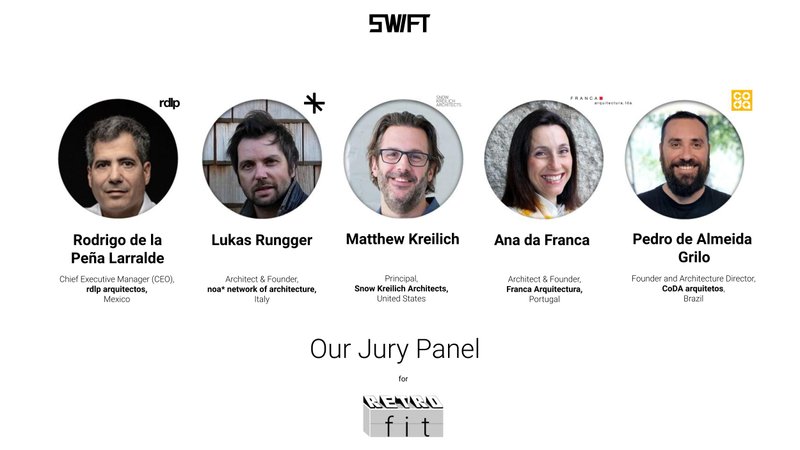
The jury for the competition consisted of esteemed designers, professionals, and academicians from around the world. The Lead Jurors for the competitions were as follows:
Rodrigo de la Peña Larralde, Chief Executive Manager (CEO), rdlp arquitectos, Mexico
Lukas Rungger, Architect & Founder, noa* network of architecture, Italy
Matthew Kreilich, Principal, Snow Kreilich Architects, United States
Ana da Franca, Architect & Founder, Franca Arquitectura, Portugal
Pedro de Almeida Grilo, Founder and Architecture Director, CoDA arquitetos, Brazil
Some of the Best of competition projects are:
Winning Project: [To] SHARE
By: Dong Cao, Yaning Zhang, Ming Xu & Zaw Latt
Description: [To] SHARE (Uber for balcony) celebrates the power and potential of a sharing economy as a vision for a sustainable Singapore.
------------------
People’s Choice: SLUM AUTONOMY - A PARADOX
By: Nikhil Jain
Description: The idea is to design a balcony for slum dwellers, (rehabilitated into new housing apartments)by understanding their lifestyle & activities in slums and how efficiently space was used. The project aims at providing a multifunctional use of balcony which gives them a sense of independence in terms of their usability and variations according to their needs.
-----------------
Institutional Excellence: ECOTent
By: Daniel Young, Zhiyu Feng & Ge Tian
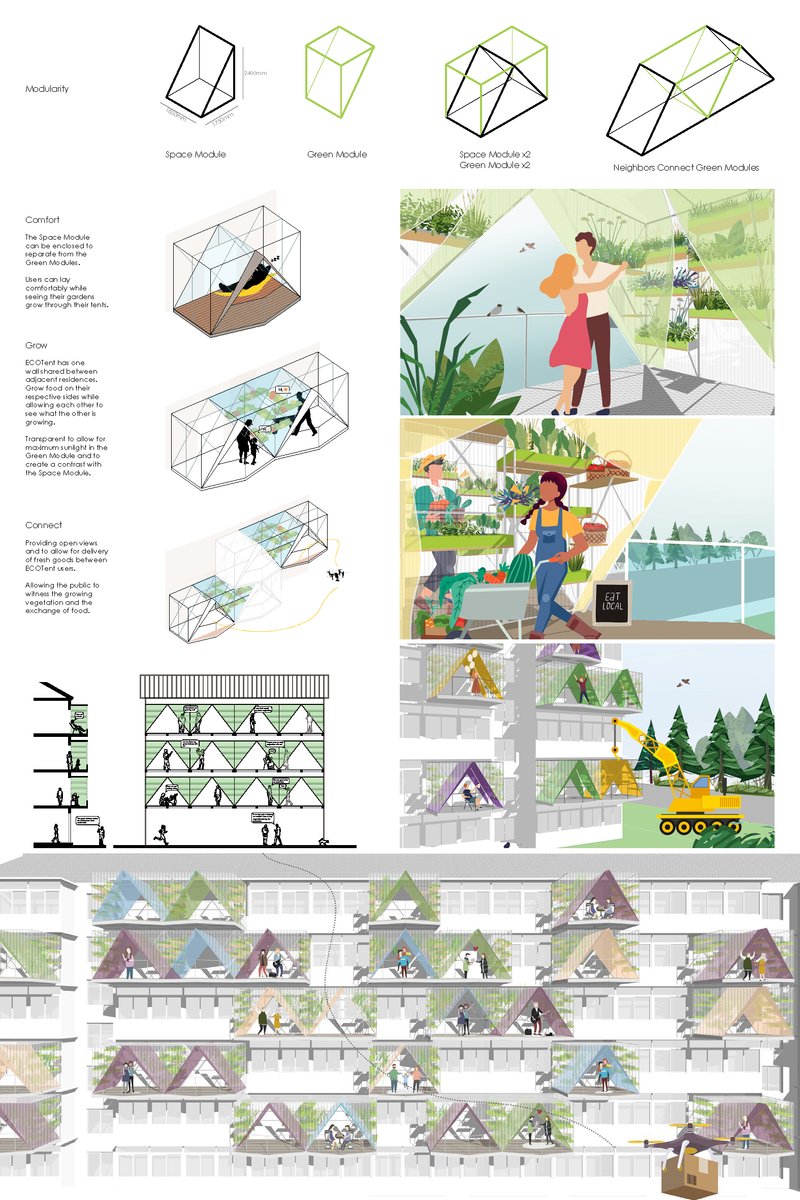
Description: Project Submission for the Retro-Fit Competition. Redefining the function of the urban balcony with post-pandemic considerations.
-----------------------
Editor’s Choice: Urban Retrofit The Collective and the Individual
By: Jgfrontado
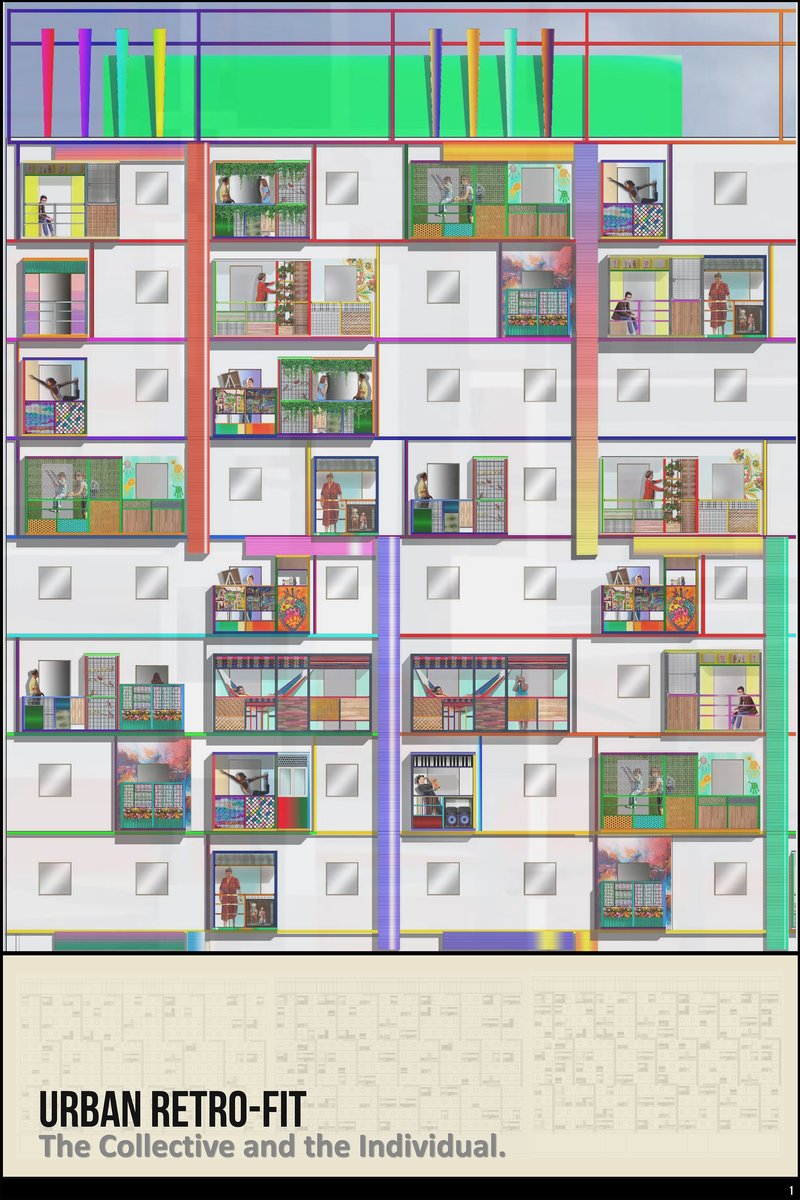
Description: The understanding of the interaction between the collective responsibility and the individual initiatives based on the support- infill theory of John Habraken is the underlying theme of the proposal. It’s architectural translation produced through the creation of a structural and service provider frame attached to the building as part of the collective responsibilities.
--------------------
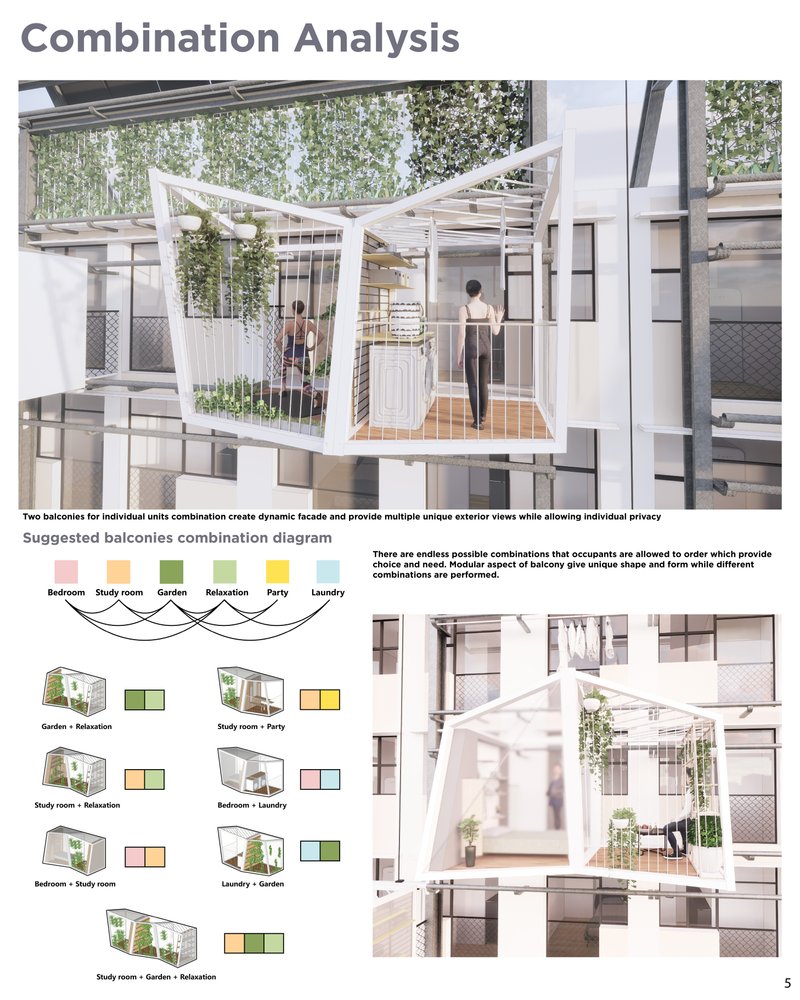
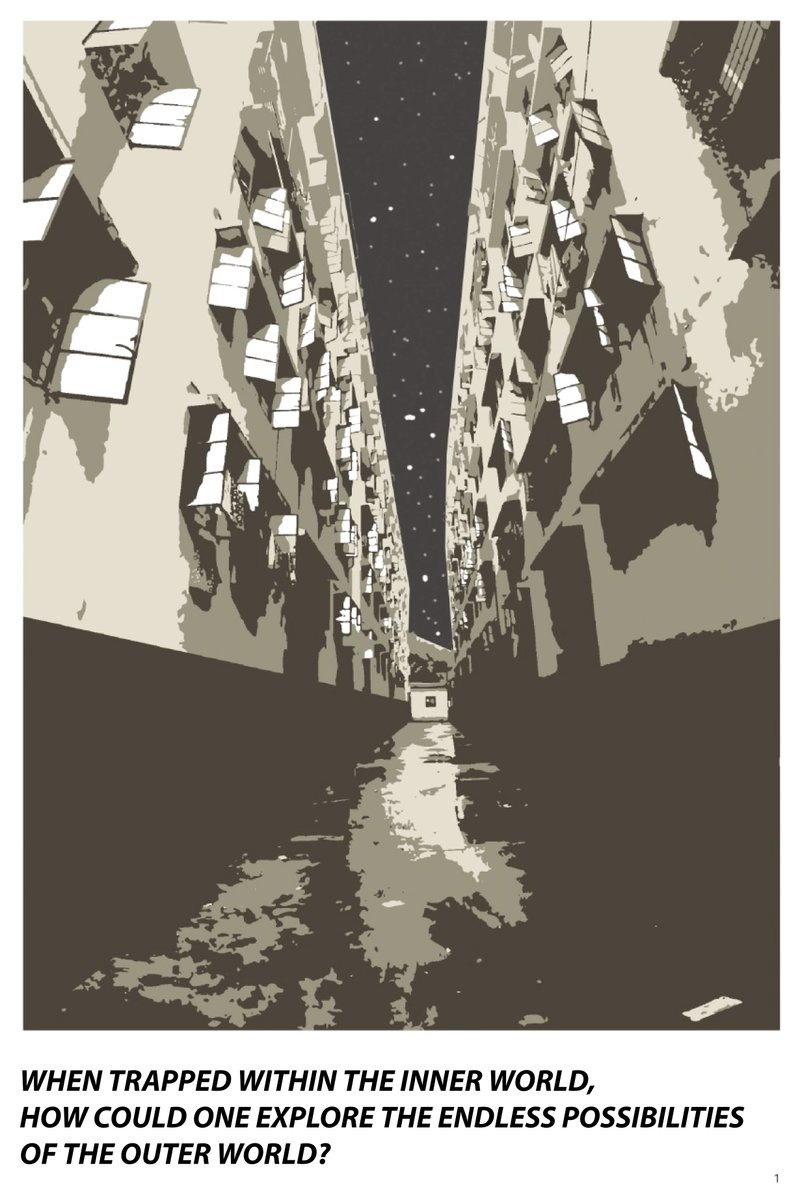
Editor’s Choice: Symbiotic Pack
By: Ceyda Tekin, Enginalp Leblebici & Hande Karataş
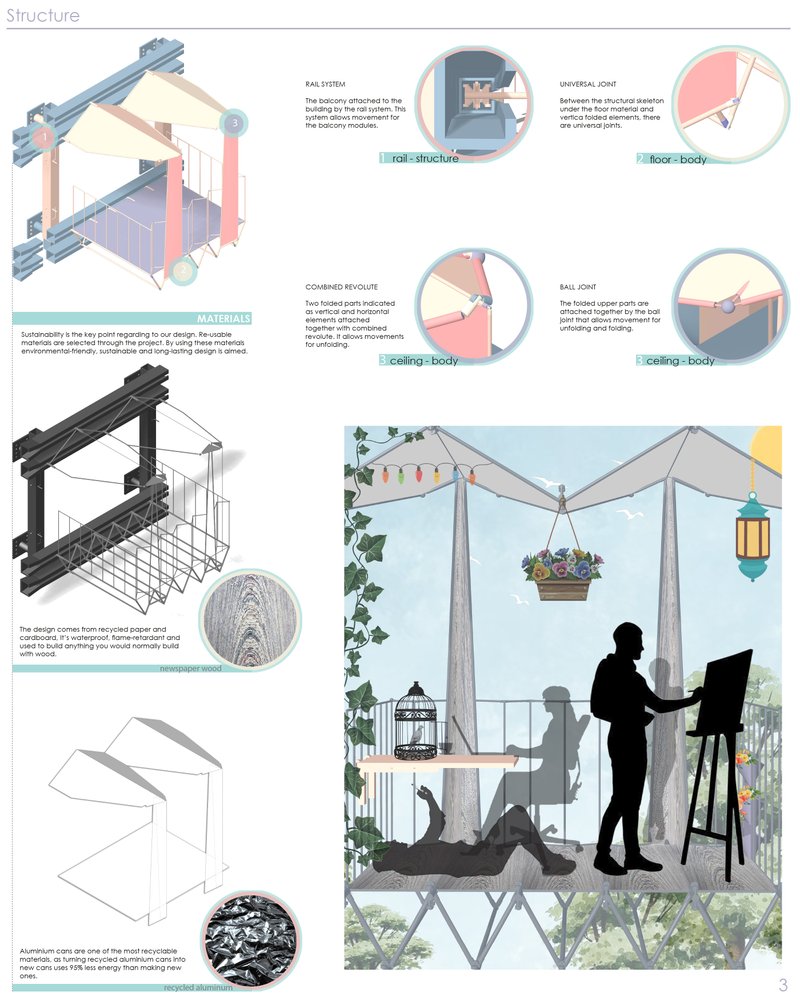
Description: The symbiotic pack allows the dweller to atone for the lack of balcony, as an unpleasant result of an increase in population and vertical growth, presenting a practical foldable structure, and also a flexible space of creativity, observation, and leisure.
--------------------
Editor’s Choice: Balco
By: Hanna Adamczyk & Adam Bieniek
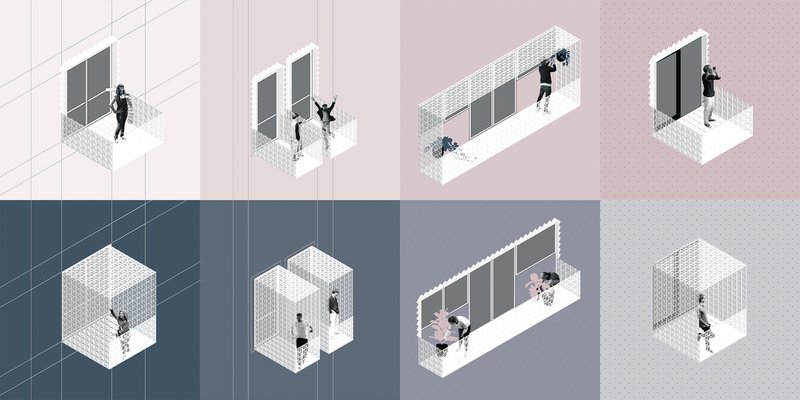
Description: The project is the answer to the questions based on the future balcony. Because of the modularity, “Balco” can have different dimensions. Inspired by origami art the product has flexible shapes that can transform according to the needs.
--------------------
Editor’s Choice: TOP HAT!
By: Jacob Bodinger & Langdon Drewett
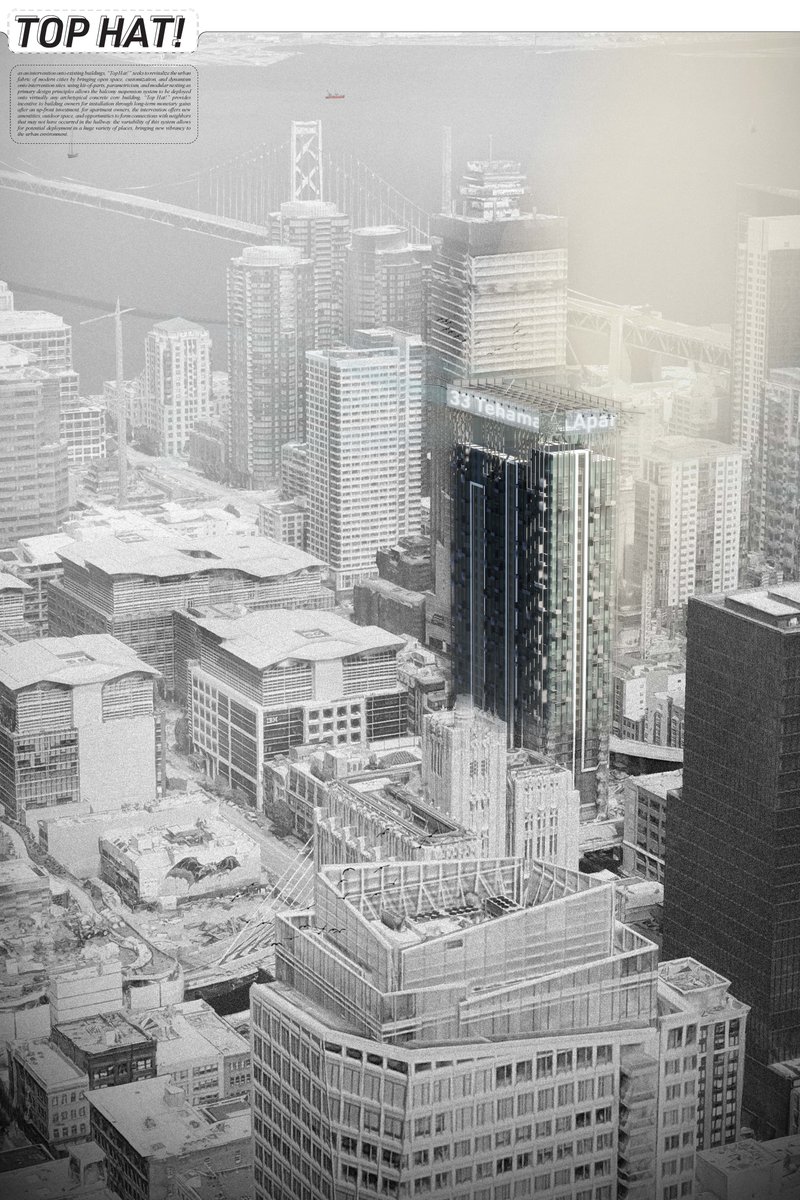
Description: As an intervention onto existing buildings, “Top Hat!” seeks to revitalize the urban fabric of modern cities by bringing open space, customization, and dynamism onto intervention sites. kit-of-parts, parametricism, and modular nesting design methods result in a system that is deployable in a wide variety of scenarios.
Discover the design brief here: https://uni.xyz/competitions/retro-fit/info/about
Discover the full results here: https://uni.xyz/competitions/retro-fit/entries
Follow us on social media: Facebook | Instagram | LinkedIn | Twitter | Youtube
Discover other design competitions to participate here: https://uni.xyz/competitions



Popular Articles
Popular articles from the community

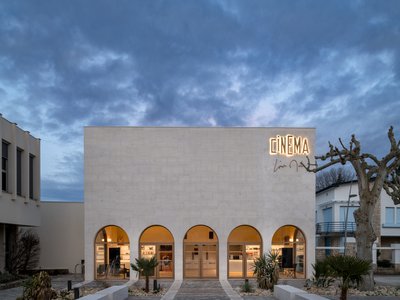
Louis Malle Cinema: A Limestone Cultural Landmark Revitalizing Community Life in Prayssac
Limestone cinema extension with public forecourt, blending heritage and modern design to create flexible cultural spaces and strengthen community interaction.
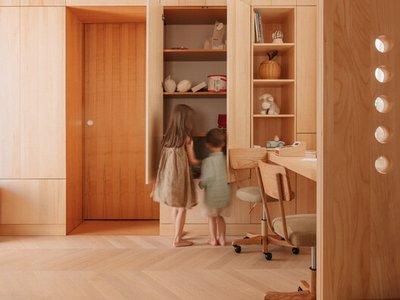
Treehouse Apartment: A Warm Timber Interior Blending Craft, Play, and Contemporary Living
Warm timber apartment with integrated treehouse, combining natural materials, craftsmanship, and playful design to create a flexible, family-oriented living environment.
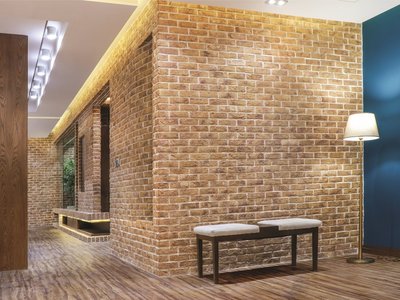
A Contemporary Take on Iranian Residential Architecture
A modern interior design in Mashhad that reinterprets brick, light, and spatial flow to create a warm, contemporary residential architecture.
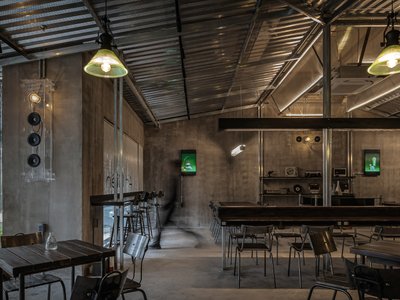
An Miên Lumière Cafe by xưởng xép, Ho Chi Minh City, Vietnam
An industrial-inspired café where layered steel and warm light create a dynamic, immersive environment shaped by reflection, depth, and perception.


Similar Reads
You might also enjoy these articles
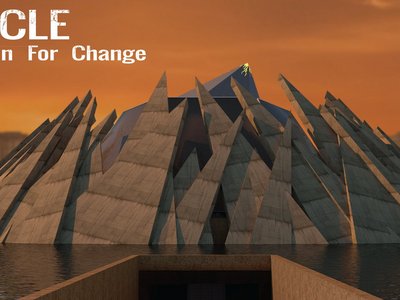
ORACLE: A Sustainable Memorial Architecture Responding to Climate Urgency
A sustainable memorial architecture in Cairo that transforms climate urgency into spatial experience, urging collective reflection and action
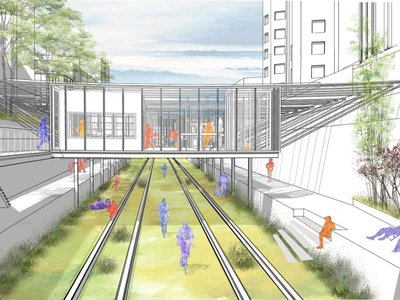
Suspended: Reimagining Paris Through Adaptive Reuse Architecture
A suspended intervention transforms abandoned Paris railways into inclusive, adaptive reuse architecture bridging heritage, mobility, and public life.

Solar Steam: A Climate-Responsive Architecture That Redefines the Monument
A climate-responsive memorial architecture that transforms heat, decay, and time into a living system reflecting humanity’s ecological impact.
Rolly: A Modular Approach to Urban Regeneration Architecture on Paris’ Petite Ceinture
A modular urban regeneration architecture project transforming Paris’ abandoned railway into a dynamic, movable and community-driven public space


Comments (0)
Please login or sign up to add comments
No comments yet. Be the first to comment!