
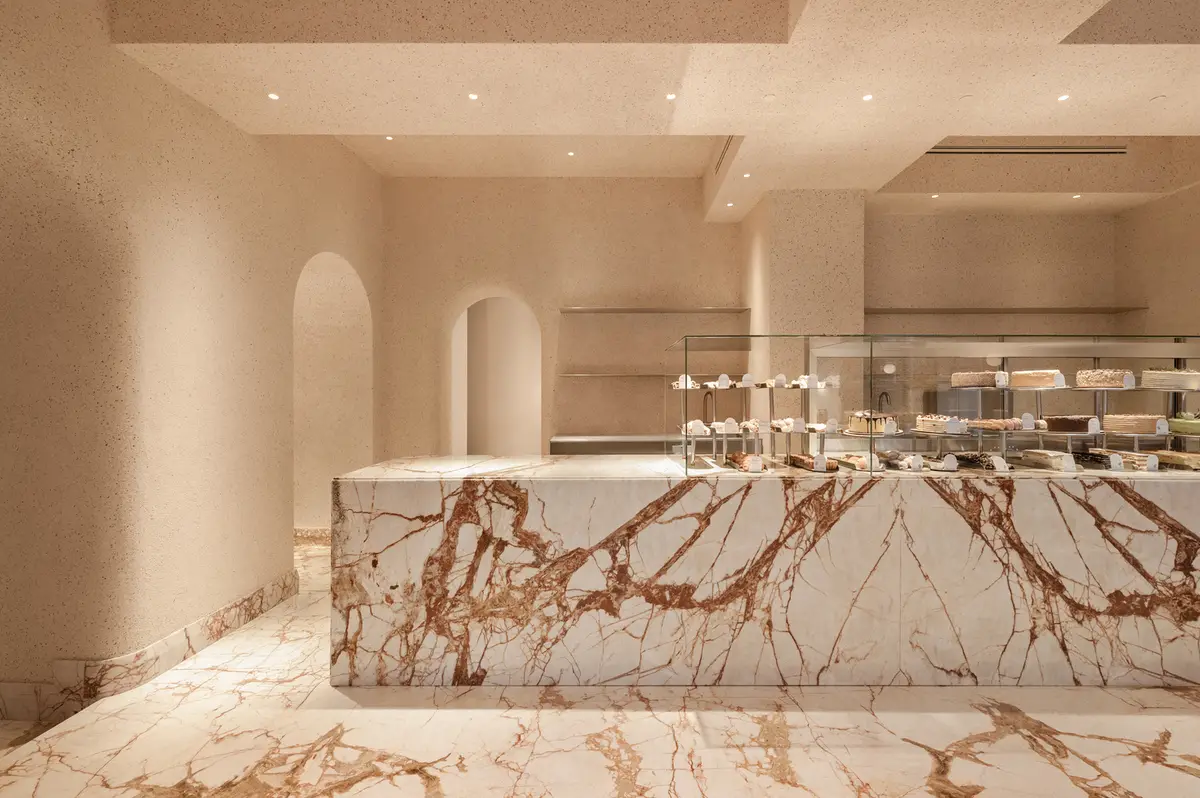
Sustainable Interior Design: Transforming Cukiernia Pastry Shop by YOD Group
Explore Cukiernia Pastry Shop's transformation by YOD Group, blending tradition with sustainable interior design using innovative materials like eggshell plaster.


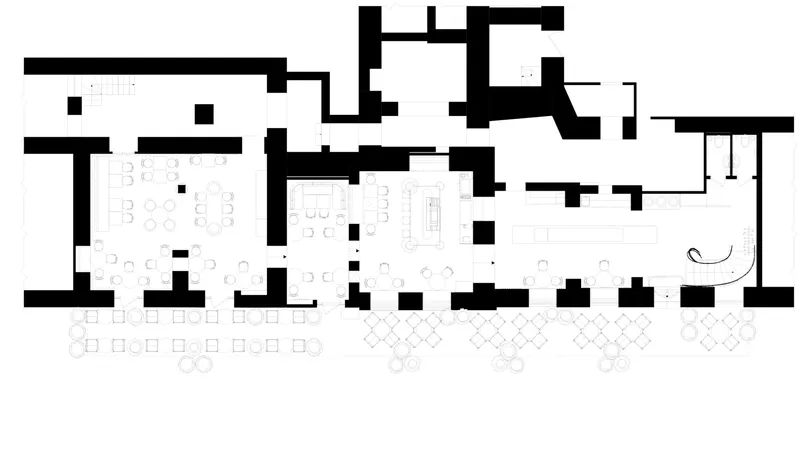
Sustainable interior design focuses on utilizing materials and methods that minimize environmental impact and promote ecological balance. The renovation of Cukiernia Pastry Shop in Lviv, Ukraine, by YOD Group showcases an exemplary application of sustainable design principles in a commercial space.
Design Philosophy and Inspiration
Preserving Tradition While Embracing Innovation
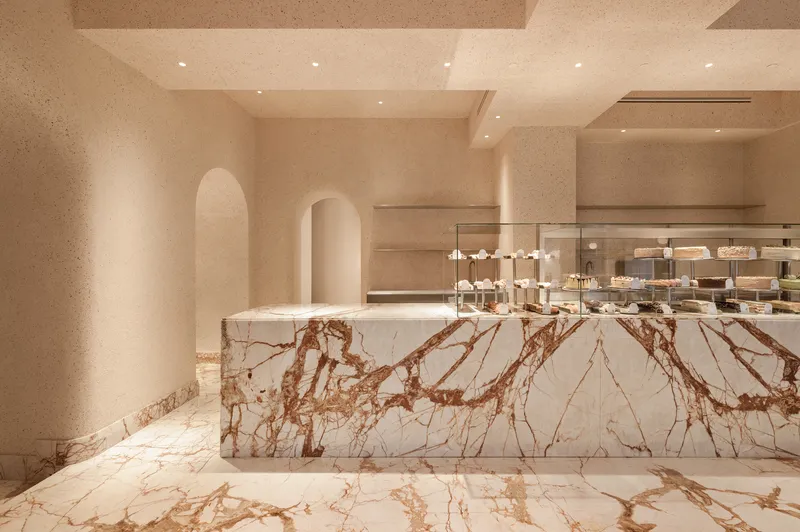
The main goal for the redesign of Cukiernia was to maintain the pastry shop’s traditional essence while incorporating innovative, sustainable materials. This delicate balance was achieved by selecting mono materials that both respect the venue's history and align with modern environmental standards.
Key Features of Sustainable Design in Cukiernia
Innovative Use of Natural Materials
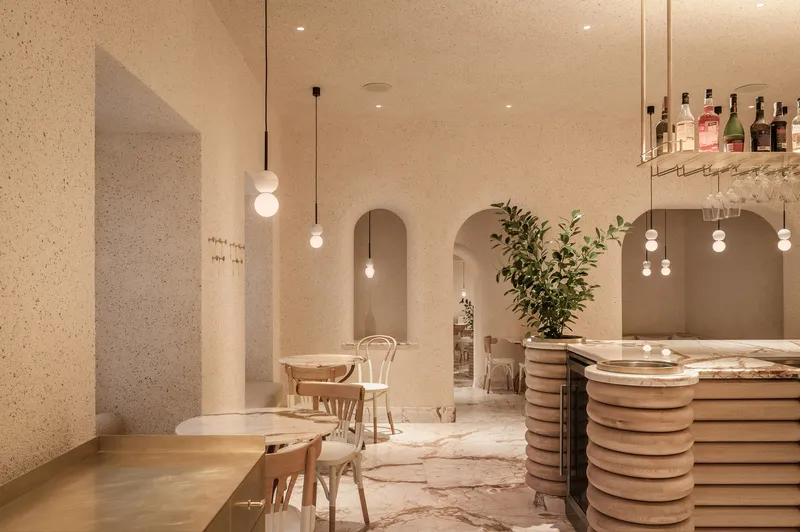
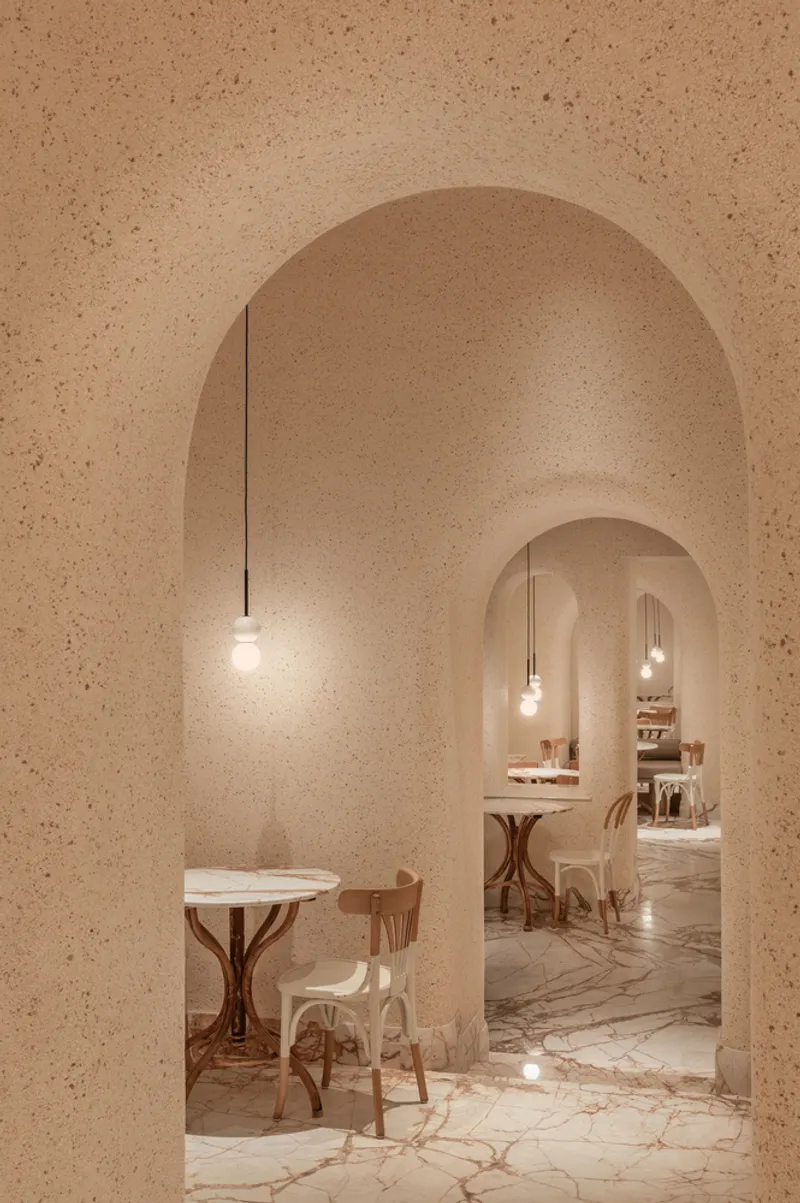
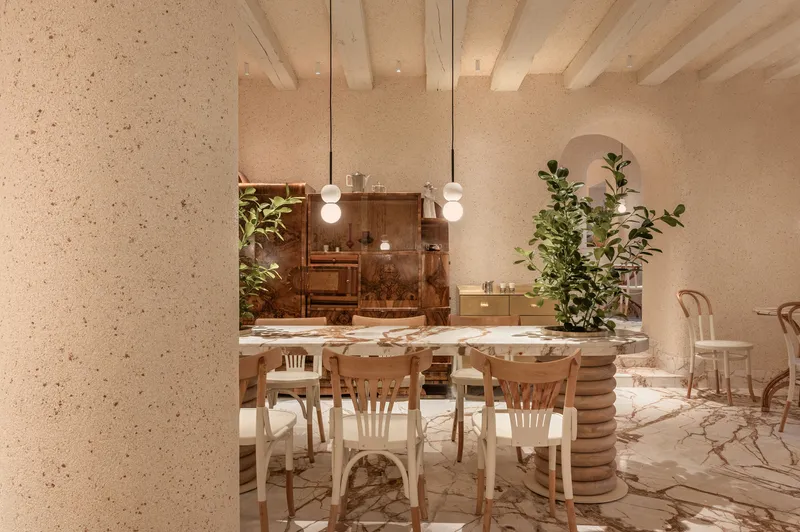
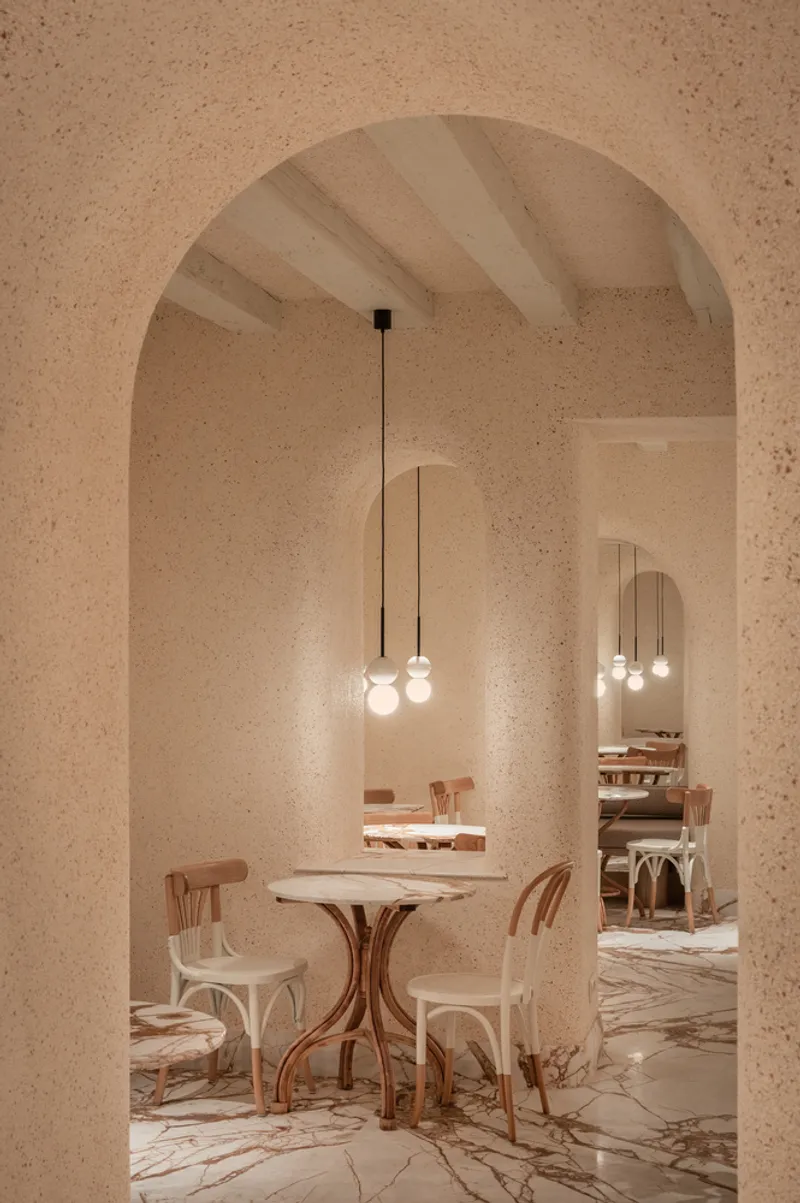
One of the standout features of Cukiernia’s redesign is the use of eggshell plaster for the walls, a unique material created specifically for this project. More than a ton of eggshells, a byproduct from a local poultry farm, were repurposed to create a sustainable wall covering, reflecting the shop’s commitment to eco-friendly practices.
Marble and Wood Integration
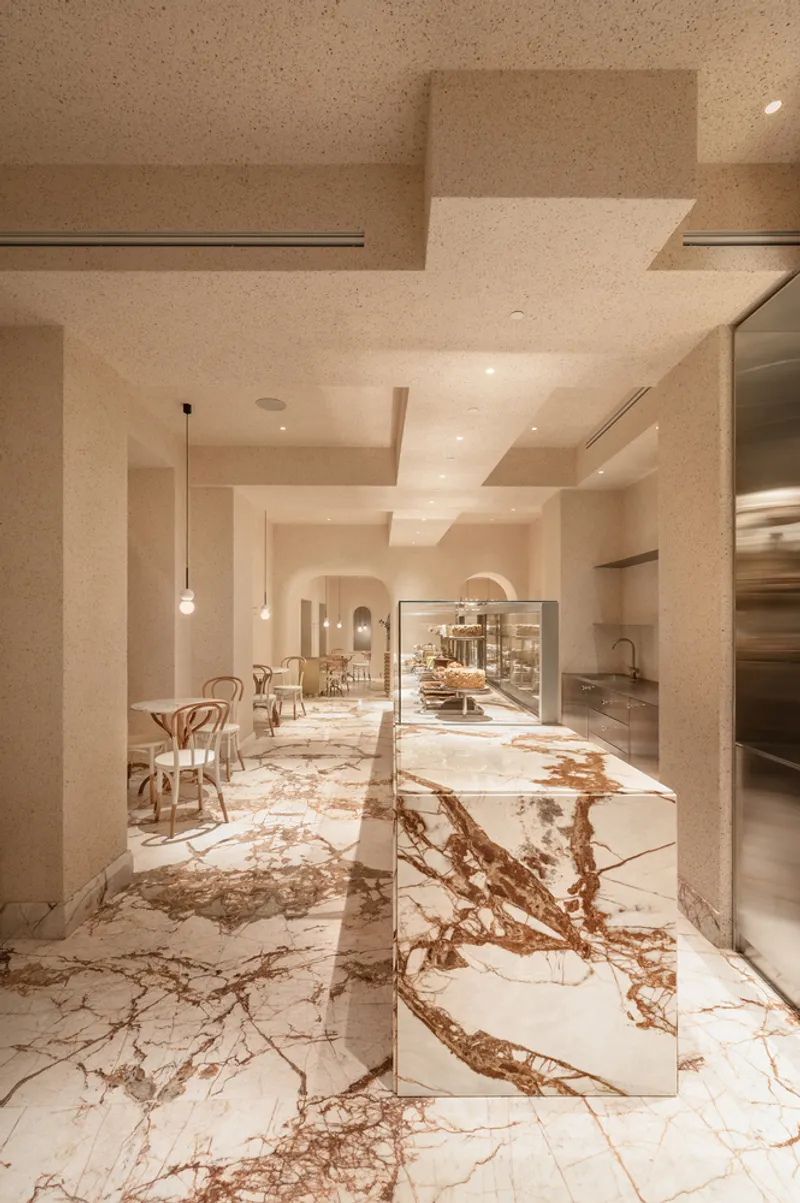
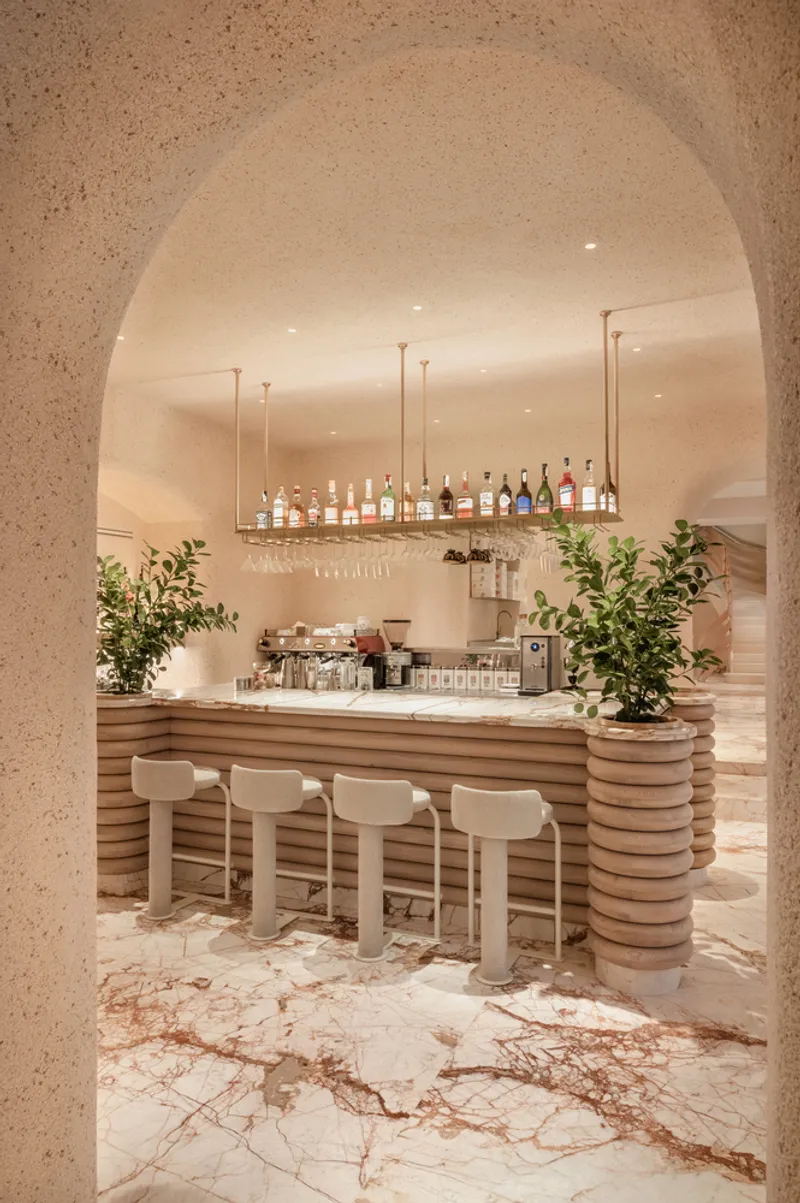
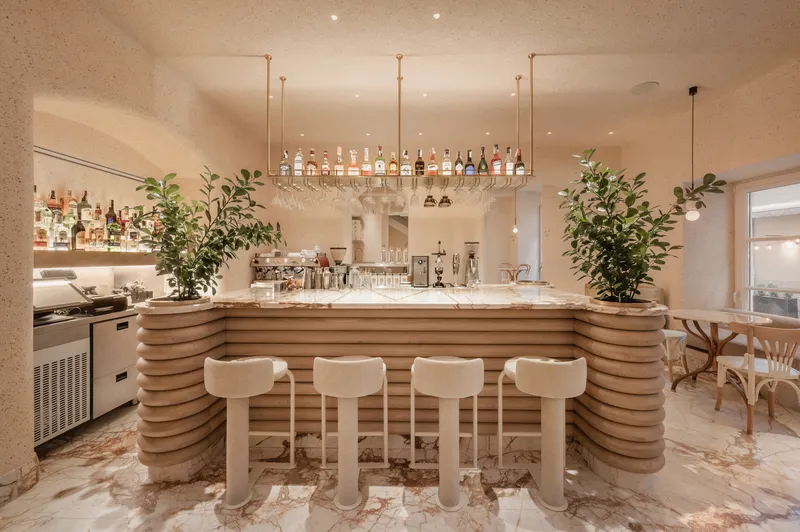
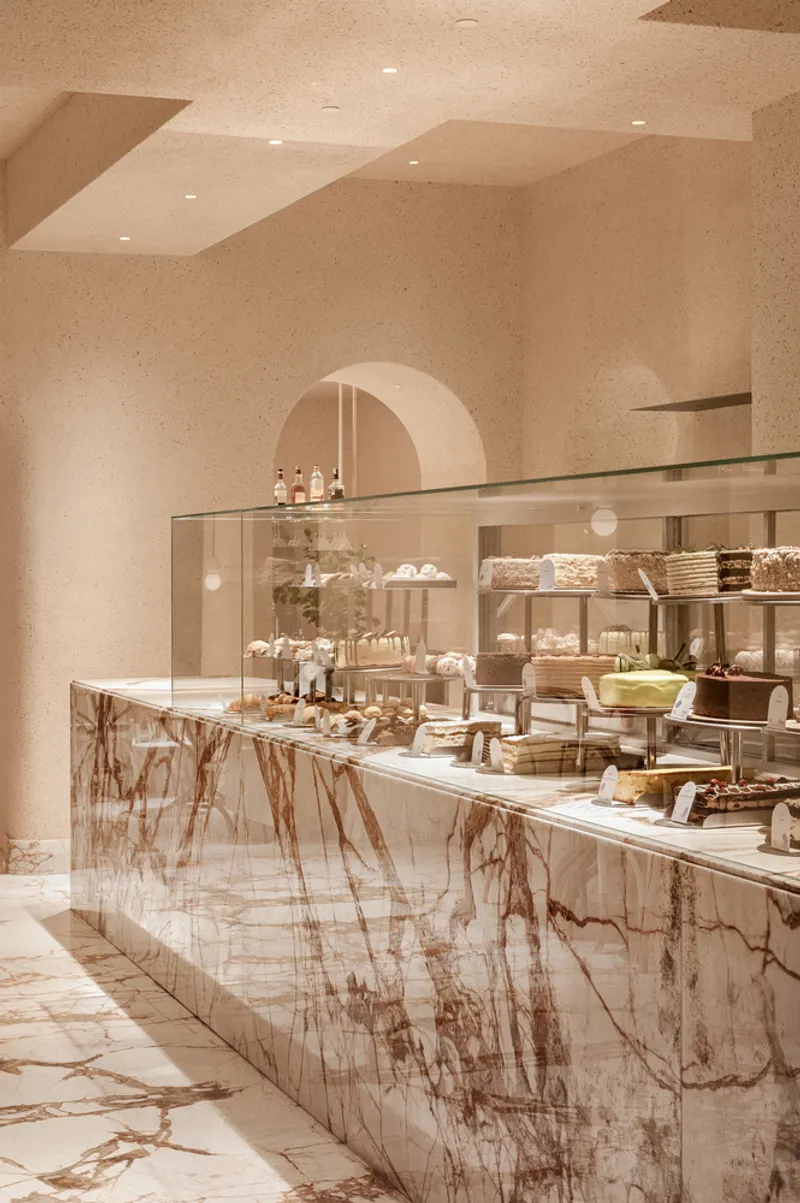
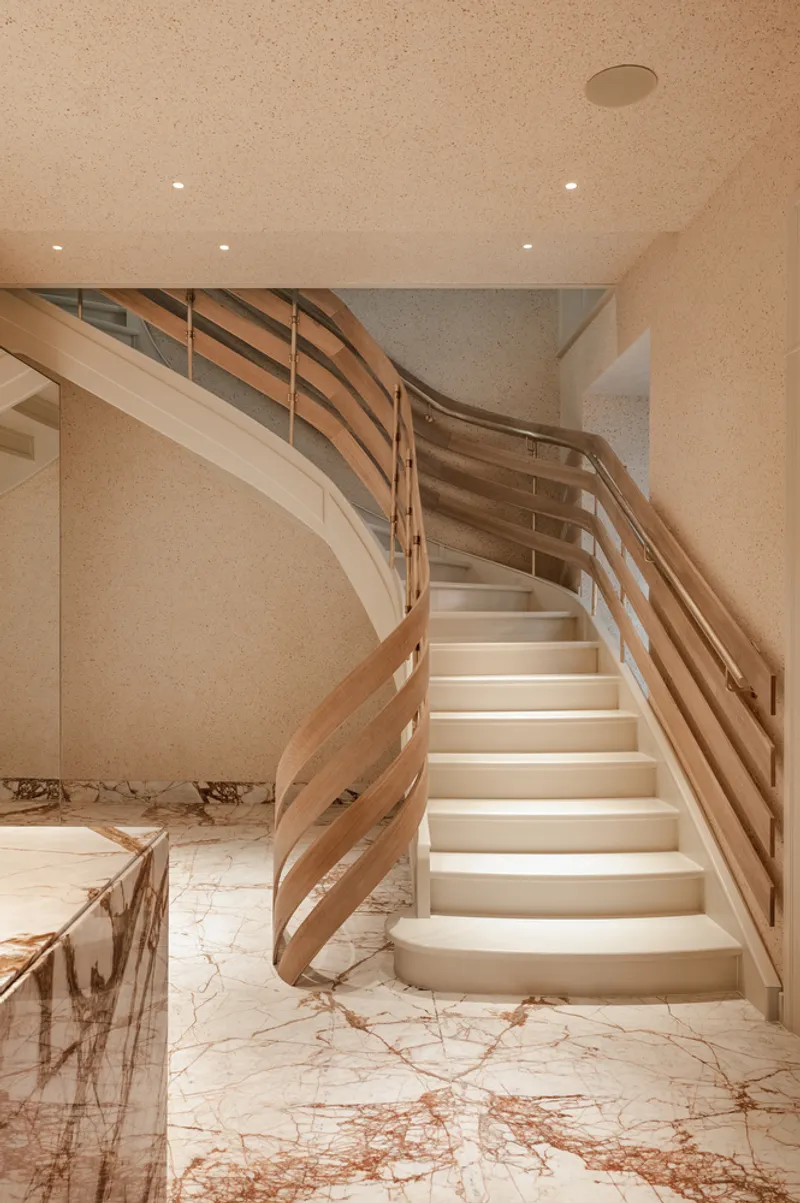
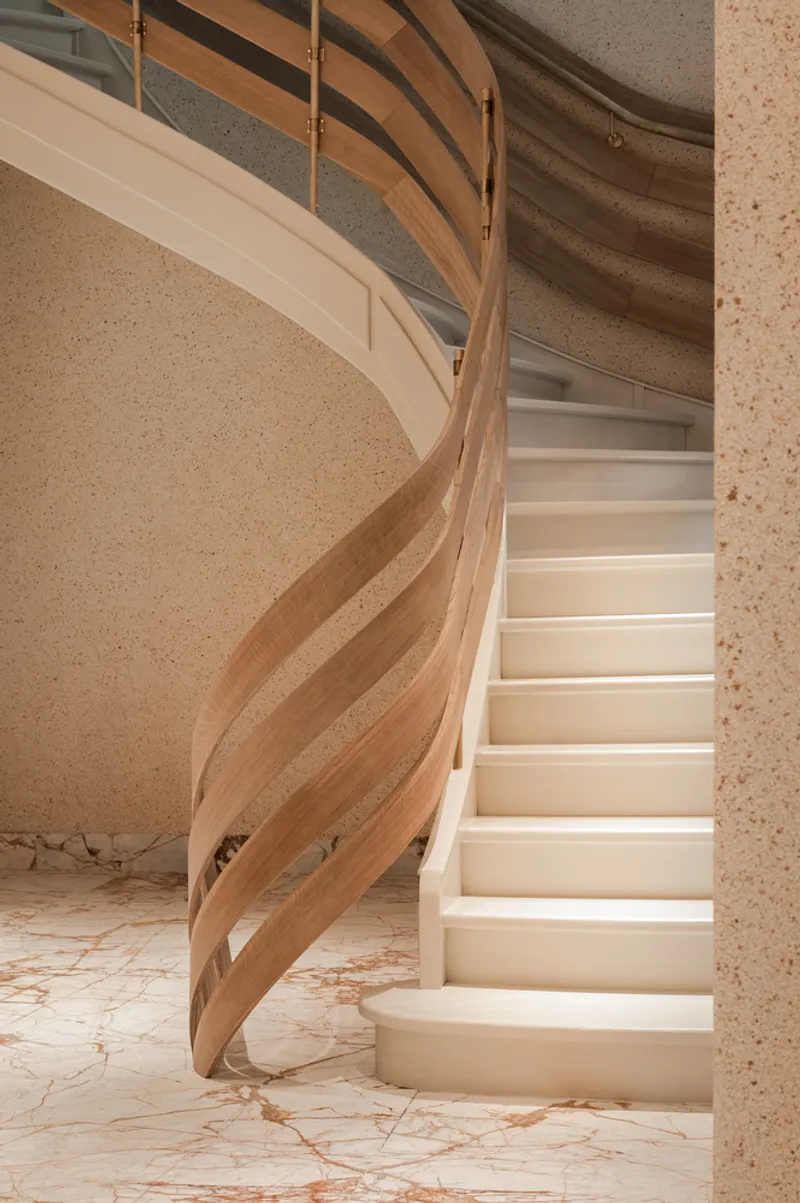
The use of Italian marble and light wood complements the eggshell plaster, adding a sense of luxury and fullness to the guest experience. The marble features caramel veins that mimic the layers of pastries sold in the shop, while the wood elements are sustainably sourced, underscoring the shop’s commitment to environmental responsibility.
Enhancing the Space with Sustainable Lighting and Furniture
Strategic Lighting Design
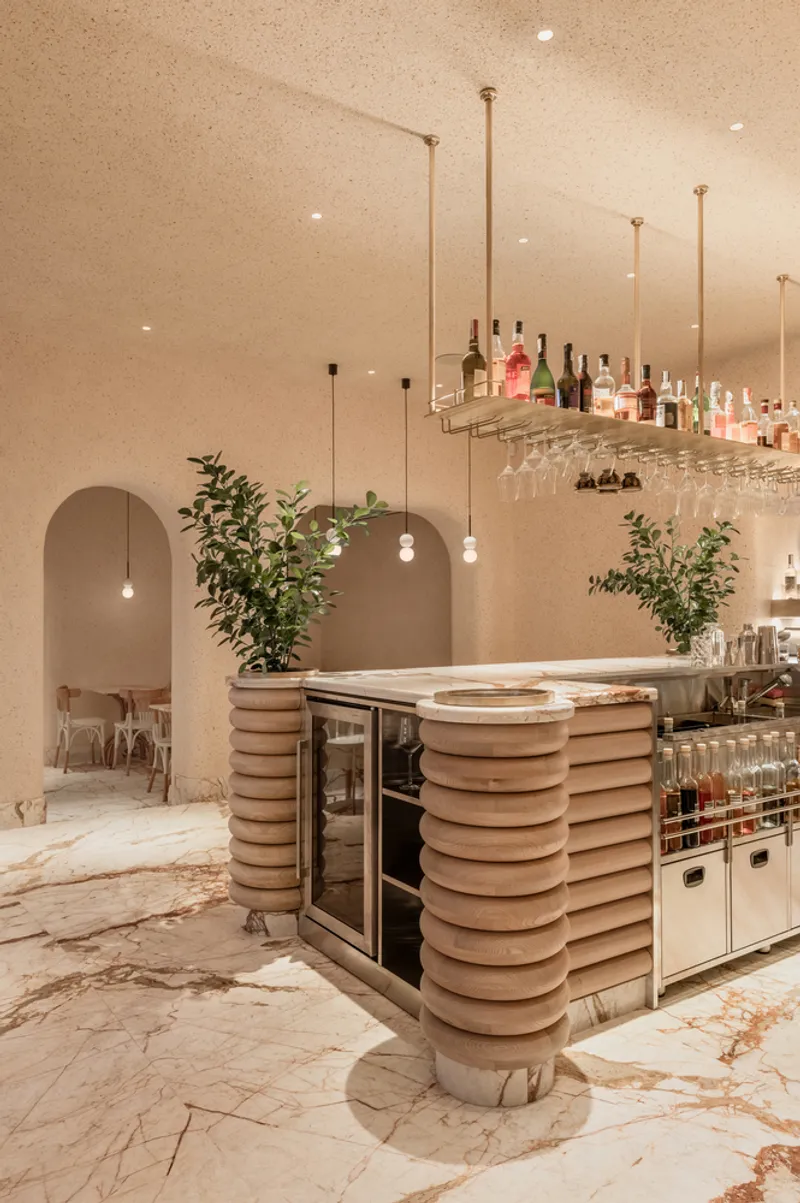
To compensate for the lack of natural daylight within the shop, YOD Group chose a light color palette and installed laconic arched niches that mimic windows, enhancing the perception of space and light. The selection of energy-efficient pendant lamps further supports the shop’s sustainable design ethos.
Restoration and Reuse of Furniture
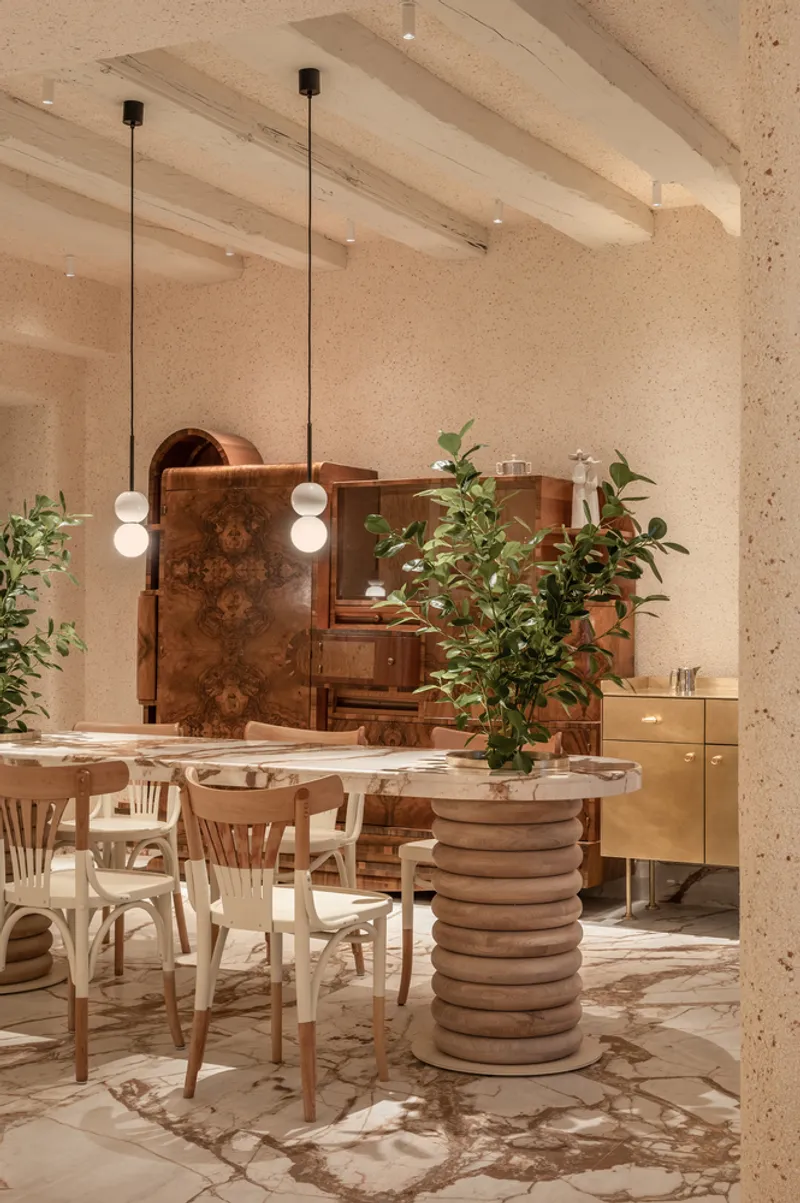
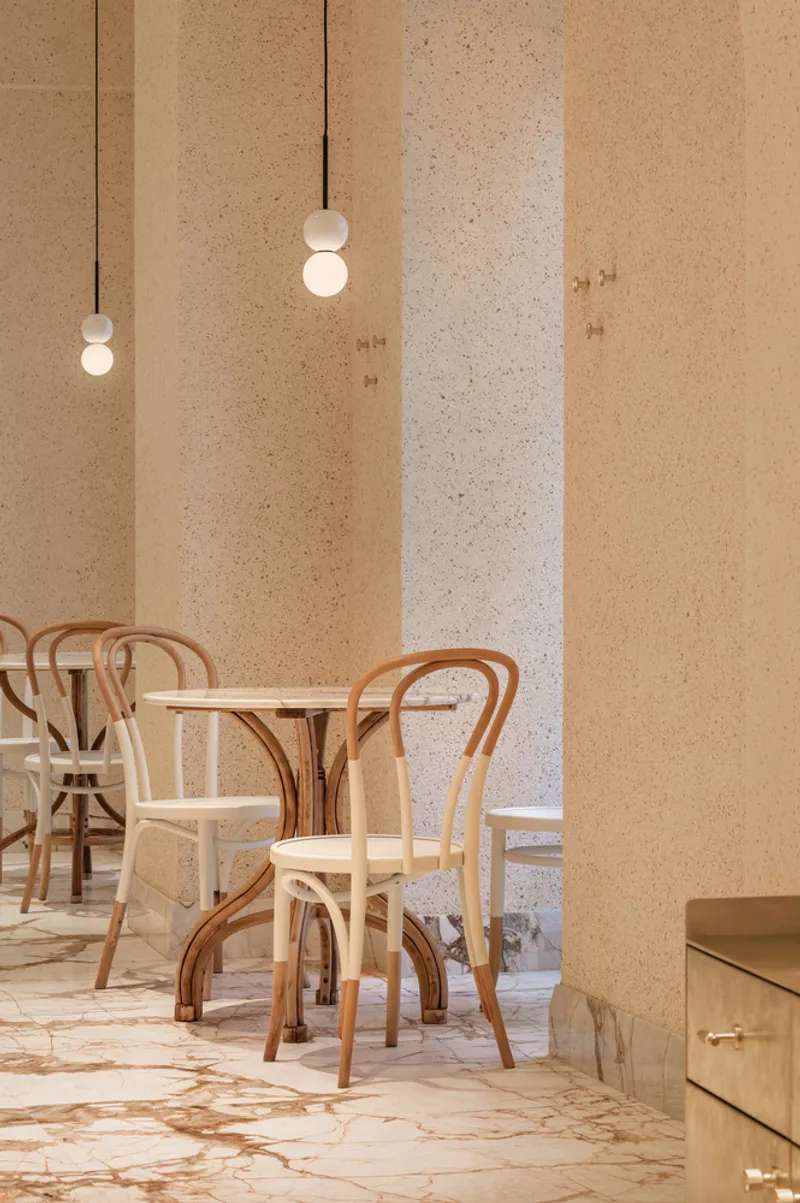
In keeping with sustainable practices, existing furniture was restored and reused. Time-tested bentwood chairs were refurbished and repainted, reducing waste and preserving the cultural heritage of the original interior. New marble tabletops were added to the wooden bases of old tables, blending tradition with contemporary design.
Community and Cultural Impact
Supporting Local Industries and Crafts
By involving local craftspeople and utilizing locally sourced materials, the renovation of Cukiernia not only supports the local economy but also reduces the carbon footprint associated with transporting materials. This approach enhances the community’s connection to the space and promotes a broader cultural appreciation for sustainability.
A Model for Sustainable Interior Design
Cukiernia Pastry Shop stands as a testament to how sustainable interior design can transform a traditional space into a modern, eco-friendly venue. Through the thoughtful use of sustainable materials and innovative design solutions, YOD Group has created a space that is both beautiful and environmentally responsible, setting a new standard for future renovations in the hospitality industry.


Popular Articles
Popular articles from the community


Little Red Riding Hood: Architectural Design as a Journey Through Fear, Light, and Storytelling
Little Red Riding Hood reimagines the fairy tale through architectural design shaped by fear, light, scale, memory, uncertainty, and choice.

Conexión: Biophilic Design Reimagines High-Rise Living in Hong Kong
Conexión reimagines high-rise living in Hong Kong through biophilic design, green facades, shared spaces, daylight, water and nature within.

Co-life: Sustainable Architecture for Age-Friendly Community Living
Co-life reimagines sustainable architecture for seniors through courtyards, rammed earth, shared gardens, and spaces designed for belonging.

The Ocean Hive: Sustainable Architecture for a Self-Sufficient Civilization at Sea
The Ocean Hive imagines sustainable architecture at sea, where modular habitats, algae, wave power and ocean waste sustain a growing colony.

Similar Reads
You might also enjoy these articles


Hodi-Mandai Geram
Project Function: Preservation and revitalization of the Intangible heritage and socio-spatial identity of the Hodi by Housing, Cultural Memory Center, Sacred Grove, landscape, local tourism economy


Olio Towers: A Mid-Rise for Performers That Fuses Housing, Rehearsal, and Stage
Located blocks from Houston's Theater District, this modular tower stacks living units around a central performance atrium.

Oasis: Modular Green Housing Carved into Dhaka's Urban Fabric
A shortlisted Plugin Housing entry reclaims unauthorized settlements in Dhaka with stepped concrete volumes, green roofs, and ventilation-driven design.

Black Hole: A Floating Megastructure for the Post-Physical Era
Emiliano Mazzarotto envisions a spherical, self-scaling arena where e-sports, digital hotels, and holographic stadiums replace traditional public space.

Explore Hospitality Building Competitions
Discover active competitions in this discipline

Challenge to reimagine the Iron Throne

Photograph architecture without architects

Illustrate the lost glory of Angkor Wat - Render Challenge

Design challenge to reuse E-waste
Comments (0)
Please login or sign up to add comments
No comments yet. Be the first to comment!