
Sustainable Office Design: A Case Study of JIC HQ by KOGAA
This article explores the JIC HQ by KOGAA, showcasing innovative sustainable office design through retrofitting in Brno, Czech Republic.


In today’s architectural landscape, the emphasis on sustainability and innovative use of space has never been more critical. A shining example of this movement is the transformation of the JIC HQ in Brno-Medlánky, Czech Republic, undertaken by the visionary Czech architecture studio KOGAA. This project not only exemplifies the principles of sustainable office design but also sets a benchmark for retrofitting existing buildings in an urban setting.
The Need for Sustainable Retrofitting
With the evolution of work models towards more collaborative and open environments, traditional office layouts have become increasingly obsolete. The JIC HQ project addresses this challenge head-on by reimagining a former laboratory space into a vibrant hub for innovation. The initiative, a collaboration between KOGAA and the South Moravian Innovation Center, showcases the potential of retrofit projects to revitalize city properties while adhering to sustainable design principles.
Design Philosophy and Implementation
Transparent and Organic Forms
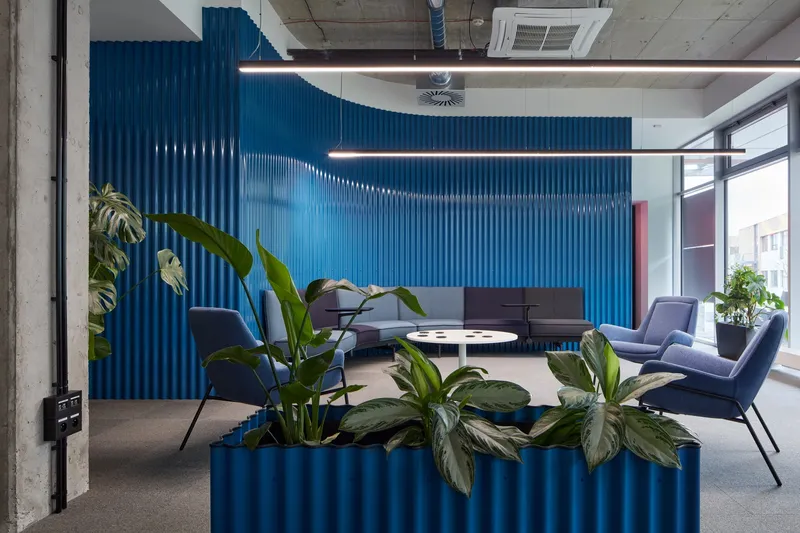
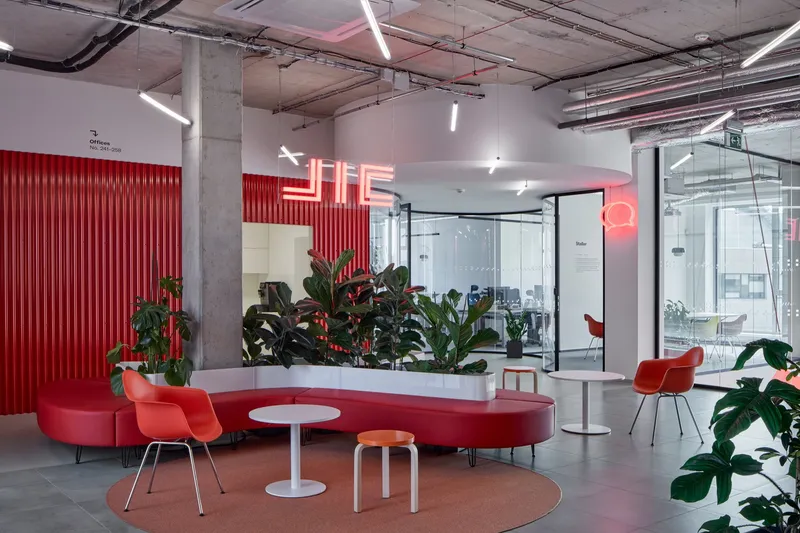
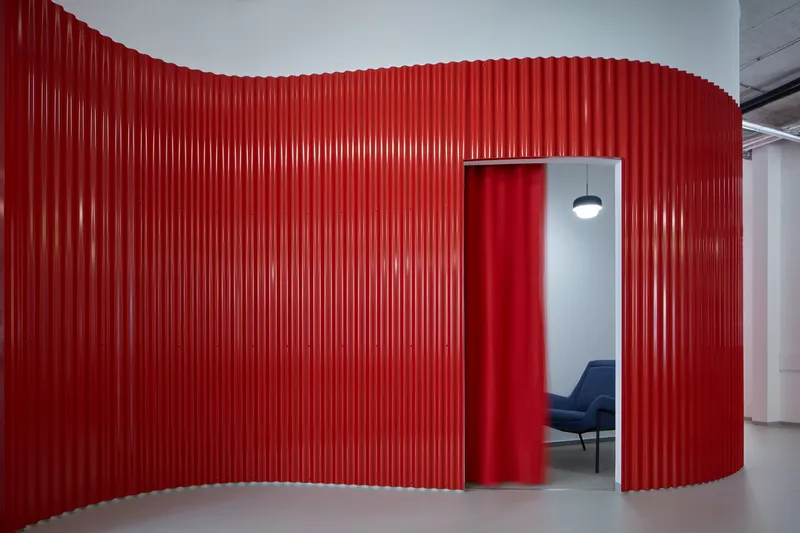
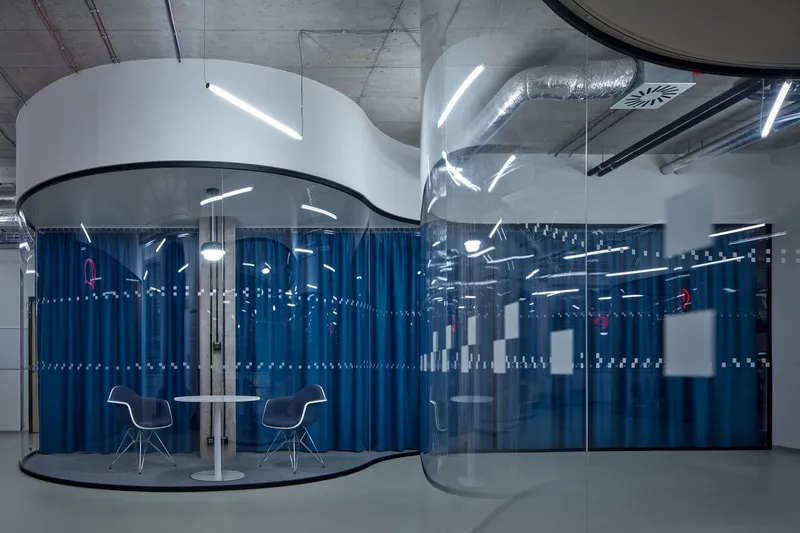
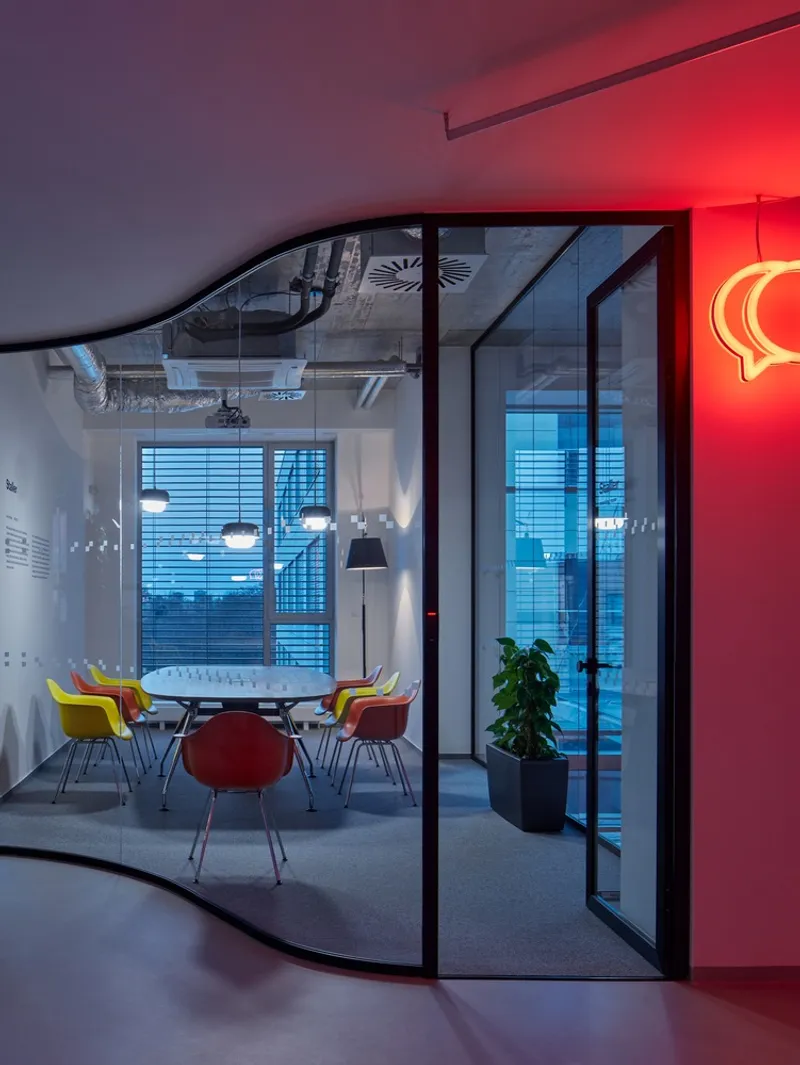
One of the standout features of the JIC HQ’s design is the replacement of fixed walls with transparent organic forms. This innovative approach not only fosters collaborative encounters but also imbues the space with a sense of openness and creativity. Meeting rooms and private workstations are accommodated within these fluid structures, facilitating both interaction and focused work.
Sustainable Material Use
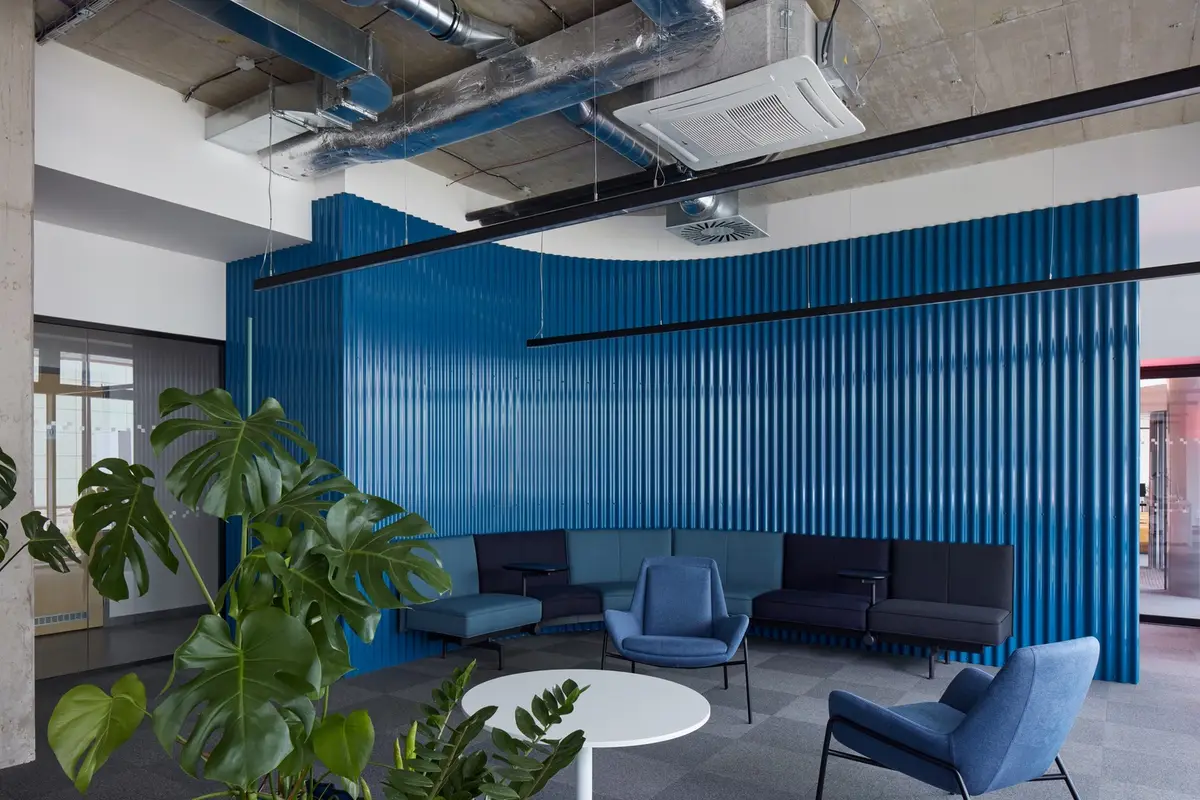
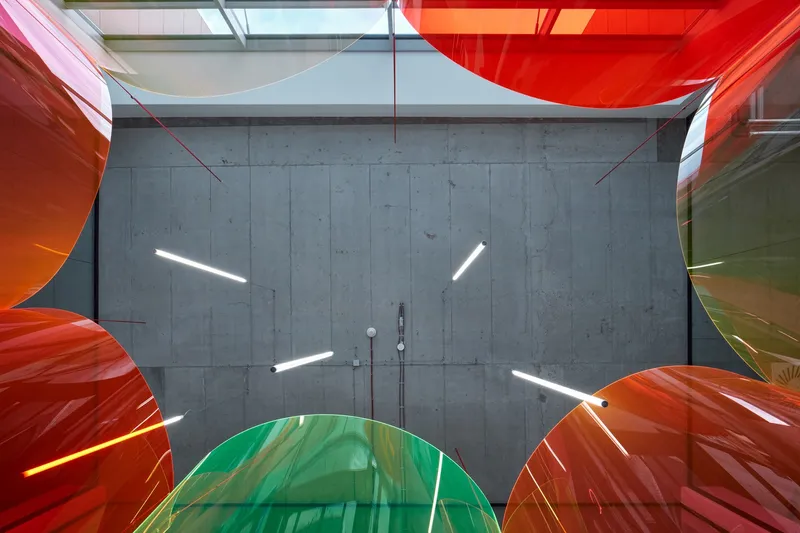
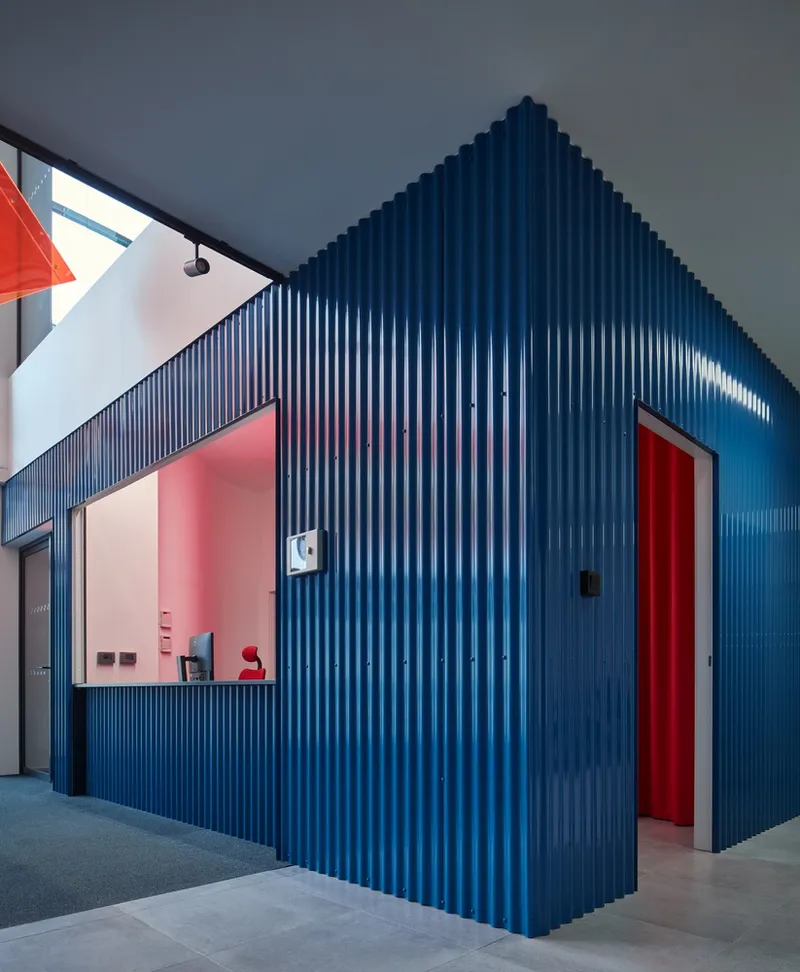
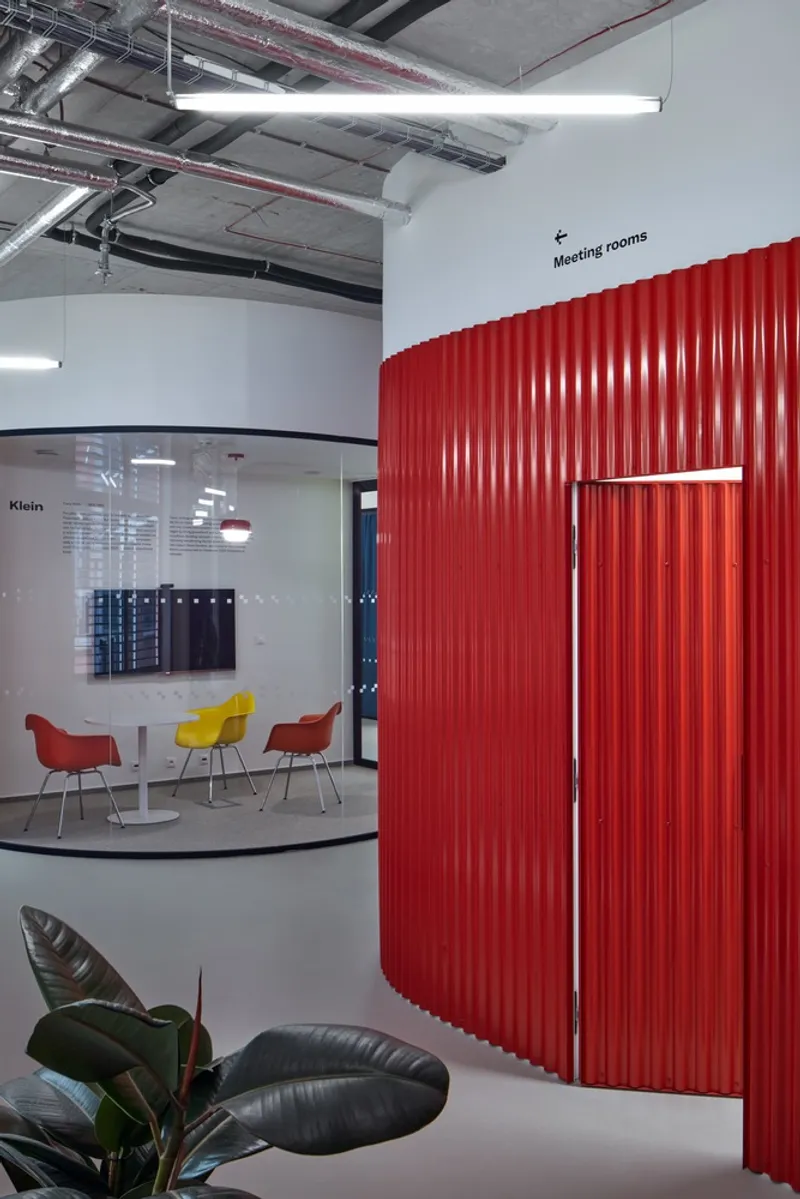
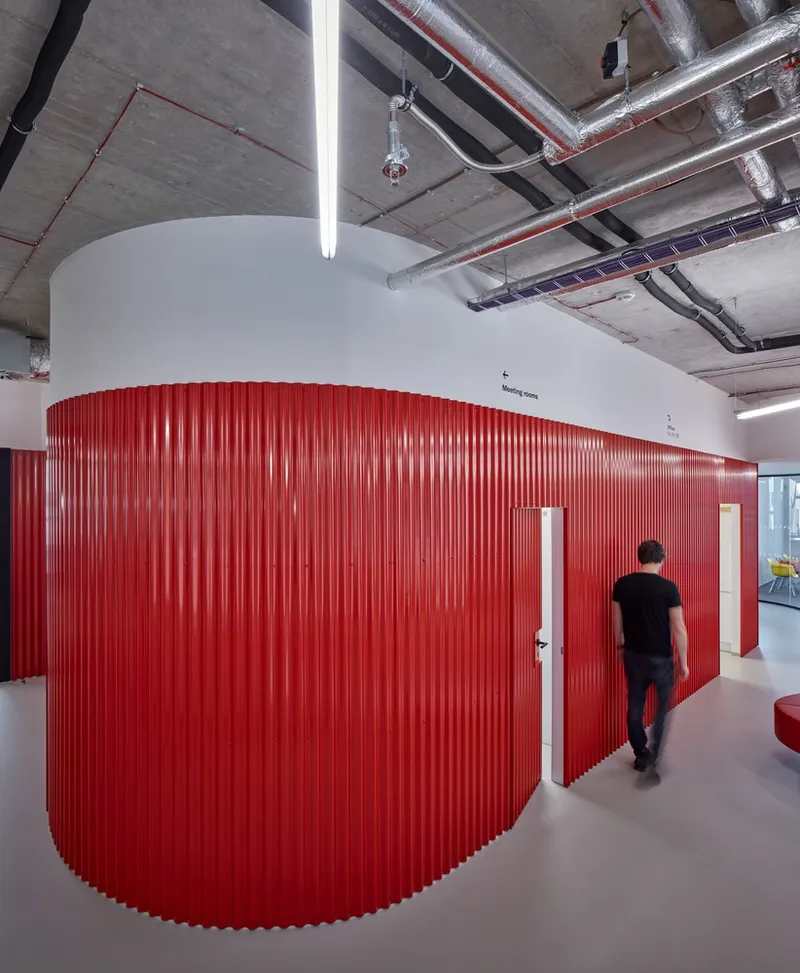
Sustainability is at the core of the JIC HQ redesign. The project team made a conscious decision to retain much of the existing furniture, lighting, and floor finishes to minimize waste. Additionally, materials such as plexiglass and corrugated powder-coated metal sheets were chosen for their flexibility and suitability for creating curved designs, contributing to the office's dynamic and organic aesthetic.
Energy Efficiency
Understanding the importance of energy efficiency, the design includes a glass partition separating the upper and lower floors to reduce heat loss. This consideration not only aligns with sustainable building practices but also enhances the comfort of the office environment.

Color Psychology in Workspace Design
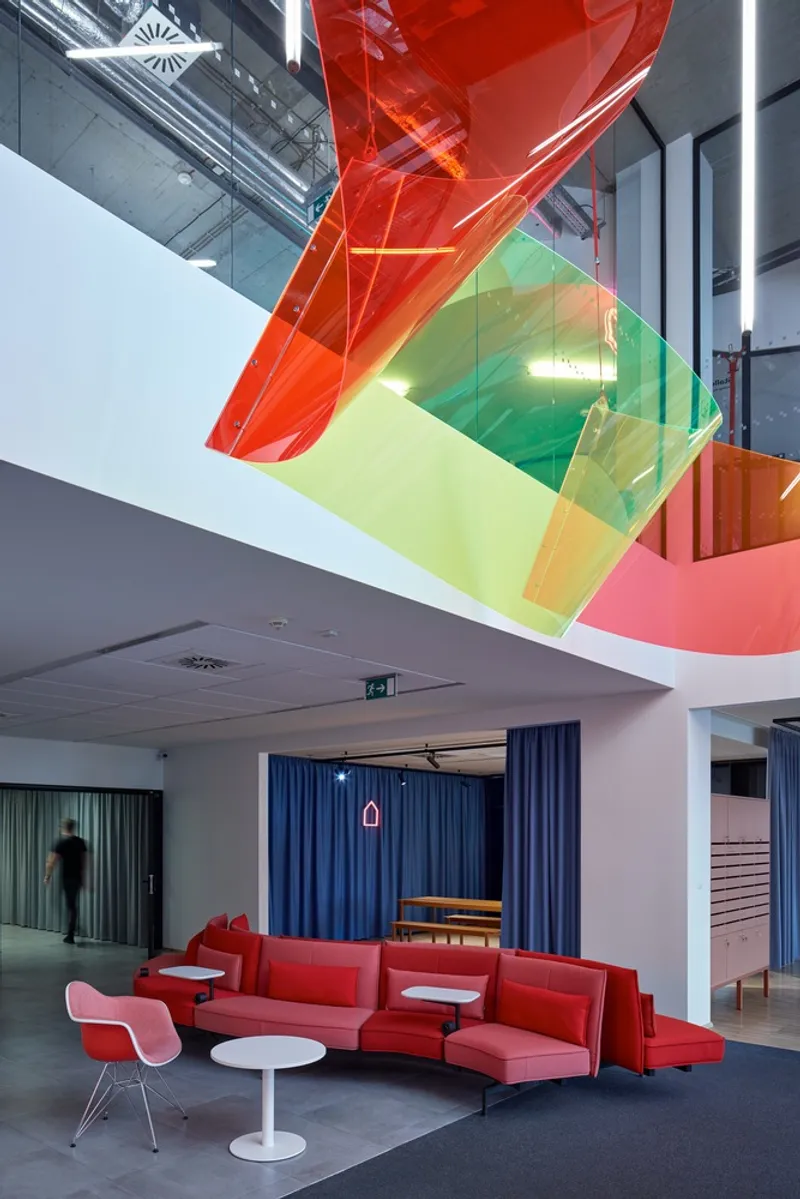
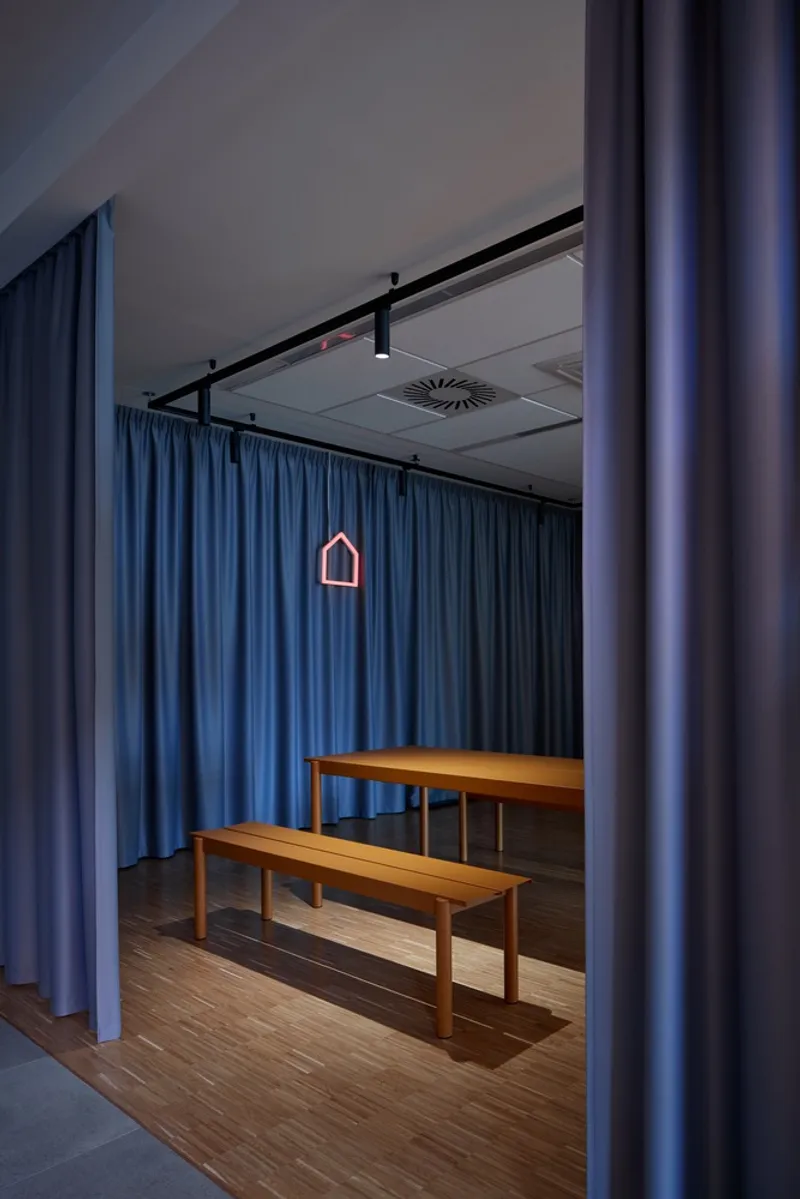
The JIC HQ interior utilizes a thoughtful color palette to delineate different workspaces according to their intended use. Active workspaces are accented with red tones to stimulate energy and creativity, while areas requiring focus and quiet are designed with cooler colors. Transitional spaces, such as the JIC dedicated floor’s glazed room, feature warm yellows and oranges, supporting the need for concentration during meetings.

The JIC HQ by KOGAA stands as a testament to the possibilities of sustainable office design. By thoughtfully retrofitting existing spaces, employing sustainable materials, and considering the psychological impact of design elements, the project not only revitalizes a previously underused building but also creates a model for future office designs. As we move towards more sustainable and innovative architectural practices, projects like the JIC HQ will undoubtedly inspire and lead the way.v
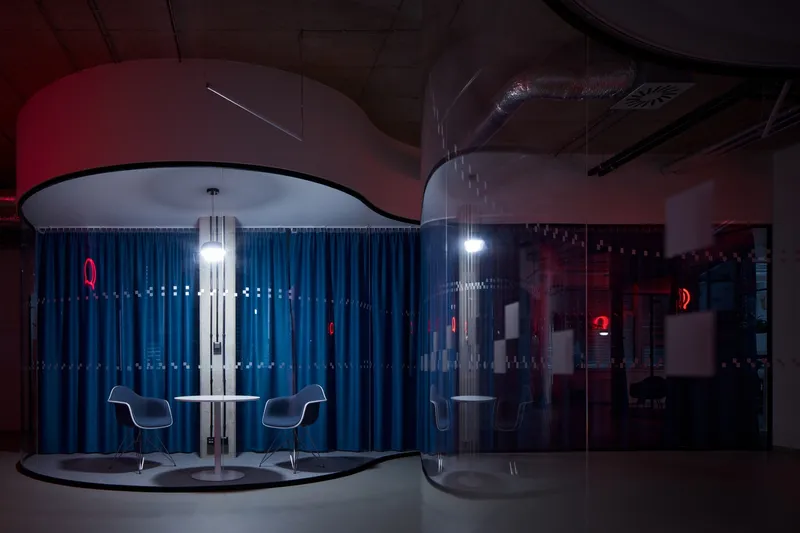
All photographs are work of BoysPlayNice


Popular Articles
Popular articles from the community


Lunar Spiral: Space Architecture Shaped by the Mathematics of the Universe
Lunar Spiral reimagines space architecture through Fibonacci geometry, lunar regolith, levitating habitats, and self-sustaining Moon living.

Hill & Cross Opera: Sculptural Opera House Architecture Shaped by Tallinn’s Landscape and Identity
Hill & Cross Opera reimagines opera house architecture in Tallinn through its sculptural hill, civic plaza, glass wave and a luminous cross.

The Musturak Paradise: Senior Living Architecture for a Connected Future in Temara, Morocco
The Musturak Paradise reimagines senior living architecture in Temara via private homes, social spaces, culture, community, and shared care.

Co-Life: Senior Housing Design That Reconnects Older Adults With the City
Co-Life reimagines senior housing design through healing gardens, shared streets, workshops, and a sustainable community across generations.

Similar Reads
You might also enjoy these articles

FAMM Arquitectura Organizes Ten Villas Around Courtyards and Jungle in Nosara, Costa Rica
El Molino pairs two elongated volumes with deep overhangs and timber louvers to build a compact coastal community five minutes from the beach.
Oscar Niemeyer's Ibirapuera Park Pavilions Define São Paulo's Cultural Identity in Concrete and Curve
A constellation of modernist volumes set within São Paulo's most important urban park, conceived for the city's 400th anniversary in 1954.
Sanjay Puri Architects Wraps a Jaipur Office Tower in Capsule-Shaped Green Buffers
A nine-level climate-responsive workplace near Jaipur Airport uses stacked planter terraces and aluminium screens to fight 40°C heat.
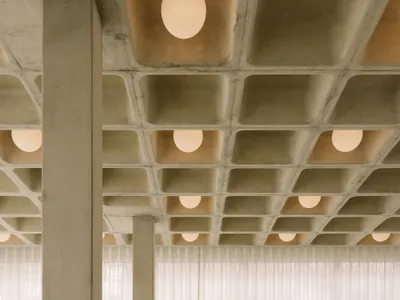
RHO Converts a Berlin Spree-Side Industrial Courtyard into Enkime's 1,000 m² Agency Headquarters
A social media agency's new home in Charlottenburg trades glossy branding for concrete waffle ceilings, glazed tile, and sheer curtains.

Explore Office Building Competitions
Discover active competitions in this discipline

Challenge to reimagine the Iron Throne

Photograph architecture without architects

Illustrate the lost glory of Angkor Wat - Render Challenge

Design challenge to reuse E-waste
Comments (0)
Please login or sign up to add comments
No comments yet. Be the first to comment!