
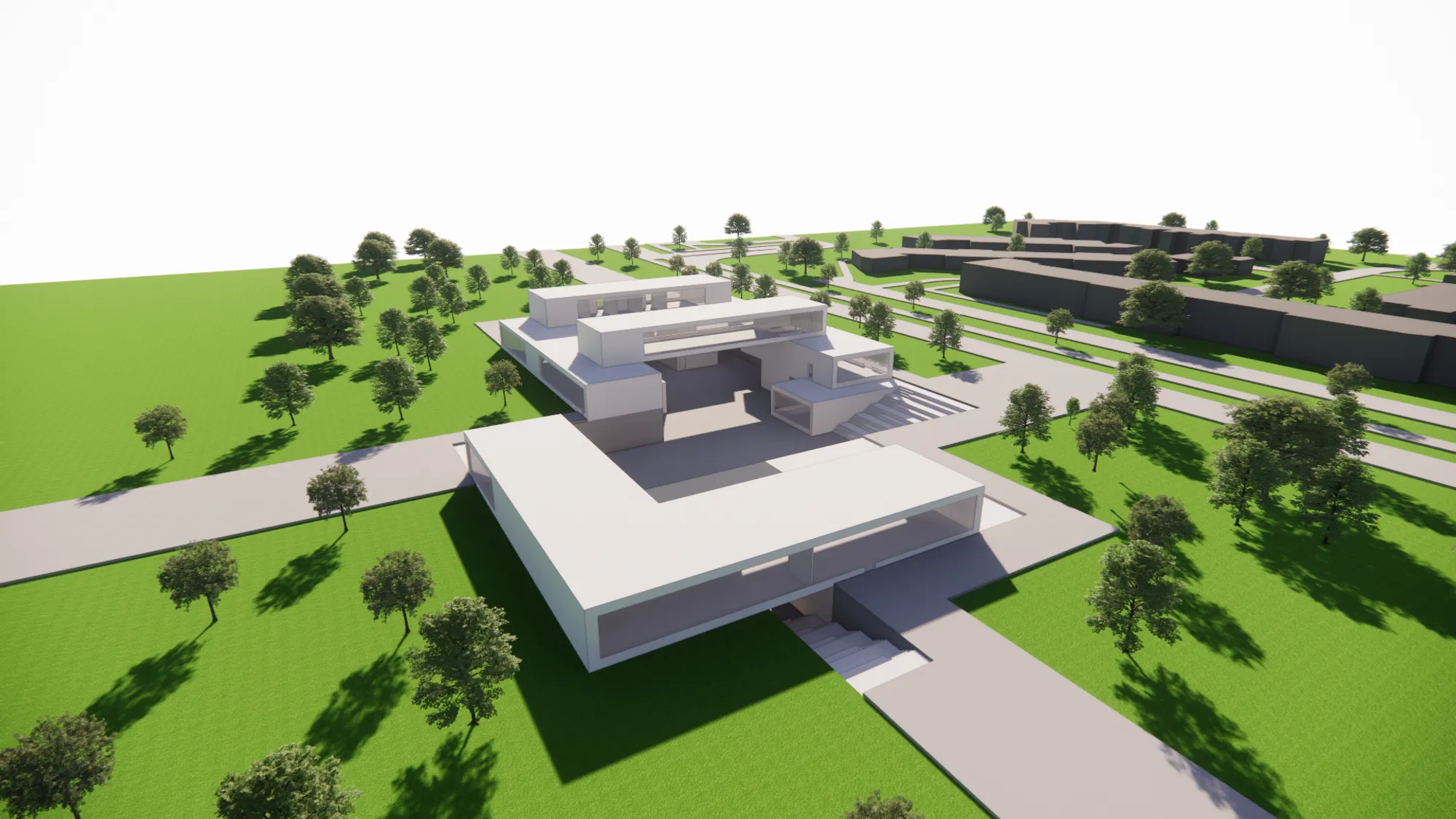
Terra-Cube
Volumes of different sizes come together to form a terrace. People can perform various activities on these terraces overlooking the forest.
The concept of the project is to be able to integrate the structure designed in the project area with the region and diversify learning spaces and learning methods by adding characteristic features to the project such as inner courtyard, building mobility, amphi stairs, and other innovative features while ensuring the integration of the project with the local environment. This will allow for a more comprehensive learning experience, as students will be able to explore different learning spaces and methods, and gain a better understanding of the local area. Furthermore, the project will also provide a platform for the community to come together and share ideas, as well as providing a space for collaboration and creativity. Ultimately, the goal of the project is to create a learning environment that is both stimulating and inspiring, and that will help to foster a sense of community and collaboration.
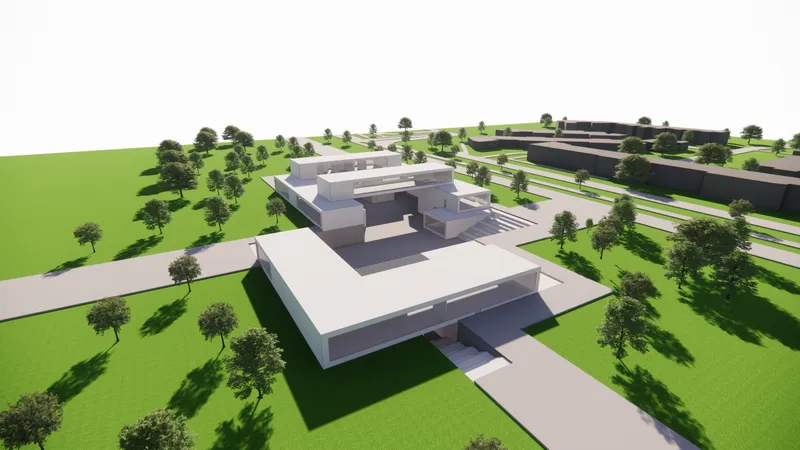
Terra-cube is a new formation that integrates with the roads around it and provides social and educational spaces to the city. In this formation, volumes of different sizes come together to form a terrace. People can perform various activities on these terraces overlooking the forest, which can be used in different periods according to their needs. Examples include setting up a booth at the book fair, creating seating areas where people can rest in the summer, setting up small stage for shows and conservations.

While the Terra-cube formation provides opportunities for various social activities outside, there are learning and information learning spaces seperated according to various learning methods indoors. Books, which are traditional method of obtaining information, provide many information sources such as e-books and computers as technological information sources. Since another way of learning information is to be in contact with people. It provides places such as book museum, hologram cinema, workshop classes, exhibition areas that provide both educational and social spaces for people.
In order to connect the universities and education centers around the site with project area, the road axis is created that intersects with existing roads. After that, a courtyard is created by widening the intersection of the road axis. In order to limit the relationship of the courtyard with roads, the courtyard is drawn to the -4.00 level. Amphi stairs are added in the form of extensions of road axes for courtyard and road circulation. When the basement masses are placed, other masses added on top of each other are pulled back and forth to provide mobility in the masses. With this mobility, the formation of circulation between terrace and masses is ensured.
Project provide us some characteristics features interior and exterior places.
In the exterior, the courtyard which is lowered to -4.00, and the road extensions are combined with amphi stairs to provide continuity in circulation and spaces where people can spend their time in the open air.
Terraces connecting the masses, the extension of the upper floor in certain parts of the masses provides ease of access on the upper floor and acts as a canopy for the lower floors.
In the interior, thanks to the indoor trees planted in the open belows, it has been ensured that green spaces are created in the interiors where people can spend time and enjoy the beauty of nature. These trees not only provide a pleasant atmosphere, but also help to purify the air and reduce the amount of dust and other pollutants in the air. Furthermore, these trees also help to reduce noise levels, making the environment more peaceful and tranquil. These trees in the interior of the building have been a great addition to the overall atmosphere and have helped to create a more pleasant and comfortable environment for everyone.

If needed, the project can evolve over time by adding new masses and adapt to changing learning methods. In addition, terra-cube formation can be implemented elsewhere, similar to the design program here, by providing mass mobility and terraces. The new terra-cube formed with these process has similar features to other formations, but has a unique design that can be used to create a variety of shapes and sizes. With the help of this design, the possibilities are endless, and the project can be adapted to fit any environment.


Popular Articles
Popular articles from the community


Play: Fragments of Their World
Familiar architecture becomes modular playground design, creating safe spaces where displaced children can learn, connect, imagine and play.

Co-life: Sustainable Architecture for Age-Friendly Community Living
Co-life reimagines sustainable architecture for seniors through courtyards, rammed earth, shared gardens, and spaces designed for belonging.

Lunar Spiral: Space Architecture Shaped by the Mathematics of the Universe
Lunar Spiral reimagines space architecture through Fibonacci geometry, lunar regolith, levitating habitats, and self-sustaining Moon living.

Co-Life: Senior Housing Design That Reconnects Older Adults With the City
Co-Life reimagines senior housing design through healing gardens, shared streets, workshops, and a sustainable community across generations.


Similar Reads
You might also enjoy these articles

Day and Night Park: A Time-Based Urban Newsstand in Beijing
A temporary urban newsstand in Beijing blending travel, light, and reading through poetic colors, compact form, and community-focused design.

Modernist Patio Renovation in El Masnou, Barcelona by Oliver Segura Arquitectura + Cebrià Arquitectura
Modernist patio renovation blending tradition and innovation with a movable pool, leveled floors, and Catalan materials in El Masnou.

Alto Residencial Coop: Cooperative Housing Development in Santiago de Compostela by Carbajo Barrios Arquitectos
A linear cooperative housing complex blending white volumes and perforated metal façades, enhancing community living, natural light, privacy, and urban integration.
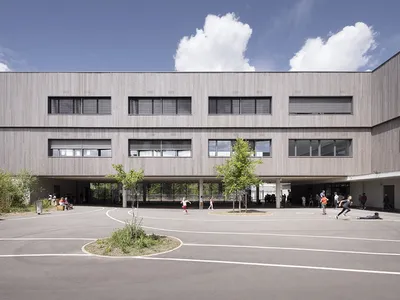
Vil Genis School by BPA ARCHITECTURE – Massy, France
Vil Genis School in Massy, France, features sustainable design, south-facing classrooms, community integration, accessible spaces, and modern educational architecture.




Comments (0)
Please login or sign up to add comments
No comments yet. Be the first to comment!