

(0,0,0) Studio Genten Office by KOKUYO: A Cutting-Edge Hub for Digital Fabrication in Minato City
Experimental digital fabrication studio by KOKUYO combining CNC technology, prototyping, and sustainable design in a creative office environment in Tokyo.


KOKUYO’s (0,0,0) Studio Genten Office, located in Minato City, Tokyo, represents a bold step toward the future of digital fabrication, workspace innovation, and sustainable design. Completed in 2022 and spanning 145 m², this experimental office space is situated within THE CAMPUS, KOKUYO’s own multifunctional hub. Designed to foster rapid prototyping, creativity, and local production, the studio exemplifies the intersection of design, technology, and sustainability in modern Japanese architecture.

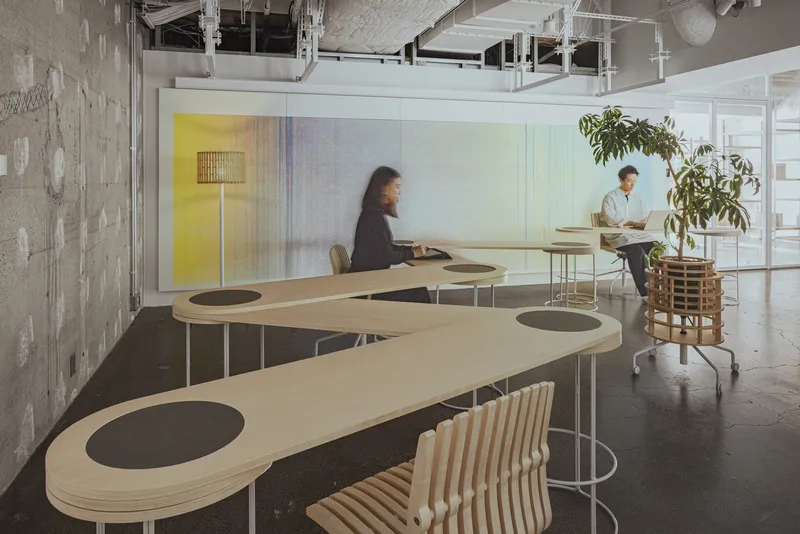
A Digital Fabrication Hub for Creative Prototyping
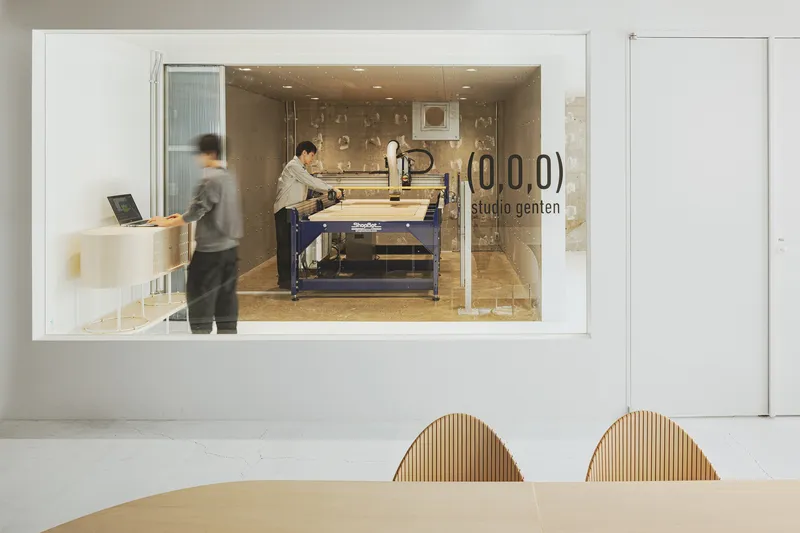
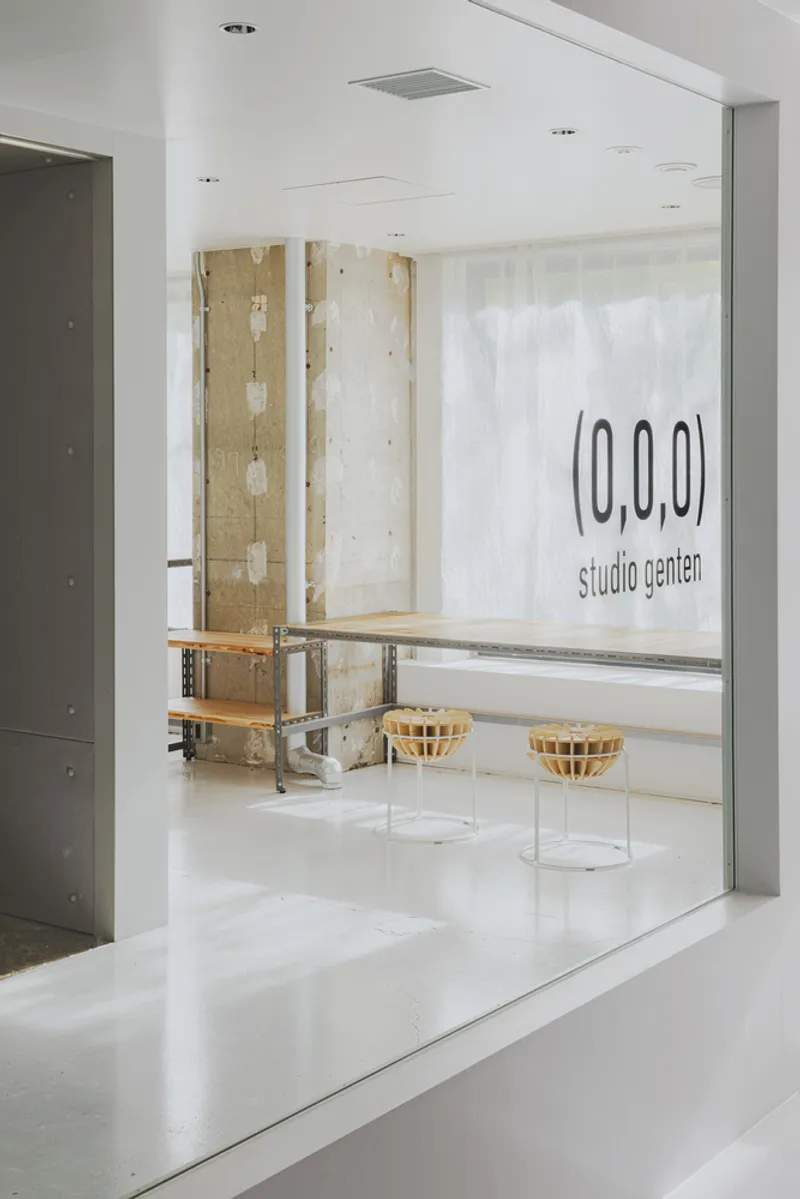
At its core, (0,0,0) is more than an office — it’s a fabrication laboratory. Developed as a platform to explore the unknowns of next-generation manufacturing, the space serves as a dynamic environment where ideas are rapidly transformed into physical objects. Central to this mission is the ShopBot, a 3-axis CNC woodworking machine that allows for real-time prototyping without the need for traditional molds.
The studio’s name, “(0,0,0)”, is derived from the X, Y, and Z coordinate system — the origin point in 3D modeling — symbolizing the starting point of creation. It reflects KOKUYO’s intention to initiate a new era of design by eliminating boundaries between makers and users, and by promoting a culture of hands-on experimentation.

Collaborative Furniture Design and Digital Craftsmanship
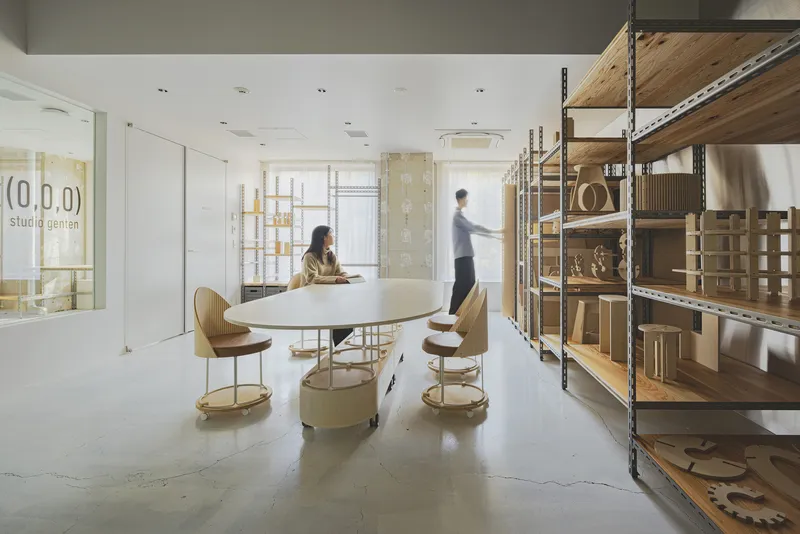
In collaboration with VUILD, a company specializing in digital fabrication, KOKUYO’s team has developed a series of experimental furniture prototypes that blend prefabricated parts with custom wooden components. These pieces reimagine traditional office furniture by embracing versatility and creative adaptation.
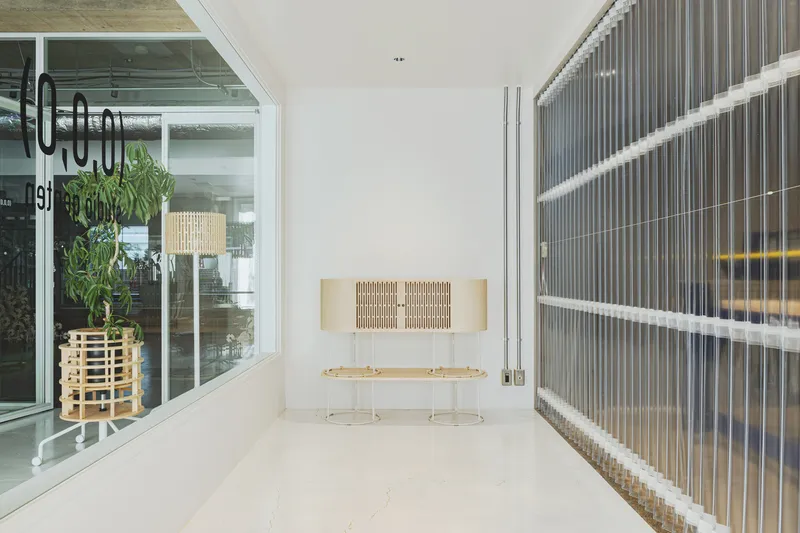
One standout example is a hybrid chair, made by attaching a CNC-cut wooden seat onto a swivel base. The same system was adapted to create a lamp and a planter — demonstrating modular thinking and multifunctional design. Other experiments include bellows-style tables made from slitted wooden boards, showcasing the precision bendingcapabilities of the ShopBot and the potential of CNC tools for aesthetic and functional innovation.

Art, Architecture, and Identity
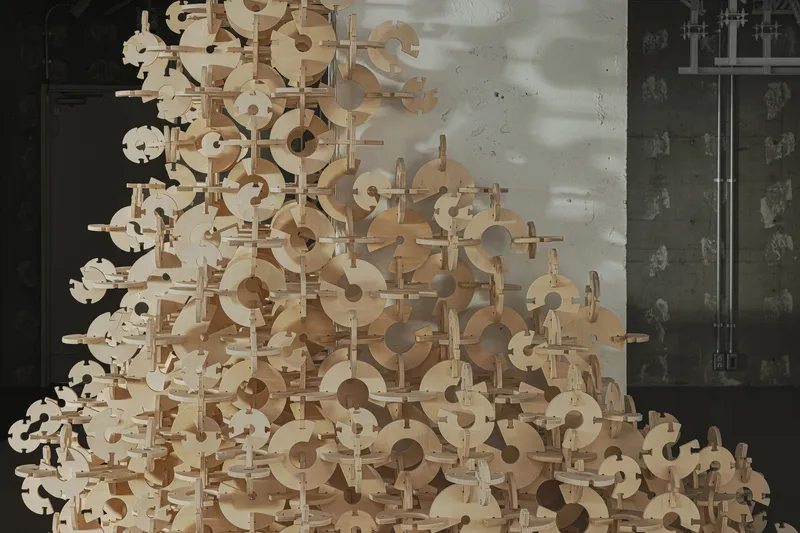
A visually striking feature of the studio is a large-scale wooden installation that wraps around a column within the space. Composed of over 1,000 CNC-cut wood pieces, the artwork incorporates the “C” from THE CAMPUS identity and evokes a parasitic structure that grows within and upon the architecture. This piece symbolizes the organic spread of digital manufacturing and the studio’s role as a catalyst for new ideas.

Promoting Sustainability and Local Production
In addition to fostering creativity, (0,0,0) aims to support environmental sustainability through local production for local consumption. By using digitally transferable design data, KOKUYO can collaborate with fabrication partners across Japan, reducing transportation emissions and supporting regional economies.
The use of thinned wood and locally sourced timber ties the project to forestry conservation efforts, helping to revitalize Japan’s forests while providing sustainable building materials. This approach aligns with broader trends in sustainable architecture, circular design, and green manufacturing.
All the photographs are works of Keishin Horikoshi / SS Inc.



Popular Articles
Popular articles from the community

EW PARK: Sustainable Architecture Reimagines the Future of Urban Parking
EW PARK reimagines city parking as a modular wooden tower combining automation, solar energy, electric mobility, and adaptable urban design.

Hill & Cross Opera: Sculptural Opera House Architecture Shaped by Tallinn’s Landscape and Identity
Hill & Cross Opera reimagines opera house architecture in Tallinn through its sculptural hill, civic plaza, glass wave and a luminous cross.

The Ocean Hive: Sustainable Architecture for a Self-Sufficient Civilization at Sea
The Ocean Hive imagines sustainable architecture at sea, where modular habitats, algae, wave power and ocean waste sustain a growing colony.

AL-JANNAH: Sustainable Architecture and Permaculture for Afghan Widows
AL-JANNAH uses sustainable architecture and permaculture to create resilient oasis of housing, learning, work and renewal for Afghan widows.


Similar Reads
You might also enjoy these articles


Hodi-Mandai Geram
Project Function: Preservation and revitalization of the Intangible heritage and socio-spatial identity of the Hodi by Housing, Cultural Memory Center, Sacred Grove, landscape, local tourism economy


Olio Towers: A Mid-Rise for Performers That Fuses Housing, Rehearsal, and Stage
Located blocks from Houston's Theater District, this modular tower stacks living units around a central performance atrium.

Oasis: Modular Green Housing Carved into Dhaka's Urban Fabric
A shortlisted Plugin Housing entry reclaims unauthorized settlements in Dhaka with stepped concrete volumes, green roofs, and ventilation-driven design.

Black Hole: A Floating Megastructure for the Post-Physical Era
Emiliano Mazzarotto envisions a spherical, self-scaling arena where e-sports, digital hotels, and holographic stadiums replace traditional public space.


Explore Tetsuo Kobori Architects Competitions
Discover active competitions in this discipline



Challenge to reimagine the Iron Throne


Photograph architecture without architects


Illustrate the lost glory of Angkor Wat - Render Challenge


Design challenge to reuse E-waste
Comments (0)
Please login or sign up to add comments
No comments yet. Be the first to comment!