

01
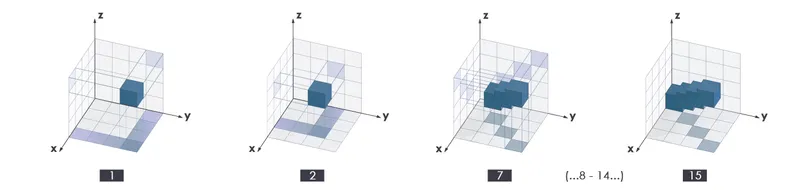
The main idea of the project is binary system. The concept is based on the structure of binary code. There are only 0 and 1: 1 - filled structure (residential), 0 - void structure (non-residential). Thanks to the use of the algorithm, the concept uses combinations of modules that form a competent structure of the complex.

INTRODUCTION
Currently, modular-block architecture is one of the most relevant and promising areas in volumetric planning, and is also an important component in the development of residential planning and environmental organization. Modular-block architecture plays an important role in the design of pre-fabricated structures, which indicates its versatility and versatility. Submitting to the necessary conditions of functional purpose and taking into account the variety of natural factors, modular blocks are able to meet the necessary requirements for quick erection, thanks to a single principle of planning and assembly on the ground.
THE PROBLEM
The practical significance of the project is determined by the increasing demand for the development of planning structures for container-type universal mobile units.
CONCEPT
This project is a project about people responding to their needs in a comfortable modern environment.
Where can you find the formula for creating an absolutely verified volume, each meter of which would be effectively used?
Similarly, a computer that uses the simplest principle of algorithms and functions in its tasks, but performs very complex processes, we decided to take the methodology of its calculations as a basis.
The basis for writing any program is binary code. There are only 0 and 1 - everything is simple.
In our case: 1 - filled structure (residential), 0 - void structure (non-residential).
With the help of a graph, we can move from a system of numbers to a three-dimensional architectural system, for this we must represent the numerical data in the form of a coordinate plane.
Answering the conditions of the competition (use 15 containers), we will present the numbers from 1 to 15 (decimal system) in the form of a binary system:
1 = 0001
...
15 = 1111
By projecting the obtained numerical data from 1 to 15 on the coordinate plane and taking into account the overlapping of the graphs on each other, we get an absolutely verified volume of living space, which we use as the basis of the complex.
Due to its compositional expressiveness, such a structure presupposes various combinations of modules that form additional volume.
GEOGRAPHICAL POSITION
Tijuana is a city in northwestern Mexico, the largest in Baja California and the westernmost in all of Latin America.
Tijuana is known for its rugged terrain, which includes canyons, hills and mesas.
The climate of Tijuana is Mediterranean, with mild winters and warm summers.
PLANNING SOLUTIONS
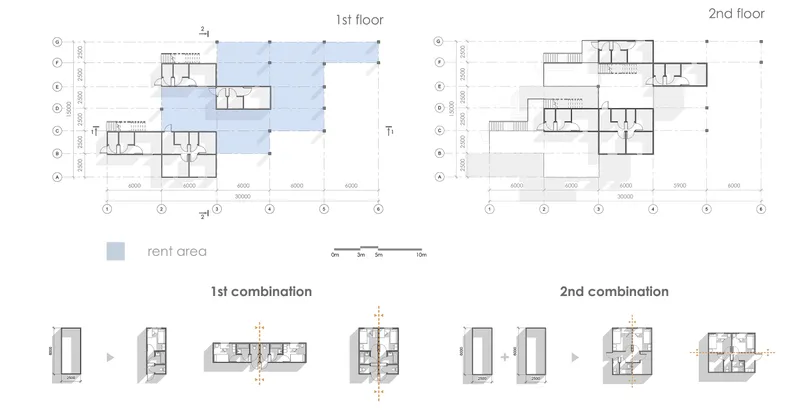
At the heart of our concept is a frame module, which, thanks to its design, opens up enormous opportunities for the formation of the entire volume and changing its structure, according to users' requests. Such "flexibility" and the ability to quickly adapt allows you to involve future users in the design process and make them players at different stages of it.
Adaptive modules, suggest 4 types of groups of residential units for different joint stay. It is practical and economical, allowing us to maintain scale and achieve a dynamic façade structure.
All residential blocks have a sufficient amount of daylight throughout the year. We have optimized the glazing of the facades, reducing the energy consumption in the building. Also, thanks to its geometry, the building itself provides shading in open areas.
With the combination of groups of modules that make up the architectural composition, smoke-free corridors and staircases are organized, which allows you to move freely throughout the space and carry out barrier-free evacuation.
PUBLIC SPACES
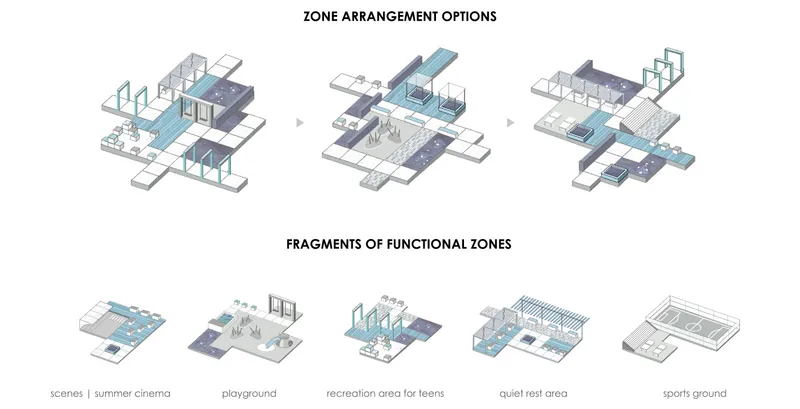
The lifestyle of potential residents has become a determining factor for us in the formation of new public spaces.
We tried to consider the entire territory as a site of "functional balance", in the areas of which we have implemented various functions. This territory will attract people with its unusual structure and variability of the plot.
We wondered how you can imagine a way of life, not only in terms of isolation, but also from the point of view of a single community? So, we tried to consider the volume as a system that offers a combination of open public spaces with green areas at different levels.
All this makes spatiality one of the defining characteristics of this complex. Despite the limited area of the site, we managed to create a complex that is dense and diverse, rich in functions, angles and meanings, where open and closed spaces form an integral volume.
In addition, it is supposed to work with local spots on the basis of modular techniques. It is necessary to introduce the maximum number of various functions, maintain simplicity, cost-effectiveness, speed of implementation of solutions and the versatility of the site.
With this tool, we have designed a compact, modular public space.
The creation of a functional layout presupposes, first of all, a rational and convenient compositional structure with the maximum saturation of functional areas.



Popular Articles
Popular articles from the community


Lunar Spiral: Space Architecture Shaped by the Mathematics of the Universe
Lunar Spiral reimagines space architecture through Fibonacci geometry, lunar regolith, levitating habitats, and self-sustaining Moon living.

Play: Fragments of Their World
Familiar architecture becomes modular playground design, creating safe spaces where displaced children can learn, connect, imagine and play.

The Earth Pod: 3D Printed Homes for Resilient Refugee Communities
The Earth Pod reimagines refugee housing through 3D printed homes made from clay, combining resilience, self-sufficiency, and rapid shelter.

The Musturak Paradise: Senior Living Architecture for a Connected Future in Temara, Morocco
The Musturak Paradise reimagines senior living architecture in Temara via private homes, social spaces, culture, community, and shared care.

Similar Reads
You might also enjoy these articles
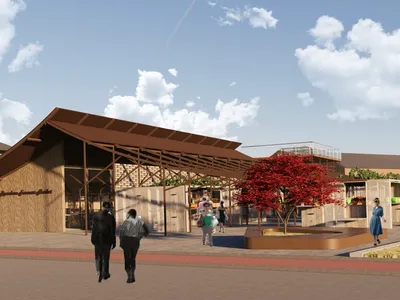
The Rhythm of Seasons
A Farmers' Market Connecting Nature and the City
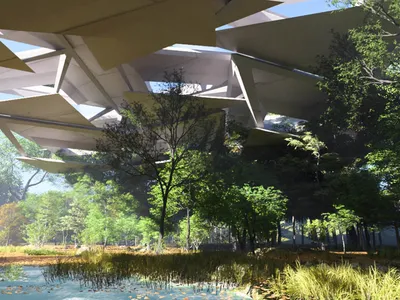

More Than a Building-Designing a Living System
More Than a Building-Designing a Living System
Base Beyond
DESERT COMPOUND ARID: TOURISM OF ABSENCE AND ABUNDANCE





Comments (0)
Please login or sign up to add comments
No comments yet. Be the first to comment!