
1110 Office for Architecture Rescues a Century-Old Wooden House in Nagano from Demolition
A 101-square-meter renovation on the outskirts of Ueda proves that traditional Japanese carpentry deserves a second century of life.


The story of this house begins with a near miss. When the clients bought a traditional wooden structure on the outskirts of Ueda in Nagano Prefecture, they intended to flatten it and start over. It looked tired, unremarkable, the kind of property that invites a wrecking ball. But 1110 Office for Architecture looked closer. Date markings on the structural timbers told a different story: this was a house approaching its hundredth birthday, built with the kind of joinery and craftsmanship that no reasonable budget could reproduce today. Demolition became renovation, and a weekend retreat became a project about time itself.
What makes the 101 Years House worth studying is not its modesty (at just 101 square meters, it is genuinely small) but its argument. Working with local shrine carpenters, the architects stripped back later additions, reduced the footprint, opened strategic views, and introduced a new atrium to flood the interior with daylight. The resulting renovation, completed in 2021, won the 2022 Nagano Prefecture Architectural Award in the preservation category and a 2023 Prize of Excellence from the Japanese Association of House Renovation. The house was built to last a century. The bet now is that it can last two.
Timber as Memory
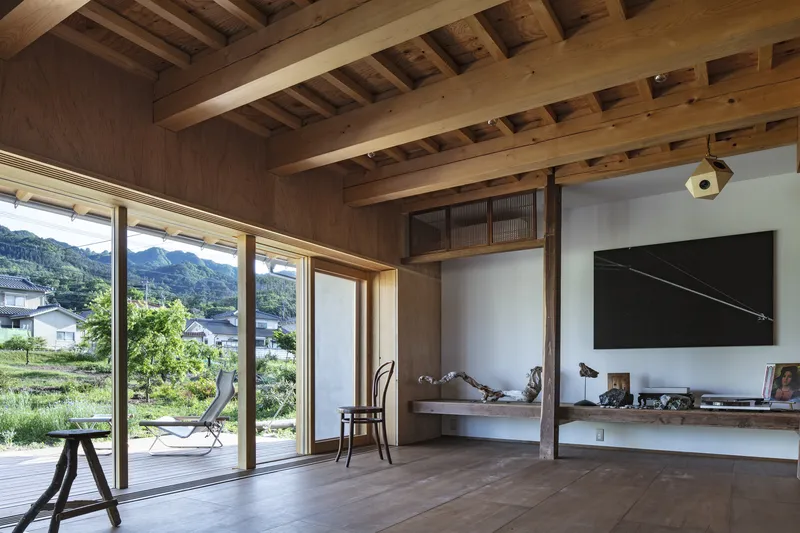
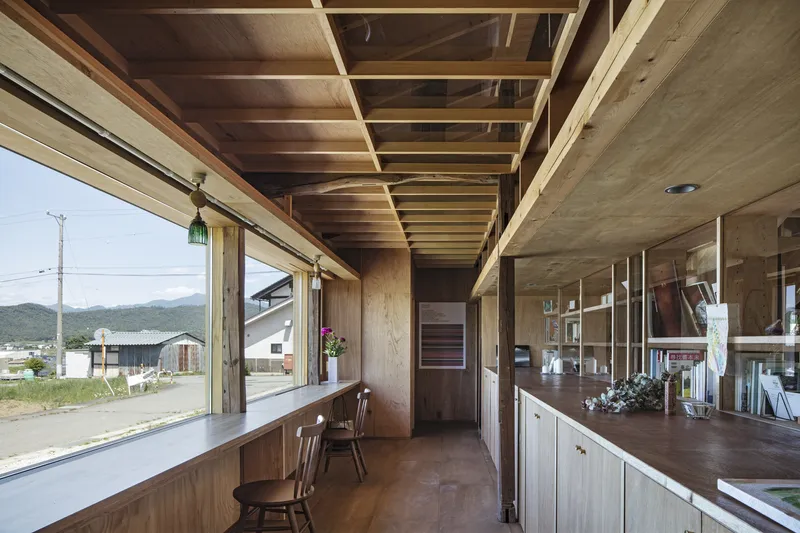
The exposed timber frame is not a decorative choice. It is the entire structural logic of the house, left visible as both an honest expression of construction and a record of nearly a hundred years of weathering, patching, and care. Beams and joists carry the marks of their original carpenters, and 1110 Office chose to celebrate rather than conceal them. In the study on the north side, these timbers frame views of open fields and distant mountain ranges through sliding glass doors. The palette is spare: dark wood, white walls, and the landscape beyond.
On the south side, the living area opens through full-height glazing to a garden and wooden deck. The relationship between old structure and new opening is precise. By reducing load-bearing walls and increasing the size of apertures, the architects turned what was once a relatively closed traditional plan into something porous and light-filled, all without undermining the integrity of the century-old frame.
A Central Wall That Organizes Everything
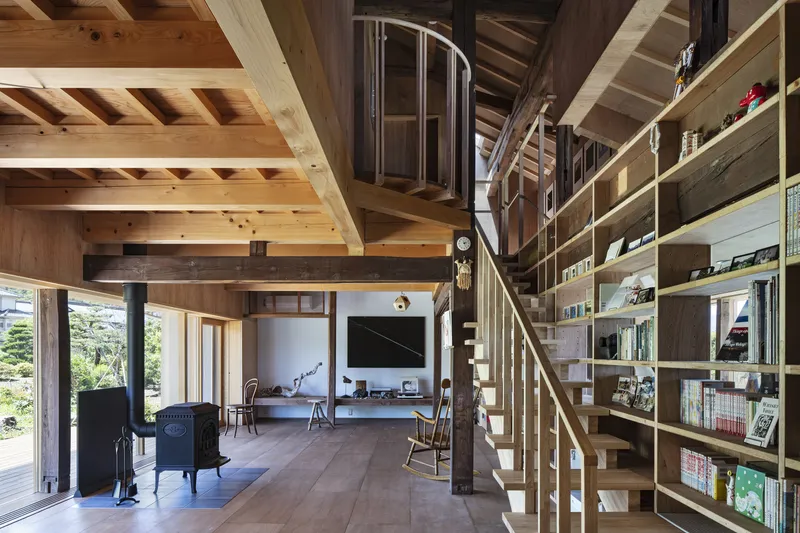
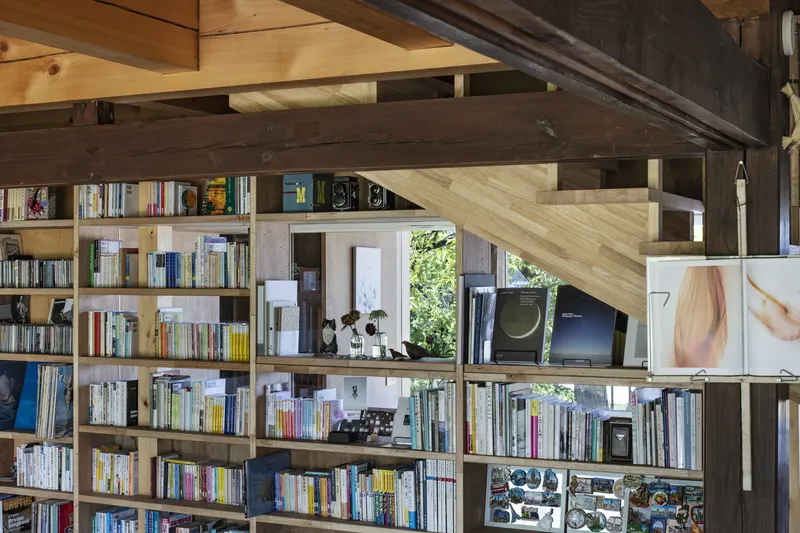
The spatial trick at the heart of the renovation is a single north-south partition that acts as spine, staircase enclosure, and floor-to-ceiling bookshelf all at once. This wall divides the ground floor into its two primary zones: the mountain-facing study to the north and the garden-facing living and dining rooms to the south. It is a piece of furniture at the scale of architecture, and it does more organizational work than any corridor could.
The bookshelves that line this central wall run from floor to pitched ceiling, integrating diagonal bracing into their geometry. A spiral staircase threads upward beside them. The effect is both practical and theatrical: from the living room, the double-height volume reads as a small library, while from the upper landing, it becomes a vertical light well connecting every level of the house.
Light Engineering on a Budget
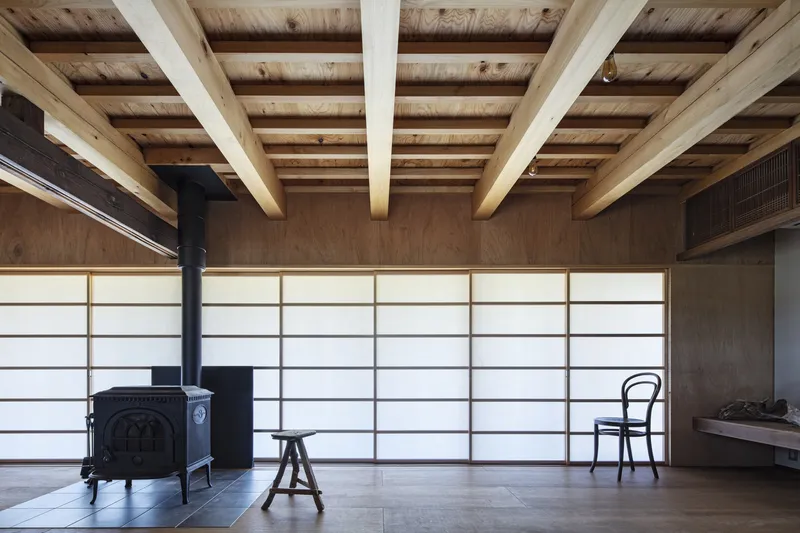
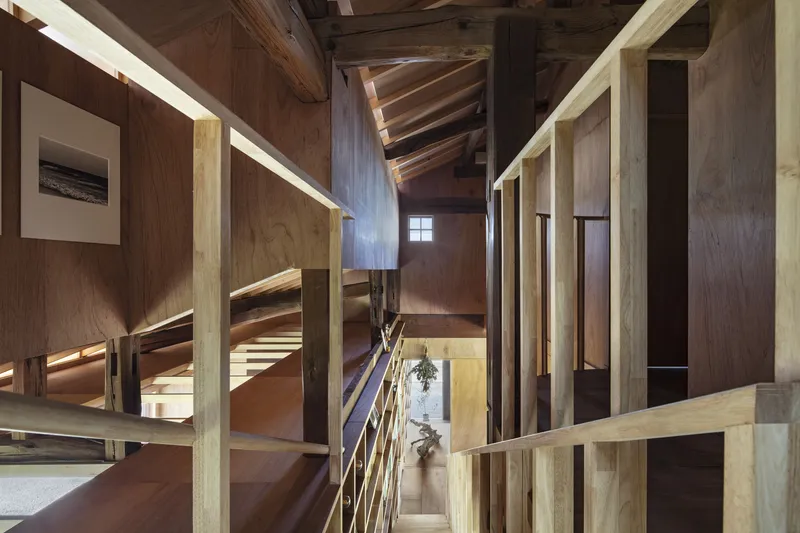
The attic level, originally a dark and partitioned space, was reorganized into three bedrooms and a new atrium. This atrium is the key move in the section: it draws daylight down through the center of the house, reaching areas that a traditional plan would leave in shadow. On the ground floor, acrylic panel ceilings in the study create a secondary trick, bouncing reflected light from the garden upward to the second-floor atrium. The result is a chain of light that connects exterior to interior to upper level without any skylights punched through the roof.
Small clerestory windows on the upper floor supplement this strategy, casting sharp beams of sunlight across timber guardrails and exposed structure. The translucent sliding panels visible beneath the ceiling joists further diffuse light while maintaining visual separation between rooms. None of these moves are expensive. All of them are intelligent.
The Warmth of Simple Details
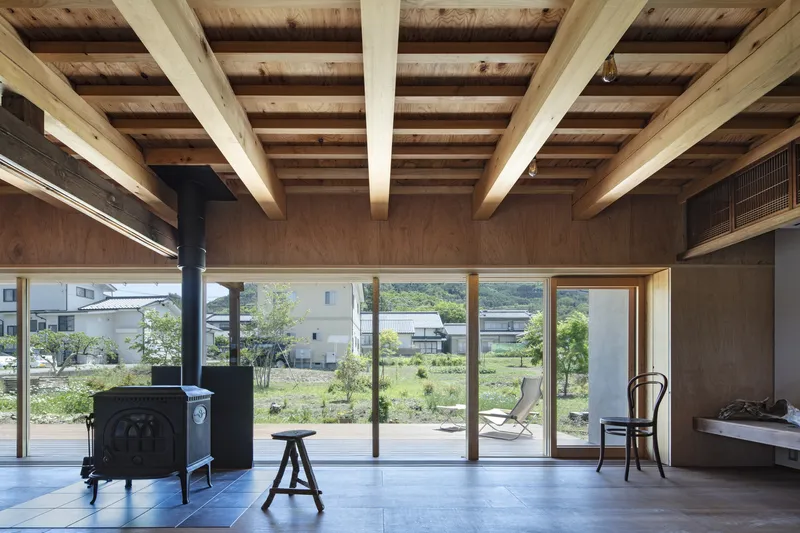
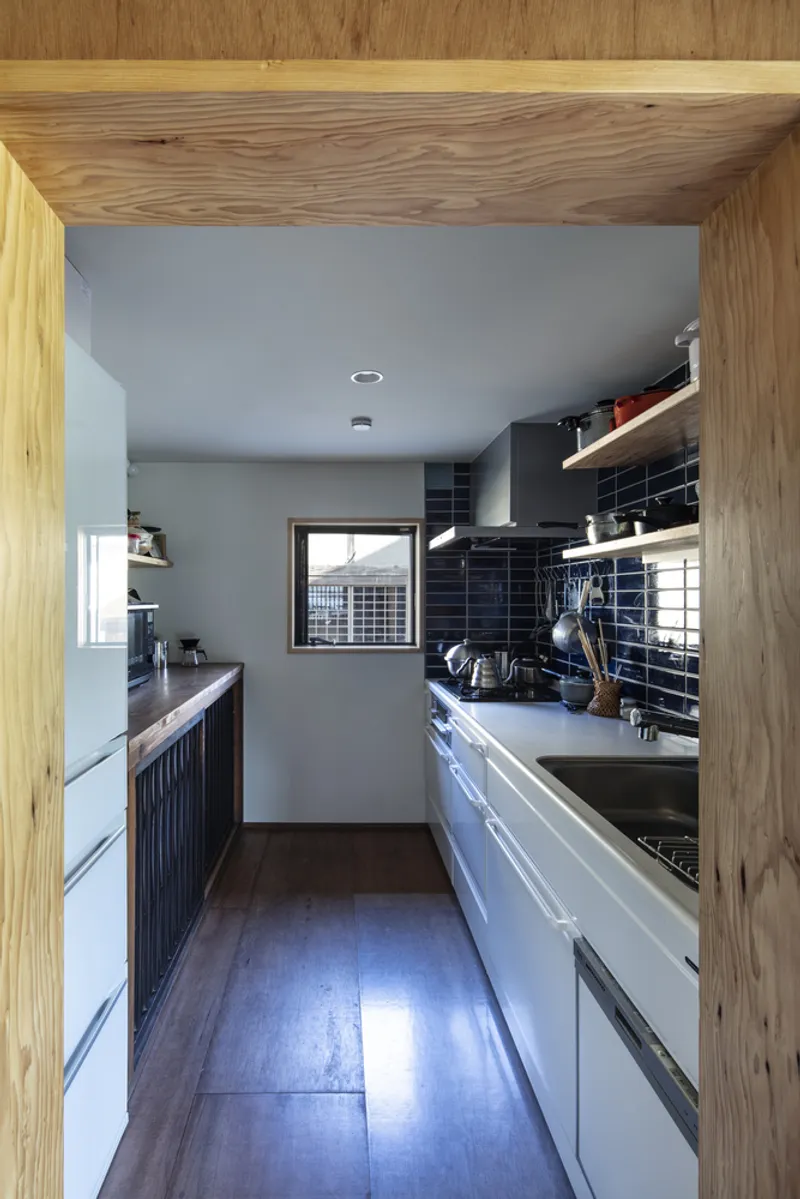
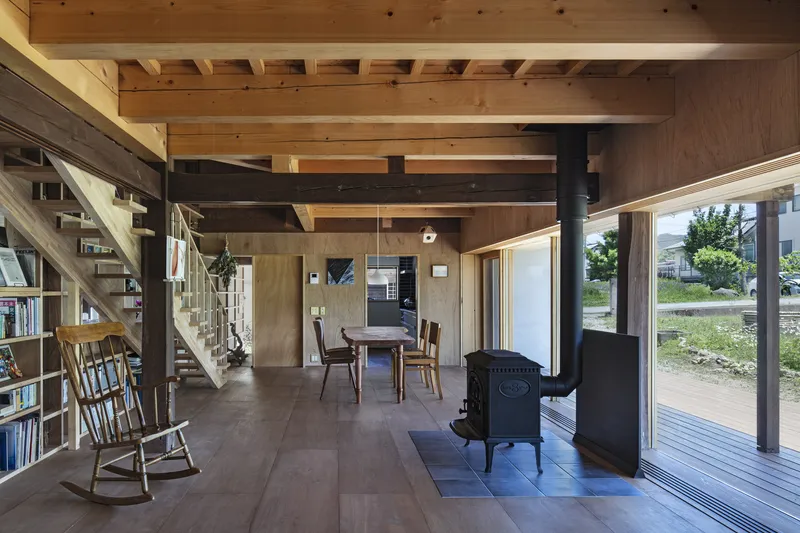
A cast-iron wood stove sits on a stone tile plinth beneath the exposed joists, oriented toward the garden view. It is the kind of element that could feel nostalgic, but here it reads as purely functional: Nagano winters are cold, and this house, for all its new openings, needs a heat source that works with its small footprint. The galley kitchen, framed by a timber doorway, pairs a black tile backsplash with white lower cabinets, keeping the material vocabulary tight.
Throughout the open-plan ground floor, the relationship between dining area, stove, staircase, and landscape view is held in a single continuous visual field. You can stand at the dining table and see the wood stove, the bookshelves, and the fields beyond the glazing in one glance. For a house of 101 square meters, that spatial generosity is the real achievement. Nothing is walled off; nothing feels cramped.
Facade at Dusk
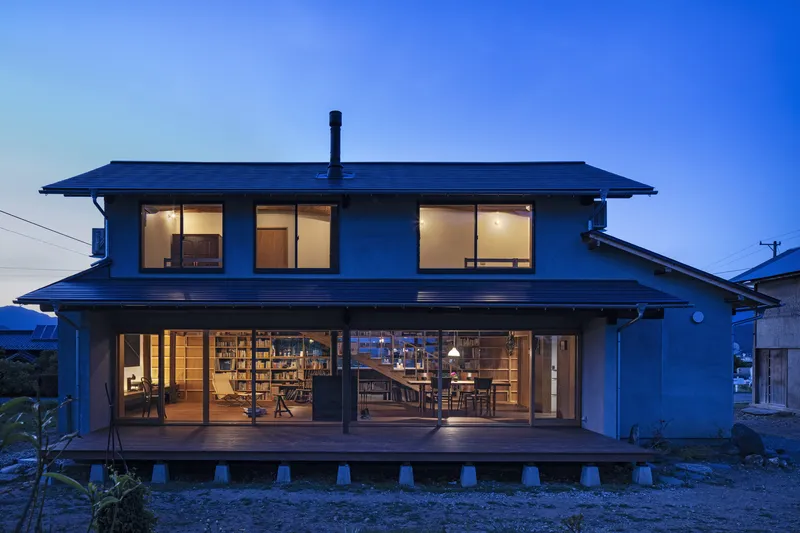
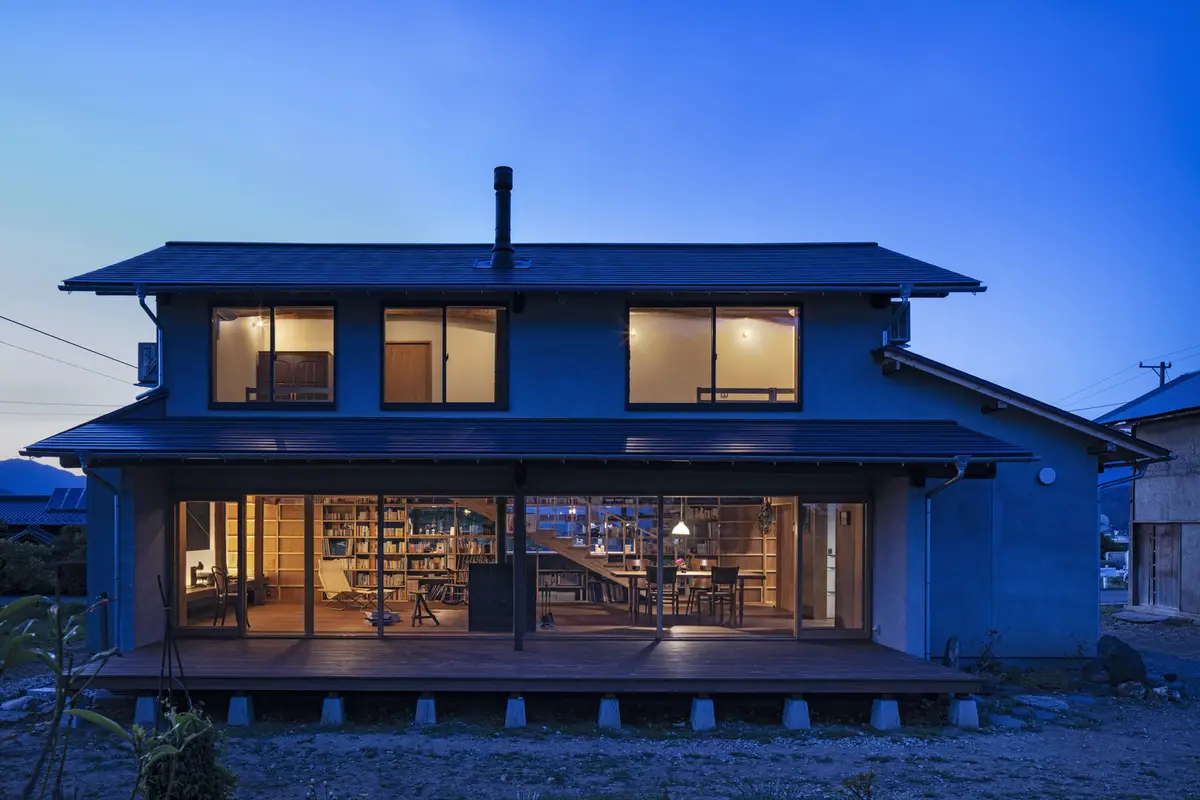
The rear facade at dusk tells you everything about the strategy. Full-height glazing and the timber deck dissolve the boundary between interior and garden. The illuminated bookshelves glow behind the glass like a lantern. From outside, the house reads as a single warm room held within an older timber shell. The original building's pitched roof and modest proportions remain, but the architecture behind them has been entirely rethought.
The house now serves as a weekend retreat, a future retirement home, and occasionally as a guesthouse or exhibition space. That programmatic flexibility was not achieved by making the spaces generic. It was achieved by making them generous, well lit, and structurally clear. A room with good bones and good light can be almost anything.
Why This Project Matters
Japan demolishes houses at a rate that would alarm most European preservation boards. The average lifespan of a Japanese residential building hovers around 30 years, and older wooden structures are routinely replaced rather than repaired. The 101 Years House pushes back against that cycle with a simple, cost-effective renovation that treats traditional carpentry as a resource rather than an obstacle. The involvement of local shrine carpenters in the restoration is not a sentimental gesture; it is a recognition that the skills required to maintain these structures still exist and deserve sustained employment.
At a moment when sustainability conversations in architecture tend to gravitate toward high-tech materials and energy modeling, this project makes a quieter case. The most sustainable building is the one that already exists. By preserving the timber frame, introducing light through section rather than mechanical systems, and keeping the renovation affordable, 1110 Office for Architecture demonstrates that longevity is a design decision, not a given. If this house makes it to 200, it will have earned every year.
101 Years House by 1110 Office for Architecture. Ueda, Nagano Prefecture, Japan. 101.0 m². Completed 2021. Photography by Kenta Hasegawa.
About the Studio
Share Your Own Work on uni.xyz
If projects like this are the kind of work you want to make, uni.xyz is a place to publish your own, find collaborators, and enter design competitions.


Popular Articles
Popular articles from the community


Little Red Riding Hood: Architectural Design as a Journey Through Fear, Light, and Storytelling
Little Red Riding Hood reimagines the fairy tale through architectural design shaped by fear, light, scale, memory, uncertainty, and choice.

Co-Life: Senior Housing Design That Reconnects Older Adults With the City
Co-Life reimagines senior housing design through healing gardens, shared streets, workshops, and a sustainable community across generations.

Lunar Spiral: Space Architecture Shaped by the Mathematics of the Universe
Lunar Spiral reimagines space architecture through Fibonacci geometry, lunar regolith, levitating habitats, and self-sustaining Moon living.

The Musturak Paradise: Senior Living Architecture for a Connected Future in Temara, Morocco
The Musturak Paradise reimagines senior living architecture in Temara via private homes, social spaces, culture, community, and shared care.

Similar Reads
You might also enjoy these articles


Hodi-Mandai Geram
Project Function: Preservation and revitalization of the Intangible heritage and socio-spatial identity of the Hodi by Housing, Cultural Memory Center, Sacred Grove, landscape, local tourism economy


Olio Towers: A Mid-Rise for Performers That Fuses Housing, Rehearsal, and Stage
Located blocks from Houston's Theater District, this modular tower stacks living units around a central performance atrium.

Oasis: Modular Green Housing Carved into Dhaka's Urban Fabric
A shortlisted Plugin Housing entry reclaims unauthorized settlements in Dhaka with stepped concrete volumes, green roofs, and ventilation-driven design.

Black Hole: A Floating Megastructure for the Post-Physical Era
Emiliano Mazzarotto envisions a spherical, self-scaling arena where e-sports, digital hotels, and holographic stadiums replace traditional public space.

Explore Architecture Competitions
Discover active competitions in this discipline

Challenge to reimagine the Iron Throne

Photograph architecture without architects

Illustrate the lost glory of Angkor Wat - Render Challenge

Design challenge to reuse E-waste
Comments (0)
Please login or sign up to add comments
No comments yet. Be the first to comment!