
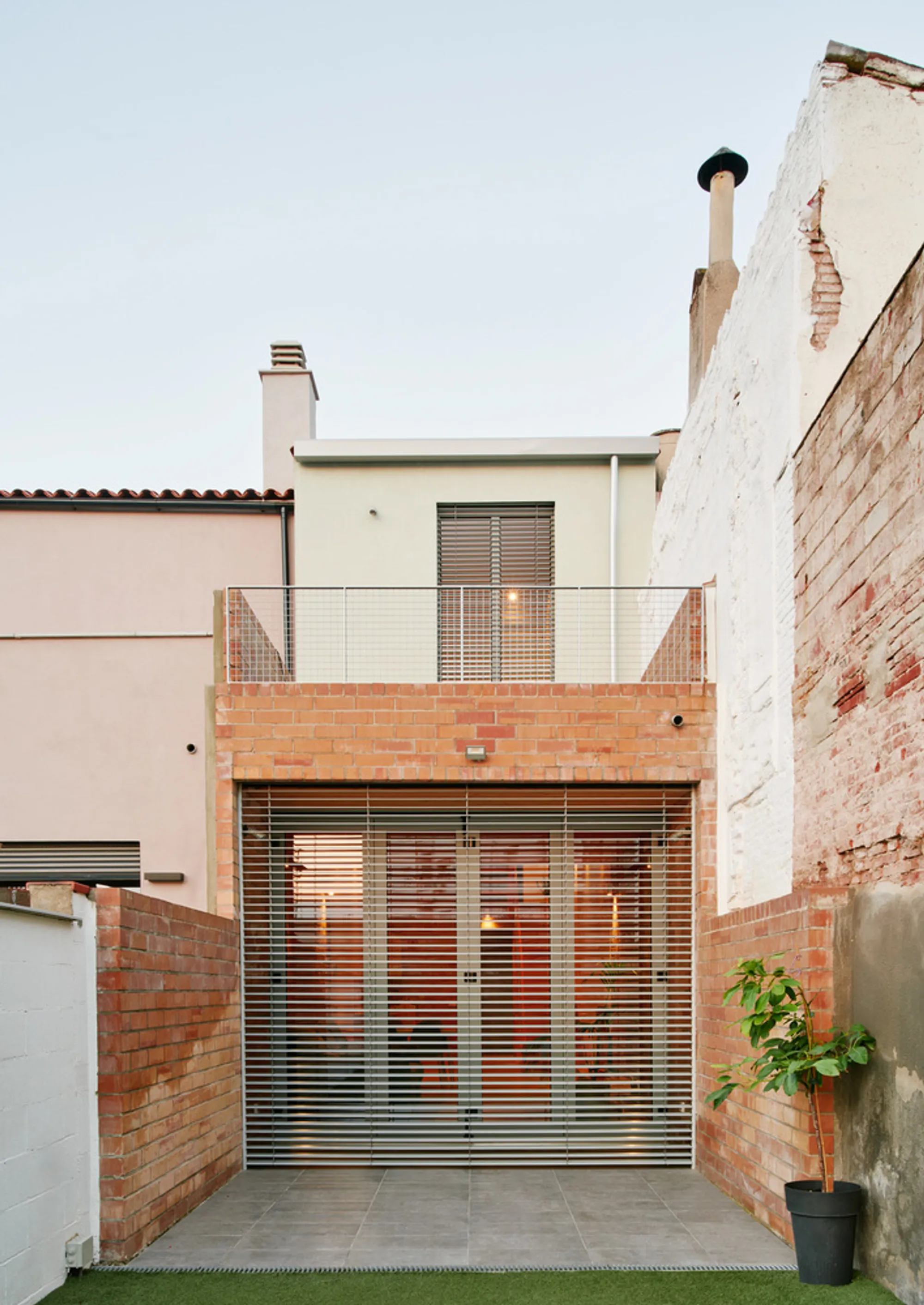
115ARI Single-Family Home Between Party Walls in Sabadell by Vallribera Noray Arquitectes
A narrow Sabadell home transforms spatial limits into light-filled, sustainable living through timber construction, passive design, and interior courtyard integration.


A Compact Urban Home That Transforms Constraints Into Light and Space
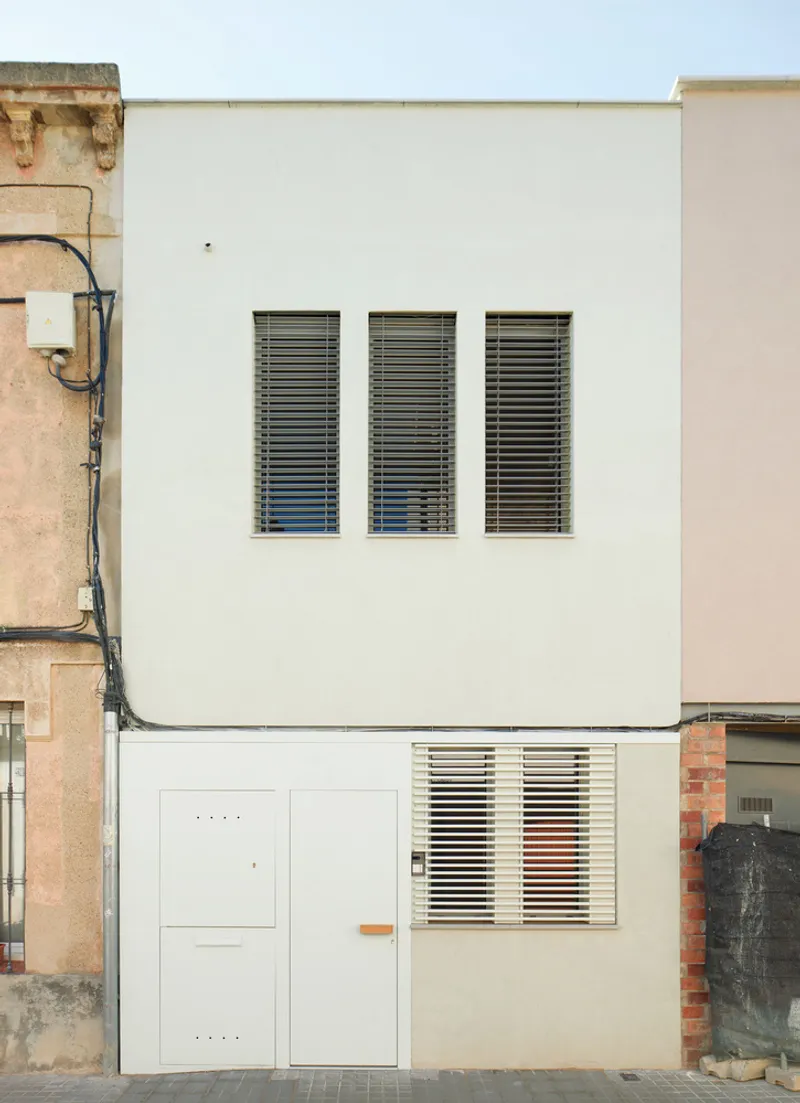
When a young family approached Vallribera Noray Arquitectes with a narrow urban plot in Sabadell, they did so with hesitation. “Can a real home even fit here?” they asked. Measuring only 3.8 meters wide and surrounded by tall neighboring houses, the site seemed unpromising at first glance. Yet, this challenging parcel offered potential: optimal orientation, a generous backyard, and a family ready to redefine their way of living.
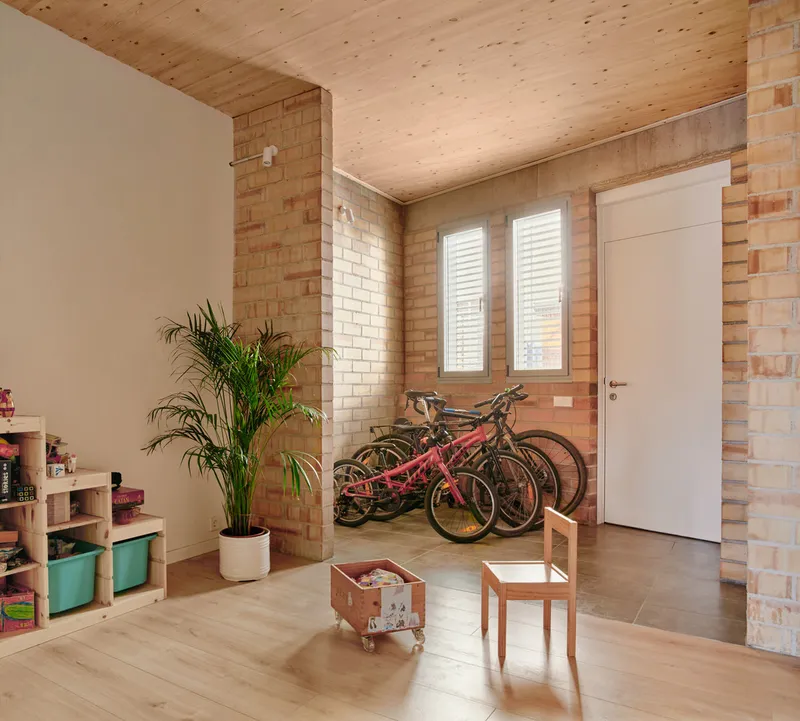
The architects saw opportunity where others saw limitation. Their response was to design a vertical, light-filled home that transforms narrowness into spatial richness, optimizing every cubic meter through intelligent sectioning, passive strategies, and natural materiality.
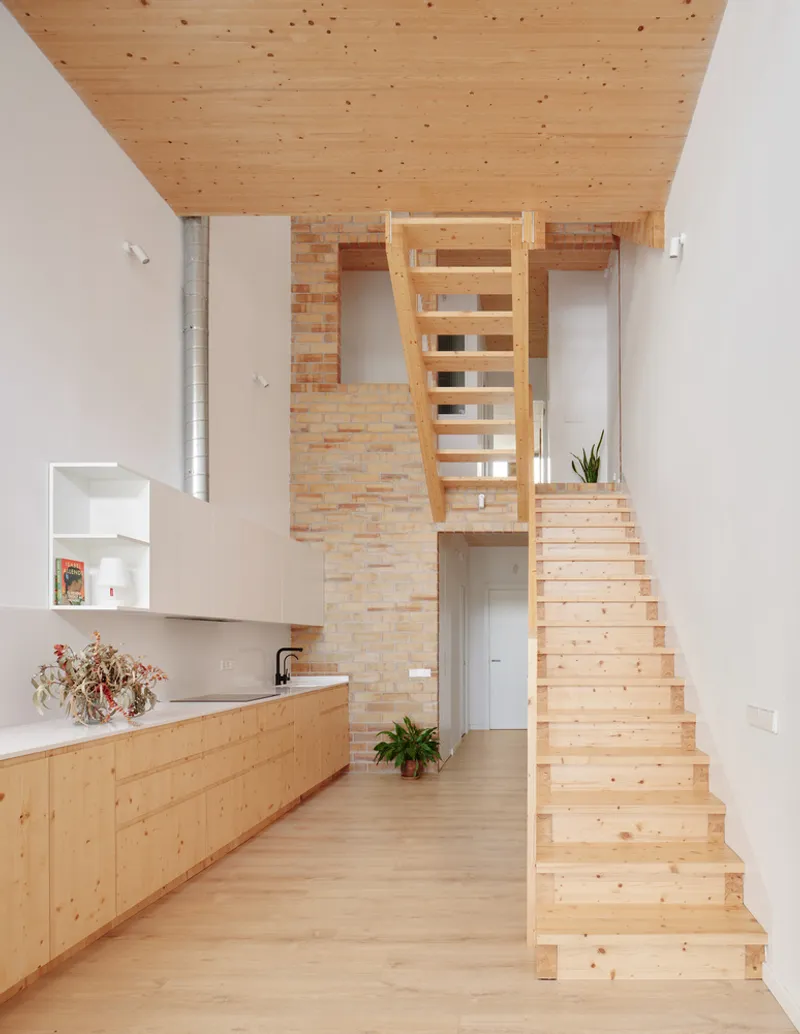
Spatial Strategy: Building Light Into the Depth of the Site
To prevent the home from feeling compressed between party walls, Vallribera Noray Arquitectes built to the maximum depth permitted by local regulations. Instead of filling the entire volume, they carved out a central void, introducing an interior courtyard that brings daylight and ventilation deep into the house.
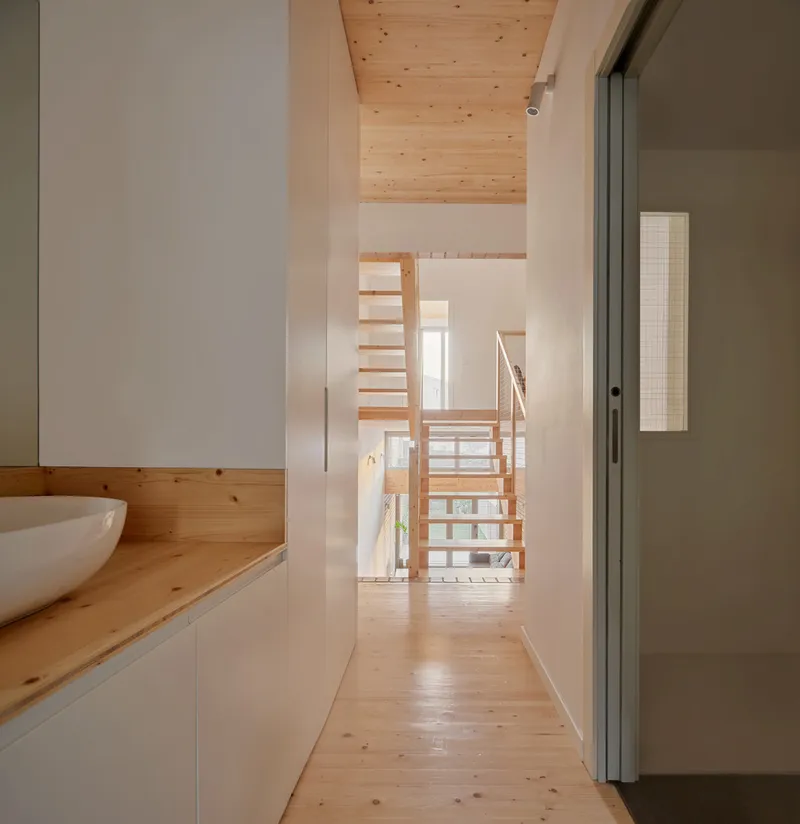
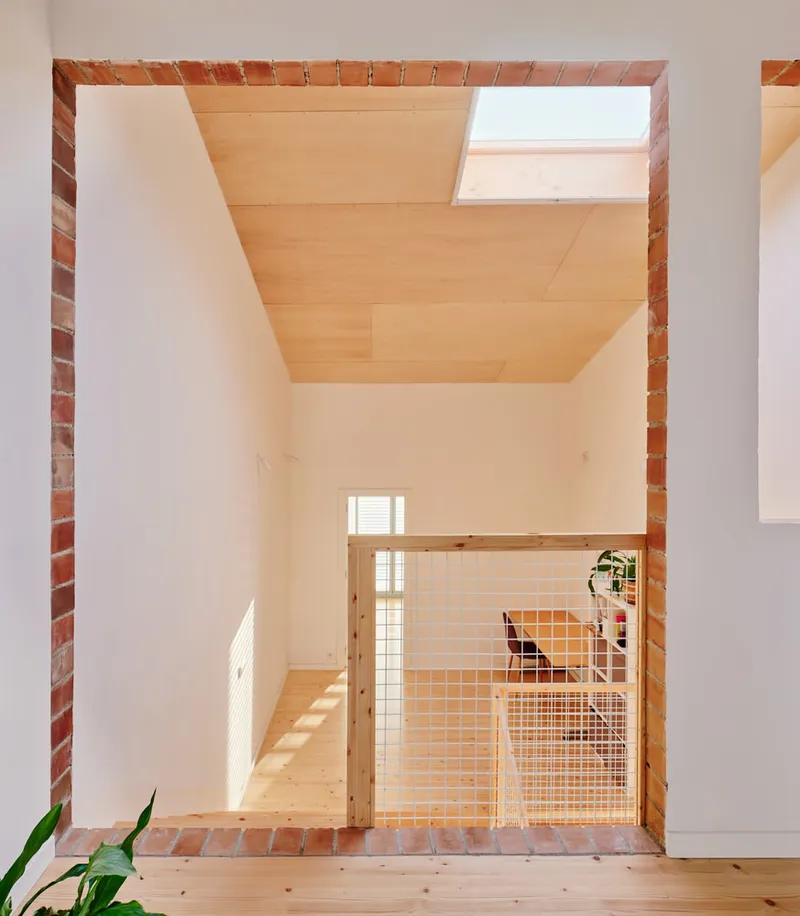
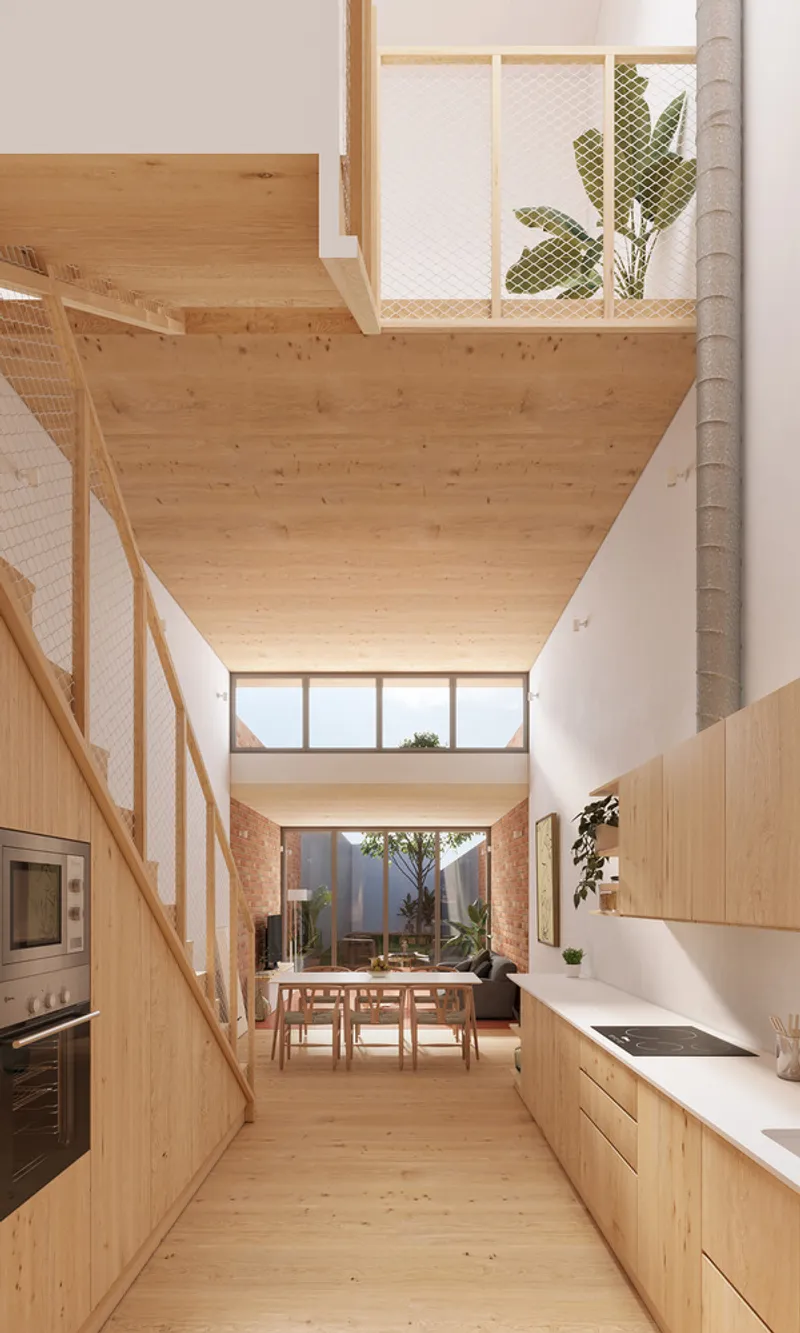
A skylit vertical atrium links all three floors, acting as a visual and environmental core that floods the interior with soft, diffused light. Around this luminous center, the home’s functions are distributed in a thoughtful rhythm: the kitchen, dining room, and study on one side; and bathrooms, laundry, and playroom on the other. The three bedrooms occupy the facades at each end, enjoying both privacy and outdoor connection.
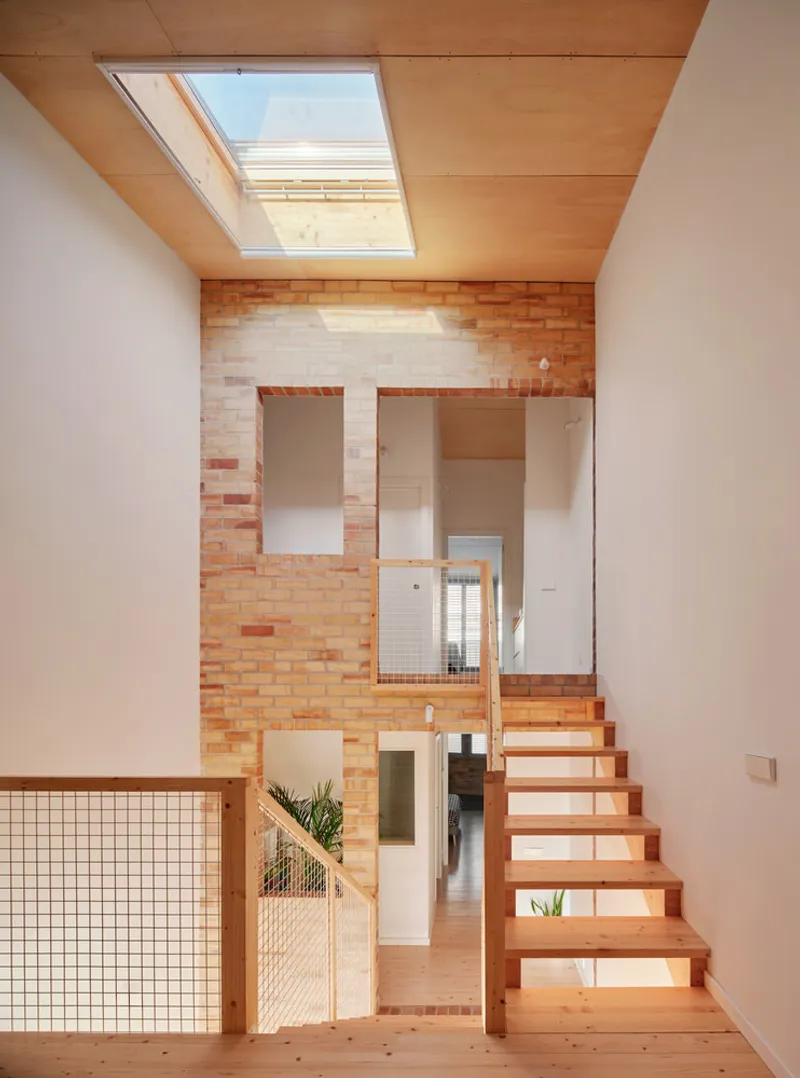
Materiality and Construction: A Dialogue Between Tradition and Timber
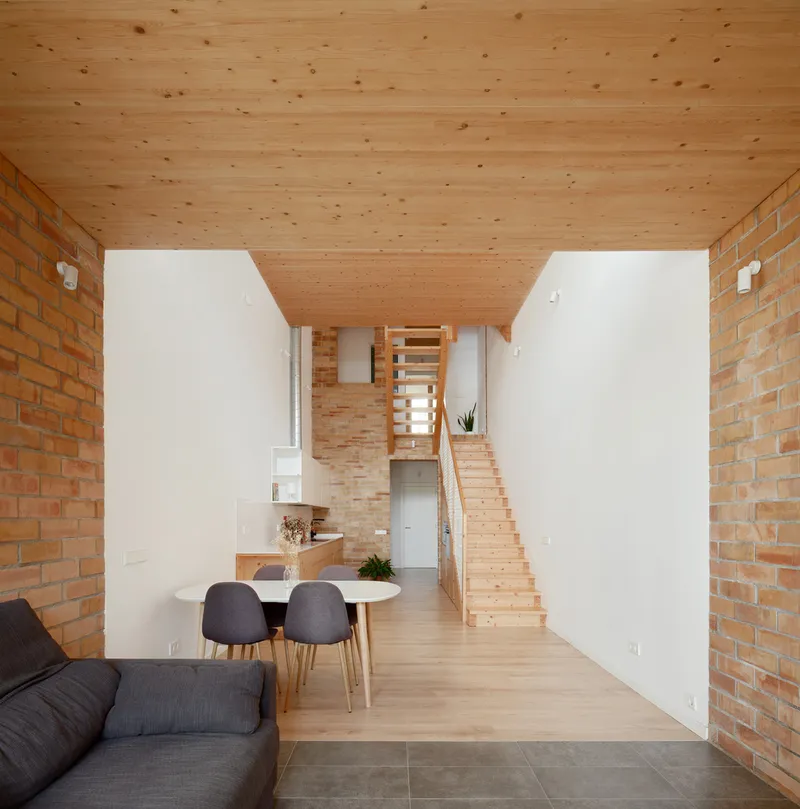
The architects employed a hybrid construction system that combines traditional masonry with advanced timber techniques. The solid wood floors, made from tongue-and-groove beams, were designed for efficient phased assembly and finished with a simple clear varnish to express the natural texture of the material.
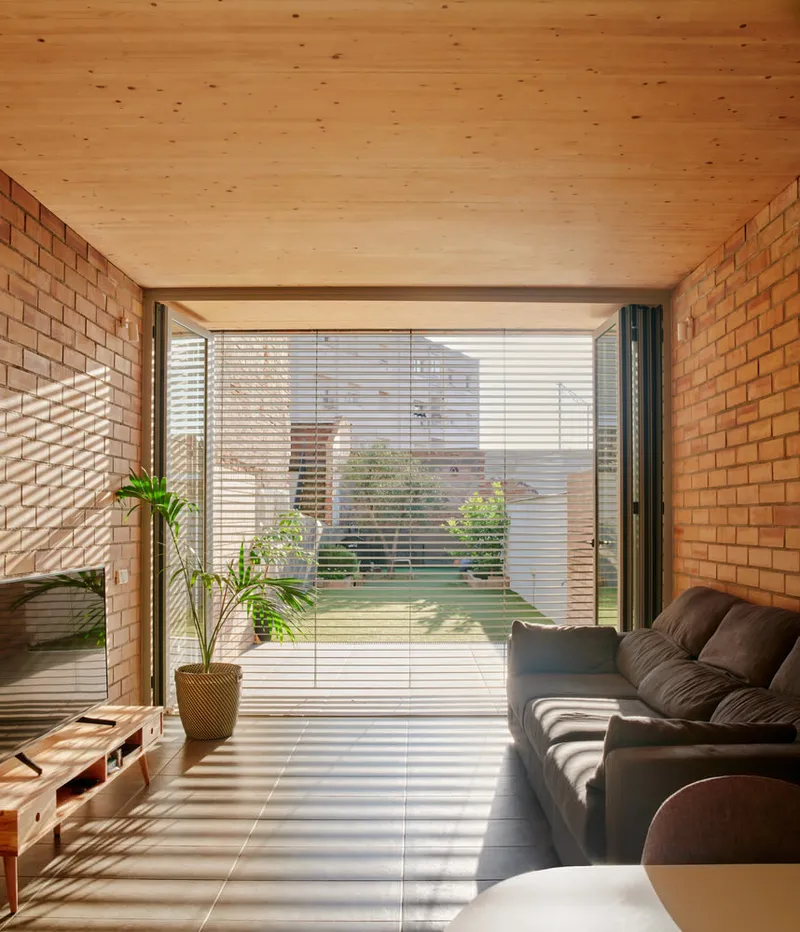
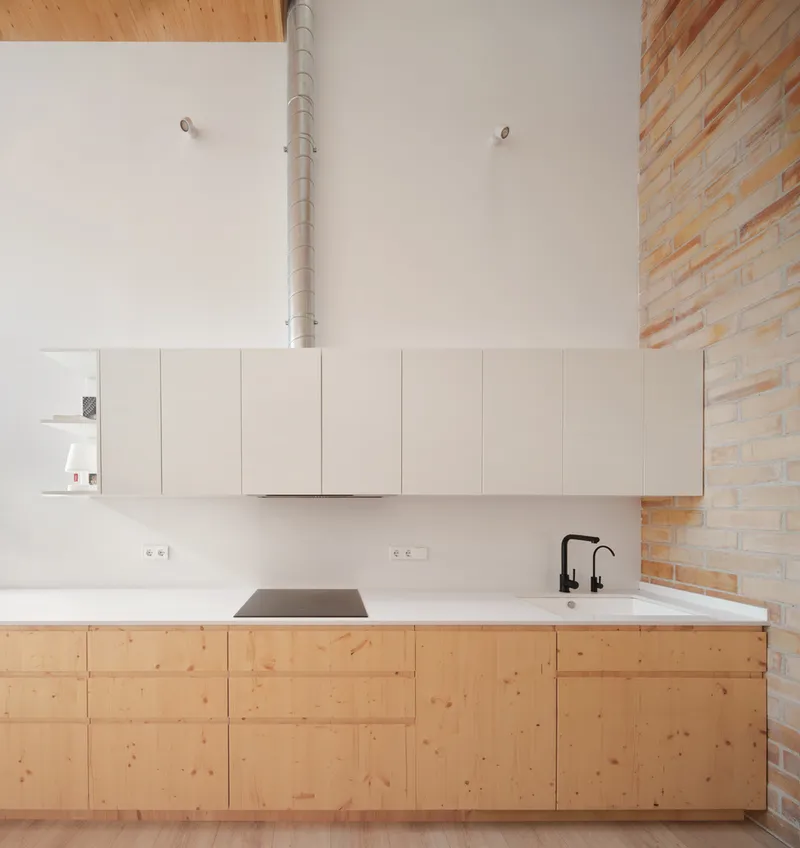
Meanwhile, the roof and external walls are framed in lightweight wood and clad with visible birch plywood panels, creating a warm, tactile interior. The exposed brick walls and ceramic floors in the semi-outdoor galleries add a robust, earthy counterpoint — a subtle continuity between inside and outside.
These transitional gallery-like spaces are lined with vegetation, blurring the boundary between the courtyard and interior. Natural light enters from above and from the patio, reducing the perception of the home’s narrowness while enriching the spatial experience.
Passive Design and Energy Efficiency
Every design decision in the 115ARI House was guided by passive environmental principles. The south-facing openings and the skylight act as solar collectors in winter, capturing heat that is stored by the masonry and ceramic surfaces to release it gradually after sunset.
In summer, deep eaves and adjustable shutters prevent overheating, while the vertical void enables nighttime cross-ventilation, ensuring comfortable temperatures without the need for mechanical air conditioning.
Combined with high-performance insulation and photovoltaic panels, these measures minimize the home’s environmental footprint, covering much of its annual energy consumption through self-generation.
A House That Grows From Constraints
What began as a skeptical question — “Can a house fit here?” — became a story of transformation. The 115ARI House now stands as a compact yet generous family home, demonstrating how design ingenuity can turn spatial constraints into architectural opportunity.
Bathed in natural light, rich in texture, and aligned with sustainable living, the home exemplifies Vallribera Noray Arquitectes’ ability to blend contextual sensitivity, passive design intelligence, and material honesty in a single, cohesive work of urban architectur.
All photographs are works of José Hevia



Popular Articles
Popular articles from the community


The Earth Pod: 3D Printed Homes for Resilient Refugee Communities
The Earth Pod reimagines refugee housing through 3D printed homes made from clay, combining resilience, self-sufficiency, and rapid shelter.

The Ocean Hive: Sustainable Architecture for a Self-Sufficient Civilization at Sea
The Ocean Hive imagines sustainable architecture at sea, where modular habitats, algae, wave power and ocean waste sustain a growing colony.
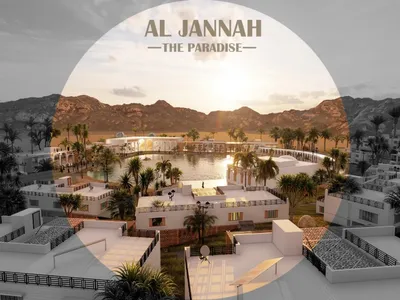
AL-JANNAH: Sustainable Architecture and Permaculture for Afghan Widows
AL-JANNAH uses sustainable architecture and permaculture to create resilient oasis of housing, learning, work and renewal for Afghan widows.

Co-Life: Senior Housing Design That Reconnects Older Adults With the City
Co-Life reimagines senior housing design through healing gardens, shared streets, workshops, and a sustainable community across generations.

Similar Reads
You might also enjoy these articles


Hodi-Mandai Geram
Project Function: Preservation and revitalization of the Intangible heritage and socio-spatial identity of the Hodi by Housing, Cultural Memory Center, Sacred Grove, landscape, local tourism economy


Olio Towers: A Mid-Rise for Performers That Fuses Housing, Rehearsal, and Stage
Located blocks from Houston's Theater District, this modular tower stacks living units around a central performance atrium.

Oasis: Modular Green Housing Carved into Dhaka's Urban Fabric
A shortlisted Plugin Housing entry reclaims unauthorized settlements in Dhaka with stepped concrete volumes, green roofs, and ventilation-driven design.

Black Hole: A Floating Megastructure for the Post-Physical Era
Emiliano Mazzarotto envisions a spherical, self-scaling arena where e-sports, digital hotels, and holographic stadiums replace traditional public space.


Explore Housing Competitions
Discover active competitions in this discipline



Challenge to reimagine the Iron Throne


Photograph architecture without architects


Illustrate the lost glory of Angkor Wat - Render Challenge


Design challenge to reuse E-waste
Comments (0)
Please login or sign up to add comments
No comments yet. Be the first to comment!