
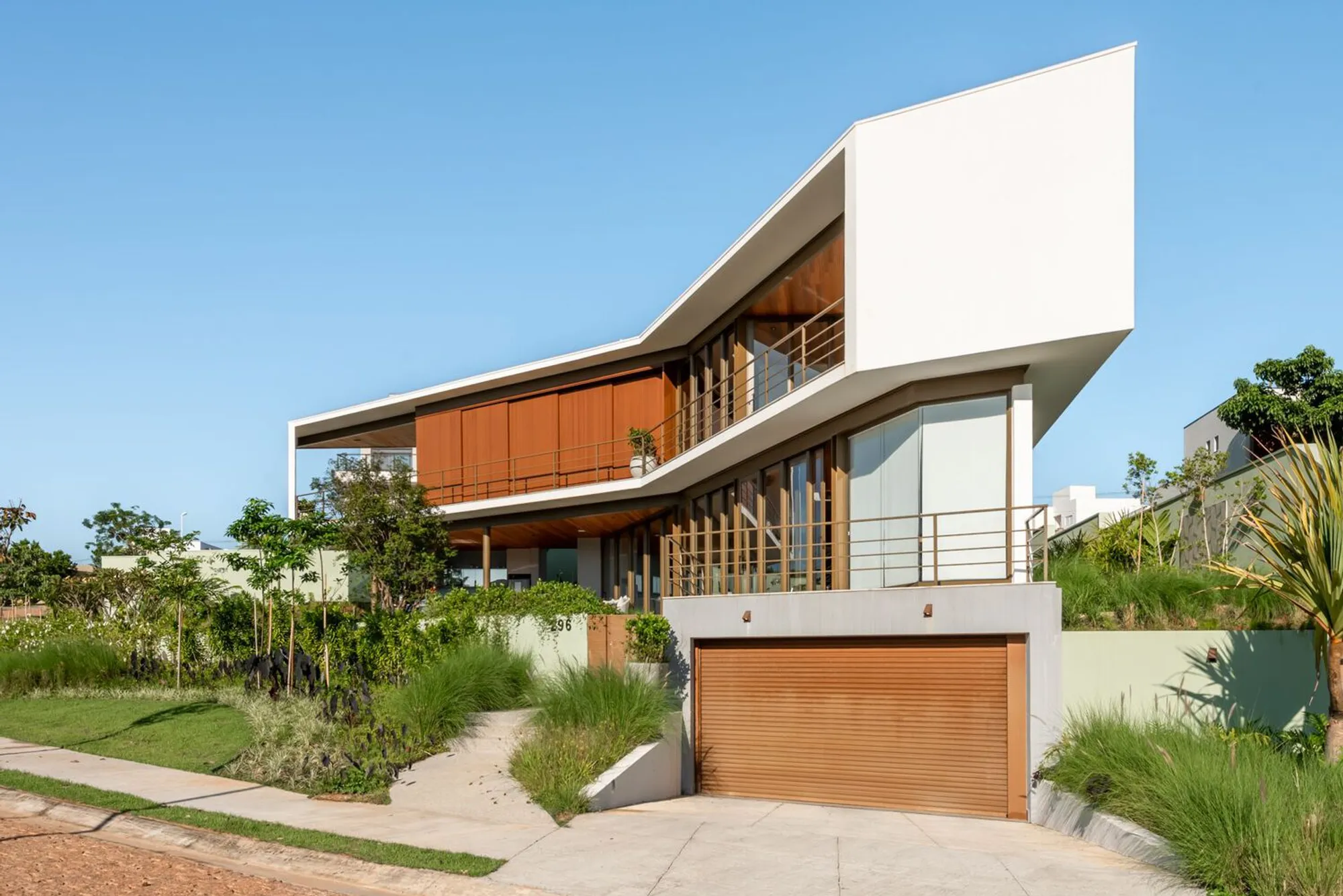
14-bis House by Uffizi Arquitetura: Contemporary Residential Design in Campinas, Brazil
14-bis House by Uffizi Arquitetura in Campinas features winged upper floors, floating design, panoramic views, metallic structure, and seamless indoor-outdoor integration.


Nestled within a serene gated community in Campinas, Brazil, the 14-bis House by Uffizi Arquitetura emerges as a masterful blend of contextual sensitivity, innovative design, and sophisticated residential architecture. Completed in 2024, this 420 m² home, photographed by Renato Nishimura, exemplifies how site-specific design can harmoniously integrate with the surrounding landscape while maximizing natural views and light. The project was led by architects Mauricio Salvi and Ana Paula Soares, who carefully considered both the environmental and experiential qualities of the property.
Site Context and Design Inspiration
Upon visiting the nearly 1,000 m² plot, the design team immediately sensed a bucolic atmosphere and a peaceful, contemplative environment. The site overlooks a working farm and offers unobstructed views of the Maria Fumaça train, instantly inspiring the direction of the home’s orientation and the layout of its spaces. Unique to the site is its irregular shape: three sides with one sweeping curved edge, reminiscent of a baseball field, combined with a slope of approximately 4 meters. This natural topography informed a non-orthogonal layout that embraces the land’s contours while optimizing elevated viewpoints.
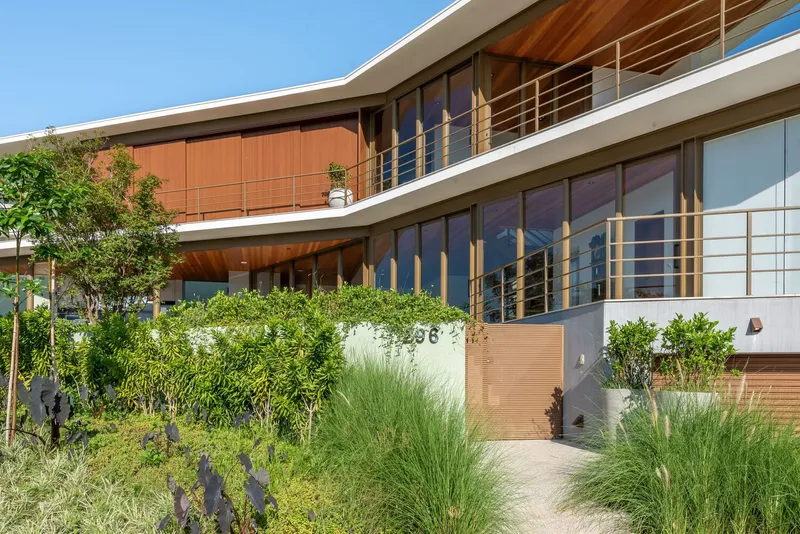
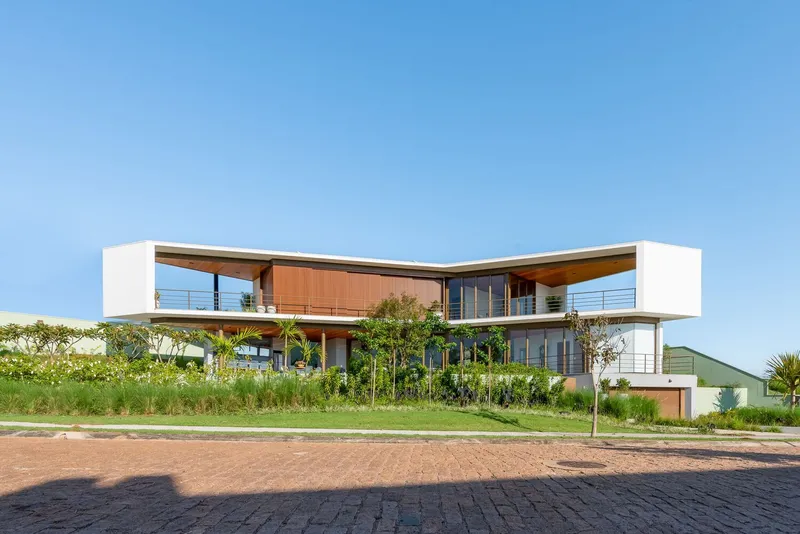
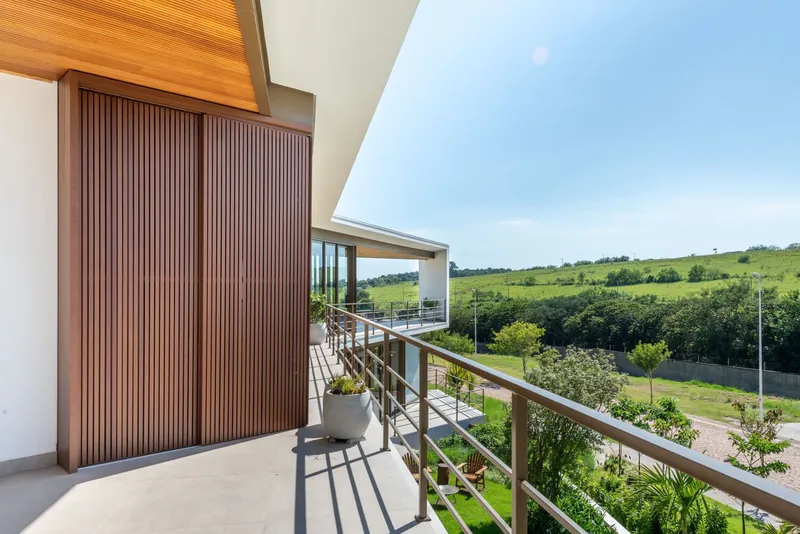
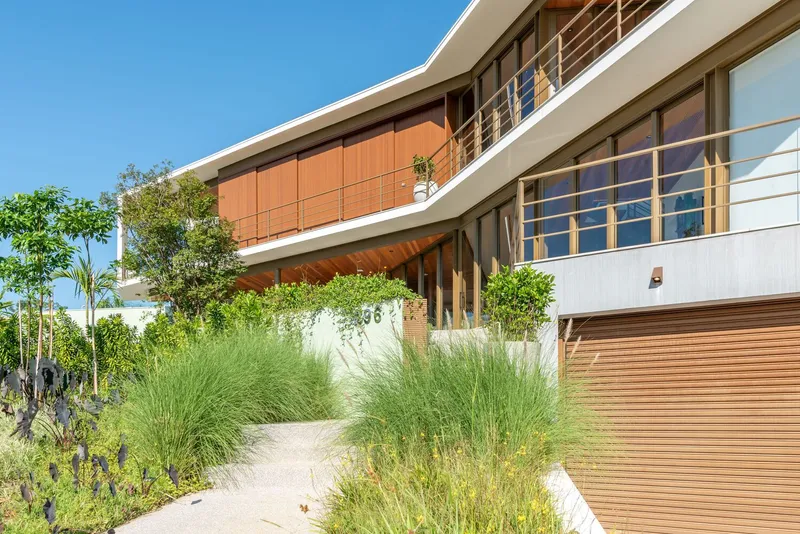
The design concept cleverly references the iconic 14-Bis airplane by Santos Dumont, with the upper floor divided into two distinct wings. One wing provides a private retreat for the couple, while the other accommodates family and guests. Verandas at each end of the wings frame the expansive landscape, creating outdoor spaces that seamlessly merge with the interior.
Architectural Concept and Layout
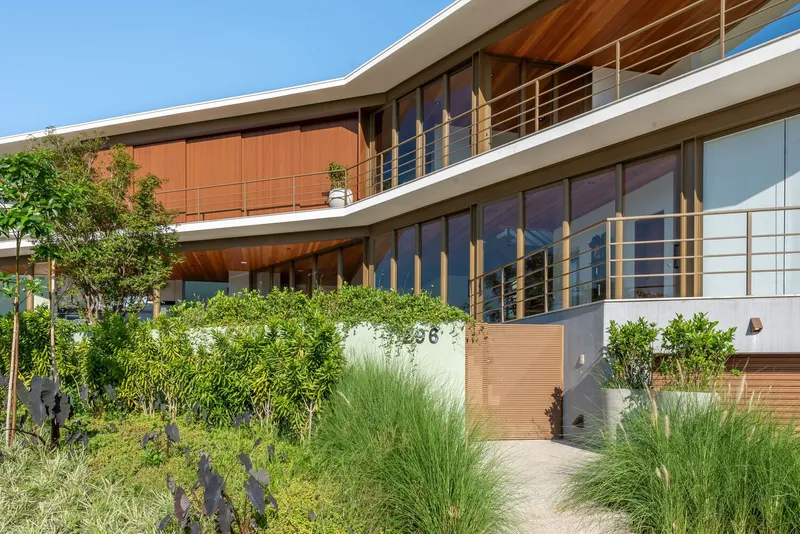
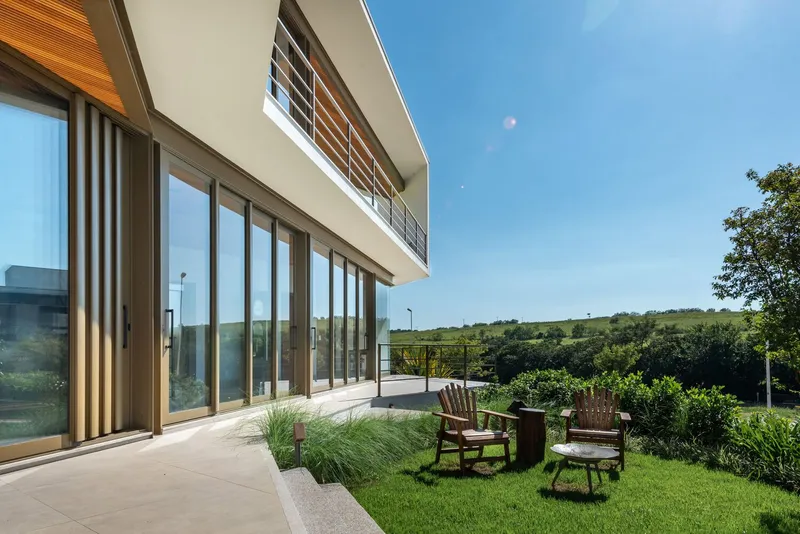
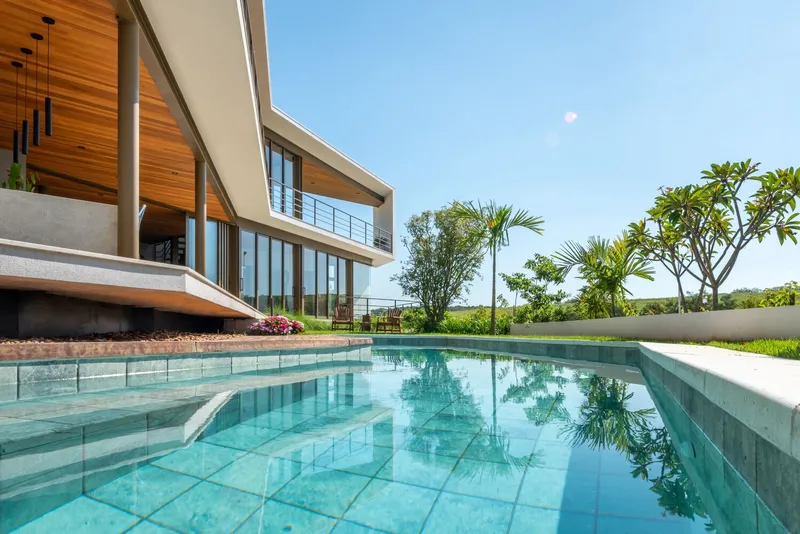
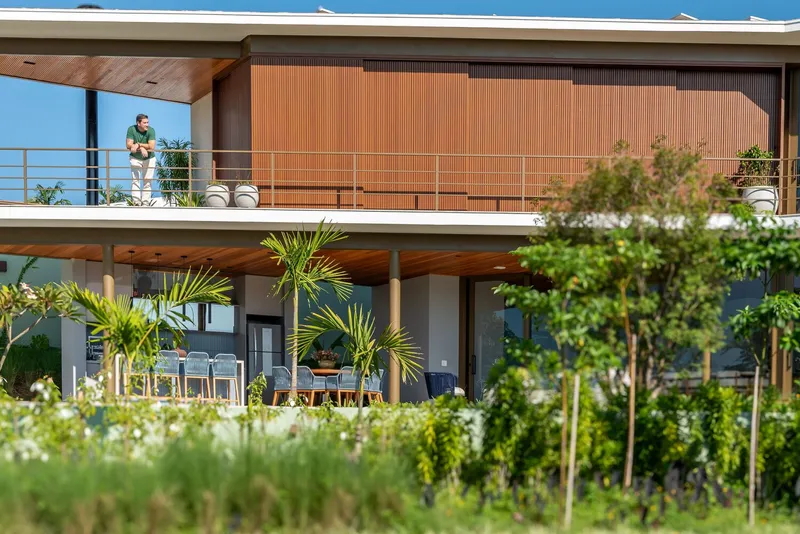
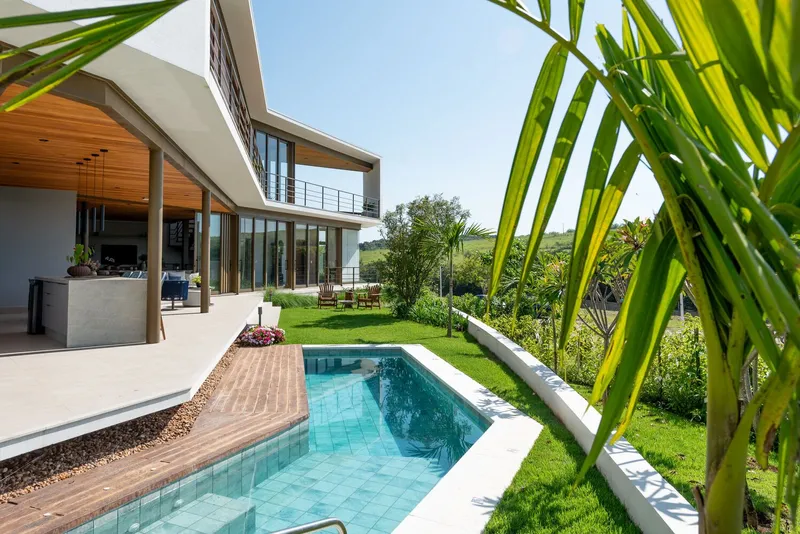
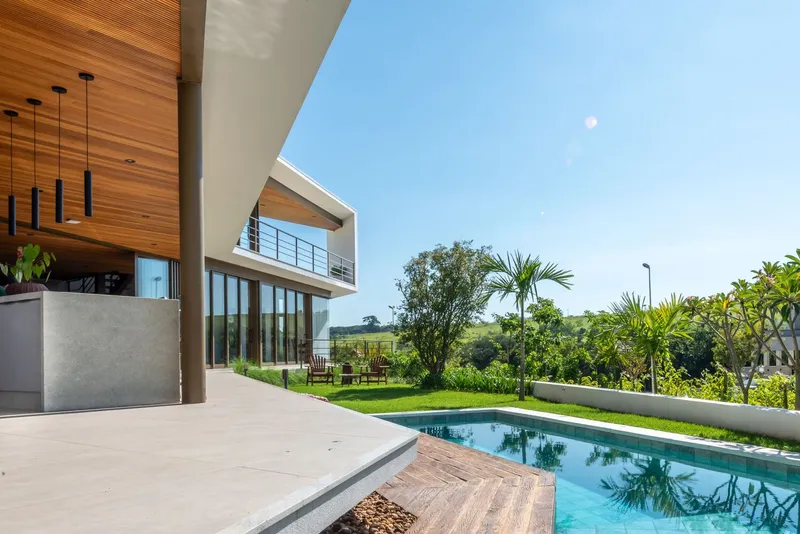
The ground floor of the house emphasizes openness, reflection, and a strong connection to nature. Floor-to-ceiling glazing ensures uninterrupted views of the surrounding gardens and farmland, while the upper level appears to float above the site, enhanced by a light metallic structural framework. The home’s form, with its wing-like extensions, not only provides visual interest but also optimizes natural light, airflow, and scenic vistas.
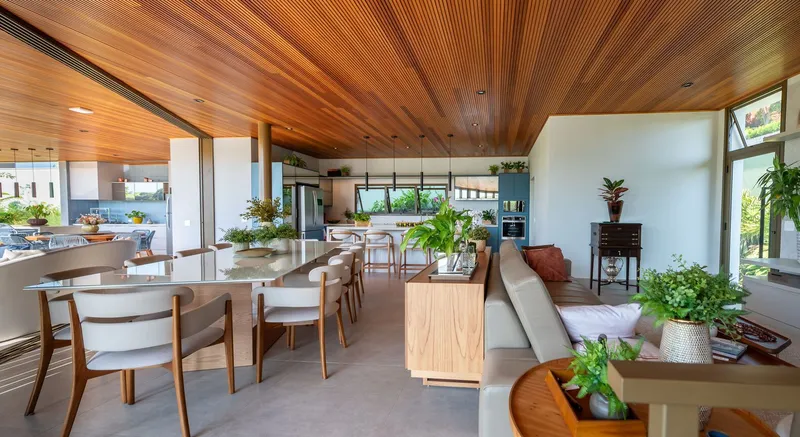
Inside, the interiors are minimal yet refined, combining functionality with elegance. The dining and living spaces are thoughtfully oriented toward the landscape, creating a sense of continuity between interior and exterior environments. Materials such as wood, glass, and metal are used with restraint, emphasizing clarity, sophistication, and a subtle dialogue with the natural surroundings.
Innovation and Spatial Experience
14-bis House stands as a testament to context-driven residential architecture, where site, topography, and views dictate form. Its distinctive winged design, floating upper floor, and open ground floor foster an experiential connection to the landscape, encouraging moments of contemplation, relaxation, and family interaction. The project balances modern aesthetics with functional design, creating a home that is both visually striking and deeply inhabitable.
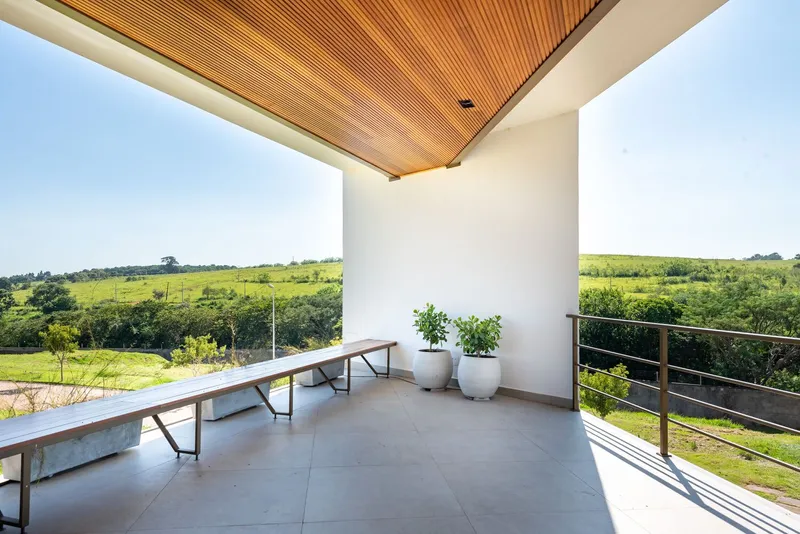
All photographs are works of Renato Nishimura



Popular Articles
Popular articles from the community


Co-life: Sustainable Architecture for Age-Friendly Community Living
Co-life reimagines sustainable architecture for seniors through courtyards, rammed earth, shared gardens, and spaces designed for belonging.
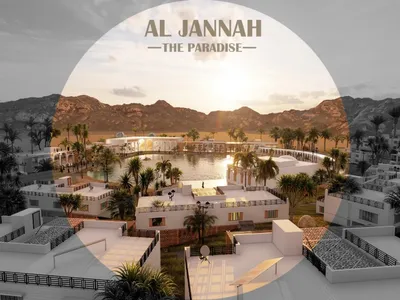
AL-JANNAH: Sustainable Architecture and Permaculture for Afghan Widows
AL-JANNAH uses sustainable architecture and permaculture to create resilient oasis of housing, learning, work and renewal for Afghan widows.

Conexión: Biophilic Design Reimagines High-Rise Living in Hong Kong
Conexión reimagines high-rise living in Hong Kong through biophilic design, green facades, shared spaces, daylight, water and nature within.

Riyadh For All: Intergenerational Urban Design for Active Aging in Rabat
Riyadh For All reimagines urban design in Rabat with intergenerational co-living, adaptive courtyards, and Moroccan cultural exchange today.


Similar Reads
You might also enjoy these articles


Hodi-Mandai Geram
Project Function: Preservation and revitalization of the Intangible heritage and socio-spatial identity of the Hodi by Housing, Cultural Memory Center, Sacred Grove, landscape, local tourism economy


Olio Towers: A Mid-Rise for Performers That Fuses Housing, Rehearsal, and Stage
Located blocks from Houston's Theater District, this modular tower stacks living units around a central performance atrium.

Oasis: Modular Green Housing Carved into Dhaka's Urban Fabric
A shortlisted Plugin Housing entry reclaims unauthorized settlements in Dhaka with stepped concrete volumes, green roofs, and ventilation-driven design.

Black Hole: A Floating Megastructure for the Post-Physical Era
Emiliano Mazzarotto envisions a spherical, self-scaling arena where e-sports, digital hotels, and holographic stadiums replace traditional public space.


Explore Residential Design Competitions
Discover active competitions in this discipline



Challenge to reimagine the Iron Throne


Photograph architecture without architects


Illustrate the lost glory of Angkor Wat - Render Challenge


Design challenge to reuse E-waste
Comments (0)
Please login or sign up to add comments
No comments yet. Be the first to comment!