

212 Stuart Street: A Sculptural Residential Tower Bridging Historic and Contemporary Boston
212 Stuart Street blends sculptural concrete façade with modern glass, harmonizing historic Bay Village and Boston’s high-rise skyline context.


Contextual Design Rooted in Contrasts
Located at the intersection of Boston’s historic Bay Village and the modern towers of the High Spine, the 212 Stuart Street residential tower by Höweler + Yoon Architecture and Sasaki is a compelling architectural response to a complex urban context. The design negotiates the scale and texture of its surroundings—blending the intimate character of a historic neighborhood with the sleek verticality of the downtown skyline.
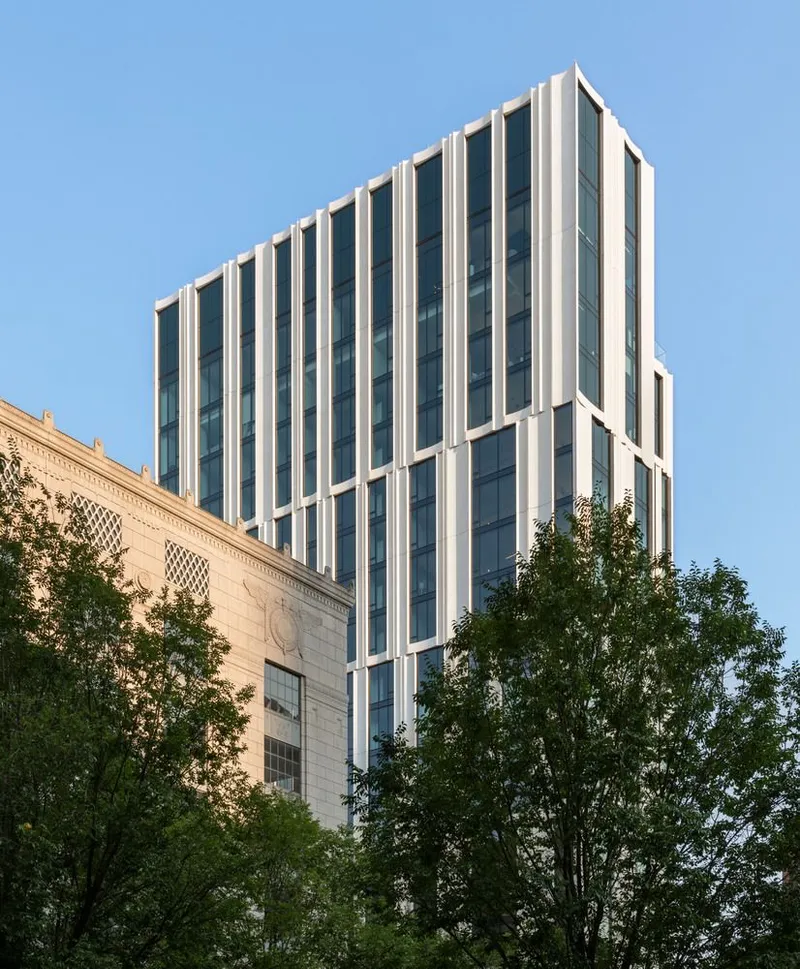
Unlike Boston’s trend of fully glazed high-rises, 212 Stuart introduces architectural depth and textural richness to the skyline. The facade features an innovative system of precast concrete fluted piers that vary in dimension, drawing visual connections to Bay Village’s masonry vernacular while asserting a bold, contemporary presence.
A Hybrid Façade That Marries Craft and Performance
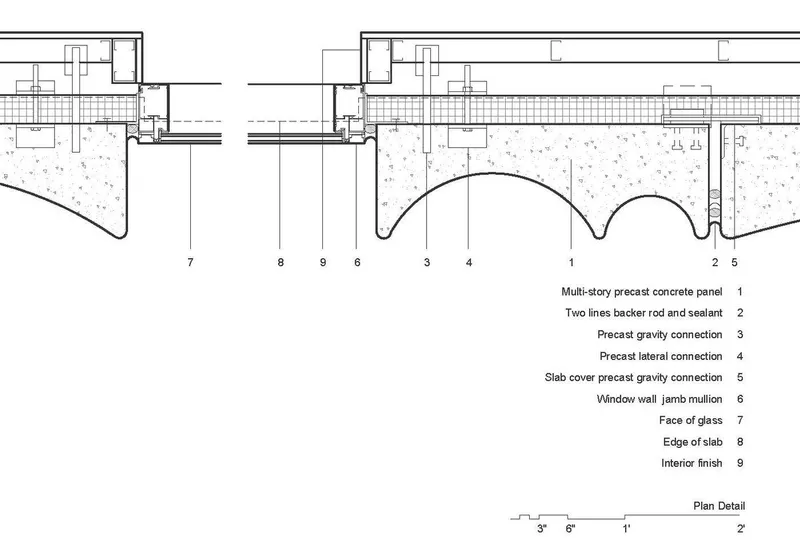
The building’s signature concave facade panels, fabricated locally by BPDL, play a crucial role in shaping its identity. These multi-story fluted elements—either 20 or 30 feet high—are recessed between floor-to-ceiling window walls, creating a rhythmic interplay of light, shadow, and verticality. Their sculptural profiles not only contribute to passive shading but also articulate the building’s vertical mass in a refined, modular language.
Carefully coordinated during early design phases, the prefabricated facade system allowed for streamlined construction. Panels were sequenced and tagged at the plant, transported on trucks, and lifted directly by crane into place—eliminating on-site staging and reducing installation time. The panel thicknesses taper from 12 inches at the edges to 5 inches at the center, offering dynamic depth and a play of shadows throughout the day.

Urban Integration and Street-Level Engagement
Beyond its distinctive skyline profile, the tower thoughtfully engages the street. At the base, stoops, planters, and custom ironwork reflect the residential charm of Bay Village. Two street-facing townhouses further reinforce the building’s contextual sensitivity, completing the northern edge of the neighborhood and strengthening its pedestrian experience.
The small, irregularly-shaped plot—previously a parking lot—posed multiple constraints, but the architectural team leveraged these challenges to create a tight-knit and intelligent vertical community that maximizes density without sacrificing livability or design quality.

Materiality and Detail
Materials were selected not only for aesthetics but also for performance and sustainability. While the ground floor embraces transparency and connection, upper floors balance glass expanses with precast concrete articulation, offering thermal performance, visual identity, and self-shading qualities. The result is a façade system that is both expressive and efficient, merging artistry with environmental responsiveness.

A Dynamic Landmark for Boston’s Future
212 Stuart Street marks a new model for context-aware urban housing in Boston—a building that celebrates the city's historic fabric while pushing the boundaries of modern architectural innovation. Through careful material calibration, thoughtful urban integration, and a refined construction process, it stands as both a sculptural form on the skyline and a respectful neighbor at street level.

All the photographs are works of Chuck Choi


Popular Articles
Popular articles from the community


U.GA Architects Wraps an Oval Rooftop Pool in Curved Board-Formed Concrete on Busan's Jeollidan-gil
In Busan's Jeonpo-dong, a 454 m² mixed-use block stacks a neighborhood facility, guest rooms and an oval rooftop pool inside spiraling concrete walls.

Jaramillo Van Sluys Arquitectura and Urbanismo Turn a Demolished Registry Lot in Quito into an Orchard Plaza
In Quito's Centro Histórico, a 2,800 m² plaza exposes the San Agustín convent wall and redraws its lost Augustinian orchard in volcanic stone.

David Macias Steps a Doorless Stone and Plaster House Down a Tropical Colombian Hillside
In the humid hills of Colombia, Threshold House replaces the front door with an open void and terraces its 850 m² down the slope instead of fighting it.

Juan García Correa, John González and Claudia Rueda Sink a Circular Amphitheater into a Manizales Engineering Building
On the La Nubia campus in Manizales, Colombia, the S1 Building folds labs and offices into a hillside of ramped lawns that double as a campus route.

Similar Reads
You might also enjoy these articles


Hodi-Mandai Geram
Project Function: Preservation and revitalization of the Intangible heritage and socio-spatial identity of the Hodi by Housing, Cultural Memory Center, Sacred Grove, landscape, local tourism economy


Olio Towers: A Mid-Rise for Performers That Fuses Housing, Rehearsal, and Stage
Located blocks from Houston's Theater District, this modular tower stacks living units around a central performance atrium.

Oasis: Modular Green Housing Carved into Dhaka's Urban Fabric
A shortlisted Plugin Housing entry reclaims unauthorized settlements in Dhaka with stepped concrete volumes, green roofs, and ventilation-driven design.

Black Hole: A Floating Megastructure for the Post-Physical Era
Emiliano Mazzarotto envisions a spherical, self-scaling arena where e-sports, digital hotels, and holographic stadiums replace traditional public space.

Explore Staarch Architects Competitions
Discover active competitions in this discipline

Challenge to design mud housing for contemporary communities

Challenge to reimagine the Iron Throne

Photograph architecture without architects

Illustrate the lost glory of Angkor Wat - Render Challenge
Comments (0)
Please login or sign up to add comments
No comments yet. Be the first to comment!