
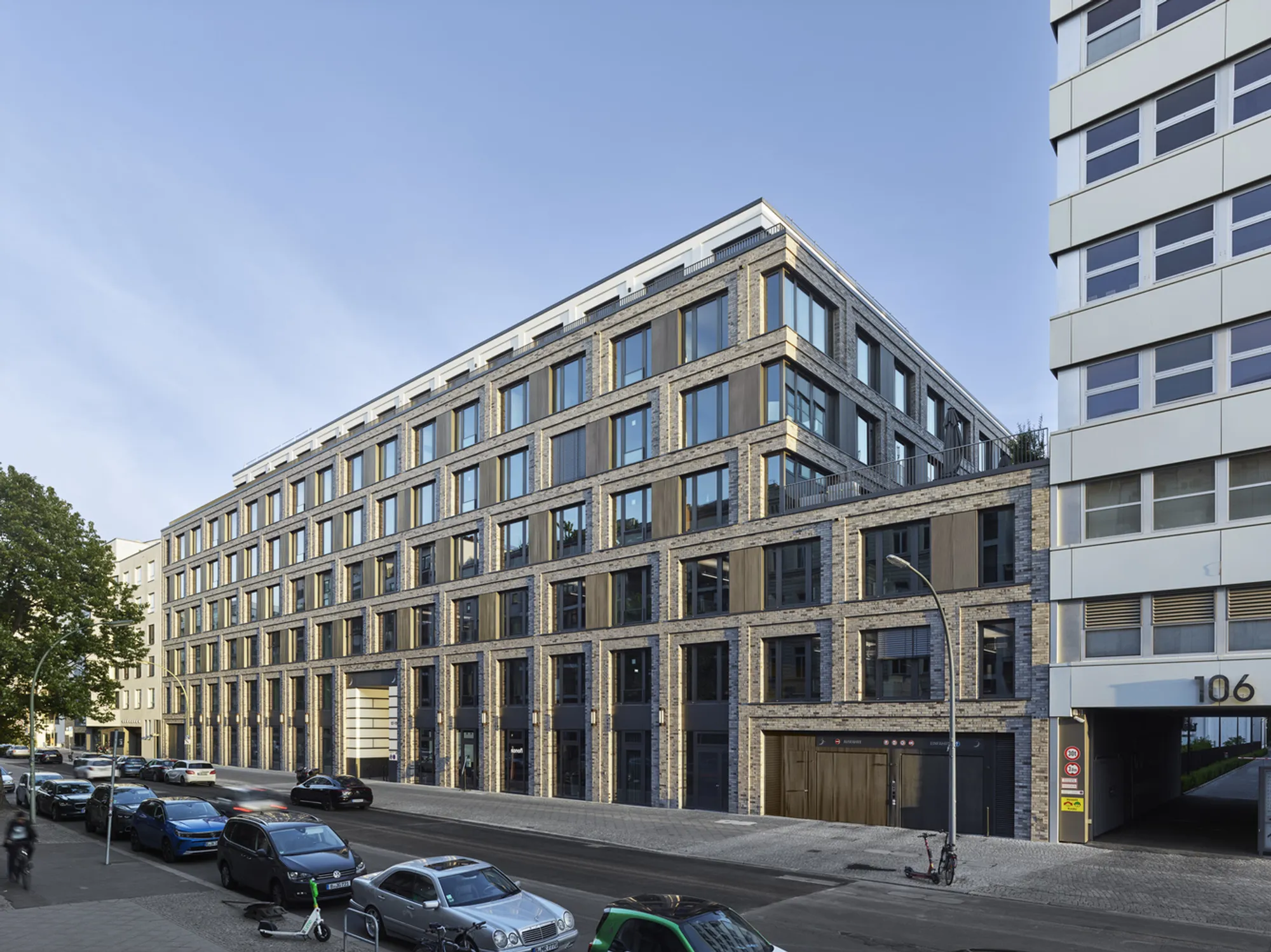
3 Höfe Office and Residential Building by Tchoban Voss Architekten
A contemporary mixed-use complex in Berlin combining offices, apartments, and green courtyards inspired by traditional courtyard architecture.


A Sustainable Mixed-Use Urban Courtyard Development in Berlin’s Historic Luetzowviertel
Located in the heart of Berlin’s Luetzowviertel—between Potsdamer Platz, Tiergarten, and Gleisdreieck Park—the 3 Höfe Office and Residential Building designed by Tchoban Voss Architekten reimagines the classic Berlin courtyard typology for the 21st century. Inspired by the urban planning principles of James Hobrecht, this modern mixed-use development spans over 33,875 square meters and harmoniously blends commercial, residential, and retail functions within a vibrant urban block.
Architectural Program & Spatial Composition
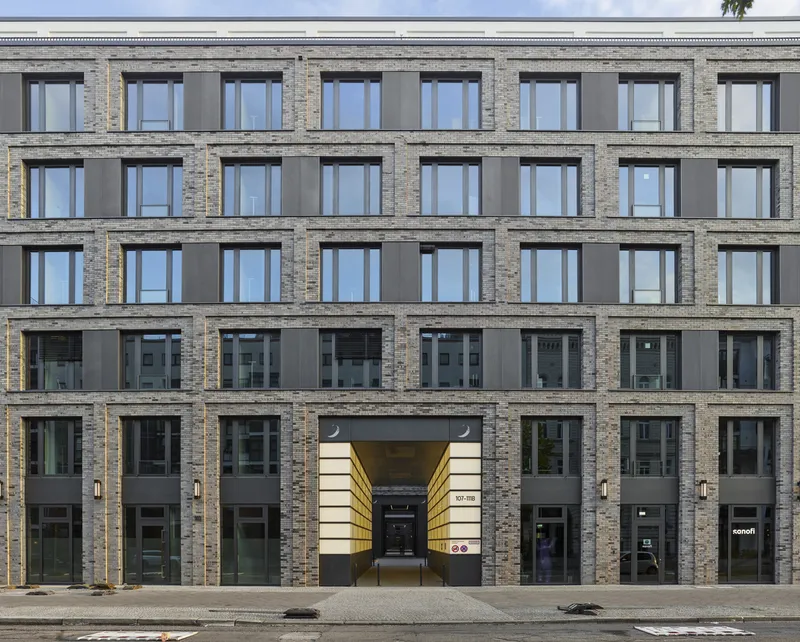
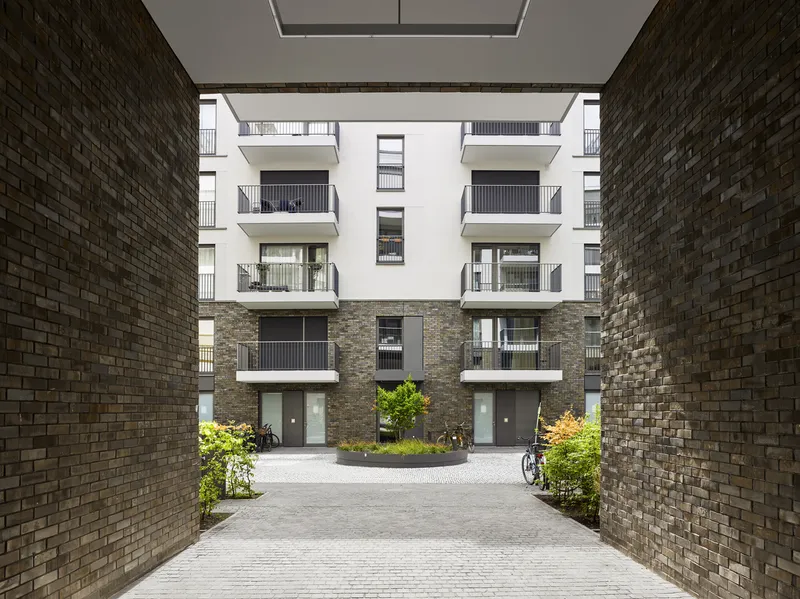
The ensemble is organized around three lushly planted inner courtyards, each uniquely designed to enhance natural light, ventilation, and community interaction. The office component comprises six full stories and a setback level, offering over 18,000 sqm of flexible workspace designed to accommodate up to seven subdivisions per floor. Complementing this are 223 residential units—a mix of studio apartments, maisonettes, and penthouses—distributed across buildings of similar scale, creating a balanced dialogue with the surrounding urban fabric.
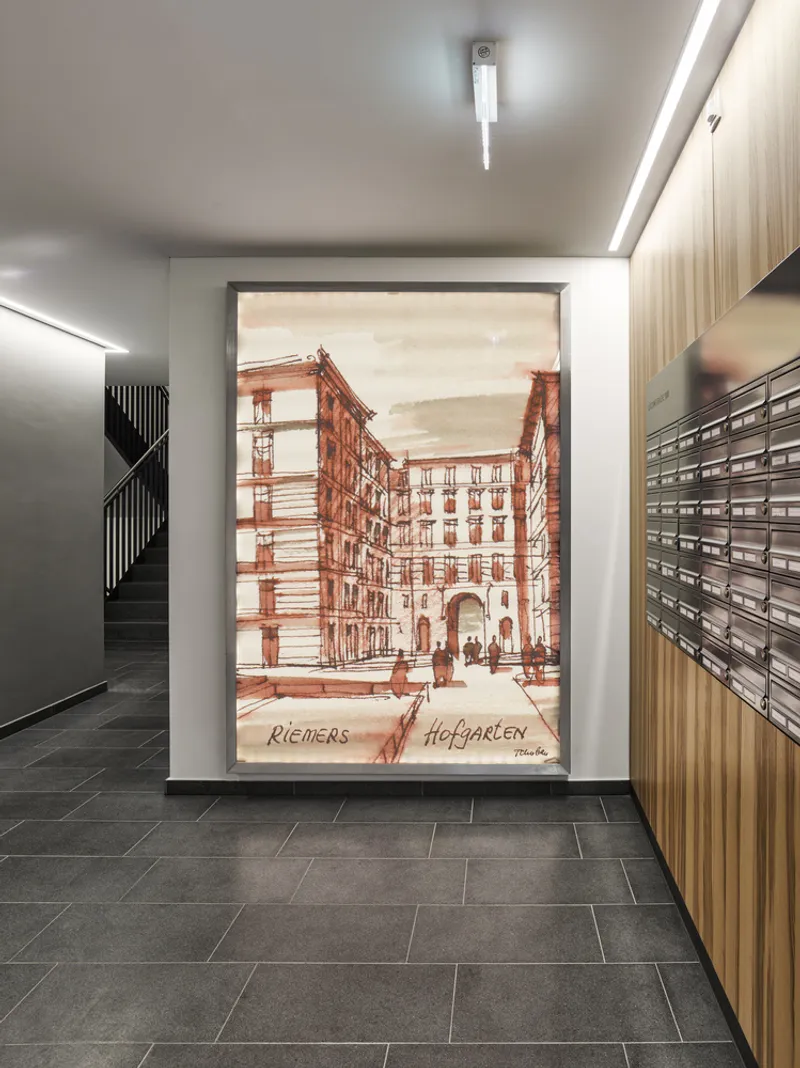
Living and Working in Harmony
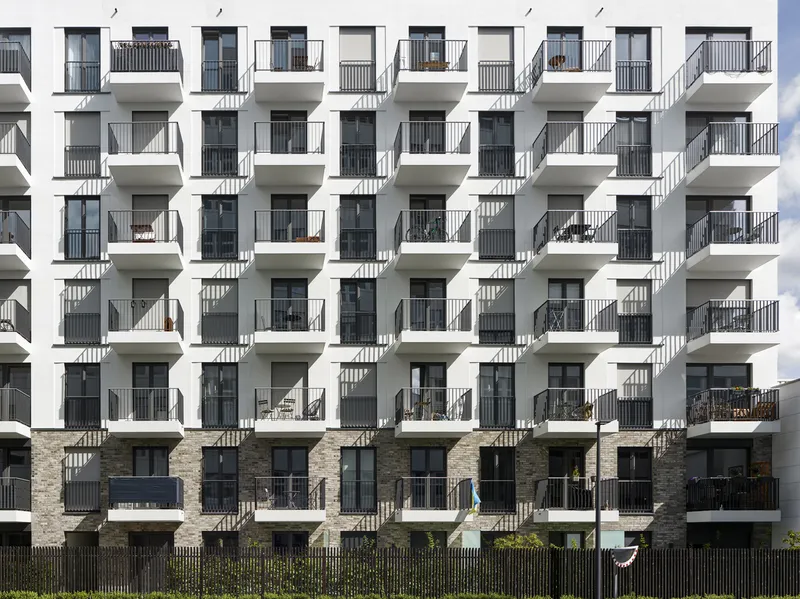
This work-live development is a contemporary response to the demands of urban life, where modular offices, diverse apartment typologies, and ground-floor retail spaces foster an inclusive, 24/7 active neighborhood. Shared lobbies, four stairwells with dual elevators, and efficient circulation routes ensure optimal accessibility. Most apartments enjoy private outdoor areas in the form of balconies, terraces, or rooftop gardens, while green roofs contribute to environmental performance and visual appeal.
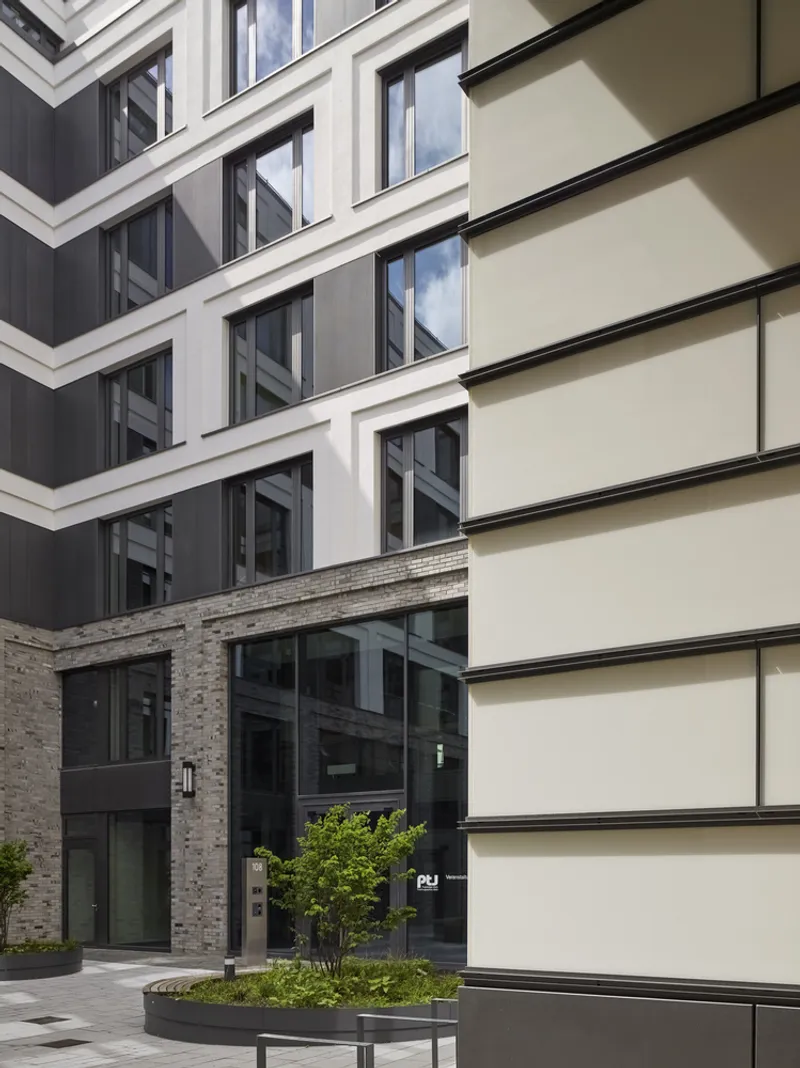
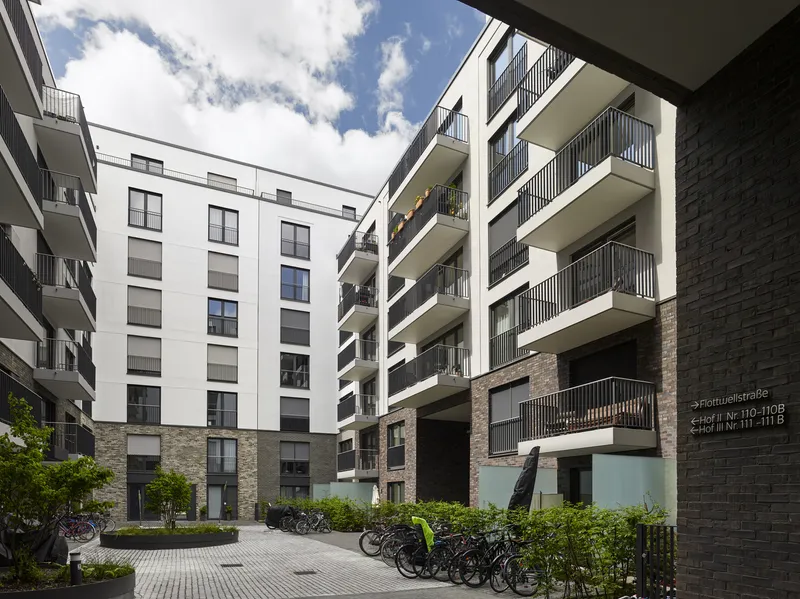
Facade & Materiality
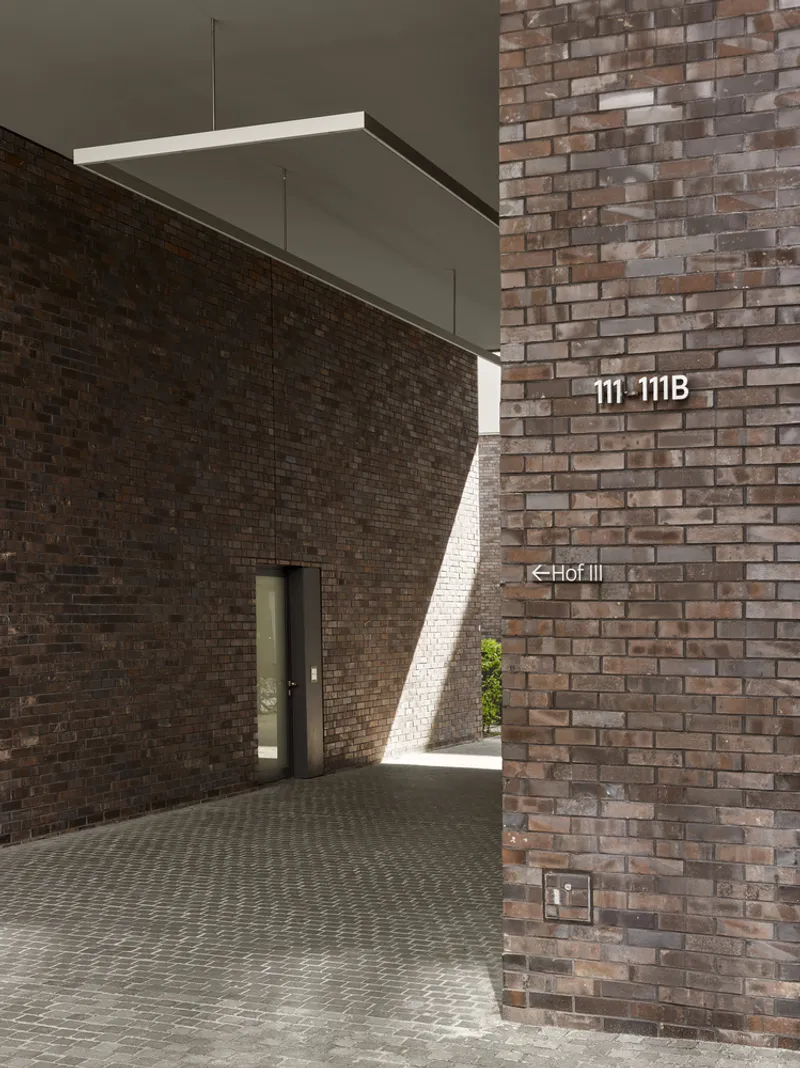
The architecture distinguishes itself through a rich interplay of textures and colors. The residential facades are animated with individualized plaster surfaces atop clinker brick socles, reflecting the parceling tradition of Berlin’s historic blocks. The office facade adopts a more rhythmic and structured language using clinker brick slips, offset pilasters, and metal panels, combining modern efficiency with timeless craftsmanship. Courtyard-facing elevations follow a similar hierarchy but transition to plaster finishes above the second level.
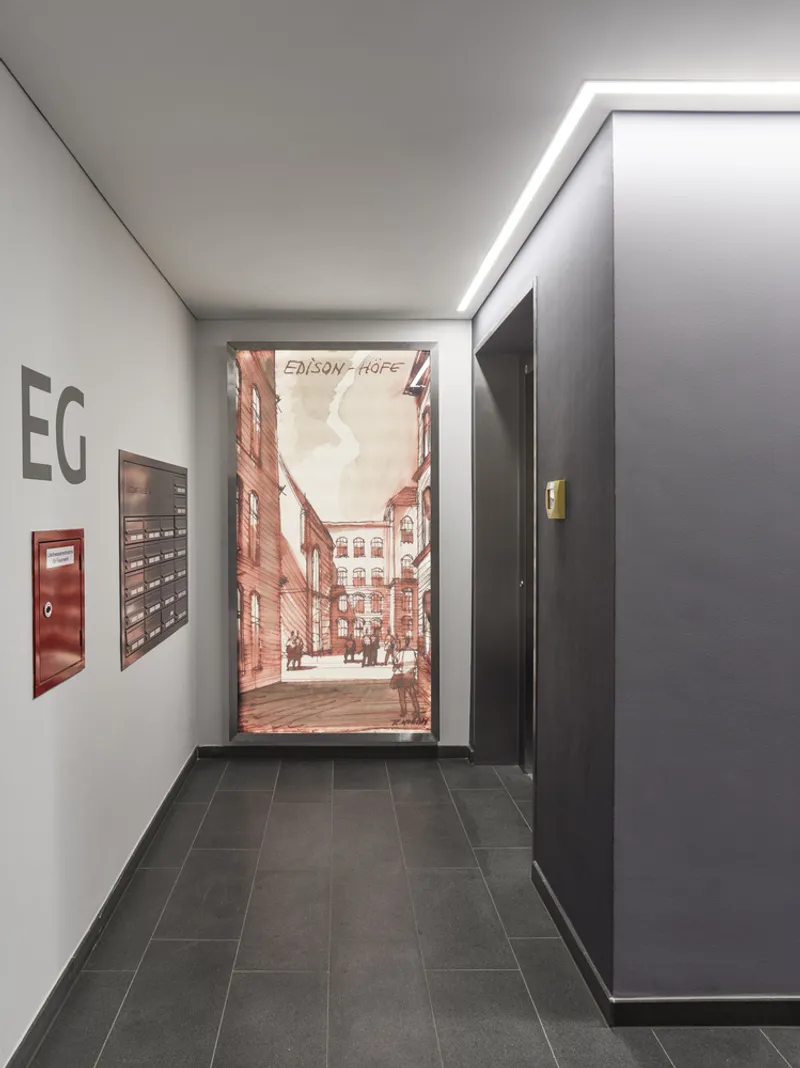
Infrastructure & Sustainability
Below ground, a 115-space underground car park, bicycle storage, and technical rooms support the building’s mixed-use program. Green infrastructure plays a key role, with extensively planted roofscapes reducing urban heat gain, supporting biodiversity, and offering enhanced leisure spaces for residents and workers alike.
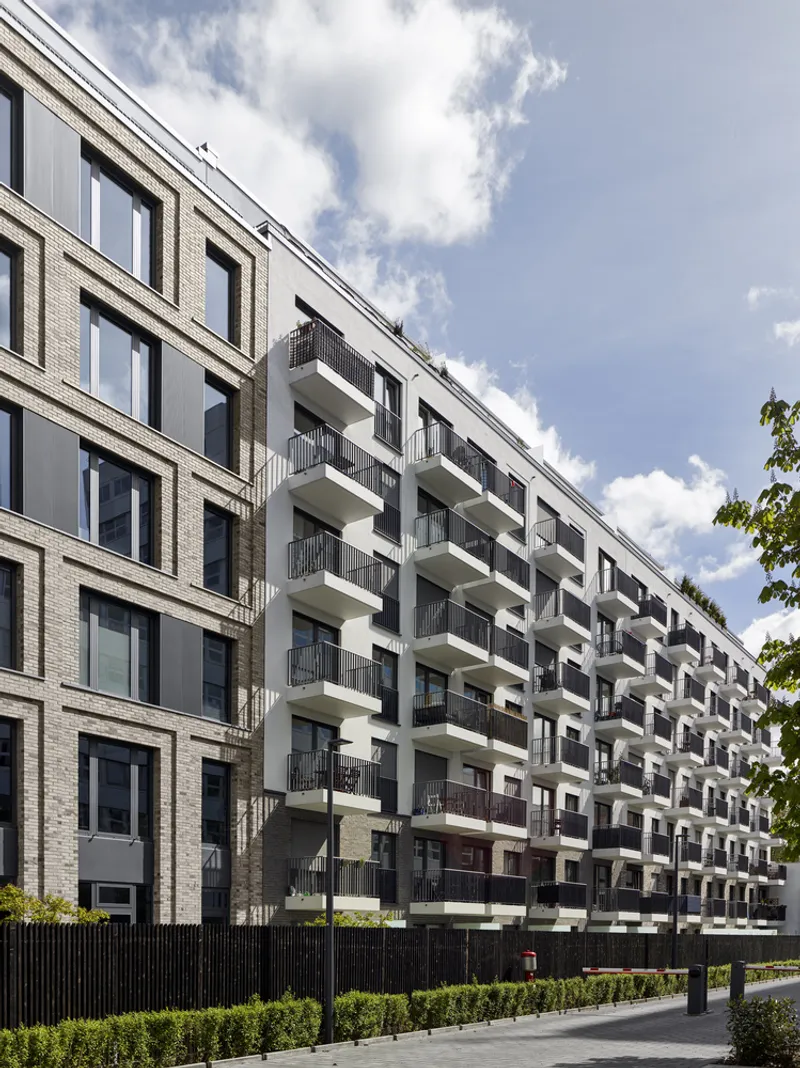
All Photographs are works of Stefan Mueller




Popular Articles
Popular articles from the community


The Ocean Hive: Sustainable Architecture for a Self-Sufficient Civilization at Sea
The Ocean Hive imagines sustainable architecture at sea, where modular habitats, algae, wave power and ocean waste sustain a growing colony.

Play: Fragments of Their World
Familiar architecture becomes modular playground design, creating safe spaces where displaced children can learn, connect, imagine and play.

Lunar Spiral: Space Architecture Shaped by the Mathematics of the Universe
Lunar Spiral reimagines space architecture through Fibonacci geometry, lunar regolith, levitating habitats, and self-sustaining Moon living.

Conexión: Biophilic Design Reimagines High-Rise Living in Hong Kong
Conexión reimagines high-rise living in Hong Kong through biophilic design, green facades, shared spaces, daylight, water and nature within.

Similar Reads
You might also enjoy these articles


Hodi-Mandai Geram
Project Function: Preservation and revitalization of the Intangible heritage and socio-spatial identity of the Hodi by Housing, Cultural Memory Center, Sacred Grove, landscape, local tourism economy


Olio Towers: A Mid-Rise for Performers That Fuses Housing, Rehearsal, and Stage
Located blocks from Houston's Theater District, this modular tower stacks living units around a central performance atrium.

Oasis: Modular Green Housing Carved into Dhaka's Urban Fabric
A shortlisted Plugin Housing entry reclaims unauthorized settlements in Dhaka with stepped concrete volumes, green roofs, and ventilation-driven design.

Black Hole: A Floating Megastructure for the Post-Physical Era
Emiliano Mazzarotto envisions a spherical, self-scaling arena where e-sports, digital hotels, and holographic stadiums replace traditional public space.


Explore Residential Building Competitions
Discover active competitions in this discipline


Challenge to design mud housing for contemporary communities


Challenge to reimagine the Iron Throne


Photograph architecture without architects


Illustrate the lost glory of Angkor Wat - Render Challenge
Comments (0)
Please login or sign up to add comments
No comments yet. Be the first to comment!