
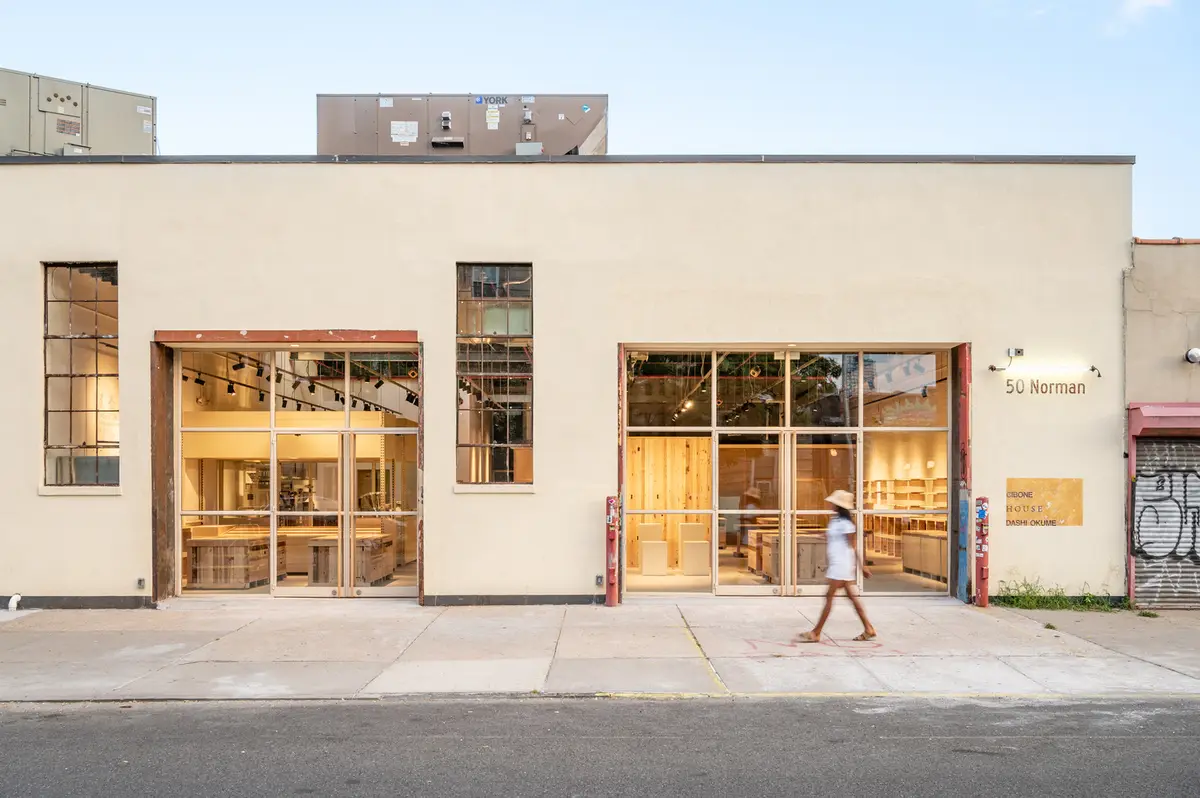
50 Norman: A Japanese Culinary and Design Destination in Brooklyn by Schemata Architects + Jo Nagasaka
Japanese-inspired retail and dining complex in Brooklyn using reclaimed materials, crafted with DEKASEGI method by Schemata Architects + Jo Nagasaka.


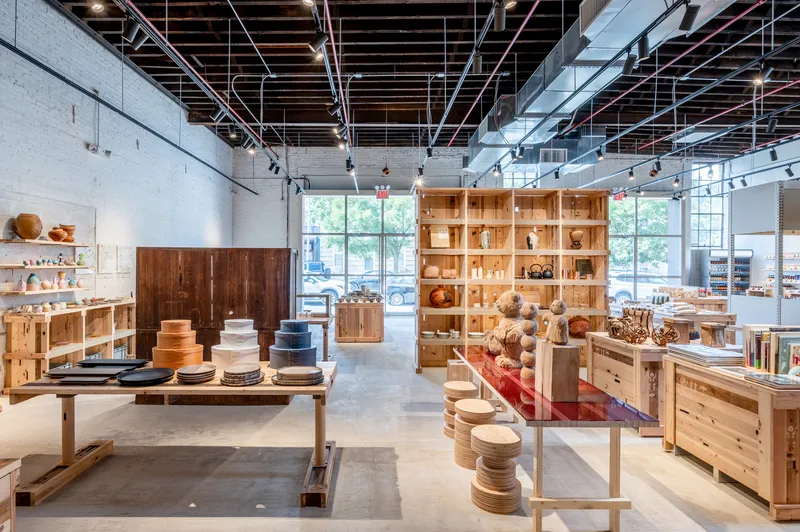
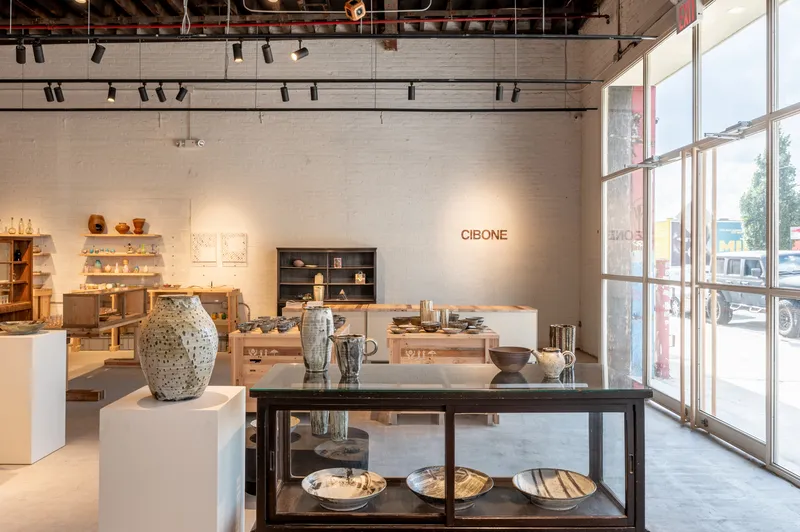
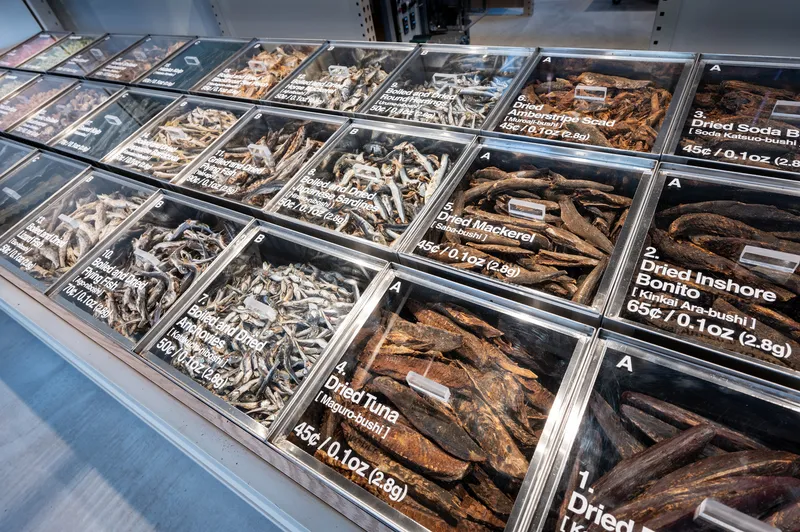
50 Norman, designed by Schemata Architects in collaboration with Jo Nagasaka, is a hybrid cultural and culinary complex located in the heart of Greenpoint, Brooklyn. Completed in 2022, the 325 m² project fuses Japanese craftsmanship, architectural reuse, and innovative global logistics into a seamless retail and dining experience. The space houses three Japanese concept brands: House Brooklyn, a Japanese-French fusion restaurant; CIBONE, a curated lifestyle shop featuring ceramics and artisan tools; and Okume, a renowned seafood store originating from Tokyo’s historic Tsukiji market.
Transcultural Craftsmanship Meets Adaptive Design
The design challenge was to bring authentic Japanese aesthetics and quality to an overseas context, without resorting to overly simplified or generalized forms. Instead of adapting to local norms, the architects aimed to preserve the refined material sensibility and structural detail typical of their work in Japan.
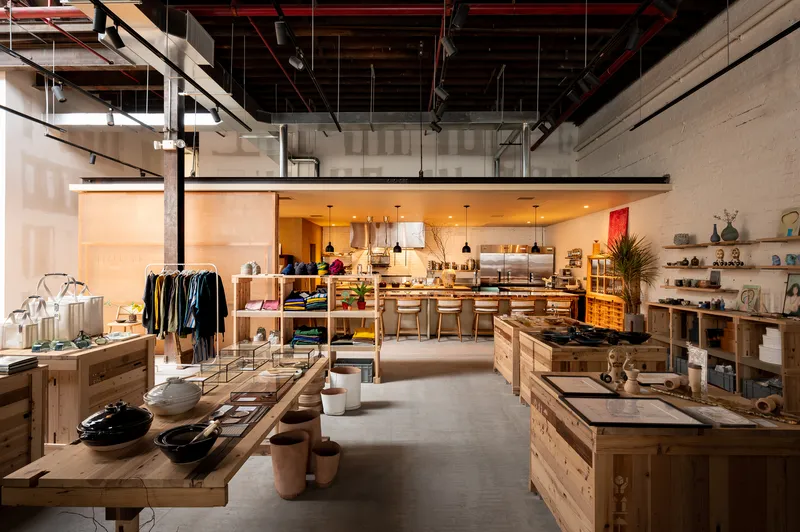
The project introduced a unique construction concept called “DEKASEGI” — a method of salvaging high-quality wood from deconstructed Japanese buildings, reducing its size for shipment, and reassembling it on-site with the help of Japanese artisans. This method not only minimized material waste but also maintained the tactile authenticity of aged timber, complete with traditional joints and patina.
Building in a Global Crisis
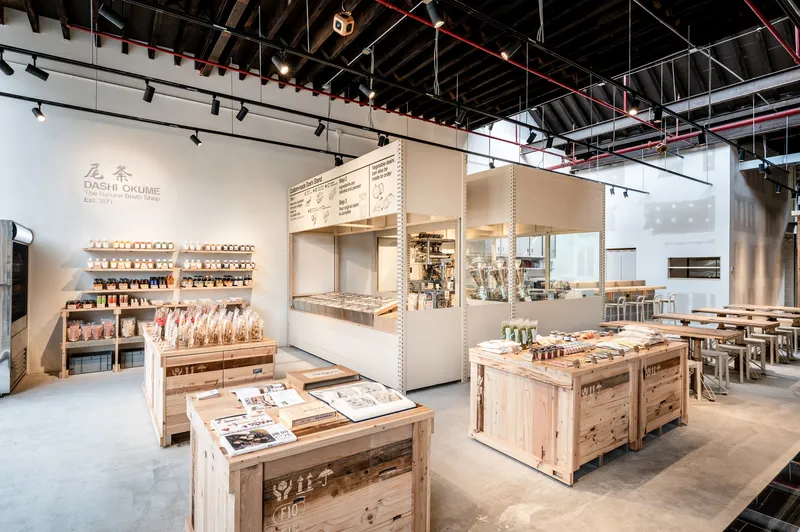
Planning and fabrication for 50 Norman began during the height of the COVID-19 pandemic, when global supply chains were disrupted, and transportation costs surged. Initially designed for shipping via sea freight, the materials eventually had to be air-freighted due to extended delays. This led to clever packing strategies using custom-built crates, which were later repurposed as modular display stands within the interiors. Local fabrication was supported by TANK, a construction firm known for their skill with FRP (Fiber Reinforced Plastic), which was adapted to fit American construction standards while maintaining a handmade character.
Interior Experience and Material Storytelling
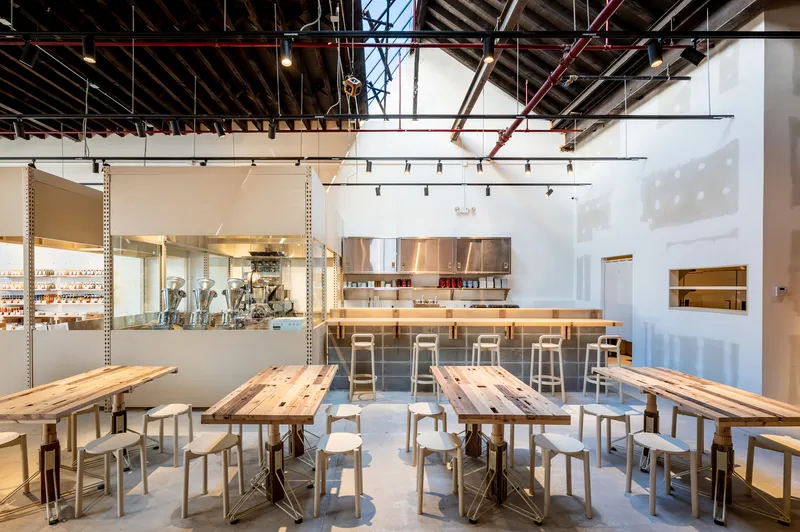
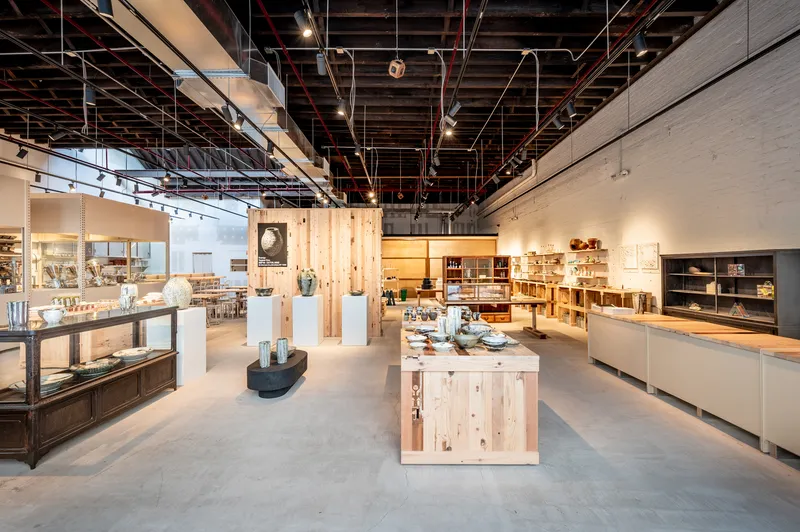
Inside, the architecture celebrates raw textures, exposed beams, and a palette of reclaimed materials. The spaces feel both grounded and elevated — a rare fusion of Japanese minimalism and Brooklyn industrial heritage. Spatially, the design encourages slow circulation and tactile engagement, from open kitchen counters and hand-built shelving to the visible integration of reused materials.
50 Norman is more than just a place to dine or shop; it is a cultural translation of Japanese design values, executed with precision, resilience, and sustainability at its core.
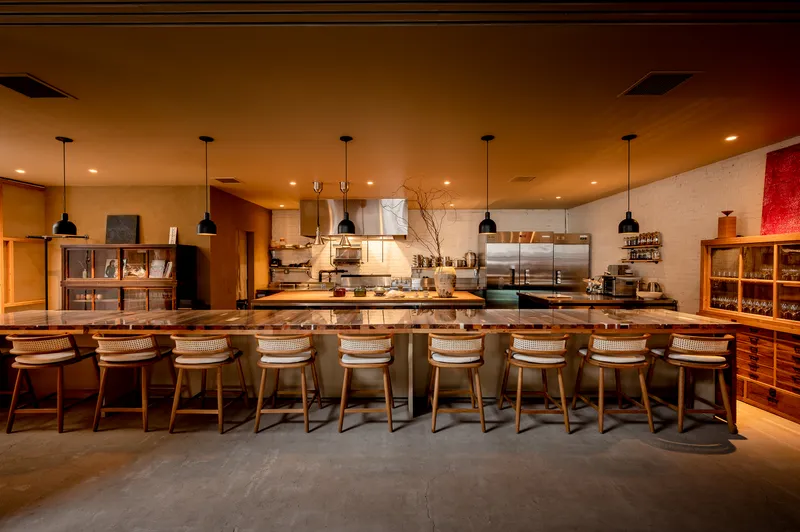
All Photographs are works of GION, Schemata Architects / 50 Norman team


Popular Articles
Popular articles from the community


David Macias Steps a Doorless Stone and Plaster House Down a Tropical Colombian Hillside
In the humid hills of Colombia, Threshold House replaces the front door with an open void and terraces its 850 m² down the slope instead of fighting it.

David Ortega Stacks a Two-Story Mexico City Penthouse Around a Steel Stair and a Pergola-Shaded Roof Terrace
In Colonia Roma, a 300 m² penthouse uses oak joinery, a planted steel stair and a slatted roof pergola to make a new-build apartment feel like a house.

longwave studio Reorganizes a 112 m² Tainan Apartment Around the Daily Routines of a Family and Two Cats
In Tainan, Taiwan, birch plywood, rust-red furniture and a freestanding plaster wall link arrival, storage, work and family life in one apartment.

Cube Design Draws an Ecological Corridor Between Two Shenzhen Hills with the Nankai Building
Beside Shenzhen's container docks, the Nankai Building pairs stacked balconies with a climbing green screen to connect two hillsides across its height.

Similar Reads
You might also enjoy these articles


Hodi-Mandai Geram
Project Function: Preservation and revitalization of the Intangible heritage and socio-spatial identity of the Hodi by Housing, Cultural Memory Center, Sacred Grove, landscape, local tourism economy


Olio Towers: A Mid-Rise for Performers That Fuses Housing, Rehearsal, and Stage
Located blocks from Houston's Theater District, this modular tower stacks living units around a central performance atrium.

Oasis: Modular Green Housing Carved into Dhaka's Urban Fabric
A shortlisted Plugin Housing entry reclaims unauthorized settlements in Dhaka with stepped concrete volumes, green roofs, and ventilation-driven design.

Black Hole: A Floating Megastructure for the Post-Physical Era
Emiliano Mazzarotto envisions a spherical, self-scaling arena where e-sports, digital hotels, and holographic stadiums replace traditional public space.

Explore Hospitality Building Competitions
Discover active competitions in this discipline

Challenge to reimagine the Iron Throne

Photograph architecture without architects

Illustrate the lost glory of Angkor Wat - Render Challenge

Design challenge to reuse E-waste
Comments (0)
Please login or sign up to add comments
No comments yet. Be the first to comment!