
50 Social Housing Units – DE PEUS A TERRA i el cap pels núvols by Miel Arquitectos + MARMOLBRAVO + MADhel
A vibrant social housing complex in Barcelona promoting community, sustainability, and flexible living through dynamic terraces, shared spaces, and local materials.


Reimagining Community Living in Barcelona’s Bon Pastor Neighborhood
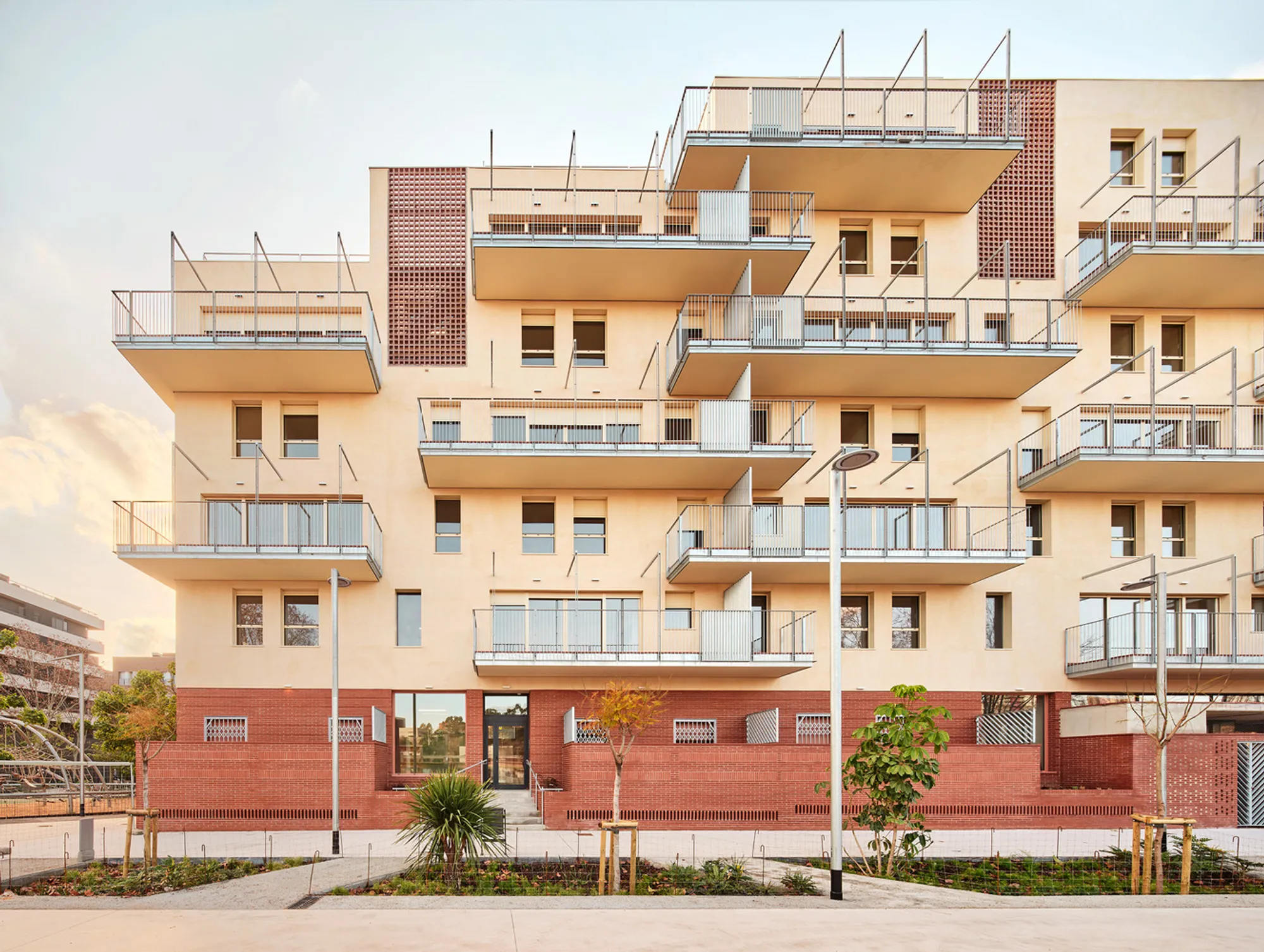
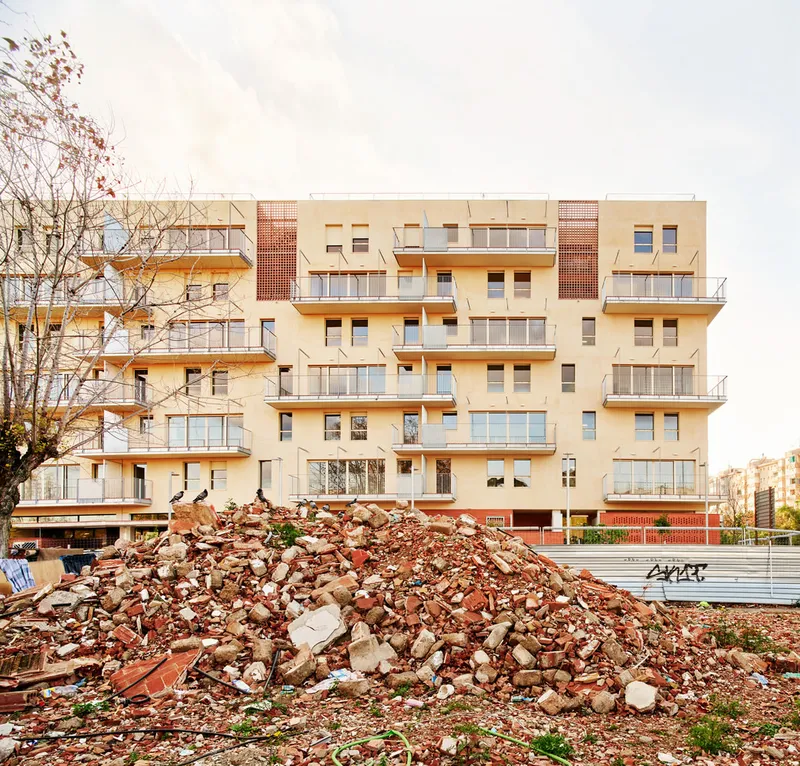
Located in the Bon Pastor district of Barcelona, Spain, DE PEUS A TERRA i el cap pels núvols is a striking social housing development by Miel Arquitectos, MARMOLBRAVO, and MADhel. Designed for the Barcelona Municipal Institute of Housing and Renovation, this 50-unit social housing complex redefines collective living through thoughtful urban integration, sustainable materials, and a deep respect for neighborhood identity.
The project forms part of the ongoing transformation of the historic “Casas Baratas de Bon Pastor,” a 20th-century housing initiative originally built for workers of the 1929 International Exposition. Over time, the neighborhood’s single-story courtyard homes have gradually been replaced by multi-story apartment buildings, including this new ground-plus-six-floor residential structure.
Restoring Neighborhood Sociability and Urban Connection
One of the primary goals of the design was to restore the sense of community and sociability that once defined Bon Pastor’s street-level interactions. To address the shift in scale introduced by newer high-rise blocks, the architects introduced several strategies to humanize the building’s presence at street level.
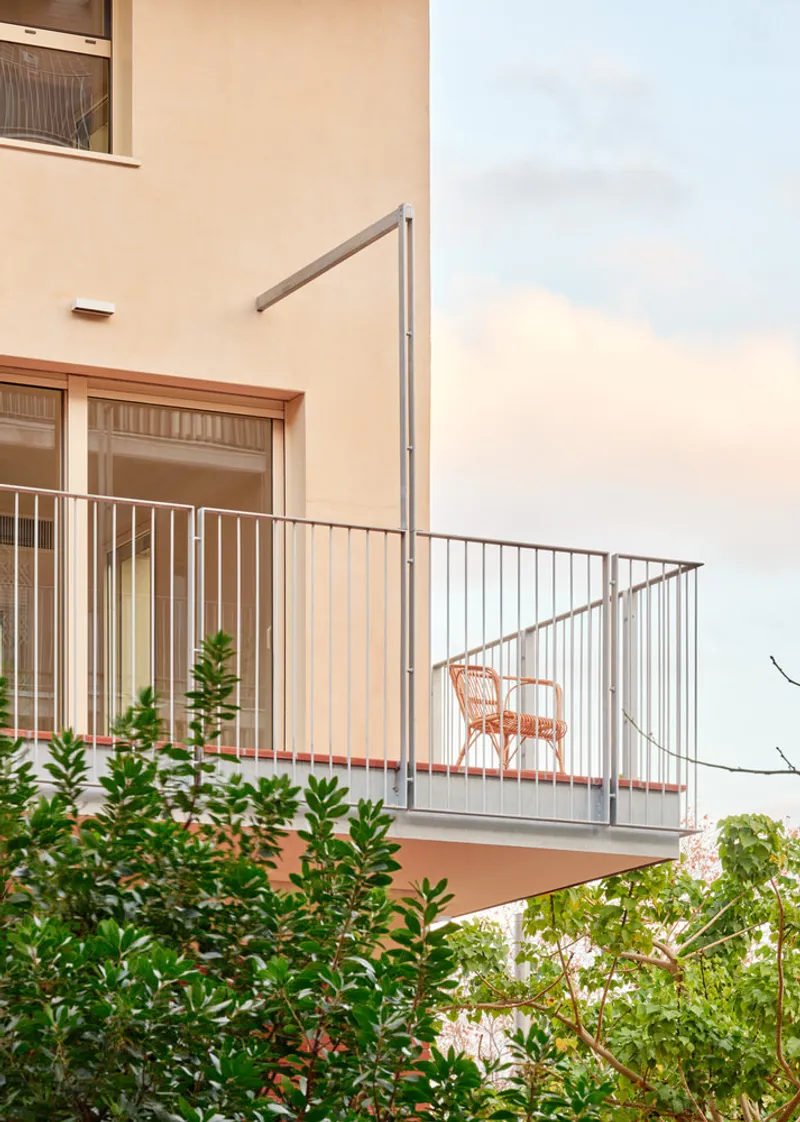
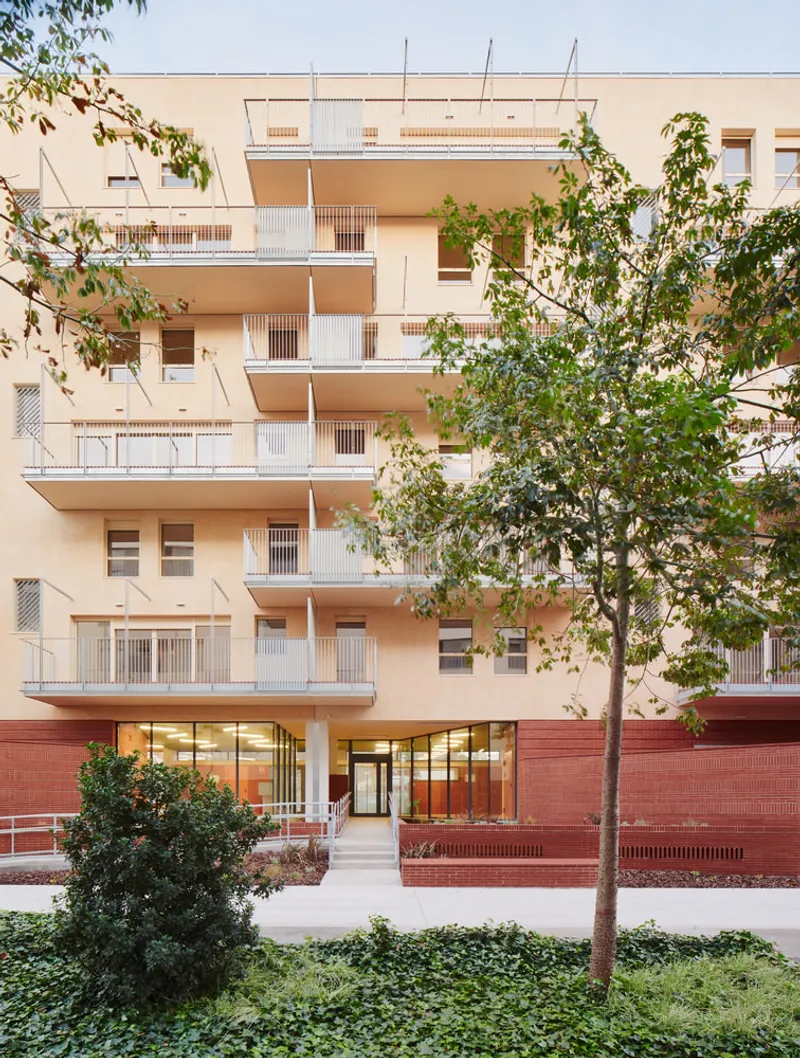
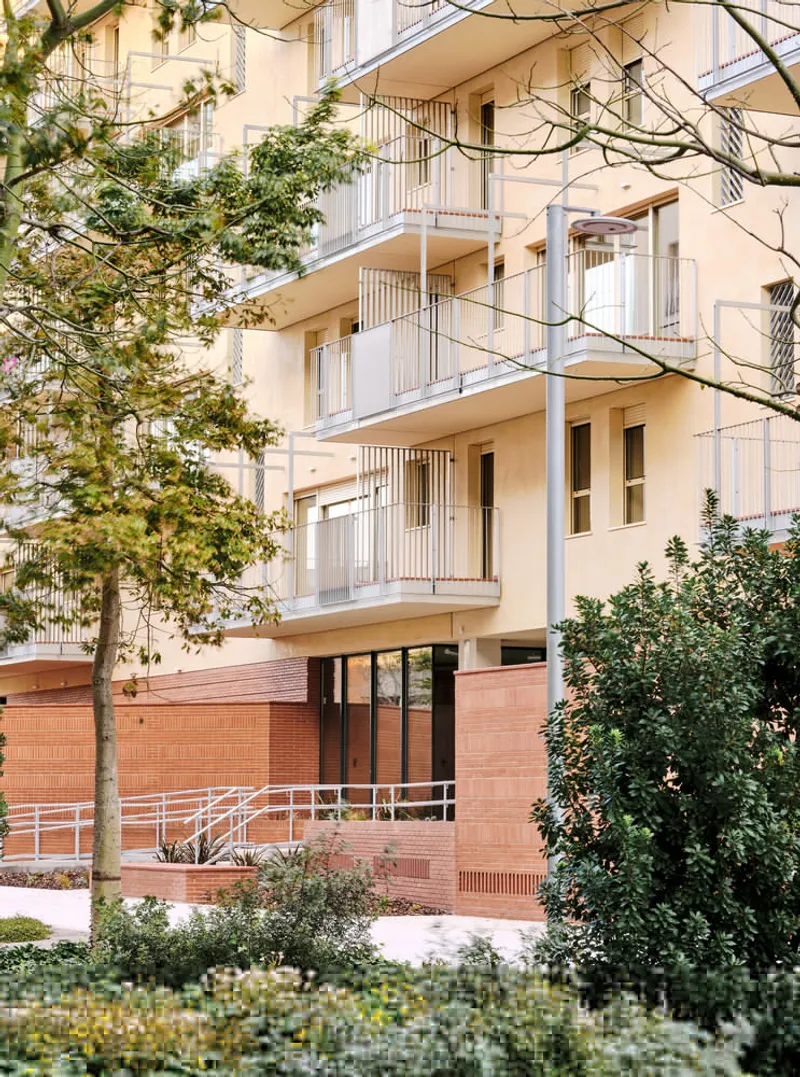
The ground floor is composed of robust red brickwork and generous openings, establishing a strong visual and physical connection with the public realm. Ramps, stairs, and open planters integrate the building seamlessly into its urban surroundings, while encouraging walking, resting, and informal encounters. The brick base’s mass and warmth contrast elegantly with the lightness and vertical rhythm of the residential levels above, creating a balanced and welcoming facade.
Architectural Strategy: Light, Flexibility, and Transparency
The design embraces staggered terraces and reversible dwelling layouts to optimize both sunlight and cross ventilation. By alternating the orientation of living spaces between the east and west facades, the architects reduce stacked terrace repetition and create a more dynamic building profile. From the street, this rhythm makes the structure appear more compact and animated.
Inside, circulation spaces become active social zones. Ramps, staircases, and open-air passageways connect street to street, fostering visual transparency, security, and natural light throughout the building. Vertical triple-height voids punctuate these communal spaces, turning everyday movement into an engaging architectural experience.
Bright colors, green ceilings, and wooden benches on each level add an element of playfulness and human warmth—inviting residents to pause, interact, and create community bonds within the vertical fabric of the building.
Flexible Domestic Spaces and Outdoor Extensions
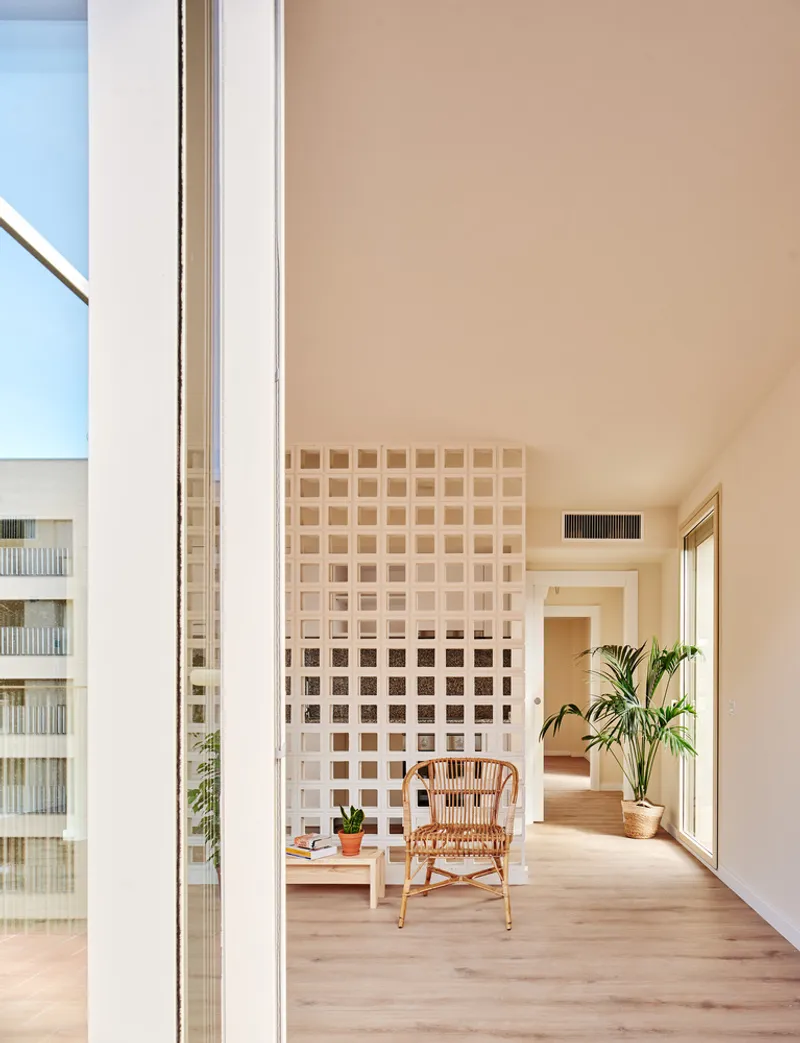
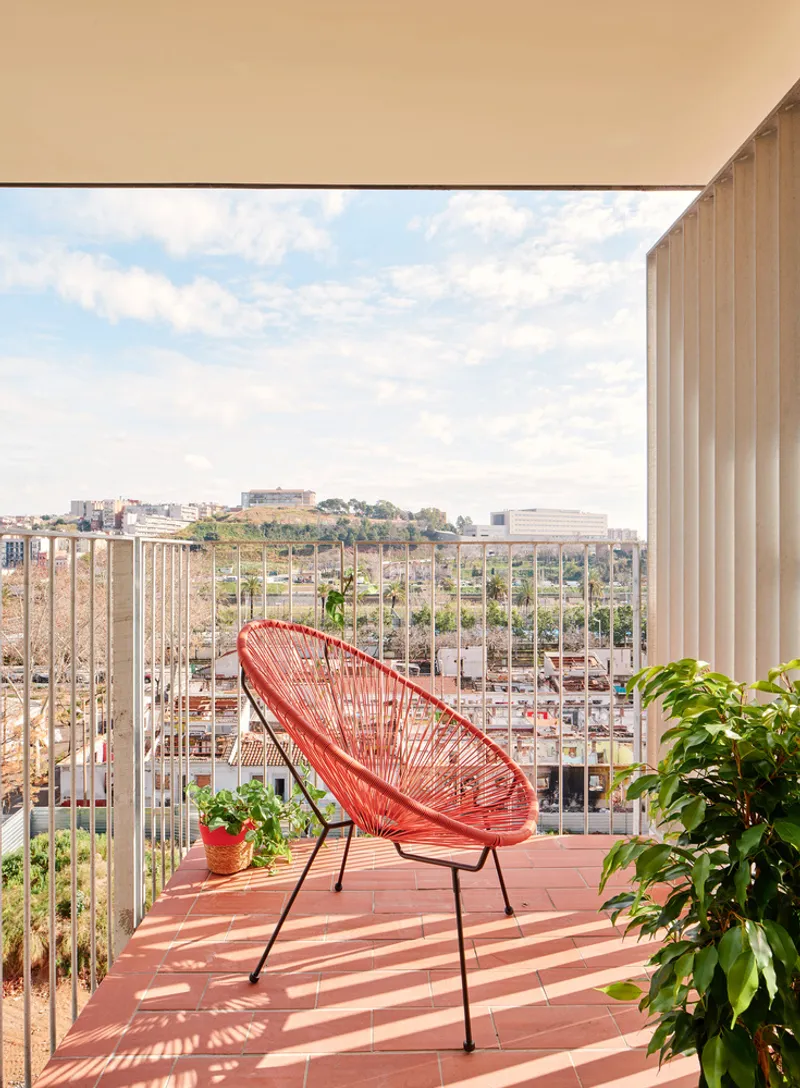
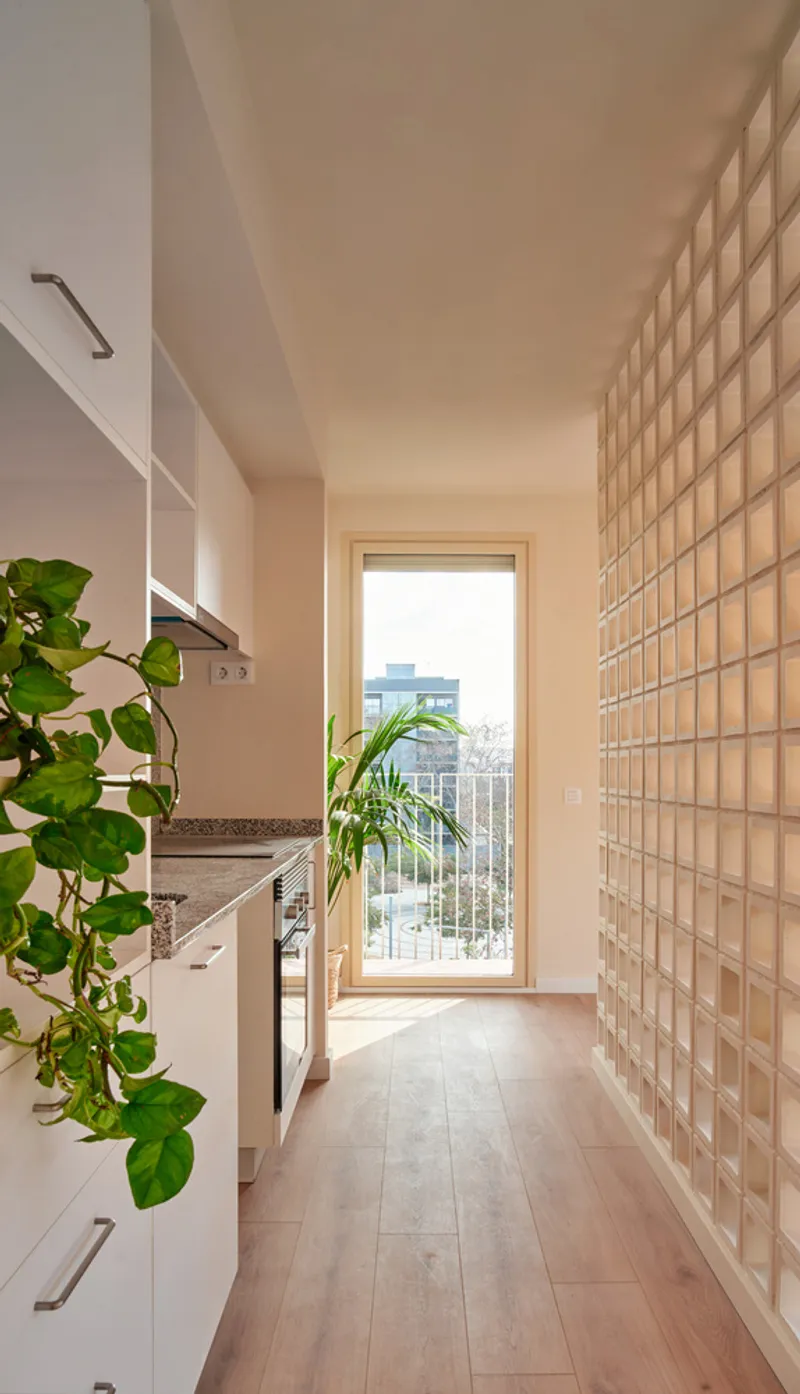
Each apartment is designed for adaptability and openness. Homes feature walk-through layouts with terraces on both facades, enabling effective cross ventilation and abundant natural lighting. The living rooms extend outward through 5-meter-wide openings that merge seamlessly with private terraces, blurring the boundary between interior and exterior—between the home and the patio.
The central bathroom divides the plan symmetrically, while adjacent flexible spaces allow for customization. Depending on user needs, these zones can become a second bathroom, dressing area, pantry, or storage room, adapting to evolving family dynamics and lifestyle shifts. This flexibility supports sustainable living by encouraging long-term habitation and minimizing the need for renovation.
Materiality and Environmental Performance
Material choice plays a crucial role in linking the project to Bon Pastor’s identity. The building’s envelope combines traditional Catalan materials—including red brick, handcrafted mortar finishes, ceramic lattices from La Bisbal, vitrified tiles, and terrazzo flooring—with modern performance standards suitable for today’s climate-conscious architecture.
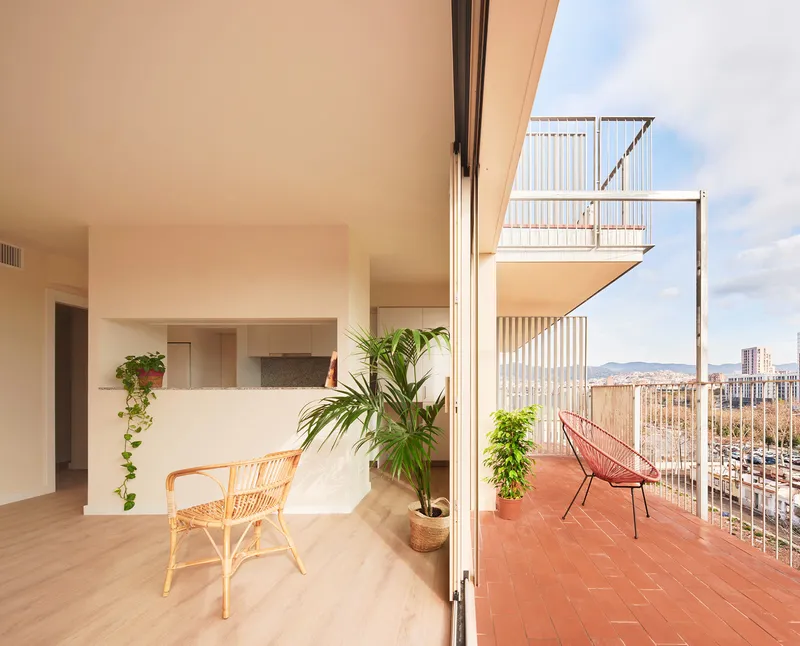
Each material is deliberately left imperfect, celebrating craftsmanship and tactility. The project’s low-energy design and passive strategies—cross ventilation, shading terraces, and thermal mass—significantly reduce its environmental impact, aligning with Barcelona’s broader goals for sustainable urban regeneration.
A New Vision for Collective Housing
DE PEUS A TERRA i el cap pels núvols exemplifies a human-centered approach to social housing that balances urban density with livability, environmental responsibility, and emotional warmth. It reinterprets the essence of Bon Pastor’s street life—community interaction, adaptability, and material honesty—into a vertical neighborhood that reflects the evolving identity of contemporary Barcelona.
Through its sensitive design language, layered facades, and interactive circulation, the project demonstrates that social housing can be both functional and poetic—a space where everyday life meets architectural imagination.




Popular Articles
Popular articles from the community


Play: Fragments of Their World
Familiar architecture becomes modular playground design, creating safe spaces where displaced children can learn, connect, imagine and play.

Hill & Cross Opera: Sculptural Opera House Architecture Shaped by Tallinn’s Landscape and Identity
Hill & Cross Opera reimagines opera house architecture in Tallinn through its sculptural hill, civic plaza, glass wave and a luminous cross.

The Ocean Hive: Sustainable Architecture for a Self-Sufficient Civilization at Sea
The Ocean Hive imagines sustainable architecture at sea, where modular habitats, algae, wave power and ocean waste sustain a growing colony.

Conexión: Biophilic Design Reimagines High-Rise Living in Hong Kong
Conexión reimagines high-rise living in Hong Kong through biophilic design, green facades, shared spaces, daylight, water and nature within.

Similar Reads
You might also enjoy these articles


Hodi-Mandai Geram
Project Function: Preservation and revitalization of the Intangible heritage and socio-spatial identity of the Hodi by Housing, Cultural Memory Center, Sacred Grove, landscape, local tourism economy


Olio Towers: A Mid-Rise for Performers That Fuses Housing, Rehearsal, and Stage
Located blocks from Houston's Theater District, this modular tower stacks living units around a central performance atrium.

Oasis: Modular Green Housing Carved into Dhaka's Urban Fabric
A shortlisted Plugin Housing entry reclaims unauthorized settlements in Dhaka with stepped concrete volumes, green roofs, and ventilation-driven design.

Black Hole: A Floating Megastructure for the Post-Physical Era
Emiliano Mazzarotto envisions a spherical, self-scaling arena where e-sports, digital hotels, and holographic stadiums replace traditional public space.

Explore Architecture Competitions
Discover active competitions in this discipline



Challenge to reimagine the Iron Throne


Photograph architecture without architects


Illustrate the lost glory of Angkor Wat - Render Challenge


Design challenge to reuse E-waste
Comments (0)
Please login or sign up to add comments
No comments yet. Be the first to comment!