

67-Unit Social Housing Building in Illa Glòries: Redefining Urban Living in Barcelona
Sustainable 67-unit social housing in Barcelona by Vivas Arquitectos and Pau Vidal promotes community living, energy efficiency, and urban integration.


Located at the heart of Barcelona’s evolving urban landscape, the 67-Unit Social Housing Building in Illa Glòries, designed by Vivas Arquitectos in collaboration with Pau Vidal, represents a new benchmark for sustainable, inclusive, and community-oriented residential architecture. With a total built area of 9,490 m², the project forms part of a larger social housing initiative that seeks to redefine the meaning of collective living in the 21st century city.
Urban Context: A Key Node in Barcelona’s Transformation
The Plaça de les Glòries Catalanes occupies a unique position in Barcelona’s urban fabric — a convergence point for three of the city’s major arteries: Gran Via, Avinguda Diagonal, and Avinguda Meridiana. Each of these axes contributes a distinct urban rhythm.
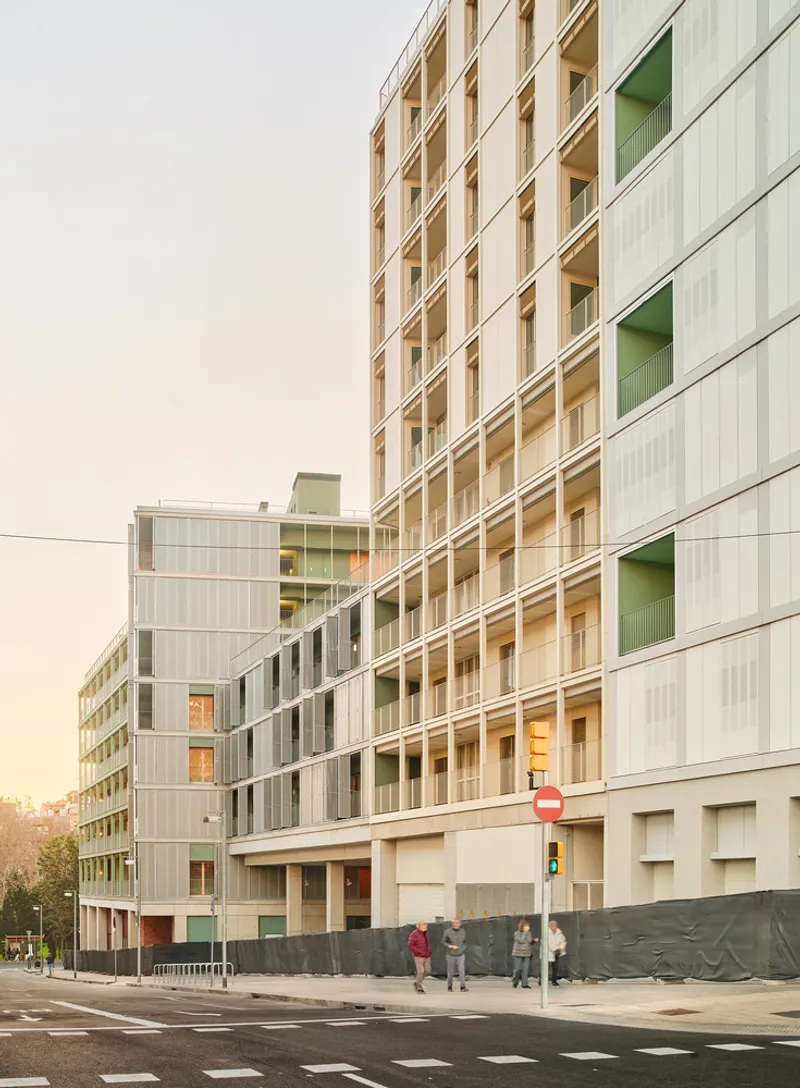
- Gran Via connects the eastern coastline, promoting pedestrian mobility and reducing vehicular dominance.
- Diagonal anchors the Eixample grid, linking the city’s higher and coastal areas.
- Meridiana, historically more industrial, redefines its identity upon reaching Glòries.
The site is further reinforced by the historic Ribes Road, designed as a civic axis promoting pedestrian and cyclist circulation, linking surrounding neighborhoods and public facilities in continuity with Carrer del Clot. This dynamic setting positions Illa Glòries as a key urban laboratory for sustainable and inclusive development.
Illa Glòries: A Model for Inclusive Urban Housing
Within this context, Illa Glòries emerges as a central piece of Barcelona’s “Superilla” (superblock) plan — a strategy promoting human-scale urban environments by limiting car traffic and enhancing public space. The development, defined by Consell de Cent, Castillejos, Bolívia, and Independència streets, includes four buildings (A, B, C, and D) under the Special Plan for Urban Improvement (PEMU). Together, they comprise 238 social housing units, marking the city’s largest contemporary housing initiative.

Building C, housing 67 dwellings, is a pivotal component in this ensemble. Its design emphasizes typological flexibility, environmental performance, and social cohesion, demonstrating how public housing can simultaneously respond to climatic, social, and spatial challenges.
Design Concept: Flexibility and Connection
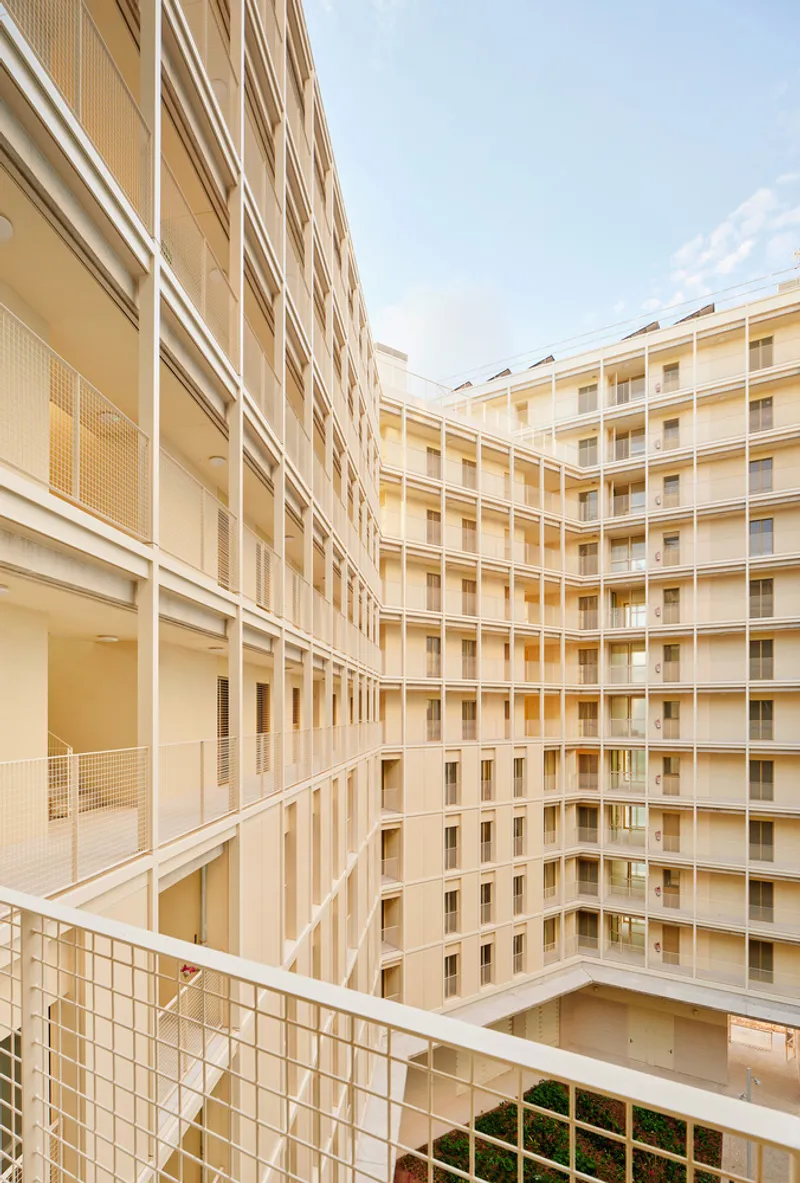
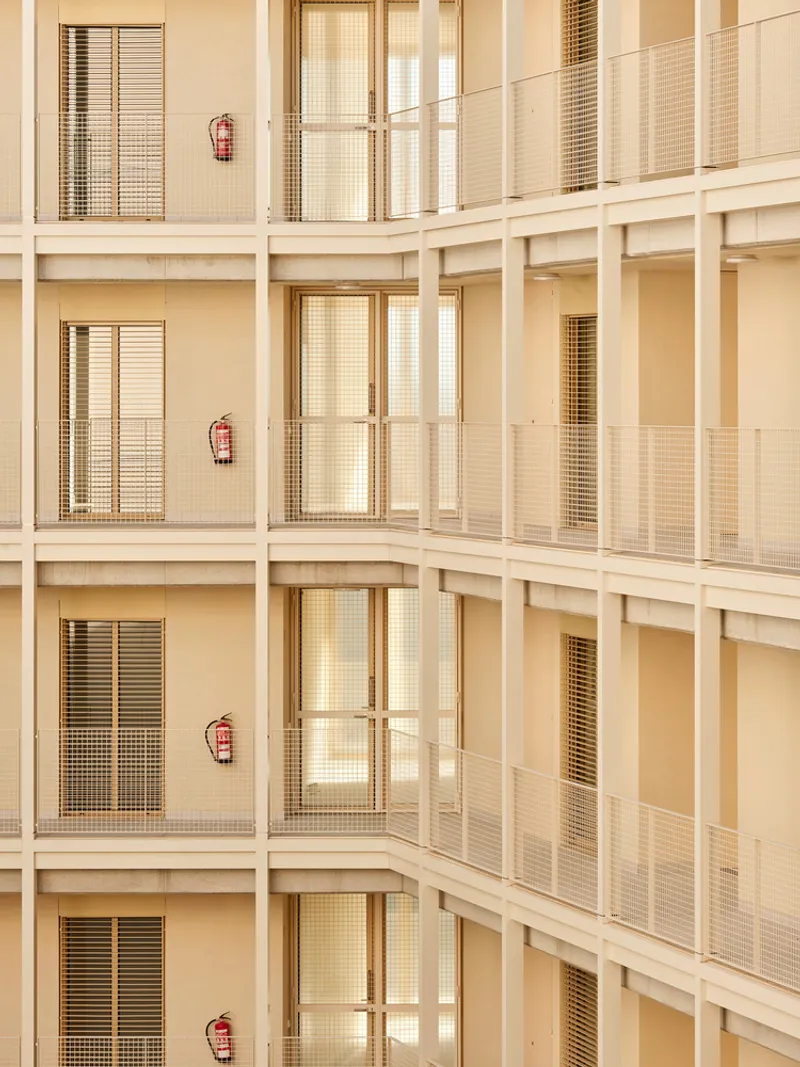
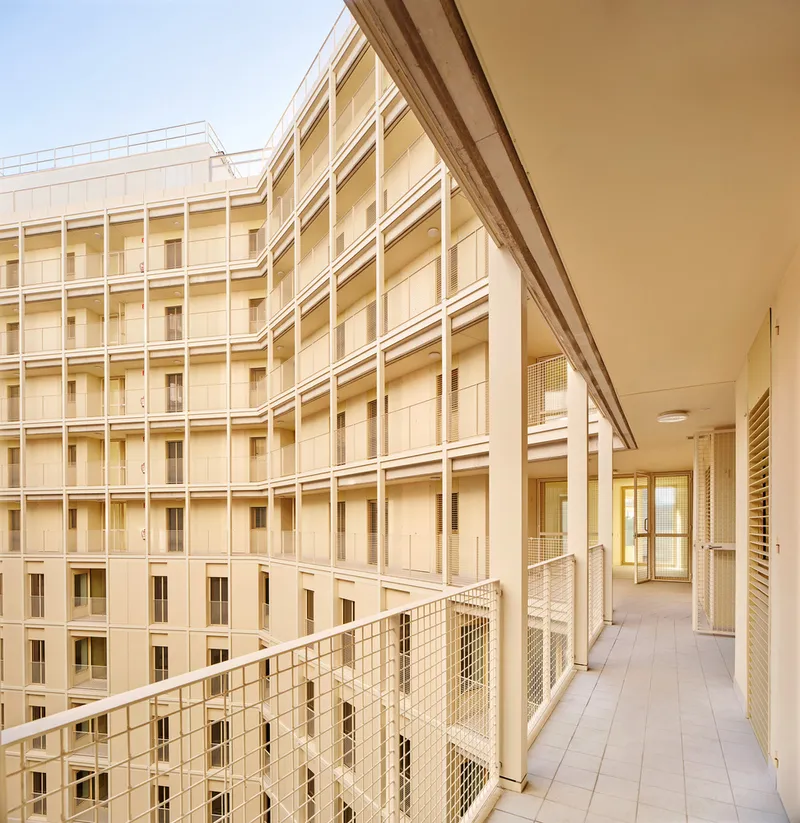
The architecture of Building C is founded on double-orientation housing typologies, ensuring optimal natural ventilation and solar exposure. Each dwelling is accessed via exterior walkways that open onto an internal courtyard, fostering a sense of community and enabling continuous airflow.
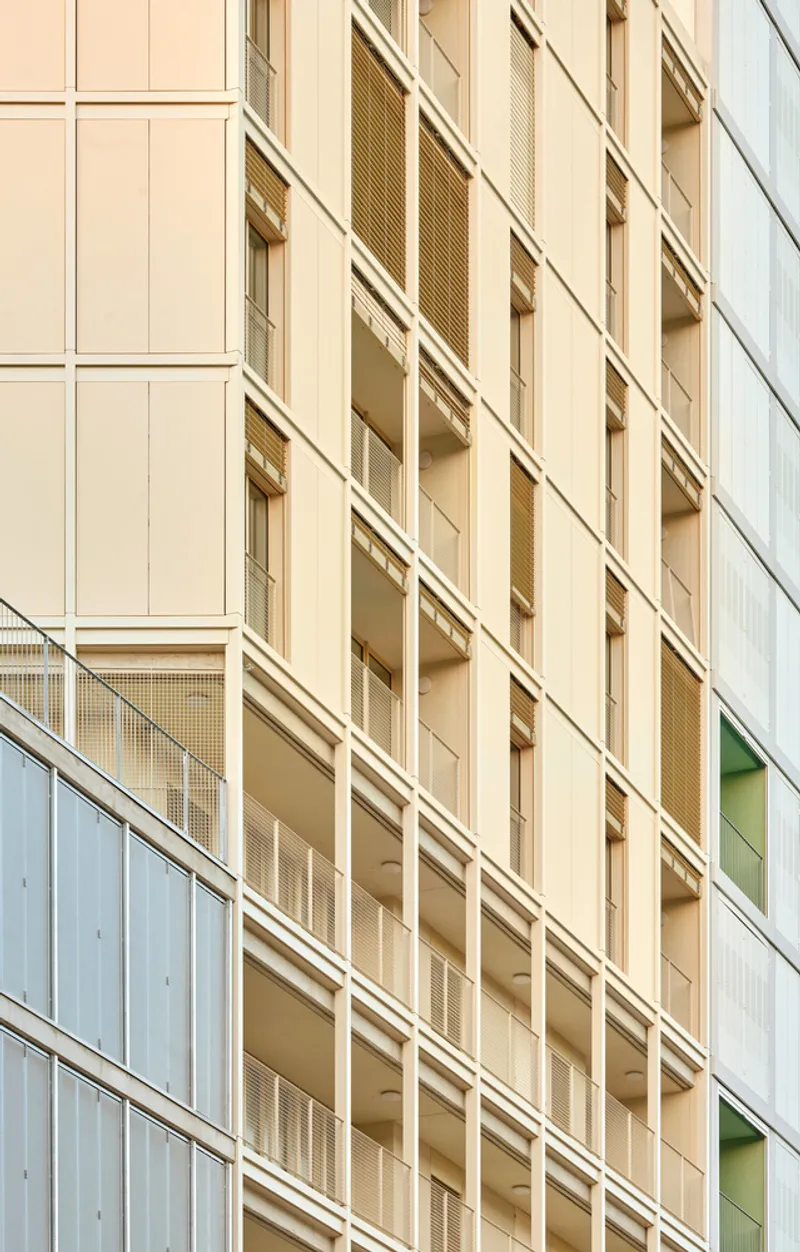
From the fifth floor upward, the absence of adjacent Building B allows for a reorientation of the units toward the south, improving sunlight and views. The walkways shift to the north façade, maximizing the building’s environmental performance and enhancing its integration with the surrounding urban landscape.
Architecture of Community: Spaces Between Private and Public
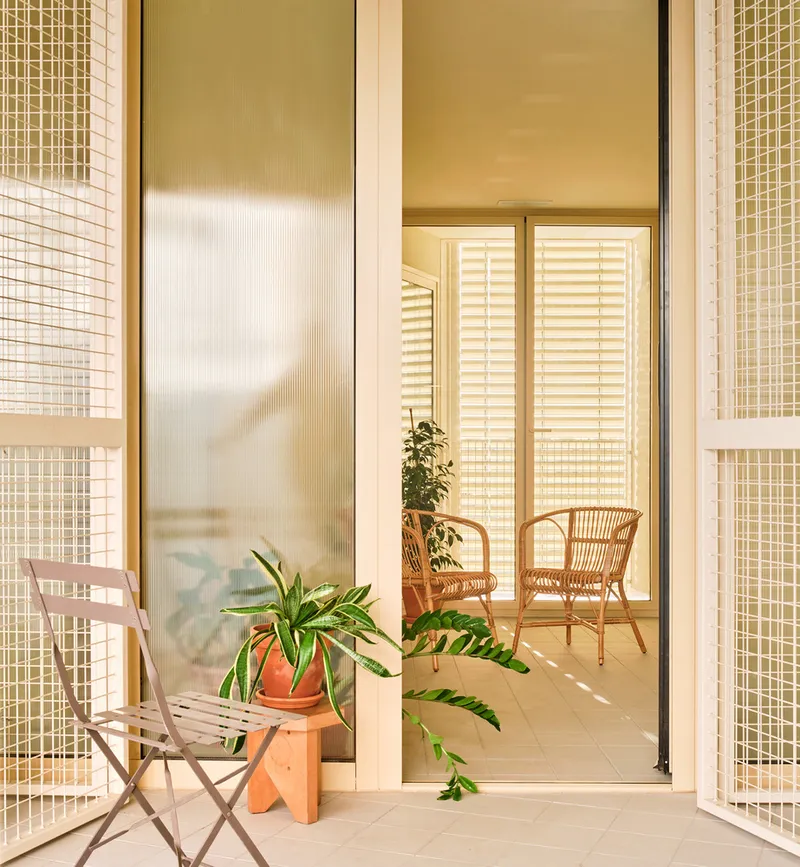
A defining element of the project is its system of connecting walkways and terraces, which double as social corridors and climatic buffers. These transitional zones provide gradual thresholds between private homes and public circulation, promoting spontaneous interaction among residents and reinforcing the spirit of collective living.
The building’s interior courtyard becomes the social and climatic heart of the design. Vertical openings, perforated façades, and movable wooden carpentry ensure a dynamic play of light, shade, and cross ventilation, creating a healthy and visually permeable environment.

Climate-Conscious Design: Passive Strategies and Energy Efficiency
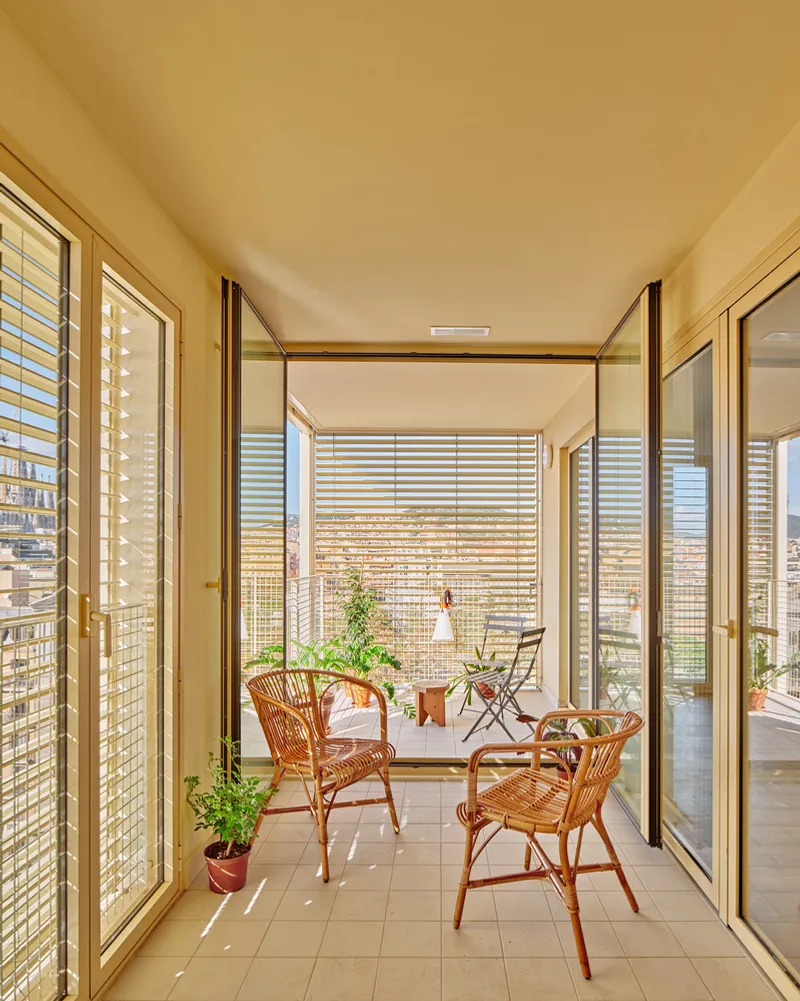
The access galleries reinterpret the concept of a multi-story family home. Acting as semi-exterior spaces, they provide thermal and light regulation throughout the year:
- In summer, open galleries allow for natural cooling and cross-ventilation.
- In winter, enclosed spaces harness solar gain through the greenhouse effect, maintaining interior comfort with minimal mechanical intervention.
This design approach not only reduces energy demand but also extends domestic activities into outdoor space, enriching the daily life of residents.
The project integrates renewable energy systems such as centralized aerothermal heating and rooftop photovoltaic panels, achieving near zero energy building (NZEB) performance. Through these systems, the building aligns with Barcelona’s environmental goals and sets a new precedent for energy-conscious social housing.
Construction and Materiality: Prefabrication and Sustainability
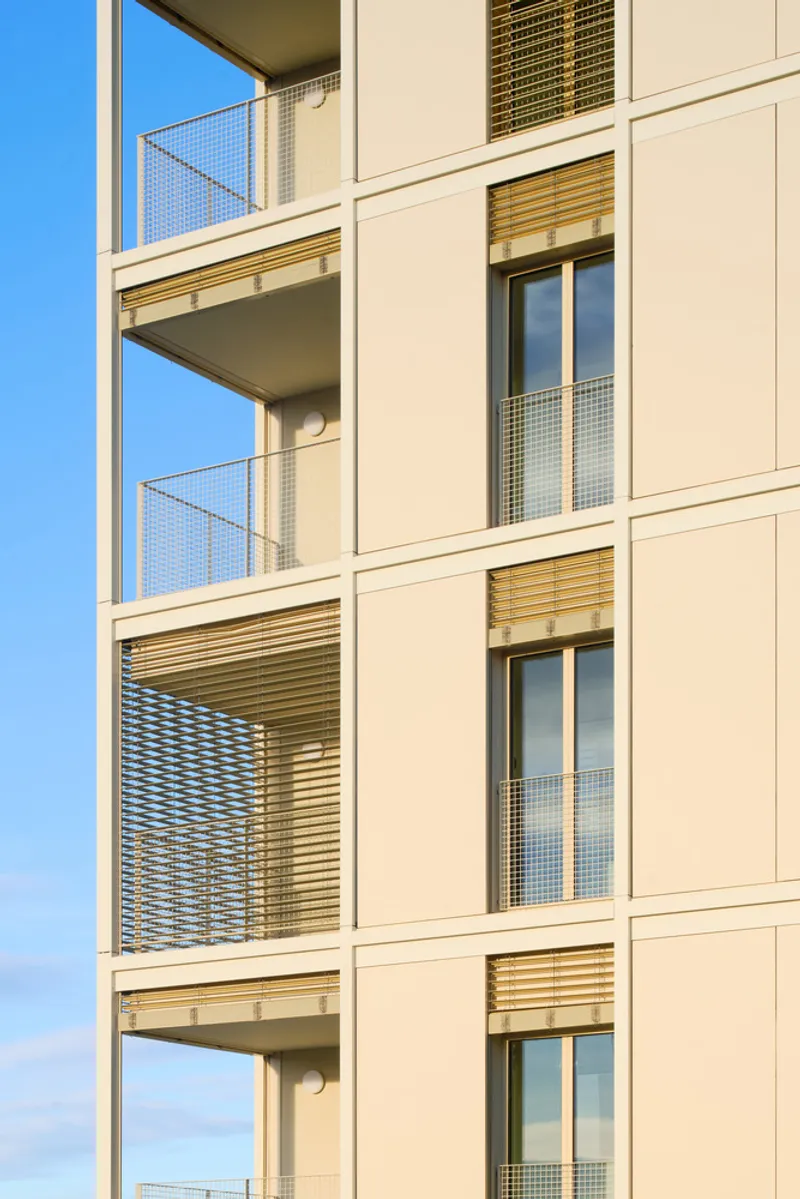
Structurally, the building employs reinforced concrete slabs and columns combined with a highly industrialized dry façade system — a strategy that minimizes environmental impact, construction time, and on-site waste.
The program includes:
- One basement level for parking,
- A ground floor accommodating common services, and
- Nine residential levels with seven apartments per floor, plus two additional floors on the Gran Via façade, totaling eleven stories.
The horizontal layering of façades — from walkways and terraces to community spaces and cornices — contrasts with the vertical voids of the inner courtyard, creating a dynamic composition that resonates with the architectural language of the broader Illa Glòries complex.
A Vision for the Future of Social Housing
Through the 67-Unit Social Housing Building, Vivas Arquitectos and Pau Vidal have reimagined public housing as an active participant in the life of the city — not just a place to live, but a framework for social interaction, environmental stewardship, and urban continuity.
By blending typological innovation with ecological responsibility, the project demonstrates how architecture can be both affordable and aspirational, shaping new standards for collective urban living in Barcelona and beyond.

Project Information
- Project Name: 67-Unit Social Housing Building in Illa Glòries
- Location: Barcelona, Spain
- Architects: Vivas Arquitectos + Pau Vidal
- Lead Architects: César Vivas Millaruelo, Cristian Vivas Millaruelo, Pau Vidal
- Area: 9,490 m²
- Year: 2024
- Program: Social housing (67 units)
- Energy System: Aerothermal + Photovoltaic
- Sustainability Goal: NZEB – Nearly Zero Energy Building


Popular Articles
Popular articles from the community


longwave studio Reorganizes a 112 m² Tainan Apartment Around the Daily Routines of a Family and Two Cats
In Tainan, Taiwan, birch plywood, rust-red furniture and a freestanding plaster wall link arrival, storage, work and family life in one apartment.

Architekt Andreas Gruber Scatters 23 Dark Timber Chalets Across a South Tyrolean Forest Edge
In Molini di Tures, Amonti Chalets breaks a resort into a hamlet of gabled timber houses, with parking, storage and services pushed into the slope.

Cube Design Draws an Ecological Corridor Between Two Shenzhen Hills with the Nankai Building
Beside Shenzhen's container docks, the Nankai Building pairs stacked balconies with a climbing green screen to connect two hillsides across its height.

David Macias Steps a Doorless Stone and Plaster House Down a Tropical Colombian Hillside
In the humid hills of Colombia, Threshold House replaces the front door with an open void and terraces its 850 m² down the slope instead of fighting it.

Similar Reads
You might also enjoy these articles


Hodi-Mandai Geram
Project Function: Preservation and revitalization of the Intangible heritage and socio-spatial identity of the Hodi by Housing, Cultural Memory Center, Sacred Grove, landscape, local tourism economy


Olio Towers: A Mid-Rise for Performers That Fuses Housing, Rehearsal, and Stage
Located blocks from Houston's Theater District, this modular tower stacks living units around a central performance atrium.

Oasis: Modular Green Housing Carved into Dhaka's Urban Fabric
A shortlisted Plugin Housing entry reclaims unauthorized settlements in Dhaka with stepped concrete volumes, green roofs, and ventilation-driven design.

Black Hole: A Floating Megastructure for the Post-Physical Era
Emiliano Mazzarotto envisions a spherical, self-scaling arena where e-sports, digital hotels, and holographic stadiums replace traditional public space.
Explore Sustainable Design Competitions
Discover active competitions in this discipline

Challenge to reimagine the Iron Throne

Photograph architecture without architects

Illustrate the lost glory of Angkor Wat - Render Challenge

Design challenge to reuse E-waste
Comments (0)
Please login or sign up to add comments
No comments yet. Be the first to comment!