

A Brave New World of Adaptive Housing Solutions
Modular Architecture: Smart, Sustainable, and Scalable Housing for Future Cities.


Rethinking Public Housing in NYC
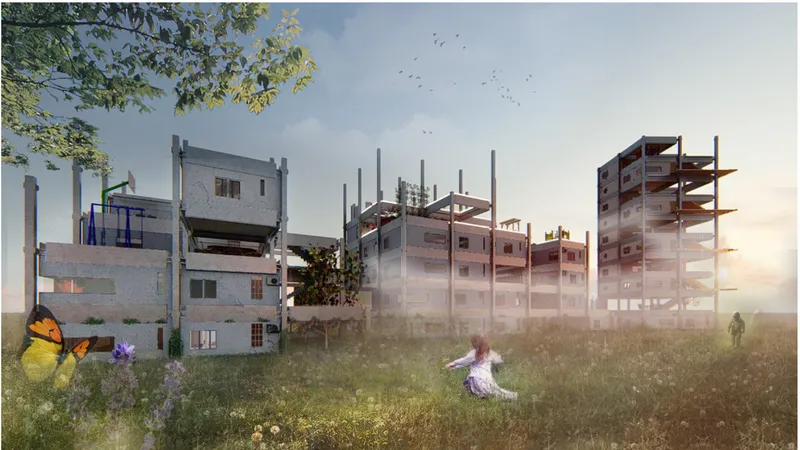
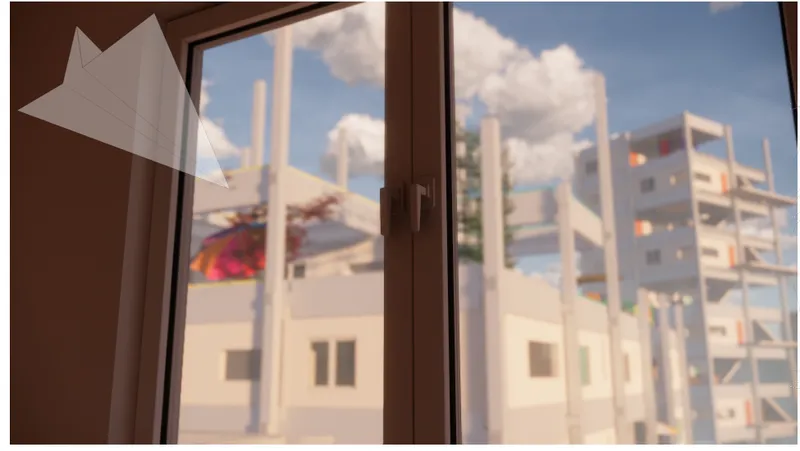
As concerns about gentrification and the widening socio-economic gap in New York City continue to grow, the local government has initiated a transformative public housing project in midtown Manhattan. This groundbreaking modular architecture approach "A brave new world" is designed to address social inequality while alleviating the strain on the city’s subway system, which connects high-density areas like the Bronx with the commercial hubs of Manhattan.
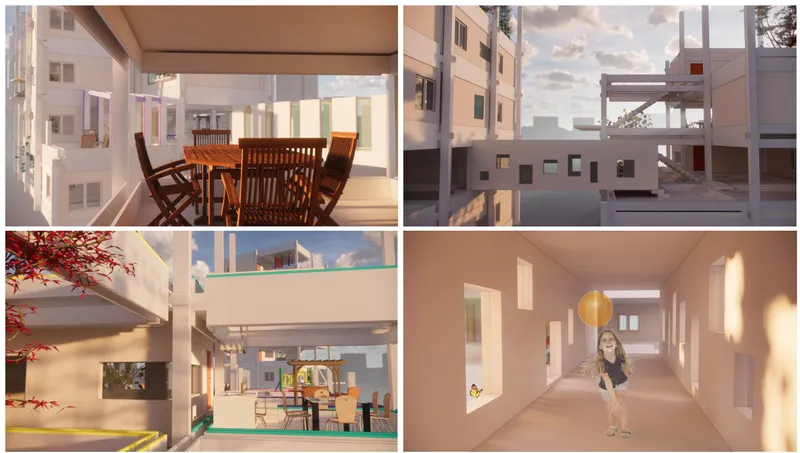
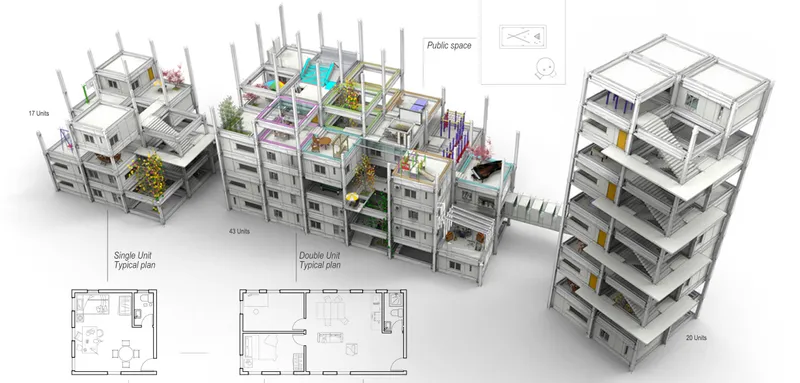
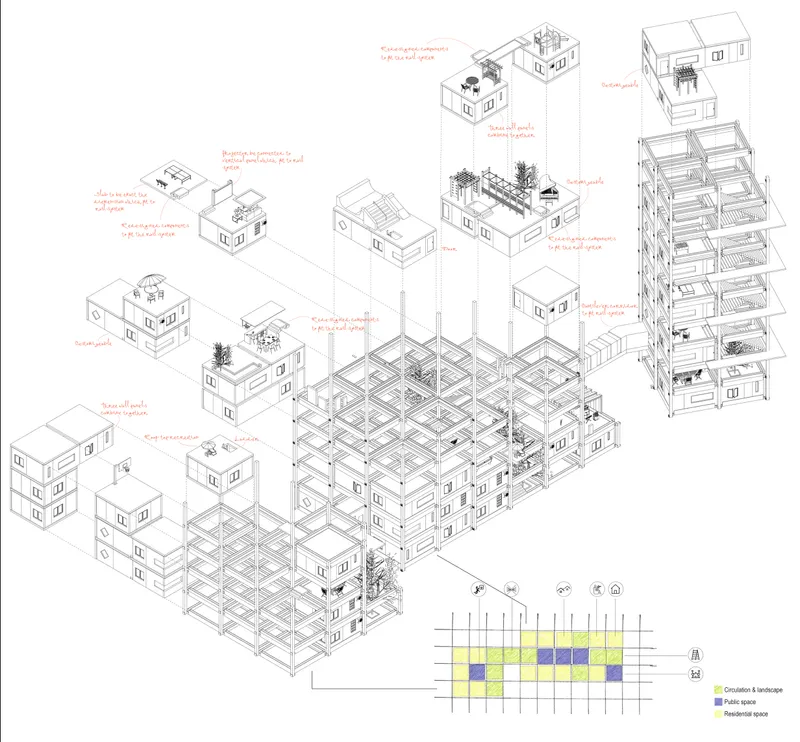
The adaptive housing concept introduces a prefabricated modular grid system, which offers a sustainable and customizable living environment for urban dwellers. Inspired by the principles of metabolism architecture, this innovative design allows for flexible expansion and transformation over time, catering to the ever-changing needs of the city’s population.
Innovative Features of Modular Architecture
- Prefabricated Units: Built off-site, reducing construction costs and timelines.
- Rail-Based Grid System: Enhances structural efficiency and ease of assembly.
- Customizable Living Spaces: Residents can personalize their units to fit their needs.
- Public and Green Spaces: Integrated communal areas improve quality of life.
- Passive Daylight & HVAC Strategies: Maximizes energy efficiency and sustainability.
A Shortlisted Entry in the Plugin Housing Challenge 2020
This ambitious project, conceptualized by architect Zhehui Sun, was shortlisted in the Plugin Housing Challenge 2020 for its visionary approach to urban living. By reimagining housing as a dynamic, expandable system, it sets a new standard for affordable, adaptive architecture that prioritizes social equity and environmental consciousness.

The Future of Urban Living
With a rapidly increasing urban population, modular architecture offers a scalable and innovative solution to housing crises worldwide. This project serves as a blueprint for future cities, proving that adaptable housing can bridge social divides while fostering sustainable urban development.




Popular Articles
Popular articles from the community


The Ocean Hive: Sustainable Architecture for a Self-Sufficient Civilization at Sea
The Ocean Hive imagines sustainable architecture at sea, where modular habitats, algae, wave power and ocean waste sustain a growing colony.

Riyadh For All: Intergenerational Urban Design for Active Aging in Rabat
Riyadh For All reimagines urban design in Rabat with intergenerational co-living, adaptive courtyards, and Moroccan cultural exchange today.

Hill & Cross Opera: Sculptural Opera House Architecture Shaped by Tallinn’s Landscape and Identity
Hill & Cross Opera reimagines opera house architecture in Tallinn through its sculptural hill, civic plaza, glass wave and a luminous cross.

Co-Life: Senior Housing Design That Reconnects Older Adults With the City
Co-Life reimagines senior housing design through healing gardens, shared streets, workshops, and a sustainable community across generations.


Similar Reads
You might also enjoy these articles


Hodi-Mandai Geram
Project Function: Preservation and revitalization of the Intangible heritage and socio-spatial identity of the Hodi by Housing, Cultural Memory Center, Sacred Grove, landscape, local tourism economy


Olio Towers: A Mid-Rise for Performers That Fuses Housing, Rehearsal, and Stage
Located blocks from Houston's Theater District, this modular tower stacks living units around a central performance atrium.

Oasis: Modular Green Housing Carved into Dhaka's Urban Fabric
A shortlisted Plugin Housing entry reclaims unauthorized settlements in Dhaka with stepped concrete volumes, green roofs, and ventilation-driven design.

Black Hole: A Floating Megastructure for the Post-Physical Era
Emiliano Mazzarotto envisions a spherical, self-scaling arena where e-sports, digital hotels, and holographic stadiums replace traditional public space.


Explore Modular Housing Competitions
Discover active competitions in this discipline



Challenge to reimagine the Iron Throne


Photograph architecture without architects


Illustrate the lost glory of Angkor Wat - Render Challenge


Design challenge to reuse E-waste
Comments (0)
Please login or sign up to add comments
No comments yet. Be the first to comment!