
A Community-Built Fog Catcher in Bogotá: Innovation, Sustainability, and Empowerment
A sustainable community-built fog catcher in Bogotá harvests water, supports urban agriculture, and empowers residents through collaborative eco-friendly construction methods.


Transforming Informal Neighborhoods Through Collective Action
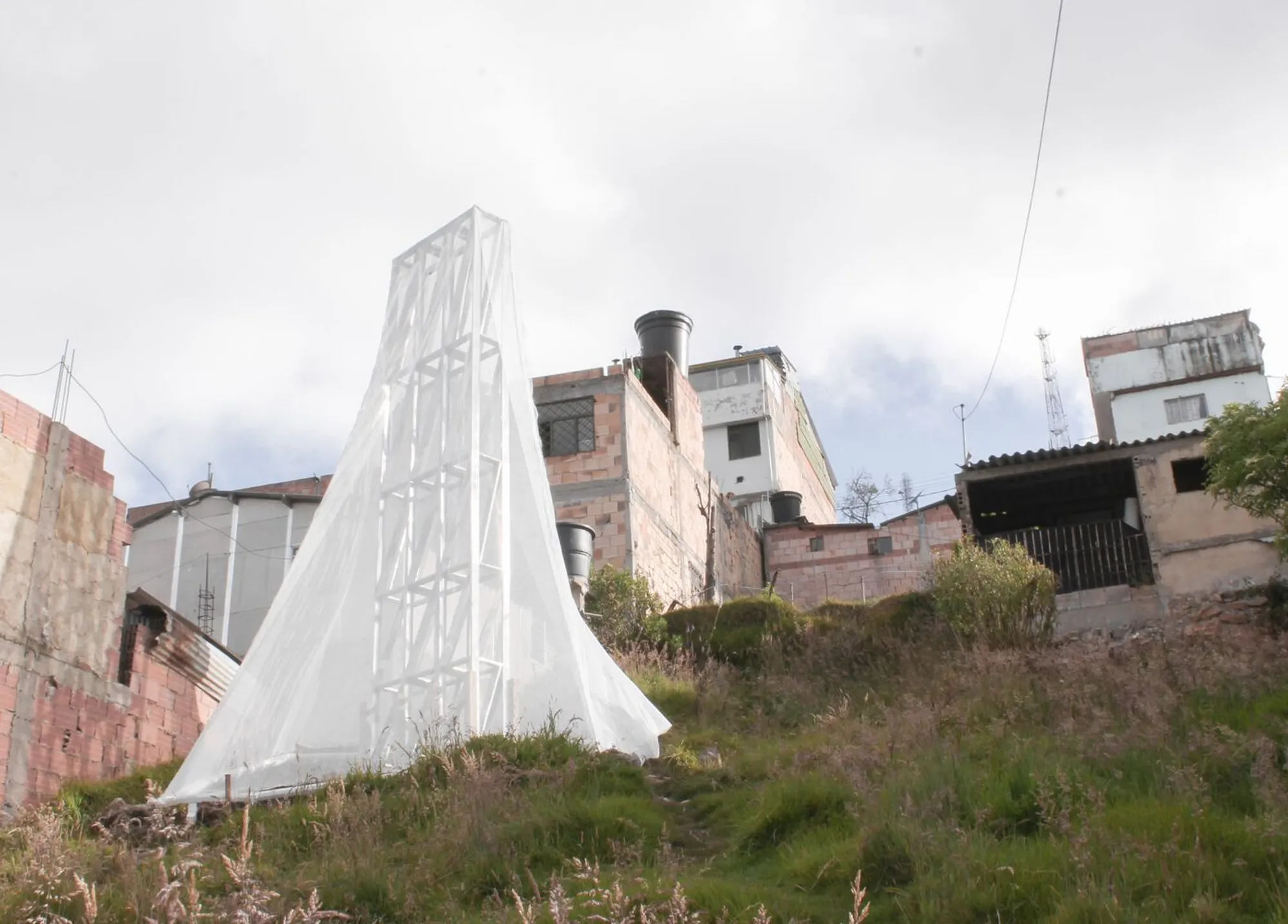
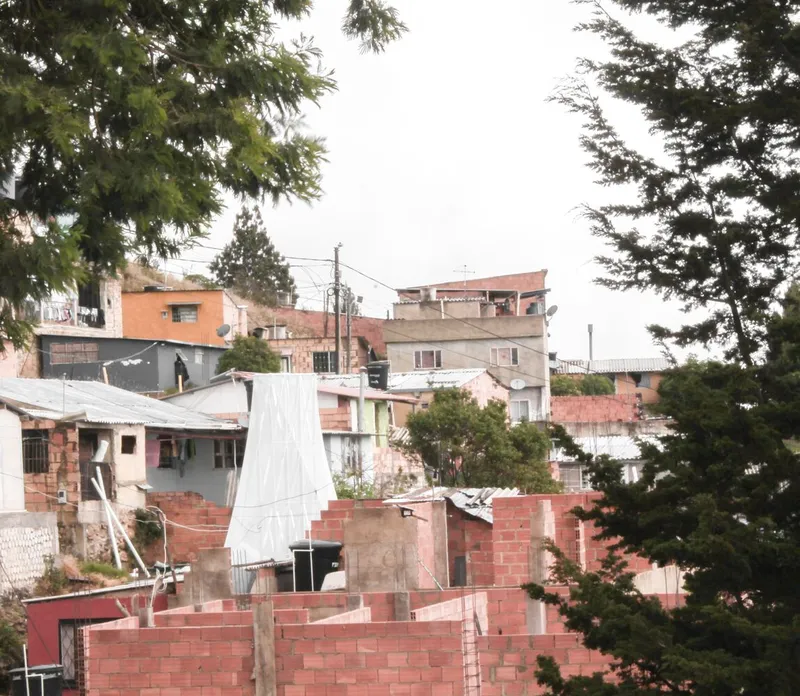
In the informal neighborhood of San Luis, Bogotá, Colombia, a groundbreaking community-driven project has emerged—A Community Built Fog Catcher, designed and constructed through collaboration between Alsar Atelier,Oscar Zamora, César Salomón, SCA, and local residents. Completed in 2022, this sustainable architecture prototype demonstrates how innovation and participation can address urgent challenges like water scarcity, food security, and ecological resilience in urban informal settlements.
Concept and Purpose: Harvesting Fog to Create Life
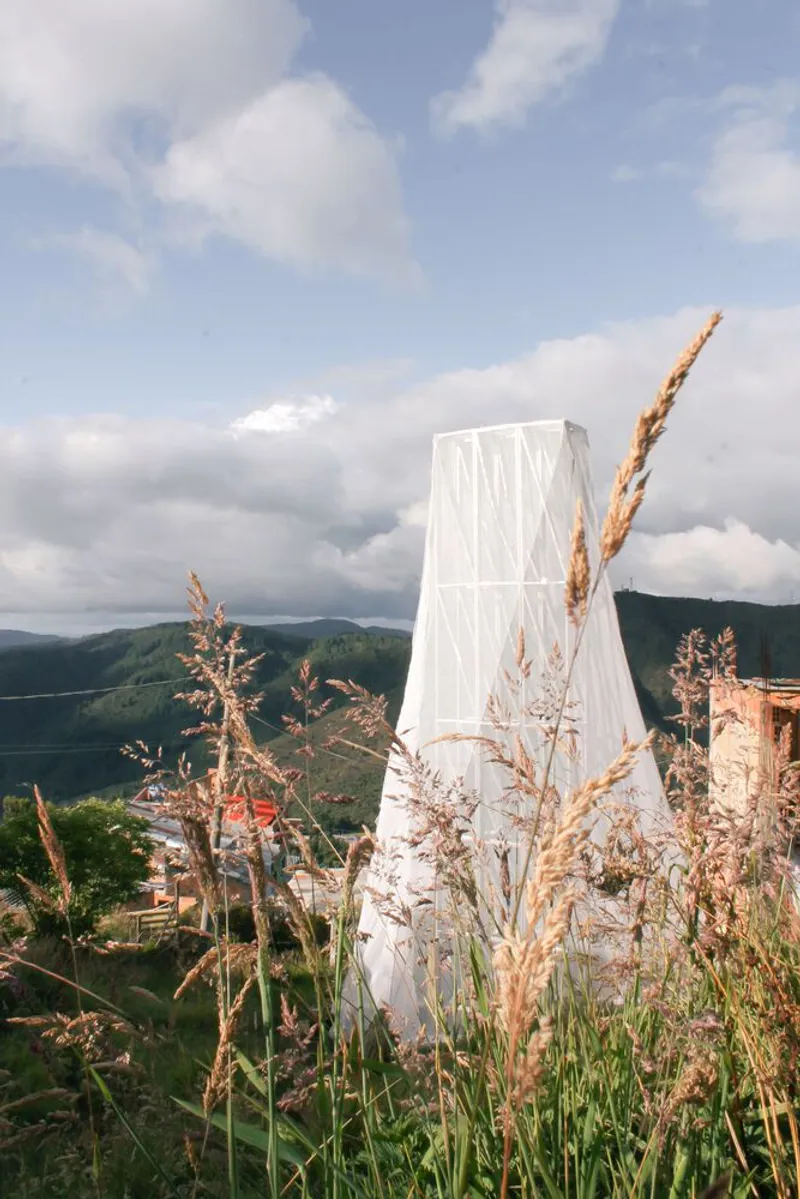
The Fog Catcher was envisioned as an inhabitable prototype capable of harvesting fog water to supply domestic use and support urban agriculture. Initiated by César Salomón and Alejandro Saldarriaga, with the support of community leader Edison Plazas, the project embodies the idea of turning natural resources into sustainable infrastructure.
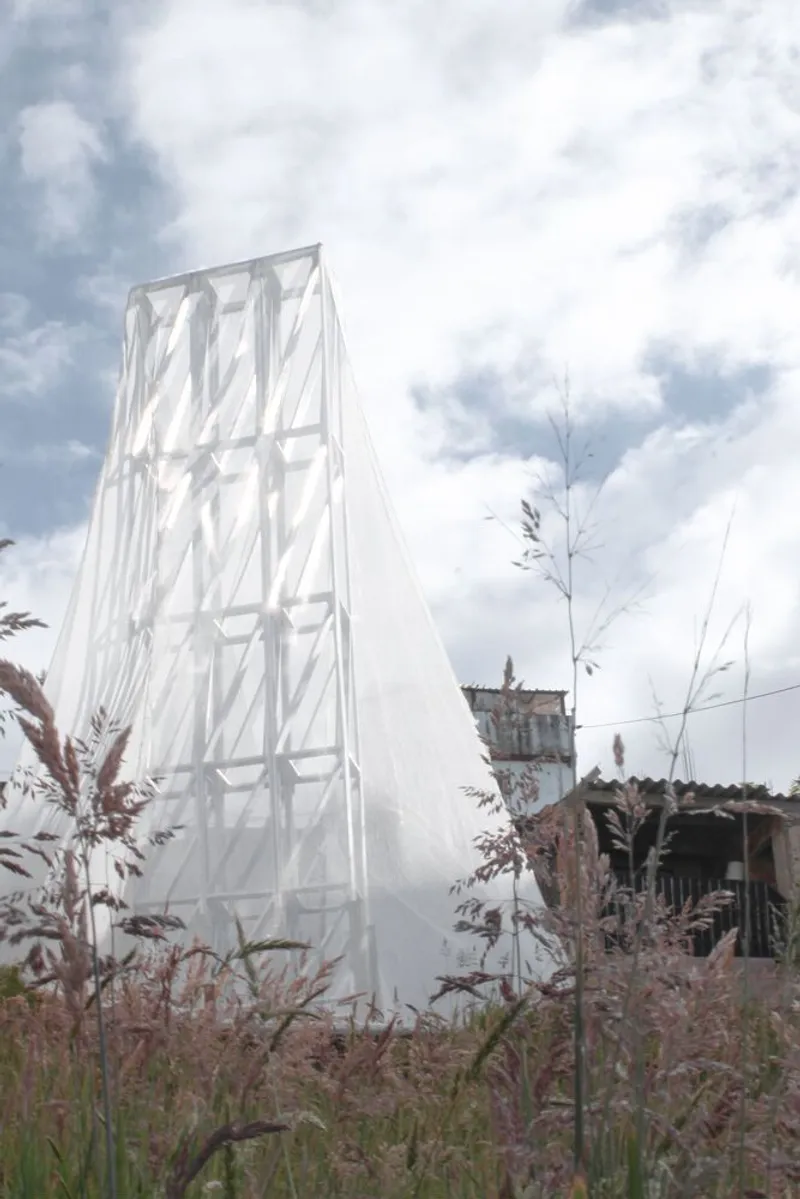
By collecting and condensing water from fog through white façade fabric (polisoimbra) and channeling it into PVC tubes, the system provides water for cleaning, washing, and irrigation. The integrated greenhouse microclimate further promotes local agriculture, enhancing both food security and environmental sustainability.

Rethinking Construction in Informal Settlements
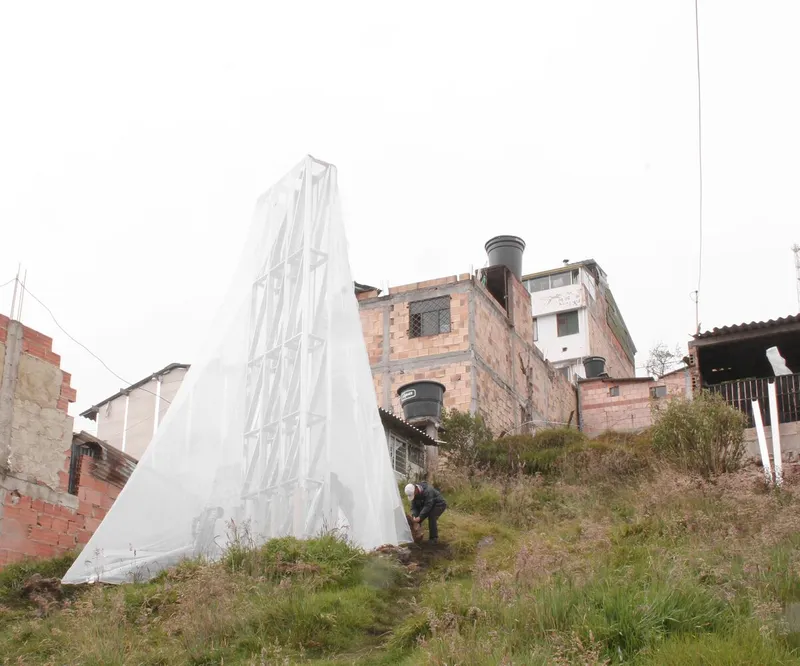
One of the most innovative aspects of this project lies in its construction method. Instead of traditional materials like brick and concrete, the prototype uses gauge steel frames, a lightweight, eco-friendly, and easy-to-assemble system requiring no prior construction knowledge.
This method:
- Reduces reliance on heavy machinery and concrete
- Empowers community members to take part in construction
- Introduces sustainable, replicable models for informal neighborhoods worldwide
The Fog Catcher was built by four community members—César Salomón, Edison Plazas, Nelson Gomez, and Diego Reyran—demonstrating that impactful architecture can be realized with minimal resources and collective effort.
Social and Environmental Impact
The project has become a landmark of resilience and empowerment in San Luis. Beyond providing access to clean water and irrigation, it has:
- Encouraged urban agriculture as a self-sustaining practice
- Reduced dependency on municipal water systems
- Inspired the adoption of sustainable building techniques
- Empowered residents through hands-on participation and skill-building
The prototype not only supports daily life but also reshapes the identity of the neighborhood, giving visibility to local innovators and strengthening community ties.
A Global Model for Sustainable Communities
The Community Built Fog Catcher demonstrates that architecture can be a tool for resilience, equity, and sustainability in contexts of scarcity. Its success lies in merging collaborative design, ecological awareness, and community participation into a replicable model for other informal settlements around the world.
This project challenges conventional construction paradigms and positions informal neighborhoods not as sites of deficiency, but as laboratories of innovation and sustainability.


Popular Articles
Popular articles from the community


The Earth Pod: 3D Printed Homes for Resilient Refugee Communities
The Earth Pod reimagines refugee housing through 3D printed homes made from clay, combining resilience, self-sufficiency, and rapid shelter.

Lunar Spiral: Space Architecture Shaped by the Mathematics of the Universe
Lunar Spiral reimagines space architecture through Fibonacci geometry, lunar regolith, levitating habitats, and self-sustaining Moon living.

The Ocean Hive: Sustainable Architecture for a Self-Sufficient Civilization at Sea
The Ocean Hive imagines sustainable architecture at sea, where modular habitats, algae, wave power and ocean waste sustain a growing colony.

Play: Fragments of Their World
Familiar architecture becomes modular playground design, creating safe spaces where displaced children can learn, connect, imagine and play.


Similar Reads
You might also enjoy these articles


Hodi-Mandai Geram
Project Function: Preservation and revitalization of the Intangible heritage and socio-spatial identity of the Hodi by Housing, Cultural Memory Center, Sacred Grove, landscape, local tourism economy


Olio Towers: A Mid-Rise for Performers That Fuses Housing, Rehearsal, and Stage
Located blocks from Houston's Theater District, this modular tower stacks living units around a central performance atrium.

Oasis: Modular Green Housing Carved into Dhaka's Urban Fabric
A shortlisted Plugin Housing entry reclaims unauthorized settlements in Dhaka with stepped concrete volumes, green roofs, and ventilation-driven design.

Black Hole: A Floating Megastructure for the Post-Physical Era
Emiliano Mazzarotto envisions a spherical, self-scaling arena where e-sports, digital hotels, and holographic stadiums replace traditional public space.


Explore Bogota Competitions
Discover active competitions in this discipline



Challenge to reimagine the Iron Throne


Photograph architecture without architects


Illustrate the lost glory of Angkor Wat - Render Challenge


Design challenge to reuse E-waste
Comments (0)
Please login or sign up to add comments
No comments yet. Be the first to comment!