
A Flexible Retail Framework in Milan: Plan C Frame Flagship Store, Via Manzoni by (ab)NORMAL + APRIL
A flexible flagship store in Milan, conceived as infrastructural architecture where retail, culture, exhibitions, and collaborations continuously evolve.


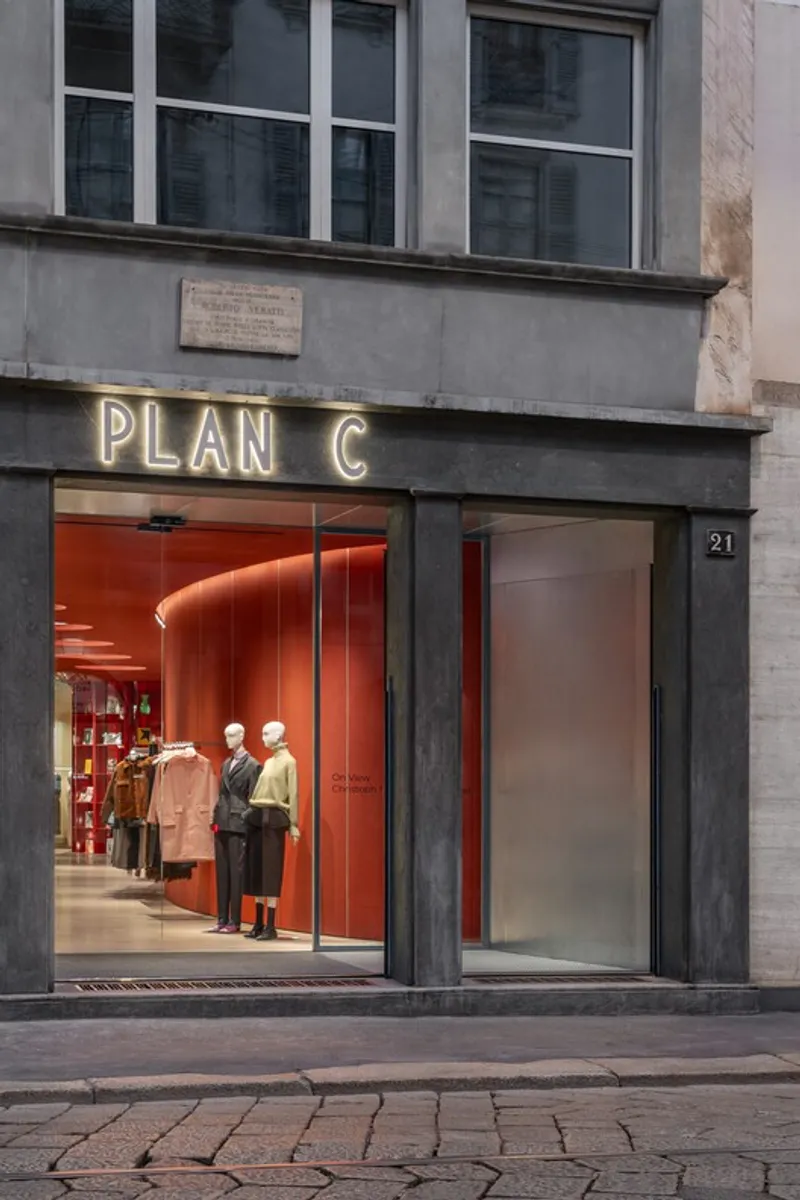
Located at Via Manzoni 21, in the historic heart of Milan, the Plan C Frame Flagship Store marks the first international step for the fashion brand founded and directed by Carolina Castiglioni. More than a conventional boutique, the project proposes a new hybrid model where retail, culture, and experimentation coexist within a single, adaptable architectural framework.
Retail as Infrastructure, Culture as Content
The flagship is conceived as a pilot project, both a spatial manifesto and a scalable prototype, capable of evolving over time while maintaining a strong and recognizable identity. It redefines the store not as a fixed interior, but as an open system designed to host changing programs, collaborations, and creative exchanges.
Collaboration as Design Method
The project is the result of a close collaboration between APRIL™, the multidisciplinary platform responsible for the overall concept, retail-cultural strategy, identity model, and the name Plan C Frame, and (ab)NORMAL, who translated this vision into spatial form through architectural development and realization.
Together, they establish a clear division of roles: APRIL™ defines the conceptual and strategic framework, while (ab)NORMAL gives it architectural substance. The outcome is a space that operates simultaneously as brand environment, exhibition platform, and cultural infrastructure.
A Pilot Model for Global Expansion
Conceived as a replicable system, the Plan C Frame flagship defines a set of architectural and operational guidelines for future international locations. At its core is the idea of infrastructural architecture: a robust yet flexible framework that can be reconfigured, reactivated, and adapted without altering its fundamental structure.
Walls, displays, staircases, and fittings are conceived as mobile or replaceable elements. This allows the space to transition seamlessly between everyday retail use and temporary formats such as exhibitions, events, pop-ups, and creative residencies. The model ensures continuity of identity while allowing local adaptation, minimizing material waste and reducing the long-term impact of future changes.
A Threshold Between City and Interior
Urban engagement plays a central role in the project. The façade is set back from the street to create a recessed urban loggia, a transitional space that softens the boundary between the public realm and the interior. This threshold invites passersby to pause, observe, and gradually enter the universe of Plan C, reinforcing the idea of retail as an open, inclusive cultural space.
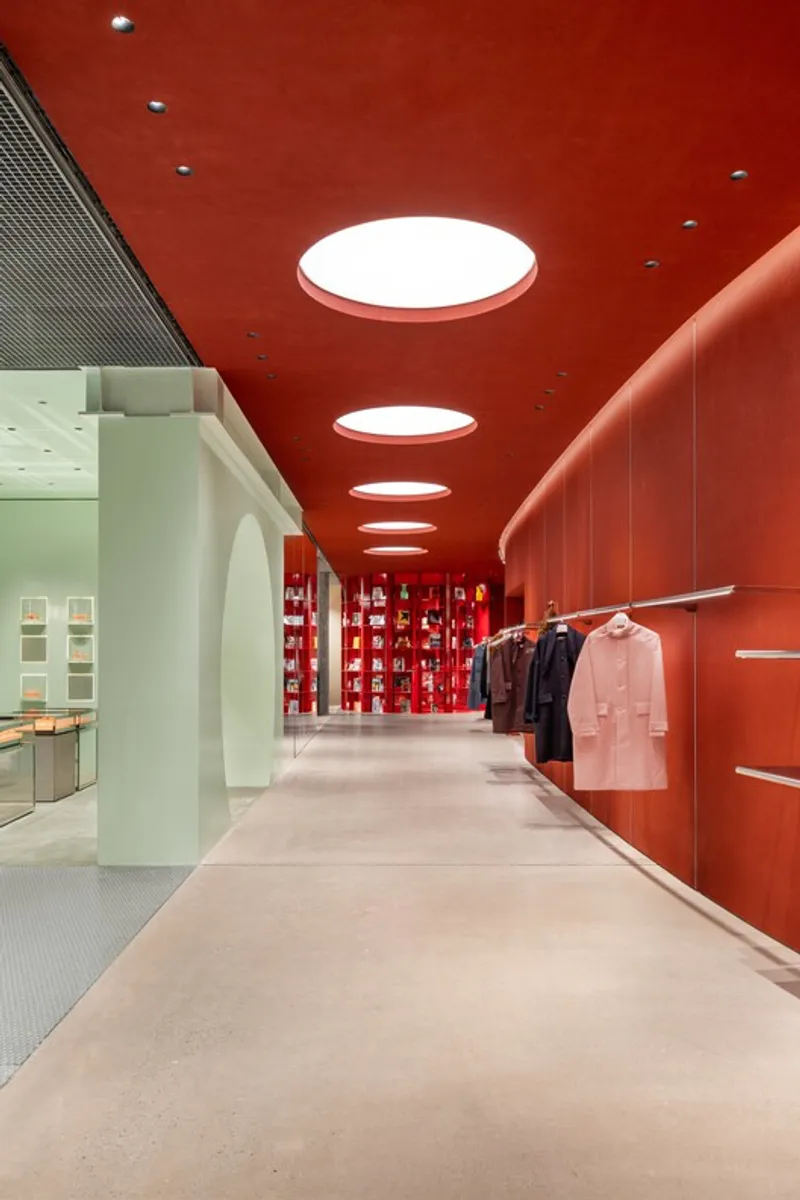
A strong visual axis runs from the city into the store, establishing an immediate dialogue between exterior and interior. This longitudinal gallery becomes both an invitation and a narrative device, guiding visitors through the space.
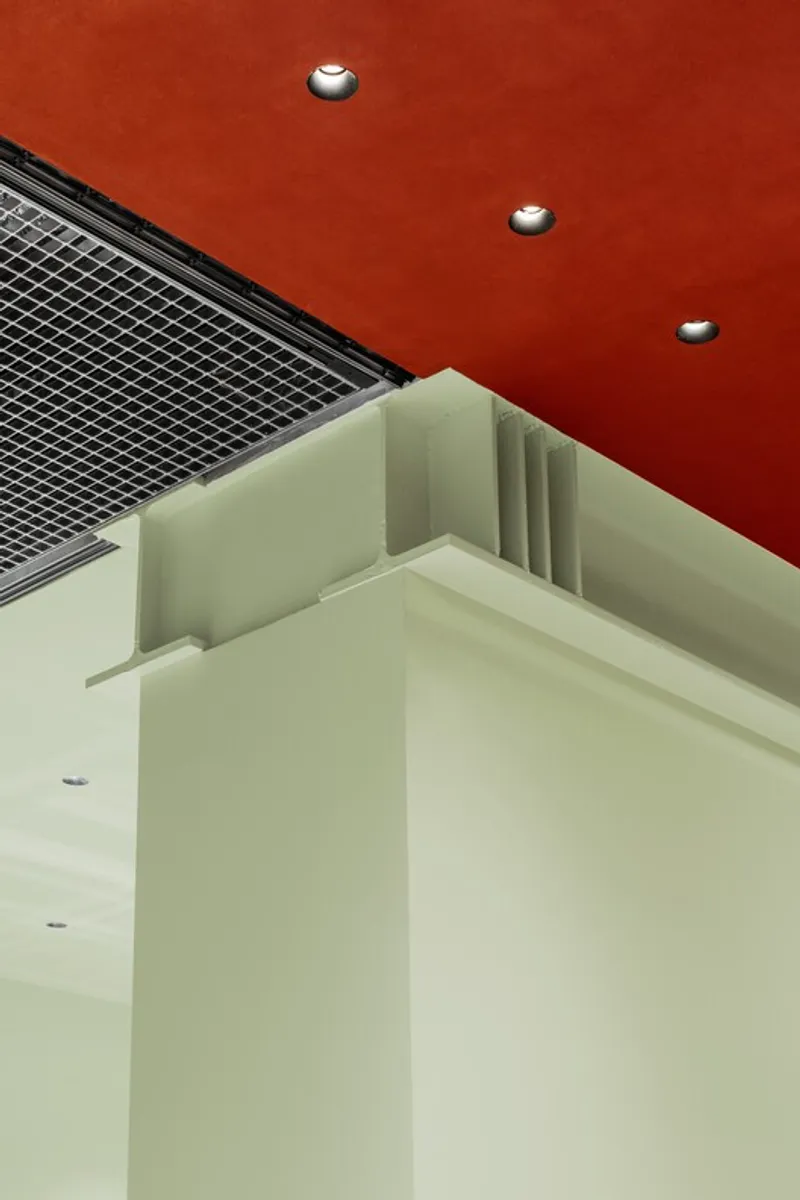
The Red Staircase as Cultural Core
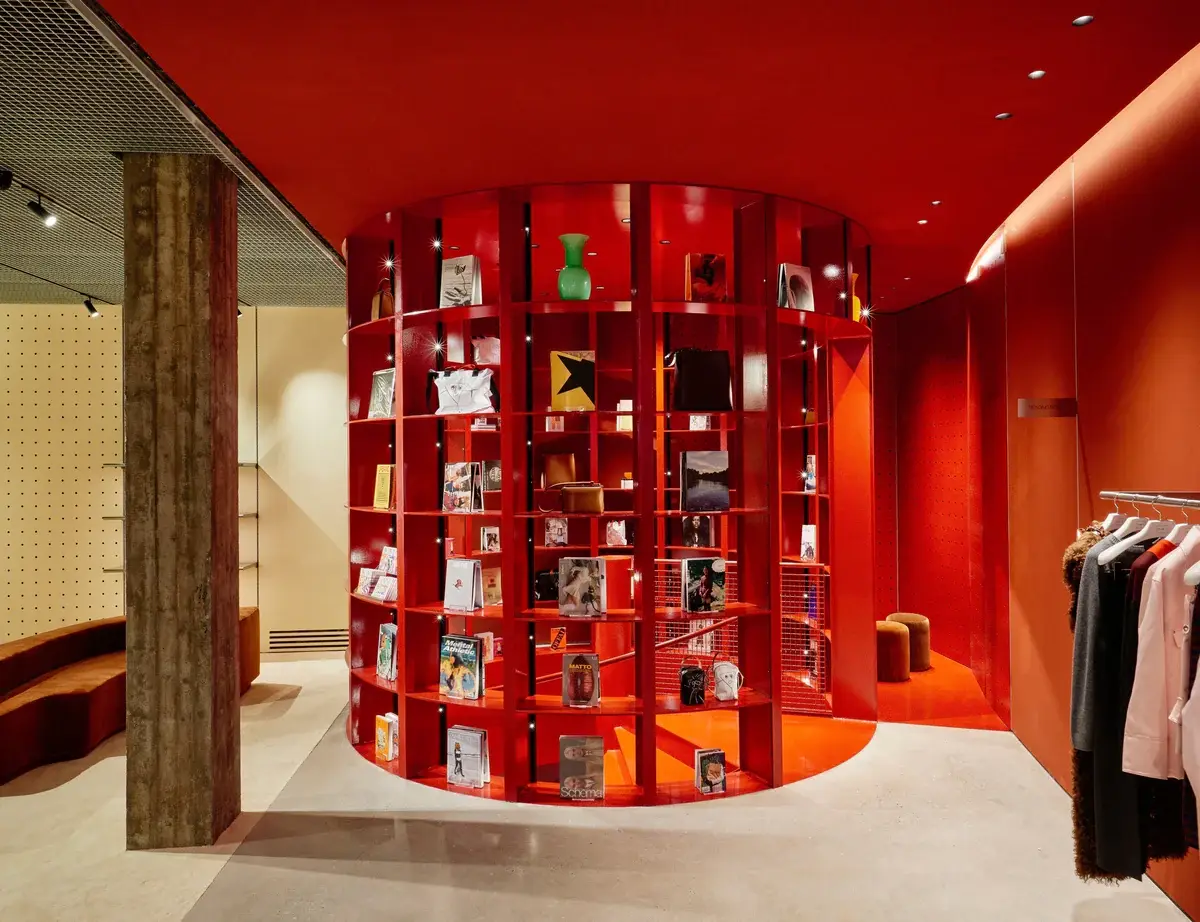
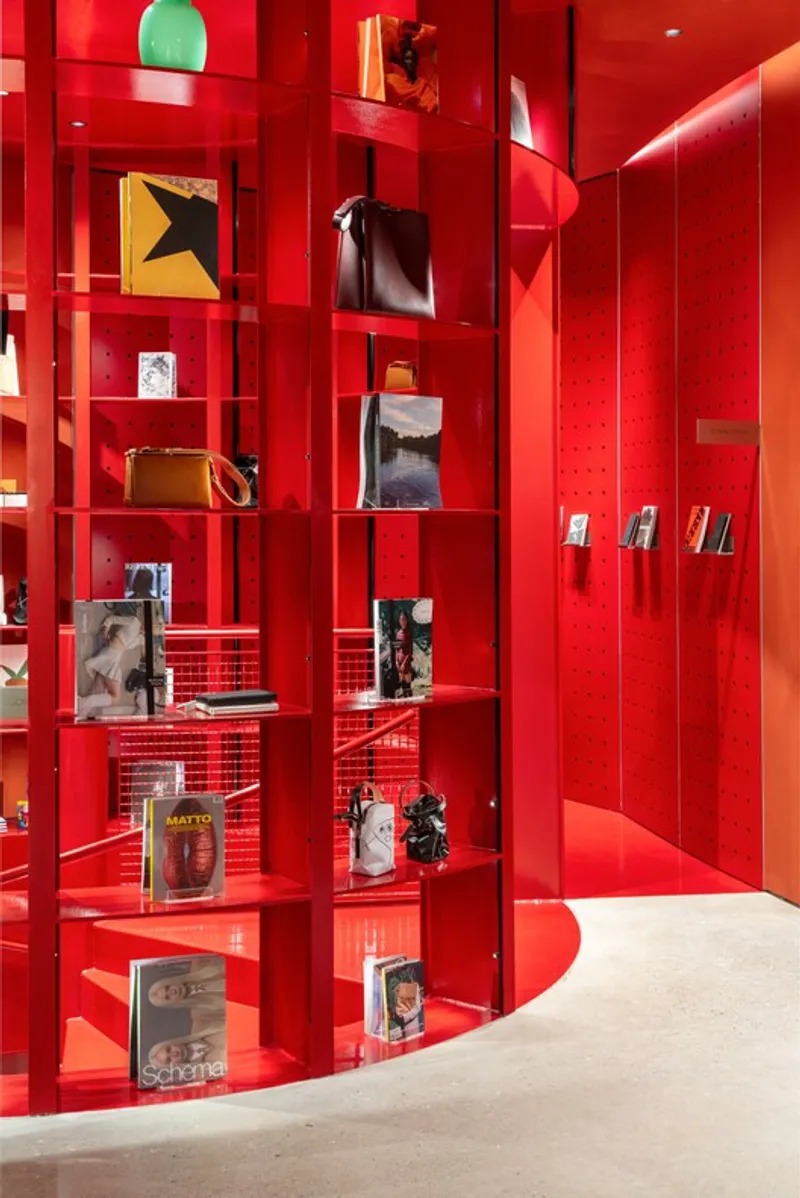
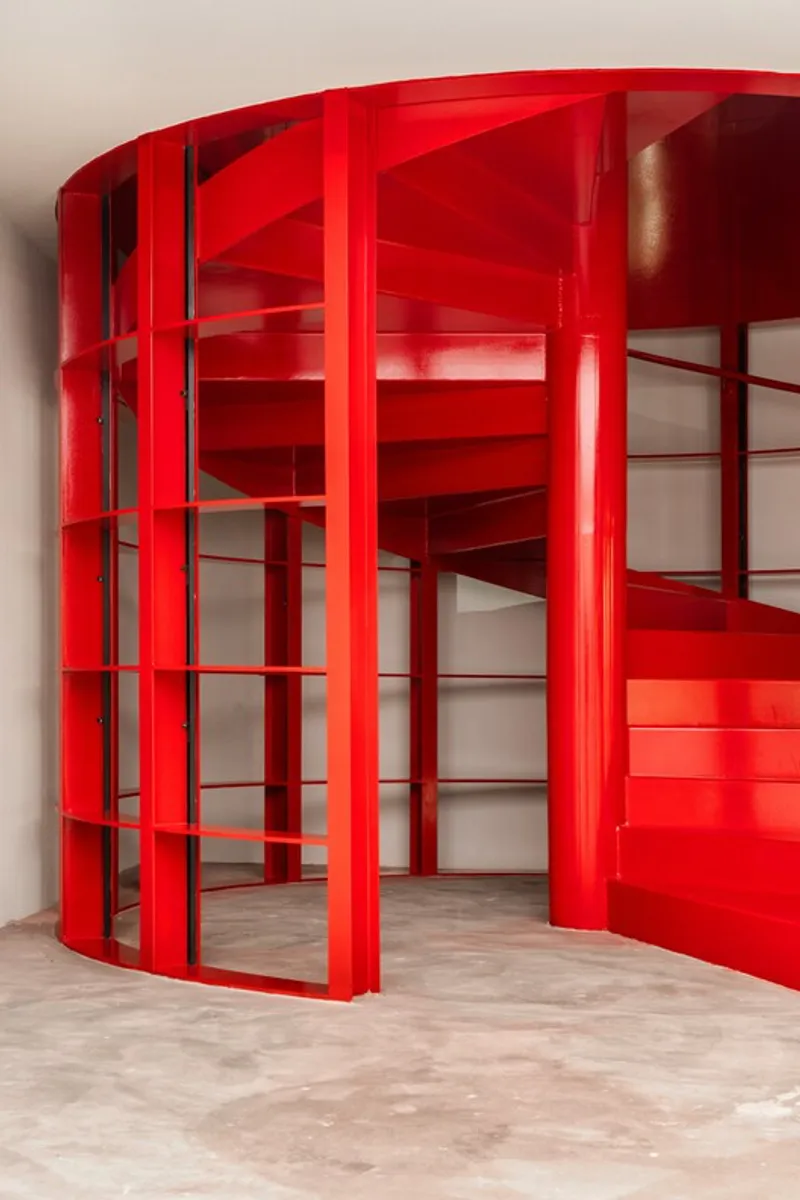
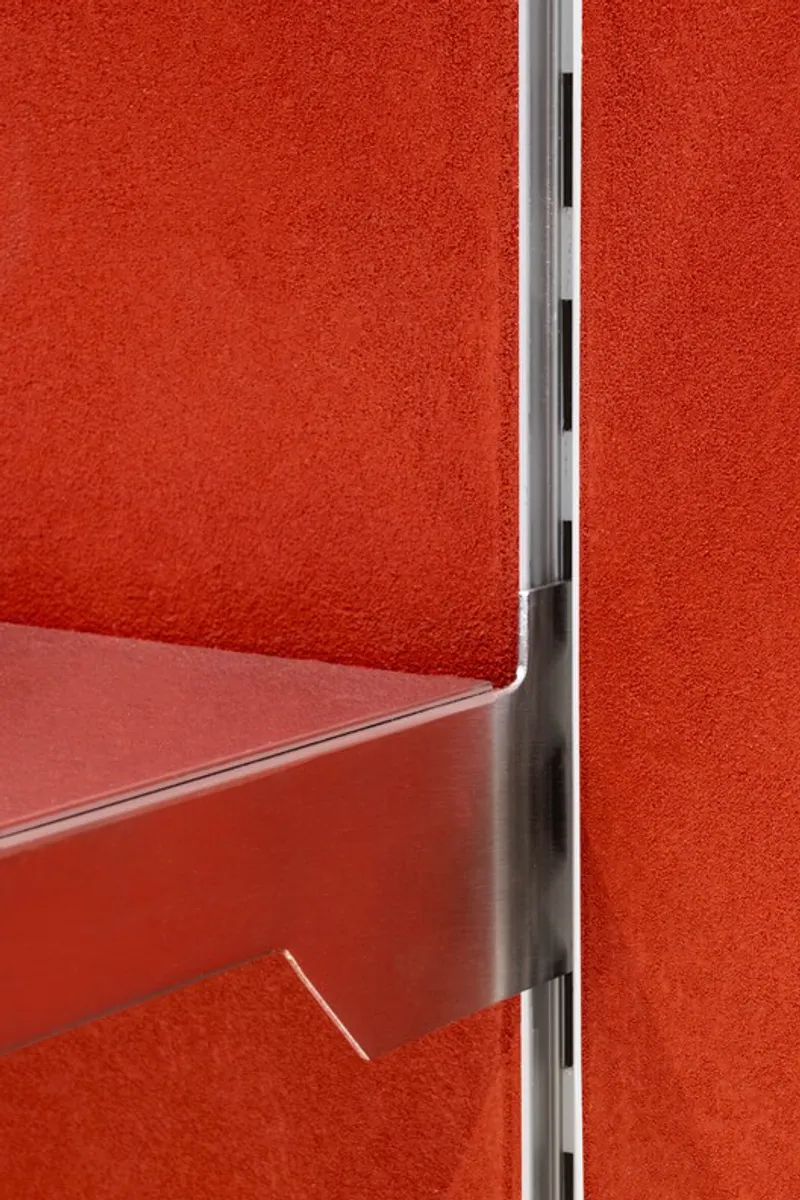
At the heart of the flagship, a bold red staircase-library acts as both spatial anchor and symbolic centerpiece. Connecting the two levels, it functions simultaneously as circulation, bookshelf, installation, and display structure. Its sculptural presence embodies the cultural ambition of the project, positioning knowledge, storytelling, and experimentation at the center of the retail experience.
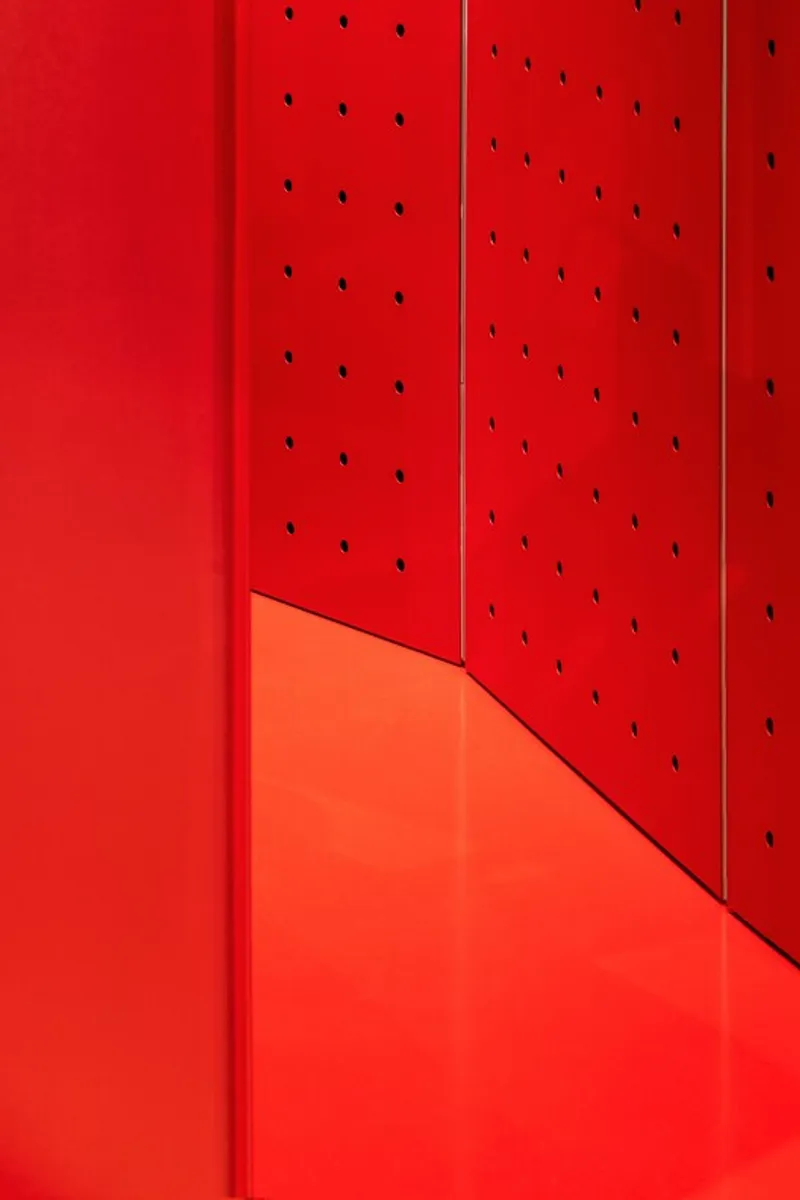
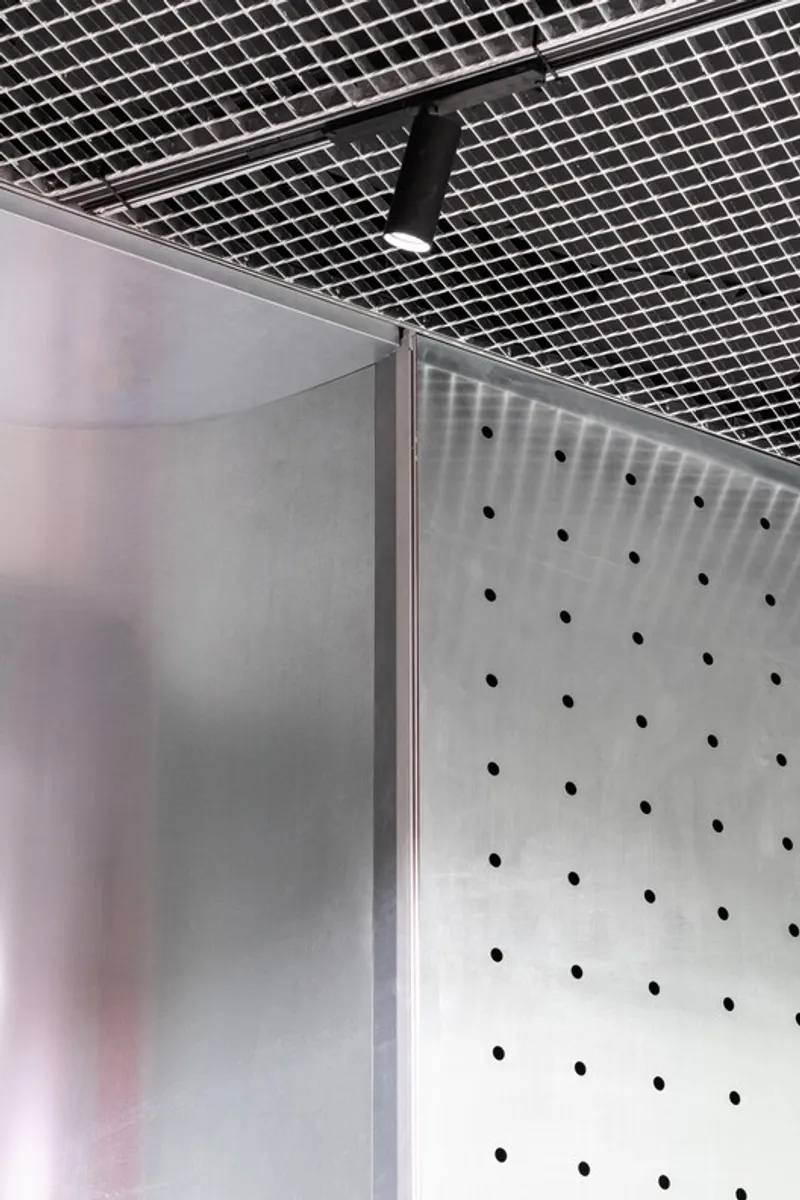
More than a stair, it is a device that organizes movement, frames views, and hosts content, reinforcing the store’s role as an evolving platform rather than a static shop.
Spatial Organization and Thematic Niches
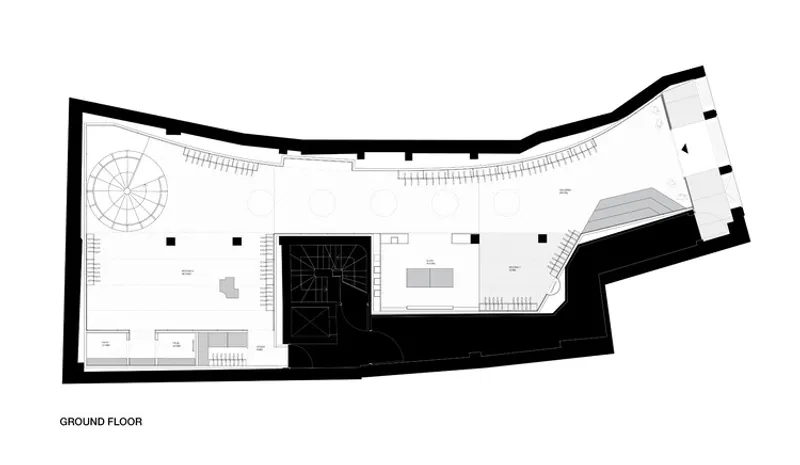
The interior unfolds across two visually and functionally connected levels, structured around the central staircase. On the ground floor, the longitudinal gallery is punctuated by three distinct thematic niches, each offering a different spatial and atmospheric condition.
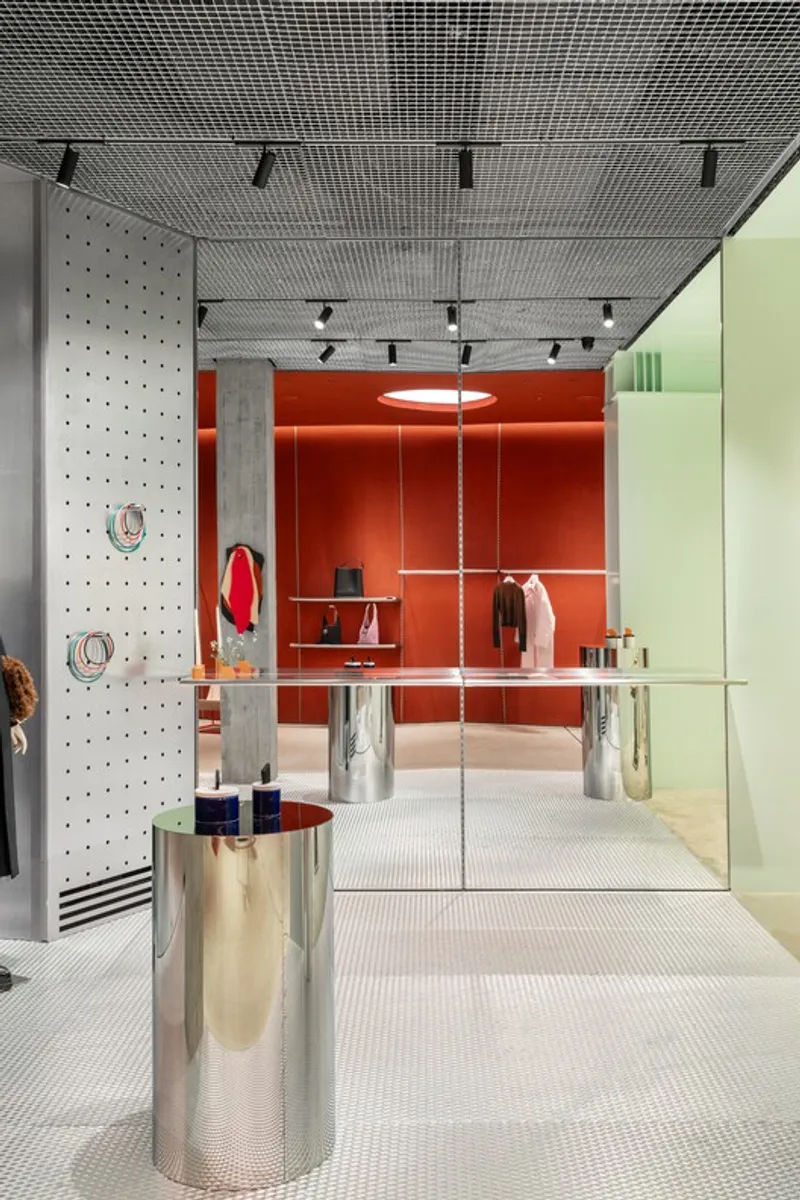
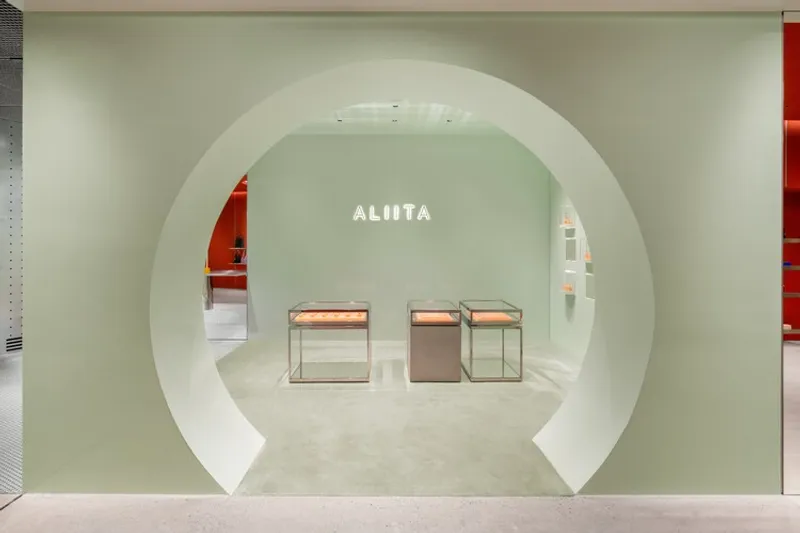
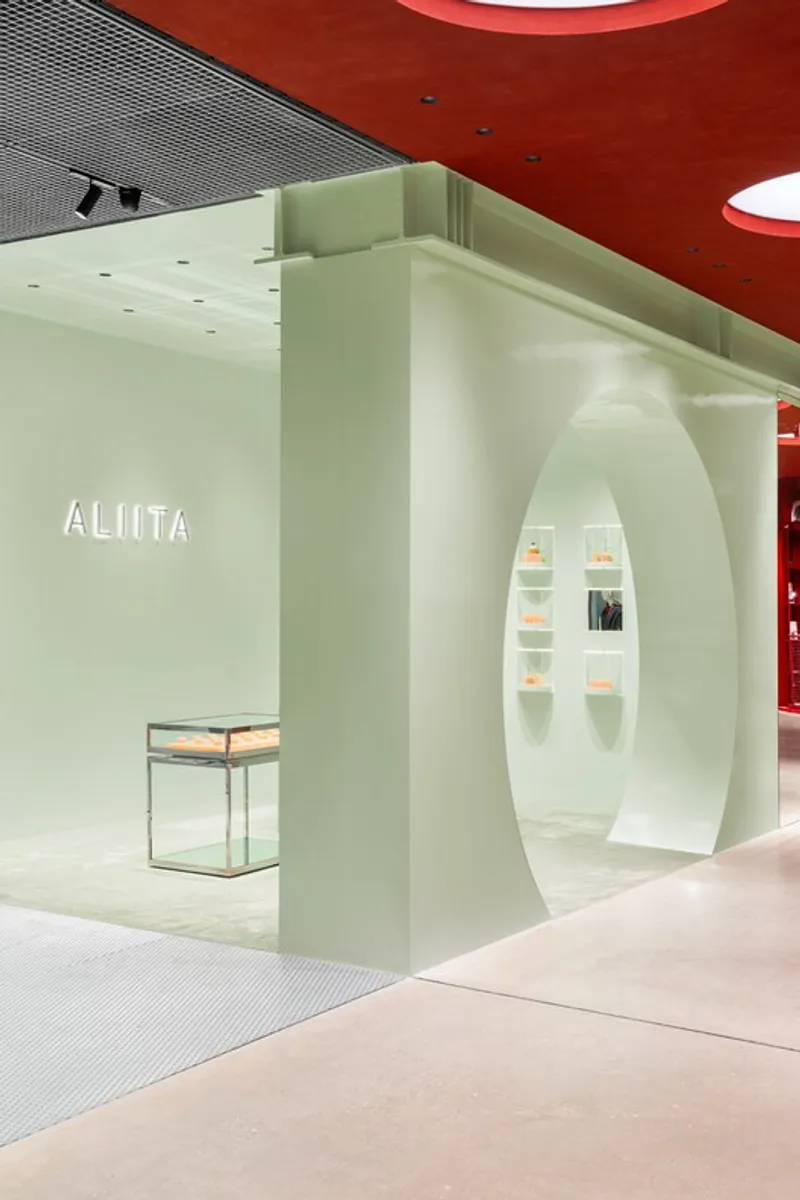
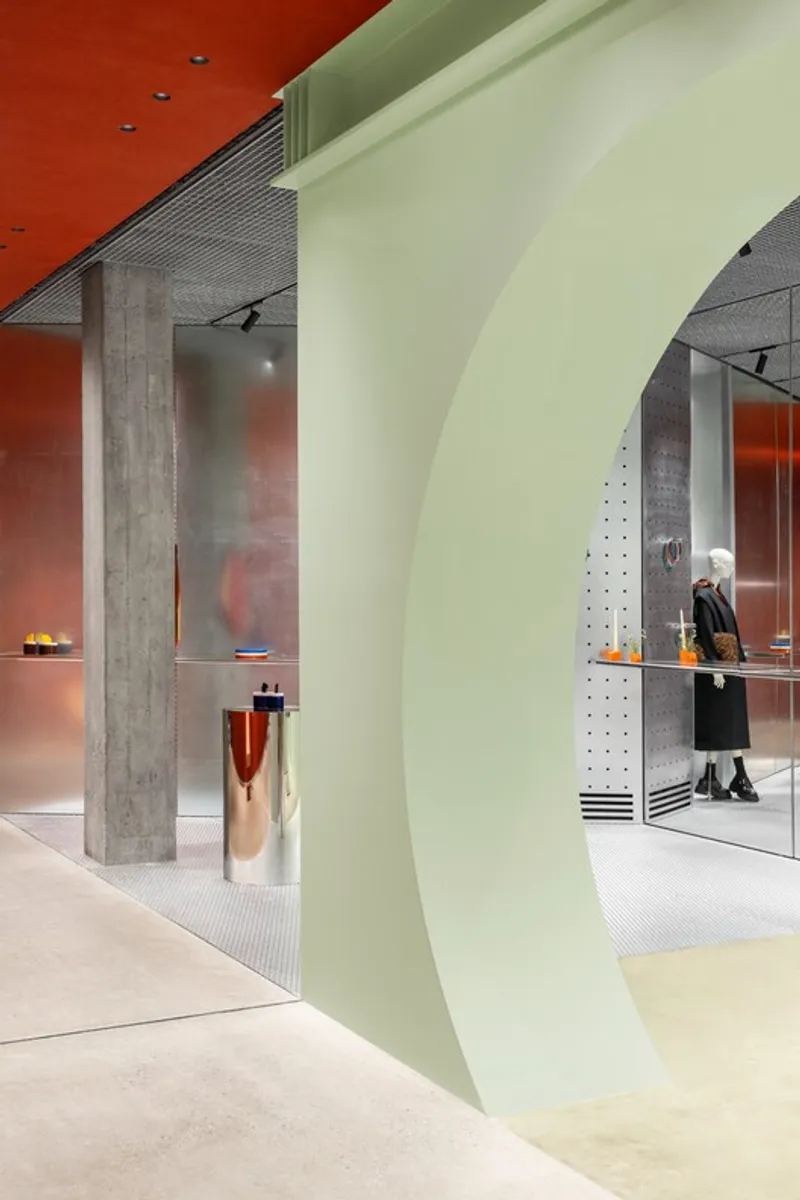
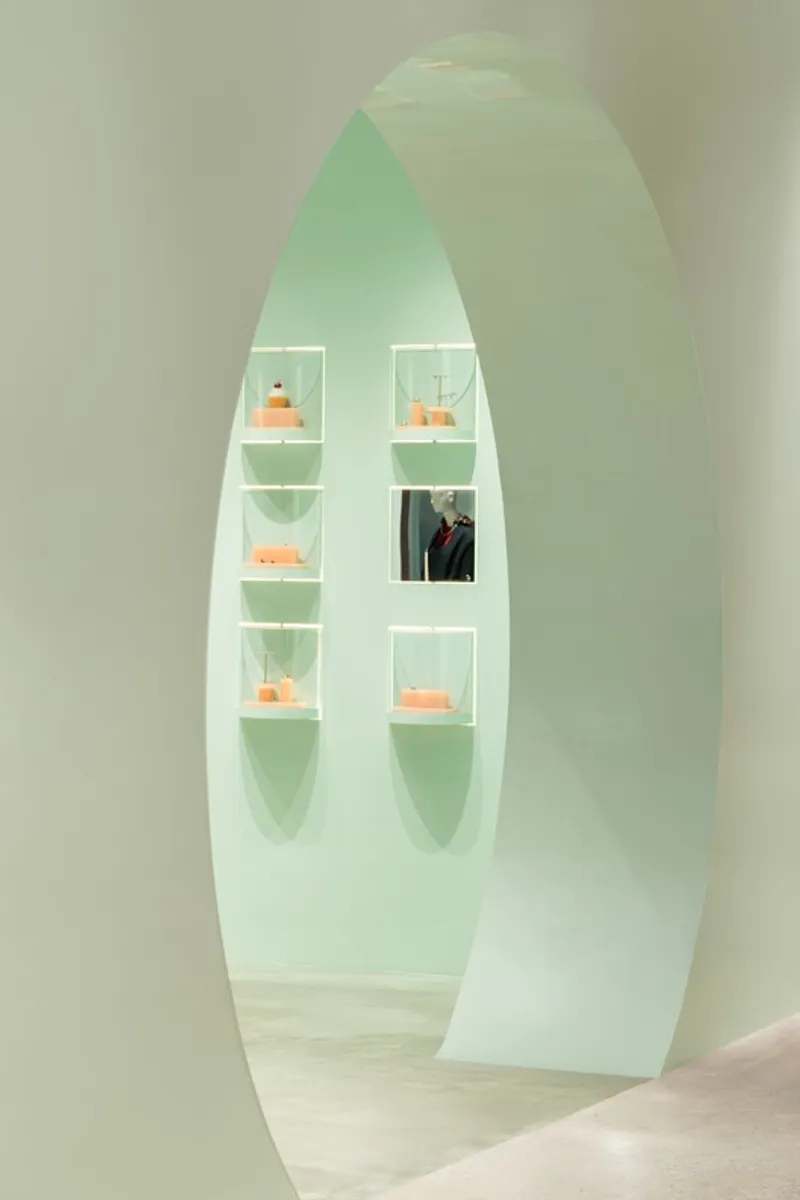
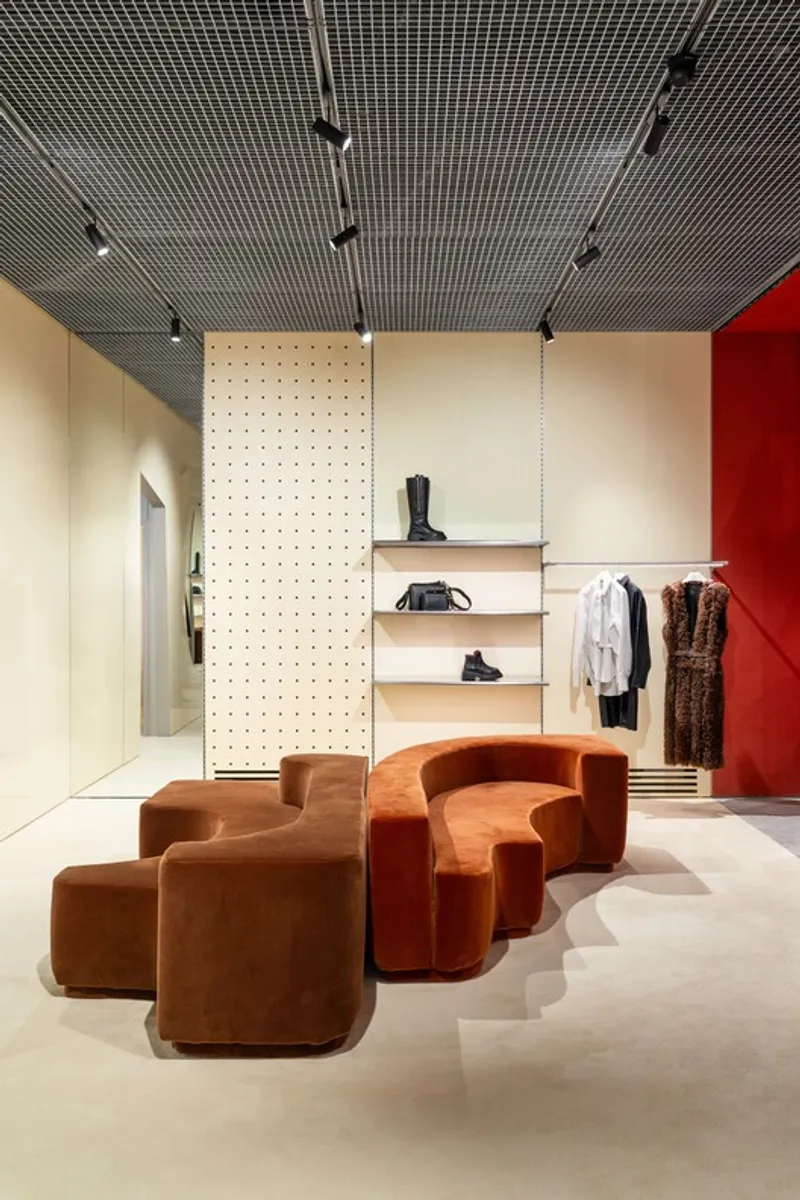
The first niche, clad in metal and mirror, is designed for pop-ups and temporary installations. The second permanently hosts Aliita, contained within a mint-green lacquered room accented by custom pink resin podiums. The third, larger niche forms a lounge-like environment with fitting rooms, wrapped in butter-colored carpet and panels to evoke a domestic, relaxed atmosphere.
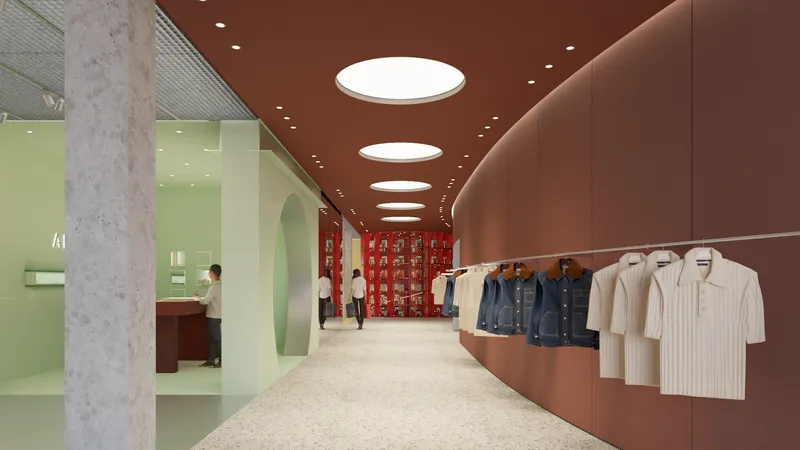
The lower level expands the store’s cultural dimension. Here, spaces are dedicated to exhibitions, collaborations, and the brand archive, extending the narrative of Plan C beyond commerce into storytelling and research.
Materiality and Controlled Expression
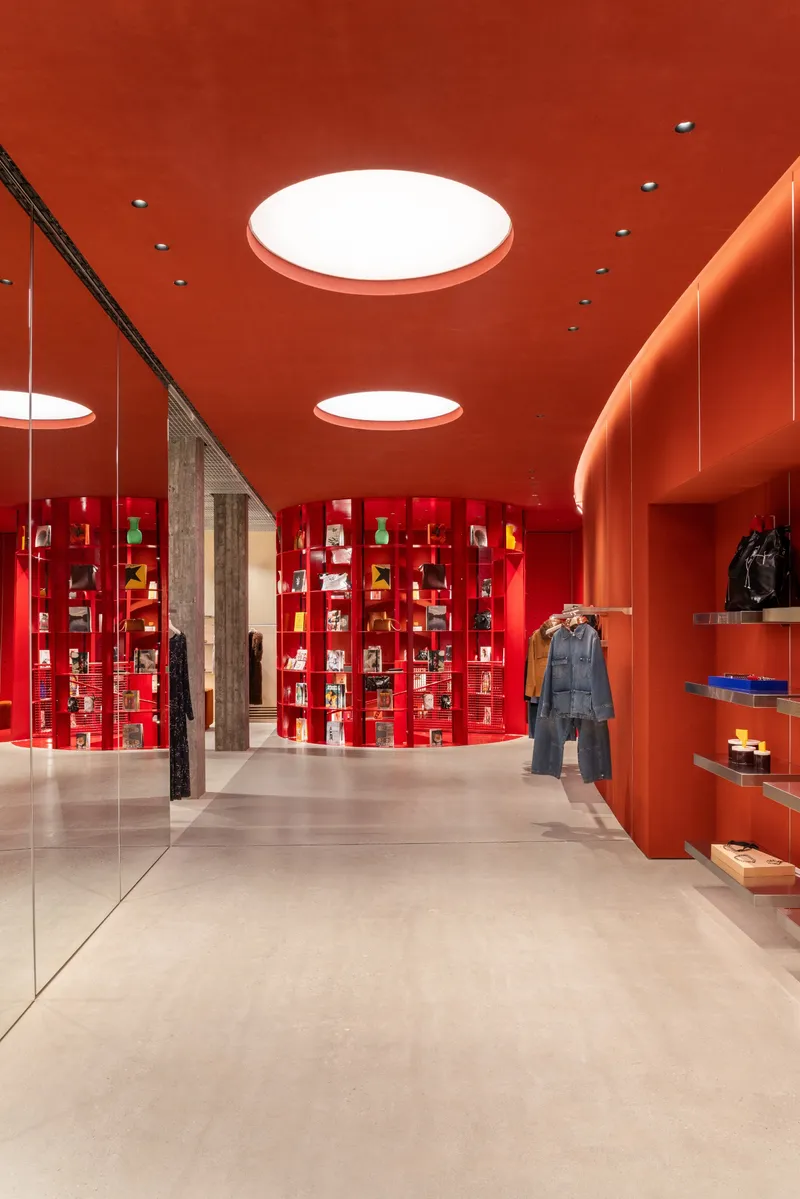
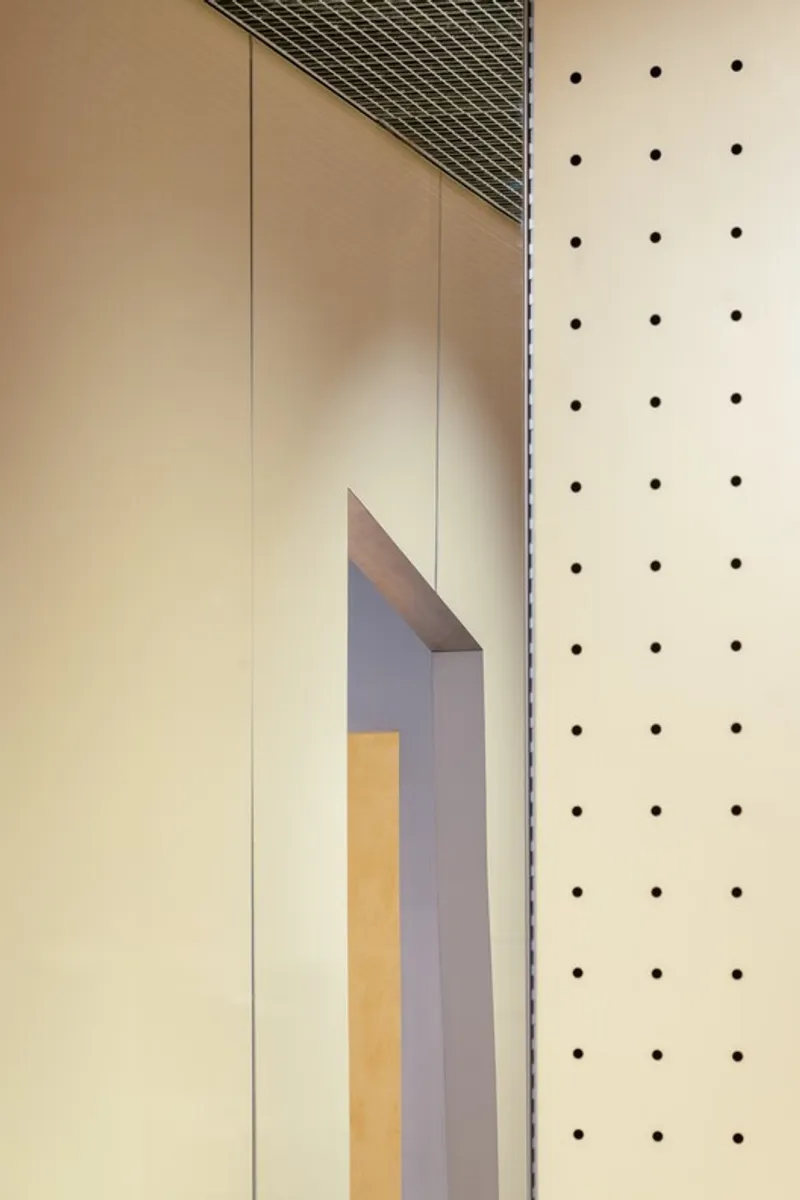
Despite its infrastructural logic, the flagship maintains a strong material and chromatic identity. Metal surfaces, raw concrete floors, colored carpets, and controlled reflections create a dense yet legible environment. Industrial and soft finishes coexist, balancing precision with warmth.
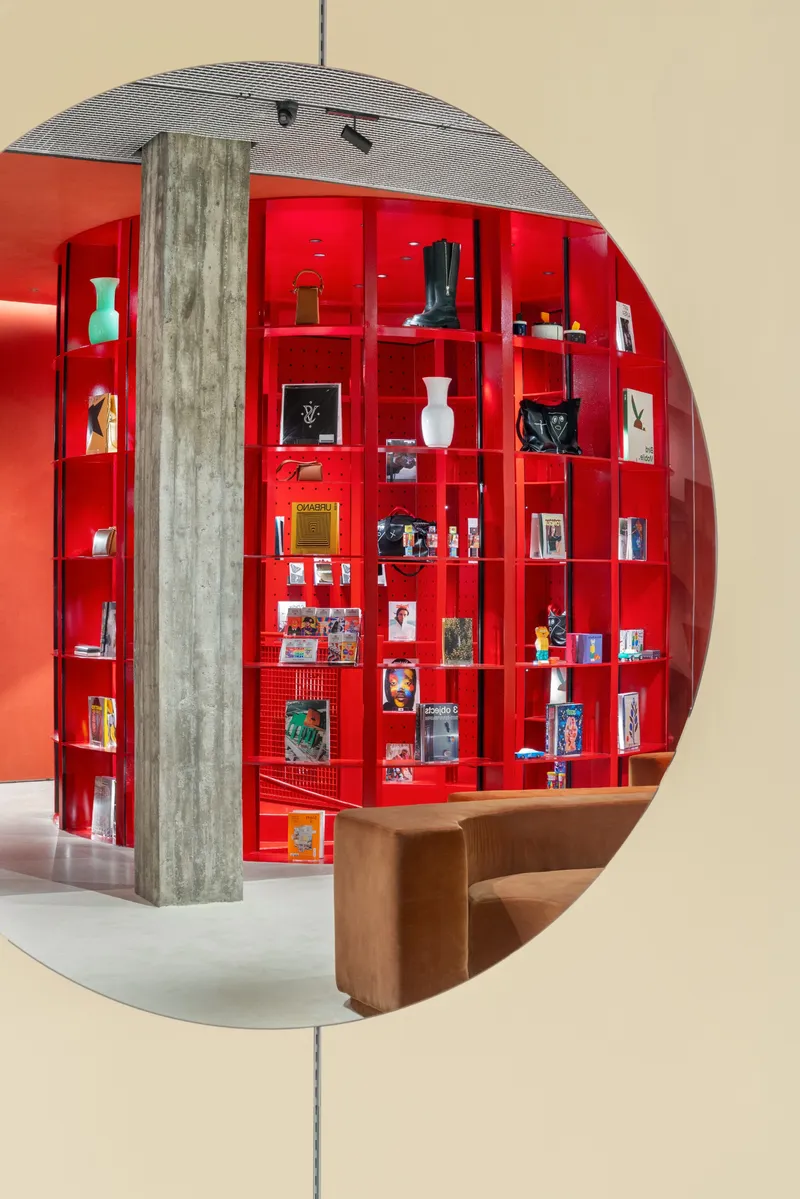
Architectural elements such as reconfigurable wall systems, a curved wall that unifies existing geometries, an infrastructural ceiling with skylights, and a carefully calibrated mix of materials reinforce the idea of a technical container capable of continuous transformation.
Retail Designed to Evolve
Interpreted spatially by (ab)NORMAL, Plan C Frame takes shape as a flexible, reprogrammable architecture that can grow with the brand. It rejects the notion of retail as a fixed image, instead embracing time, change, and collaboration as integral components of design.

In doing so, the flagship establishes a new paradigm: one where architecture becomes an enabling structure, culture becomes content, and retail becomes an evolving, participatory experience.
All the Photographs are works of


Popular Articles
Popular articles from the community


Juan García Correa, John González and Claudia Rueda Sink a Circular Amphitheater into a Manizales Engineering Building
On the La Nubia campus in Manizales, Colombia, the S1 Building folds labs and offices into a hillside of ramped lawns that double as a campus route.

Cube Design Draws an Ecological Corridor Between Two Shenzhen Hills with the Nankai Building
Beside Shenzhen's container docks, the Nankai Building pairs stacked balconies with a climbing green screen to connect two hillsides across its height.

LT2A and OPEN Architectes Thread a Brick and Glass High School Through a Wooded Belgian Campus
In Braine-l'Alleud, a 3,000 m² wing for Collège Cardinal Mercier pairs pale brick with a glazed colonnade, deferring to a small chapel and a dense wood.

Architekt Andreas Gruber Scatters 23 Dark Timber Chalets Across a South Tyrolean Forest Edge
In Molini di Tures, Amonti Chalets breaks a resort into a hamlet of gabled timber houses, with parking, storage and services pushed into the slope.

Similar Reads
You might also enjoy these articles


Hodi-Mandai Geram
Project Function: Preservation and revitalization of the Intangible heritage and socio-spatial identity of the Hodi by Housing, Cultural Memory Center, Sacred Grove, landscape, local tourism economy


Olio Towers: A Mid-Rise for Performers That Fuses Housing, Rehearsal, and Stage
Located blocks from Houston's Theater District, this modular tower stacks living units around a central performance atrium.

Oasis: Modular Green Housing Carved into Dhaka's Urban Fabric
A shortlisted Plugin Housing entry reclaims unauthorized settlements in Dhaka with stepped concrete volumes, green roofs, and ventilation-driven design.

Black Hole: A Floating Megastructure for the Post-Physical Era
Emiliano Mazzarotto envisions a spherical, self-scaling arena where e-sports, digital hotels, and holographic stadiums replace traditional public space.

Explore Commercial Buildings Competitions
Discover active competitions in this discipline

Challenge to reimagine the Iron Throne

Photograph architecture without architects

Illustrate the lost glory of Angkor Wat - Render Challenge

Design challenge to reuse E-waste
Comments (0)
Please login or sign up to add comments
No comments yet. Be the first to comment!