

JYA-RCHITECTS Stacks a Brick House on Top of a Glass Storefront in Seoul's Yeongdeungpo-gu
Dots 2 pairs commercial transparency with domestic weight, creating visual tension on a narrow Seoul lot next to its sibling building.


There is a particular kind of architectural bravado in placing something heavy on top of something light. JYA-RCHITECTS, the Seoul practice led by Jo Janghee and Won Youmin, does exactly that with Dots 2: a 210 square meter mixed-use building in Yeongdeungpo-gu where an expanding brick mass sits atop a transparent glass ground floor, growing wider as it climbs. The effect is deliberately unstable, a composition that refuses to settle into the expected logic of base, middle, and top. It is a small building that punches well above its weight.
Dots 2 is the second act in a two-building story. The clients, who run a design company out of the neighboring Dots 1, purchased an adjacent multiplex housing unit with plans to remodel. Demolition constraints, parking regulations, and floor height limitations made renovation impractical, so they chose to start fresh. The result is a companion building that shares a courtyard, a material palette of brick and concrete, and an urban strategy with its predecessor, while pushing the formal language further. Where Dots 1 established the vocabulary, Dots 2 makes it argue with itself.
Heavy Over Light


The street elevation tells you everything about how this building thinks. A steep gabled form rises in clay brick, its upper floors punched by recessed concrete balconies that carve deep shadows into the chevron-patterned wall. Below, the commercial floors dissolve into glass and aluminum curtain wall, creating an inversion of the structural instinct that normally demands the heaviest elements at the bottom. Thick concrete bands mark the transition between materials, continuing a facade motif from Dots 1 while simultaneously holding the visual tension together.
The brick volume does not simply sit on the glass; it gradually increases in size as it ascends. Each floor steps outward slightly, so the building's silhouette widens toward the sky. The gable peak reinforces this upward expansion. It is a calculated provocation: the building looks like it should not work, and yet the concrete lintels and structural bands make clear that every gram of apparent instability has been engineered.
Brick as Pattern Language


The brown clay brick, supplied by Jeil Brick, is not laid flat and forgotten. The facade features a zigzag pattern, with bricks protruding at regular intervals to create a chevron relief that catches light differently throughout the day. The close-up reveals the precision required: each projecting unit casts a sharp diagonal shadow across its neighbor, turning the wall into a surface that reads as textile rather than masonry. It is decoration achieved through tectonics, not appliqué.
Seen from the street alongside Dots 1, the two buildings share enough material continuity to read as siblings. Both use brick. Both deploy concrete lines as structural and graphic elements. But Dots 2 takes the pattern work further, using the stepped surface to give the narrow facade a sense of depth and scale it would otherwise lack. On a site this tight, every surface has to work overtime.
The Courtyard as Urban Connector


The yard between Dots 1 and Dots 2 is the project's quiet masterstroke. It functions simultaneously as a passage connecting the two buildings, a communal outdoor room, and a small alley linking back to the city. The first-floor rental spaces in both buildings can spill out into this shared zone, expanding their usable area and allowing commercial tenants to operate across the gap. It transforms what could have been a leftover setback into the social heart of the complex.
At the residential levels, the relationship is more intimate. The third and fourth floors open onto a brick-walled terrace through sliding glass doors, extending the living space outward. The timber flooring inside runs right up to the threshold, blurring the line between indoor warmth and the rough masonry exterior. The building is open toward the south, and these connections through windows and doors become the primary passive strategy for bringing light and air into the narrow plan.
Vertical Living in a Thin Tower


The program stacks vertically with ruthless efficiency. The ground floor prioritizes the larger rental space and a single parking spot. The second floor holds a smaller commercial unit, with portions given over to ancillary residential facilities. The residence itself begins in earnest on the third floor and continues through the fourth and into an attic. Bedrooms, bathrooms, a living room, kitchen, and dining area are all packed into the upper volume, organized around a staircase that doubles as infrastructure spine.
That staircase is the building's circulatory system. From the first floor to the third, the stair structure conceals the boiler room, machine room, utility room, and storage spaces within its thickness. The transition from raw concrete and steel at the lower commercial levels to warm timber paneling in the residential zone is handled through material shifts along the stair itself. Cove lighting at the treads and a recessed handrail slot in the angled wood walls give the upper circulation a domestic intimacy that contrasts sharply with the exposed ducts and industrial character below.
Two Registers of Interior


The residential interiors commit fully to timber and white surfaces. The galley kitchen is a compact masterclass: integrated appliances line both walls under recessed ceiling lighting, with every centimeter accounted for. There are no grand gestures here, just disciplined planning for a household that needs a real kitchen in a building barely wider than a bus. The sloped ceilings in the upper stairwell and corridor follow the roofline, turning the gable geometry from an exterior formal move into an interior spatial experience.
Below, the commercial floors are left deliberately unfinished. Raw concrete walls, exposed mechanical systems, and a steel staircase signal flexibility. Tenants can project their own identity onto these spaces without fighting a predetermined aesthetic. The material contrast between the two zones, glass and concrete below, brick and timber above, is not just visual language. It is a practical distinction between spaces designed to be adapted and spaces designed to be lived in.
Why This Project Matters
Dots 2 is a lesson in doing more with less. On a site too small for conventional mixed-use planning, JYA-RCHITECTS found room for two commercial units, a full family residence, parking, and a shared courtyard that activates both this building and its neighbor. The spatial ingenuity of tucking mechanical rooms inside the staircase, of using the yard as both public passage and private terrace, of letting the glass commercial floors fund the brick home above, reflects a type of architectural intelligence that has nothing to do with budget and everything to do with attention.
More broadly, the project demonstrates that the small-lot Korean mixed-use typology, often treated as a forgettable commodity, can be a vehicle for serious design thinking. The facade's deliberate instability, the careful material sequencing from glass to concrete to brick, and the choreographed relationship with Dots 1 all argue that even at 210 square meters, architecture can take a position. It is a building that knows exactly what it is doing and makes sure you know it too.
Dots 2 Commercial Building and House by JYA-RCHITECTS (Lead Architects: Jo Janghee, Won Youmin). Yeongdeungpo-gu, Seoul, South Korea. 210 m². Completed 2022. Photography by Hwang Hyochel.
About the Studio
Share Your Own Work on uni.xyz
If projects like this are the kind of work you want to make, uni.xyz is a place to publish your own, find collaborators, and enter design competitions.


Popular Articles
Popular articles from the community

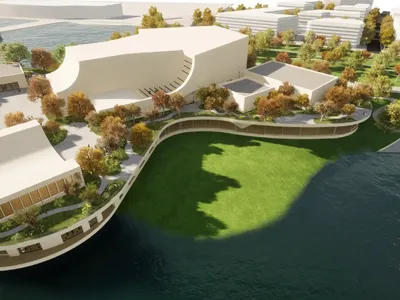
The Amber Palace Opera: A Geological Fiction Surfaces on Tallinn's Baltic Waterfront
Pierre Brillard reimagines a Baltic legend as a public landscape, opera house, and waterfront promenade rooted in Tallinn's coastal identity.
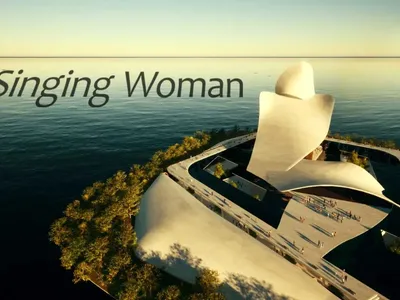
Singing Woman: Contemporary Architecture Inspired by Estonia’s Voice and the Sea
Singing Woman turns Estonia’s song culture into flowing opera house architecture, blending public life, landscape, sea, and national memory.
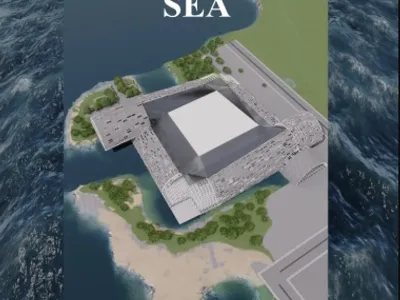
Opera on the Sea: Driftwood Logic Shapes a Timber Opera House on Estonia's Coast
Trevor Orgill's opera house translates the entangled drift of floating timber into a civic building where wood, water, and music converge.

Cloaked Colonization: A Mobile Underwater Habitat That Moves Like a Fish
Micah Abaya's shortlisted EHC Pacific entry reimagines ocean settlement as a dispersed network of self-sustaining architectural organisms.

Similar Reads
You might also enjoy these articles


Hodi-Mandai Geram
Project Function: Preservation and revitalization of the Intangible heritage and socio-spatial identity of the Hodi by Housing, Cultural Memory Center, Sacred Grove, landscape, local tourism economy


Olio Towers: A Mid-Rise for Performers That Fuses Housing, Rehearsal, and Stage
Located blocks from Houston's Theater District, this modular tower stacks living units around a central performance atrium.

Oasis: Modular Green Housing Carved into Dhaka's Urban Fabric
A shortlisted Plugin Housing entry reclaims unauthorized settlements in Dhaka with stepped concrete volumes, green roofs, and ventilation-driven design.

Black Hole: A Floating Megastructure for the Post-Physical Era
Emiliano Mazzarotto envisions a spherical, self-scaling arena where e-sports, digital hotels, and holographic stadiums replace traditional public space.

Explore Mixed-Use Competitions
Discover active competitions in this discipline

Challenge to reimagine the Iron Throne

Photograph architecture without architects

Illustrate the lost glory of Angkor Wat - Render Challenge

Design challenge to reuse E-waste
Comments (0)
Please login or sign up to add comments
No comments yet. Be the first to comment!