
A Sustainable and Thoughtful Family Home in Byron Bay
The Bangalow Road House in Byron Bay is a sustainable, family-friendly home designed within a compact footprint for maximum efficiency.


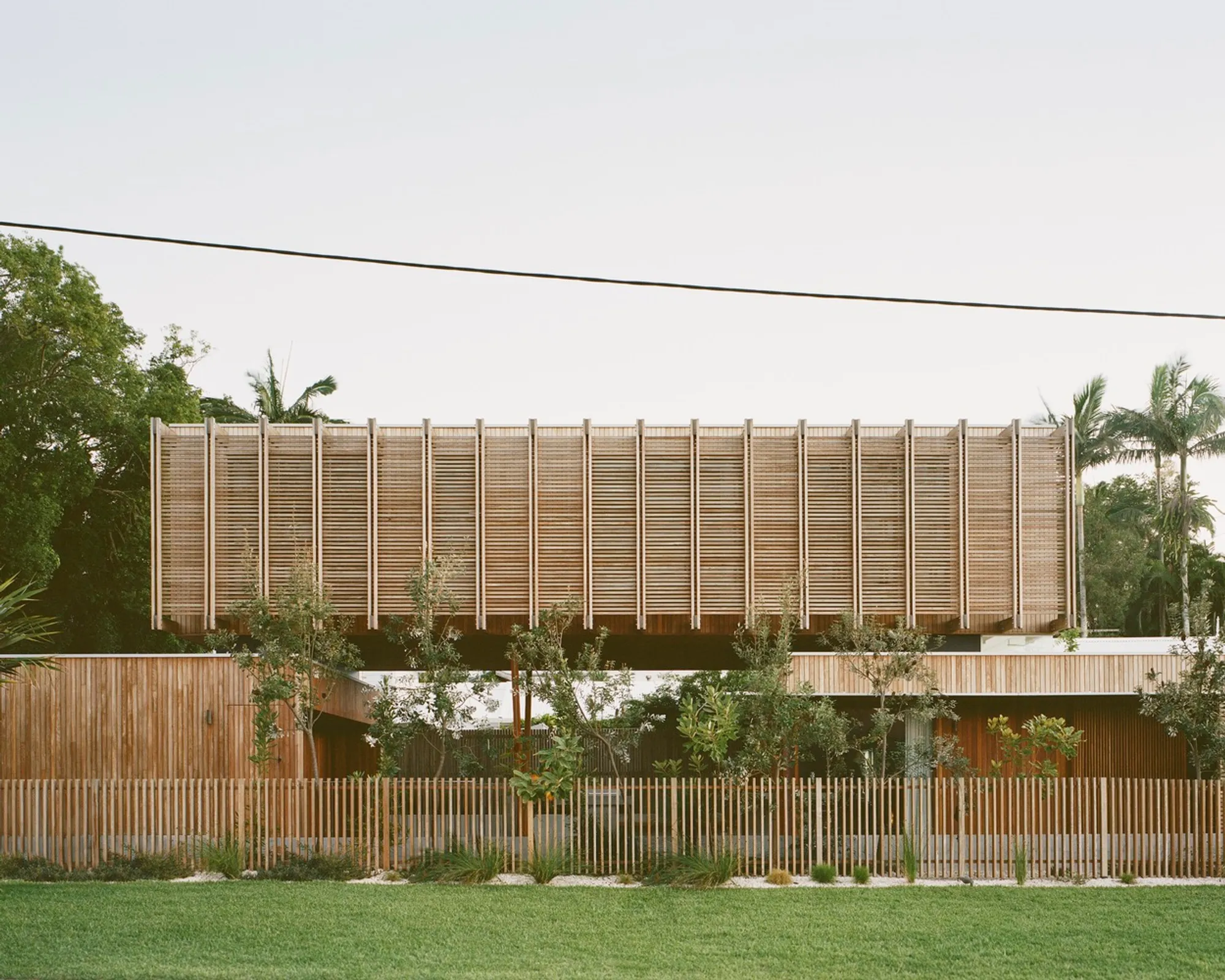
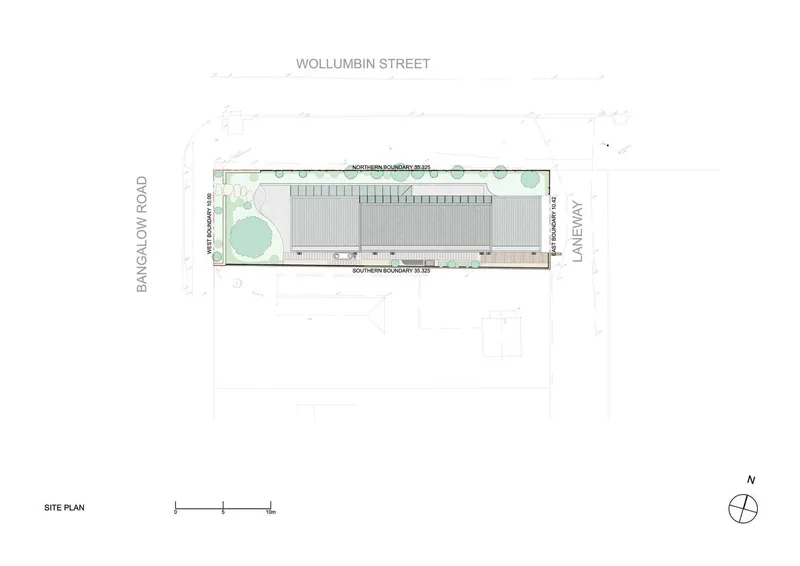
Bangalow Road House, designed by Son Studio, is an exemplary family residence located in Byron Bay, Australia. This home ingeniously responds to the constraints of a narrow 360m² corner block, creating a three-bedroom family dwelling within a modest footprint of just 180m². The design is a creative response to the limited dimensions of the site, offering an elevated plan and utilizing three distinct rectangular volumes to achieve the internal floor area needed.


A Solution for Site Constraints
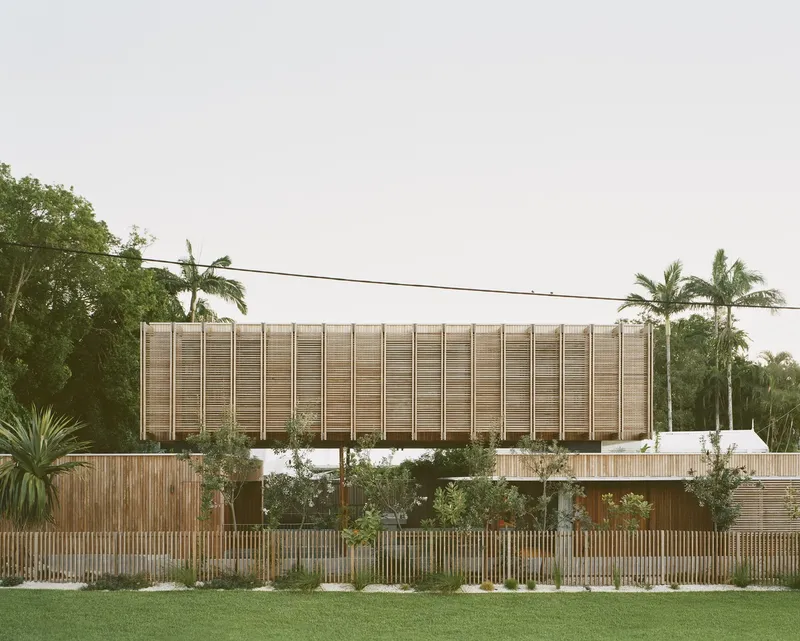
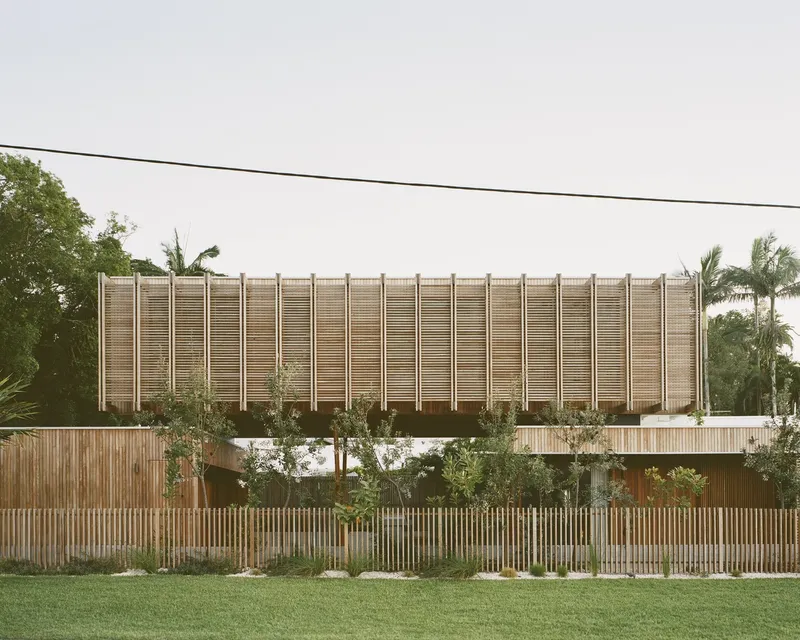
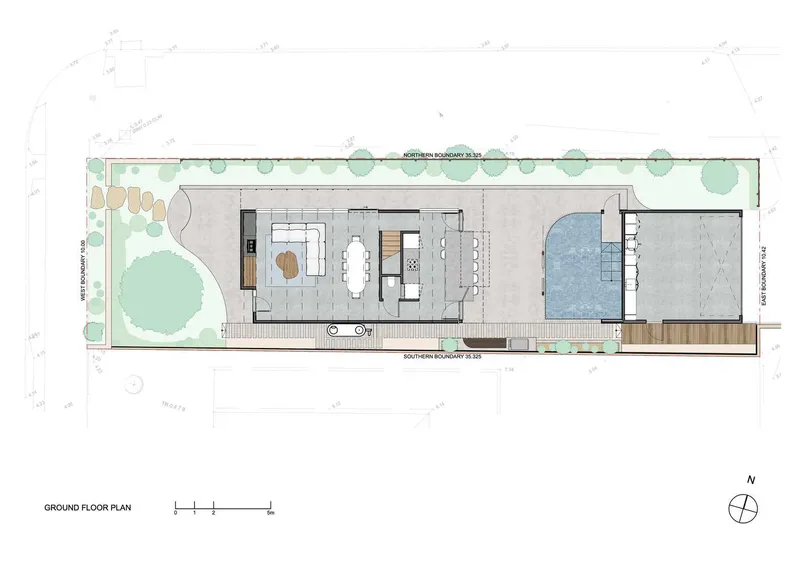
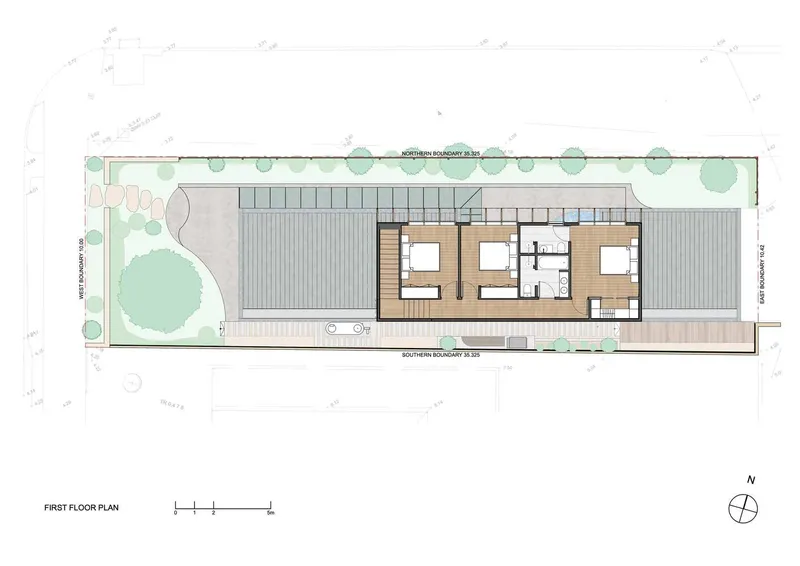
The house's design maximizes the use of the site’s limited space while respecting strict height and side boundary constraints. The structure is composed of three interrelated volumes, each serving different functions. The upper volume houses the private areas, including all the bedrooms, while the two lower volumes accommodate the garage and the living spaces. The home’s two-storey form deviates from conventional designs by creating a visual separation between the volumes, allowing the upper volume to appear as if it floats above the lower ones. This configuration not only adheres to prescribed site limitations but also minimizes the perceived scale of the building, ensuring it integrates harmoniously with the surrounding neighborhood.

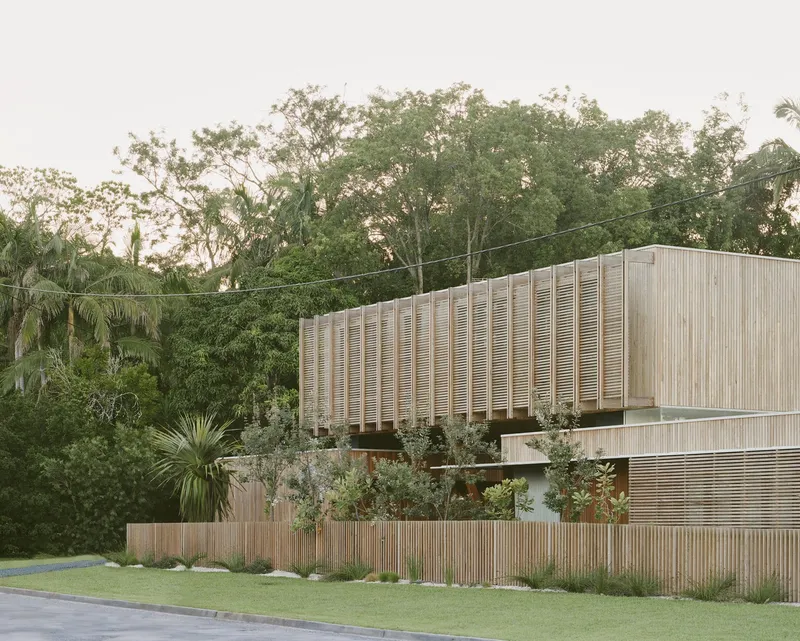
Creating a Courtyard as a Central Element
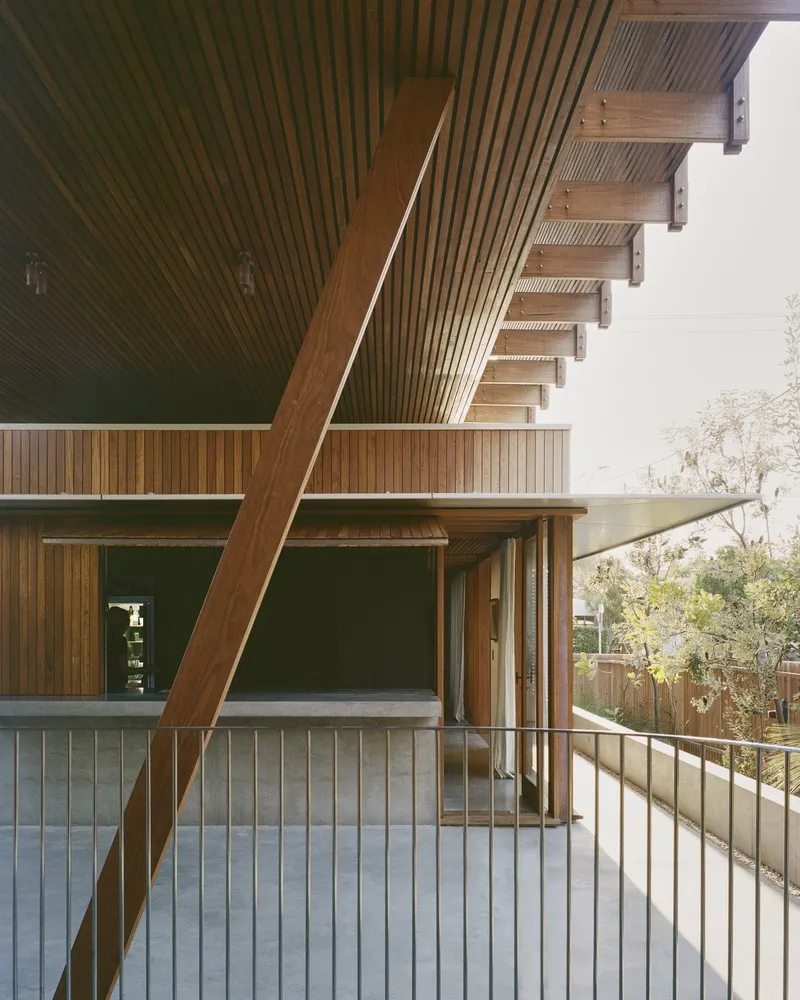
A central courtyard is the heart of the Bangalow Road House, providing an important spatial and functional feature. This outdoor area, enclosed by the building’s form, fosters a flow between openness and privacy, a vital aspect of the design, especially given the proximity to a busy street. When the space is opened to the courtyard, the home creates a welcoming, social atmosphere, while solid openings can be closed off to ensure privacy and shield the occupants from the street view. The design of the courtyard, combined with a thoughtful arrangement of volumes, offers a dynamic and private living experience despite the house's small size.


Privacy through Layered Timber Screens
Privacy from the busy street is achieved through a combination of timber screening mechanisms that not only block the street-level view but also allow abundant natural light to flood the interior spaces. The upper volume features horizontal battens that block sight lines from the street while still allowing occupants to enjoy views of the surroundings. This strategy creates a delicate balance between openness and seclusion, preventing the house from feeling too enclosed while also minimizing solar radiation without relying on traditional eaves.
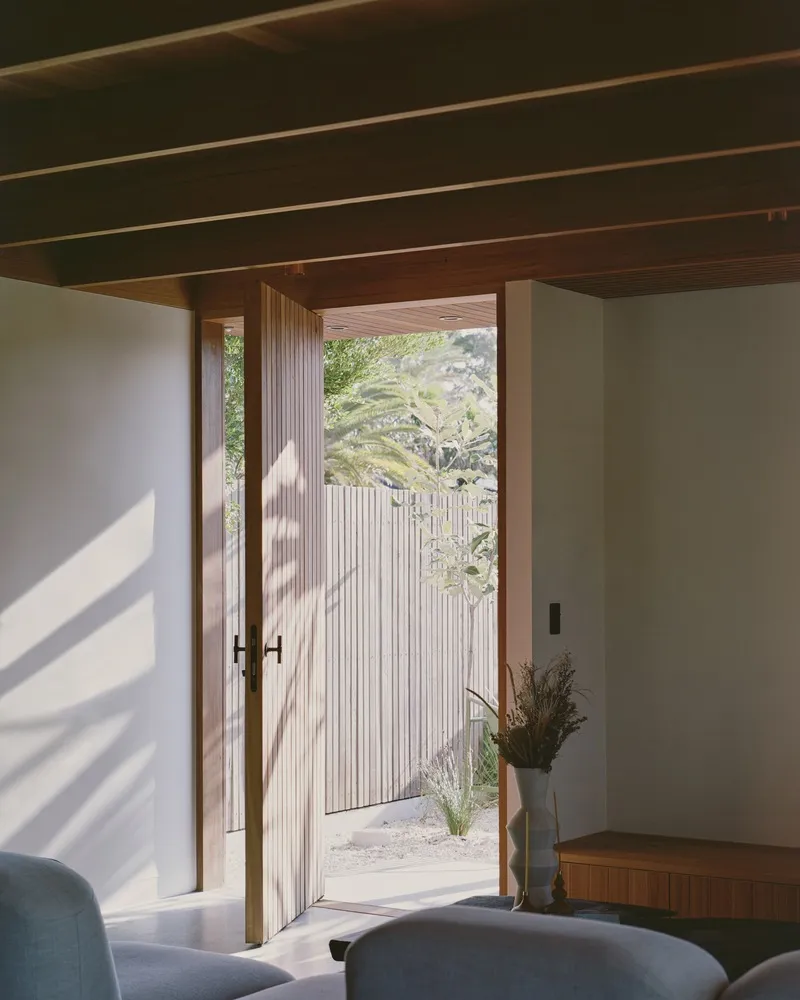

The layered timber screens also create a unique spatial experience within the house, with shifting patterns of dappled light that change throughout the day. These screens give the home a poetic quality, with vistas of the street, gardens, and surrounding site framed differently from every angle. This dynamic interplay between light and shadow brings a heightened sensitivity to the way occupants interact with their home, encouraging curiosity and engagement with the environment.
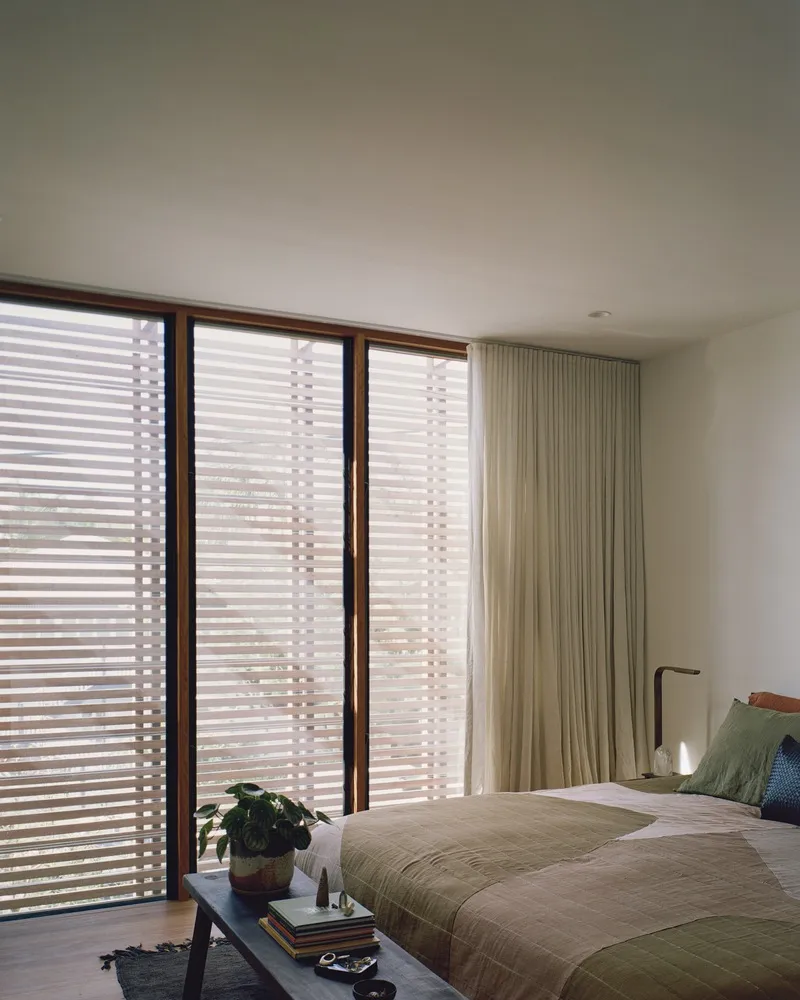

Sustainable Materials and Environmental Considerations
Sustainability is a key component of the Bangalow Road House. The home makes use of locally sourced, raw materials to reduce carbon emissions associated with transportation. The primary material is a native hardwood that encases the structure and extends into the interior, transitioning from a rich hue in the interior to a silver-grey patina on the exterior. This use of natural materials helps anchor the home to its location, creating a deep sense of place and a seamless connection between the inside and outside.


The design also minimizes environmental impact by using fewer materials, cutting down on the number of trees felled and reducing the overall energy consumption for heating and cooling. The home incorporates photovoltaic solar panels, a heat pump system powered by the solar electricity, rainwater tanks, and all-electric appliances to further reduce its ecological footprint. These sustainable features contribute to the home's energy independence and water conservation efforts.
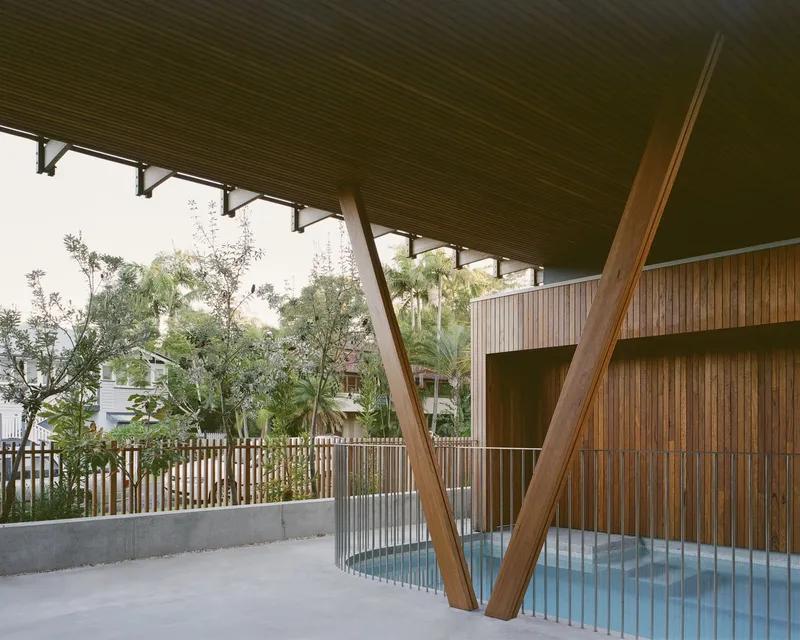
Efficient Living in a Smaller Footprint
Despite its modest size, the Bangalow Road House offers a spacious and functional environment for a family. The efficient use of space ensures that the home meets the needs of its occupants without relying on excessive square footage. The home’s environmentally conscious design, combined with its smaller footprint, results in fewer materials and reduced energy consumption. These sustainable choices not only minimize the environmental impact but also enhance the quality of life for its residents, offering a comfortable, energy-efficient, and thoughtfully designed home.
All Photographs are work of Rory Gardiner



Popular Articles
Popular articles from the community

EW PARK: Sustainable Architecture Reimagines the Future of Urban Parking
EW PARK reimagines city parking as a modular wooden tower combining automation, solar energy, electric mobility, and adaptable urban design.

The Musturak Paradise: Senior Living Architecture for a Connected Future in Temara, Morocco
The Musturak Paradise reimagines senior living architecture in Temara via private homes, social spaces, culture, community, and shared care.

Hill & Cross Opera: Sculptural Opera House Architecture Shaped by Tallinn’s Landscape and Identity
Hill & Cross Opera reimagines opera house architecture in Tallinn through its sculptural hill, civic plaza, glass wave and a luminous cross.

Co-life: Sustainable Architecture for Age-Friendly Community Living
Co-life reimagines sustainable architecture for seniors through courtyards, rammed earth, shared gardens, and spaces designed for belonging.


Similar Reads
You might also enjoy these articles


Hodi-Mandai Geram
Project Function: Preservation and revitalization of the Intangible heritage and socio-spatial identity of the Hodi by Housing, Cultural Memory Center, Sacred Grove, landscape, local tourism economy


Olio Towers: A Mid-Rise for Performers That Fuses Housing, Rehearsal, and Stage
Located blocks from Houston's Theater District, this modular tower stacks living units around a central performance atrium.

Oasis: Modular Green Housing Carved into Dhaka's Urban Fabric
A shortlisted Plugin Housing entry reclaims unauthorized settlements in Dhaka with stepped concrete volumes, green roofs, and ventilation-driven design.

Black Hole: A Floating Megastructure for the Post-Physical Era
Emiliano Mazzarotto envisions a spherical, self-scaling arena where e-sports, digital hotels, and holographic stadiums replace traditional public space.


Explore Architecture Competitions
Discover active competitions in this discipline



Challenge to reimagine the Iron Throne


Photograph architecture without architects


Illustrate the lost glory of Angkor Wat - Render Challenge


Design challenge to reuse E-waste
Comments (0)
Please login or sign up to add comments
No comments yet. Be the first to comment!