

A Sustainable Office Building Transformation by Helen & Hard
Innoasis by Helen & Hard is a transformative office building in Stavanger that combines industrial heritage with sustainable design, creating a green, flexible workspace with a central atrium.


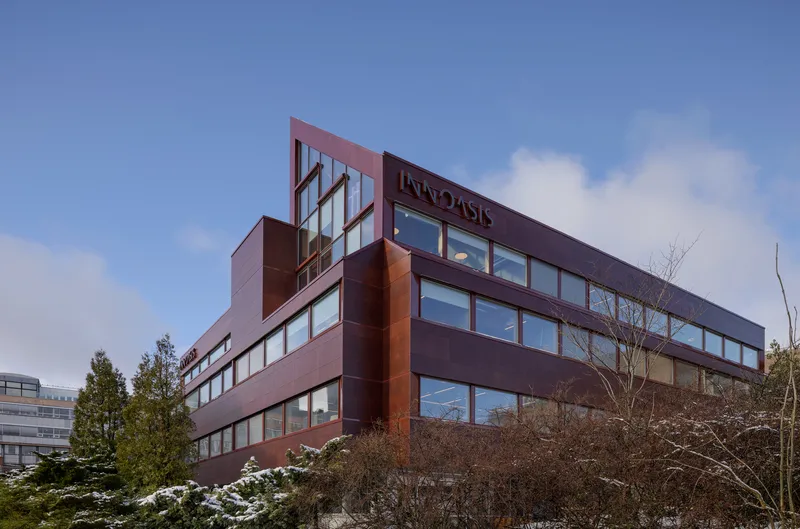
The Innoasis building, located in Stavanger, Norway, is an exemplary project that blends industrial heritage with modern sustainability and design. Designed by Helen & Hard, this 4000 m² office building underwent a major transformation of an existing 1978 structure, once the headquarters of the Norwegian Petroleum Directorate. Completed in 2022, Innoasis introduces a contemporary workspace that focuses on ecological value, innovation, and social interaction.


Architectural Transformation and Concept
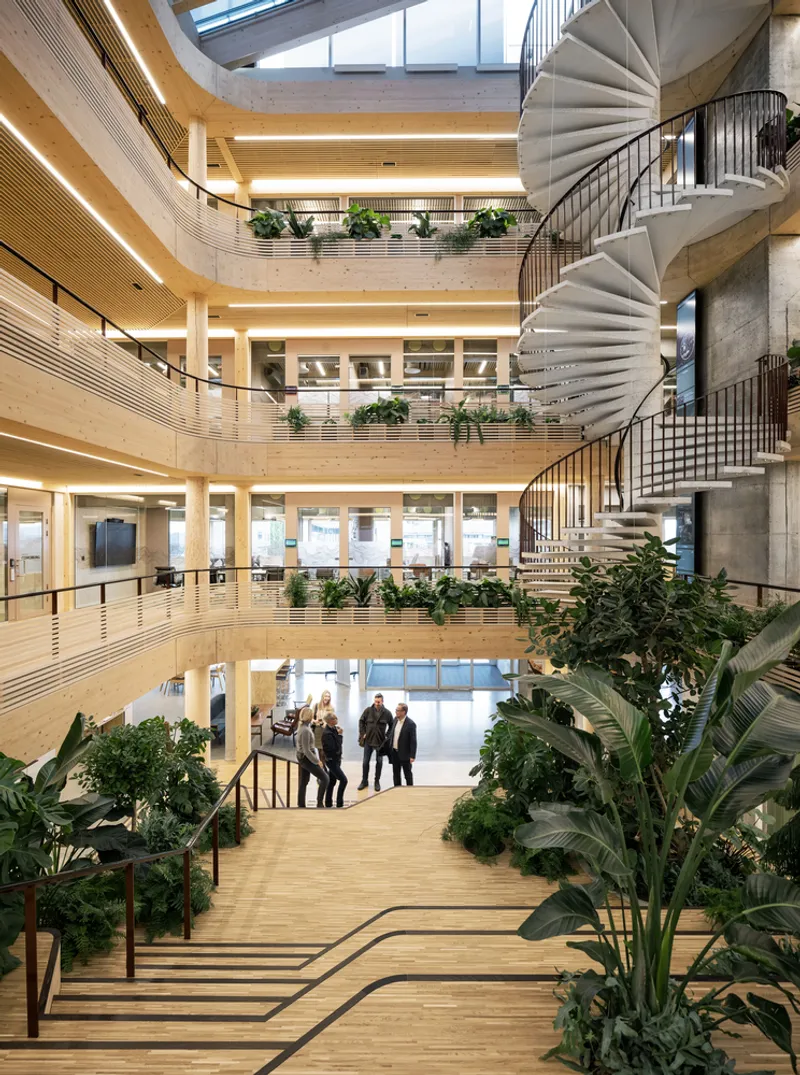
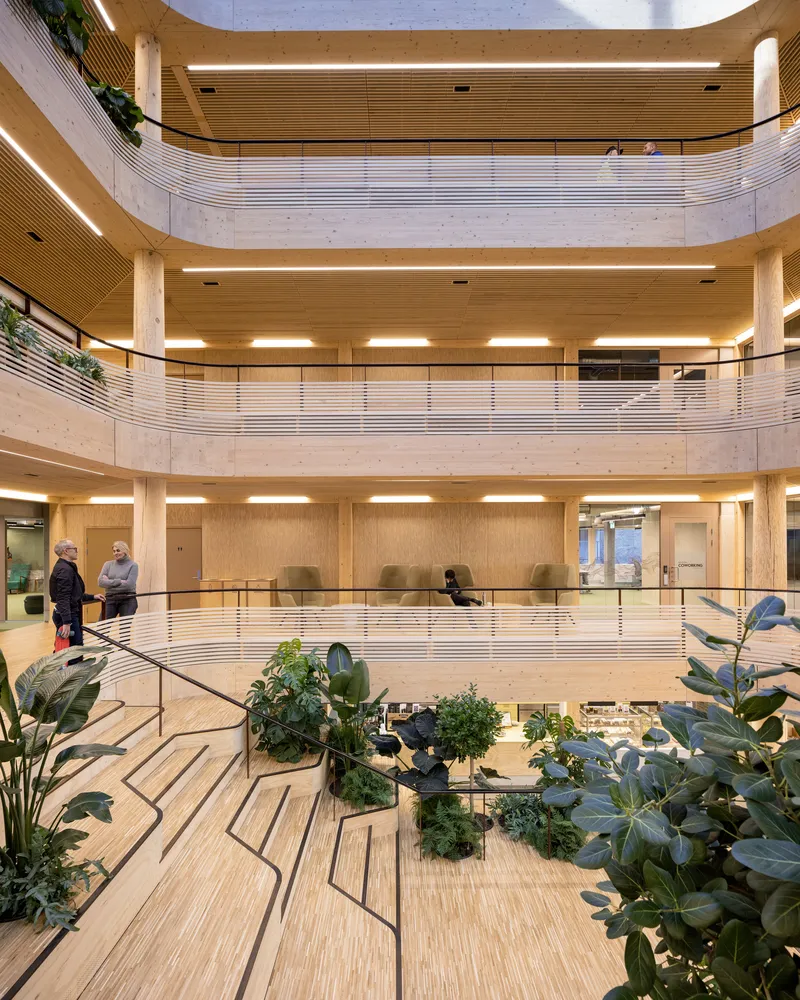
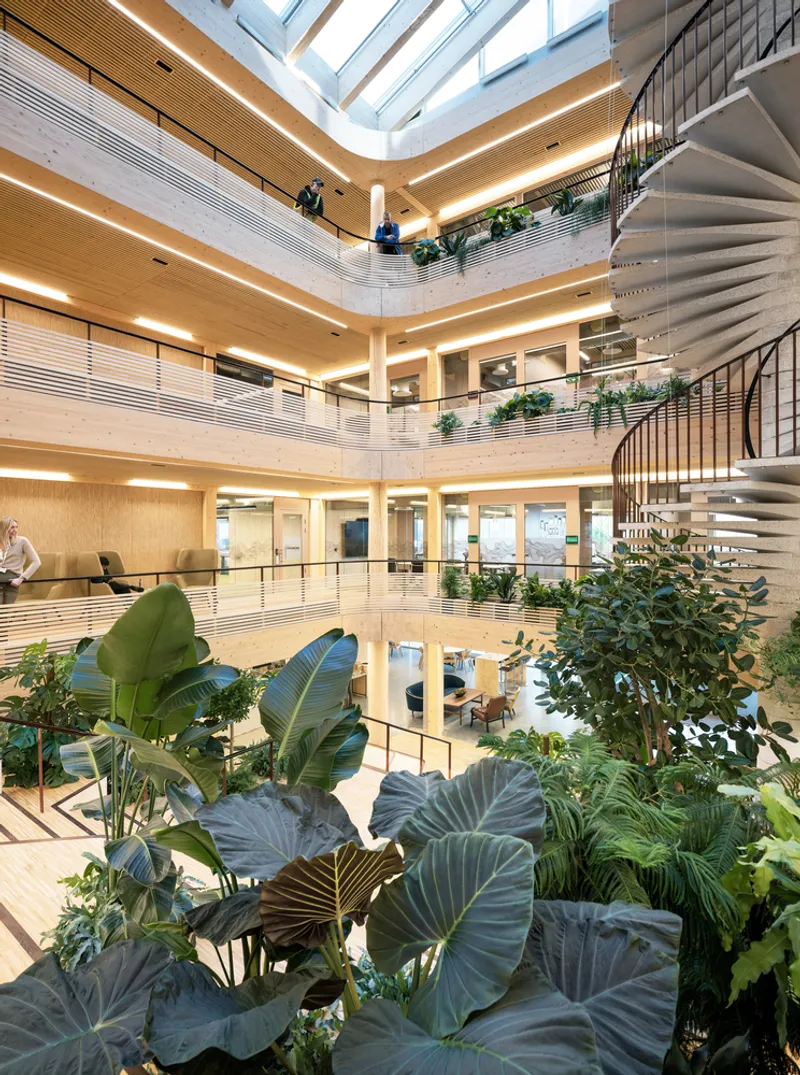
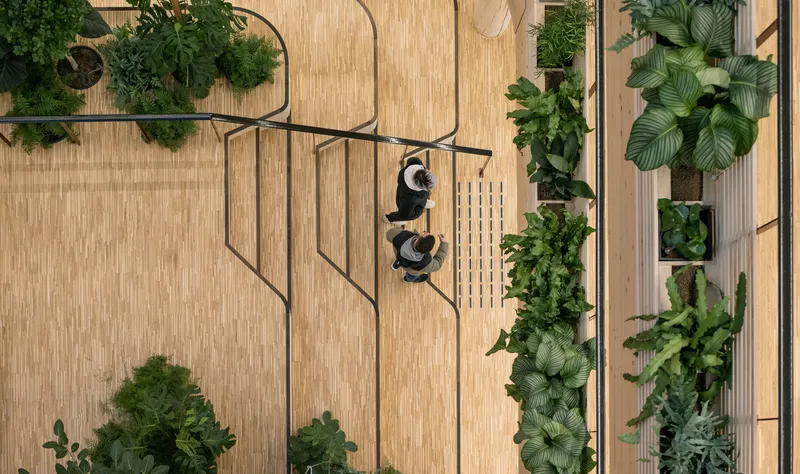
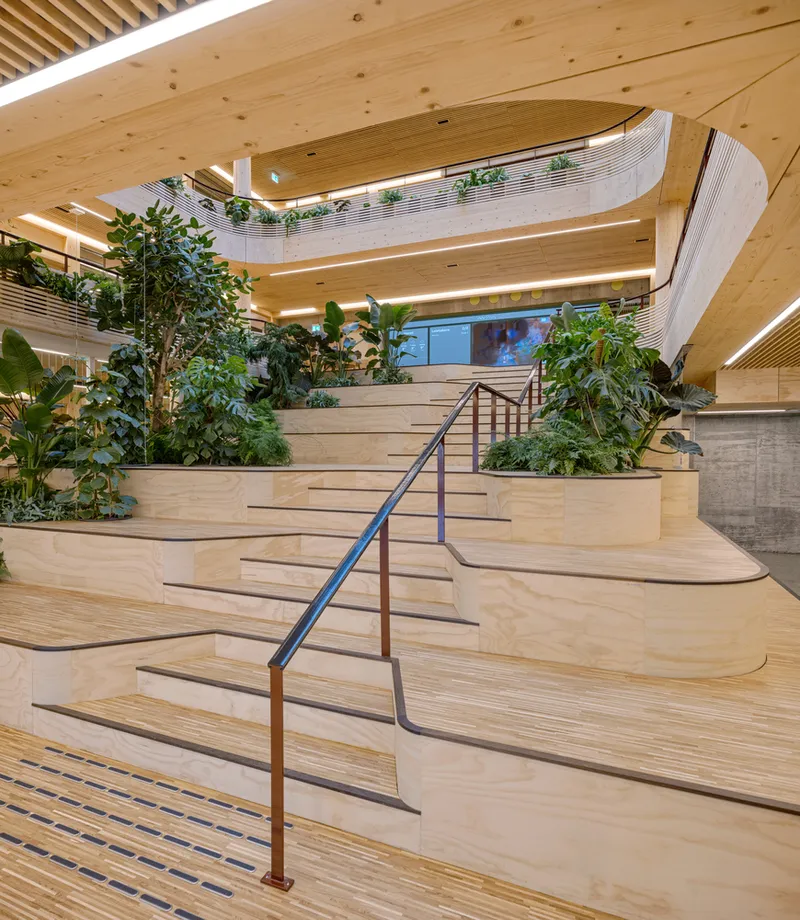
Originally built with a clear industrial system—concrete columns and DT rib elements—the Innoasis renovation preserves these structural elements while giving the building a new identity. A central change was the conversion of the old backyard into a covered atrium, transforming the heart of the building into a social and collaborative hub. The atrium is framed with a striking glulam beam structure and natural spruce columns, which support a glass roof and create a bright, airy environment filled with greenery integrated into the balustrades and plant installations.

Design and Spatial Organization
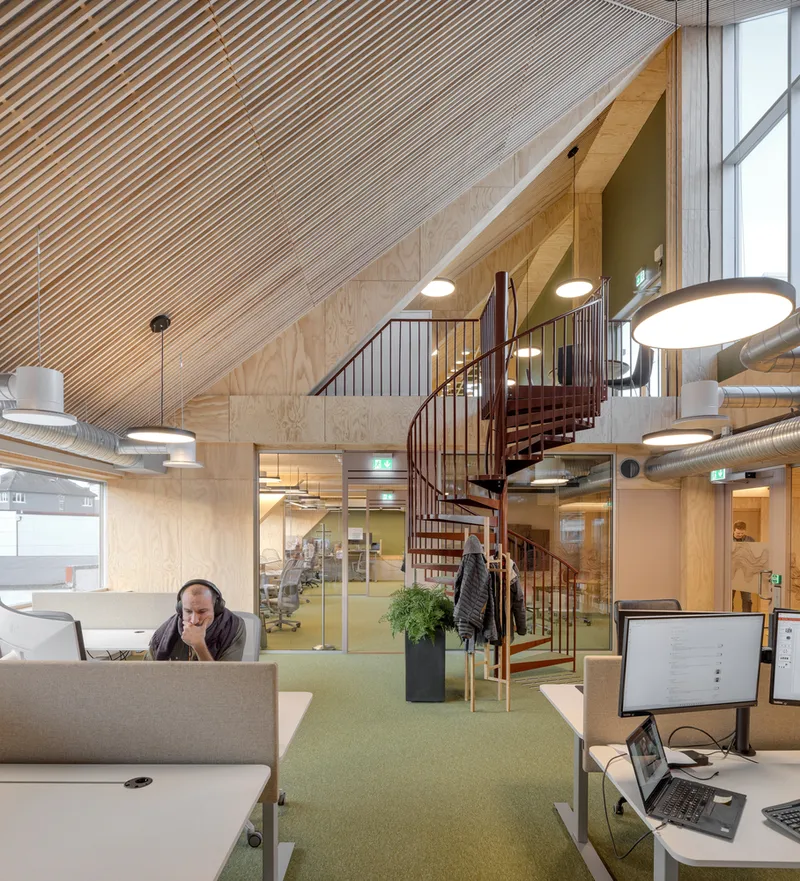
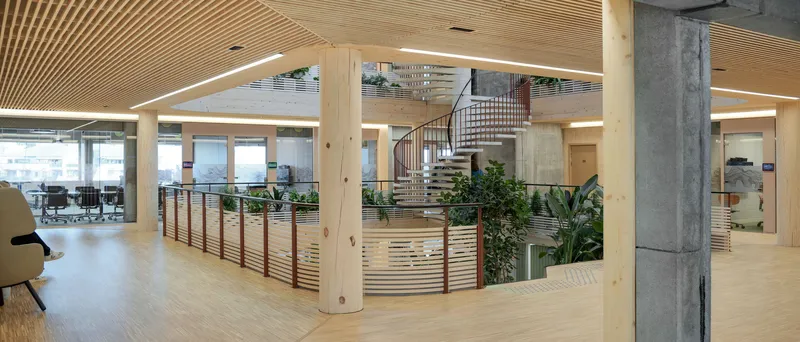
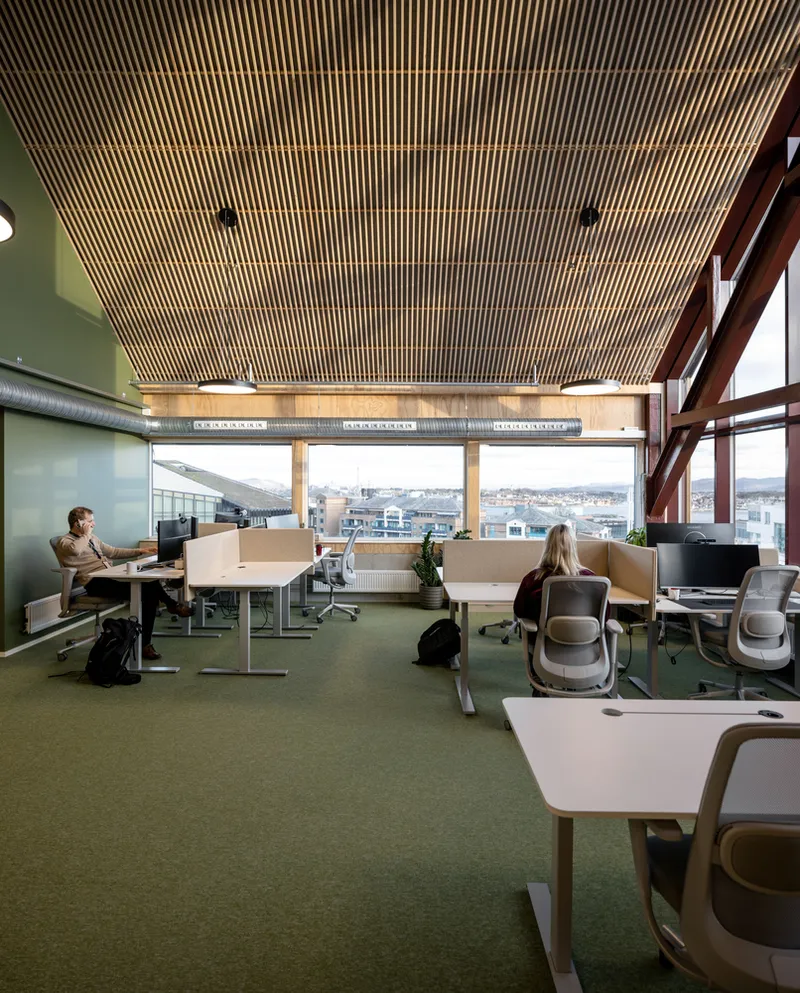
The building's spatial arrangement revolves around the atrium, which functions as the core of the space, fostering both connectivity and flexibility. Meeting rooms are arranged in layers around this central space, while the outer perimeter of the building is occupied by flexible workspaces along the facades. Two additional volumes with pointed roofs are added to the existing structure, introducing new possibilities for mezzanines, workspaces, and unique spatial experiences on the third floor.
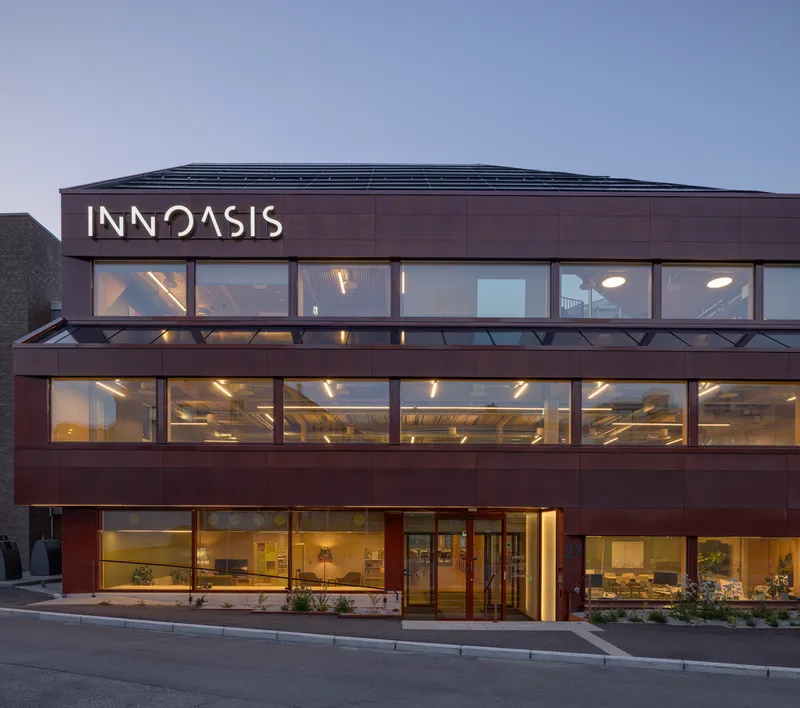

The roofs are not only functional but contribute to the building’s sustainability: they are designed with solar panels, sedum roofing, and local plant species, enhancing the ecological performance of the site. The building's overall design allows for future adaptability with a grid system for easy reconfiguration between cellular offices and open office landscapes.
Sustainable Features and Materials
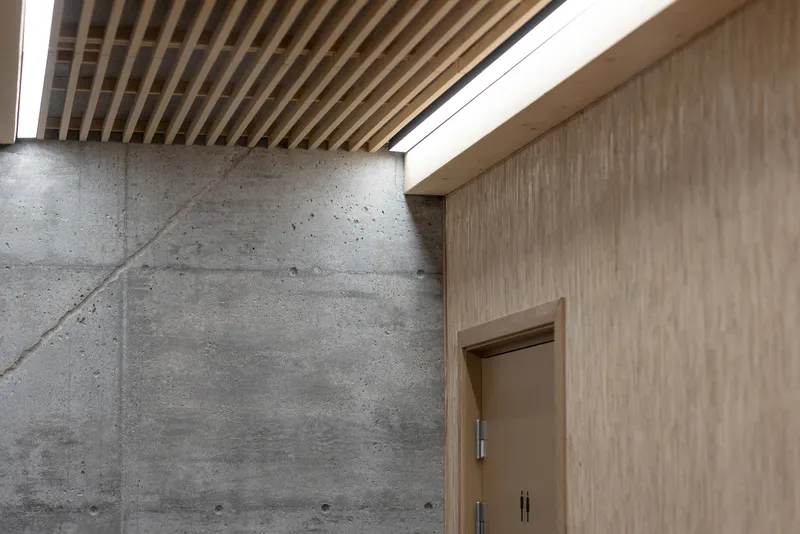
The use of timber plays a significant role in the design, combining new and existing materials. Wooden slats between the concrete ribs, along with straw wallpaper in the atrium, help improve acoustic quality, creating a pleasant atmosphere while reducing sound reverberation. An existing spiral concrete stair is also preserved and reoriented as a central feature, further integrating the building’s industrial past with its modern transformation.

Greenery is another key element of the design. Plants are incorporated into the architecture, particularly within the atrium, enhancing the overall ambiance and contributing to the building's "oasis-like" atmosphere. These plants, along with the sustainable materials used throughout, support the building's high greenhouse gas reduction of over 50% compared to a reference building, contributing to the project’s BREAAM-NOR certification.

Energy Efficiency and Environmental Impact
Innoasis not only reduces the thermal energy used for heating and cooling to one-third of the original building’s requirements, but it also reduces the delivered energy to one-fourth. This transformation results in a substantial improvement in energy performance and a major reduction in carbon emissions, exemplifying the potential of adaptive reuse to create sustainable environments.
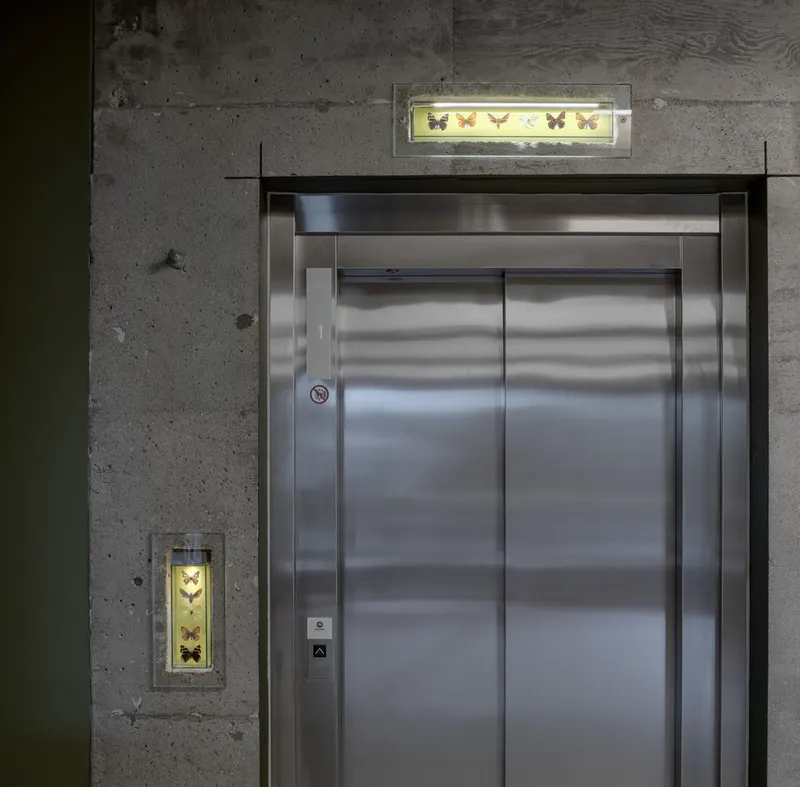


The Innoasis project exemplifies how adaptive reuse can revitalize existing structures, combining heritage with modern sustainable solutions. The building serves as an innovative workspace that prioritizes social interaction, flexibility, and ecological value. Through the clever integration of timber, green roofs, and renewable energy technologies, Innoasis is not only a testament to the power of transformation but also a blueprint for future office buildings that are both environmentally responsible and people-centered.


All Photographs are work of Sindre Ellingsen




Popular Articles
Popular articles from the community

AL-JANNAH: Sustainable Architecture and Permaculture for Afghan Widows
AL-JANNAH uses sustainable architecture and permaculture to create resilient oasis of housing, learning, work and renewal for Afghan widows.

Co-life: Sustainable Architecture for Age-Friendly Community Living
Co-life reimagines sustainable architecture for seniors through courtyards, rammed earth, shared gardens, and spaces designed for belonging.

Hill & Cross Opera: Sculptural Opera House Architecture Shaped by Tallinn’s Landscape and Identity
Hill & Cross Opera reimagines opera house architecture in Tallinn through its sculptural hill, civic plaza, glass wave and a luminous cross.

The Ocean Hive: Sustainable Architecture for a Self-Sufficient Civilization at Sea
The Ocean Hive imagines sustainable architecture at sea, where modular habitats, algae, wave power and ocean waste sustain a growing colony.


Similar Reads
You might also enjoy these articles


Hodi-Mandai Geram
Project Function: Preservation and revitalization of the Intangible heritage and socio-spatial identity of the Hodi by Housing, Cultural Memory Center, Sacred Grove, landscape, local tourism economy


Olio Towers: A Mid-Rise for Performers That Fuses Housing, Rehearsal, and Stage
Located blocks from Houston's Theater District, this modular tower stacks living units around a central performance atrium.

Oasis: Modular Green Housing Carved into Dhaka's Urban Fabric
A shortlisted Plugin Housing entry reclaims unauthorized settlements in Dhaka with stepped concrete volumes, green roofs, and ventilation-driven design.

Black Hole: A Floating Megastructure for the Post-Physical Era
Emiliano Mazzarotto envisions a spherical, self-scaling arena where e-sports, digital hotels, and holographic stadiums replace traditional public space.

Explore Office Building Competitions
Discover active competitions in this discipline



Challenge to reimagine the Iron Throne


Photograph architecture without architects


Illustrate the lost glory of Angkor Wat - Render Challenge


Design challenge to reuse E-waste
Comments (0)
Please login or sign up to add comments
No comments yet. Be the first to comment!