
A Thoughtful, Sustainable Living Space by Modersohn & Freiesleben Architekten
The House in a Park, designed by Modersohn & Freiesleben Architekten, offers a sustainable, accessible home for residents with disabilities, harmonizing modern design with natural surroundings in Berl


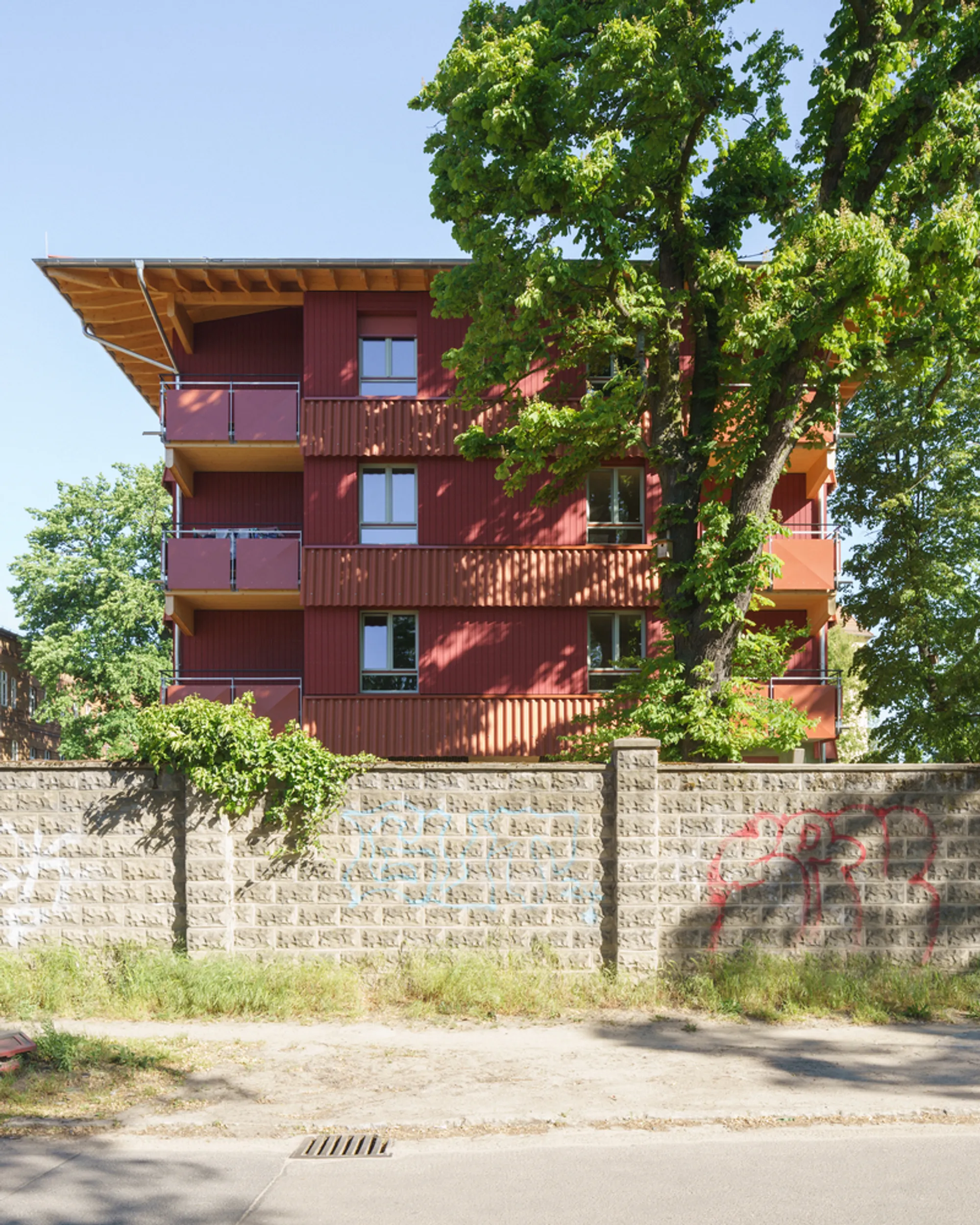
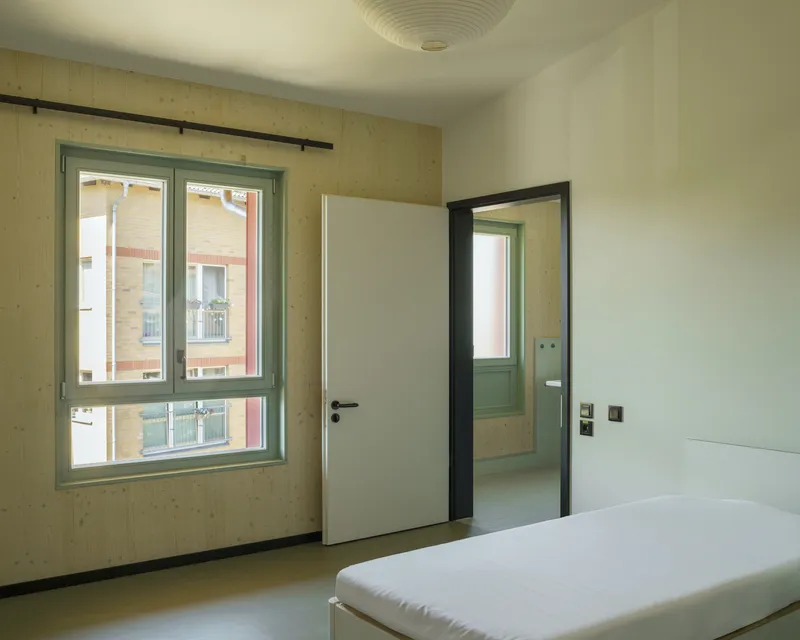
The House in a Park is a specialized residential building in the Pankow district of Berlin, designed by Modersohn & Freiesleben Architekten Partnerschaft. Completed in 2024, this four-story building serves as a home for 32 residents with mental and physical disabilities. It is a prime example of modern architecture that harmonizes with its natural and historical surroundings while focusing on sustainability, accessibility, and functionality.
Context and Design Concept
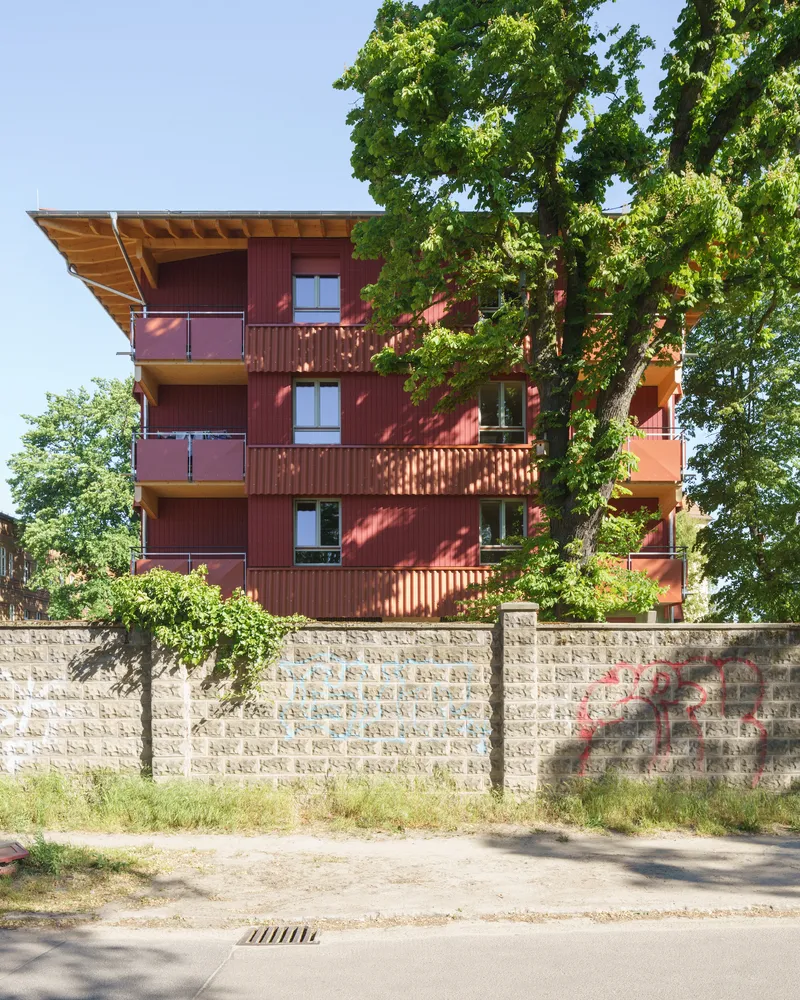
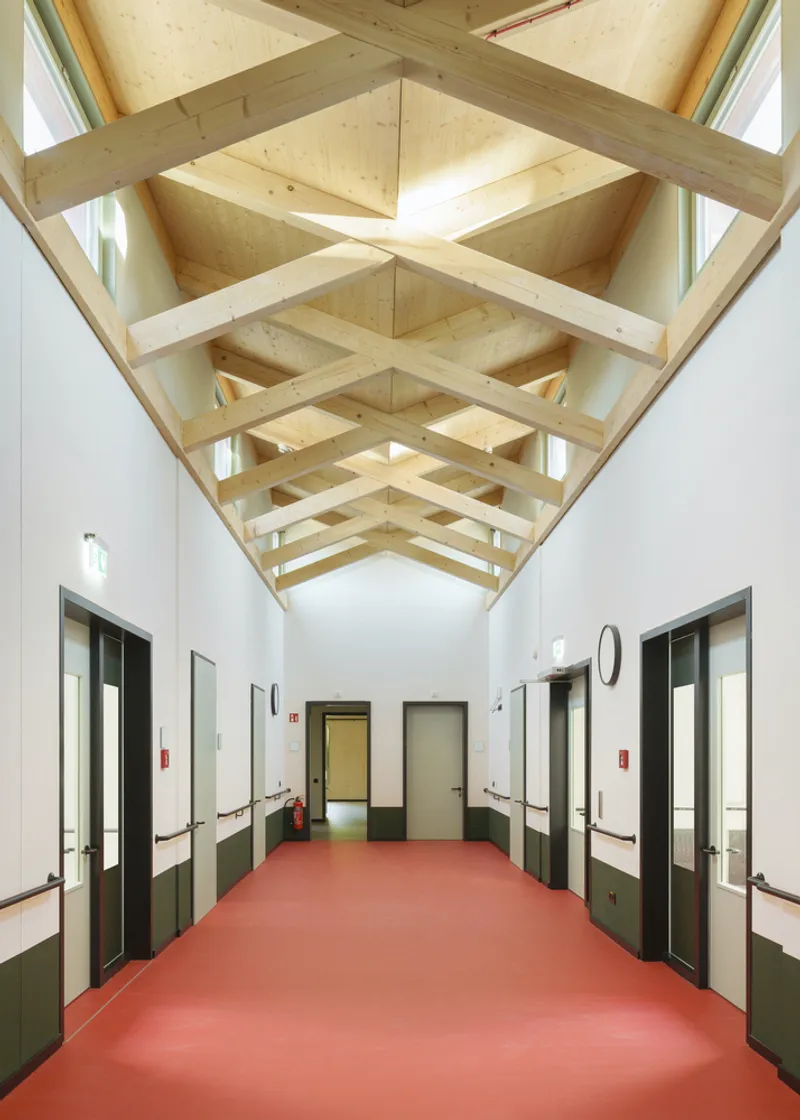
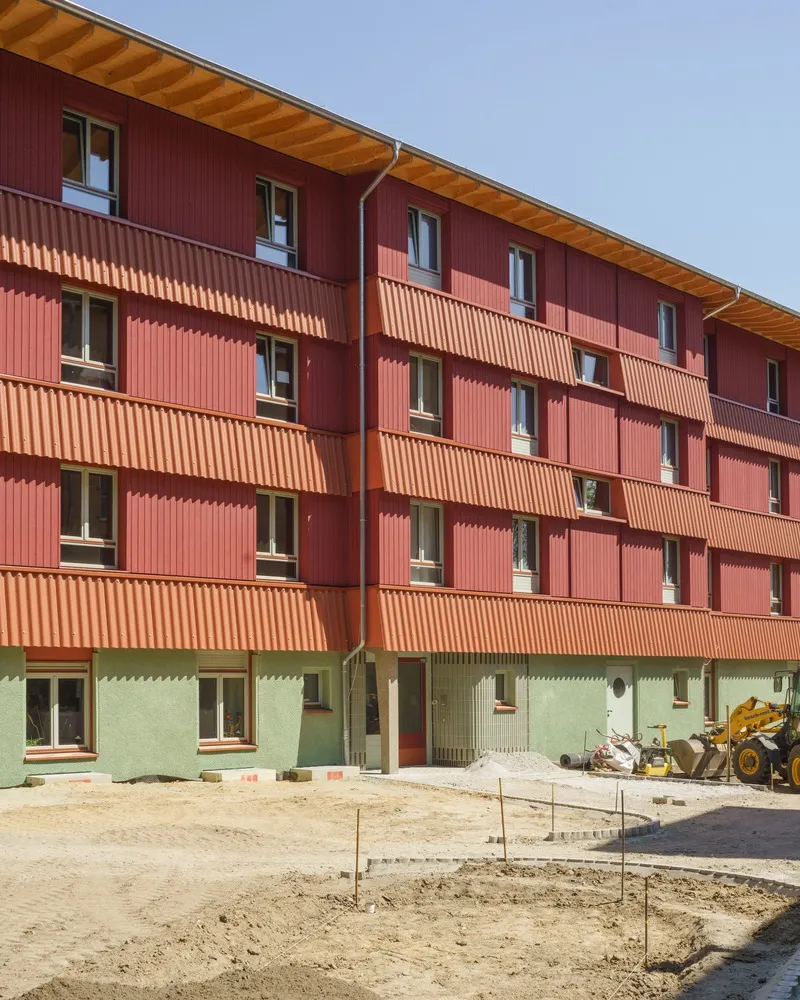
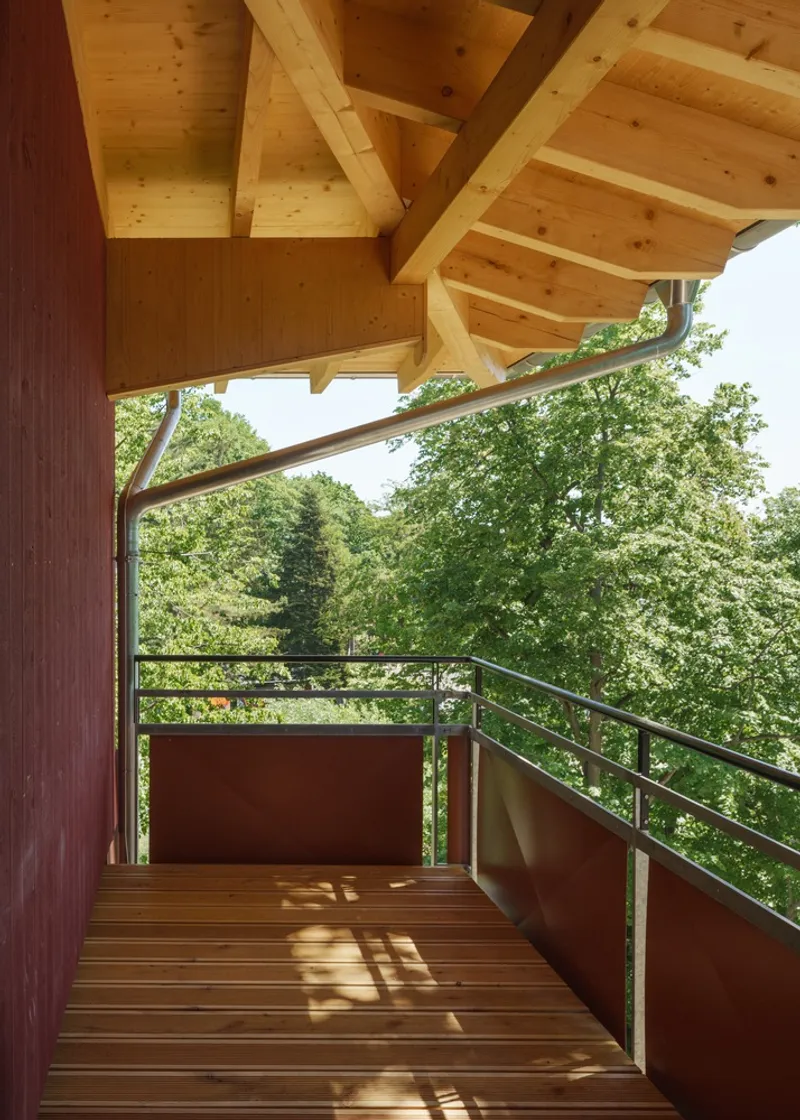
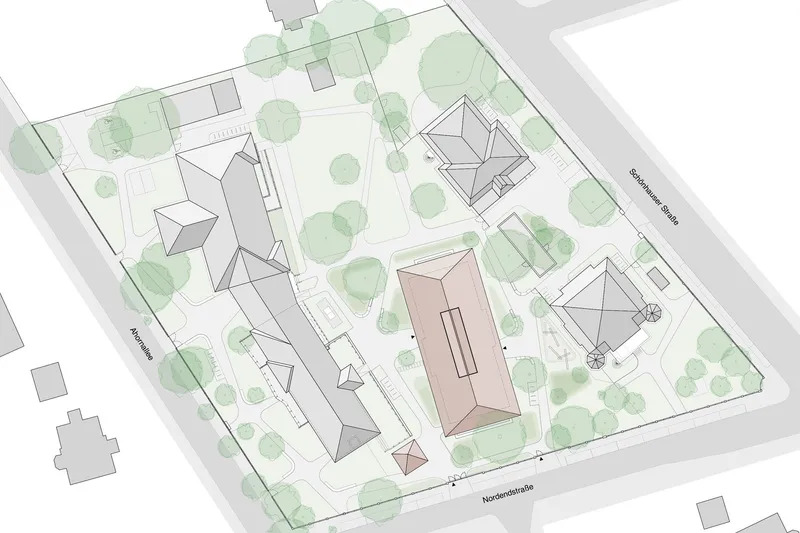
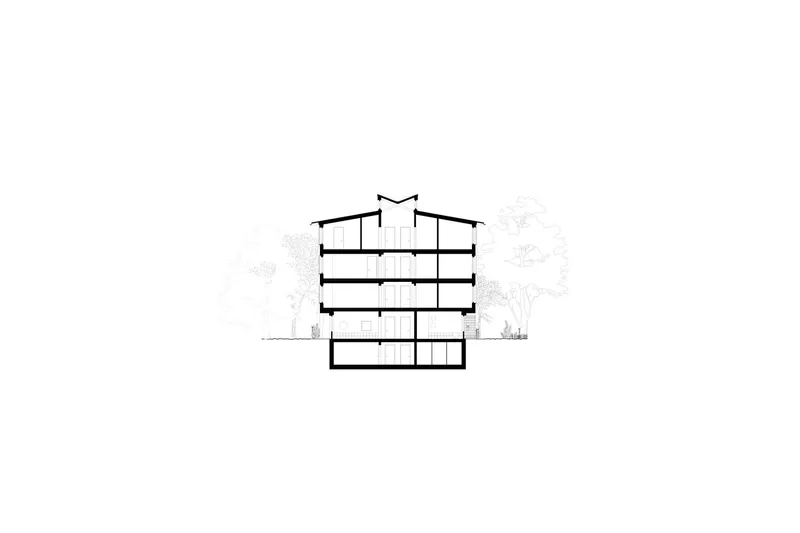
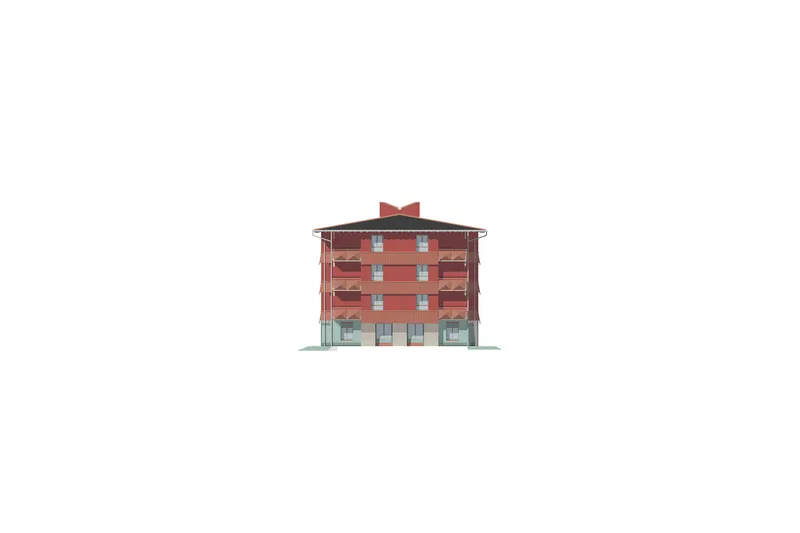
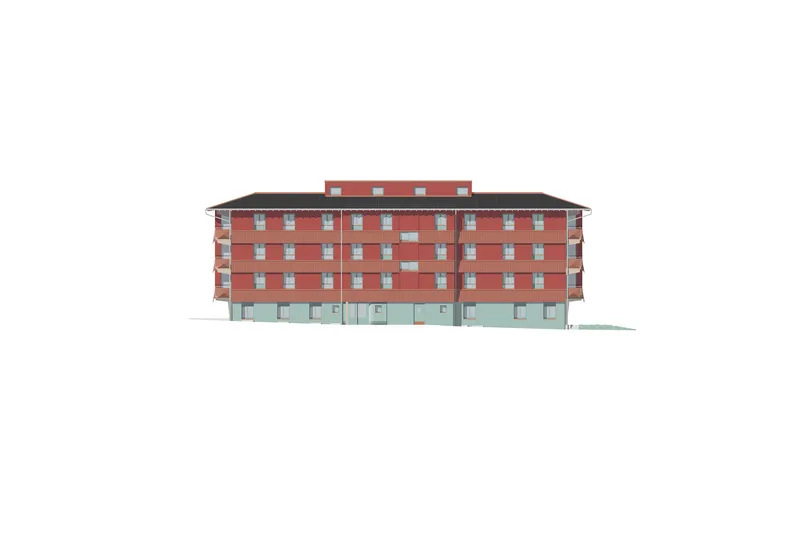
Situated between historic villas and large, mature trees, the building fits seamlessly into its park-like setting. The design carefully balances the contemporary extension with its historical context, respecting the surrounding architecture while introducing innovative, sustainable features. The house's cantilevered roof with visible wooden rafters, a solid green plastered base, and wooden superstructure reflect a thoughtful approach to modern residential design.
Architecture and Materials
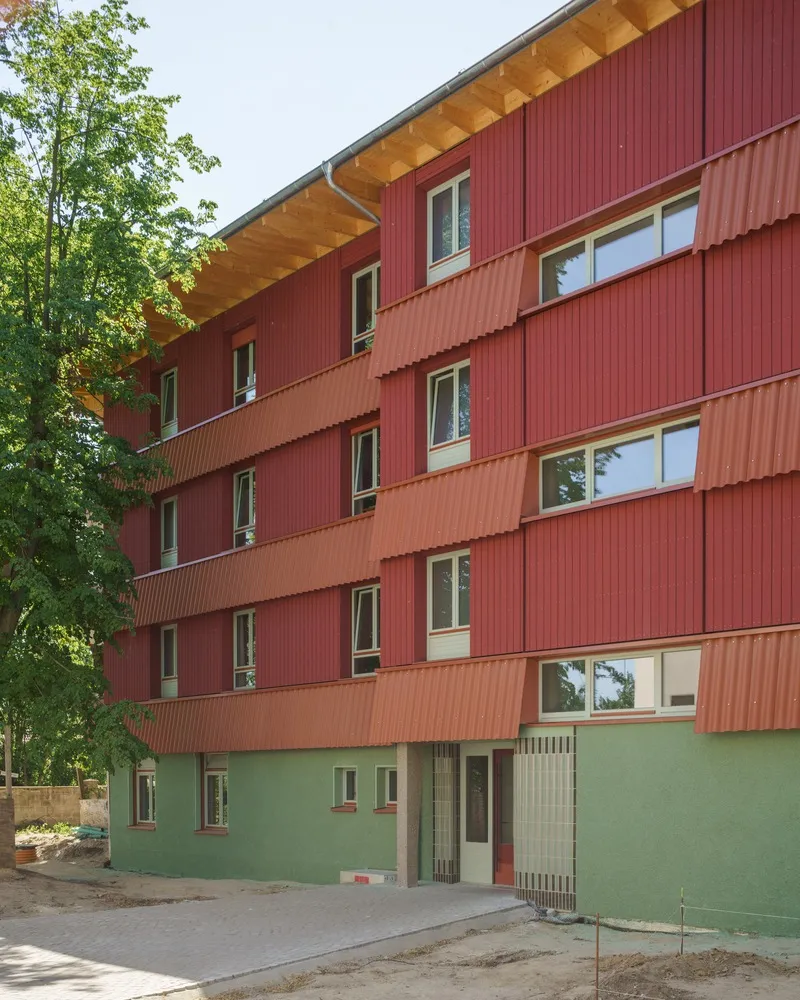
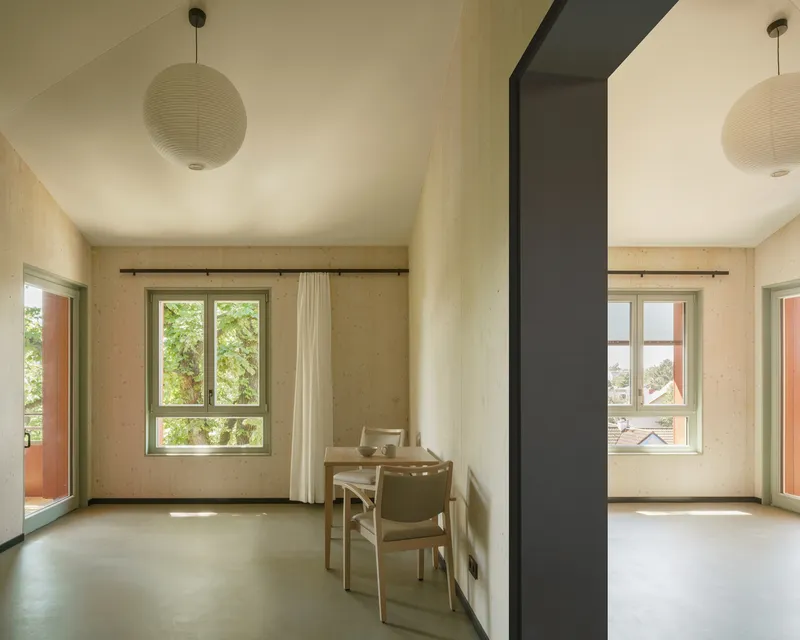
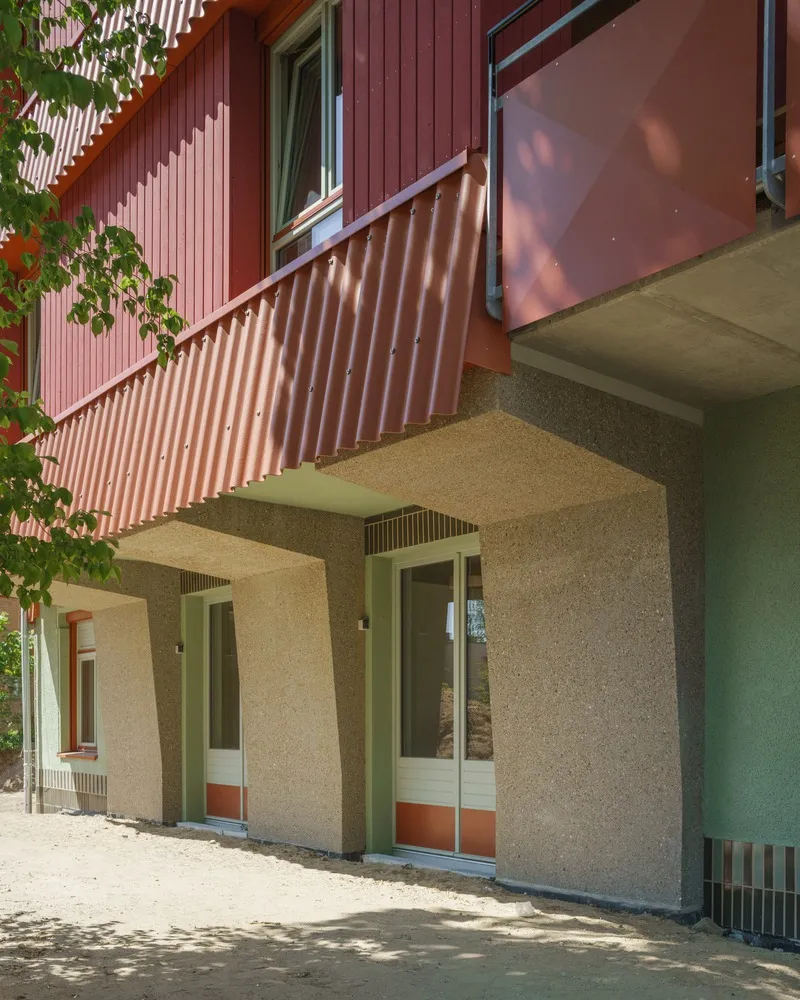
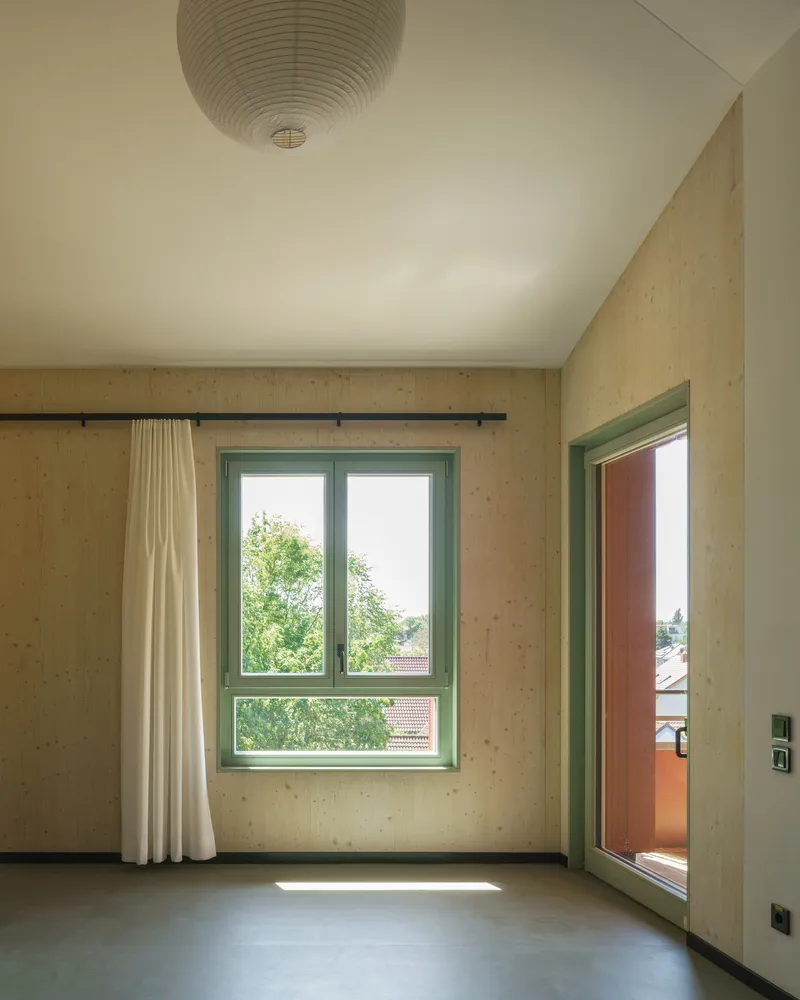
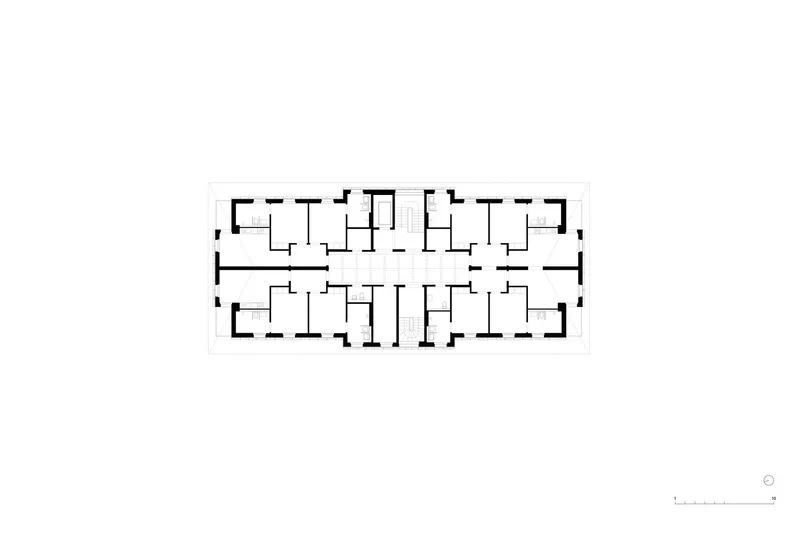
The house extends 37 meters in length and varies in width between 14 to 16 meters, positioning itself between neighboring buildings. It is structured with CLT (cross-laminated timber) walls and ceilings, creating a natural and warm ambiance inside. The building’s red-glazed wood exterior, combined with corrugated cement skirts for fire protection, ensures durability and aesthetic appeal while remaining cost-efficient. The use of prefabricated panels and mineral insulation reduces construction time and promotes sustainability.
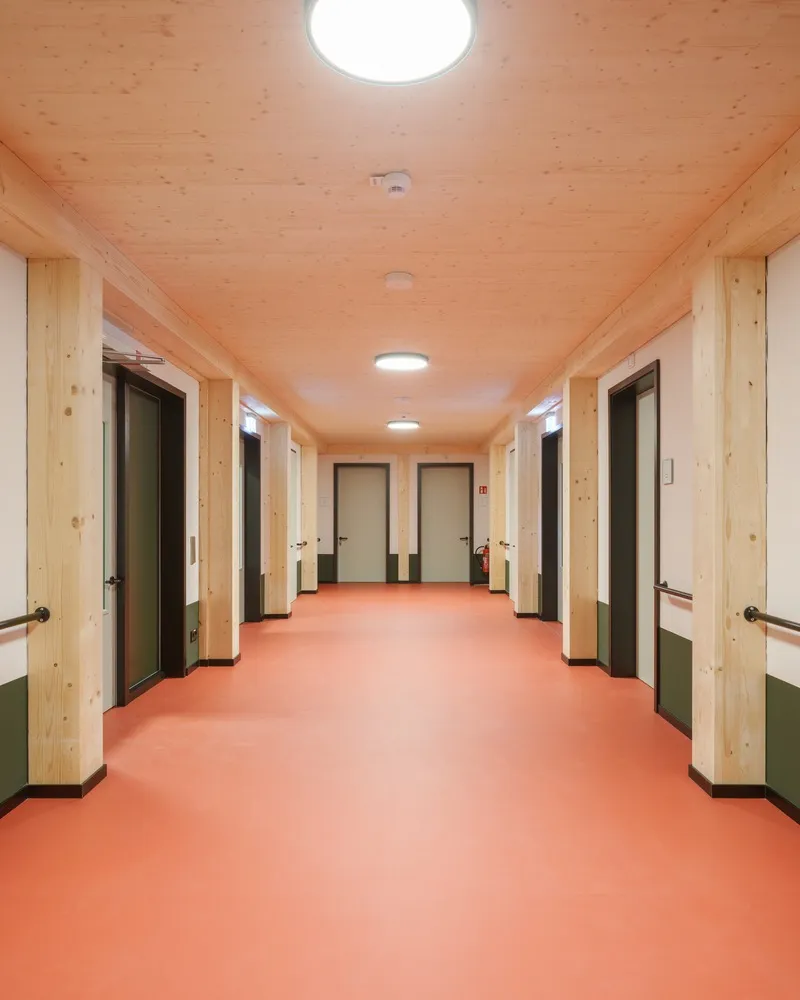
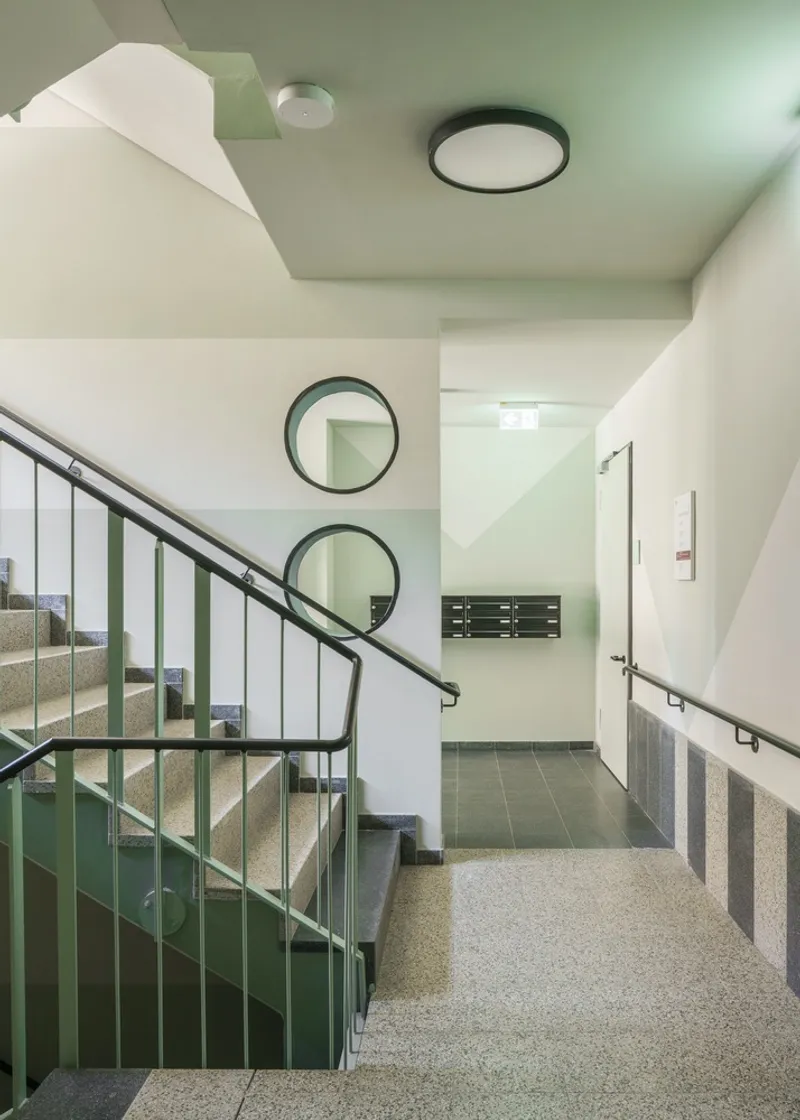
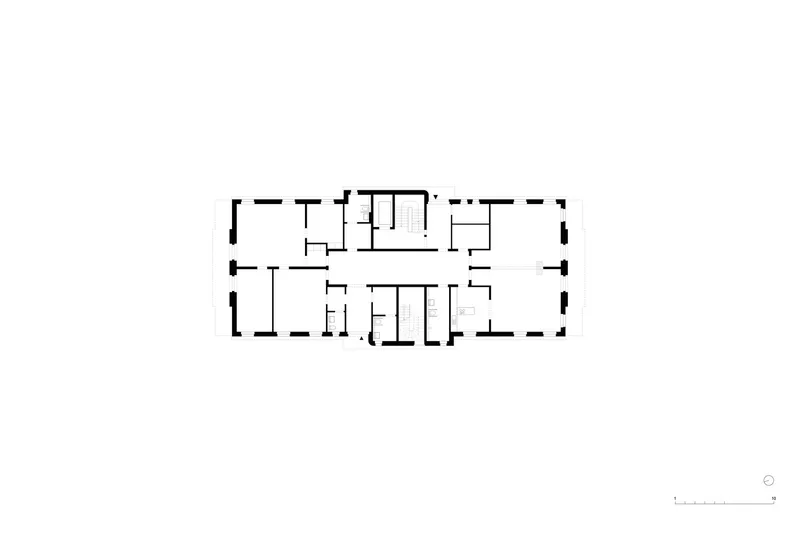
The exterior is anchored by the green roughcast plinth, with shiny green tiles highlighting the entrance, welcoming residents and guests into the home. Inside, the house embraces an open layout, especially in the central hallway, which is designed as a spacious, welcoming area rather than a narrow corridor. Natural light pours in through the upper-level rafters, further enhancing the open, airy feel.
Accessibility and Special Design Features
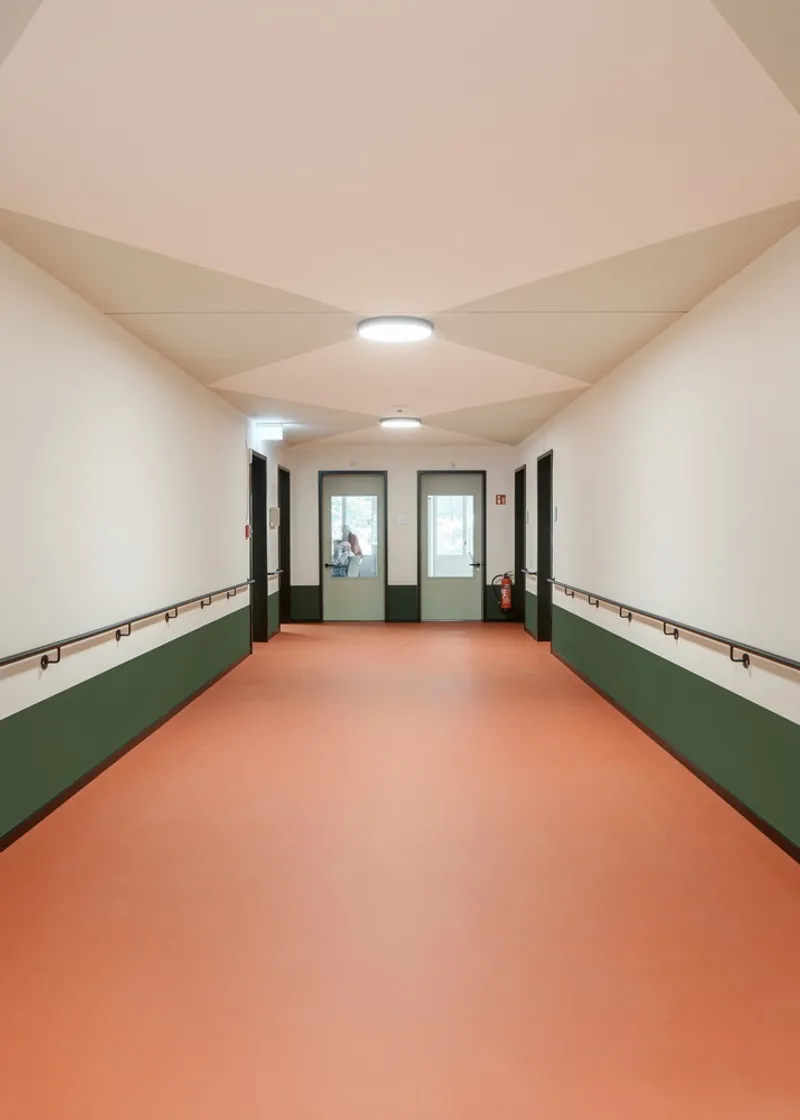
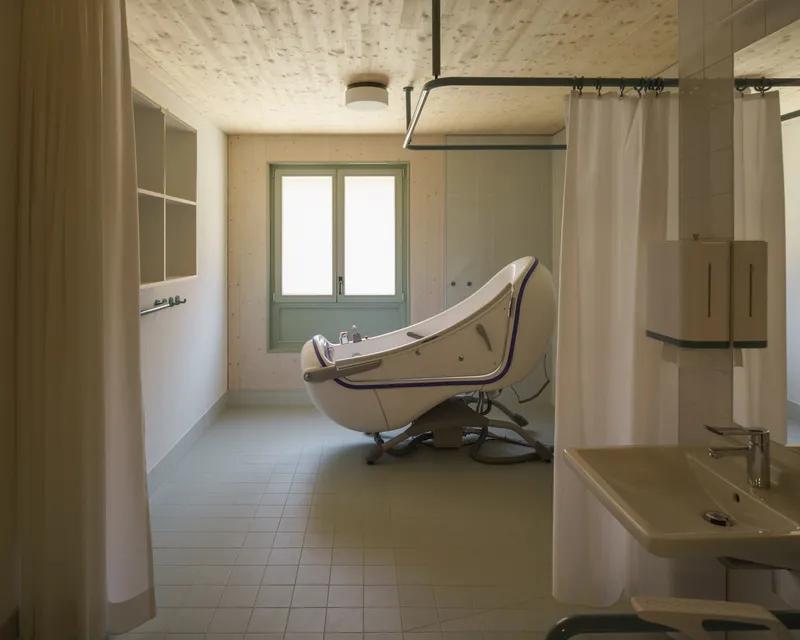
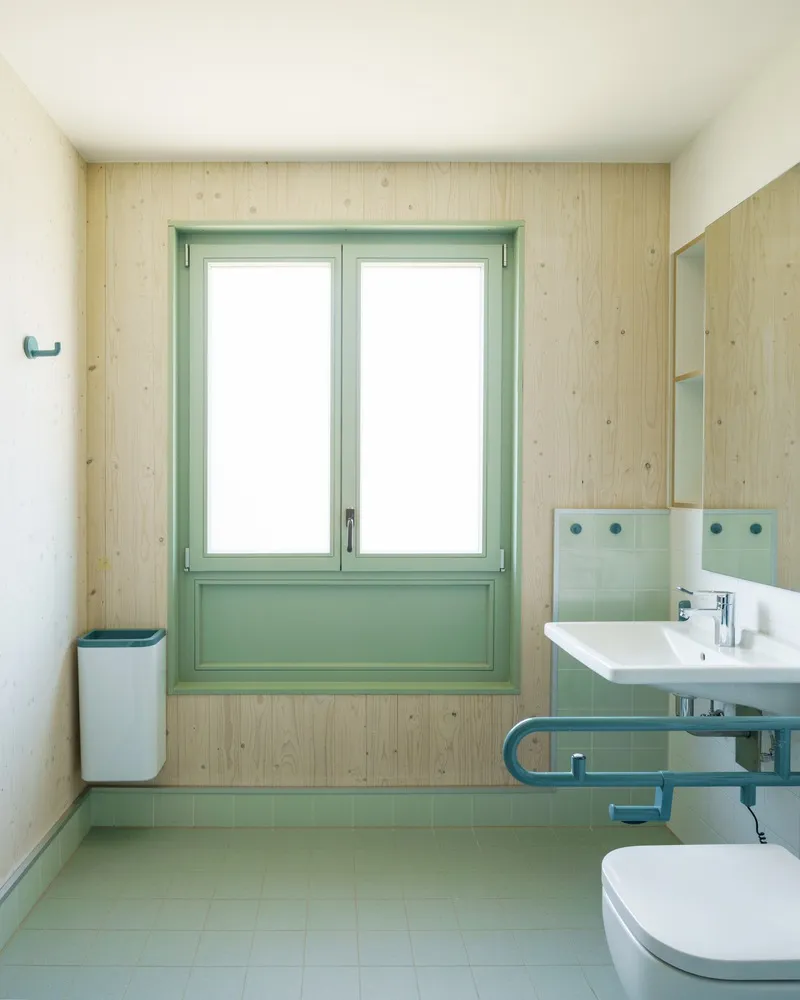
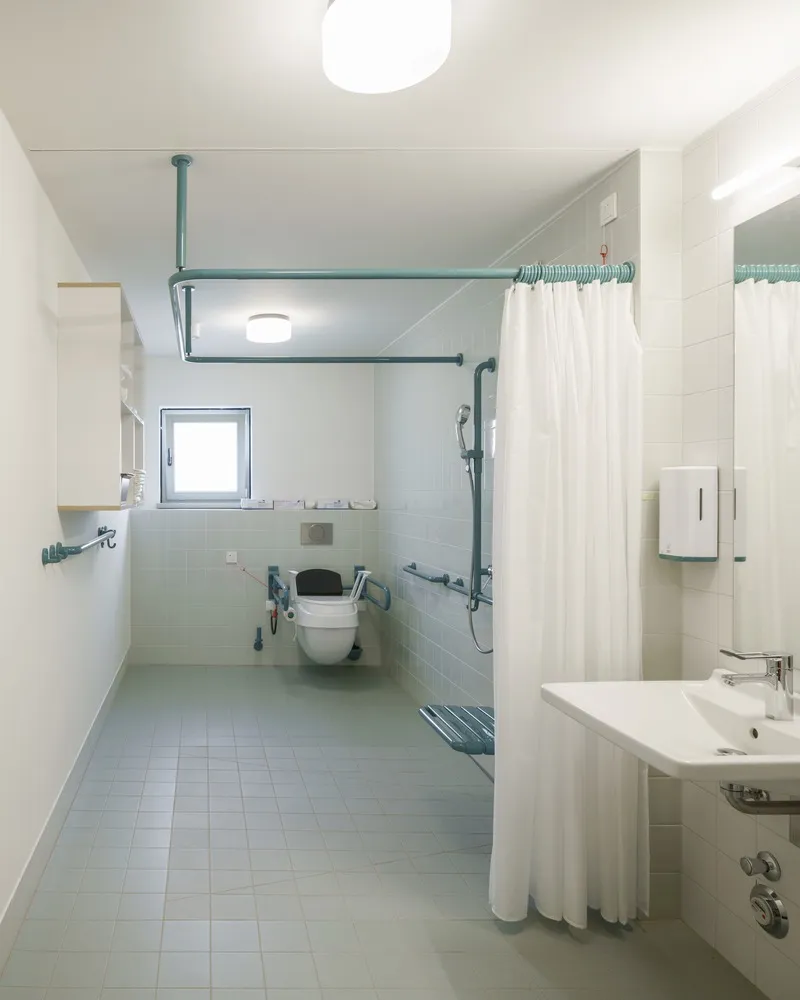
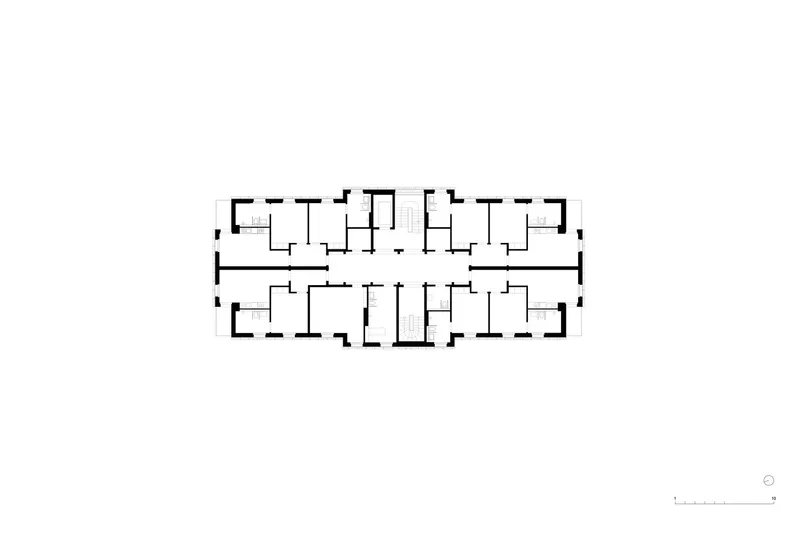
A key element of the design is its commitment to accessibility for all residents. The building is barrier-free and wheelchair accessible, featuring wide corridors, clear heights in windows, and high-contrast light switches for ease of use. The stairwells are equipped with wheelchair waiting areas, while emergency call systems are strategically placed throughout the building. Two stairwells ensure optimal safety, and special rooms such as a Snoezel room, communal kitchen, and care bathrooms meet the specific needs of the residents.
Sustainability and Energy Efficiency
The building prioritizes sustainability in both construction and operation. Geothermal energy powers the heating system, and photovoltaic panels supply electricity, making the house energy-self-sufficient during peak performance. These green technologies align with the goals of reducing carbon footprints and promoting energy efficiency in public buildings.
Community and Social Impact
This facility was designed not only to provide individual rooms and bathrooms for the residents but also to foster community living. Two units share a communal kitchen and living room with a private balcony, promoting interaction while still respecting personal space. The separate entrances for residents and daytime activity areas create clear spatial divisions, ensuring the facility operates smoothly and residents feel a sense of autonomy.
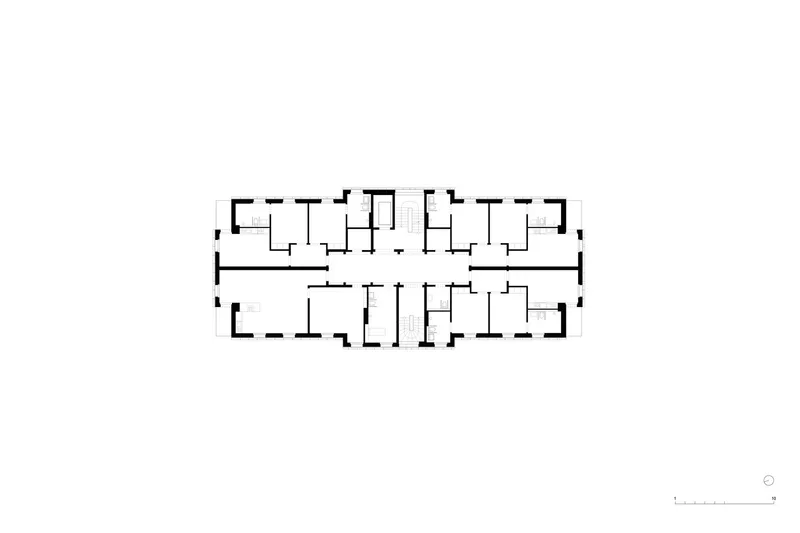
The House in a Park represents a new model of residential architecture for people with disabilities—one that is both socially inclusive and environmentally sustainable. Through thoughtful design and the use of sustainable materials and technologies, the house provides not only a comfortable living space but also an example of how architecture can support self-determined living for vulnerable populations while respecting and enriching its surrounding environment.
All Photographs are work of Sebastian Schels



Popular Articles
Popular articles from the community


The Earth Pod: 3D Printed Homes for Resilient Refugee Communities
The Earth Pod reimagines refugee housing through 3D printed homes made from clay, combining resilience, self-sufficiency, and rapid shelter.

Co-life: Sustainable Architecture for Age-Friendly Community Living
Co-life reimagines sustainable architecture for seniors through courtyards, rammed earth, shared gardens, and spaces designed for belonging.

Lunar Spiral: Space Architecture Shaped by the Mathematics of the Universe
Lunar Spiral reimagines space architecture through Fibonacci geometry, lunar regolith, levitating habitats, and self-sustaining Moon living.

Play: Fragments of Their World
Familiar architecture becomes modular playground design, creating safe spaces where displaced children can learn, connect, imagine and play.

Similar Reads
You might also enjoy these articles


Hodi-Mandai Geram
Project Function: Preservation and revitalization of the Intangible heritage and socio-spatial identity of the Hodi by Housing, Cultural Memory Center, Sacred Grove, landscape, local tourism economy


Olio Towers: A Mid-Rise for Performers That Fuses Housing, Rehearsal, and Stage
Located blocks from Houston's Theater District, this modular tower stacks living units around a central performance atrium.

Oasis: Modular Green Housing Carved into Dhaka's Urban Fabric
A shortlisted Plugin Housing entry reclaims unauthorized settlements in Dhaka with stepped concrete volumes, green roofs, and ventilation-driven design.

Black Hole: A Floating Megastructure for the Post-Physical Era
Emiliano Mazzarotto envisions a spherical, self-scaling arena where e-sports, digital hotels, and holographic stadiums replace traditional public space.


Explore Architecture Competitions
Discover active competitions in this discipline



Challenge to reimagine the Iron Throne


Photograph architecture without architects


Illustrate the lost glory of Angkor Wat - Render Challenge


Design challenge to reuse E-waste
Comments (0)
Please login or sign up to add comments
No comments yet. Be the first to comment!