

A Timber Family Home Embedded in the Rural Landscape of Southwest Germany
A single-storey timber house in rural Germany, integrating orchard landscape, passive design, and warm interiors through simple, sustainable construction.


A Timber Family Home Rooted in Landscape and Rural Context
Bliesgau House is a carefully crafted single-storey family residence located in a small village in Gersheim, Southwest Germany. Designed by architect Roman Morschett, the house occupies a previously undeveloped plot within an old orchard, offering an alternative model to suburban sprawl by densifying the rural village core while preserving its pastoral character.

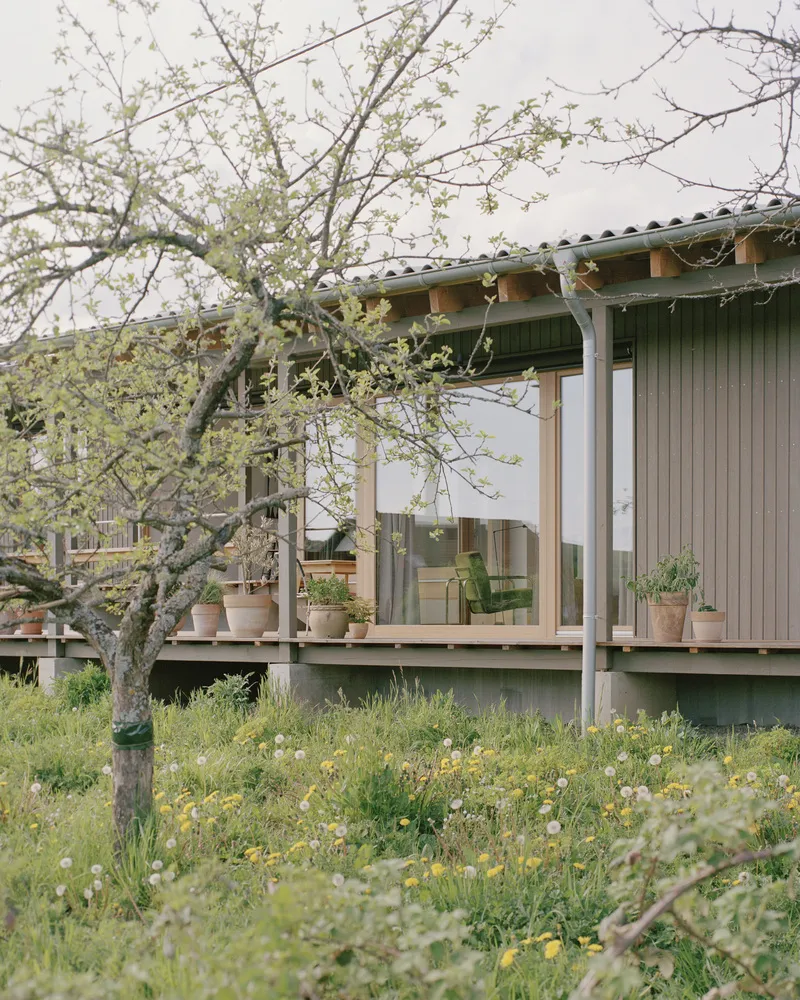
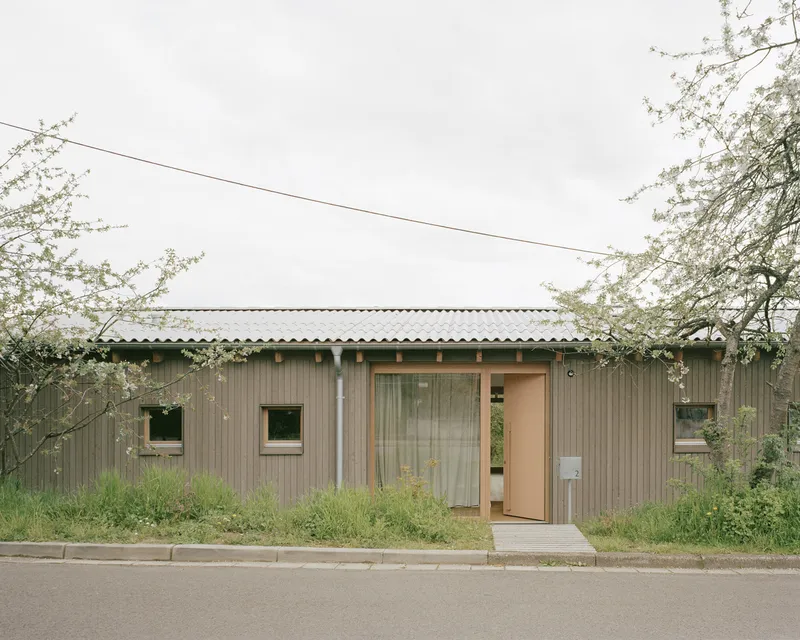
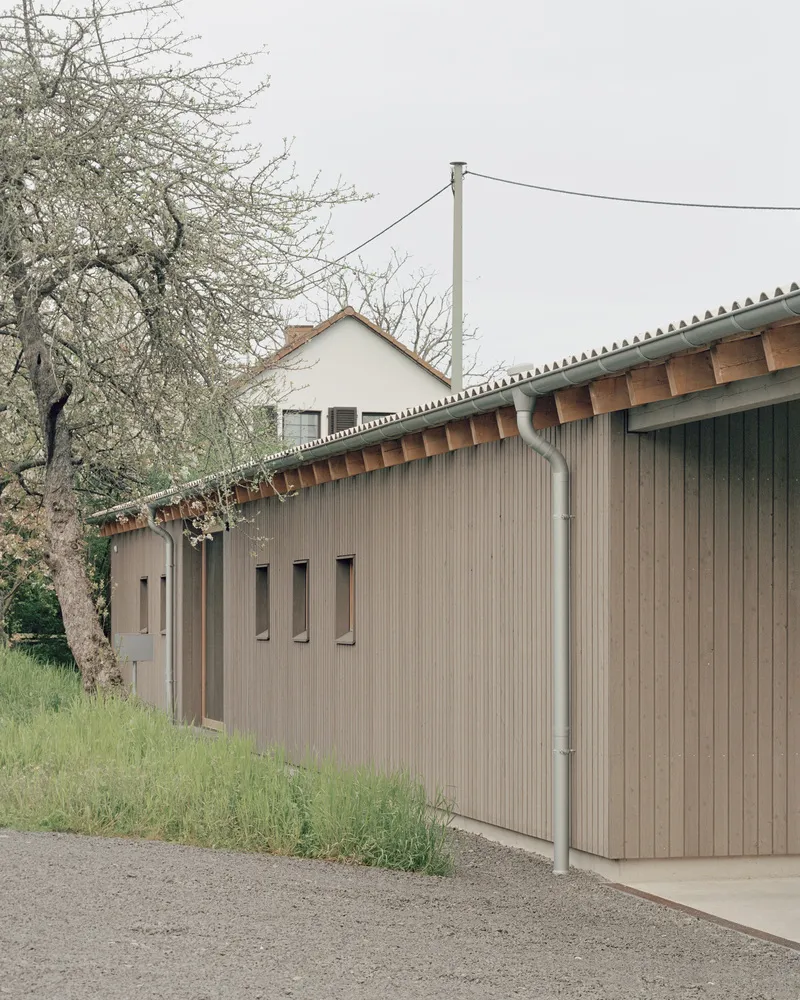
Stretching parallel to the street, the elongated timber structure acts as a subtle mediator between public and private realms. To the north, the house presents a restrained and closed façade, shielding the interior from the street. To the south, it opens generously toward the orchard and cultivated landscape beyond, reinforcing a strong visual and spatial connection to nature. This deliberate orientation establishes a clear hierarchy of spaces while responding sensitively to climate, topography, and context.
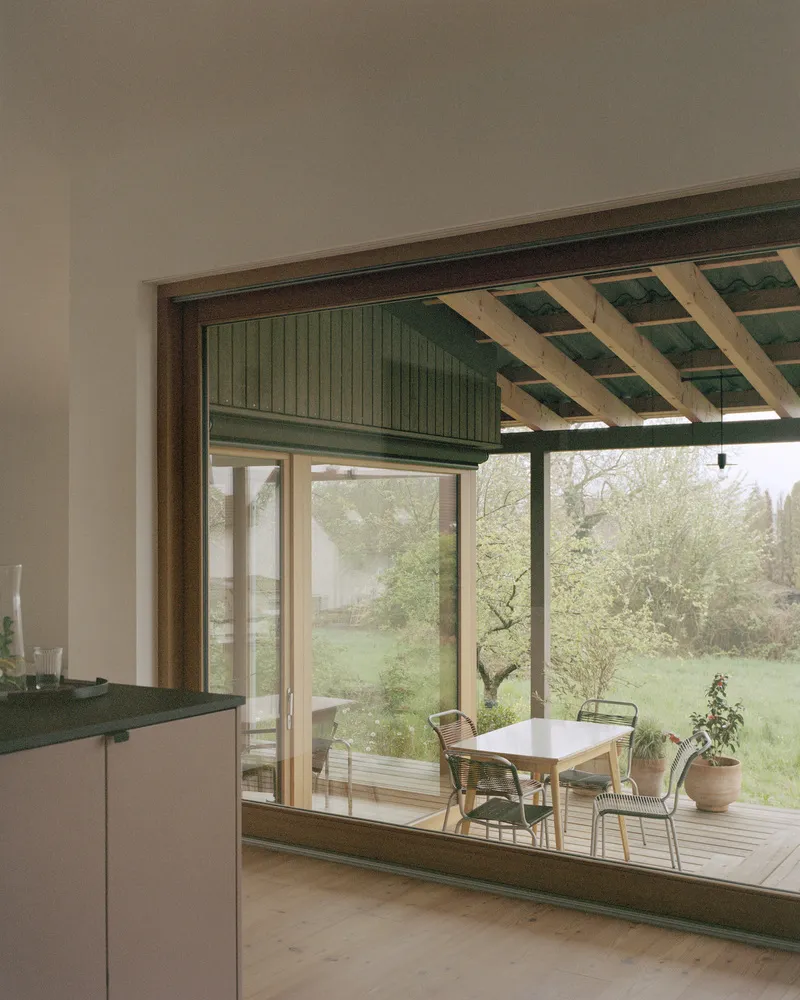
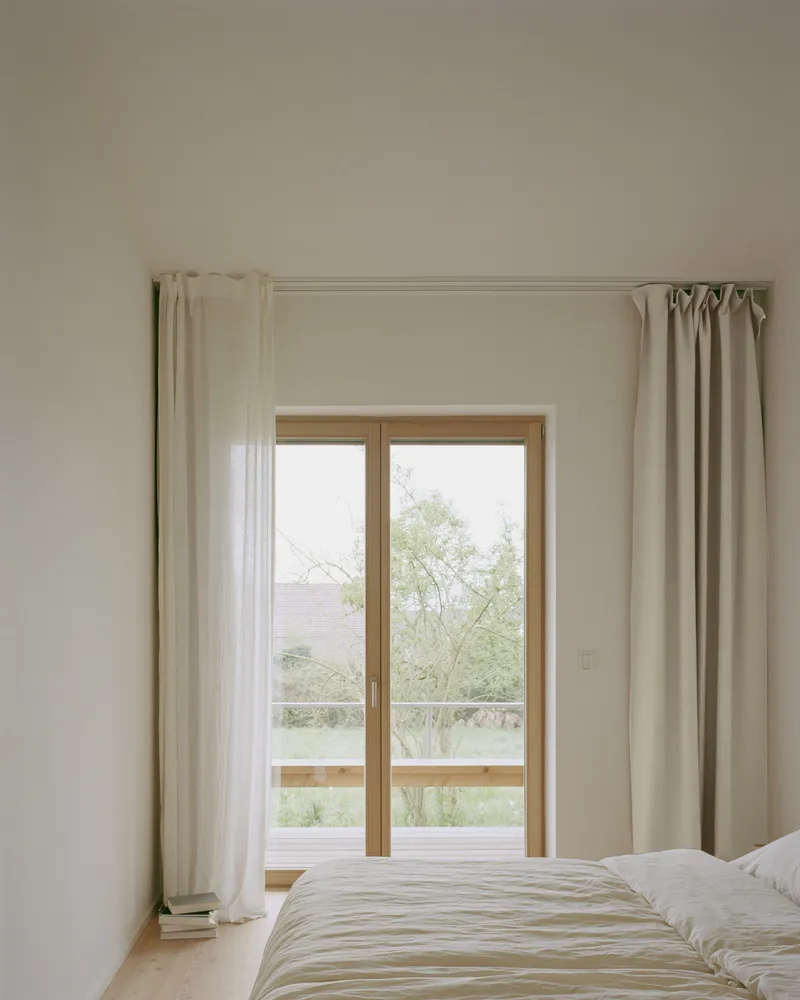
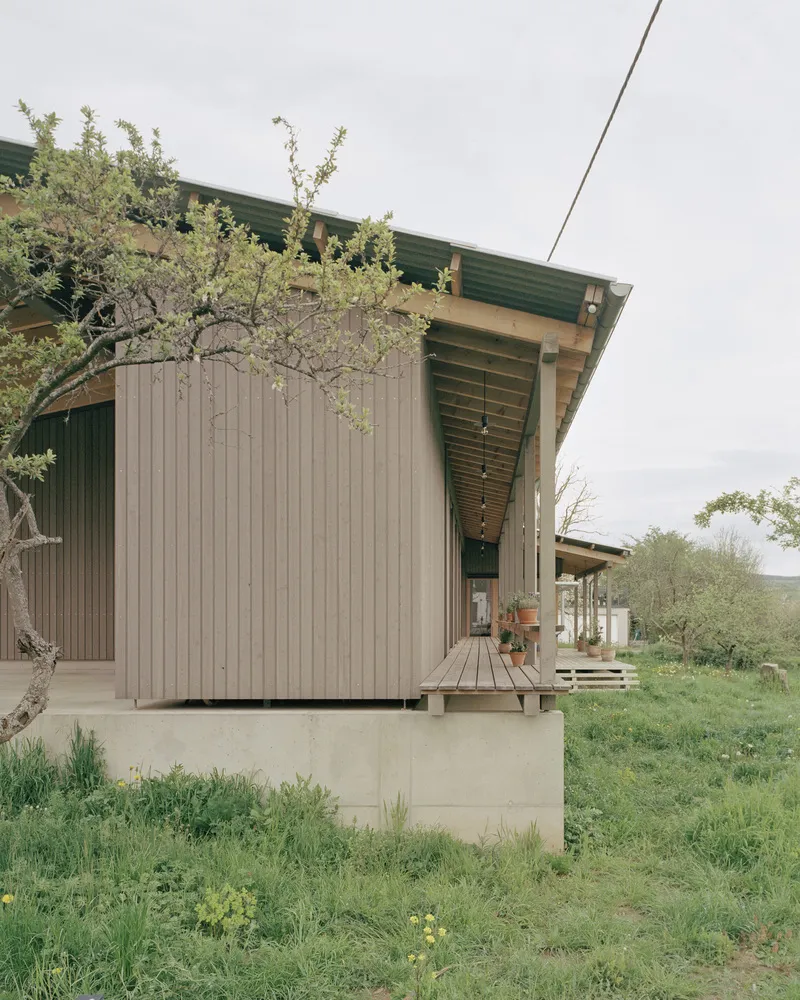
The building follows the gentle movement of the site’s topography, allowing the interior spaces to flow naturally into the garden. Secondary rooms: including storage, bathrooms, and service areas, are aligned along the northern edge, forming a thermal and acoustic buffer. In contrast, the living spaces and communal areas are oriented southward, offering expansive views over village rooftops and into the surrounding agricultural landscape.
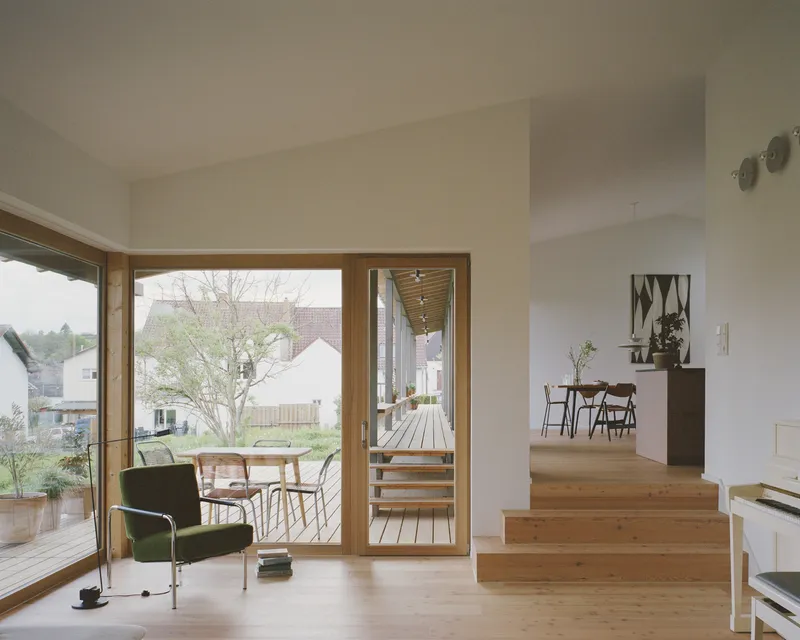
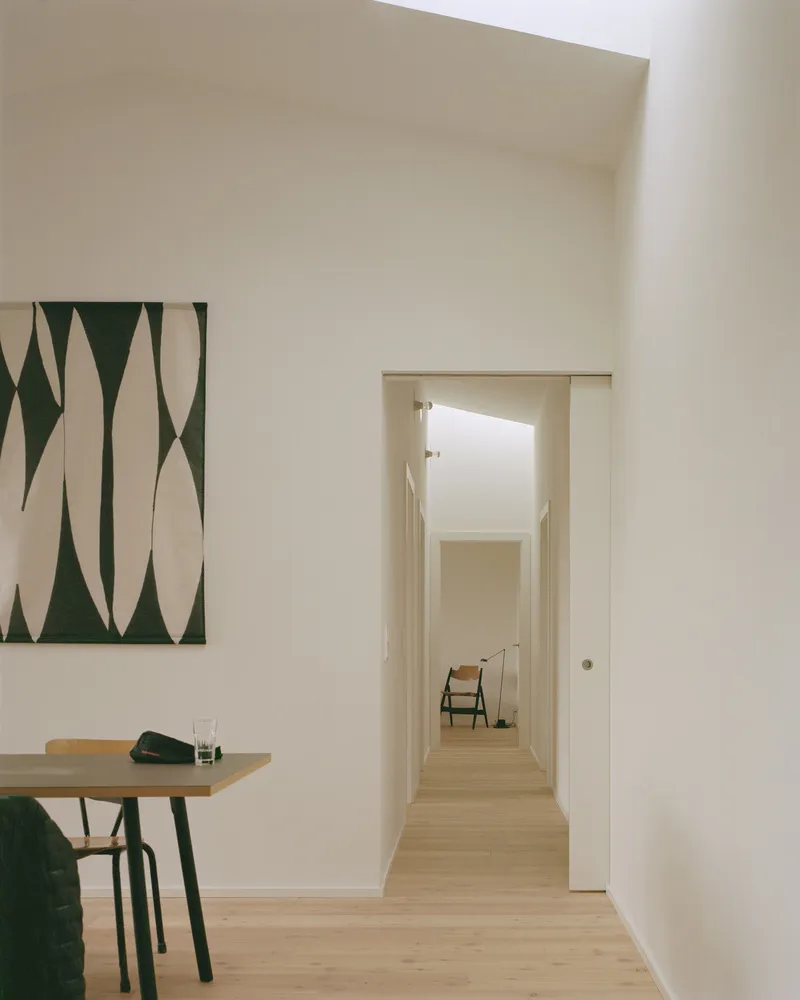
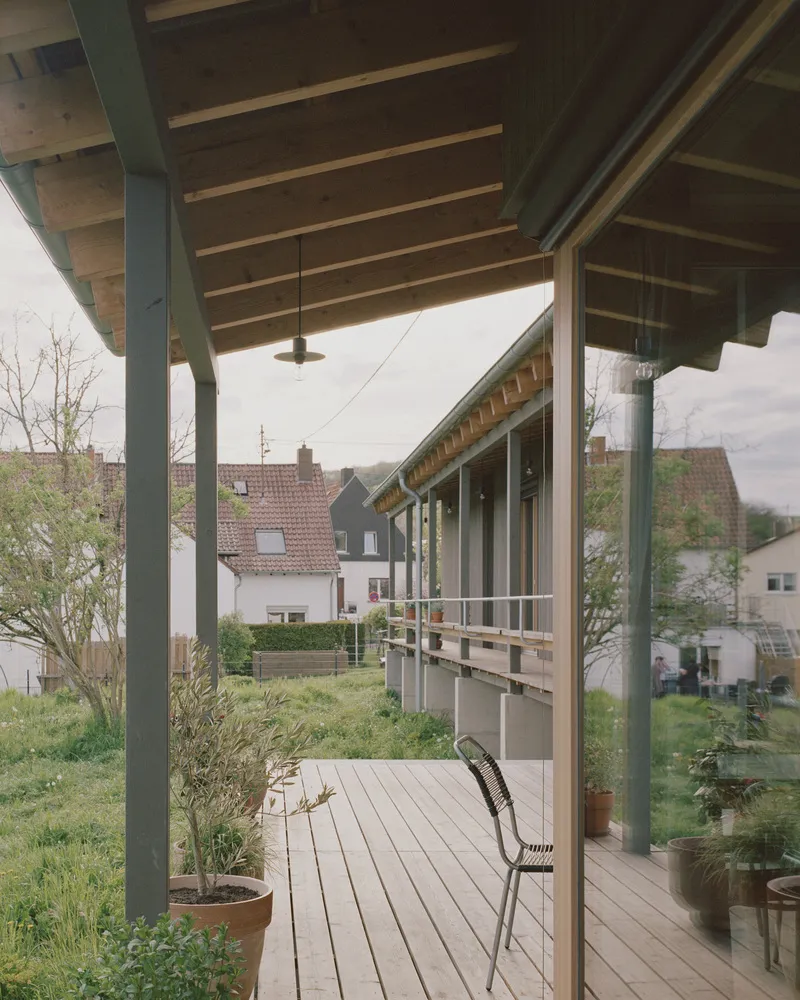
At the heart of the house lies a covered terrace, conceived as the social nucleus of family life. The living area wraps around this sheltered outdoor space, blurring the boundary between inside and outside. Subtle level changes between the kitchen and living room introduce varying degrees of intimacy within the open-plan layout, creating a rich spatial sequence despite the rational organization of the floor plan. A pergola extending along the façade further enhances this relationship, with built-in benches spanning between timber columns to extend daily life into the outdoors.
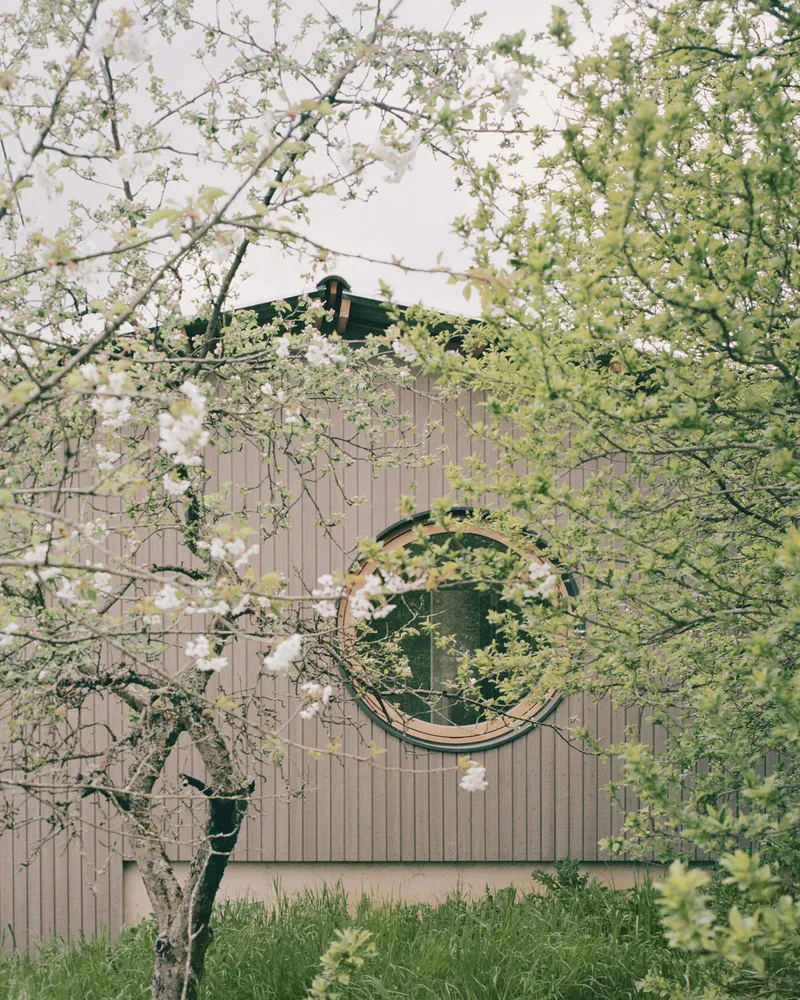
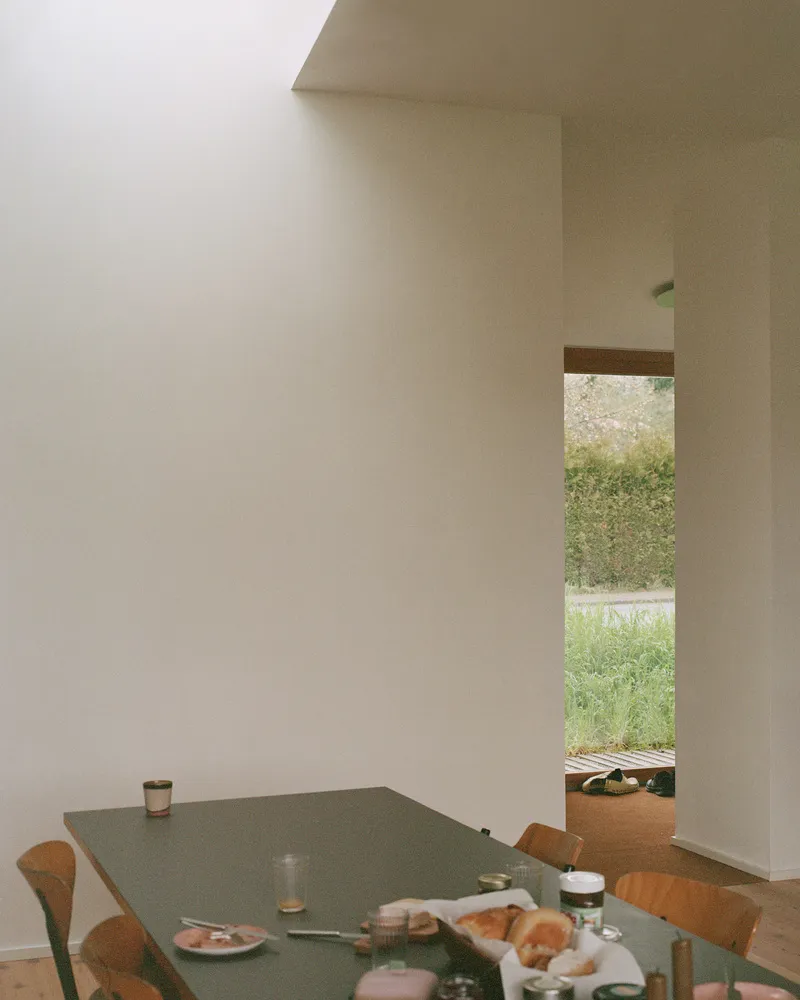
Materiality plays a defining role in the architectural expression of Bliesgau House. The project is constructed using a simply joined timber system, deliberately referencing the language of local agricultural buildings. Larch wood is used consistently throughout the project: appearing in the façade cladding, terrace decking, structural pillars, window frames, built-in furniture, and interior parquet flooring. This cohesive material palette lends the house a calm, timeless character while reinforcing its connection to the orchard setting.
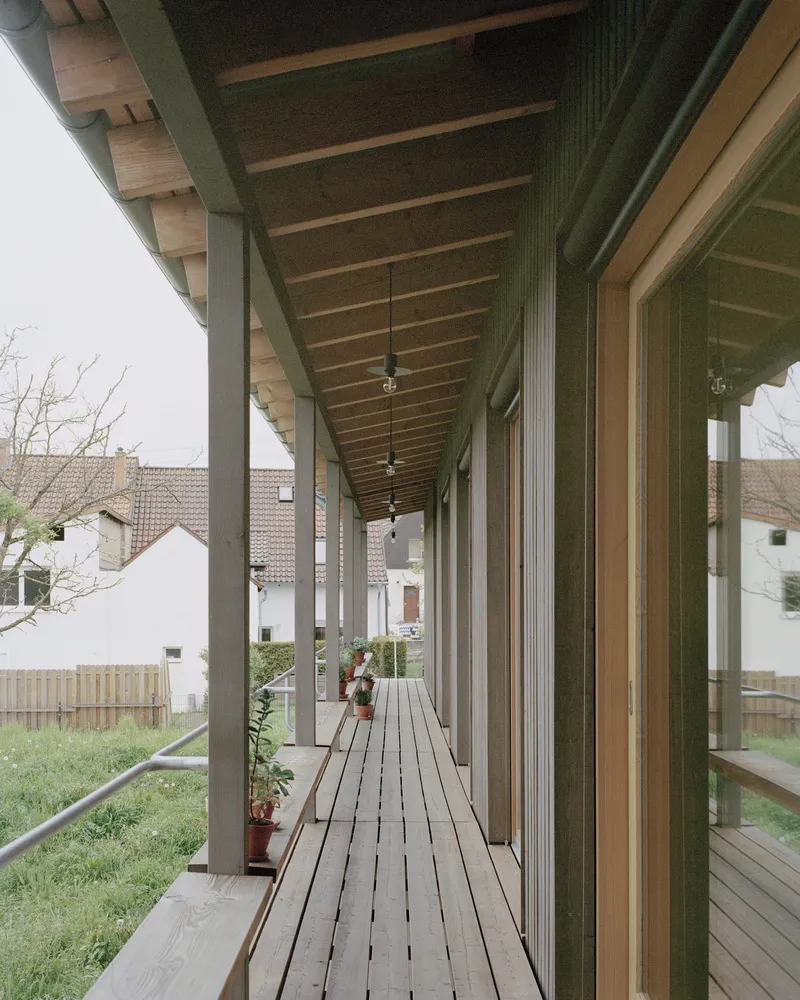
Despite its simplicity, the house offers a variety of spatial experiences. The study, distinguished as the only east-facing room, features a large circular window that captures morning light and frames a focused view of the landscape. Throughout the interior, exposed timber elements create warmth and tactility, balancing minimal detailing with spatial richness.
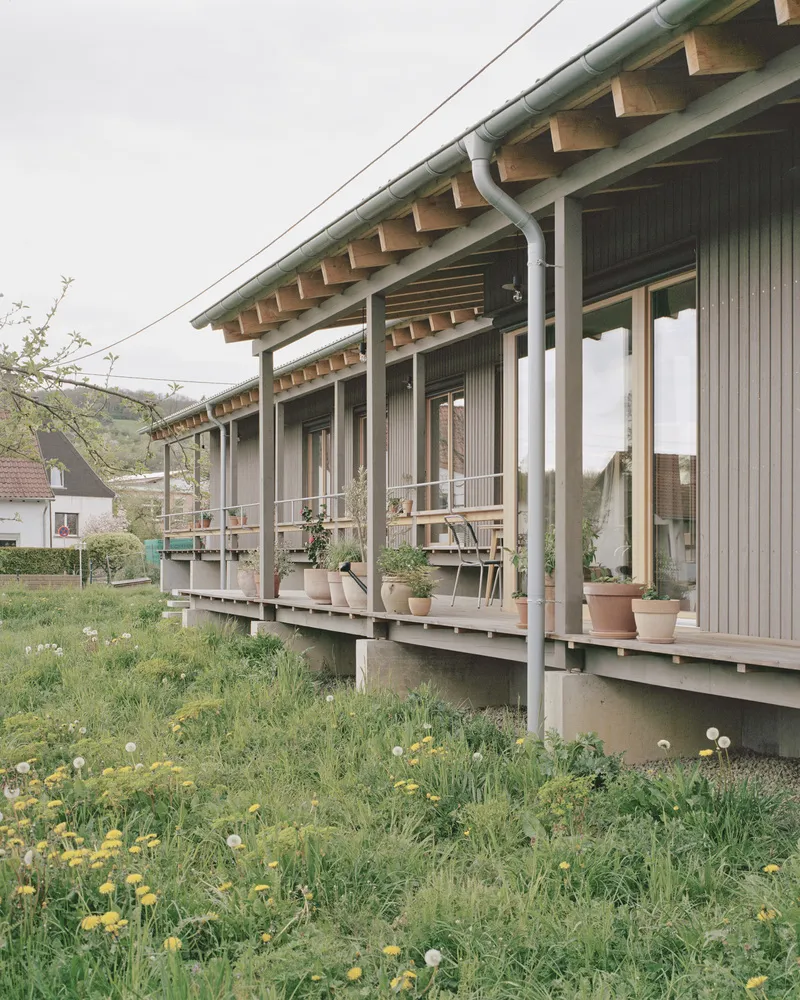
Sustainability and resource efficiency are integral to the design. The south-facing glazed façade allows for passive solar heat gain during winter, while deep roof overhangs prevent overheating in summer. By omitting additional external cladding layers, the exposed timber structure reduces material use and reinforces the architectural concept. The house is powered by a heat pump system, with electricity generated on-site through photovoltaic panels combined with battery storage, ensuring a low-energy and future-oriented residential solution.
All photographs are works of
Rory Gardiner


Popular Articles
Popular articles from the community


FCC Arquitectura Expands a Portuguese Granite House with a Board-Marked Concrete Wing
In Portugal, JV House pairs a cleaned-up whitewashed and granite dwelling with a timber-shuttered concrete extension, courtyards and a garden pool.

Cube Design Draws an Ecological Corridor Between Two Shenzhen Hills with the Nankai Building
Beside Shenzhen's container docks, the Nankai Building pairs stacked balconies with a climbing green screen to connect two hillsides across its height.


The Amber Palace Opera: A Geological Fiction Surfaces on Tallinn's Baltic Waterfront
Pierre Brillard reimagines a Baltic legend as a public landscape, opera house, and waterfront promenade rooted in Tallinn's coastal identity.

Aquadapt: An Underwater Habitat That Rewrites Its Rooms by the Hour
Curved modules ring the seabed while one shell shifts from breakfast room to cinema, farm and football pitch as residents' needs change.

Similar Reads
You might also enjoy these articles


Hodi-Mandai Geram
Project Function: Preservation and revitalization of the Intangible heritage and socio-spatial identity of the Hodi by Housing, Cultural Memory Center, Sacred Grove, landscape, local tourism economy


Olio Towers: A Mid-Rise for Performers That Fuses Housing, Rehearsal, and Stage
Located blocks from Houston's Theater District, this modular tower stacks living units around a central performance atrium.

Oasis: Modular Green Housing Carved into Dhaka's Urban Fabric
A shortlisted Plugin Housing entry reclaims unauthorized settlements in Dhaka with stepped concrete volumes, green roofs, and ventilation-driven design.

Black Hole: A Floating Megastructure for the Post-Physical Era
Emiliano Mazzarotto envisions a spherical, self-scaling arena where e-sports, digital hotels, and holographic stadiums replace traditional public space.
Explore Heavy Timber Competitions
Discover active competitions in this discipline

Challenge to reimagine the Iron Throne

Photograph architecture without architects

Illustrate the lost glory of Angkor Wat - Render Challenge

Design challenge to reuse E-waste
Comments (0)
Please login or sign up to add comments
No comments yet. Be the first to comment!