

A Unique Asian Noodle Shop: Stripping Back to Create an Authentic Experience
Can Stripping Away Traditional Asian Design Elements Enhance the Dining Experience?

As the world of interior design and architecture continues to evolve, more establishments are breaking away from traditional design norms to create spaces that provide a unique experience. This Asian noodle shop is a prime example, as it avoids conforming to any specific style, choosing instead to present an authentic Asian street food experience without overtly Asian design elements.
A Strategic Kitchen Layout: The Heart of the Space
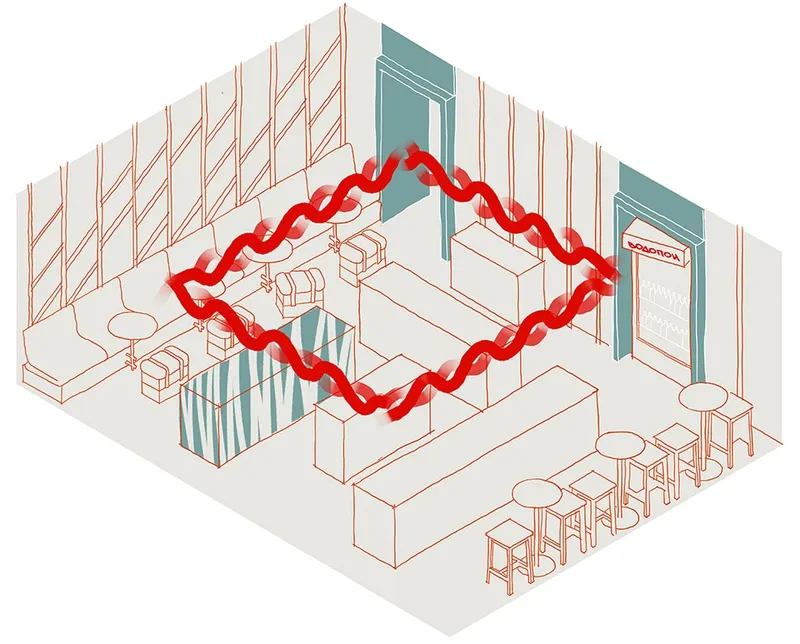
The central focus of this innovative interior is the open kitchen, situated between the two entrances along the building's façade. This strategic placement ensures that guests are immediately immersed in the action upon entering the restaurant, with noodles being made, wok dishes being fried, and drinks being poured in full view of the diners.
Paying Homage to Asian Street Eateries
By placing the open kitchen at the center of the space, the design pays tribute to Asian street eateries where all processes are open and on display. The first room is the most dynamic and noisy, while privacy increases as guests move deeper into the subsequent rooms, culminating in a small VIP room near the bathroom.


Minimalist Design Approach
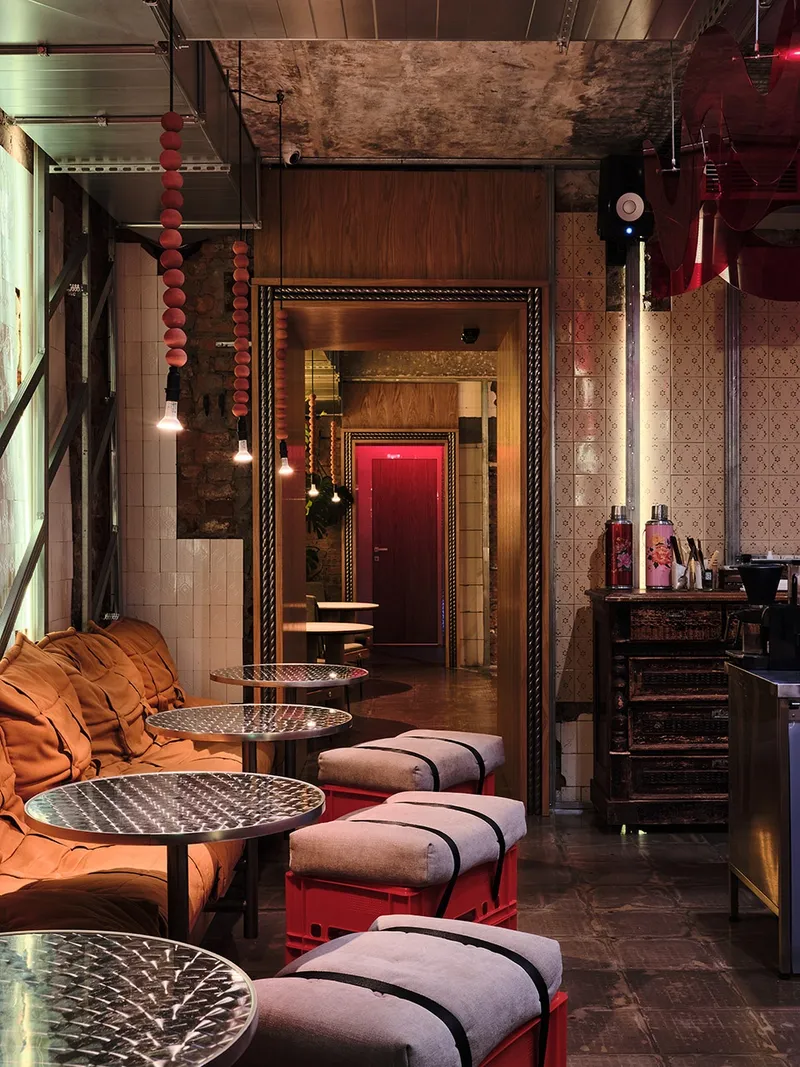
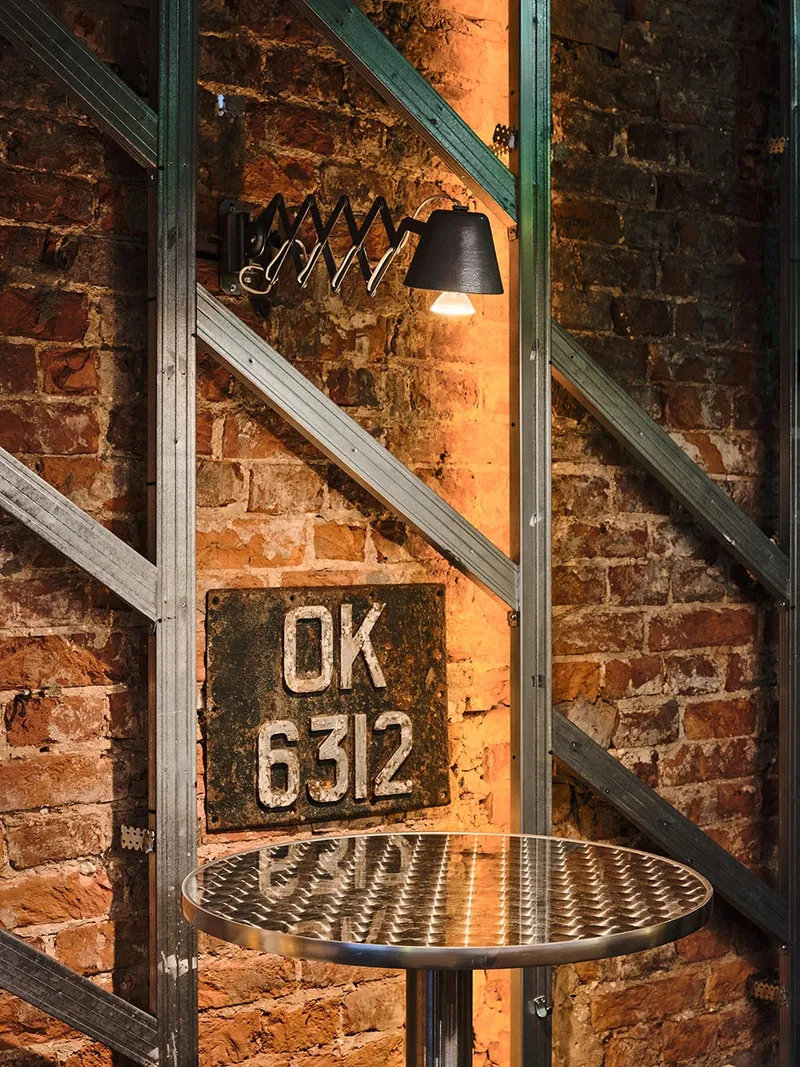
The design is inspired by authentic Asian catering establishments that typically avoid intrusive decoration and excessive pretentiousness. As a result, the decision was made to leave the room virtually untouched after the disassembly phase, exposing the brick walls and preserving the beautiful floor texture with translucent epoxy resin.

Preserving the True History of the Space
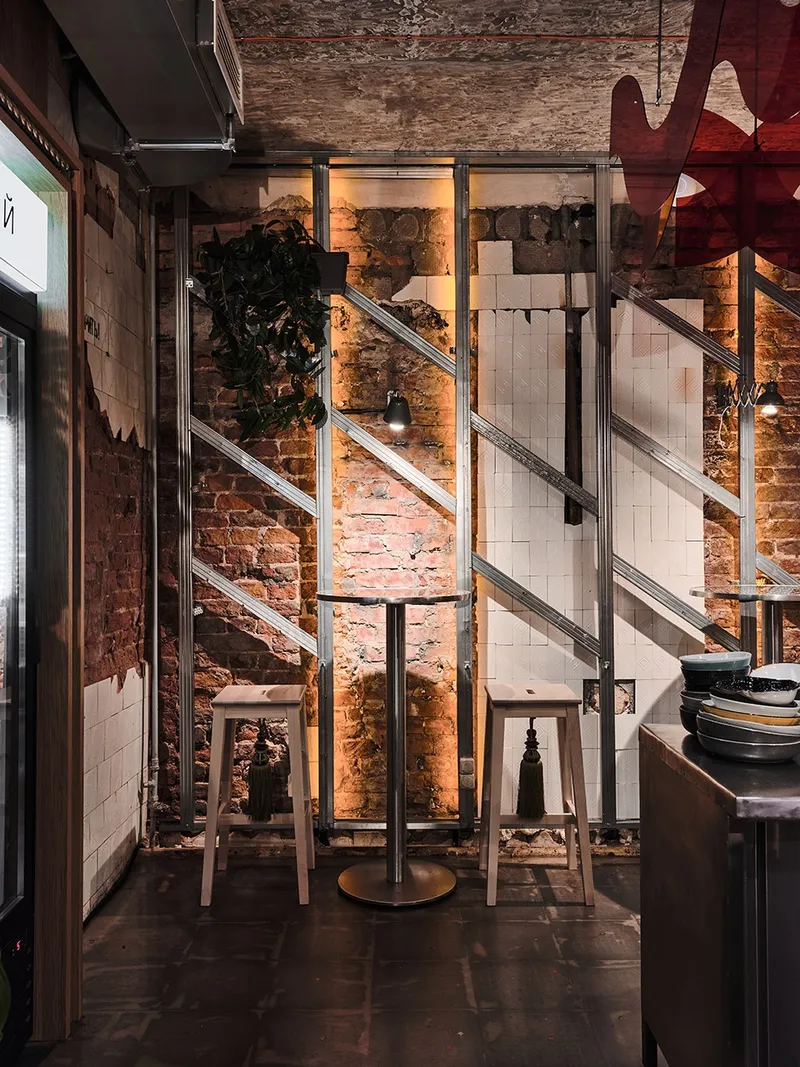
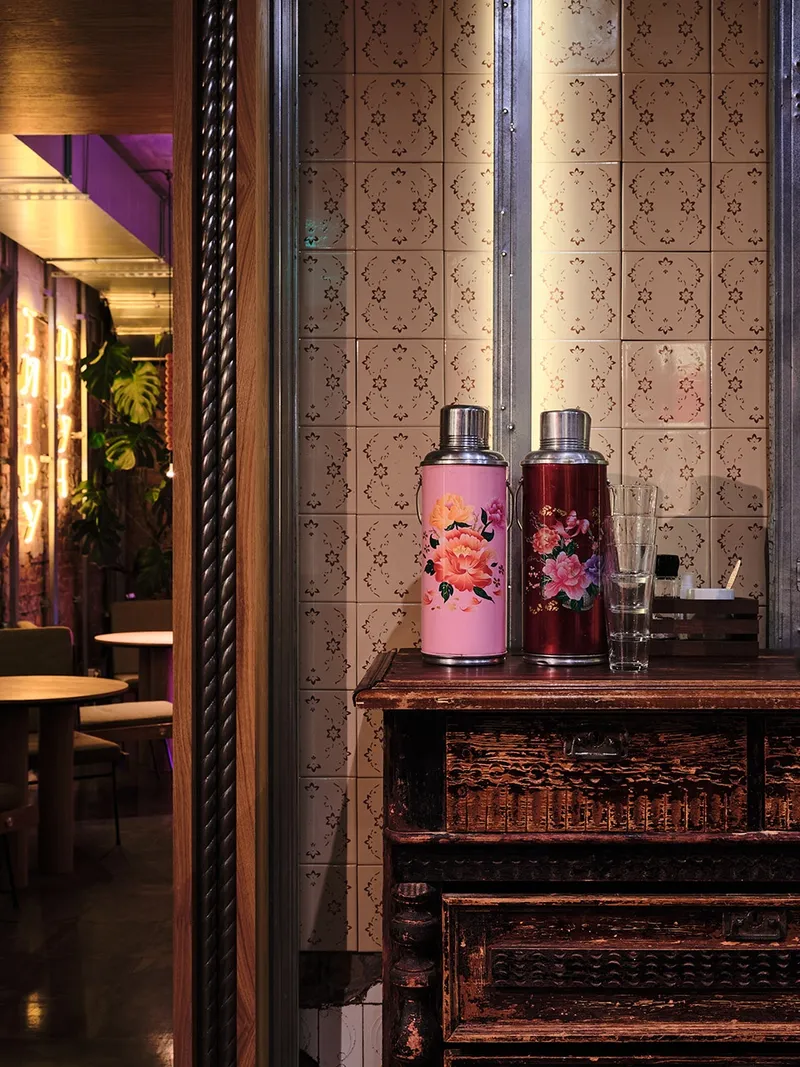
Upon removing the drywall, the designers discovered remnants of old embossed tiles on the brick walls, which were left exposed to showcase the space's history. The metal rails from the drywall were also retained, transformed into a three-dimensional pattern that complements the brick walls.



Wooden Portals: A Touch of Modernity
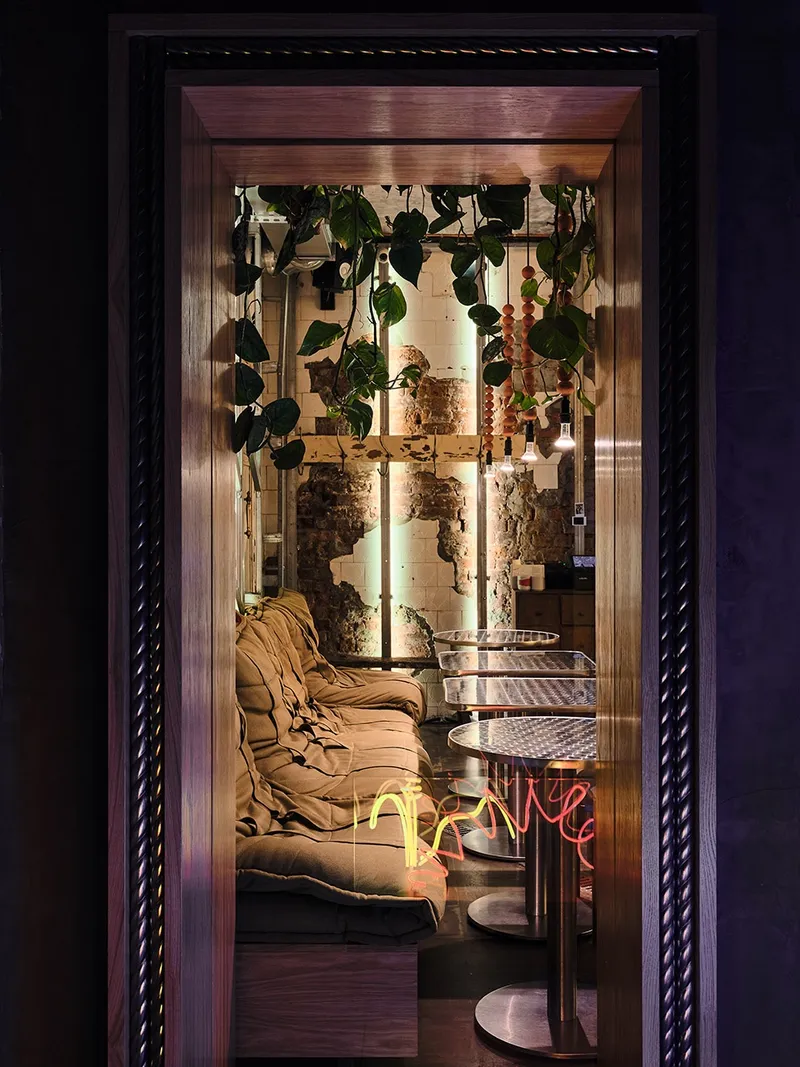
One of the few overtly designer elements in the space is the wooden portals in the doorways. These modern introductions serve to further highlight the preserved details and surroundings, creating a harmonious balance between old and new.
Subtle Allusions to Asian Markets
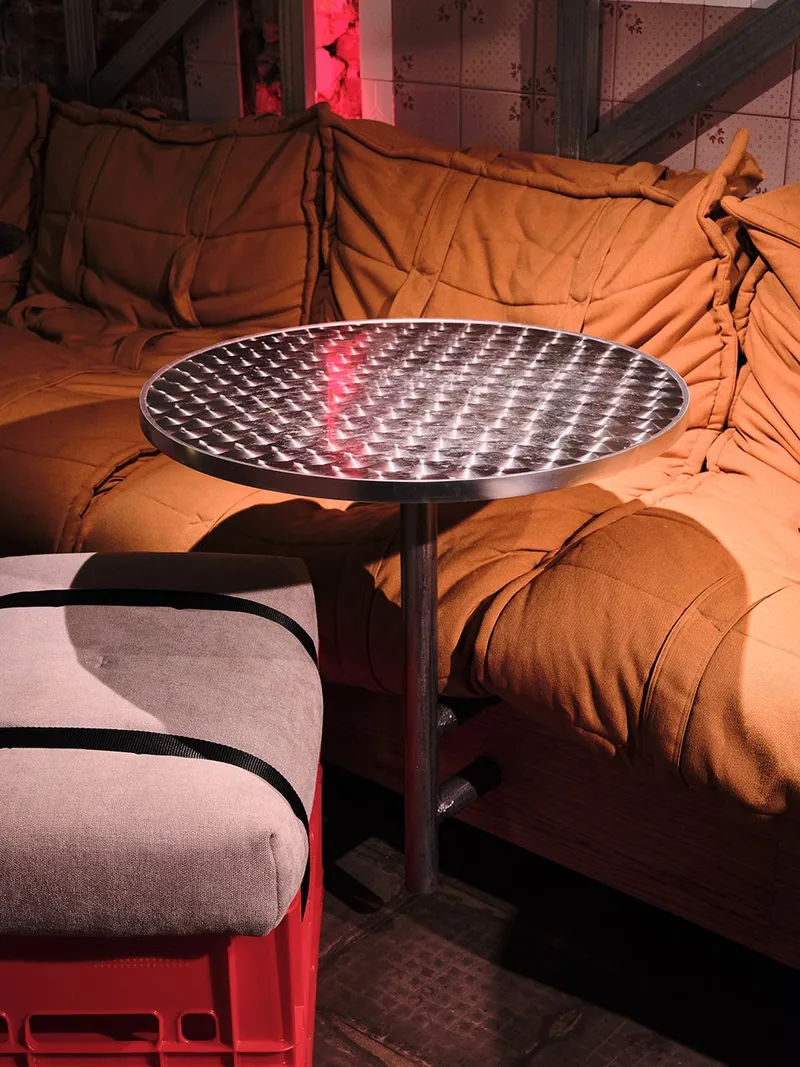
While the overall design avoids overtly Asian details, the interior subtly incorporates elements reminiscent of Asian markets. Seating areas feature sofas made from folded cotton mattresses, and vegetable storage boxes are repurposed as chairs, providing a casual and authentic dining experience.


"Dismantling Style" Light Fixtures
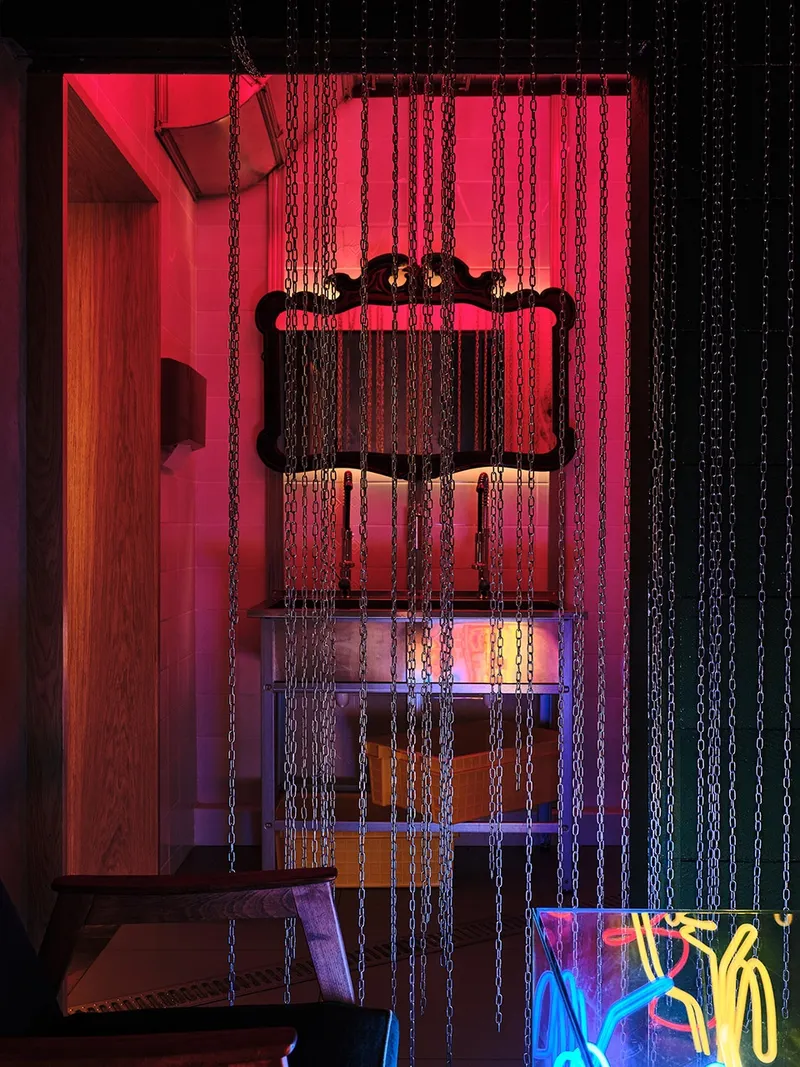
The light fixtures in the space are left in a "dismantling style," without casings, further emphasizing the stripped-back design approach. This choice contributes to the overall warmth and ambiance of the interior, despite the use of relatively cold materials in the finish.



A Touch of Whimsy: Red Glitter Hearts
As a playful reference to the small pieces of litter often found on the floor in Asian street cafés, the designers poured epoxy resin over tiny heart-shaped red glitter, adding an unexpected touch of whimsy to the space.
This unique Asian noodle shop provides a refreshing alternative to the conventional interior design of such establishments. By stripping back the space and incorporating subtle nods to Asian street food culture, the designers have created an authentic and immersive dining experience that is sure to leave a lasting impression on guests.

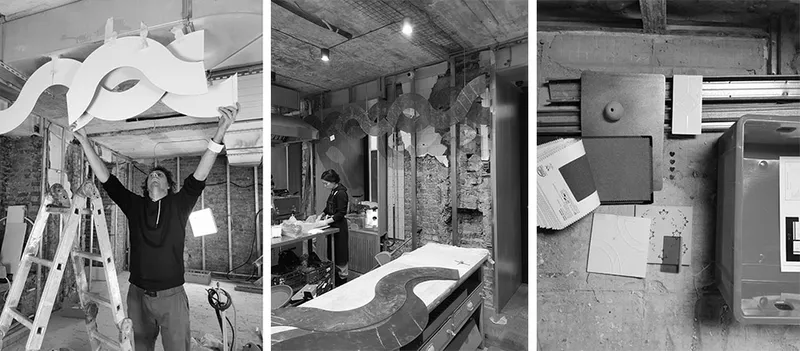

Architecture Bureau: Anna Lvovskaia, Boris Lvovskiy, Fedor Goreglyad, Maria Romanova
Project team: Anna Lvovskaia, Boris Lvovskiy, Fedor Goreglyad, Maria Romanova, Julia Gritsuk
Location: Russia, Saint-Petersburg, Nekrasova str. 21
Year of construction: 2020
Area: 75 m2
Timescales: 2 months
Photography: Dmitrii Tsyrenshchikov


Popular Articles
Popular articles from the community


Opera on the Sea: Driftwood Logic Shapes a Timber Opera House on Estonia's Coast
Trevor Orgill's opera house translates the entangled drift of floating timber into a civic building where wood, water, and music converge.

Faces of the Soviet Avant-Garde: Turning Moscow's Street Names into an Open-Air Museum
A network of sculptural installations across a Moscow residential district transforms forgotten architect names into spatial encounters with cultural memor
Temporary Home for Dogs: A Reversed Zoo Rethinks Animal Shelter Architecture
In Bucharest, a sinuous corridor and freed landscape flip the logic of containment, designing a shelter that works to make itself unnecessary.
Opera by the Sea Estonia: Three Shells Dissolving Architecture into Tallinn's Coastline
A winning opera house proposal replaces monumental form with interconnected shells that blur the boundary between building, park and Baltic Sea.

Similar Reads
You might also enjoy these articles

Day and Night Park: A Time-Based Urban Newsstand in Beijing
A temporary urban newsstand in Beijing blending travel, light, and reading through poetic colors, compact form, and community-focused design.

Modernist Patio Renovation in El Masnou, Barcelona by Oliver Segura Arquitectura + Cebrià Arquitectura
Modernist patio renovation blending tradition and innovation with a movable pool, leveled floors, and Catalan materials in El Masnou.

Alto Residencial Coop: Cooperative Housing Development in Santiago de Compostela by Carbajo Barrios Arquitectos
A linear cooperative housing complex blending white volumes and perforated metal façades, enhancing community living, natural light, privacy, and urban integration.

Vil Genis School by BPA ARCHITECTURE – Massy, France
Vil Genis School in Massy, France, features sustainable design, south-facing classrooms, community integration, accessible spaces, and modern educational architecture.

Explore Interior Design Competitions
Discover active competitions in this discipline


Challenge to design luxury tourism on rails

VR headsets Storefront design competition

Designing a staircase for a client
Comments (0)
Please login or sign up to add comments
No comments yet. Be the first to comment!