
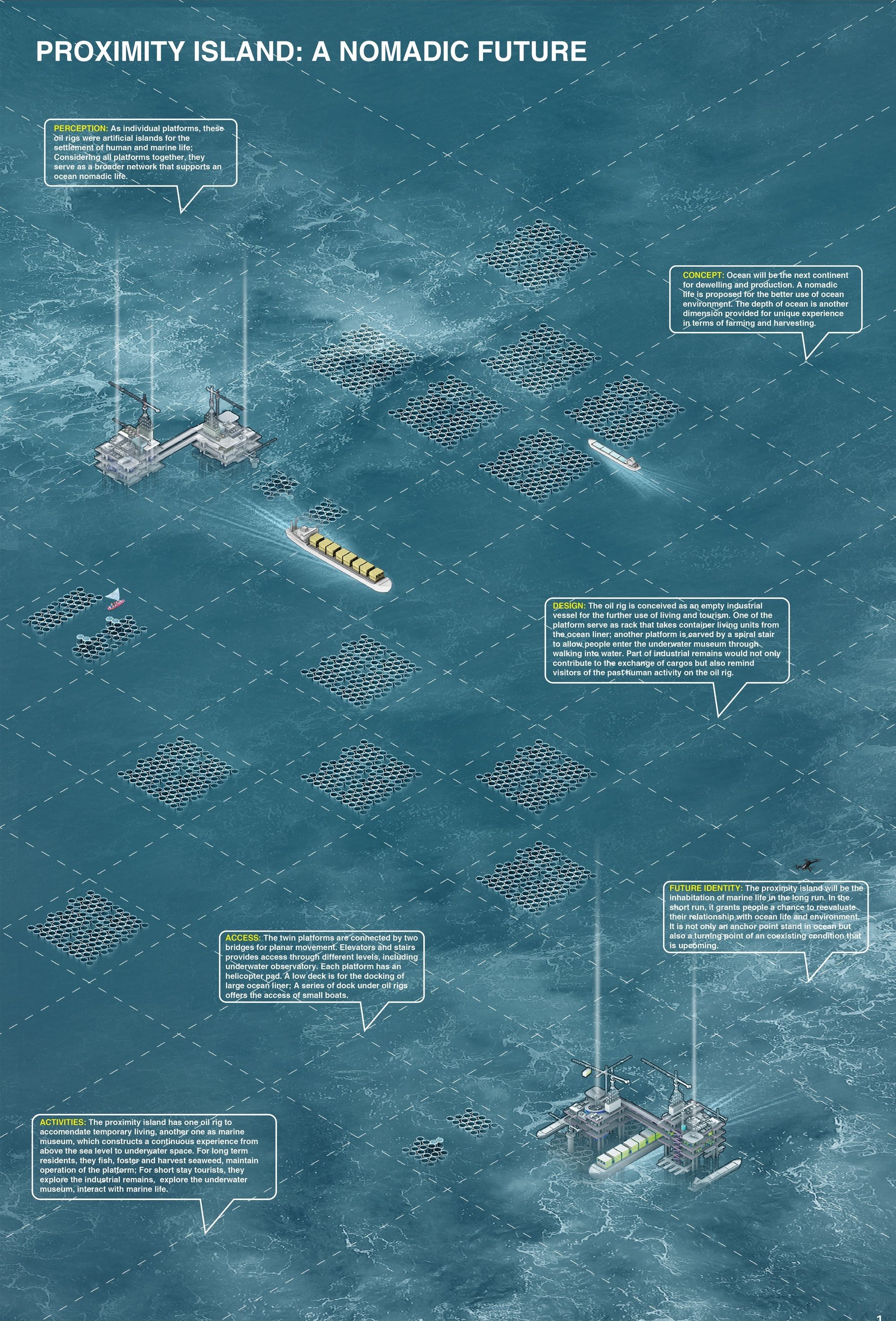
A visionary floating architecture project reimagining ocean living through marine sustainability, adaptive infrastructur
A visionary floating architecture project reimagining ocean living through marine sustainability, adaptive infrastructure, and nomadic habitats.

Floating Architecture and the Future of Ocean Habitation
As climate instability, urban congestion, and environmental degradation continue to reshape global conversations around architecture and urbanism, designers are increasingly turning toward the ocean as the next frontier for sustainable habitation. Floating architecture has emerged as one of the most compelling architectural movements of the twenty-first century, exploring how human settlements can coexist with marine ecosystems while adapting to uncertain environmental futures.
"Proximity Island: A Nomadic Future" by Shi Zhang presents an ambitious vision for this emerging paradigm. Recognized as an Editor's Choice entry in the Proximity Island 2019 competition, the project proposes an adaptive floating infrastructure system located in the Cervia gas field in the Adriatic Sea. The proposal imagines a future where architecture no longer treats the ocean as an edge condition, but as an active environment for living, production, research, and ecological restoration.
Rather than functioning as an isolated offshore platform, the project becomes a hybrid marine ecosystem where human occupation and ocean life operate in mutual coexistence. Through floating residential units, underwater observatories, industrial museums, ocean farming systems, and modular shipping-container habitats, the project explores a future in which architecture becomes fluid, mobile, and ecologically responsive.
Reimagining the Relationship Between Humans and the Ocean
At the core of the proposal lies a philosophical shift. The project argues that future architecture must move beyond extraction-based relationships with natural environments and move toward systems of reciprocity. Instead of using the ocean solely for industry, transport, or tourism, the design positions the sea as a shared habitat requiring stewardship and collaboration.
The proposal introduces the concept of "proximity" not merely as physical distance, but as emotional, ecological, and social closeness between people and marine environments. The floating island acts as both infrastructure and educational experience. Visitors and residents are continuously exposed to underwater ecosystems, fishing activities, ocean farming, and changing marine conditions.
This constant interaction transforms architecture into an instrument of environmental awareness.
Through immersive spatial experiences, the project encourages inhabitants to reevaluate their dependence on marine ecosystems and reconsider the future of coastal urbanization.
Site Strategy in the Adriatic Sea
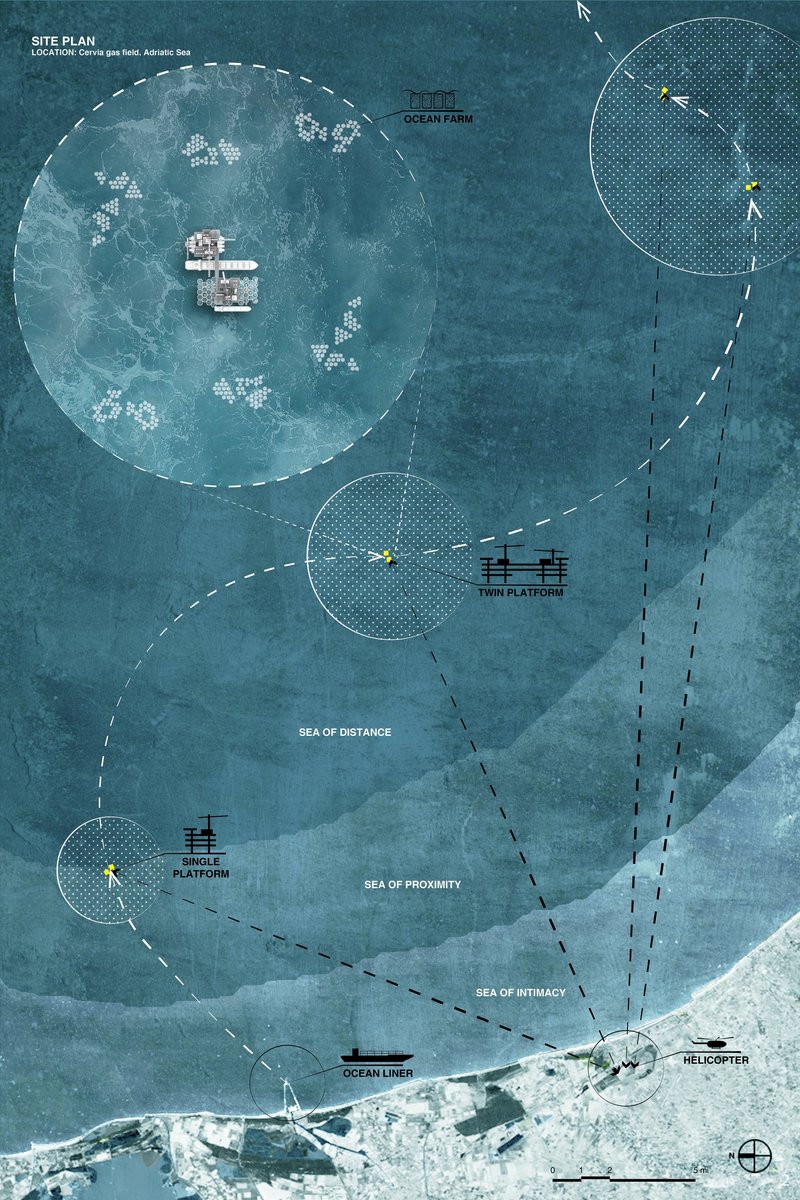
The site plan establishes the project within the Cervia gas field in the Adriatic Sea, using existing offshore conditions as an opportunity for adaptive reuse and environmental transformation.
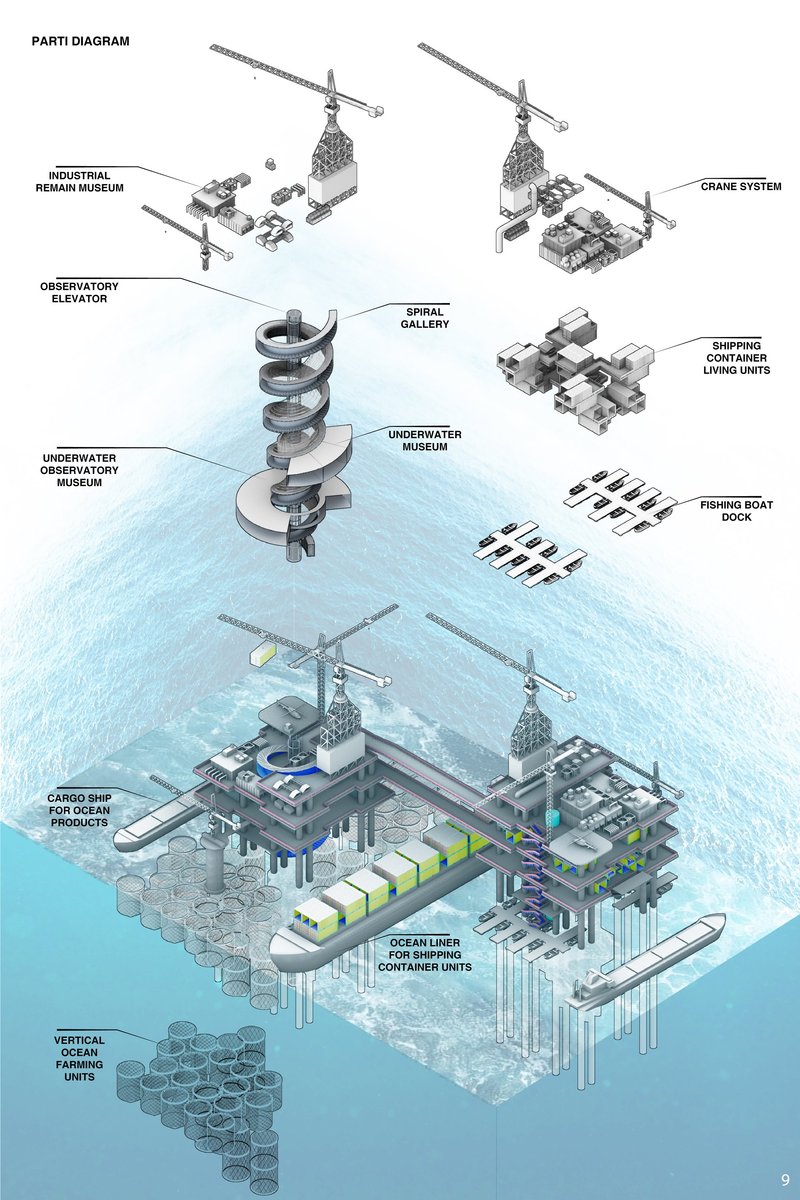
The masterplan proposes a distributed network of ocean platforms categorized by varying levels of distance and intimacy. These include single platforms, twin platforms, and larger ocean farming clusters connected through maritime circulation routes.
Transportation systems include:
- Helicopter access
- Ocean liners
- Small boat docks
- Cargo ships for modular delivery
- Marine logistics infrastructure
Rather than concentrating all functions into a singular megastructure, the proposal creates a decentralized floating urban network capable of gradual expansion over time.
This modular strategy reflects contemporary discussions around resilient infrastructure and climate-adaptive urbanism. By dispersing functions across multiple platforms, the project increases flexibility while reducing environmental impact on any singular marine zone.
A Hybrid Program of Living, Research, and Marine Production
One of the most compelling aspects of the project is its integration of diverse architectural programs into a cohesive marine environment.
The floating island is neither purely residential nor purely industrial. Instead, it functions as a hybrid civic ecosystem where living, working, learning, farming, and observing merge together.
Ocean Farming Infrastructure
Large-scale vertical ocean farming systems form the ecological foundation of the proposal. Circular marine farming units surrounding the platforms support aquaculture and kelp cultivation while creating underwater habitats for marine biodiversity.
These systems transform the floating architecture into productive ecological infrastructure rather than passive occupation.
The integration of kelp farming is particularly significant. Kelp acts as a carbon sink, supports marine ecosystems, and contributes to water purification. By embedding farming systems directly into the architectural framework, the project positions marine agriculture as a central component of future ocean urbanism.
Floating Residential Communities
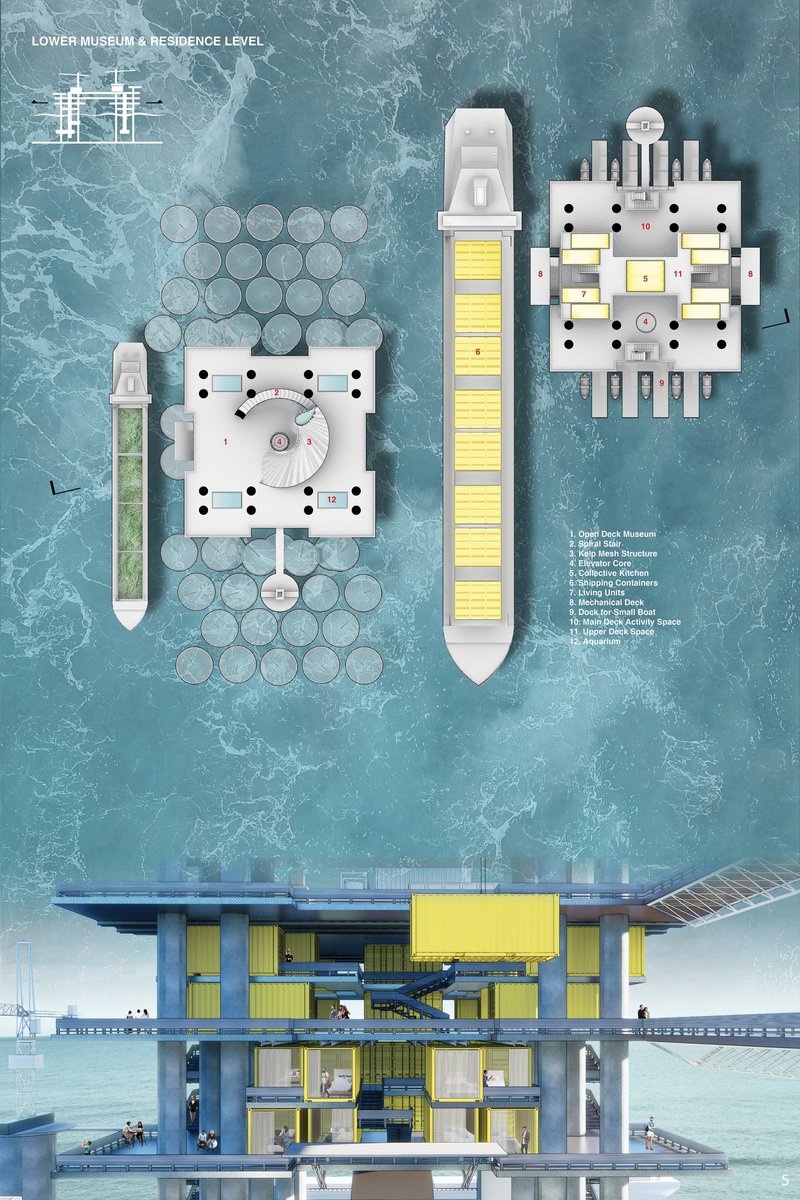
The housing strategy utilizes modular shipping-container living units arranged across elevated platform structures. These adaptable units allow flexible occupation patterns while maintaining efficient construction logistics.
The modular system also reinforces the project's nomadic identity. Units can theoretically be relocated, expanded, or reconfigured depending on changing environmental or social needs.
Shared circulation systems, open deck spaces, and collective activity areas encourage community interaction while maintaining visual connectivity with the surrounding sea.
The architecture avoids creating enclosed separation from nature. Instead, the open structural framework allows the environment itself to remain constantly visible and present.
Underwater Museum and Observatory Spaces
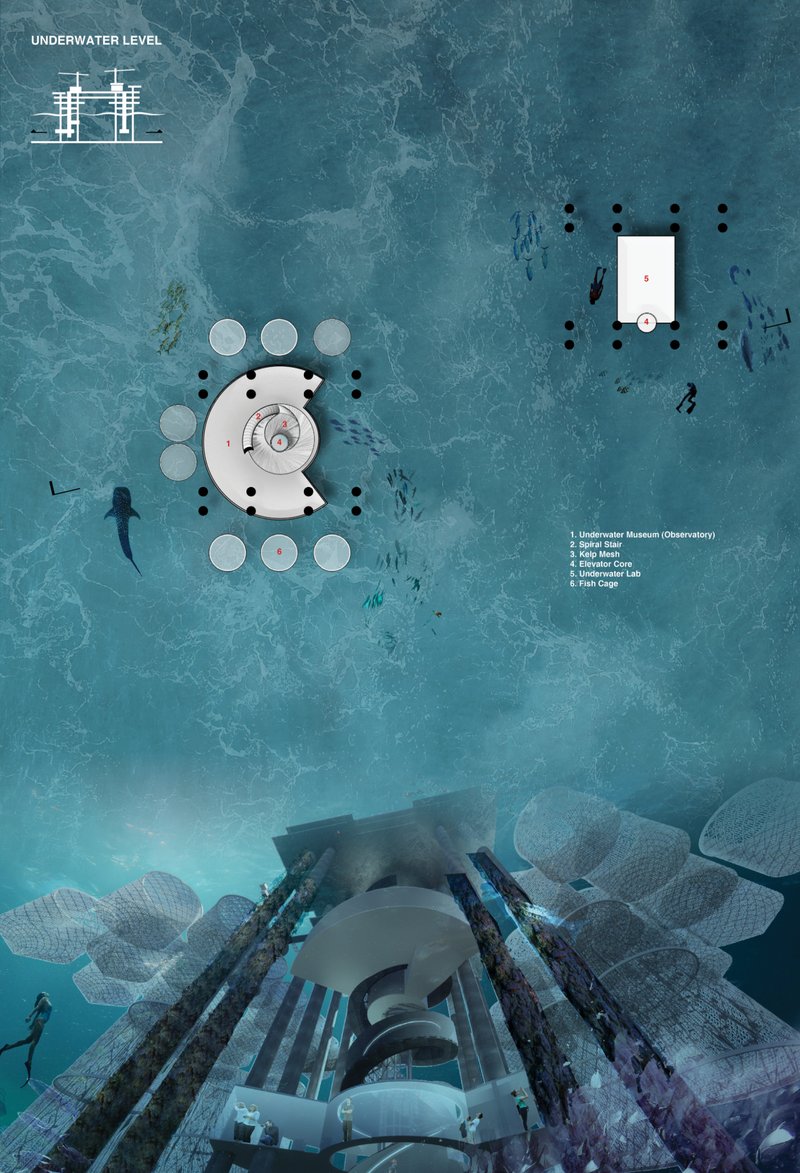
Among the project's most striking features is the underwater observatory and museum system suspended beneath the ocean surface.
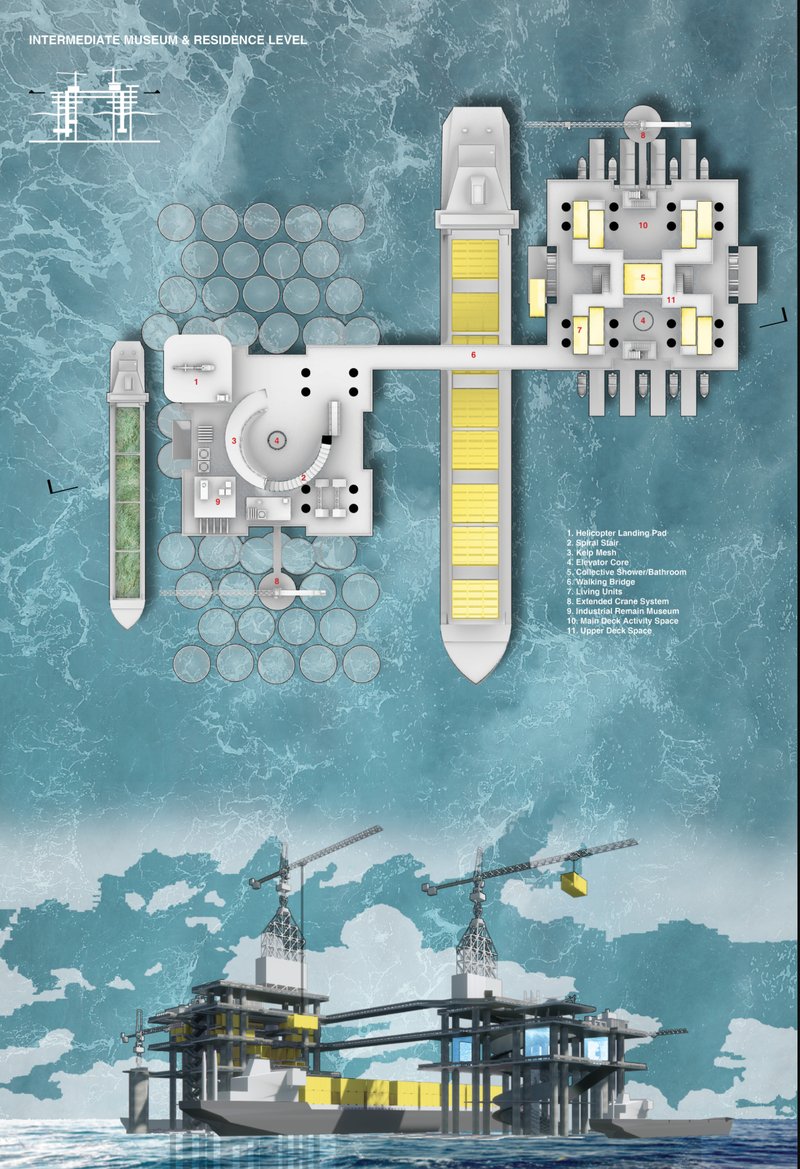
A spiraling gallery descends vertically into the sea, creating a continuous experiential transition between above-water and underwater environments. This circulation spine combines elevator systems with spiraling ramps that allow gradual immersion into marine space.
The underwater museum functions simultaneously as:
- Educational infrastructure
- Environmental observatory
- Public exhibition space
- Experiential marine research center
By placing visitors directly within underwater ecosystems, the architecture creates a visceral understanding of marine environments that traditional museums cannot achieve.
The design transforms the ocean itself into a living exhibition.
Industrial Memory and Adaptive Reuse
Another important layer of the proposal is its relationship with industrial heritage.
The floating structures incorporate industrial crane systems and museum spaces that reference offshore extraction infrastructure while transforming their purpose toward ecological regeneration.
This adaptive reuse strategy acknowledges humanity's historical exploitation of marine environments while proposing a new architectural future grounded in restoration and coexistence.
Rather than erasing industrial history, the project reframes it as part of an evolving narrative.
The crane systems become symbolic markers of transformation. Previously associated with extraction and industrial production, they now facilitate modular construction, ecological support systems, and marine habitation.
Structural and Spatial Expression
Visually, the project combines the raw language of industrial infrastructure with the openness of floating civic space.
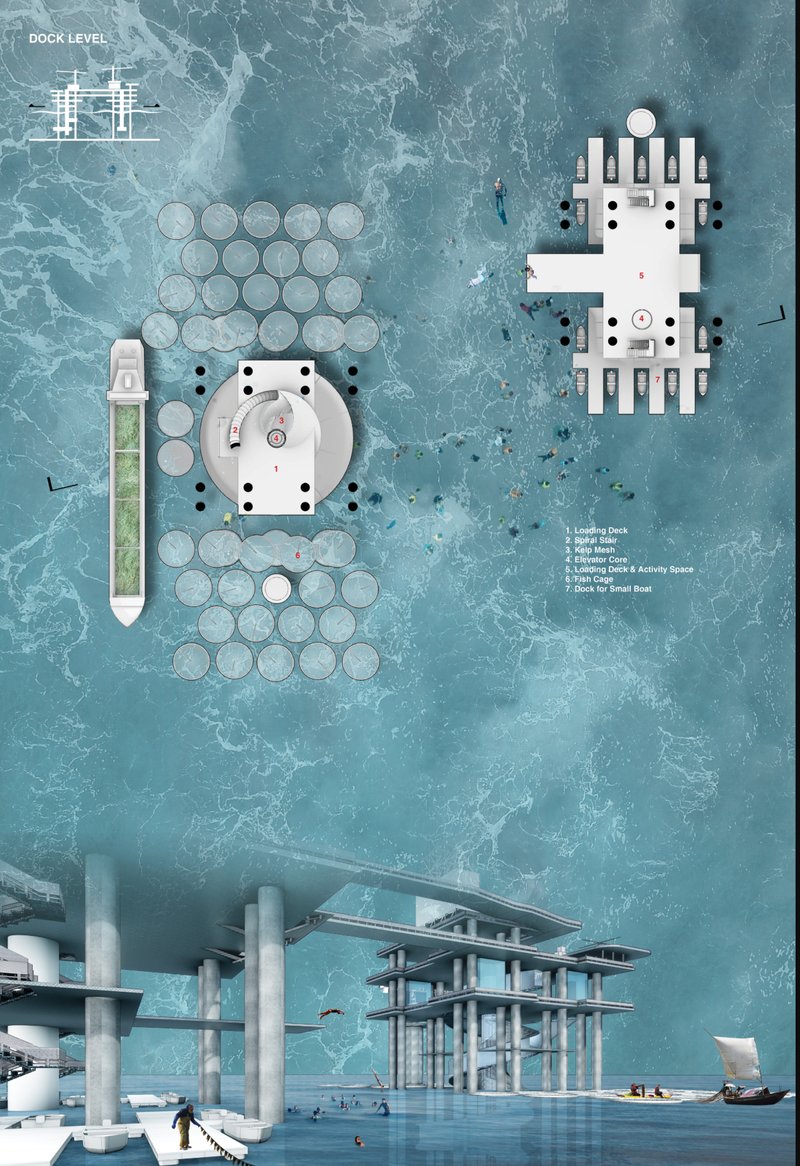
Large concrete support columns elevate the platforms above sea level while allowing marine activity to continue beneath the structures. The open skeletal framework reduces visual heaviness and enables continuous airflow, light penetration, and environmental interaction.
The spatial organization emphasizes vertical layering:
- Public and industrial activities above water
- Transitional circulation zones at water level
- Marine observation and ecological spaces below sea level
This vertical sequencing creates a rich architectural narrative connecting sky, sea surface, and underwater environments into one continuous experiential system.
The project's representational drawings reinforce this idea through sectional perspectives that reveal the hidden underwater dimensions typically absent from conventional architecture.
Floating Architecture as Climate Resilience
The proposal also engages with urgent global conversations surrounding rising sea levels and climate migration.
As coastal cities face increasing environmental pressure, floating architecture offers potential alternatives for future habitation. Unlike static land-based infrastructure, floating systems can adapt to changing water conditions while minimizing disruption to terrestrial ecosystems.
"Proximity Island: A Nomadic Future" positions itself within this discourse by proposing architecture that is:
- Mobile
- Expandable
- Environmentally adaptive
- Resource-conscious
- Ecologically integrated
Its modular construction strategy allows phased development while supporting long-term flexibility.
This adaptability becomes increasingly valuable in an era defined by uncertainty.
Architecture Beyond Land
Perhaps the project's most radical proposition is its challenge to architecture's traditional dependence on land.
Historically, cities have evolved through territorial permanence and fixed geography. This proposal instead imagines architecture as migratory, fluid, and continuously evolving.
The floating island becomes less of a singular building and more of an evolving marine settlement system.
This shift fundamentally alters how architecture is understood:
- Buildings become infrastructure
- Infrastructure becomes ecology
- Ecology becomes public space
- Public space becomes environmental education
The project demonstrates how future architectural thinking may increasingly operate through networks, systems, and environmental relationships rather than isolated objects.
A Vision for Coexistence
"Proximity Island: A Nomadic Future" by Shi Zhang presents more than a speculative ocean settlement. It proposes an entirely new relationship between architecture, infrastructure, and ecology.
By combining floating architecture, marine agriculture, underwater observatories, adaptive reuse, and modular habitation systems, the project constructs a compelling vision for future ocean urbanism.
Its strength lies not only in its ambitious imagery but also in its conceptual clarity. The project recognizes that future architecture must address environmental responsibility, climate adaptation, and ecological coexistence simultaneously.
Rather than treating the ocean as empty territory for expansion, the proposal frames it as a shared living environment requiring care, understanding, and mutual dependence.
In doing so, "Proximity Island" becomes both a speculative architectural project and a broader reflection on humanity's future relationship with the planet.



Popular Articles
Popular articles from the community

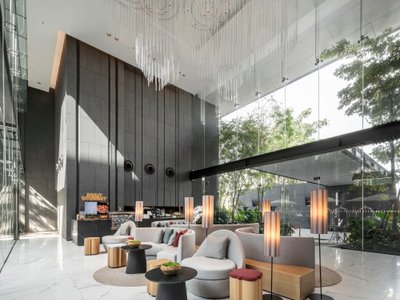
IDIN Architects Wraps a Hua Hin Hotel Around a Private Courtyard to Escape the City
Dusit D2 Hua Hin turns an urban infill site in Thailand's family vacation heartland into a self-contained resort through courtyard planning.
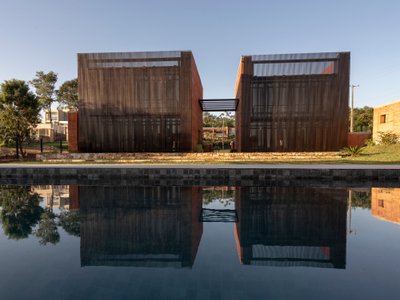
BAUEN Builds Two Rammed Earth Volumes in Paraguay Inspired by the Ovenbird's Nest
In San Bernardino, a house of compacted earth channels the instinct of a constructive bird to shelter life from the Paraguayan summer.
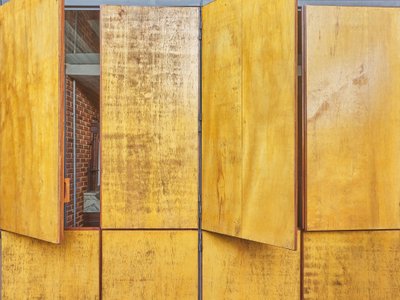
gru.a Builds a 70 m² Timber Shelter That Opens Like a Farm Door in Brazil's Valley of the Vines
In the mountainous region near Rio de Janeiro, a compact retreat uses plywood panels and deep eaves to blur the line between inside and out.
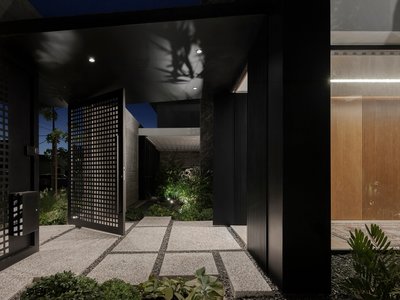
Constanti Architects Builds a Fortress of Privacy in Nicosia with House 345
A concrete and timber residence in Cyprus reinterprets the traditional introverted courtyard house for a new urban landscape.


Similar Reads
You might also enjoy these articles


Urban Forest: A Vertical Ecosystem for 5,000 Workers in Singapore's Changi Business Park
Radially stacked pods and layered green decks turn a 7-acre plot into 47 acres of ecological workspace projected for 2040.
interACT: A Wearable Transit Object That Turns Commuting Into Social Infrastructure
A backpack-mounted foldable device transforms walking, waiting, and riding into moments of shared comfort across Jakarta's transit network.
Lean On Barrier System: Where Traffic Safety Meets Chai Culture in Ahmedabad
A modular steel barrier doubles as informal seating and lean-on furniture at one of Ahmedabad's busiest intersections, keeping vendors in place.
The Black Bagh: A Living Monument Built from Water, Light, and Memory
On the banks of the Yamuna, two designers replace the myth of a marble mausoleum with a regenerative landscape of reflection and ritual.






Comments (0)
Please login or sign up to add comments
No comments yet. Be the first to comment!