
Abe House by masafumiharigaiarchitecture: A Harmonious Fusion of Structural Innovation and Human Sensation in Residential Architecture
Abe House blends innovative structure and human-centered design, creating dynamic, comfortable living spaces in a modern Japanese family home.


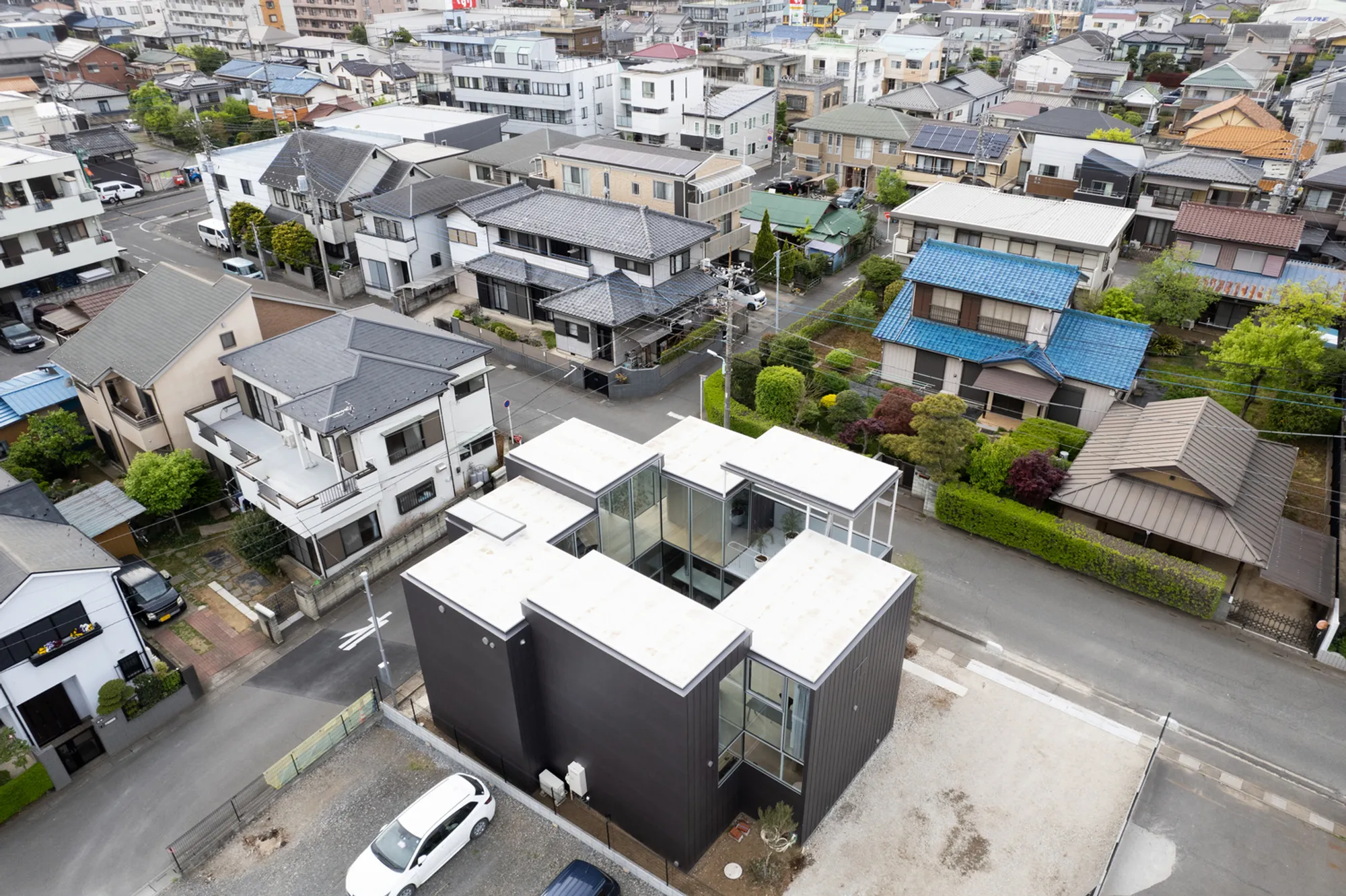
Located in Saitama, Japan, the Abe House, designed by masafumiharigaiarchitecture, is a striking example of contemporary residential architecture that redefines the relationship between structure, space, and human experience. Completed in 2022, this 190-square-meter family home offers a unique exploration of architectural form driven not solely by mechanical rationality but by bodily sensations and emotional responses to space.
Architectural Concept and Structural Innovation
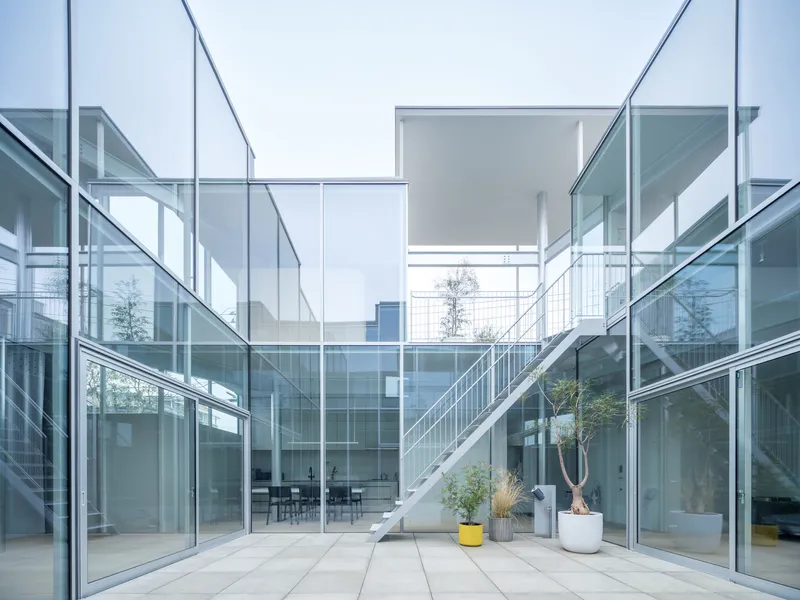
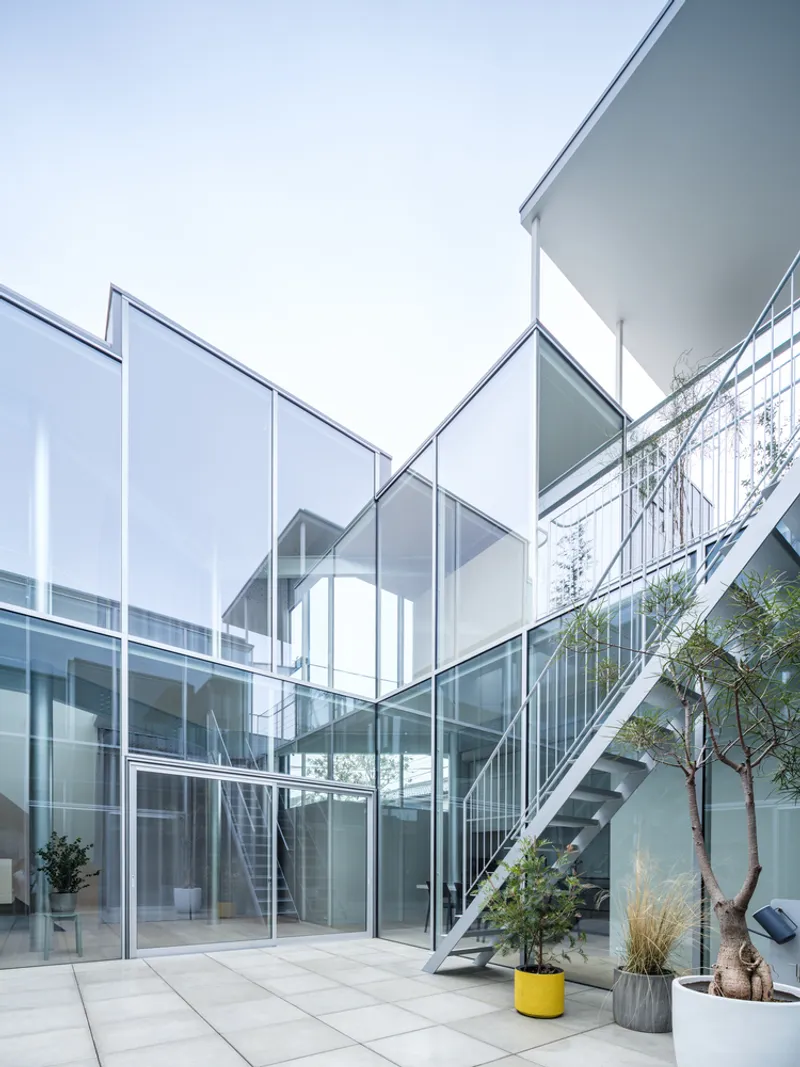
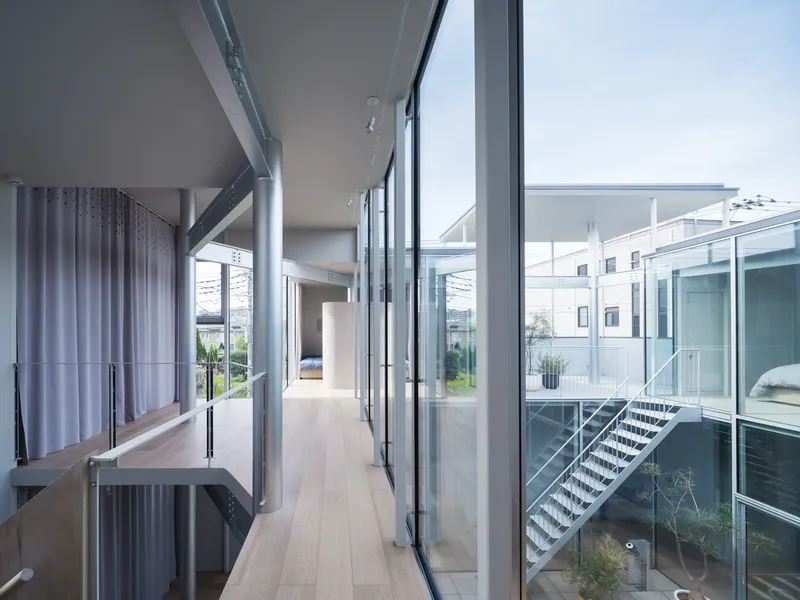
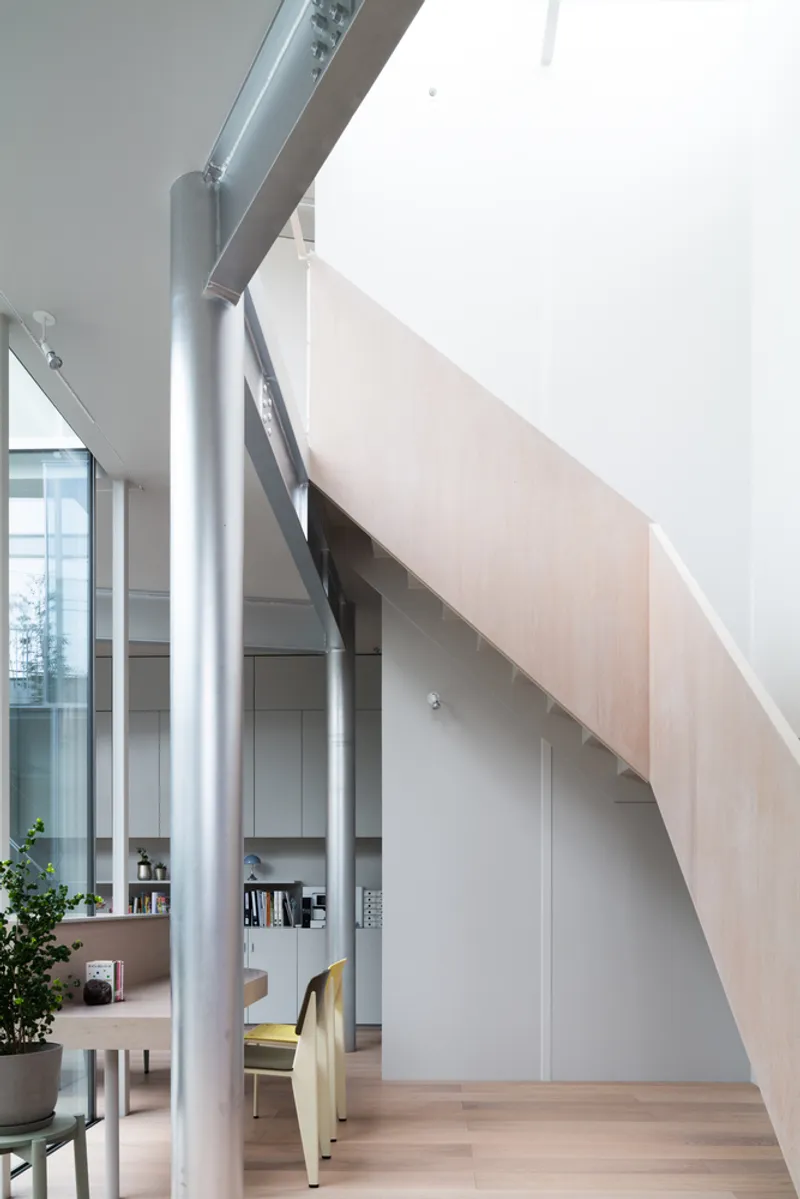
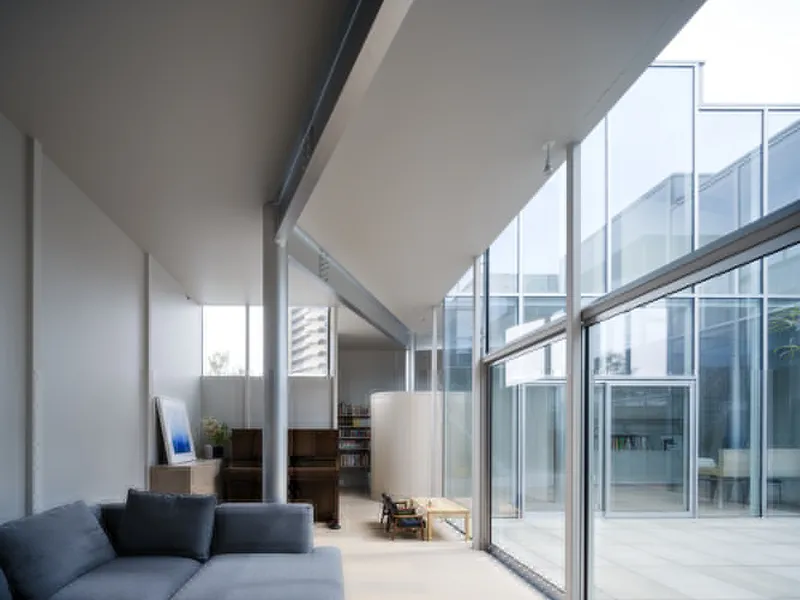
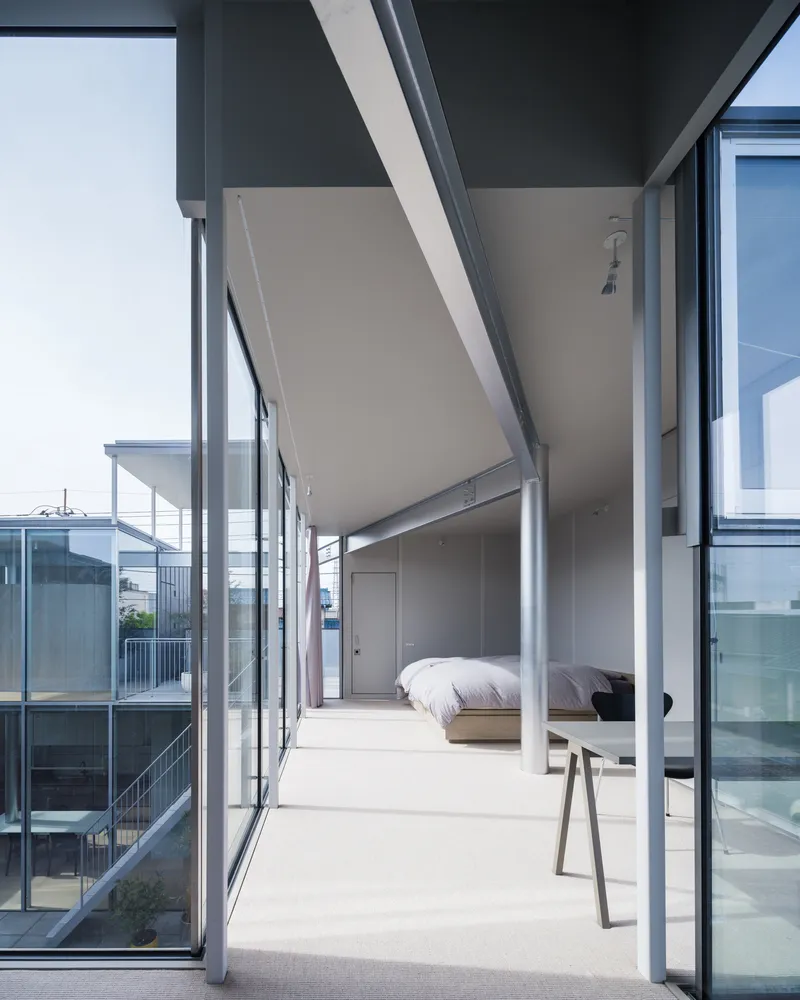
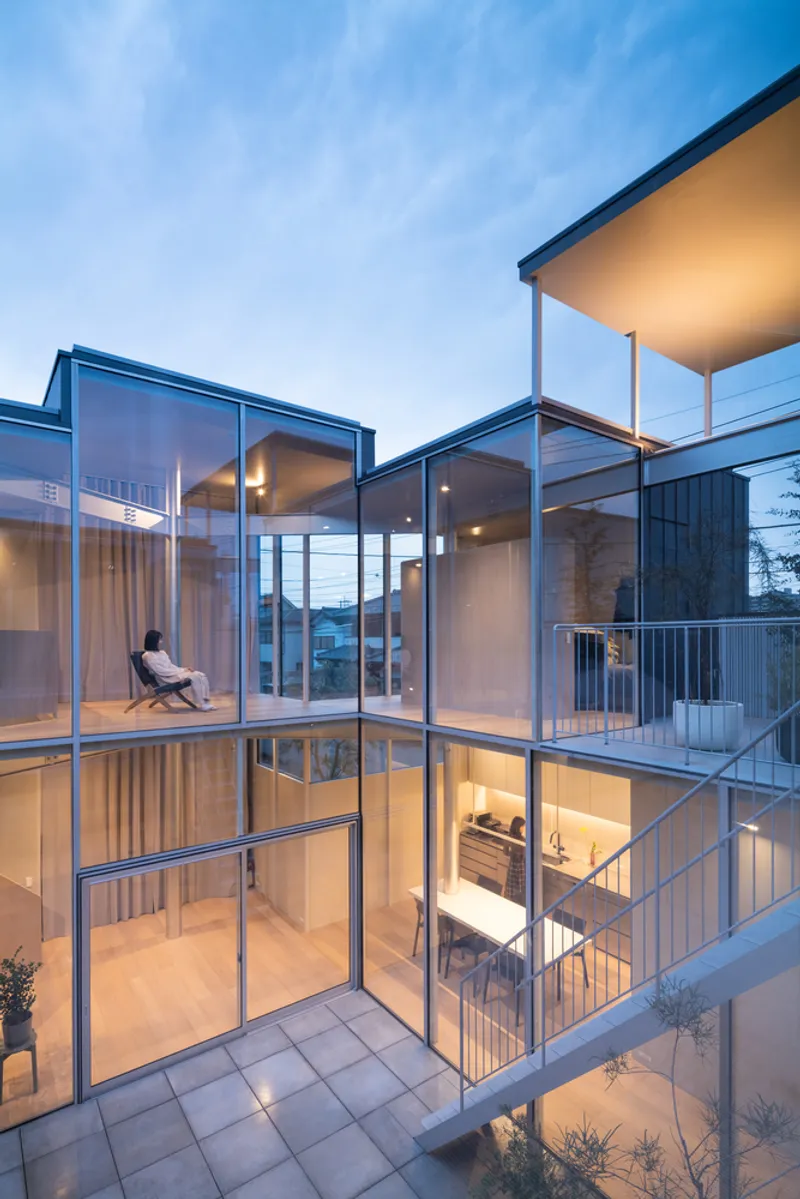
The Abe House challenges traditional architectural approaches by separating the building’s structural framework from its external form. Rather than optimizing the building’s shape primarily for structural efficiency, the architects introduced an innovative design method where a thin, rectangular frame—defining the living spaces—wraps around a central, polygonal spine-like framework. This central structure functions as the home’s "spine," supporting horizontal forces while creating a dynamic tension between the two structural elements.
This dual-structure system creates a unique spatial rhythm where both components appear to have distinct intentions yet harmoniously influence one another. This interplay results in a "swaying fixed point"—a concept that incorporates physical sensation into architectural decision-making, enabling a flexible and human-centric design.
Human-Centric Spatial Experience
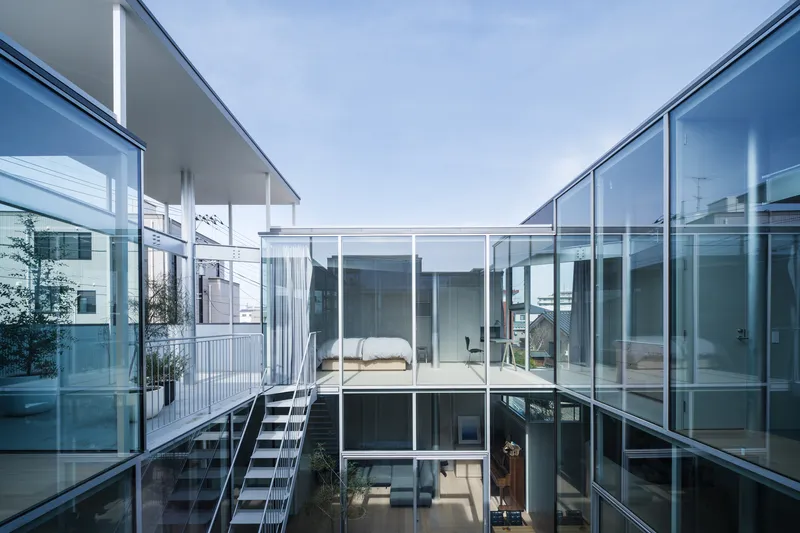
By carefully adjusting the positions and cross-sections of structural members within mechanical constraints, the design prioritizes comfort and spatial connection. For example, widening the distance between pillars or altering the angles of beams enhances spatial openness and visual continuity, fostering an intuitive flow throughout the home.
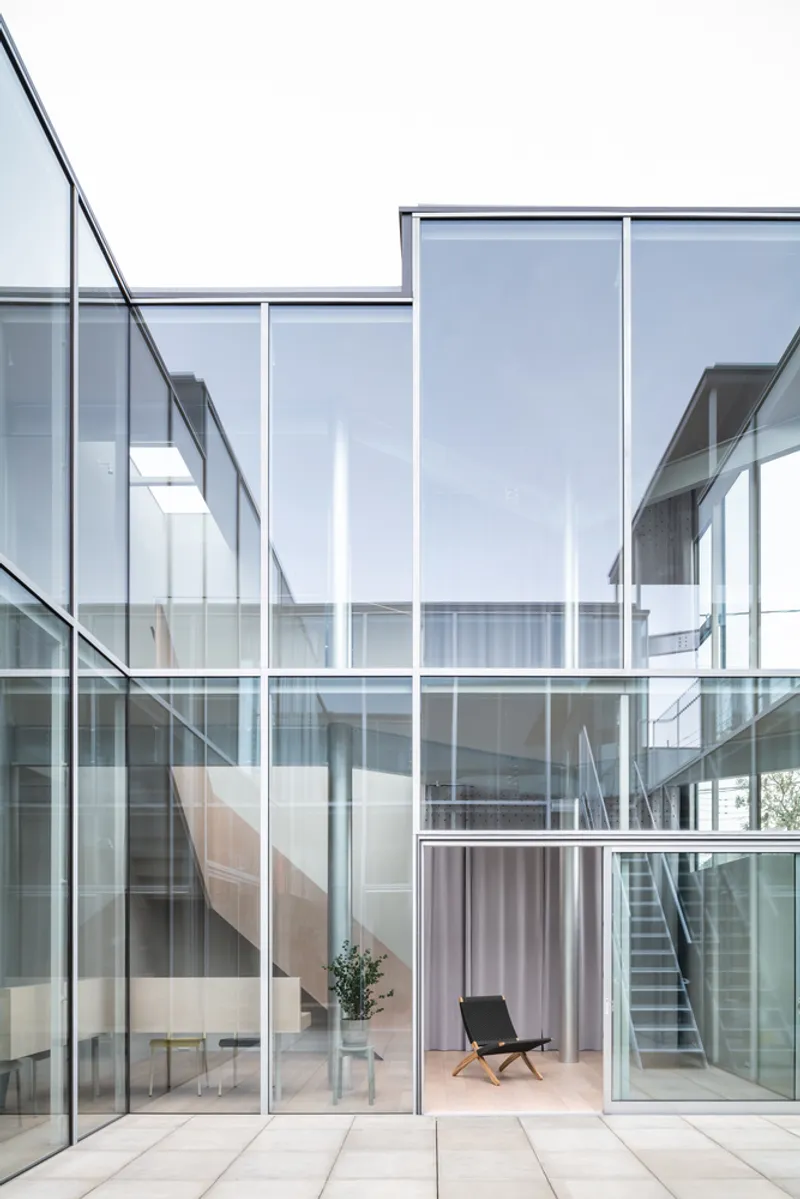
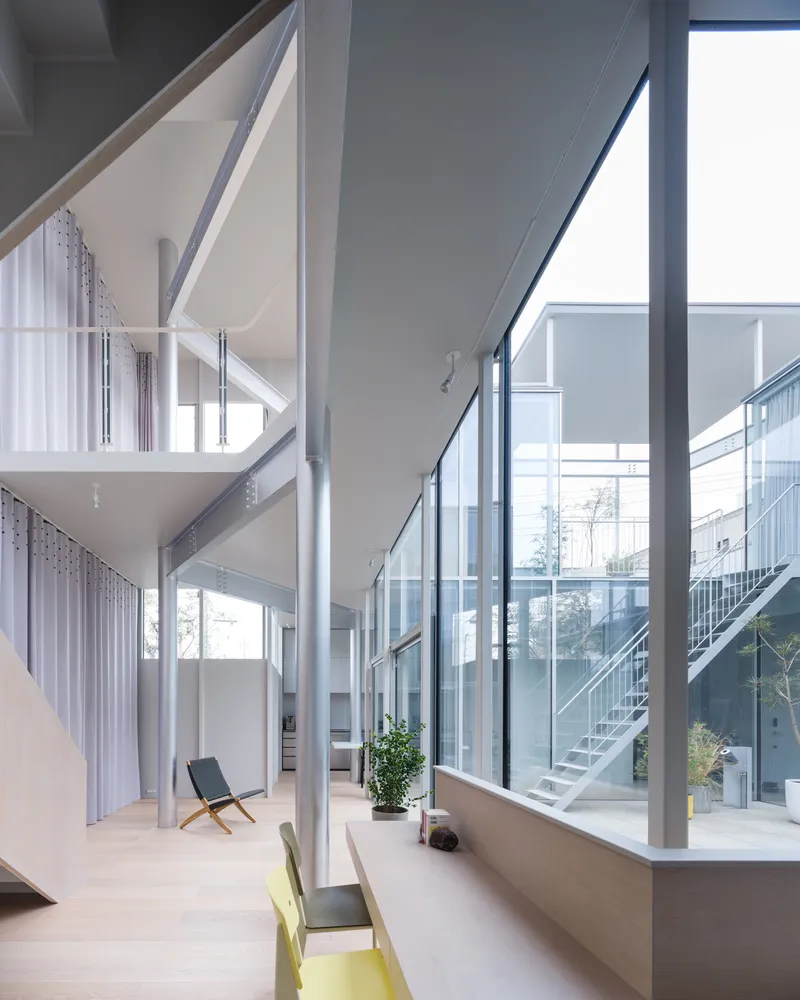
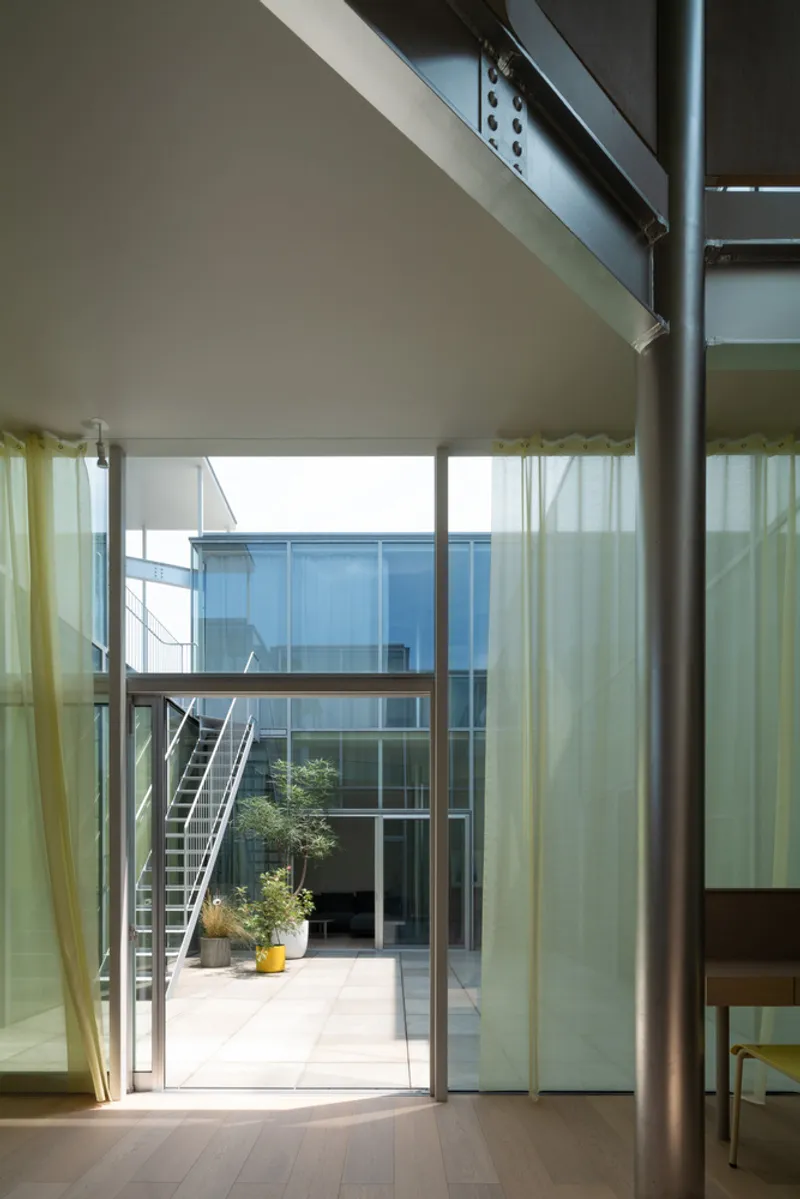
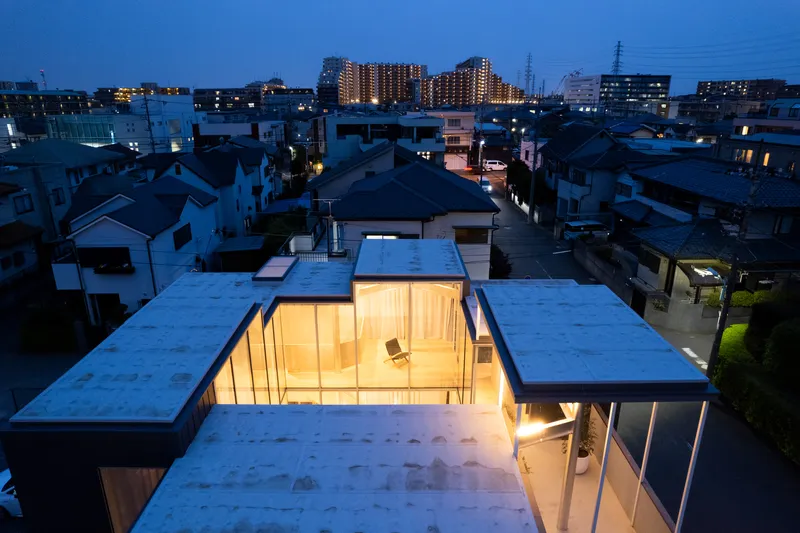
The Abe House is designed for a family of six, situated in a serene residential area that balances proximity to the city with peaceful surroundings. Its courtyard-style layout comprises smaller, interconnected volumes, creating a protective enclave that respects both collective family unity and individual privacy.
Courtyard Layout and Family Dynamics
The home embraces the concept that a family is a collective of individuals connected yet independent. The courtyard arrangement facilitates intimate interactions while allowing for personal space. The continuous columns and beams form a polygonal enclosure that simultaneously acts as a whole and as distinct elements that subtly divide and define living areas.
These structural elements become an integral part of daily life—sometimes unnoticed, sometimes offering refuge or companionship—contributing to a dynamic living environment where family members can share moments yet retreat when needed.
Perceptual Complexity and Dynamic Order
The scattered placement of pillars within the open layout introduces varying degrees of visibility and concealment, enriching the spatial experience. This complexity supports simultaneous family activities, accommodating multiple events and interactions without losing a sense of cohesion.
In contrast to the static order commonly found in modern architecture, Abe House embodies a “dynamic order” informed by bodily perception and human presence. This approach allows the architecture to connect people with each other, with the environment, and with the flow of everyday life in a fluid and meaningful way.
All Photographs are works of Masao Nishikawa



Popular Articles
Popular articles from the community


The Musturak Paradise: Senior Living Architecture for a Connected Future in Temara, Morocco
The Musturak Paradise reimagines senior living architecture in Temara via private homes, social spaces, culture, community, and shared care.

Riyadh For All: Intergenerational Urban Design for Active Aging in Rabat
Riyadh For All reimagines urban design in Rabat with intergenerational co-living, adaptive courtyards, and Moroccan cultural exchange today.

The Ocean Hive: Sustainable Architecture for a Self-Sufficient Civilization at Sea
The Ocean Hive imagines sustainable architecture at sea, where modular habitats, algae, wave power and ocean waste sustain a growing colony.

Hill & Cross Opera: Sculptural Opera House Architecture Shaped by Tallinn’s Landscape and Identity
Hill & Cross Opera reimagines opera house architecture in Tallinn through its sculptural hill, civic plaza, glass wave and a luminous cross.


Similar Reads
You might also enjoy these articles


Hodi-Mandai Geram
Project Function: Preservation and revitalization of the Intangible heritage and socio-spatial identity of the Hodi by Housing, Cultural Memory Center, Sacred Grove, landscape, local tourism economy


Olio Towers: A Mid-Rise for Performers That Fuses Housing, Rehearsal, and Stage
Located blocks from Houston's Theater District, this modular tower stacks living units around a central performance atrium.

Oasis: Modular Green Housing Carved into Dhaka's Urban Fabric
A shortlisted Plugin Housing entry reclaims unauthorized settlements in Dhaka with stepped concrete volumes, green roofs, and ventilation-driven design.

Black Hole: A Floating Megastructure for the Post-Physical Era
Emiliano Mazzarotto envisions a spherical, self-scaling arena where e-sports, digital hotels, and holographic stadiums replace traditional public space.


Explore Architecture Competitions
Discover active competitions in this discipline



Challenge to reimagine the Iron Throne


Photograph architecture without architects


Illustrate the lost glory of Angkor Wat - Render Challenge


Design challenge to reuse E-waste
Comments (0)
Please login or sign up to add comments
No comments yet. Be the first to comment!