
Acerbis House by BURATTI ARCHITETTI: Blending Historic Charm with Modern Villa Living in Albino, Italy
Acerbis House by BURATTI ARCHITETTI blends Albino’s historic architecture with modern villa design, featuring courtyards, private gardens, sophisticated materials, and Italian craftsmanship.


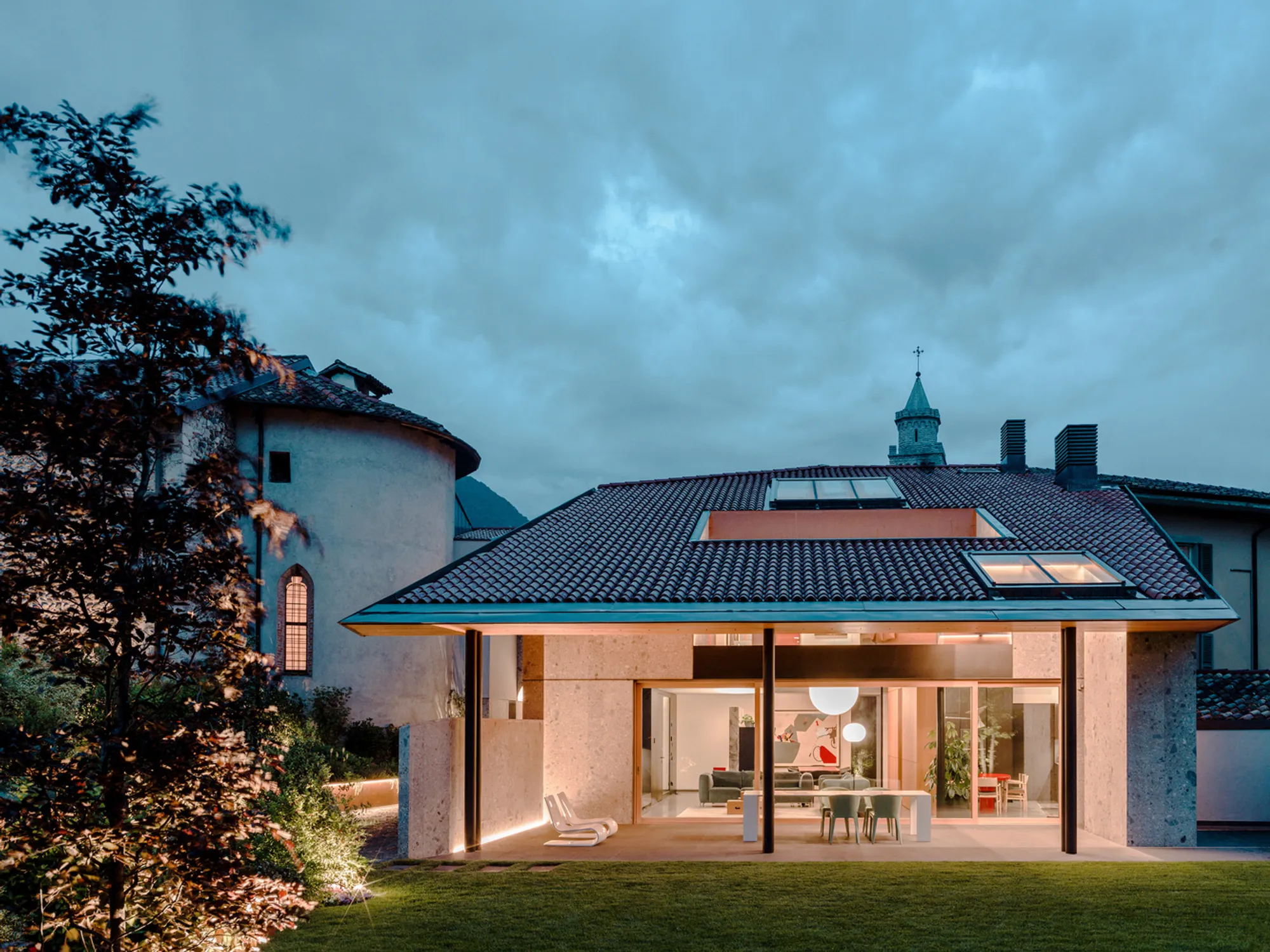
Acerbis House is a striking example of typological hybridization in contemporary residential architecture. Located in the historic center of Albino, this project reinterprets traditional Italian architectural elements while creating a modern, intimate villa experience. BURATTI ARCHITETTI masterfully balances the charm of urban life with the serenity of private domestic space, reflecting the essence of small-town living where social interaction meets secluded relaxation.


The design completes the historic building facade on the piazza, harmonizing with the surrounding streetscape, yet simultaneously transforms the inner courtyard into a private villa with a lush garden. Residents enjoy the duality of public engagement and private retreat, stepping out onto Piazza San Giuliano to greet neighbors or retreating to the courtyard to dine under the portico and stroll barefoot on the grass.

Contextual Integration in Albino’s Historic Core
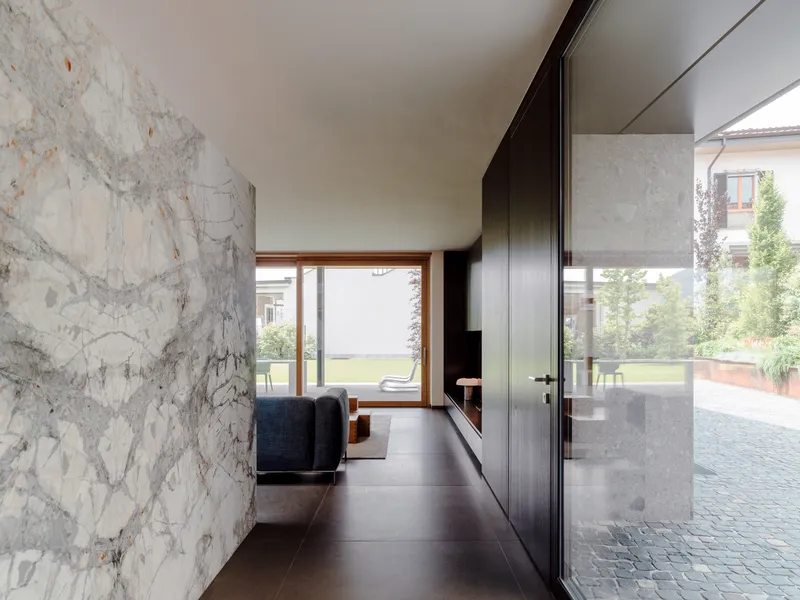
Piazza San Giuliano anchors the project, framed by the 14th-century Church of San Bartolomeo and featuring 16th-century frescoes by Moroni. The architectural narrative moves from the bustling public square to the secluded garden through a vaulted passageway. The exterior facade, adorned with plaster and openings arranged in a sophisticated rhythm, contrasts with the Ceppo di Grè stone covering the entrance side, a modern yet locally rooted material that elegantly transitions from public to private.
Turning toward the garden, visitors encounter a serene domestic environment with a portico that bridges indoor and outdoor living. The house design respects its historical context while creating a modern villa atmosphere, blending heritage and contemporary architecture seamlessly.

Innovative Spatial Planning and Vertical Connectivity
The main three-story apartment faces inward, emphasizing a vertical courtyard that connects the home’s interior spaces while allowing abundant natural light. The residence also includes a smaller, two-story apartment overlooking the piazza, enhancing spatial complexity and functionality. The interplay of vertical light and horizontal views traverses the large sloping roof, linking terraces, porticos, and interior volumes in a dynamic spatial choreography.
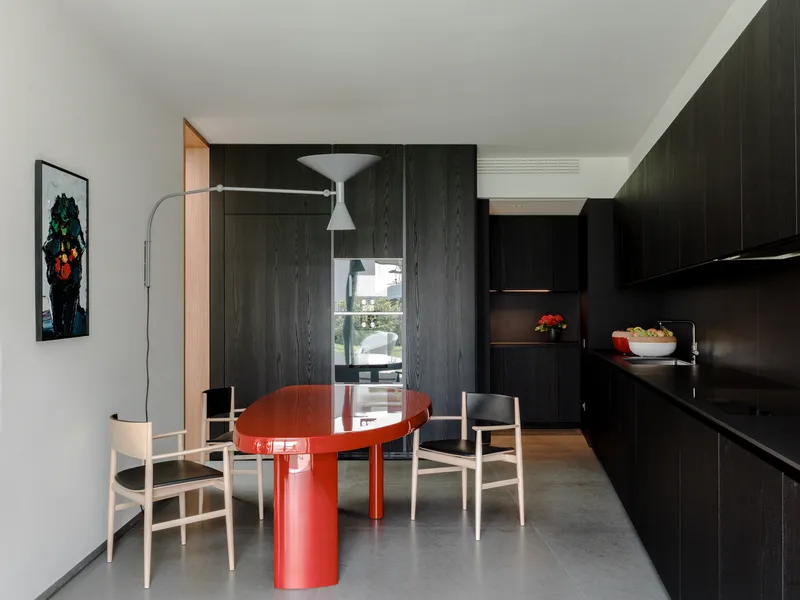
Materials are carefully curated to enhance both exterior and interior experiences. Natural stones: Ceppo, basaltina, and invisible veined stones: interact with oak, black-stained elm wood, raw waxed iron, and colored mirrors, crafting a sophisticated yet warm atmosphere.

Interior Design: Italian Craftsmanship Meets Modern Comfort
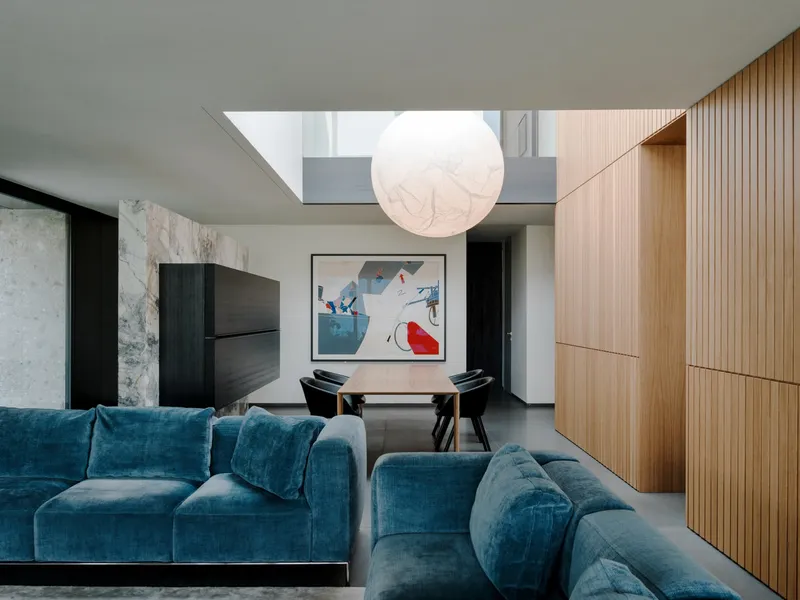
Acerbis House showcases Italian design excellence, seamlessly integrating architecture, interiors, and furnishings. The triple-height courtyard features fluted oak paneling, creating a visual anchor and an elegant backdrop for custom-designed furniture. BURATTI ARCHITETTI collaborated with prestigious Italian manufacturers, including B&B Italia, Alias, Porro, and Fontana Arte, ensuring that each piece harmonizes with the architectural intent.

This project exemplifies the studio’s holistic approach: embracing multiple scales of design, from building architecture to interiors, furniture, and product design. By merging functional living with refined aesthetics, Acerbis House becomes not only a residence but a celebration of Italian craftsmanship and contemporary lifestyle.


All photographs are works of
Marcello Mariana




Popular Articles
Popular articles from the community


The Ocean Hive: Sustainable Architecture for a Self-Sufficient Civilization at Sea
The Ocean Hive imagines sustainable architecture at sea, where modular habitats, algae, wave power and ocean waste sustain a growing colony.

Conexión: Biophilic Design Reimagines High-Rise Living in Hong Kong
Conexión reimagines high-rise living in Hong Kong through biophilic design, green facades, shared spaces, daylight, water and nature within.
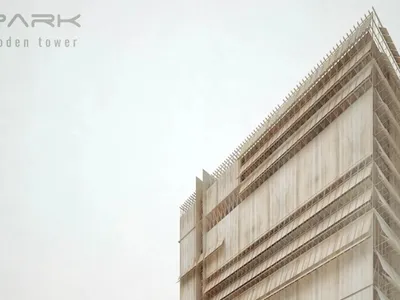
EW PARK: Sustainable Architecture Reimagines the Future of Urban Parking
EW PARK reimagines city parking as a modular wooden tower combining automation, solar energy, electric mobility, and adaptable urban design.

Riyadh For All: Intergenerational Urban Design for Active Aging in Rabat
Riyadh For All reimagines urban design in Rabat with intergenerational co-living, adaptive courtyards, and Moroccan cultural exchange today.


Similar Reads
You might also enjoy these articles

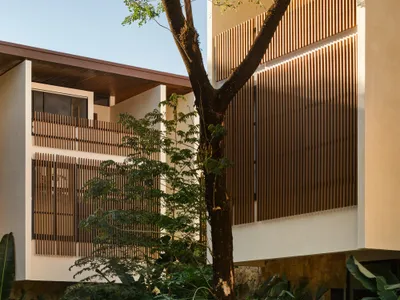
FAMM Arquitectura Organizes Ten Villas Around Courtyards and Jungle in Nosara, Costa Rica
El Molino pairs two elongated volumes with deep overhangs and timber louvers to build a compact coastal community five minutes from the beach.
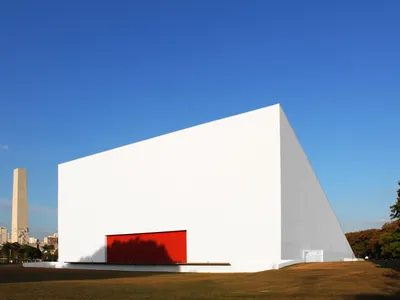
Oscar Niemeyer's Ibirapuera Park Pavilions Define São Paulo's Cultural Identity in Concrete and Curve
A constellation of modernist volumes set within São Paulo's most important urban park, conceived for the city's 400th anniversary in 1954.
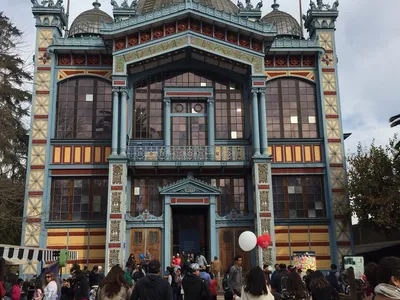
How Henri Picq's 1889 Paris Pavilion Traveled 11,000 Kilometers to Become Santiago's Artequín Museum
A prefabricated iron and glass pavilion built for the Paris Universal Exposition found a second life as a children's art museum in Chile.
Sanjay Puri Architects Wraps a Jaipur Office Tower in Capsule-Shaped Green Buffers
A nine-level climate-responsive workplace near Jaipur Airport uses stacked planter terraces and aluminium screens to fight 40°C heat.


Explore Architecture Competitions
Discover active competitions in this discipline



Challenge to reimagine the Iron Throne


Photograph architecture without architects


Illustrate the lost glory of Angkor Wat - Render Challenge


Design challenge to reuse E-waste
Comments (0)
Please login or sign up to add comments
No comments yet. Be the first to comment!